Jan S. retweetledi
Jan S.
6.9K posts

Jan S. retweetledi

Turkish media outlets claim that ‘three-quarters of Crete should belong to Turkey’
Have you noticed that virtually everywhere Muslims and non-Muslims live in proximity, there are land disputes, with Muslims claiming more than they have? Israel is supposedly on “occupied” Muslim land. Muslims claim Kashmir from India. Muslims have illegally occupied northern Cyprus since 1974. They claim southern Thailand and the Philippine island of Mindanao. And now the Turks are claiming Crete. The reality is just the opposite: not just three-quarters, but all of Turkey is Greek land. History and archaeology bear that out. They are conquerors and occupiers on land they have stolen, but somehow the left never gets around to being enraged over that fact, despite the fact that in Turkey’s case, as opposed to Israel’s, it’s actually true.

English
Jan S. retweetledi

“Extraordinary claims require extraordinary evidence, but Kristof provides none to support this testimony. No effort is made by Kristof or his editors to distinguish what is known, what is alleged, and what may have been invented by those with a clear agenda.”
quillette.com/2026/05/15/nic…
English
Jan S. retweetledi

"Ongoing" - One of the phrases increasingly used next to the term "Nakba" is "Ongoing" as in the recent proposal by Congresswoman Rashida Tlaib. Now westerners assume that the "ongoing" seeks to highlight continued suffering of Palestinian Arabs, but as with so many other phrases that serve as "dual use language" (as Eran Shayshon coined) is that the deep meaning is very different.
Once it is known and understood that the real time meaning of the Nakba, as described by Constantin Zureiq as "Seven Arab states declare war in an attempt to subdue Zionism, stop impotent before it, and return on their heels" was the shameful failure to defeat the lowly Jews in war - it becomes crystal clear why it remains "ongoing":
As long as Israel exists, the Arab, and especially Palestinian Arab shameful failure to dismantle Jewish sovereignty and "subdue Zionism" remains "ongoing". As long as, per Bevin's quote, the top goal of the Palestine Arabs "to resist to the last the establishment of Jewish sovereignty in any part of the land" remains unfulfilled, their definition of disaster remains "ongoing".
In the updated book of The War of Return, "October Return", @Adi_Schwartz and I included a dictionary of sort to explore this dual use language. I share it here with you:
"This becomes especially clear when analyzing the language of Palestinian identity and that of its supporters around the world. Terms such as “two states,” “justice,” “return,” and “rights” carry one meaning in dialogue between Palestinians and Westerners or Israelis—but an entirely different meaning within internal Palestinian discourse.
"Take “two states,” for example. During the years of negotiations, Palestinian leaders—and many surveys—expressed support for the “two-state solution.” Israelis and Westerners reasonably assumed that this meant one state for Palestinian Arabs and one for Jews. In retrospect, we should have checked. For when Palestinians speak of “two states,” they also maintain that millions of Palestinian “refugees” have a right to settle inside Israel. The implication is that the phrase “two states” actually means a Palestinian Arab state in the West Bank and Gaza, alongside a second Arab-majority state that replaces Israel via the mass return of refugees. In effect: “this one is ours, and that one is also ours.”
"To this day, no official Palestinian peace plan includes the recognition of a Jewish state on any part of the land between the river and the sea.
"It is also worth examining the meaning of a word like “justice”—so frequently invoked in phrases like “a just peace,” “a just solution,” or in the names of organizations such as “Students for Justice in Palestine.” To many in the world, “justice” may simply mean that Palestinians should have a state of their own, or that Israel should not control their daily lives. That is a reasonable interpretation. But it is not the Palestinian one.
"For Palestinians, there is only one concept of justice: the reversal of the injustice they associate with the creation of the State of Israel. And central to that “corrective justice” is return—which, by definition, entails the end of Israel as the nation-state of the Jewish people.
"The same applies to words like “rights,” “liberation,” and, of course, “return.” As will become clear in the pages ahead, there is no ambiguity: “return” is the concept that embodies victory over the Jewish state and its elimination.
"That is why the butcherty of October 7 was greeted with euphoria."
English
Jan S. retweetledi

1/
The star source behind @NickKristof’s latest @nytimes Gaza piece has a history the paper never told readers about.
It includes torture allegations, Hamas-linked activity, and claims even Palestinian investigators struggled to pin down.
The omissions are staggering. 🧵
HonestReporting@HonestReporting
1/ The @nytimes just published one of the most serious sets of allegations imaginable against Israel – claims of systematic sexual violence, including a bizarre story about carrots and trained rape dogs. We checked the sources. What we found is journalistic malpractice. 🧵
English
Jan S. retweetledi

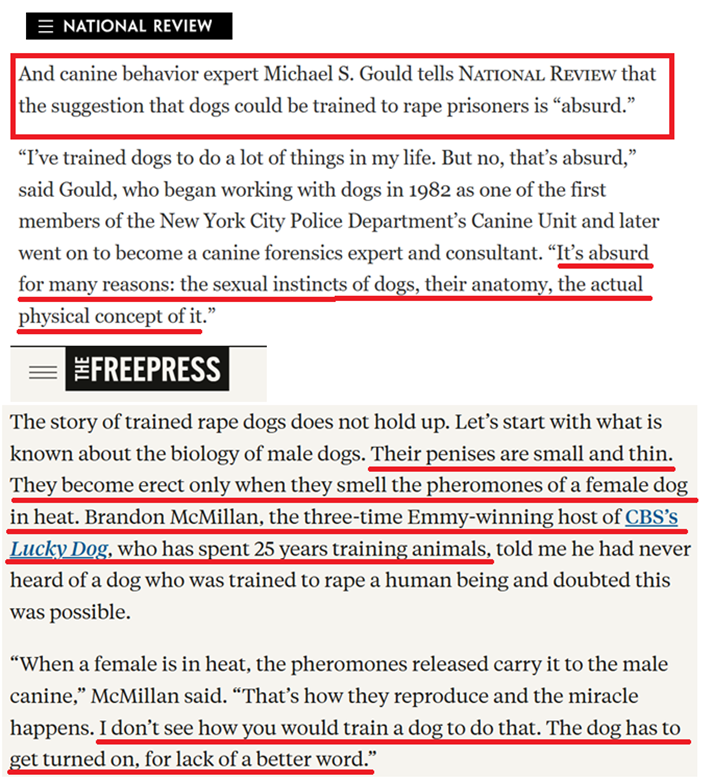
@mehdirhasan The specific claim by the "Gaza journalist" of a prison guard using a verbal command to arouse the dog and anally penetrate has never been recorded in history. Dogs have been wielded abusively to do horrible things, but never this documented in history. If so, prove it.

English
Jan S. retweetledi
Jan S. retweetledi

Maria Popova is famous for her personal blog, The Marginalian, where she's published more than six million words.
All the nights I've spent reading her writing were like an entry point into intellectual curiosity. She's introduced me to more writers and ideas than just about anybody, and this conversation is about how she does it.
Timestamps:
00:00 Introduction
00:37 Why writers should visit archives
04:39 Lessons from reading diaries
09:41 Letters vs diaries
11:35 Presence over productivity
18:30 How language shapes thought
19:48 Why Maria started reading poetry
36:46 Why college failed her
39:58 Reading to survive
41:41 Why epiphanies don’t stick
43:57 Thoughts on famous quotes
47:32 Why AI can never make art
53:10 Stop calling it content
I've shared the full interview with Maria Popova below. If you'd rather watch it on YouTube, or listen on Apple / Spotify, check out the reply tweets.
English
Jan S. retweetledi
Jan S. retweetledi

Much has been written about @NickKristof's latest NYT opinion column over the past 24 hours, most of it focusing on the specific claims and their sourcing, but what I think deserves most attention is something broader: how this kind of journalism, whatever its intentions, ultimately makes accountability harder to achieve rather than easier, and harms the very people it claims to champion.
The principle that Israeli abuses should be investigated and condemned is not in dispute, and nobody serious is arguing otherwise. Israel is not above scrutiny, and in fact it operates under more intense international scrutiny than almost any country on earth, routinely held to standards applied nowhere else.
The problem here is something different entirely: the complete collapse of evidentiary standards the moment Israel is the subject.
This piece reads less like rigorous reporting and more like a catalogue of hearsay, unverifiable allegations, and activist claims stitched together into a sweeping moral indictment. Its sourcing leans heavily on Euro Med Human Rights Monitor, an organisation repeatedly criticised over extremist ties, disinformation, and deeply questionable methodology, yet treated throughout as a credible authority while its leadership openly engages in pro Hamas propaganda on X.
Worse, the same ecosystem of activists and self appointed “experts” that amplifies Euro Med’s claims online increasingly feeds narratives into more established organisations and media outlets, laundering deeply contested allegations into the appearance of institutional credibility.
The most severe claims are anonymous, uncorroborated, and presented in the emotional register of established fact rather than allegation, despite lacking meaningful evidentiary backing. Yet Kristof largely adopts them without serious scrutiny, publishing the piece in the Opinion section because even the already diminished evidentiary standards often applied to reporting on the Israeli Palestinian conflict would likely not suffice for it to pass as straight news reporting.
This approach doesn't strengthen accountability, it actively destroys it. When every allegation is immediately inflated into systematic rape and "standard operating procedure" before any serious verification, genuine investigation becomes harder rather than easier.
Real abuses, if they occurred, get buried beneath maximalist narratives so extreme that large portions of the public simply stop trusting any of it, and the people who actually suffered pay that price.
It also alienates the vast majority of Israelis and Jews worldwide, including the many who are perfectly capable of criticising Israeli policy and supporting investigations into misconduct, but who understandably recoil when accusations begin resembling modernised blood libels dressed up as human rights reporting. The framing matters enormously, and so does proportionality, and so does evidence.
Nor does any of this serve Palestinians. Atrocity inflation entrenches both sides deeper into defensive tribalism, and every dubious claim amplified by a prestigious outlet makes legitimate criticism easier to dismiss when it actually matters.
The timing compounds everything. On a day when documented reporting on Hamas sexual violence was again circulating, the NYT chose to run an opinion column built substantially on unverifiable anonymous testimony asserting that Israelis are conducting systemic rape campaigns, not as a rigorously evidenced investigative report but as an opinion piece with the imprimatur of the paper of record.
Kristof is not a naive bystander in any of this. In 2014 he used the full credibility of the NYT to repeatedly platform Somaly Mam, a Cambodian anti-trafficking activist whose harrowing personal story he championed across multiple columns, until it emerged that her backstory was substantially fabricated and he was forced to issue a public correction. When challenged this time around on his sourcing, corroboration, and methodology, he defaulted to bad faith engagement on social media rather than addressing the underlying concerns seriously.
It is the same pattern, playing out again in a different context. Real journalism requires skepticism, corroboration, and restraint applied consistently regardless of the subject, and when those standards disappear the moment Israel is involved, what remains is not human rights reporting but narrative activism wearing a journalist's costume that does far more harm than good to everyone it claims to serve.
English
Jan S. retweetledi

Hamas Declares War: In a bizarre twist of events, Hamas has officially declared war on me today, calling me a “suspicious figure,” after its leader, Basem Naim, came out against me because a Board of Peace official had retweeted a post of mine, triggering a cascade of events by the terror group and its online armies. Naim said that I am a “suspicious person” who has maligned Hamas and that my condemnation of the terror group is “fascist, racist, and extremist” because, according to Naim, my depictions of Hamas are “inaccurate.”
He attacked the Board of Peace official for retweeting me, questioning how a “suspicious” person like me could be taken seriously. Hamas’s media office then issued statements on my page, while their outlets published articles inciting against me and accusing me of “marketing Zionist projects to eliminate the resistance and deport Gaza’s population,” all of which began trending on Gazan social media.
Hamas didn’t just go after me; they also viciously attacked the UAE and its leadership, claiming I am “wholly financed by the Emirates” and an “agent of media empires they control.” They even targeted the Realign For Palestine initiative, falsely alleging that the UAE Foreign Ministry funds me (they don’t). Hilariously, they added that I write for “Zionist platforms like Haaretz to malign the resistance” and call for peace and reconciliation – interestingly, I’ve only ever written for Haaretz twice in 2017 and 2024.
Unfortunately, attacks by Hamas’s leaders and government against me triggered an avalanche of online hate by the group’s members and terrorists, including those who were calling for there to be “operations like the 1972 Munich attack to deal with agents and those who seek to weaken the resistance in Western countries,” in reference to me.
All of this started because of a post that called out Hamas for not allowing the construction of new accommodations for displaced Gazans near the Rafah area beyond the “Yellow Line,” and because I said that, like many other conflicts, civilians must not be left along with combatants if there is ever to be hope for the removal of terrorists and the reconstruction of Gaza for its people.
Hamas knows exactly why my words hit a nerve. They know that moving civilians out of the red zone they control and creating a new reality beyond the “Yellow Line” with better housing, health, education, and security under an International Stabilization Force and a new Gaza police force is the only strategy that will weaken them. They fear any plan that removes their leverage, their ability to weaponize Gazans suffering, and their access to aid and resources.
So if Hamas and Basem Naim want a war, they have one. And I’m only getting started. Now that we know what triggers them, this is precisely the strategy the Arab world, the international community, the United States, the European Union, the Board of Peace, Israel, and the United Nations must pursue, maximally and without hesitation.


English
Jan S. retweetledi
Jan S. retweetledi

Ich hätte nie gedacht, dass ich so etwas einmal öffentlich äußere.
Ich kann gerade nicht mehr.
Ich reiße mich sehr zusammen, dies zu schreiben.
Eine Kommission zur Untersuchung des Massakers vom 07. Oktober 2023 im Hinblick auf den sexualisierten Terror – auch an den Geiseln – hat ihren Bericht veröffentlicht.
In einigen Kommentaren hatte ich schon dazu gelesen. Die meisten von ehemaligen Soldaten, die im OSINT- oder akademischen Bereich in der Richtung öffentlich auftreten. Alle waren erschüttert, selbst Soldaten, die „in der Scheiße“ waren.
Mein Wille war – und ist es noch – zumindest einen kurzen Überblick über das 300-seitige Dokument zu geben, für das über 10.000 Fotos und Video-Segmente und 1800 Stunden Videomaterial ausgewertet wurden. Welches die Palästinenser zumeist selber veröffentlicht haben.
Und das ist auch nicht irgendwie halt eine jüdische Kommission und Hasbara. Sie ist eine Non-Profit-Organisation und wird unterstützt durch die deutsche Botschaft Tel Aviv, Kanada, Microsoft, usw. Mit dabei sind u.a. eine französische Botschafterin für Menschenrechte, ein Professor und Gründer des UN-Gerichts für Sierra Leone, ein ehemaliger Kommissar für Menschenrechte der UN, ein ehemaliger Stabschef des Weißen Hauses, und und und.
Ich wollte zumindest erklären, was dieser Bericht ist, von wem er kommt und einige Zeugenaussagen zitieren. Denn, so grauenvoll wie das ist, halte ich es für meine und unsere Pflicht, sich dem auszusetzen.
Wenn wir nicht in der Lage sind das zu ertragen, wie können wir dann erhobenen Hauptes von den Opfern erwarten, dass sie es erdulden und sich fügen? Ohne ihnen das allzu menschliche zuzugestehen womöglich?
Die Opfer waren nicht nur Juden. Es waren auch Thailänder, Amerikaner, Argentinier, Franzosen, Briten… Und die Deutschen haben es in einer sozialpsychologisch bemerkenswerten Leistung vermocht zu verdrängen, dass auch 22 Deutsche getötet und 17 als Geiseln genommen wurden.
Es geht nicht alleine darum, diese Unmenschlichkeiten zu lesen. (Fotos sind nicht drin, ich kenne eh viele.) „Unmenschlichkeiten“ ist ein absolut treffendes Wort, dass jedoch durch zu häufigen Gebrauch seinen tatsächlichen Inhalt verloren hat.
Das kann ich ab. Ich bin MilBlogger, ich habe viele Stunden Videos erduldet, in denen Menschen von Drohnen getroffen, erschossen und von Minen zerrissen wurden. Und ich habe sehr viele Videos und Bilder des 10/7 gesehen. Mehr als jedem Menschen eigentlich lieb sein sollte.
Es geht darum, nicht in zu lange den Abgrund zu blicken, weil der Abgrund sonst in dich blickt.
Auch vorher schon habe ich öffentlich deutlich gemacht, dass ich keinerlei Empathie mehr für die Palästinenser empfinde. Oder nicht darüber nachdenke, wie sehr sie sich auf das eh nutzlose Völkerrecht berufen.
Denn mein Gedanke ist eigentlich sehr leicht, auch wenn er für viele schwer zu erfassen scheint:
Wir Europäer haben unsere Werte, auf denen das Völkerrecht unbestreitbar basiert, in langen Kriegen untereinander erstritten und mit Churchills Blut, Schweiß und Tränen teuer erkauft. Nicht so sehr basierend auf den christlichen Glauben – dessen Teil ich gar nicht abstreiten will – sondern auf die griechische Philosophie und die Aufklärung.
Es ist aber nur schwer nachvollziehbar, warum wir diese Werte auch auf diejenigen anwenden, sie sogar auf sie projizieren und ihnen die gleichen Werte unterstellen, die so offensichtlich einen Scheiß auf sie geben.
Nach nur wenigen Stunden der Arbeit an diesem Bericht kämpfe ich mit Dämonen.
Ich möchte auch weiterhin für eine Zweistaatenlösung sein können. Ich möchte auch weiterhin nicht von der passiven Empathielosigkeit in offene Aggression verfallen. Ich möchte auch weiterhin nicht den Hass als einfachste Lösung bevorzugen. Ich will nicht alles auf den Islam projizieren.
Doch mit jeder Seite, mit jeder Zeugenaussage und mit jedem Bericht eines Helfers, in der nüchternen, fast wissenschaftlichen Zusammenfassung und Forensik, fällt es zunehmend schwer. So unglaublich schwer, dass ich mich dabei erwischt habe, alleine im Büro laut Debatten zu führen. (Normalerweise eine gute Schreib-Technik um Argumentationen zu üben.)
In unserem europäischen Hirn sortieren wir die Hamas gerne als Terrororganisation ein, die losgelöst von der palästinensischen Bevölkerung agiert. Dieses Bild beginnt zu bröckeln in dem Moment, in dem wir uns klar machen müssen, dass mindestens die Gaza-Palästinenser sich ja in dieser Gesellschaft eingerichtet haben. In der sie mit Cousins verheiratet werden, ihren Kindern in UNRWA-Schulen der Hass auf Juden beigebracht wird und jeder Angestellte eines Krankenhauses oder einer Uni die Hamas als Arbeitgeber auf der Lohnabrechnung hat. Das geht weit über Nazi-Mitläufer hinaus.
Wie lange kann jemand in einem solchen System tatsächlich unschuldig sein?
Und mehr noch: Wie muss eine Gesellschaft gestrickt sein, in der es als Machtdemonstration gilt, wenn junge Männer im Kreis um eine Geisel stehen, ihre sexuelle Frustration und soziale Inkompetenz kompensieren und sie reihum vergewaltigen? Selbst wenn sie tot ist, noch den rotten Pimmel unter dem Gelächter der Umstehenden in die Rotze des Vorgängers stecken?
Wenn diese Formulierung Ihnen zu hart war, sind Sie nicht ansatzweise bereit für die Realitäten. Damit müssen Sie klarkommen, nicht ich. Sich bei mir über die Formulierungen zu beklagen ist das deutlichste Zeichen dafür, sich den Realitäten nicht stellen zu wollen.
„Die Männer zerrten eine Frau aus dem Fahrzeug... entfernten gewaltsam die Kleidung und vergewaltigten sie... Sie stachen wiederholt auf sie ein und töteten sie... und vergewaltigten sie weiter, nachdem sie tot war.“
Raz Cohen, Überlebender des Nova Festivals
Wir können ja noch nicht einmal deutlich darüber debattieren. Weil unsere Regularien und unser sozialer Konsens es unterbinden auszusprechen, was die Realität ist. Ich kann noch nicht einmal Fotos posten, weil ich befürchten muss, dass die Social Media Plattformen mich dafür blockieren. Ich kann teilweise nicht einmal Links zu Fotos anderer Plattformen posten.
Wir bekommen eine heile Welt aufgezwungen, während um die Ecke das passiert, was wir als „unmenschlich“ aus unserer Welt entfernen wollen. Und leisten damit denen Bärendienste, die diese Realität verschwinden lassen wollen, während sie sie vorher noch stolz veröffentlicht haben.
Mir braucht keiner mehr mit Völkerrecht und Empathie gegenüber den Palästinensern kommen. Ich erlaube mir den menschlichen Reflex zumindest soweit.
Aber ich will nicht in diesen Abgrund. Und das ist anstrengend. Ich hatte Wuttränen.
Und ich musste mir Luft machen.
Der Artikel wird kommen.
Ich habe nicht das Recht wegzusehen.
Aber jetzt gerade kann ich einfach nicht mehr.
youtu.be/2p3rtnQ_7y4?si…
Anmerkung: In den Datenbanken mit Pressebildern gibt es nur sehr wenige Bilder des 10/7 aus Israel, da dort Persönlichkeitsrechte und Opferschutz geachtet werden. Weshalb ich auch für die meisten auf Social Media gesperrt würde. Aber dafür sehr viele aus dem Gazastreifen, schon am ersten Tag.
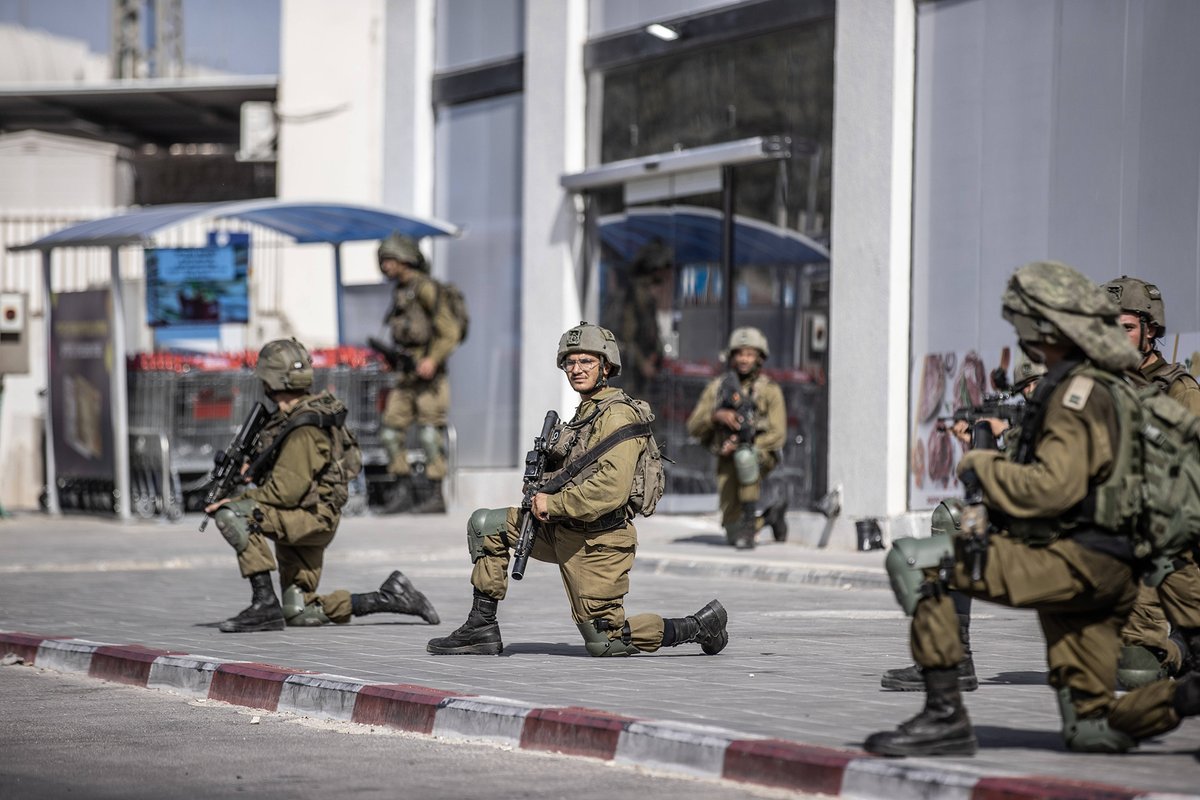
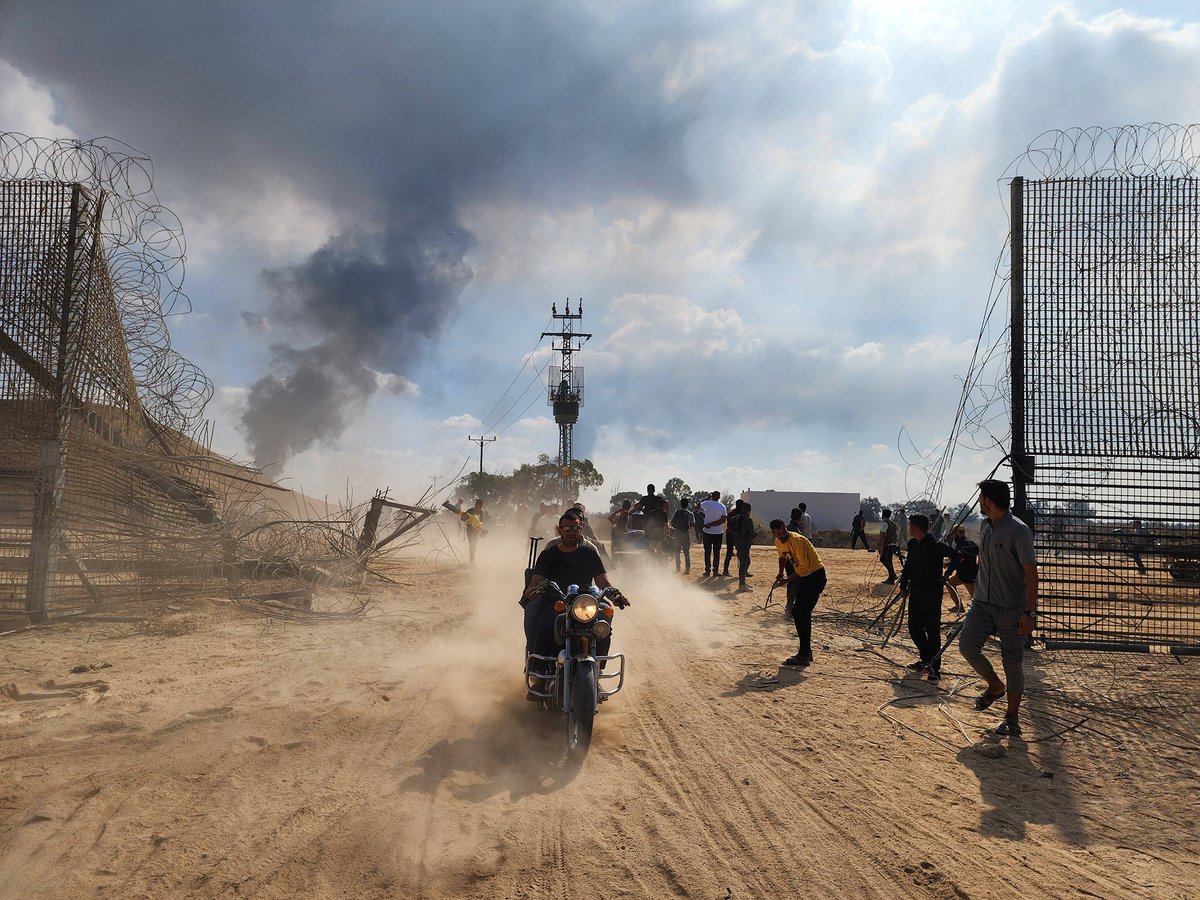
Aus meinem Archiv…
Foto 1: Getötete Zivilisten auf der Straße nach Sderot
Foto 2: Israelische Truppen versuchen Sderot wieder unter Kontrolle zu bringen
Foto 3: Palästinenser überqueren zum Morden und Vergewaltigen die eingerissene Grenze nach Israel

YouTube


Deutsch
Jan S. retweetledi

Remember Asia Bibi, a Pakistani Christian woman who spent 8 years on death row after being accused of “blasphemy” for drinking water from a Muslim’s cup.
Asia was working in the fields with her Muslim coworkers. She got thirsty and went to fetch water from the well, where she took a drink with an old metal cup she had found. That’s all it took.
Christians are considered dirty and impure in Islam, and she was accused of attempting to contaminate the Muslims’ water just by drinking from their cup. She was sentenced to death by hanging.
The governor of her province voiced opposition to the verdict and was assassinated by his own bodyguard.
When she was finally acquitted in 2018 due to international pressure, tens of thousands of Muslims rioted, demanding her immediate execution.
A local poll found that 10 MILLION Pakistanis would personally kill her if given the chance. Just for drinking water from a Muslim’s cup.
Her lawyer had to flee the country. And after months in hiding, she was finally able to escape Pakistan and received asylum in Canada.
This is Pakistan, where non-Muslims live under the constant threat of death. The more I learn about this country, the more it just feels like ISIS with a formal government.

English
Jan S. retweetledi

This is wild. The amount of lives this will save is staggering.
Most people have no idea that Israel created a revolutionary bio-glue that can seal internal wounds in seconds.
A Technion team developed a biodegradable, anti-bacterial hydrogel inspired by the natural adhesives mussels use to stick to rocks.
This medical breakthrough instantly closes bleeding tissue, fights infection, and breaks down safely inside the body.
From emergency surgery to battlefield medicine, it’s a game-changer for saving lives.
This isn’t science fiction anymore. It’s Israeli innovation turning nature’s genius into life-saving technology.
Proud every single day. 🇮🇱
#Technion #BioGlue #IsraelInnovation #MedicalBreakthrough #StartupNation

English
Jan S. retweetledi

Two documents on sexual violence in the Gaza conflict were published over the last twenty-four hours. One is a three hundred page evidentiary record built over two and a half years to support criminal prosecution of Hamas and its collaborators. It examined over ten thousand photographs and video segments, conducted over 1,800 hours of visual analysis, ran more than 430 formal and informal interviews, mapped victims across 52 nationalities, and is the culmination of the scholarship and analytic contributions of dozens of leading figures in their field led by Dr. Cochav Elkayam-Levy, with principal contributor Hon. Irwin Cotler, and distinguished contributors including David Crane (founding chief prosecutor of the UN Special Court for Sierra Leone) and Yuval Shany (former UN Human Rights Committee). It is endorsed by internationally recognized notables such as Ambassador Isabelle Rome (France’s Ambassador at-Large for Human Rights), Alice Wairimu Nderitu (Former UN Under-Secretary-General and Special Adviser on the Prevention of Genocide), Noëlle Lenoir (Former Justice on the French Constitutional Court), Aharon Barak (Former President of the Supreme Court of Israel) and Mukesh Kapila (Former Special Adviser to the UN High Commissioner for Human Rights), among many others.
The other is Nicholas Kristof’s lascivious New York Times opinion column accusing the Israeli state of systematic sexual violence against Palestinian men, women, and children, supported by Hamas-linked figures at Euro-Med and a documented, self-admitted sexual harasser of minors, Shaiel Ben Ephraim, who lost his junior research fellowship at UCLA over the scandal. It is based on uncorroborated testimony from mostly convicted and suspected terrorists who accuse Israel’s security apparatus of training dogs to rape. The most accredited source it leans on is that of Issa Amro, one of Kristof’s two named witnesses, who holds EU and UN human rights awards and is an HRW fellow. After being convicted in Israeli military court in 2021 of six counts, three for participating in demonstrations without a permit, two for obstructing security forces, and one count of assault for pushing a settlement guard, he was sentenced to a 3-month suspended sentence, 2 years probation, and fined about 3,500 NIS. Amro told the Washington Post in February 2024 that he was threatened with sexual assault during a 10-hour detention on October 7, yet in Kristof’s column, the same October 7 detention has him as a victim of rape -- his own first-person account of the same event contradicts itself. The other, Sami al-Sai, one day after the Hamas massacres, while bodies were still being recovered from the kibbutzim and fighting was ongoing, posted celebratory content praising “the green flag” flying across the West Bank, “over the camps of the occupier and his tanks,” and “decorating the foreheads of the heroic fighters.” About a year before Kristof’s column, al-Sai gave testimony about his alleged abuse to a domestic anti-Israel NGO, B’Tselem, that has been at the center of its own fair share of sourcing scandals. B’Tselem’s account did not include the specific, graphic details that surfaced in Kristof’s column: being sodomized with a carrot, a female guard grabbing his genitals, or finding “other people’s vomit, blood and broken teeth” on his skin from other detainees.
In five years, one of these documents will be cited in international tribunals, in court filings, and in academic literature. The other might still be a Wikipedia footnote about a press controversy that likely ended Kristof’s career.
English
Jan S. retweetledi

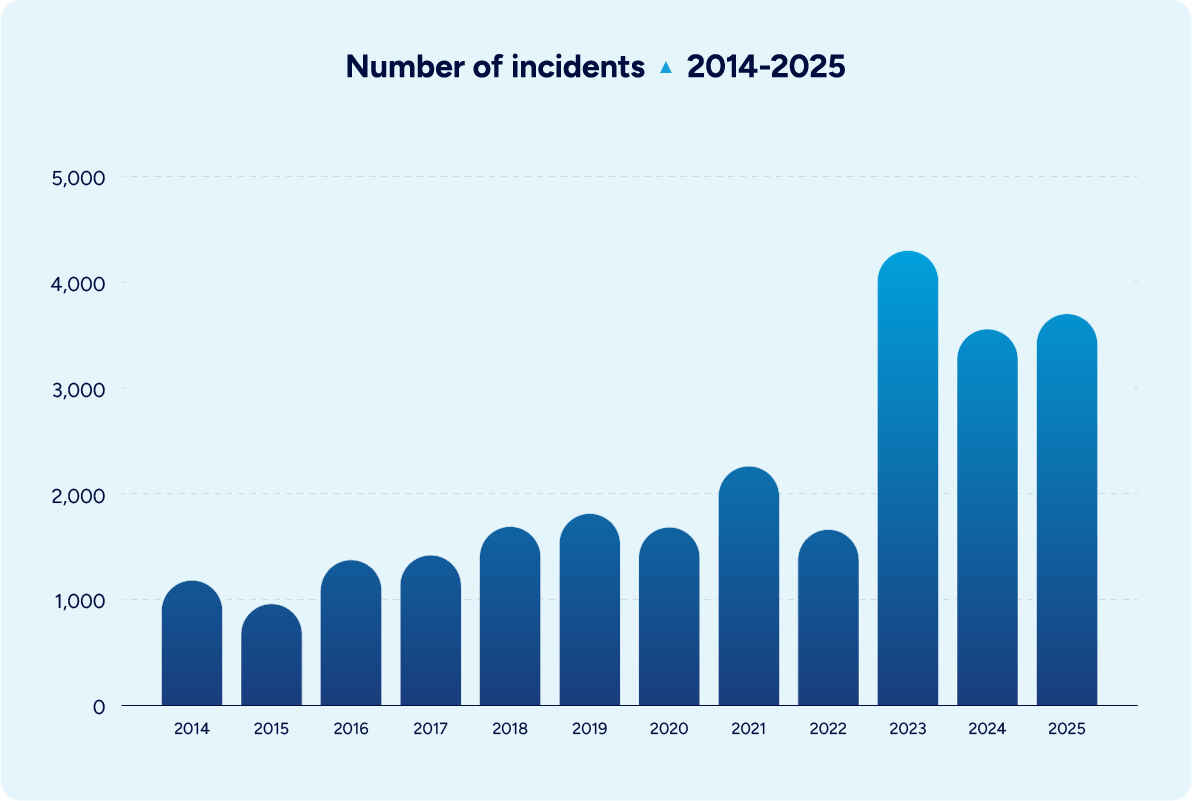
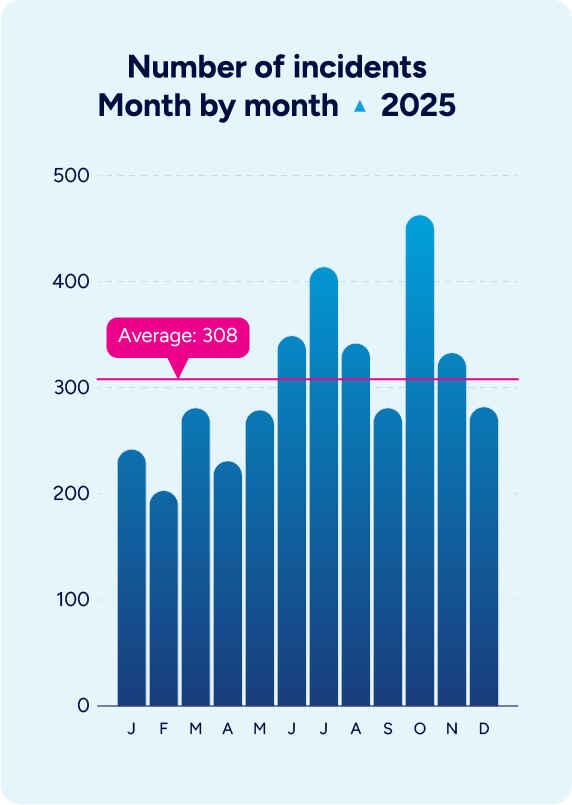
You don't see a spike in anti-Jewish attacks when Israel does something. You see a spike in anti-Jewish attacks when people attack Jews. That's the data. That's what the numbers say.
It's not about policy. It's not about Gaza. It's not about Netanyahu. It's about whether there's a social cost for going after Jews.
Right now, there really isn't.


English
Jan S. retweetledi

𝐒𝐂𝐎𝐓𝐓 𝐉𝐄𝐍𝐍𝐈𝐍𝐆𝐒 𝐃𝐄𝐌𝐀𝐍𝐃𝐒 𝐓𝐇𝐄 𝐍𝐄𝐖 𝐘𝐎𝐑𝐊 𝐓𝐈𝐌𝐄𝐒 𝐑𝐄𝐓𝐑𝐀𝐂𝐓 𝐓𝐇𝐄 𝐍𝐈𝐂𝐇𝐎𝐋𝐀𝐒 𝐊𝐑𝐈𝐒𝐓𝐎𝐅 𝐁𝐋𝐎𝐎𝐃 𝐋𝐈𝐁𝐄𝐋 𝐀𝐆𝐀𝐈𝐍𝐒𝐓 𝐈𝐒𝐑𝐀𝐄𝐋 𝐀𝐍𝐃 𝐅𝐈𝐑𝐄 𝐄𝐕𝐄𝐑𝐘𝐎𝐍𝐄 𝐑𝐄𝐒𝐏𝐎𝐍𝐒𝐈𝐁𝐋𝐄 𝐅𝐎𝐑 𝐈𝐓
Jennings, on camera, on the journalistic floor the Times just walked through:
‘𝘛𝘩𝘦 𝘕𝘦𝘸 𝘠𝘰𝘳𝘬 𝘛𝘪𝘮𝘦𝘴 𝘱𝘳𝘪𝘯𝘵𝘦𝘥 𝘰𝘯 𝘵𝘩𝘦 𝘧𝘳𝘰𝘯𝘵 𝘱𝘢𝘨𝘦 𝘢𝘯 𝘰𝘱𝘪𝘯𝘪𝘰𝘯 𝘱𝘪𝘦𝘤𝘦 𝘵𝘩𝘢𝘵 𝘤𝘰𝘯𝘵𝘢𝘪𝘯𝘦𝘥 𝘢𝘯 𝘢𝘯𝘰𝘯𝘺𝘮𝘰𝘶𝘴, 𝘶𝘯𝘷𝘦𝘳𝘪𝘧𝘪𝘦𝘥, 𝘶𝘯𝘸𝘪𝘵𝘯𝘦𝘴𝘴𝘦𝘥 𝘢𝘭𝘭𝘦𝘨𝘢𝘵𝘪𝘰𝘯 𝘵𝘩𝘢𝘵 𝘐𝘴𝘳𝘢𝘦𝘭 𝘵𝘳𝘢𝘪𝘯𝘦𝘥 𝘥𝘰𝘨𝘴 𝘵𝘰 𝘳∗𝘱𝘦 𝘗𝘢𝘭𝘦𝘴𝘵𝘪𝘯𝘪𝘢𝘯𝘴. 𝘑𝘶𝘴𝘵 𝘴𝘢𝘺𝘪𝘯𝘨 𝘵𝘩𝘪𝘴 𝘰𝘶𝘵 𝘭𝘰𝘶𝘥 𝘮𝘢𝘬𝘦𝘴 𝘮𝘦 𝘧𝘦𝘦𝘭 𝘴𝘵𝘶𝘱𝘪𝘥.”
‘𝘛𝘩𝘪𝘴 𝘰𝘱𝘪𝘯𝘪𝘰𝘯 𝘱𝘪𝘦𝘤𝘦 𝘸𝘢𝘴 𝘱𝘳𝘪𝘯𝘵𝘦𝘥 𝘢 𝘥𝘢𝘺 𝘣𝘦𝘧𝘰𝘳𝘦 𝘵𝘩𝘦 𝘳𝘦𝘱𝘰𝘳𝘵 𝘰𝘯 𝘷𝘦𝘳𝘪𝘧𝘪𝘦𝘥 𝘏∗𝘮𝘢𝘴 𝘴𝘦𝘹𝘶𝘢𝘭 𝘢𝘵𝘳𝘰𝘤𝘪𝘵𝘪𝘦𝘴 𝘸𝘢𝘴 𝘵𝘰 𝘣𝘦 𝘮𝘢𝘥𝘦 𝘱𝘶𝘣𝘭𝘪𝘤. 𝘛𝘩𝘦 𝘕𝘦𝘸 𝘠𝘰𝘳𝘬 𝘛𝘪𝘮𝘦𝘴 𝘴𝘢𝘪𝘥 𝘯𝘰 𝘵𝘩𝘢𝘯𝘬𝘴, 𝘯𝘰𝘵 𝘪𝘯𝘵𝘦𝘳𝘦𝘴𝘵𝘦𝘥 𝘪𝘯 𝘵𝘩𝘪𝘴 𝘦𝘷𝘪𝘥𝘦𝘯𝘤𝘦. 𝘛𝘩𝘦𝘺 𝘬𝘯𝘦𝘸 𝘵𝘩𝘪𝘴 𝘴𝘵𝘰𝘳𝘺 𝘸𝘢𝘴 𝘨𝘰𝘪𝘯𝘨 𝘵𝘰 𝘣𝘦 𝘵𝘦𝘳𝘳𝘪𝘣𝘭𝘦 𝘧𝘰𝘳 𝘏∗𝘮𝘢𝘴. 𝘚𝘰 𝘵𝘩𝘦 𝘯𝘪𝘨𝘩𝘵 𝘣𝘦𝘧𝘰𝘳𝘦, 𝘸𝘩𝘢𝘵 𝘥𝘪𝘥 𝘵𝘩𝘦𝘺 𝘤𝘩𝘰𝘰𝘴𝘦 𝘵𝘰 𝘥𝘰? 𝘗𝘳𝘪𝘯𝘵 𝘵𝘩𝘪𝘴 𝘨𝘢𝘳𝘣𝘢𝘨𝘦 𝘧𝘳𝘰𝘮 𝘕𝘪𝘤𝘩𝘰𝘭𝘢𝘴 𝘒𝘳𝘪𝘴𝘵𝘰𝘧.”
‘𝘈𝘣𝘴𝘰𝘭𝘶𝘵𝘦𝘭𝘺 𝘴𝘩𝘢𝘮𝘦𝘧𝘶𝘭 𝘮𝘦𝘥𝘪𝘢 𝘣𝘦𝘩𝘢𝘷𝘪𝘰𝘳. 𝘠𝘰𝘶 𝘤𝘢𝘯𝘯𝘰𝘵 𝘨𝘦𝘵 𝘢𝘯𝘺 𝘭𝘰𝘸𝘦𝘳 𝘵𝘩𝘢𝘯 𝘵𝘩𝘪𝘴. 𝘏𝘰𝘸 𝘤𝘢𝘯 𝘒𝘳𝘪𝘴𝘵𝘰𝘧 𝘬𝘦𝘦𝘱 𝘩𝘪𝘴 𝘫𝘰𝘣? 𝘏𝘰𝘸 𝘤𝘢𝘯 𝘵𝘩𝘦 𝘕𝘦𝘸 𝘠𝘰𝘳𝘬 𝘛𝘪𝘮𝘦𝘴 𝘯𝘰𝘵 𝘳𝘦𝘵𝘳𝘢𝘤𝘵 𝘵𝘩𝘦 𝘱𝘪𝘦𝘤𝘦, 𝘢𝘱𝘰𝘭𝘰𝘨𝘪𝘻𝘦, 𝘢𝘯𝘥 𝘧𝘪𝘳𝘦 𝘦𝘷𝘦𝘳𝘺𝘰𝘯𝘦 𝘳𝘦𝘴𝘱𝘰𝘯𝘴𝘪𝘣𝘭𝘦 𝘧𝘰𝘳 𝘵𝘩𝘪𝘴 𝘪𝘯𝘴𝘢𝘯𝘪𝘵𝘺?”
What the Civil Commission report Kristof tried to bury contains: 𝐡𝐮𝐧𝐝𝐫𝐞𝐝𝐬 𝐨𝐟 𝐩𝐚𝐠𝐞𝐬 𝐨𝐟 𝐞𝐲𝐞𝐰𝐢𝐭𝐧𝐞𝐬𝐬 𝐭𝐞𝐬𝐭𝐢𝐦𝐨𝐧𝐲, 𝐯𝐢𝐝𝐞𝐨, 𝐚𝐧𝐝 𝐟𝐨𝐫𝐞𝐧𝐬𝐢𝐜 𝐞𝐯𝐢𝐝𝐞𝐧𝐜𝐞 𝐨𝐟 𝐇∗𝐦𝐚𝐬 𝐬𝐞𝐱𝐮𝐚𝐥 𝐚𝐭𝐫𝐨𝐜𝐢𝐭𝐢𝐞𝐬 𝐨𝐧 𝐎𝐜𝐭𝐨𝐛𝐞𝐫 𝟕𝐭𝐡, 𝐢𝐧𝐜𝐥𝐮𝐝𝐢𝐧𝐠 𝐆𝐨𝐏𝐫𝐨 𝐟𝐨𝐨𝐭𝐚𝐠𝐞 𝐟𝐢𝐥𝐦𝐞𝐝 𝐛𝐲 𝐭𝐡𝐞 𝐩𝐞𝐫𝐩𝐞𝐭𝐫𝐚𝐭𝐨𝐫𝐬 𝐭𝐡𝐞𝐦𝐬𝐞𝐥𝐯𝐞𝐬. The Times was offered the report months in advance and declined.
𝐖𝐇𝐄𝐍 𝐓𝐇𝐄 𝐏𝐀𝐏𝐄𝐑 𝐎𝐅 𝐑𝐄𝐂𝐎𝐑𝐃 𝐀𝐂𝐓𝐈𝐕𝐄𝐋𝐘 𝐄𝐃𝐈𝐓𝐎𝐑𝐒 𝐔𝐏 𝐀 𝐁𝐋𝐎𝐎𝐃 𝐋𝐈𝐁𝐄𝐋 𝐓𝐇𝐄 𝐍𝐈𝐆𝐇𝐓 𝐁𝐄𝐅𝐎𝐑𝐄 𝐓𝐇𝐄 𝐕𝐄𝐑𝐈𝐅𝐈𝐄𝐃 𝐑𝐄𝐏𝐎𝐑𝐓 𝐆𝐎𝐄𝐒 𝐏𝐔𝐁𝐋𝐈𝐂, 𝐓𝐇𝐄 𝐃𝐄𝐂𝐈𝐒𝐈𝐎𝐍 𝐈𝐒 𝐍𝐎𝐓 𝐉𝐎𝐔𝐑𝐍𝐀𝐋𝐈𝐒𝐌 — 𝐈𝐓 𝐈𝐒 𝐋𝐈𝐓𝐈𝐆𝐀𝐓𝐈𝐎𝐍 𝐒𝐔𝐏𝐏𝐎𝐑𝐓 𝐅𝐎𝐑 𝐓𝐄𝐑𝐑𝐎𝐑𝐈𝐒𝐓𝐒
𝘝𝘪𝘥𝘦𝘰 𝘧𝘳𝘰𝘮 @𝘚𝘤𝘰𝘵𝘵𝘑𝘦𝘯𝘯𝘪𝘯𝘨𝘴𝘒𝘠
English
Jan S. retweetledi

“What kind of a depraved monster slices off a woman’s breast while she is being gang raped, and throws it into the dust to be used as a plaything? What kind of a twisted pervert turns rape into necrophilia by shooting a woman in the head while he is still defiling her?
What kind of ‘freedom fighters’ go into battle with a set of handy Arabic-to-Hebrew phrases, including ‘take off your pants’, ‘lie down’, and ‘spread your legs’?
What self-respecting human being presses nails, scalpels, a hammer, an axe, screwdrivers and other household tools into a woman’s genitals?
How hard do you have to rape someone, and with what, to shatter their pelvis? Who shoots a young girl in the face and then films her mutilated corpse on her brother’s mobile phone?
The answer is: Hamas terrorists. This is the stark reality of what they did to men, women and children on October 7, 2023. And the world must never forget.”
@WestminsterWAG
English
Jan S. retweetledi

The New York Times and Israel: Anatomy of a Long Decline
On Monday, May 11, 2026, The New York Times published in its opinion pages a column by Nicholas Kristof, a two-time Pulitzer Prize winner, titled “The Silence That Meets the Rape of Palestinians.” The piece asserts that sexual violence against Palestinians is part of Israel’s “security apparatus.” It draws on fourteen testimonies. It describes, among other allegations, rapes committed with batons, metal rods, carrots. And then, buried in a paragraph, comes the sentence that pushed the article from contestable reportage into obscene fable: Kristof, citing “reports,” writes of dogs trained by Israeli forces to rape Palestinian prisoners.
Kristof himself concedes, in his own text, that “there is no evidence that Israeli leaders order rapes.” He adds that when it is suggested to him that Palestinian witnesses might fabricate accusations to smear Israel, this strikes him as “far-fetched.” Here, then, is the evidentiary standard of a piece published by America’s most prestigious daily: no physical evidence, no forensic expertise, no independent corroboration, and an explicit presumption of truth granted to testimonies whose sources include, as NGO Monitor has documented, Euro-Med Human Rights Monitor, whose founder Ramy Abdu has been photographed repeatedly alongside senior Hamas officials, including Ismail Haniyeh in 2011 and Osama Hamdan in 2013. Israel’s Ministry of Foreign Affairs, on its official account, called the article “one of the worst blood libels ever to appear in the modern press.” Deborah Lipstadt, former U.S. special envoy for combating antisemitism—a Holocaust historian, not a barroom pundit—asked the Times publicly: “Have they no sense of decency and journalistic responsibility?”
“Blood libel,” that old medieval antisemitic fantasy according to which Jews used the blood of Christian children for their rituals, is not a term Israeli diplomacy uses lightly. It is reached for when a narrative crosses the line separating political criticism, however fierce, from dehumanization. Dogs trained to rape humans—can a man of sound mind publish such a thing in the opinion section of a paper of record? The answer is yes. And the editor can, the very next day, defend the article on X by arguing that it is “backed by independent studies,” when those “independent studies” are, for the most part, reports issued by an NGO whose ties to Hamas have been publicly documented for more than a decade.
The timing of publication, on its own, is worth pausing over. On Tuesday, May 12—the day after the Kristof column—came Silenced No More, a nearly 300-page report by the Civil Commission on October 7 Crimes Against Women and Children. The document draws on more than 430 interviews and testimonies, the review of more than 10,000 photographs and videos, to establish the systematic nature of sexual violence committed by Hamas on October 7, 2023, and against hostages held in Gaza. Twenty-four hours before that report was released, The New York Times published a column placing on the same plane, in the same paragraph, the documented rapes of October 7 and the “rape dogs” drawn from the reports of a Hamas-linked NGO. Professor Gerald Steinberg, founder of NGO Monitor, asked the question publicly on X: what are the odds the timing was coincidence? He answered himself: “I’d say zero.” One may judge the accusation excessive.
One may also ask, more modestly, what editorial sequence leads a newspaper to publish that text, on that day.
A Pattern, Not an Accident
The Kristof episode is not isolated. The Times’s record of errors, corrections, and apologies on Israeli and Jewish subjects has thickened at an accelerating rate in recent years, to the point that it traces not a string of accidents but a trajectory. Let us run through the markers.
September 2000. A wire photo distributed by the AP and reprinted by the Times shows a bloodied young man on his knees, and an Israeli policeman with a baton in hand. The caption identifies the young man as “a Palestinian victim of the new intifada.” His name, in fact, is Tuvia Grossman. He is an American Jewish student from Chicago, and he has just been beaten by a Palestinian mob. The Israeli officer was protecting him. Grossman’s father wrote to the paper immediately. It took several corrections, spaced out over time, before the caption was set right.
April 2019. The international edition publishes a cartoon in which Benjamin Netanyahu appears as a guide dog, a Star of David hanging from his collar, leading a blind Donald Trump wearing a kippah. The paper will speak of an “error of judgment,” then issue a fuller apology, take internal disciplinary action, and eventually eliminate political cartoons from its international edition altogether. No one at the Times has explained how such a cartoon was approved in the first place. The iconographic codes it deployed—the Jew pulling the strings of power, the animalization—belong to a register every serious journalist is supposed to recognize at a glance.
October 17, 2023. A few days after October 7, the Times publishes—as a mobile alert, in a banner headline, across social channels—the claim that a Gaza hospital, al-Ahli, has been hit by an Israeli airstrike with hundreds killed. The source is Hamas. Within hours, U.S. intelligence, then French military intelligence, then a Human Rights Watch investigation, then open-source analysis converge on a different conclusion: this was, in all likelihood, a failed Palestinian rocket launch. The Times eventually publishes an editor’s note, reproduced in full by Nieman Lab, acknowledging that its initial coverage “relied too heavily on claims by Hamas” and “left readers with an incorrect impression” of what was known and how credible the account was. The correction comes after the false information has already traveled the world, fueled protests, triggered the cancellation of a regional diplomatic summit. In modern journalism, the first headline is almost always the final headline. The Times knows this. It published anyway.
December 22, 2023. A Times headline: “Gaza Deaths Surpass Any Arab Loss in Wars in Past 40 Years.” False. Trivially false. Anyone with a passing knowledge of recent Middle Eastern history—the Iran-Iraq war, the Syrian civil war, Iraq, Yemen—knows that Arab casualties over the past four decades run into the hundreds of thousands. A correction was published on December 28: it should have read “the heaviest loss on the Arab side in any war with Israel in 40 years.” The correction came too late to undo what the headline had already done: produce the impression that Israel’s war in Gaza was, by itself, more lethal than anything the region had seen since 1983. That is false, and the falsehood is precisely what was useful.
July 2025. Front-page photograph, maximum emotional mobilization: a skeletal Gaza child in his mother’s arms. The image becomes the global emblem of famine in Gaza. It will go on to win a Pulitzer Prize. A few weeks later, the child’s doctors and medical records make clear that he suffered from pre-existing congenital conditions, omitted from the original presentation. The Times ultimately appends a note. But the image had already done its work. And the Pulitzer remained.
Stack these cases now: Grossman, the 2019 cartoon, al-Ahli, the December 2023 headline, the July 2025 child, and now the rape dogs of May 2026. Six cases, more than twenty-five years, but with a clear acceleration since 2023. Every time, the same pattern: a spectacular first-instance claim, unfavorable to Israel, thinly sourced or stripped of context; a quieter correction later, after the damage is done. This is what common-law lawyers call a pattern of practice. It is no longer a series of errors. It is a method.
The Precedent: Sulzberger and the Universalizing of Genocide
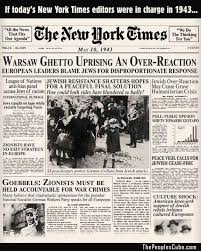
This method has a history. And that history is unsettling, because it traces back to the moment when, more than any other, the American paper of record should have been equal to the task. Under the leadership of Arthur Hays Sulzberger, owner of the Times during the Second World War, the paper made choices on the persecution of Europe’s Jews that today rest on an overwhelming scholarly consensus. The work of the historian Laurel Leff, in particular her book Buried by The Times, has established that the paper did not, strictly speaking, argue for the exclusion of Jewish refugees from the United States. It did something subtler, and in some respects graver: it systematically de-Judaized the persecution. Its editorials spoke of the “refugee problem” as a “test of civilization,” as “a problem of mankind,” and went so far in July 1939 as to insist it was “neither a Jewish problem nor a Gentile problem.” But it was precisely a Jewish problem. Jews were being persecuted as Jews. Refusing to say so stripped the argument for rescue of its own moral force.
The intellectual mechanism is exactly the one we find today, mirrored: where in 1939 the goal was to dissolve Jewish specificity into the “problem of mankind,” the goal now is to inflate Palestinian suffering until it becomes the deadliest event of the modern Middle East, or to draw it close, by way of the baton and the dog, to the horror of October 7. In both cases, one does not exactly lie. One distorts the frame. And in a paper whose every word sets precedent for millions of readers, that is infinitely more effective than a frontal lie.
Honesty requires acknowledging—and the historical record acknowledges—that the Times of 1939–1945 also published editorials sympathetic to the refugees of the St. Louis, and in March 1943 called for revision of the “chilly formalism” of American immigration law. Not everything was dark. But Sulzberger, himself a Jew, had one fixation: never to appear “a Jewish paper.” Out of that fixation came an editorial policy that, in practice, contributed to burying news of the extermination on inside pages, diluting its specific character, depriving the case for rescue of the urgency without which no policy is possible. There is a direct line between that refusal to write “Jews are being killed because they are Jews” and the intellectual ease with which, today, one publishes a column placing in the same sentence October 7 and a canine fantasy.
The Warning from Bari Weiss
In July 2020, Bari Weiss—the opinion journalist recruited by the Times precisely to broaden its range of voices after the paper’s predictive collapse in 2016—resigned with an open letter. That letter is today an essential document for understanding what is happening inside the 8th Avenue building. Weiss describes a paper that has become “a performance space,” where stories are chosen and told “to satisfy the narrowest of audiences” rather than to allow a curious public to draw its own conclusions. She writes, in so many words, that she had learned to “brush off comments about how I’m writing about the Jews again.” She describes internal Slack channels where, under the gaze of masthead editors, colleagues posted axe emojis next to her name. She describes an implicit norm by which Twitter—not the editor in chief—has become the paper’s true editor.
Reread that letter in the light of Kristof, of the December 2023 headline, of the July 2025 photograph, and one understands better how such texts make it through the editorial process. They make it through because the newsroom no longer has, internally, any friction mechanism. The voices that might have asked, in a meeting, the awkward question—“Is this source really independent?”; “Is it biologically possible to train a dog to do this?”; “Does this headline say what we actually want it to say?”—those voices have left, or have learned to keep silent.
What the Times No Longer Is
One must conclude with measure, because measure is the only effective weapon against a newspaper that has lost the use of it. The New York Times still has excellent journalists. Its economic, scientific, and cultural reporting remains, often, of the first rank. This is not a militant pamphlet. What it is, is more disquieting: an institution that, on certain subjects—Israel chief among them, but not Israel alone—has lost the ability to distinguish itself from activism. It no longer knows, or no longer wishes, to tell the difference between a testimony and a piece of evidence, between an NGO source and a political actor, between legitimate emotion and a framing that distorts. And when a paper of this stature renounces that distinction, the social cost is not small. Demonstrations gather around headlines that will be corrected three days later. New York synagogues find themselves surrounded by crowds quoting, sometimes verbatim, sentences that appeared in its pages.
The Times is not an antisemitic newspaper. To say otherwise would be easy and would be false. What it has become is a newspaper for which the idea that Jews, and the state they have built, might have their own legitimate account of their own history is now, at best, a hypothesis treated with permanent suspicion. That suspicion, accumulating article after article, headline after headline, caption after caption, ends up producing something that looks a great deal like bias. And bias in a newspaper that styles itself as objective is not a respectable opinion. It is a breach of contract with its readers.
On Monday last, that contract was torn in two by a text in which someone dared write, in the columns of the paper Adolph Ochs founded with the promise that it would welcome “all shades of opinion,” that dogs were being trained to rape prisoners. At this point only one question remains. How many more such episodes will it take before the word “of record,” attached to The New York Times, becomes, simply, a joke?

English