Zu Jian Lee
4.2K posts
Zu Jian Lee
@JeanLuize
Engineer who likes music, basketball and anime. I like thinking about things
Singapore Katılım Eylül 2013
266 Takip Edilen143 Takipçiler

上司「は?早退したい?」
部下「母が倒れたらしくて…」
上司「…はぁ…俺が若い時は、
家族なんかより
仕事優先したんだけどなぁ〜」
部下「…そんなこと言われるくらいなら、
僕は仕事より、家族を優先します
では、失礼します。」
(バタン…)
上司「……」
日本語

前にロシア人が「日本のアニメはどれだけの人を救っているのか、日本人は知らない」ってポストをしていて、その中でロシア人やアメリカ人、他の国々の人もその意見を「その通りだ」って肯定していたんだけど…
そんなに救いになるものなの?確かに日本のアニメは面白いものが多いけど、そんなにたくさんの人の心を救うものだったとは考えたことも無かった。
Anime Tweets@AnimexTwts
Real
日本語



🚨 HOLY CRAP! Newly-released surveillance video shows a high school principal in Oklahoma TACKLING a school shooter before he could open fire on kids
What a HERO!
Principal Kirk Moore RUSHED the shooter when he aimed at his first would-be victim, wresting the gun away from him.
Give this man an award. Absolute legend.
The attempted shooter at Pauls Valley High School is now being held on a $1 million bond.
English

Раз уж языковой барьер пал хочу спросить дорогих итальянцев, вы, макароны моете?
Русский
@BooGhan @ClutchPoints Nah take out Wemby and the Spurs have no shooters
English

@ClutchPoints And Wemby's the MVP?
Spurs are deep. Remove Wemby they still a top 3 in the West
English

We were FIVE points away from seeing something that has never happened in the 78-year history of the NBA 🤯
Eight players. All averaging double digits.
Harrison Barnes needed just two buckets and a free throw across an entire season to cross that 10.0 PPG line.
But that one missed milestone doesn’t change the terrifying reality for the rest of the league: San Antonio has built a monster 👀
It’s the ultimate Popovich fever dream.
The Spurs just rolled into the #2 seed with 62 wins and a historic 26-2 stretch. They aren't a year away anymore.
With this kind of balance, you can’t just stop Wemby and expect to win.
You have to stop eight different people, and as the regular season showed, almost nobody can.
Brace yourselves, Spurs might be legit contenders this year 🏆

English
@zaihanisme @DefenceMinSG And what exactly is wrong with storing fossil fuels
English

@DefenceMinSG Calling it hydrocarbon storage to obfuscate that they store fossil fuels, oil essentially
English

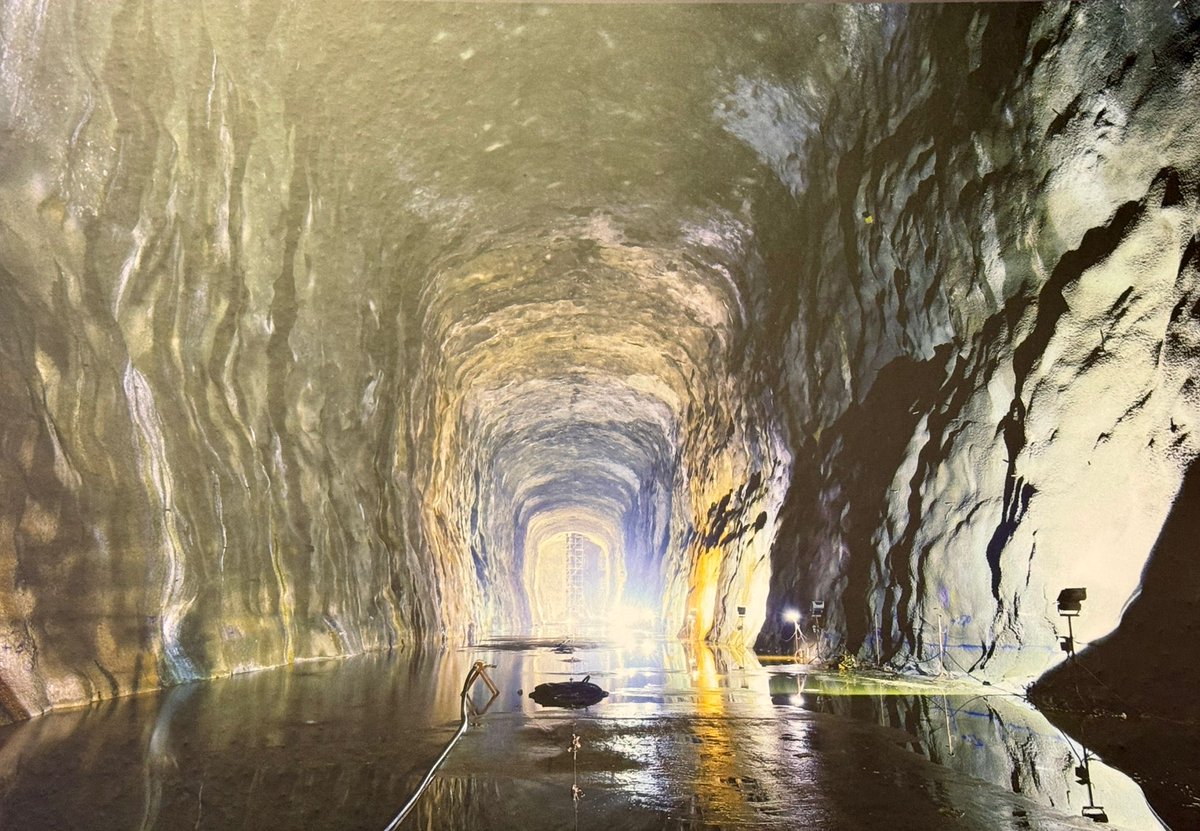
#GuessWhere
This place isn’t visible from the surface, but it plays a critical role in keeping Singapore running.
Conceptualised over 20 years ago, it stores resources that power our homes and businesses.
English


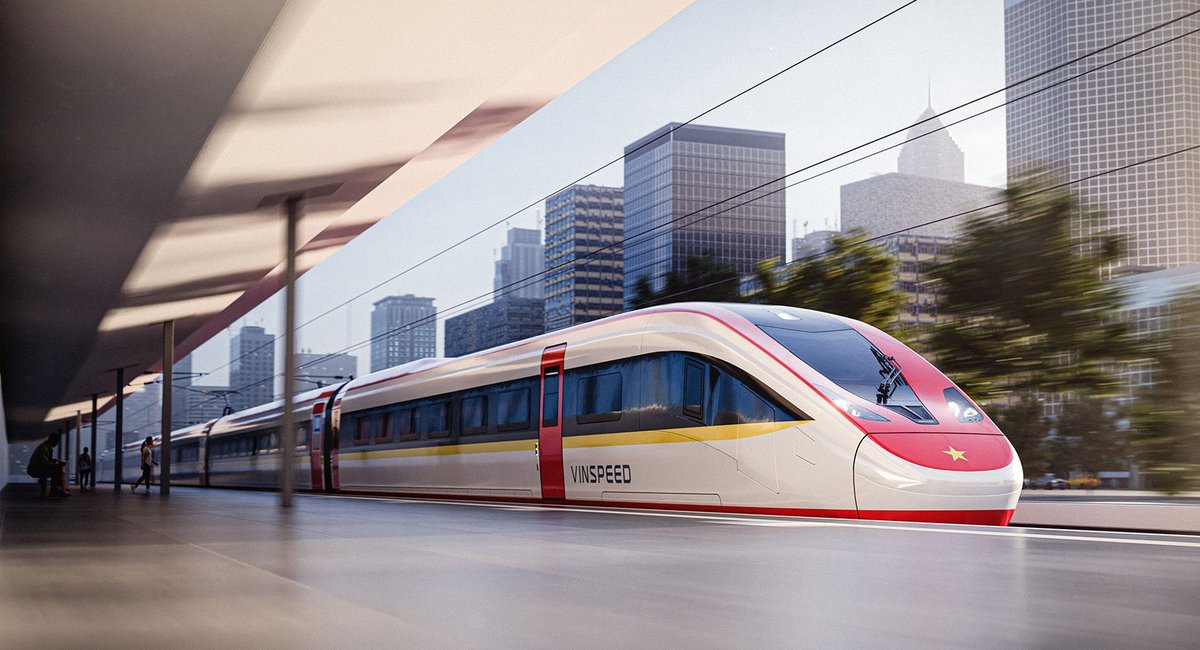
#Vietnam's Hanoi to Ha Long Bay high speed rail cuts travel time from 3h to 23 minutes
Vietnam broke ground on April 12 on the 120km high-speed rail to link Hanoi and Ha Long Bay at 350 kph speed (217 mph).
The $5.6 billion railway (excluding site clearance costs) is being developed by VinSpeed, a subsidiary of Vingroup.
Tourism in Vietnam is set to gain from easier and faster travel to Ha Long Bay, a famous UNESCO World Heritage Site.
Visitors will be able to explore Hanoi’s cultural sites and Halong Bay’s natural beauty in a single day, boosting the appeal for international tourists.
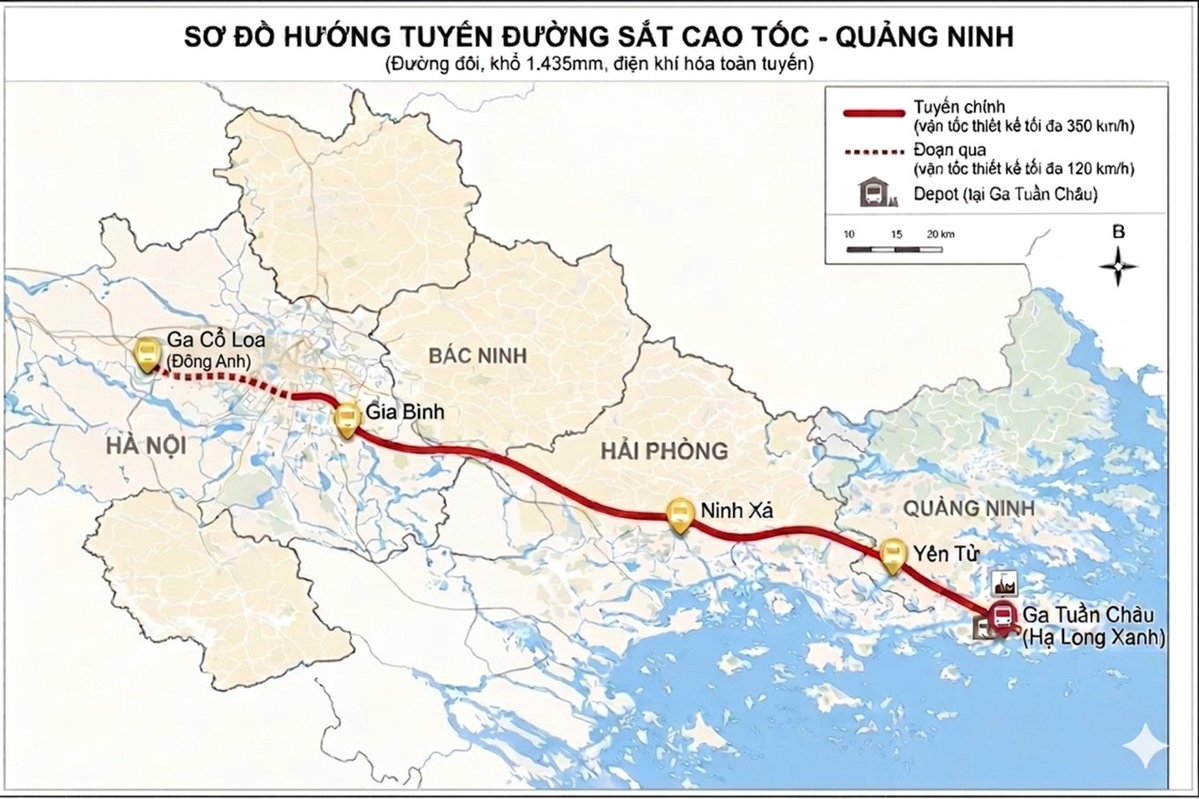
The railway will be connecting Hanoi, Bac Ninh, Hai Phong, and Quang Ninh provinces, and is scheduled for completion by the end of 2028.
The project is set to deploy the latest generation of high-speed trains, alongside advanced signaling and communications systems supplied by Germany’s Siemens Mobility, which will also gradually transfer technology to VinSpeed during operations.
Designed as a double-track, standard-gauge of 1,435mm, fully electrified line, it will support maximum speeds of up to 350kph, with sections in Hanoi capped at 120kph.
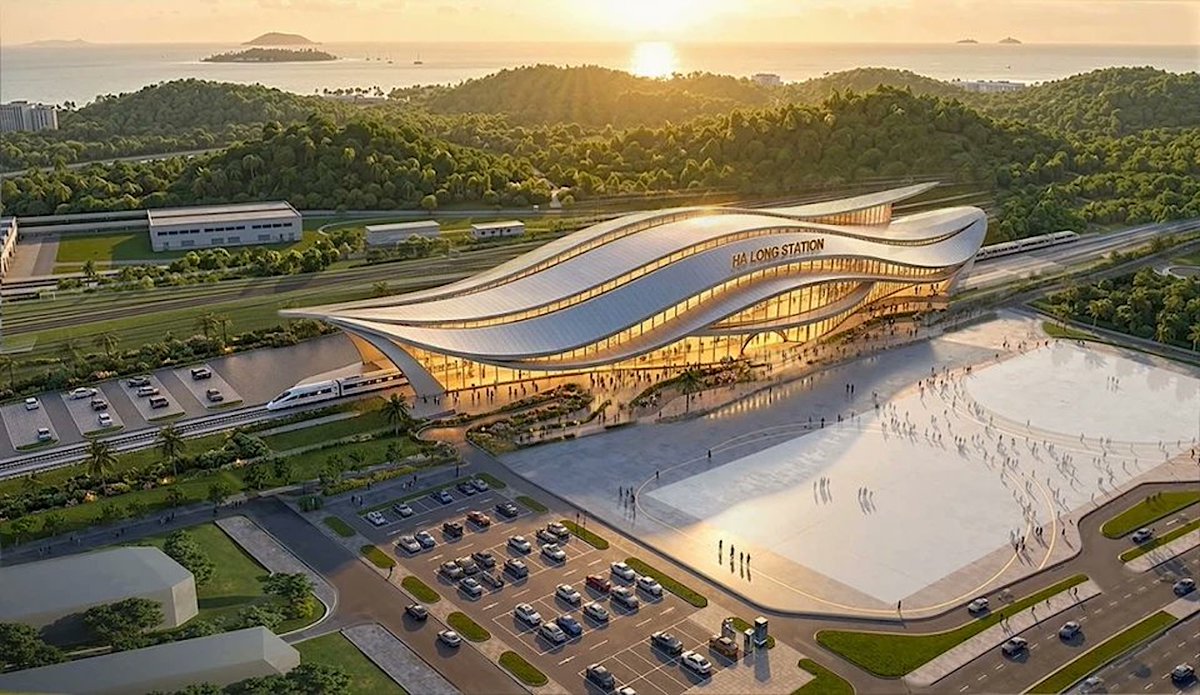
The line will start at Cổ Loa Station in Ha Noi and end at Hạ Long Station in Quang Ninh, with intermediate stops at Gia Binh (Bac Ninh), Ninh Xa (Hai Phong) and Yen Tu (Quang Ninh), as well as a depot located at the Ha Long terminus.
The project will require 551 hectares of land, including 44 hectares in Hanoi, 19 hectares in Bac Ninh, 210 hectares in Hai Phong, and 278 hectares in Quang Ninh.
Speaking at the ceremony, Michael Peter, CEO of Siemens Mobility, affirmed that the company would deliver world-proven high-speed rail technology that is highly efficient and safe.
He also pledged long-term cooperation with Vingroup, including deep technology transfer, joint assembly and maintenance, aimed at building a new high-speed rail ecosystem in Việt Nam.
The Ha Noi–Quang Ninh line is the second high-speed rail project undertaken by VinSpeed.
Previously, in late 2025, the company broke ground on the Ben Thanh–Can Gio railway in HCM City, which is scheduled for completion in the fourth quarter of 2028.
The project reflects both the investor’s strong capacity and commitment, and the increasingly significant role of the private sector in developing the country’s critical infrastructure.
Quang Ninh’s proximity to China’s Guangxi Zhuang autonomous region also means the rail will strengthen cross-border connectivity.
Officials say improved rail links with China will help reduce logistics costs, integrate Vietnam into broader Asia-Europe supply chains, and elevate the country’s position in regional trade networks.
“Railway infrastructure is a strategic breakthrough for economic development and bilateral trade with China,” says To Lam (Vietnam's new president).
Note: I gathered the information from public announcements and a variety of state news media sources.

English







NASA ran a study on a potential trip to Mars and found the most important trait for team dynamics was humor

English

@ValeryGilka I didn't know BMW driver behavior was a global phenomenon
English

В вашей стране водители bmw тоже не включают поворотники?
Русский
@neteru_365 Never too late to start taking control of your own life 💪
English


「デートしてきた。」
「デート?」
「初めて付き合った日に行った喫茶店、まだあったから。」
父が珍しく笑ってた。
「お父さんが連れてったの。」
「覚えてたんだ、あの店。」
「覚えてた。」
「なんで今日。」
父が少し間を置いた。
「今日からまた、付き合い直そうと思って。」
母がうつむいた。
また泣いてた。
「なんで泣くの。」
「40年経って、そんなこと言われると思わなかったから。」
父が照れた顔をした。
「定年になったら言おうと思ってた。」
「40年間、ずっと。」
「ずっと。」
40年間、朝送り出して夜迎えてただけだと思ってた母に、父は40年間、定年になったら言おうと思ってたらしい。
その夜、父と母が並んでテレビを見てた。
いつもより少しだけ、近かった。
付き合い直した2人が、また同じ方向を向いてた。
40年かかったデートの続きが、やっと始まったらしい。
日本語
父が定年退職した日、母が泣いた。
嬉しくて泣いてると思った。
違った。
「なんで泣いてるの。」
母が父を見た。
「この人が家にいるのが、怖くて。」
父が固まった。
私も固まった。
「40年間、朝送り出して、夜迎えるだけだったから。」
「それが今日で終わる。」
「嬉しくないの。」
母が首を振った。
「嬉しいけど、怖い。」
「ずっと2人でいる自信がない。」
父が黙ってた。
長い沈黙だった。
父が立ち上がった。
「出かけるぞ。」
「どこに。」
「いいから来い。」
母の手を引いて、出ていった。
2人が帰ってきたのは、3時間後だった。
母の顔が変わってた。
何があったか聞いたら、母が照れながら言った。
日本語

Valonia ventricosa, or “sea grape,” is the largest single-celled organism on Earth. It’s three-to-four orders-of-magnitude larger than most “normal” microbes. (Yes, the green ball in the image below is a single cell.)
More than 95% of the cell’s volume is taken up by a vacuole. This vacuole is not like cytoplasm; it’s acidic and packed with ions. It’s also filled with big sugar chains, which the cell uses to repair damage on its cell extremities. Each cell has dozens or hundreds of nuclei, pressed tightly against the walls.
One cool thing about sea grapes is that (because they are so huge, and visible to the naked eye) you can directly inject them with chemicals. I gave a $1,000 microgrant (courtesy of Astera) to a team of six working on scaling up Valonia cells as "living bioreactors." They are based out of SPLAT, a community lab in Durham, North Carolina.
Today, when scientists want to “design” a new metabolic pathway, they often use E. coli. The microbes are engineered to express each gene in the pathway, and then these genes are swapped and replaced until the metabolic network starts working. This takes a lot of work and usually requires months of genetic engineering. But with Valonia, what if we could instead test out metabolic pathways by injecting molecules straight into their vacuole? Perhaps sea grapes could become a sort of self-replicating, cell-free system for prototyping ideas.
That's the SPLAT team's idea. I think it's really cool, even though I’m skeptical that Valonia will become a model organism anytime soon. Nobody has ever engineered these cells, for a few reasons:
- They have hundreds of nuclei, each sharing a common cytoplasm pool extending as a thin layer around the whole cell. (Perhaps an extrachromosal plasmid would work?)
- Their cell walls are thick, so electroporation is unlikely to work.
- Nobody knows their genome sequence!
- Even if you get DNA inside, you need to make sure that DNA matches the cells’ abnormal genetic code. After millions of years of evolution, Valonia has reassigned its TAG and TAA stop codons to glutamine.
There are also issues with injecting chemicals into the vacuole. The vacuole is *not* like cytoplasm; it is acidic and packed with molecules that would likely interfere with proteins. So you’d need to find some way to engineer the vacuole environment, and maintain that environment, before you turn Valonia into a prototyping platform. Not an easy problem to solve!
If this idea did pan out, though, the SPLAT team told me that they could transform sea grapes in bulk (”potentially hundreds of thousands at once”) and then grow them to the size of cherries. It’d be a totally new way to prototype metabolic pathways and manufacture chemicals.
And despite the barriers, I’m surprised more people are not studying these organisms. At the very least, we should have better microscopy images and a complete genome sequence. So best of luck to the SPLAT team. I’m glad they are working on hard problems!


English

$TSLA - DUTCH RDW: APPROVAL OF TESLA FSD IS VALID ON ALL ROADS IN THE NETHERLANDS
DUTCH RDW: IF IT'S GOOD ENOUGH FOR THE NETHERLANDS ITS GOOD ENOUGH FOR EUROPE
DUTCH RDW SAYS IT HAS NOTIFIED EUROPEAN COMMISSION OF ITS PLAN TO SEEK EU-WIDE APPROVAL OF TESLA FSD
English