Jeff Brender

775 posts

Jeff Brender

Jeff Brender

@JeffBrender

Cancer researcher with an interest in bioinformatics and protein design Google Scholar: https://t.co/UUNsPGcEjX

Katılım Ağustos 2017
168 Takip Edilen33 Takipçiler
Jeff Brender retweetledi
Clay Kosonocky
Clay Kosonocky@kosonocky·
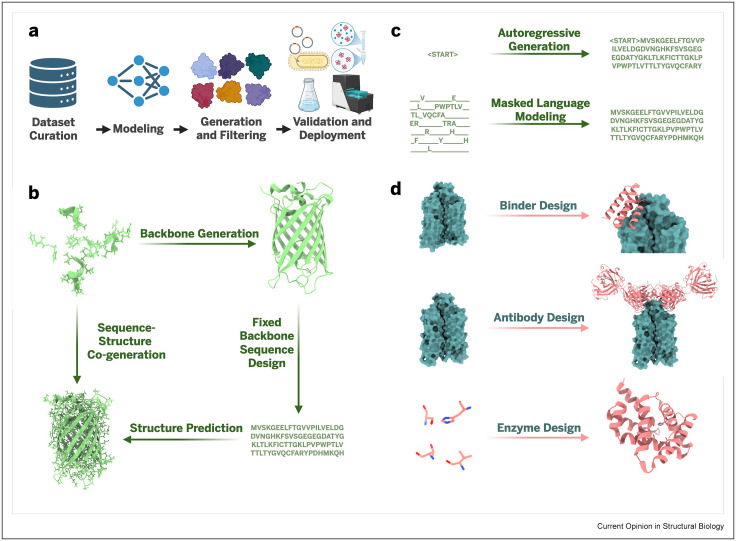
Have you wondered what the wet lab success rates are for current AI-driven protein design models? Look no further! In our new open access review, @KevinKaichuang, @avapamini, @SarahAlamdari, and I report wet lab success rates for *over 200* different protein design tasks 🧬💻
Clay Kosonocky tweet mediaClay Kosonocky tweet media
English
9
108
495
93.9K
Kodos
Kodos@_Kodos_·
@tgof137 Did the first cases happen during the market outbreak? No. Therefore the market outbreak wasn't the origin. No kind of painful squinting at old data will ever change that. You're just a quack
English
4
0
16
1.9K
Peter Miller
Peter Miller@tgof137·
Thread on the A24325G mutation. Yet another obscure reason why we can tell that Covid started at Huanan market.
English
20
50
380
113.9K
Jeff Brender
Jeff Brender@JeffBrender·
Myocarditis rates for the COVID-19 vaccine fell to baseline with the introduction of the bivalent booster
Jake Scott, MD@jakescottMD

One of the most common problems in the vaccine debate is people citing myocarditis rates that are either inaccurate, outdated, or both. This is a good example. The 2/10,000 rate (20 per 100,000) claimed here by Dr. Murthy is not supported by any published study I’m aware of. National surveillance in South Korea found the highest dose-specific rate in adolescent males was 5 per 100,000 after dose 2 of BNT162b2 (Ahn 2024, J Korean Med Sci 39:e317). CDC’s Vaccine Safety Datalink, which actively monitors 12-39 year olds, found rates of about 38 per million after dose 2 of the original monovalent vaccine. That was the peak. It’s 3.8 per 100,000, not 20. But more importantly, that was 2020-2021. The VSD data show that myocarditis incidence dropped with each subsequent formulation and is now back at background levels of about 2 per million for the 2024-2025 doses. A Danish study of over 1 million adults who received the JN.1-adapted vaccine found a myocarditis IRR of 1.12 (95% CI 0.41-3.10), no association (Andersson 2025, JAMA Netw Open 8:e2523557). Two U.S. studies of the XBB.1.5-adapted vaccines also found no signal (Pan 2025, Nat Commun 16:6514; Sun 2025, Vaccine 45:126629). Citing a historical peak rate, inflating it by 4-5x, and presenting it as if it reflects the current risk is not a serious argument.

English
0
0
1
46
Neil Stone
Neil Stone@DrNeilStone·
All surgical procedures have a risk of complications Should all surgical procedures therefore be banned? Obviously not Same goes for vaccines
English
648
166
1.5K
40.2K
Jeff Brender retweetledi
Basil🧡
Basil🧡@LinkofSunshine·
If you’ve never read this article btw, you really should. Almost 10 years out, but still probably the best article I’ve ever read. Very unfortunate he passed before it was released
Basil🧡 tweet media
English
134
3.8K
42.4K
5.9M
🐱
🐱@miau1437·
@SamtheNightOwl Ok asking genuinely cause I'm from LatAm, what makes Sliwa a bad dude? I pretty much assume every republican is at least somewhat fucked up but what has the guy done for real?
English
6
1
21
18.3K
Jeff Brender retweetledi
Jorge Bravo Abad
Jorge Bravo Abad@bravo_abad·
Toward truly generalizable binding affinity prediction Accurately predicting protein–ligand binding affinity is a cornerstone of structure-based drug design. Deep learning models have made major progress—but benchmarking them reliably is harder than it seems. Overlaps between commonly used training and test sets (such as PDBbind and CASF) can make models appear to generalize better than they truly do. David Graber and coauthors take an important step forward with PDBbind CleanSplit, a carefully curated dataset that removes structural overlaps using protein 3D similarity, ligand Tanimoto scores, and pocket-aligned ligand RMSD. The result is a cleaner separation between training and evaluation data, enabling a more realistic measure of model generalization. They also introduce GEMS, a sparse graph neural network that integrates protein–ligand interaction graphs with embeddings from large protein and chemistry language models. Trained on CleanSplit, GEMS maintains strong accuracy on CASF and independent test sets, even without benefiting from overlapping examples—showing genuine understanding of molecular interactions. Why this matters: as generative methods like AlphaFold3, RFdiffusion, and DiffSBDD begin creating massive libraries of new protein–ligand complexes, the field needs scoring functions that can assess novel structures with confidence. CleanSplit and GEMS together provide a foundation for the next generation of robust, data-leakage-free affinity prediction. Paper: nature.com/articles/s4225…
Jorge Bravo Abad tweet media
English
1
39
196
9.4K
Jeff Brender retweetledi
Jorge Bravo Abad
Jorge Bravo Abad@bravo_abad·
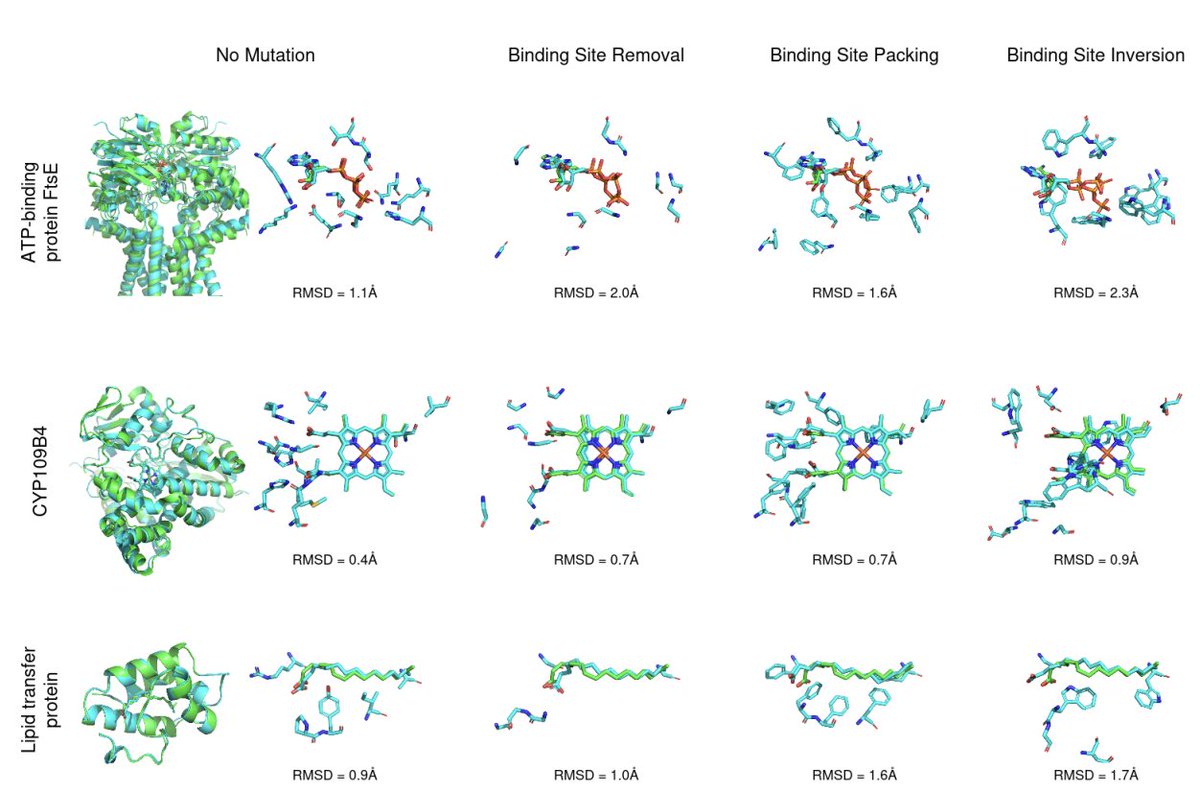
Do co-folding models learn physics—or just memorize pockets? Deep models like AlphaFold3 and RoseTTAFold All-Atom can place small molecules into protein pockets with eye-popping accuracy. But when chemistry changes, do they still obey sterics, electrostatics, and chemistry—or just stick the ligand where training data “expects” it? Matthew Masters, Amr Mahmoud, and Markus Lill probe this with physically motivated stress tests. They mutate binding sites (strip contacts to Gly, overpack with Phe, invert properties) and edit ligands (methylate sugars to kill H-bonding; flip ATP’s triphosphate to positively charged groups). If models understood interactions, poses should shift—or unbind entirely. Instead, several co-folding models frequently keep nearly the same pose in the same pocket, sometimes with steric clashes or implausible electrostatics. Scaling to CASF-2016 shows the effect broadly: many poses persist despite disruptive pocket edits. Independent funnel metadynamics then indicates these mutated complexes should not bind, confirming the non-physical predictions. Takeaway: co-folding is a breakthrough, but for drug design you still need physics in the loop. Use pose sanity checks (clash counts, Coulomb maps), replicate with varied seeds, and validate critical cases with MD/free-energy. Next-gen models should bake in hard priors (repulsion, charge, geometry) and be benchmarked on adversarial chemistry, not only native poses. Paper: nature.com/articles/s4146…
Jorge Bravo Abad tweet media
English
4
34
179
11.6K
Jeff Brender retweetledi
Millie Marconi
Millie Marconi@MillieMarconnni·
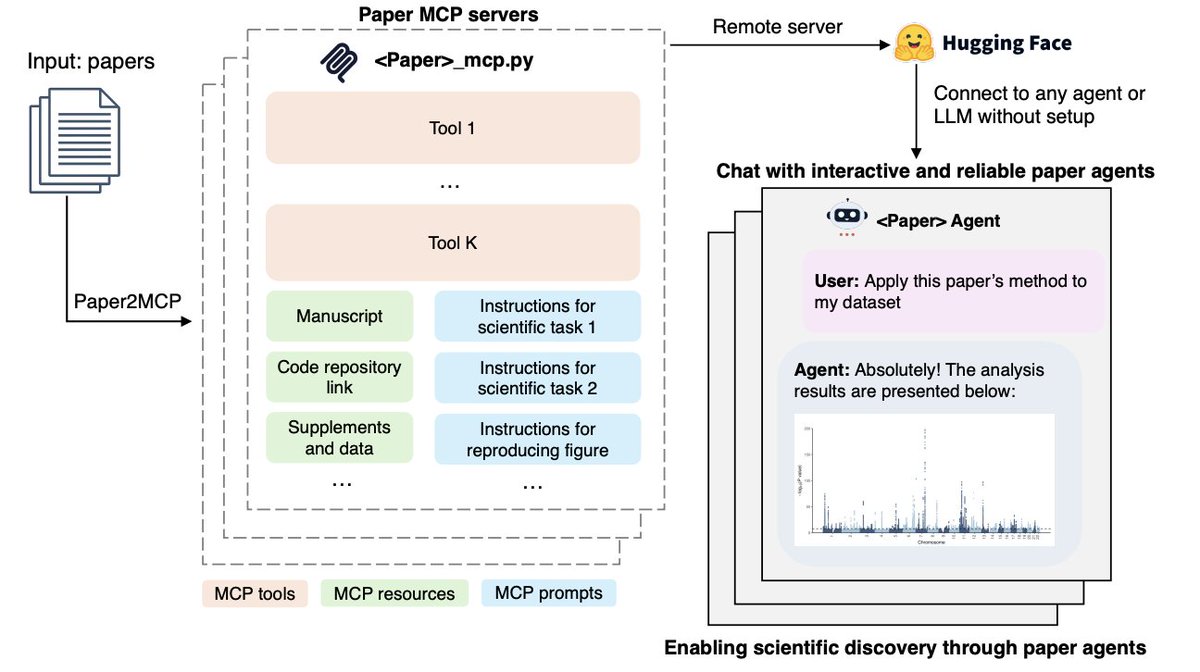
Holy shit...Stanford just built a system that converts research papers into working AI agents. It’s called Paper2Agent, and it literally: • Recreates the method in the paper • Applies it to your own dataset • Answers questions like the author This changes how we do science forever. Let me explain ↓
Millie Marconi tweet media
English
91
823
4.1K
299.2K
Jeff Brender retweetledi
Matt Clancy
Matt Clancy@mattsclancy·
Earlier this year, the President’s budget proposed a 40% cut to the NIH budget. This sparked an obvious research question: What if the NIH had been 40% smaller in previous years? Here’s what Pierre Azoulay, Danielle Li, Bhaven Sampat, and I found when we looked at grants that were at-risk of being cut in an alternative history with a smaller NIH budget: - 51% of 21st century drugs have a patent that cites one or more articles funded by an at-risk grant - 12% of drugs have more than a quarter of their patent-to-paper citations going to at-risk research - 35% of drugs that acknowledge NIH support reference a grant that would have been at-risk We were able to make these estimates because we have access to the real priority scores for all NIH grants made over 1980-2007. Since NIH mostly funds research by working down these priority scores until the budget runs out, we can identify the grants that would probably have been cut with a smaller budget. Would anyone miss the research funded by these at-risk grants? To help assess that, we link these at-risk grants to drugs, focusing on all 557 FDA approvals for new molecular entities approved in the 21st century. Most new drugs are protected by patents. We look at these patents to see if they cite research funded by at-risk grants. We find 51% of drugs have a patent that cites one or more articles funded by an at-risk grant. This doesn’t mean 51% of drugs wouldn’t exist if the NIH had been 40% smaller. Various caveats cut in different ways (see discussion in the online appendix). But we take this as evidence that the benefits of at-risk NIH research are wide and diffuse. We consider other ways to link drugs with at-risk grants. For example, we find that 12% of drugs have more than a quarter of their patent-to-paper citations going to at-risk research. See the paper for some examples of specific drugs. Finally, it’s less common, but in some cases, drugs directly acknowledge support from specific NIH grants in their patents. Only 40 drugs acknowledge NIH grant support, but of that group, 14 (35%) acknowledge support from a grant that is at-risk. Are drugs linked to at-risk research worse? We look at two proxies for drug value: whether a drug gets priority review at the FDA, and stock market reactions when a drug patent is announced. Yes, very imperfect, but we think still worth looking at. We find that drugs that cite at-risk research are, on average, no less likely to get priority reviews at FDA and do not have worse implied valuations by the stock market. In short, we don’t have reason to believe drugs linked to at-risk research are worse.
Matt Clancy tweet media
English
12
130
439
126.2K
Jeff Brender retweetledi
Rohan Paul
Rohan Paul@rohanpaul_ai·
🚨 BAD news for Medical AI models. MASSIVE revelations from this @Microsoft paper. 🤯 Current medical AI models may look good on standard medical benchmarks but those scores do not mean the models can handle real medical reasoning. The key point is that many models pass tests by exploiting patterns in the data, not by actually combining medical text with images in a reliable way. The key findings are that models overuse shortcuts, break under small changes, and produce unfaithful reasoning. This makes the medical AI model's benchmark results misleading if someone assumes a high score means the model is ready for real medical use. --- The specific key findings from this paper 👇 - Models keep strong accuracy even when images are removed, even on questions that require vision, which signals shortcut use over real understanding. - Scores stay above the 20% guess rate without images, so text patterns alone often drive the answers. - Shuffling answer order changes predictions a lot, which exposes position and format bias rather than robust reasoning. - Replacing a distractor with “Unknown” does not stop many models from guessing, instead of abstaining when evidence is missing. - Swapping in a lookalike image that matches a wrong option makes accuracy collapse, which shows vision is not integrated with text. - Chain of thought often sounds confident while citing features that are not present, which means the explanations are unfaithful. - Audits reveal 3 failure modes, incorrect logic with correct answers, hallucinated perception, and visual reasoning with faulty grounding. - Gains on popular visual question answering do not transfer to report generation, which is closer to real clinical work. - Clinician reviews show benchmarks measure very different skills, so a single leaderboard number misleads on readiness. - Once shortcut strategies are disrupted, true comprehension is far weaker than the headline scores suggest. - Most models refuse to abstain without the image, which is unsafe behavior for medical use. - The authors push for a robustness score and explicit reasoning audits, which signals current evaluations are not enough. 🧵 Read on 👇
Rohan Paul tweet media
English
172
826
3.8K
522.2K
Jeff Brender retweetledi
Rohan Paul
Rohan Paul@rohanpaul_ai·
🧬 Bad news for medical LLMs. This paper finds that top medical AI models often match patterns instead of truly reasoning. Small wording tweaks cut accuracy by up to 38% on validated questions. The team took 100 MedQA questions, replaced the correct choice with None of the other answers, then kept the 68 items where a clinician confirmed that switch as correct. If a model truly reasons, it should still reach the same clinical decision despite that label swap. They asked each model to explain its steps before answering and compared accuracy on the original versus modified items. All 6 models dropped on the NOTA set, the biggest hit was 38%, and even the reasoning models slipped. That pattern points to shortcut learning, the systems latch onto answer templates rather than working through the clinical logic. Overall, the results show that high benchmark scores can mask a robustness gap, because small format shifts expose shallow pattern use rather than clinical reasoning.
Rohan Paul tweet media
English
208
463
2.5K
695.6K
Jeff Brender retweetledi
Jorge Bravo Abad
Jorge Bravo Abad@bravo_abad·
Kolmogorov–Arnold graph neural networks for molecular property prediction Predicting molecular properties quickly and accurately is critical for drug discovery, materials science, and chemical engineering—but traditional deep learning approaches often face a trade-off between accuracy, efficiency, and interpretability. Graph neural networks (GNNs) have become a workhorse for modeling molecules as graphs of atoms and bonds, while Kolmogorov–Arnold networks (KANs) offer a mathematically grounded way to model complex functions with fewer parameters and greater interpretability. Longlong Li and coauthors introduce KA-GNNs, a new framework that fully integrates KAN modules into all three core GNN components: node embedding, message passing, and readout. They develop a Fourier-series-based KAN that captures both low- and high-frequency patterns in molecular graphs, with strong theoretical guarantees of expressiveness. Tested on seven benchmark datasets from MoleculeNet, KA-GNN variants (KA-GCN and KA-GAT) consistently outperform state-of-the-art models—achieving higher accuracy, faster runtime, and improved ability to highlight chemically meaningful substructures. By combining richer feature transformations, explicit modeling of covalent and non-covalent interactions, and interpretable predictions, KA-GNNs offer a powerful, generalizable tool for molecular property prediction. The approach could accelerate AI-driven drug discovery and materials design while providing domain experts with insights into the structural drivers of a molecule’s behavior. Paper: nature.com/articles/s4225…
Jorge Bravo Abad tweet media
English
1
29
183
8.6K
Jeff Brender retweetledi
Shai Shalev-Shwartz
Shai Shalev-Shwartz@shai_s_shwartz·
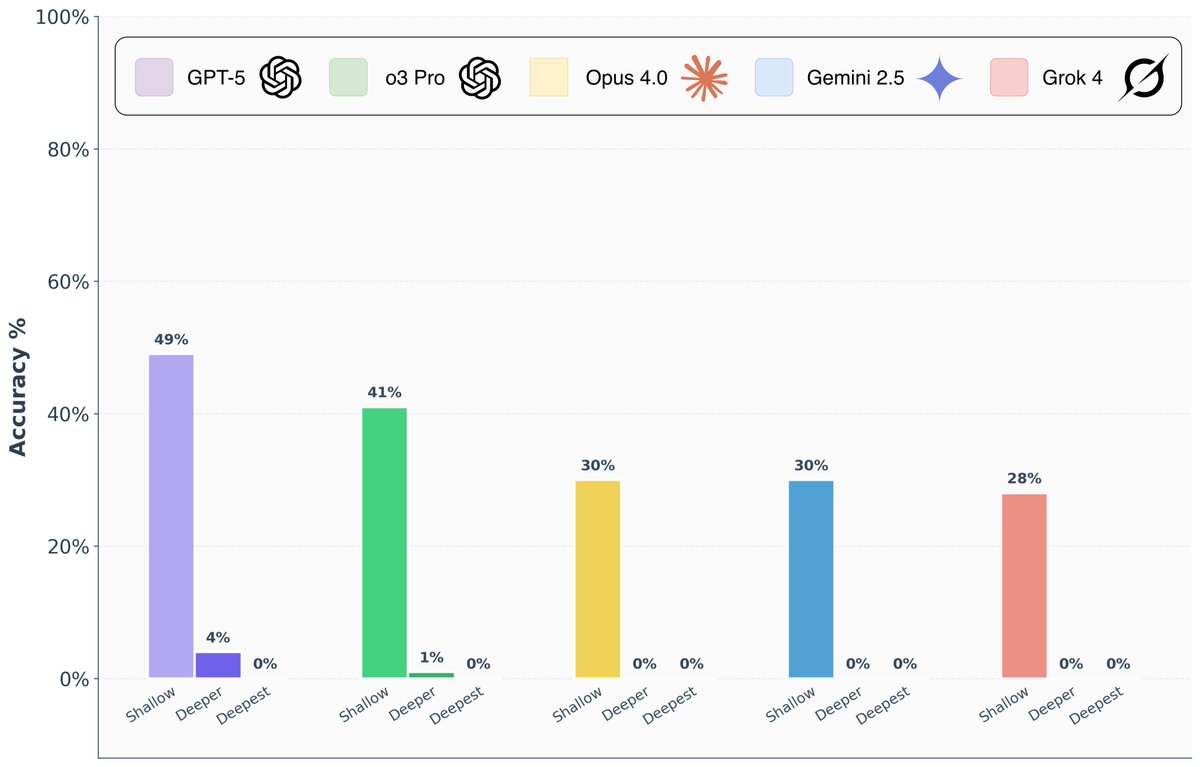
Are frontier AI models really capable of “PhD-level” reasoning? To answer this question, we introduce FormulaOne, a new reasoning benchmark of expert-level Dynamic Programming problems. We have curated a benchmark consisting of three tiers, in increasing complexity, which we call ‘shallow’, ‘deeper’, ‘deepest’. The results are remarkable: - On the ‘shallow’ tier, top models reach performance of 50%-70%, indicating that the models are familiar with the subject matter. - On ‘deeper’, Grok 4, Gemini-Pro, o3-Pro, Opus-4 all solve at most 1/100 problems. GPT-5 Pro is significantly better, but still solves only 4/100 problems. - On ‘deepest’, all models collapse to 0% success rate. 🧵
Shai Shalev-Shwartz tweet media
English
98
388
3.4K
701.1K
Jeff Brender retweetledi
Biology+AI Daily
Biology+AI Daily@BiologyAIDaily·
Accelerating Protein Design by Scaling Experimental Characterization 🚀 New preprint from David Baker!🚀 1. This preprint introduces a novel workflow called Semi-Automated Protein Production (SAPP) that significantly accelerates the experimental validation of de novo protein designs. SAPP enables rapid, modular, and cost-effective protein production and characterization, allowing for the purification and analysis of hundreds of protein designs per day. 2. The SAPP protocol leverages a standardized cloning approach and optimized purification pipeline to achieve at least a tenfold increase in throughput compared to traditional methods. It reduces the total hands-on time to just 6 hours for end-to-end execution, making it highly efficient for large-scale protein design campaigns. 3. A key innovation is the use of a background-suppressing cassette in the cloning process, which eliminates the need for colony isolation and sequencing, thus bypassing traditional multi-day cloning protocols. This approach ensures that the correct clone is the dominant construct in most cases, with a clonal purity of over 90% in many instances. 4. The authors also developed a scalable demultiplexing protocol (DMX) to further reduce costs. DMX converts DNA oligo pools into sequence-verified clonal constructs, enabling the purification and characterization of over 1000 designs at a cost of $5 per construct. This protocol integrates seamlessly with SAPP and is particularly useful for large design campaigns. 5. The SAPP and DMX protocols have been successfully applied to characterize tens of thousands of de novo designed proteins, including mini-protein binders, enzymes, and large protein assemblies. These workflows are designed to be widely adoptable, making large-scale experimental testing more accessible and affordable. 6. The integration of these protocols with computational protein design methods is expected to drive the development of new protein design models informed by experimental data. This could also enable active learning approaches, where experimental feedback is used to iteratively improve protein designs. 💻Code: github.com/bwicky/SAPP_DMX 📜Paper: biorxiv.org/content/10.110… #ProteinDesign #ExperimentalValidation #SAPP #DMX #ComputationalBiology #HighThroughput #CostEffective #ActiveLearning
Biology+AI Daily tweet media
English
1
45
140
12K
Jeff Brender retweetledi
IntegralAnswers
IntegralAnswers@IntegralAnswers·
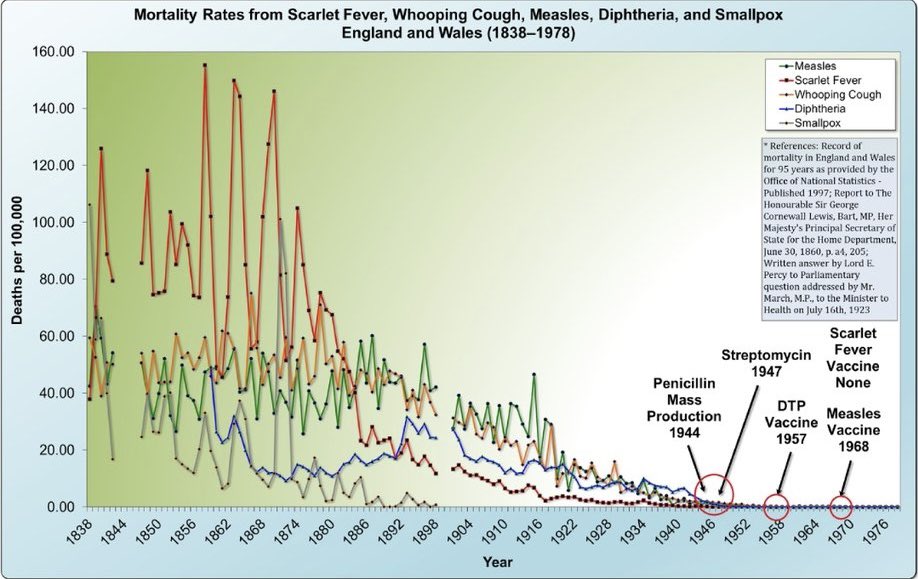
🧵1/ Antivaxxers love this chart. It shows mortality from scarlet fever, whooping cough, measles, diphtheria & smallpox falling before vaccines were introduced. Their claim? “Vaccines didn’t save us.” Let’s break down why this argument is completely misleading. 📉⚠️
IntegralAnswers tweet media
English
18
108
316
29.1K
Jeff Brender retweetledi
Hunter📈🌈📊
Hunter📈🌈📊@StatisticUrban·
The median age at death for people with cystic fibrosis went from 29 in 2008 to 72 today. Incredible breakthroughs, new drugs (Trikafta) turn it into a manageable condition with a normal lifespan. If started in adolescence, life expectancy is 82.5.
Hunter📈🌈📊 tweet media
English
18
151
1.1K
49.9K
AB
AB@AB84·
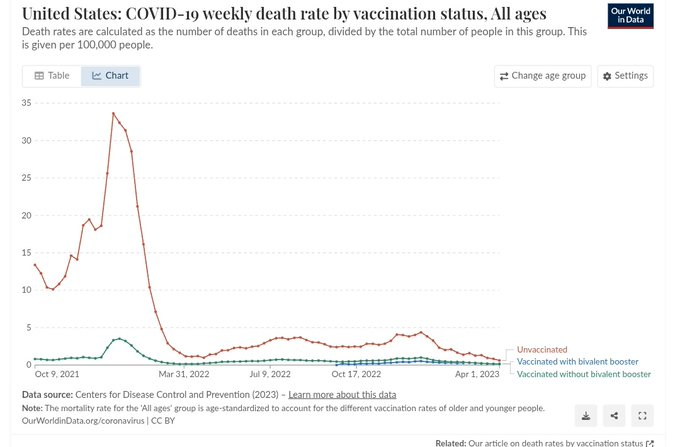
So, nothing really happened to those people who refused to take Covid-19 vaccine.
English
3.8K
890
21.1K
34.1M
Jeff Brender
Jeff Brender@JeffBrender·
@KelseyTuoc Why do you believe COVID came from gain of function research?
English
1
0
2
336
Kelsey Piper
Kelsey Piper@KelseyTuoc·
I evaluate the people who cut off payments for ongoing contracts for PEPFAR, etc. through DOGE the same way I evaluate the people who kept finding side routes to fund gain of function research on pandemic-potential coronaviruses after Obama imposed a freeze.
English
40
19
531
256.6K