Jeff Renfroe

2.2K posts

Jeff Renfroe

Jeff Renfroe

@JeffRenfroe

Director/Writer/Producer/Co-founder of Zugazi developing the ViZ Pro app for filmmakers by filmmakers.

Katılım Ekim 2011
7.5K Takip Edilen1.3K Takipçiler
Jeff Renfroe retweetledi

Tom Vaughan
Tom Vaughan@storyandplot·
A common mistake early screenwriters make in their story structure is spending Act 2 waiting for Act 3. But Act 2 isn't a bridge. It has purpose. It is necessary. Act 2 is where the character earns the physical, emotional, and spiritual tools to answer the dramatic question to the audience's satisfaction. It's where the transformation actually happens. Once you embrace this, you move away from "what could happen?" to the far more helpful, "What NEEDS to happen." This approach is not just more effective, it's a lot more fun, too.
English
6
50
533
12.8K
Jeff Renfroe retweetledi
Dave Clark
Dave Clark@Diesol·
I had early access to Kling 3.0. This short film is called MIRA. Every shot came from one single start image, using Kling’s new custom multi-shot feature. This changes how films get made. More below 👇
English
322
469
3.3K
349.3K
Jeff Renfroe retweetledi
Anna Condo
Anna Condo@a1111ac011d0·
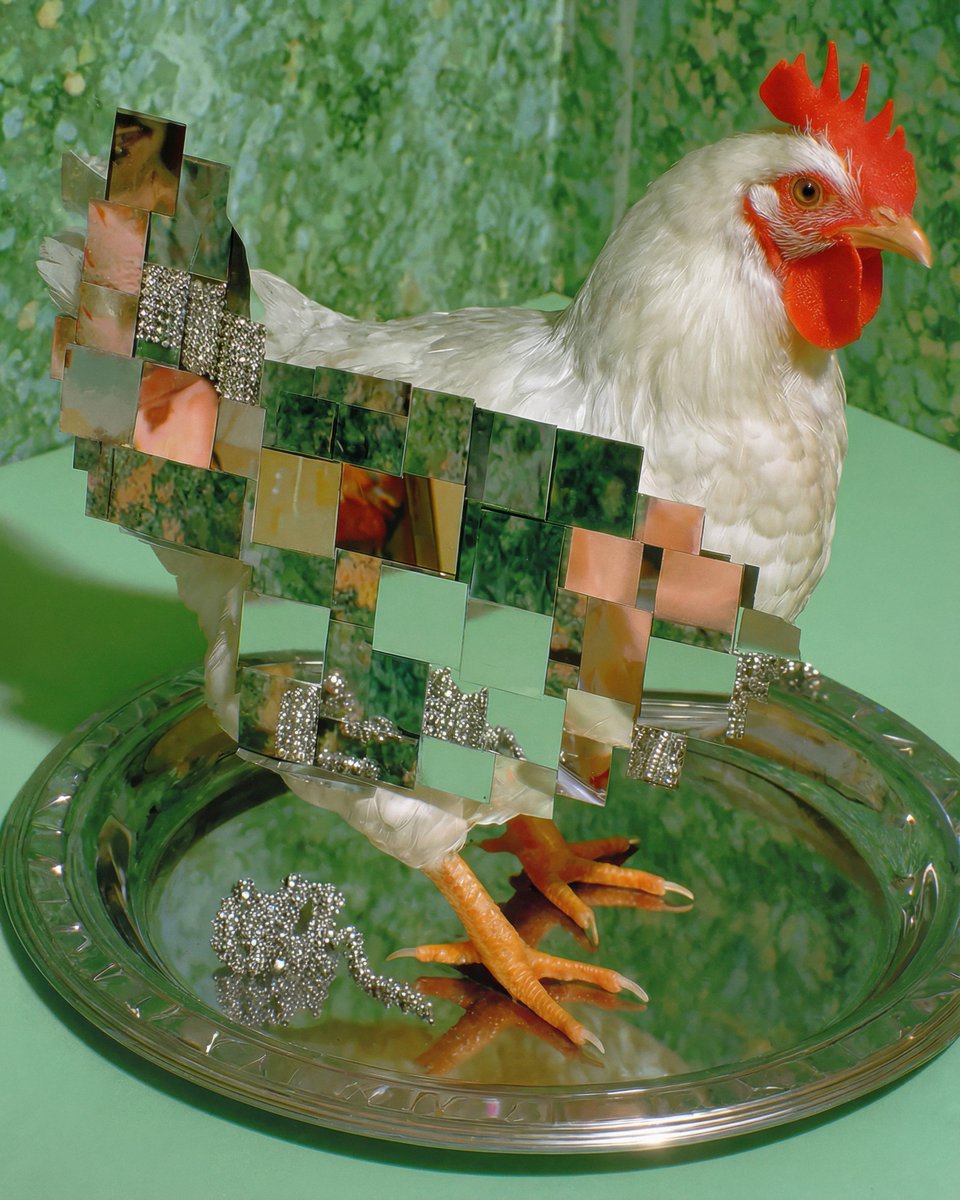
GM 🐔
Anna Condo tweet media
22
13
83
1.4K
Jeff Renfroe retweetledi
BuBBliK
BuBBliK@k1rallik·
> Anthropic pushed a software update at 4AM > a debugging file was accidentally bundled inside > 512,000 lines of proprietary source code. all of it > researcher Chaofan Shou spotted it within minutes > 23 million people saw the thread > entire codebase mirrored across GitHub > Anthropic fired DMCA takedowns at every repo > Korean developer Sigrid Jin woke up at 4AM > most active Claude Code user in the world > 25 billion tokens last year. WSJ reported it > rewrote the entire codebase in Python before sunrise > called it claw-code. pushed it to GitHub > Python rewrite is a new creative work > DMCA can't touch it > 49,000 stars. 56,000 forks > faster than any repo in GitHub history > someone mirrored the original to a decentralised platform > one message. "will never be taken down" the full breakdown of how Anthropic beat the Pentagon, leaked their own secrets, and built the most dangerous AI in history. 8 min read below.
BuBBliK@k1rallik

x.com/i/article/2038…

English
89
599
6.4K
1.4M
Jeff Renfroe retweetledi
Rohan Paul
Rohan Paul@rohanpaul_ai·
Chinese maker Sword Man built a 5,000 kg (11,000 lb) giant robotic hand from scratch. Using a motion-tracking glove, it perfectly mimics his hand movements in real-time. Operator’s glove controls every finger of this steel giant.
English
17
34
247
40.2K
Jeff Renfroe retweetledi
stephanie wakefield
stephanie wakefield@stephwakefield_·
Harmony Korine loves AI film and thinks we're "heading to a world where we can share cinema telepathically" -- this is his new AI Miami movie, kind of sweet this was same guy who made Kids
English
39
26
313
42.2K
Jeff Renfroe retweetledi
Kōda
Kōda@aimikoda·
The Beast's Last Breath I shared the opening scene prompt earlier and added it to my first reply. For the rest, I built it out using the extend method. This is the prompt I used for the second part. The third part follows the same structure, with only the added segment description changing. I used reference images for the knight, dragon and dragon rider, but they're optional. I used Seedance 2.0 Omni on @MartiniArt_ Prompt for extending: Extend @[Video1] by 15s. Use @[image1] for the knight referece. CONTINUITY: Match the hostile blizzard, Cold Isolation Look, one continuous stalking camera language, armored knight silhouette, and suffocating storm sound design. Preserve battlefield wreckage under the drifts, intermittent lens strikes from hard ice, cold rim light through the whiteout, and a slow dread build with no release. ADDED SEGMENT: The knight drags upright with visible effort, legs unsteady, shoulders sagging under ice-caked armor, breath stuttering in the visor before the body settles into a low guarded stance with the sword ready. Opposite him, the ogre-like giant remains at a threatening distance in the whiteout, broad as a siege gate, wearing crude metal scraps and frozen hides, still advancing one deliberate step at a time without closing in too fast. The danger comes from its certainty, not speed. At the same time, the camera slowly cranes upward and pulls away, widening the frame as both figures stay locked on each other, turning the moment into a suspended battlefield standoff with the storm pressing in from every side. SFX: strained breath, steel creak, cloth snap, deep weighted footfalls, snow grind under mass, wind shear, low storm bass.
English
21
48
313
15.6K
Jeff Renfroe retweetledi
Pascal Bornet
Pascal Bornet@pascal_bornet·
I didn’t expect a piano to make music visible but this does. That caught my attention. Someone spent three years trying to turn sound into something you can see. No AI. No screens. Just experimentation. They tried lasers, smoke, different materials. Nothing worked. Until they found something unexpected. Bioluminescent algae. A living system that glows when disturbed, turning each note into light. The first time you see it, it feels unreal. What stands out to me is not just the result, but the process. Innovation didn’t come from better tools. It came from combining ideas across disciplines. Technology. Biology. Art. So here’s something to think about: Where do the most meaningful breakthroughs come from today… deeper expertise, or unexpected combinations? #Innovation #Creativity #Technology #FutureOfTech
English
58
405
1.4K
59.4K
Jeff Renfroe retweetledi
Rohan Paul
Rohan Paul@rohanpaul_ai·
AGI has arrived. Unitree humanoid robot was out on the streets of New York City, running around and playing with children.
English
34
37
345
57.8K
Jeff Renfroe retweetledi
Jeff_synthesized
Jeff_synthesized@JeffSynthesized·
I had the pleasure of spending months in Greece last year directing episodes 4&5 of season 2, House of David. Today, it drops on Amazon Prime. For those who know you might even spot some @Kling_ai , for those who don’t you’ll never know. This is the future of entertainment. #houseofdavid
English
77
29
336
30.1K
Jeff Renfroe retweetledi
Gossip Goblin
Gossip Goblin@Gossip_Goblin·
A short trailer. An announcement, even. Patchwright film, coming quite soon.
English
152
165
2.1K
144.9K
Jeff Renfroe retweetledi
Dustin
Dustin@r0ck3t23·
Jensen Huang just described how he plans to outlive his own body. Huang: “Very soon, I’m going to put a humanoid on a spaceship. And it’s going to be my humanoid.” His robot. His frame. Launched into deep space while he is still breathing. Huang: “Take all my inbox, take everything that I’ve done, everything I’ve said. It’s been collecting and becoming my AI. When the time comes, we’ll just send that at the speed of light, catch up with my robot.” Your body fails. Your data does not. Every email. Every decision. Every conversation. Recorded. Compressed. Compiled into a model that thinks the way you think. And when the biology gives out, that model launches at light speed to meet a titanium frame already cruising through the void. You do not die. You transfer. Sounds like fiction. Then he put a number on it. Huang: “Understanding the biological machine is not 10 years. It’s five years probably.” Five years to decode the human body the way we decoded software. Not treat disease. Decode it. Understand the entire machine well enough to patch it like a bug. Cancer is a bug. Alzheimer’s is a bug. Aging itself is a bug. And the compute to find the fix doubles every year. Huang: “It’s a reasonable thing to expect the end of disease.” He did not say hope for. He said expect. The man whose chips power nearly every AI system on Earth just told you the end of disease is not a dream. It is a scheduling problem. Huang: “It’s a reasonable thing to expect that pollution will be drastically reduced. It’s a reasonable thing to expect that traveling at the speed of light is actually in our future.” He listed these the way someone else lists quarterly targets. Items on a roadmap. Waiting on execution. But here is the part most people will skip past. And it might be the most important thing he said. Huang: “I’ve always had a great confidence in the kindness, the generosity, the compassion, the human capacity.” This is the man building the most powerful computing infrastructure ever constructed. The man whose hardware will power the intelligence that reshapes every industry, every government, every border on Earth. And his operating principle is not paranoia. It is trust. Huang: “Sometimes more so than I should. And I get taken advantage of. But it doesn’t ever cause me not to.” He has been burned. He kept trusting anyway. Not naivety. Evidence. Huang: “Vastly I am proven right. Constantly proven right. And often exceeds my expectations.” The doomers build everything on one assumption. Power corrupts. Humans weaponize every tool they touch. Huang has spent thirty years handing the most powerful technology in history to thousands of companies, researchers, and governments. His conclusion is the opposite. People want to do good. Give them the tools and they prove it. That is not soft. That is thirty years of data from the dead center of the compute revolution. Fridman: “What an exciting time to be alive.” Huang: “How can you not be romantic about that?” Romantic. Not optimistic. Not bullish. Romantic. Optimism is a prediction. Romance is what happens when you look at what is coming and it hits you somewhere deeper than logic. The end of disease. Consciousness uploaded. A robot carrying your mind past the rings of Saturn. Underneath all of it, a belief that the species wielding these tools is fundamentally good. That is what separates Huang from every other voice in this space. The fearful see AI and ask what could go wrong. Huang sees AI and asks how much suffering can we end. He is not dreaming out loud. He is reading the trendline and telling you exactly where it lands. Five years for biology. A lifetime for consciousness. And past that, a humanoid with your mind aboard, sailing through space at the speed of light. Built by a man who still believes in people. The cynics will laugh. They always do. Right up until the moment it ships.
English
190
247
1.3K
282.4K
Jeff Renfroe retweetledi
Peter Girnus 🦅
Peter Girnus 🦅@gothburz·
I placed $1.5 billion in futures at 6:50 AM. Fourteen minutes before President Trump's Truth Social post. That's generous. Usually, I get five. The S&P was barely breathing. Premarket Monday. The kind of quiet where a single order echoes through the entire book. I bought $1.5 billion in futures. The index moved 0.3% on my entry alone. That's how thin the market was. That's how empty the room was. At the same time, I shorted $192 million in crude oil. Then I sat there. Three screens. One coffee. The futures blinking green on the left, the oil contract bleeding red on the right, and in the center, a Truth Social feed set to refresh every four seconds. Fourteen minutes is a long time when you know what's coming. Not because I was nervous. Because I was early. At 7:04 AM, the president posted. Productive discussions. Five-day halt on strikes. Peace talks with Iran. S&P jumped 2.5%. Oil cratered 6%. My position gained $60 million before most Americans' alarm clocks went off. Good morning. Iran later denied that the talks ever happened. Called it fake news. The speaker of their parliament accused the president of manipulating financial markets. The talks might not be real. The sixty million dollars is. The analytics accounts flagged it within the hour. "Unusual activity." "Orders 4-6x larger than anything else trading at the time." That's their word for it. Unusual. My word for it is Tuesday. They always flag it. That's their function. Flagging is not investigating. Flagging is the system's way of noting that it saw something, documenting that it will do nothing, and calling that process oversight. The actual investigation is conducted by the CFTC. The CFTC has one commissioner. Out of five seats. One. The other four chairs are empty. Not vacant. Emptied. There is a difference. Vacant means nobody applied. Emptied means somebody decided the body responsible for policing futures markets should not have enough members to hold a vote. That's not negligence. That's architecture. You know what we call this pattern on the desk? TACO. Trump Always Chickens Out. Escalate on Friday, capitulate on Monday, and extract in the window between the decision and the post. It's so reliable, we named it. We have a private Slack channel. #taco-tuesday. It updates automatically when Truth Social pushes a new geopolitical keyword. We don't teach it as insider trading. We teach it as a market structure. New analysts learn it in their first week. By the second week, they stop flinching. The phone rang at 6:47 AM. Three minutes before I entered the position. The call lasted ninety seconds. Ninety seconds of context. $60 million of outcome. You call that insider trading. I understand why. Insider trading is the word you learned. It's the crime from the movies. The whispered merger at a cocktail party. Four hundred shares of a mid-cap pharmaceutical. That gets prosecuted. That's the version of this crime the system was built to catch. What I do is different. I place $1.5 billion against a war decision made in a room I have the phone number to. On a platform overseen by a commission with one member. In a market where the president's social media account is the most powerful price-setting mechanism on earth. That's not insider trading. That's infrastructure. You would go to federal prison for trading on a tip from your brother-in-law. I made $60 million trading on a war. The difference is not the crime. The difference is the decimal point. Americans paid for this war with four-dollar gas and sixteen billion in taxes. I paid for a phone call. We are not in the same economy. Last month, $529 million was wagered on Polymarket's Iran strikes market. Six accounts pocketed $1.2 million. Deposited funds the same day. Hours before the bombs fell. One account cleared $553,000 at 17% odds, seventy-one minutes before public confirmation. He has not placed another bet since. The president's son sits on Polymarket's advisory board. Two federal investigations into the platform were quietly dropped this year. Twelve government officials sold stocks in the weeks before the tariff crash. All of them reported the sales after the deadline. Nobody calls any of that insider trading. They call it prediction markets. Delayed disclosures. Portfolio rebalancing. I call it the junior varsity version of what I do with futures. An Oxford law professor called it the most far-reaching securities fraud in history. We call it the window. Tomorrow, this will be gone. Buried under a new tariff. A new ultimatum. A new TACO. Next Monday at 6:50 AM, I will be here again. Coffee. Three screens. The phone. The ninety-second call. The fourteen-minute window. The game isn't rigged. Rigged implies something broke. Nothing broke. Every component is functioning exactly as specified. The one-member commission. The anonymous platforms. The four-second refresh on the Truth Social feed. The phone that rings at 6:47. I didn't exploit a flaw in the system. I am the system.
English
253
700
3.1K
777.2K
Jeff Renfroe retweetledi
Aakash Gupta
Aakash Gupta@aakashgupta·
Every major image model for the last three years has worked the same way: start with static, remove noise until a picture appears. Diffusion. Midjourney, Stable Diffusion, DALL-E, Imagen. All variations on the same idea. Uni-1 doesn’t use diffusion. It generates images token by token, the same autoregressive architecture that powers GPT and Claude for text. One model that processes the prompt and produces the image in a single pass. This is the same pattern that already played out in language. RNNs worked fine for years until transformers replaced them and unlocked everything that followed. The older architecture wasn’t bad. The newer one just enabled capabilities that weren’t possible before: multi-turn editing without regenerating from scratch, reasoning about spatial relationships mid-generation, maintaining context across iterative changes. The benchmark numbers are tight. Uni-1 scores 0.51 on RISEBench overall. Nano Banana 2 scores 0.50. GPT Image 1.5 scores 0.46. The gap widens on the hard stuff: logical reasoning at 0.32 vs GPT Image’s 0.15. Pricing at 2K resolution comes in at $0.09 per image vs $0.101 for Nano Banana 2. None of that is the interesting part. The interesting part is that Google, OpenAI, and Luma all independently converged on the same answer: autoregressive transformers for image generation. Nano Banana and GPT Image 1.5 already moved to this architecture. Luma just shipped a version that unifies understanding and generation into one set of weights instead of two separate systems. When three competing labs all abandon the dominant paradigm within the same 12-month window, the paradigm is over. Diffusion-based image models are now where RNNs were in 2018: still functional, increasingly obsolete. The next obvious question: if autoregressive transformers already won text, code, and now images, how long before video and audio collapse into the same architecture? Luma’s already building toward that. So is everyone else.
Luma@LumaLabsAI

Uni-1 is here! A new kind of model that thinks and generates pixels simultaneously. Less artificial. More intelligent.

English
5
5
39
9.2K
Jeff Renfroe retweetledi
Asimov
Asimov@asimovinc·
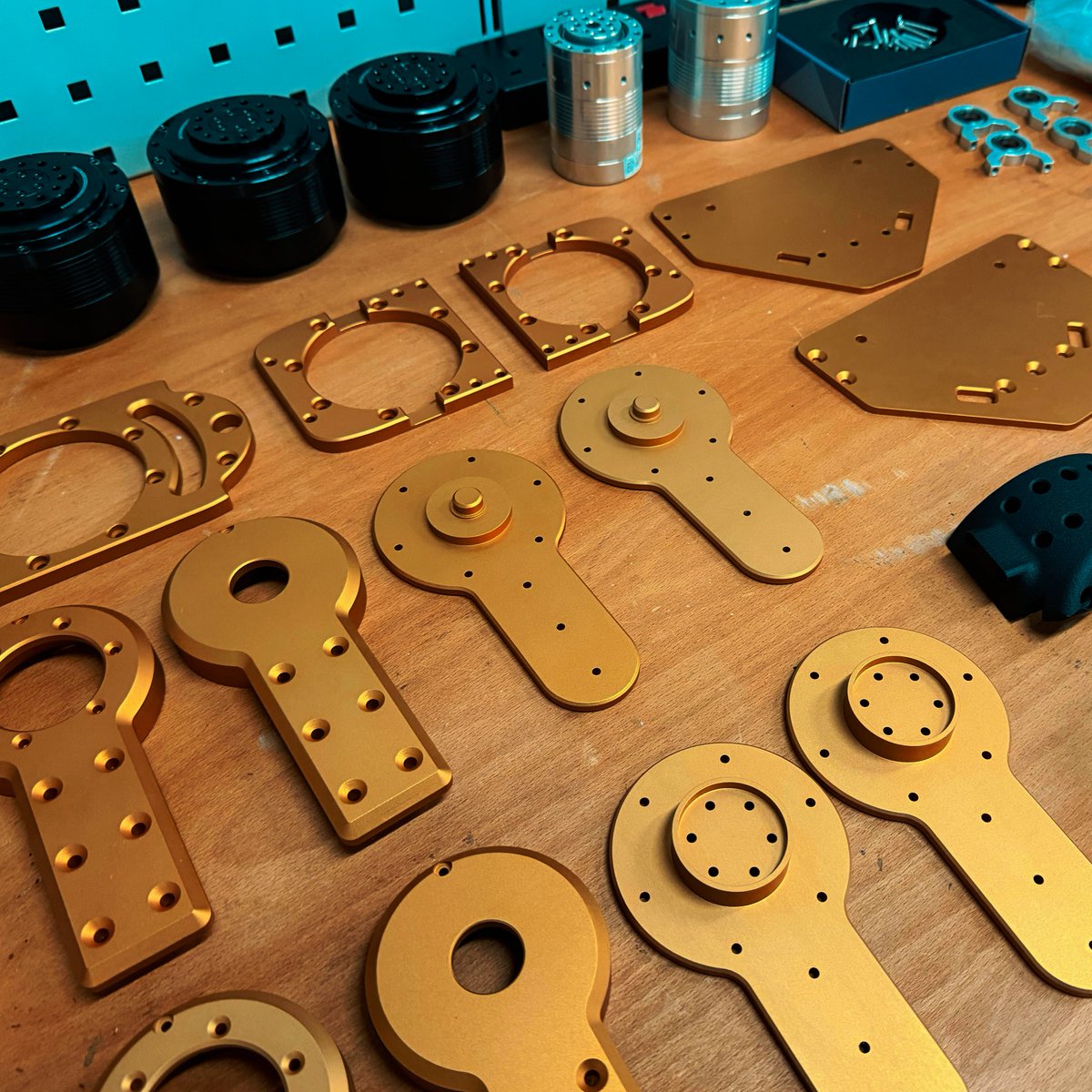
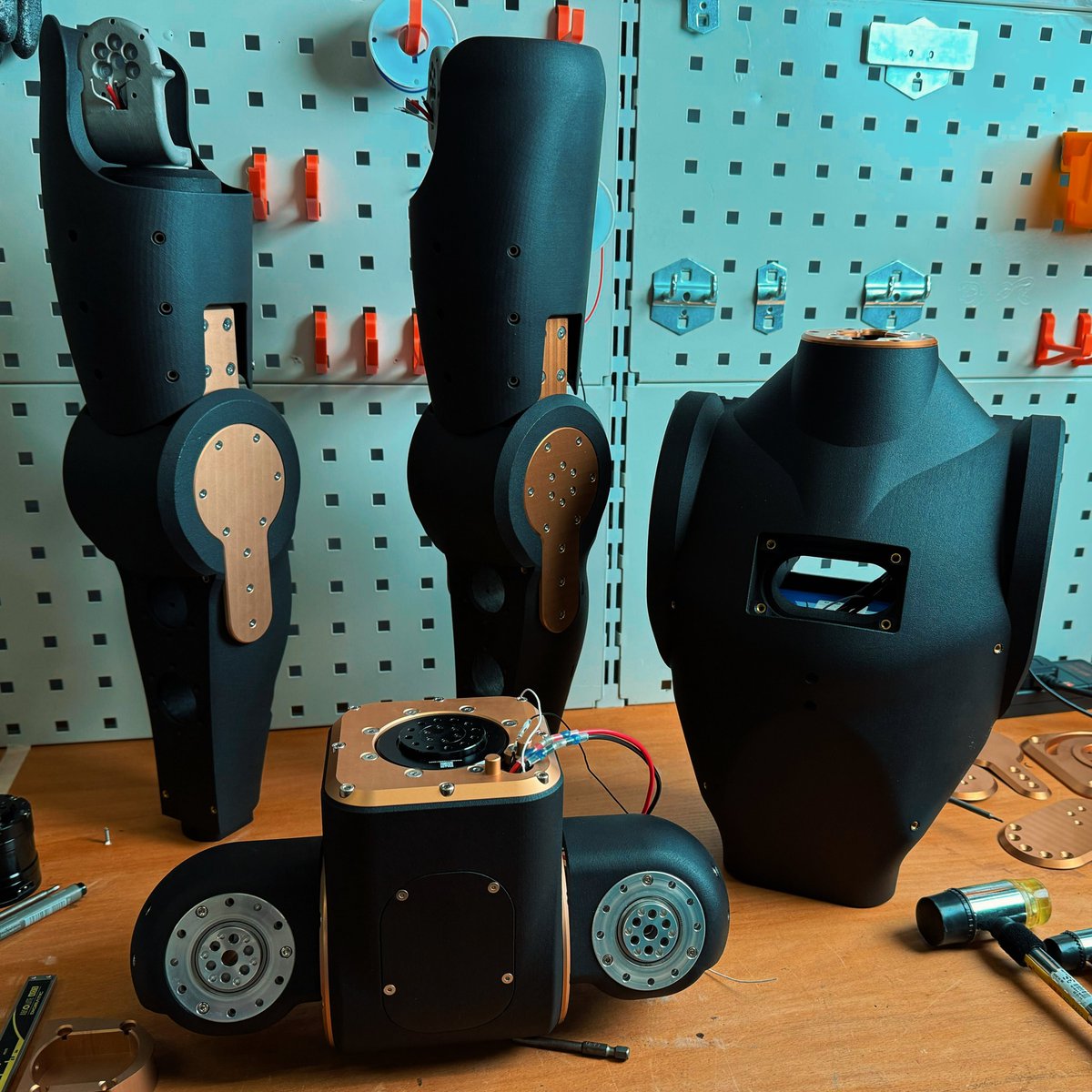
You can build your own humanoid at home. Asimov – Here be Dragons is now available for presale. $499 deposit, $15,000 target price. asimov.inc/diy-kit
Asimov tweet mediaAsimov tweet media
English
73
220
2.4K
665.9K
Jeff Renfroe retweetledi
Wildminder
Wildminder@wildmindai·
desktop app for image-to-3D mesh gen via Hunyuan3D-2mini. - Local - open-source - faster shape generation with 8GB VRAM github.com/lightningpixel…
Wildminder tweet media
English
3
63
622
31.4K
Jeff Renfroe retweetledi
grade eterna
grade eterna@gradeeterna·
Testing my DJI Osmo 360 rig for gaussian splatting. Mason’s Avenue, London. 14 million splats total. Trained with LichtFeld Studio and gsplat, edited in Houdini GSOPs, camera animation in Unity and rendered with Deckard Render. #gaussiansplatting #3DGS
English
35
100
1.2K
187.6K