Jeff muller junior

489 posts

Jeff muller junior banner
Jeff muller junior

Jeff muller junior

@Jeffmullerj

Knowledge dispenser by profession

Kericho, Kenya Katılım Şubat 2022
145 Takip Edilen52 Takipçiler
Maskani Ya Taifa 🇰🇪
Maskani Ya Taifa 🇰🇪@Maskani254·
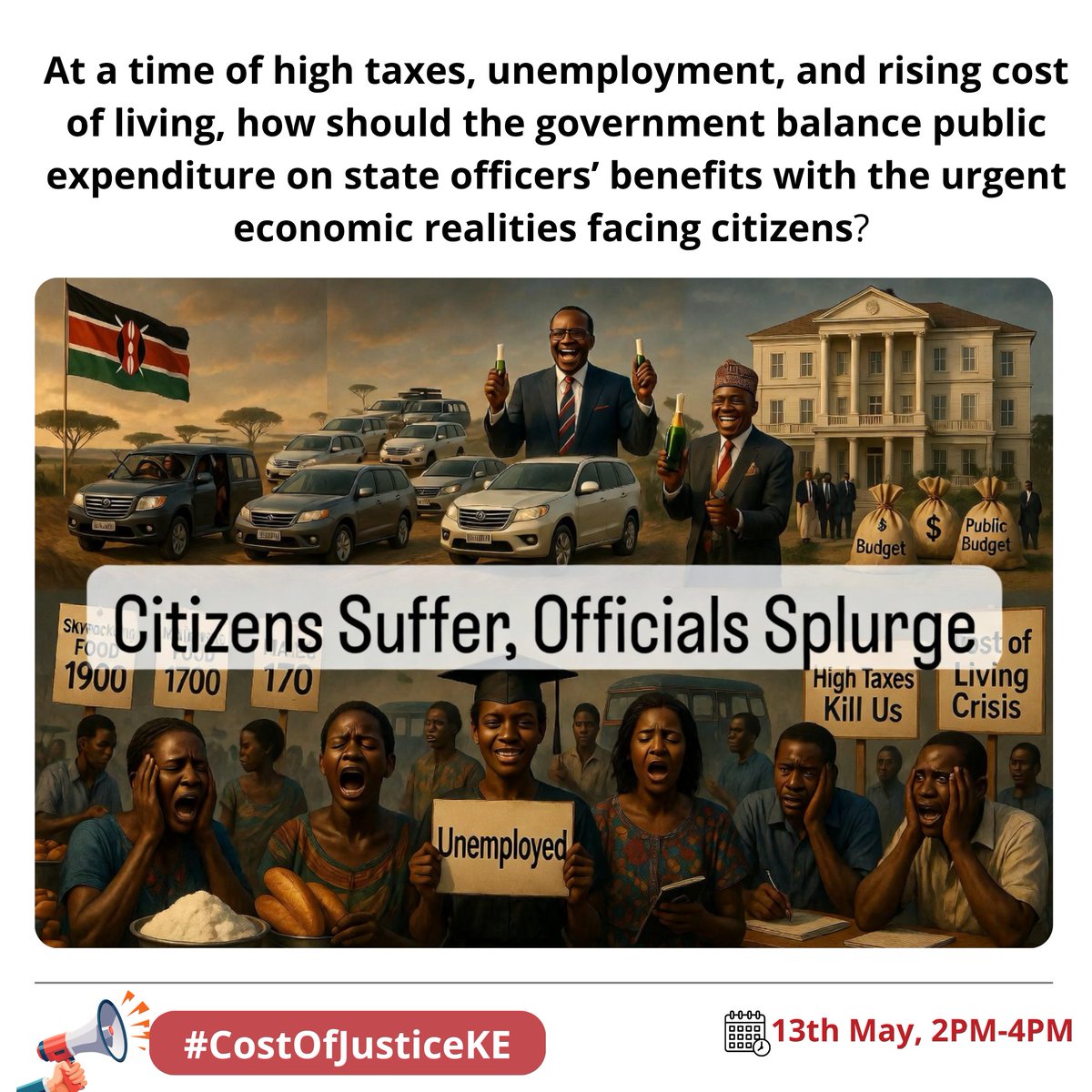
At a time of high taxes, unemployment, and rising cost of living, how should the government balance public expenditure on state officers’ benefits with the urgent economic realities facing citizens? #OurTaxesOurVoice
Maskani Ya Taifa 🇰🇪 tweet media
English
253
36
40
466
Maskani Ya Taifa 🇰🇪
Maskani Ya Taifa 🇰🇪@Maskani254·
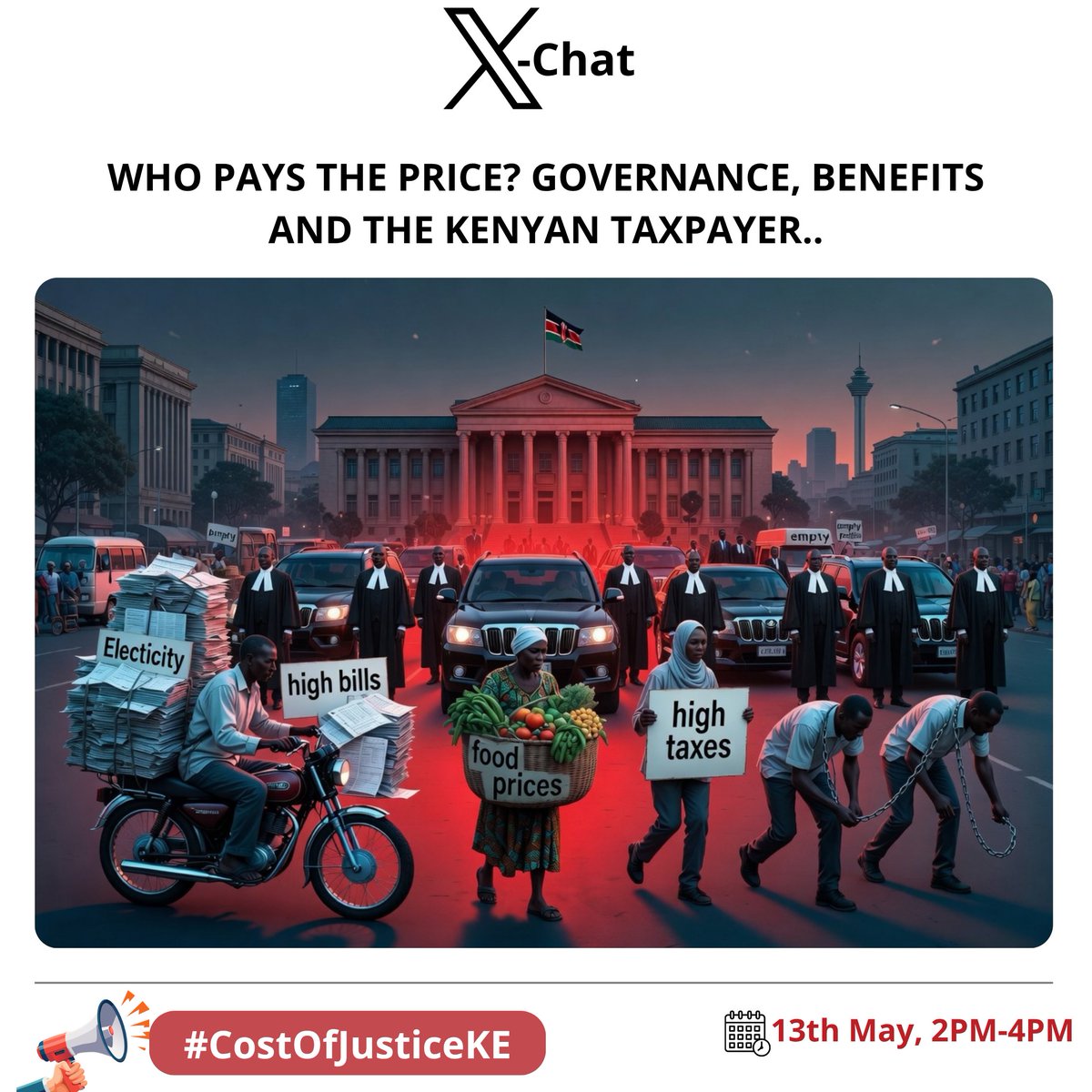
Kenya continues to experience growing public concern over the rising cost of living, high taxation, unemployment, and increasing pressure on public resources. In this context, questions around how taxpayer money is spent across government institutions have become central to national debates on governance, accountability, and public trust. Within this environment, the ongoing legal dispute on judicial car grants and judges’ allowances (Civil Appeal No. E533 of 2024 – Salaries & Remuneration Commission v Gachuiri & 3 Others [2026] KECA 692 (KLR)) has intensified public discussion on public expenditure, constitutional oversight, and institutional accountability. The case stems from historical benefit arrangements that evolved from pre-2010 duty-free vehicle schemes into progressively increased car grants for judges, raising questions about how such benefits are determined and regulated under the Constitution. The matter has highlighted the role of the Salaries and Remuneration Commission (SRC), which is constitutionally mandated to set and review remuneration for state officers. It has also raised broader concerns about institutional coordination, oversight gaps, and adherence to constitutional processes in approving public sector benefits. At the same time, the case has sparked a national conversation on judicial independence, separation of powers, and public confidence in constitutional institutions. While judicial independence remains a foundational principle of democracy, there is increasing public demand for transparency and accountability in how taxpayer-funded benefits are managed, especially in a difficult economic period. For many citizens, this issue goes beyond legal interpretation, it reflects deeper questions about national priorities. With essential services such as healthcare, education, and employment creation under strain, there is growing scrutiny over whether public spending decisions reflect the urgent needs of ordinary Kenyans. However, it is equally important that this conversation is conducted in a balanced manner that respects constitutional institutions and safeguards judicial independence, while still allowing for legitimate public scrutiny and civic engagement. The #CostOfJusticeKE campaign is a citizen-driven initiative aimed at fostering informed national dialogue on judicial benefits, public expenditure, and constitutional accountability. It seeks to empower citizens to critically engage with how public resources are allocated and to raise important questions about fairness, transparency, and governance priorities. The campaign encourages Kenyans to interrogate key issues such as: 1. How are benefits for state officers determined and reviewed? 2. Are current accountability and oversight systems effective and transparent? 3. How should Kenya balance judicial independence with public accountability? 4. What impact do such cases have on public trust in institutions? 5. How can citizens play a stronger role in shaping public expenditure decisions? This campaign is not just about judicial allowances,it is about strengthening accountability, enhancing transparency, and ensuring that public resources are used in the best interest of citizens. Join the conversation under #CostOfJusticeKE as we build a national dialogue on governance, public finance, and constitutional accountability. Together, let’s amplify citizen voices, strengthen trust in public institutions, and demand responsible use of public resources. #CostOfJusticeKE
Maskani Ya Taifa 🇰🇪 tweet media
English
28
63
78
3.4K
Maskani Ya Taifa 🇰🇪
Maskani Ya Taifa 🇰🇪@Maskani254·
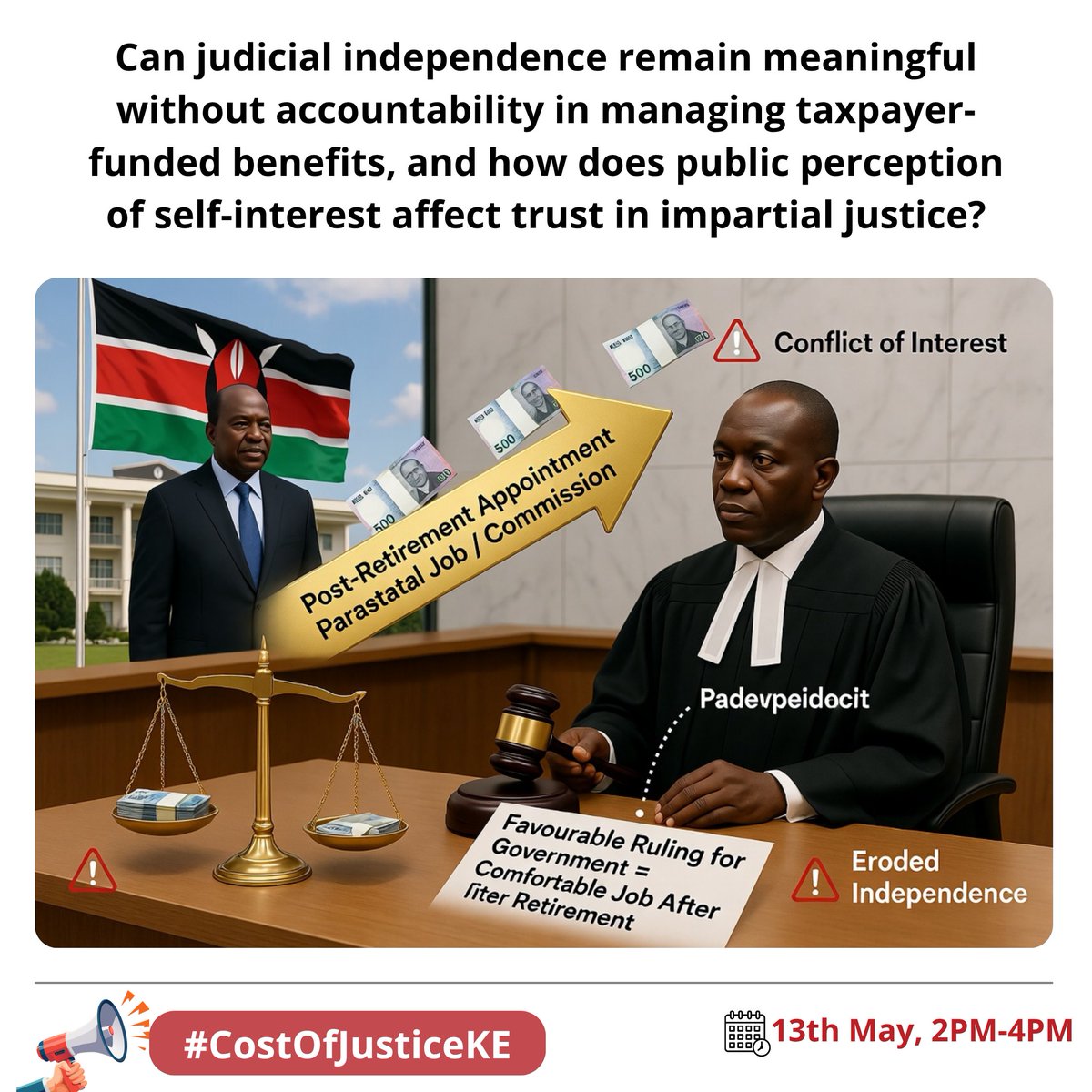
Can judicial independence remain meaningful without accountability in managing taxpayer-funded benefits, and how does public perception of self-interest affect trust in impartial justice? #CostOfJusticeKE
Maskani Ya Taifa 🇰🇪 tweet media
English
251
40
49
711
Maskani Ya Taifa 🇰🇪
Maskani Ya Taifa 🇰🇪@Maskani254·
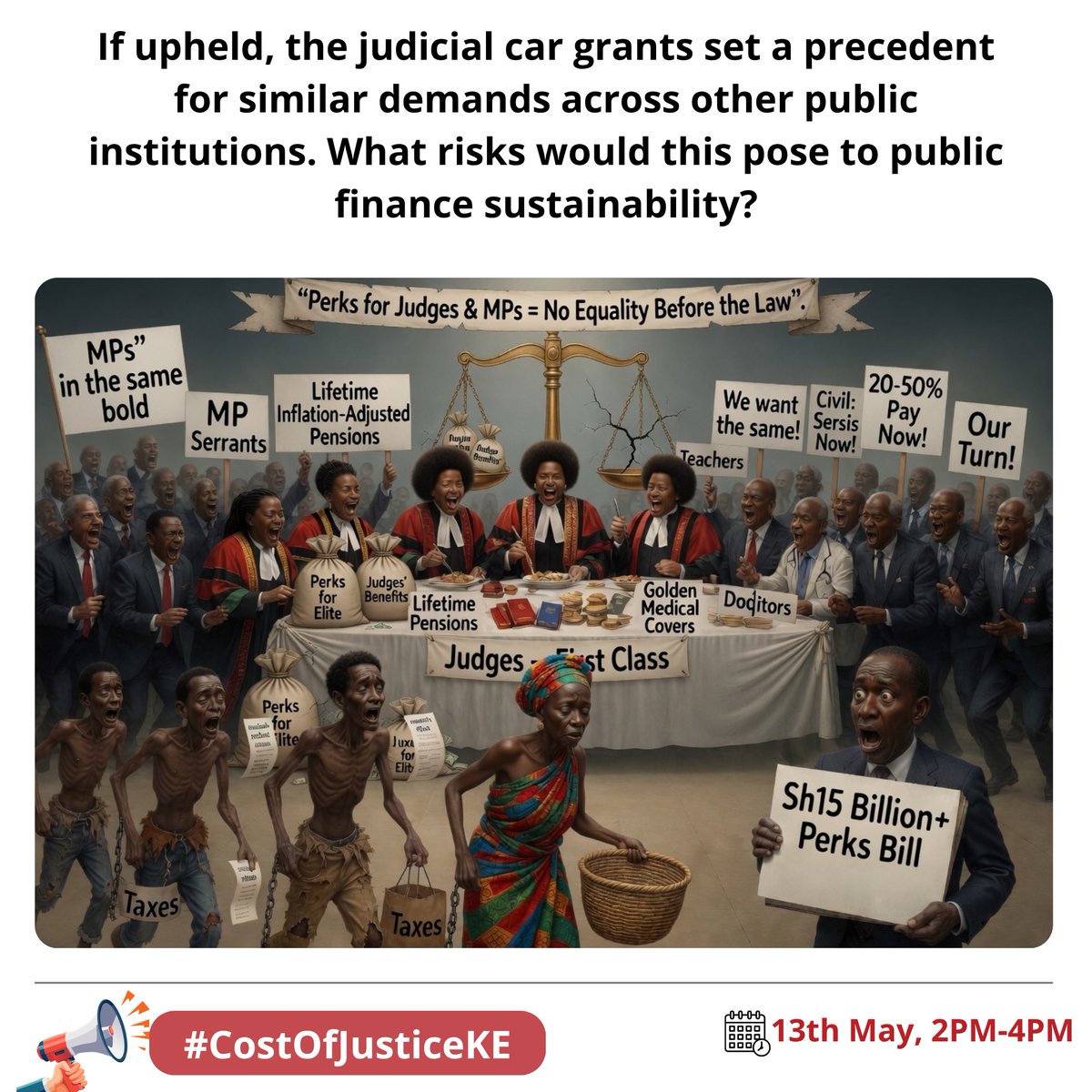
If upheld, the judicial car grants set a precedent for similar demands across other public institutions. What risks would this pose to public finance sustainability? #CostOfJusticeKE
Maskani Ya Taifa 🇰🇪 tweet media
English
239
32
45
958
Maskani Ya Taifa 🇰🇪
Maskani Ya Taifa 🇰🇪@Maskani254·
How can Kenya strengthen trust in constitutional institutions while ensuring they remain accountable, transparent, and responsive to citizens’ needs? #CostOfJusticeKE
Maskani Ya Taifa 🇰🇪 tweet media
English
244
38
49
593
Maskani Ya Taifa 🇰🇪
Maskani Ya Taifa 🇰🇪@Maskani254·
What mechanisms are needed to ensure openness and accountability in the use of taxpayer funds to strengthen public trust in governance institutions? #CostOfJusticeKE
Maskani Ya Taifa 🇰🇪 tweet media
English
251
36
44
779
Maskani Ya Taifa 🇰🇪
Maskani Ya Taifa 🇰🇪@Maskani254·
What role can citizens play in demanding accountability, shaping governance decisions, and ensuring prudent use of public resources across all arms of government?#CostOfJusticeKE
Maskani Ya Taifa 🇰🇪 tweet media
English
250
43
51
741