
Jesse75
25.1K posts


Jesse75
@Jesse7510
CEO JESSNOVATION NIG LTD./FLOORNG
Military psychology is clear: a soldier who believes his nation has abandoned him hesitates. In counter‑insurgency, hesitation kills. The difference between a successful ambush and a fatal one is often split seconds. When a frontline soldier spends his rest time watching a viral video accusing his commander of stealing his meal allowance, trust in the chain of command erodes. This is a fact 💯

The Nigeria Police Force is a rotten institution. No one can convince me otherwise

@larmmy You're just oblivious to the complete reality. Both parties sponsor it.

"lEt Me SpEaK pLaInLy HeRe As A sOlDiEr..." You and the other idiot propagandist @ZagazOlaMakama that you quoted are actual fools for this stupid propaganda you're spreading. How come this nonsense you're spreading is not included in the charges against him?
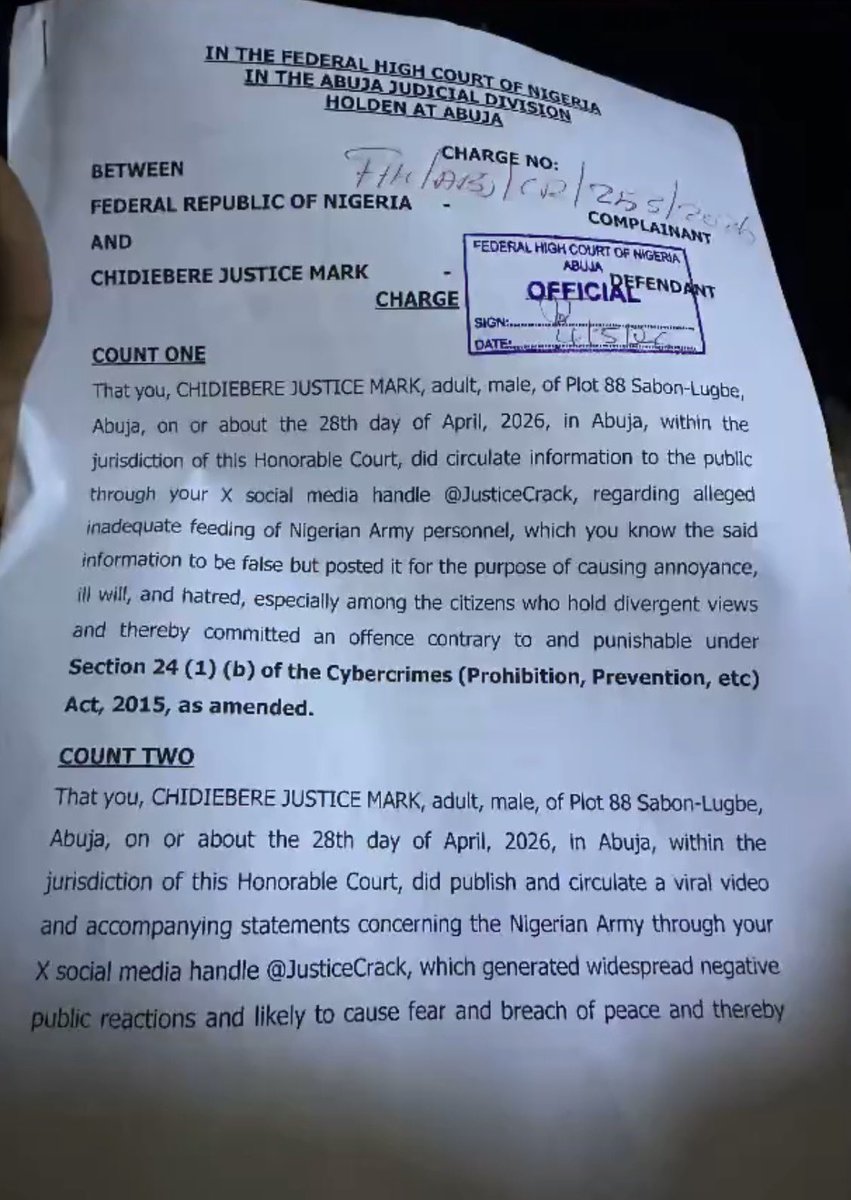
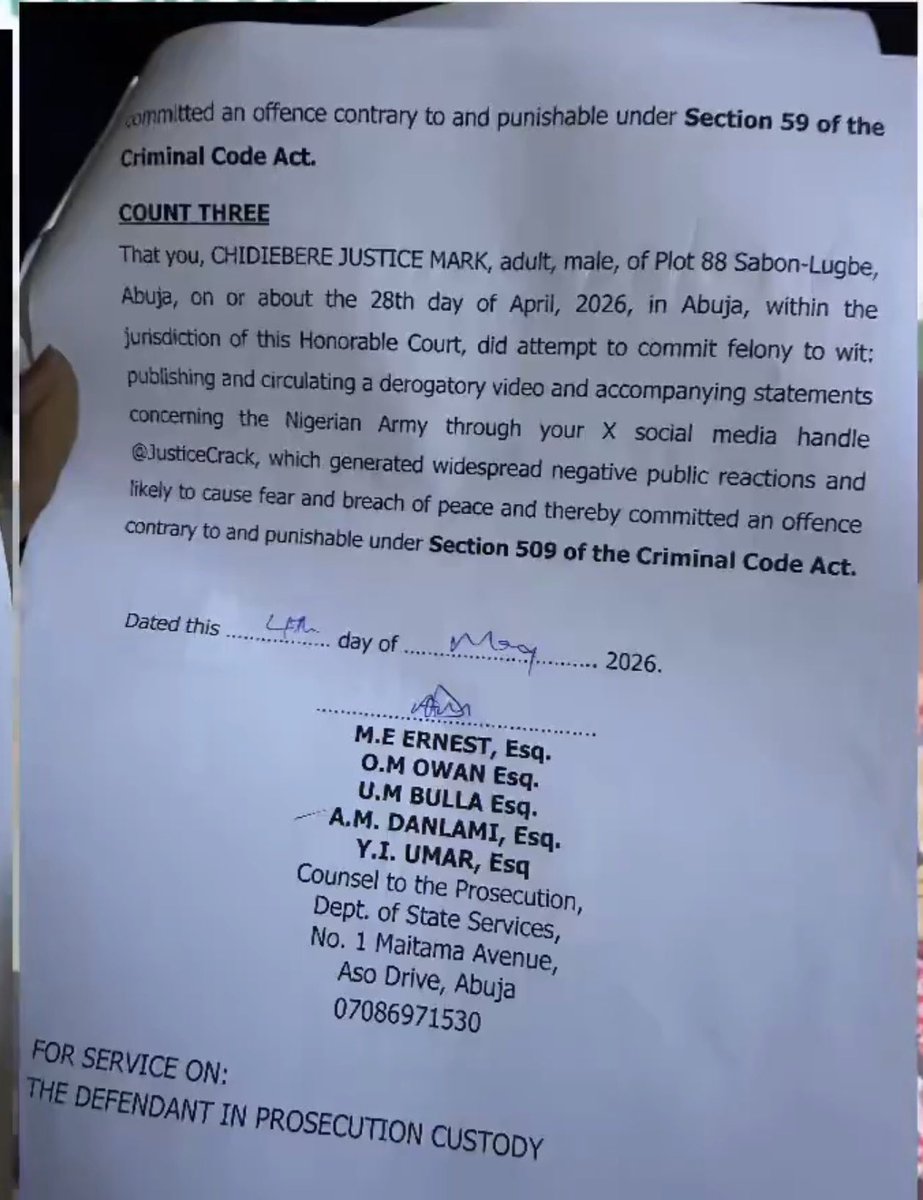
Let me speak plainly here as a soldier. Zagazola just broke this down better than most commentators ever will. Justice Mark Chidiebere didn't cross the line because he criticised the military. He crossed it when he allegedly started having private conversations with serving soldiers about "change of government." That is not activism. That is not free speech. That is a red flag wrapped in a conspiracy. Let me make this clear for everyone in the back: any civilian who tries to pull a serving soldier into discussions about overthrowing the government is not a journalist. They are not a blogger. They are not a citizen activist. They are a security threat. And no military in the world not America, not Britain, not Nigeria will ignore that. So while people argue about free speech, we soldiers are thinking about something else: what happens if a young, frustrated soldier actually listens? What happens if an illegal order is given? What happens if that conversation leads to real action? That is why the DSS stepped in. Not to silence opinions. To prevent a potential explosion. Content creators need to understand something: your phone is not a shield. Your follower count is not immunity. When you cross from criticising policy to courting mutiny, you become a problem that the state is duty‑bound to solve. Zagazola said the line is not always visible but it is very real. Let me add: if you cannot see it, stay far away from it. Because the consequences will not care about your intentions. They will care about what you did. Be wise. 🇳🇬
Justice Crack's only crime is asking the government to pay the soldiers well and feed the ones in camp well. That's all! That is why they are prosecuting him like this. Who knows what they did to him? They dried the young man up within a week! Damn! All the lawmakers are silent about this. What kind of country is this!

Interviewer: “Can you give me two reasons why I should vote for President Tinubu for a second tenure?” APC supporter: “How many states are APC states right now in Nigeria? That alone is a signal. If a party is controlling about 32 states, what does that mean? Those governors are rushing to join APC because Tinubu is doing well.”

Where Justice Mark Chidiebere Crossed the Line By Zagazola Makama The recent arrest and handover of Justice Mark Chidiebere, popularly known as Justice Crack, to the Department of Security Services has sparked predictable debates about free speech, accountability, and the limits of online activism. But beneath the noise lies a more serious issue one that goes beyond blogging and into the sensitive terrain of national security. From available details, the turning point was not mere criticism of the military. Democracies tolerate, and even benefit from, scrutiny of their institutions. The red line appears to have been crossed when private conversations between the blogger and serving soldiers suggested alignment around “change of government.” In any country, that phrase, especially when involving active-duty personnel is not taken lightly. No professional military, whether in Nigeria or elsewhere, would ignore such signals once credible evidence emerges. The Nigerian Army’s response, therefore, should be viewed through that lens. This is an institution that has, in recent months, remained alert to internal and external threats, including failed attempts by rogue elements to destabilise the system. When a civilian is perceived rightly or wrongly to be encouraging disaffection or coercing soldiers within the ranks, it triggers an entirely different category of concern. At that point, it is no longer about opinion, it becomes a question of discipline, cohesion, and national stability. This is where many content creators must draw a hard lesson. The digital space is not a vacuum. Conversations especially with uniformed personnel carry consequences. Amplifying unverified allegations, engaging soldiers in sensitive political discussions, or projecting narratives that could be interpreted as incitement can quickly move from advocacy into dangerous territory. The line is not always visible, but it is very real. There is also the broader issue of responsibility. Too often, fragments of internal grievances are pushed into the public domain without context or verification, feeding a cycle where the military is portrayed only through its shortcomings. While criticism is legitimate, a pattern of reckless amplification erodes public confidence and, more importantly, can embolden hostile actors who thrive on internal discord. If indeed the conversations attributed to Justice Mark Chidiebere reflect attempts to influence serving soldiers toward political ends, then the response by authorities was not just expected; it was inevitable. What we must all know is that freedom of expression does not extend to actions that could undermine the stability of the state. In an era where a single message can travel faster than any bullet, knowing where the line is and choosing not to cross it has never been more important.
You are talking nonsense. I am his lawyer. I read the statement at the DSS office. I spoke with director of investigation. Nothing like that. He has been charged. It is all about cyber crime. No single thing about talking to soldiers. He never corresponded with any soldier. This is your own manufactured falsehood

Where Justice Mark Chidiebere Crossed the Line By Zagazola Makama The recent arrest and handover of Justice Mark Chidiebere, popularly known as Justice Crack, to the Department of Security Services has sparked predictable debates about free speech, accountability, and the limits of online activism. But beneath the noise lies a more serious issue one that goes beyond blogging and into the sensitive terrain of national security. From available details, the turning point was not mere criticism of the military. Democracies tolerate, and even benefit from, scrutiny of their institutions. The red line appears to have been crossed when private conversations between the blogger and serving soldiers suggested alignment around “change of government.” In any country, that phrase, especially when involving active-duty personnel is not taken lightly. No professional military, whether in Nigeria or elsewhere, would ignore such signals once credible evidence emerges. The Nigerian Army’s response, therefore, should be viewed through that lens. This is an institution that has, in recent months, remained alert to internal and external threats, including failed attempts by rogue elements to destabilise the system. When a civilian is perceived rightly or wrongly to be encouraging disaffection or coercing soldiers within the ranks, it triggers an entirely different category of concern. At that point, it is no longer about opinion, it becomes a question of discipline, cohesion, and national stability. This is where many content creators must draw a hard lesson. The digital space is not a vacuum. Conversations especially with uniformed personnel carry consequences. Amplifying unverified allegations, engaging soldiers in sensitive political discussions, or projecting narratives that could be interpreted as incitement can quickly move from advocacy into dangerous territory. The line is not always visible, but it is very real. There is also the broader issue of responsibility. Too often, fragments of internal grievances are pushed into the public domain without context or verification, feeding a cycle where the military is portrayed only through its shortcomings. While criticism is legitimate, a pattern of reckless amplification erodes public confidence and, more importantly, can embolden hostile actors who thrive on internal discord. If indeed the conversations attributed to Justice Mark Chidiebere reflect attempts to influence serving soldiers toward political ends, then the response by authorities was not just expected; it was inevitable. What we must all know is that freedom of expression does not extend to actions that could undermine the stability of the state. In an era where a single message can travel faster than any bullet, knowing where the line is and choosing not to cross it has never been more important.

@moon6eam_ There’s absolutely no governance without the politics. Only people with good politics will get to govern people