Jikesh

18 posts

Jikesh banner
Jikesh

Jikesh

@Jikesh123

PhD scholar👨‍🎓 | Bioorganic Chemistry ⚗️🧪 | JNCASR, Bangalore

Bangalore, India Katılım Ağustos 2022
236 Takip Edilen14 Takipçiler
Jikesh retweetledi
Andrew Akbashev
Andrew Akbashev@Andrew_Akbashev·
High-impact papers are crucial in academia. Like it or not. As a PhD student, you quickly learn that such papers are cool. They make advisors happy. Everyone admires you. During a postdoc, high-IF papers are not just cool. They are mandatory for a PI job. They give you awards and interviews. During the tenure track, they often become your ticket to a permanent position. Many young PIs are fighting to get their papers published in Nature/Science/Cell. It’s like getting a micro-Nobel prize. Many feel relaxed only when they publish in Nature (their tenure is finally safe!). But: Because such papers require a lot of time (often years), you live in constant uncertainty. You HOPE you will get it. You spend evenings at work, you look for stronger results, and you’re battling through a battalion of failed experiments. Then you submit it… Then: Stage 1. Editors reject 9/10 papers. Yours might be among them. Stage 2. The paper goes to reviewers but they are brutal. For some reason (and you know why!) they just don’t want to see your paper in Nature. Many papers get rejected in the first round. Stage 3. If reviewers can’t come up with reasons to kick you out immediately, they will request a lot of new experiments and changes to your work. Obviously, that will take months (if not years). Of course, some reviewers are great and genuinely help improve your work. But they are not as common as you might hope. Stage 4. After addressing all problems and submitting it again, you will likely see some reviewers still resisting. They can simply reject your paper because they didn’t like how you addressed their requests. Or they will find new flaws and will get you to do another round of revision. (If you’re lucky, they will accept the paper.) Stage 5. If reviewers are divided between “accept” and “reject”, the editors may send your paper to additional reviewers. That will start another cycle of hell with a likely negative outcome. Stage 6. If you are rejected, congratulations - you’ve just wasted months on nothing. But because you need that paper, you resubmit it to another high-IF journal, and it all starts with Stage 1. So, it’s like gambling. You gamble your career on this publication. During those 6–24 months of fighting with reviewers and editors, someone else may publish the same work. Then you’re screwed. Or your paper is likely not accepted in any high-IF journal. After loosing a year or more on trying to push it through, you will have to publish it in a low-IF journal. Is it a healthy game? No. You get exhausted. Anxiety skyrockets. But unfortunately that’s how academia works. I’ve been through this myself. Most of my colleagues have the same experience. We definitely despise it. And the worst part of it? We’ve started to see it as completely normal.
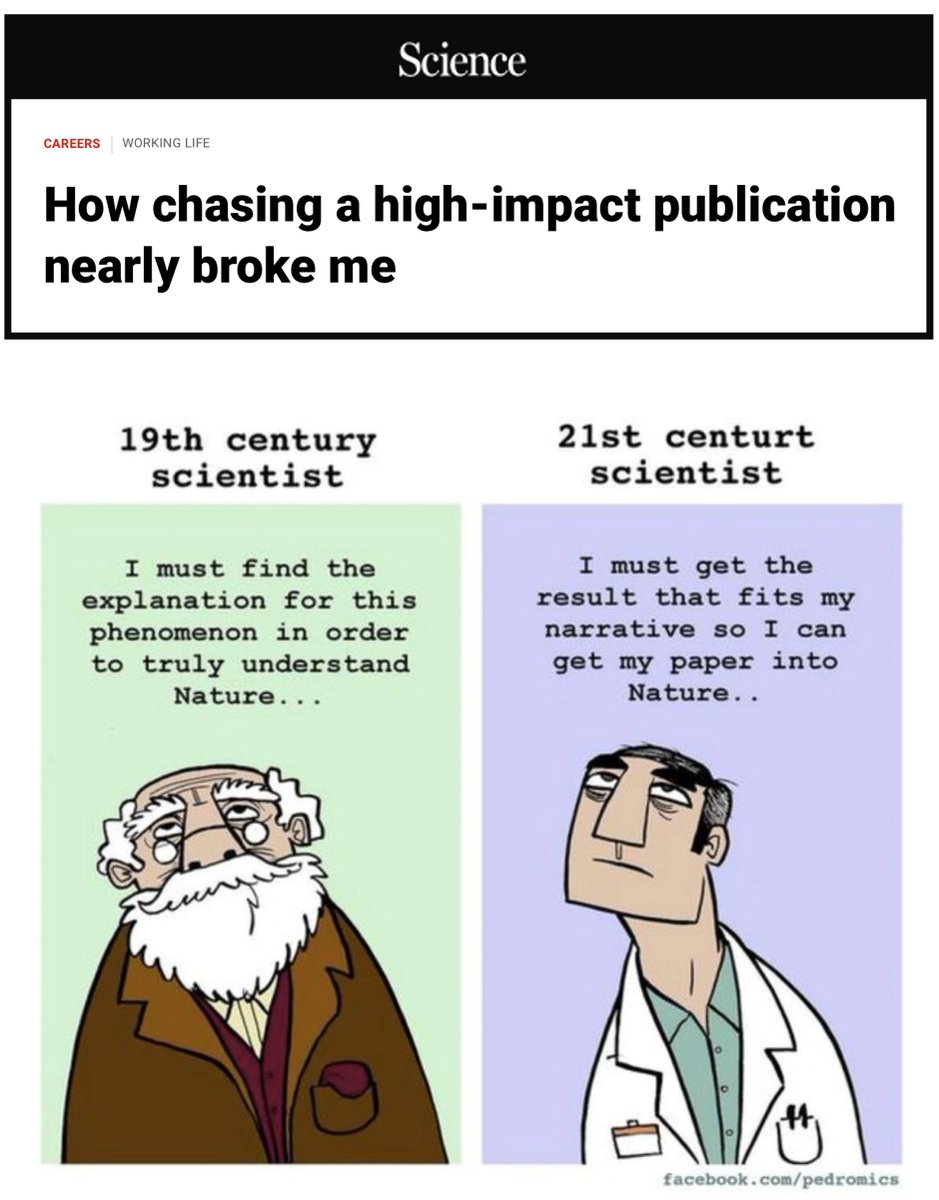
Andrew Akbashev tweet media
English
49
190
1.3K
108K
Jikesh retweetledi
Asian Chemical Biology Initiative
Asian Chemical Biology Initiative@asianchembiol·
📌Don’t miss your chance to join the ACBI 2025 Tutorial & Interview! 🔔Tutorial lectures on #chembio & 🤝1:1 interviews await you this January in Hanoi🇻🇳 Take the first step toward shaping your future in chemical biology‼️ 👉Apply by Dec. 1, 2024, at asianchembio.com/hanoi-2025-int…
English
0
3
10
841
Jikesh retweetledi
Publishing with Integrity
Publishing with Integrity@fake_journals·
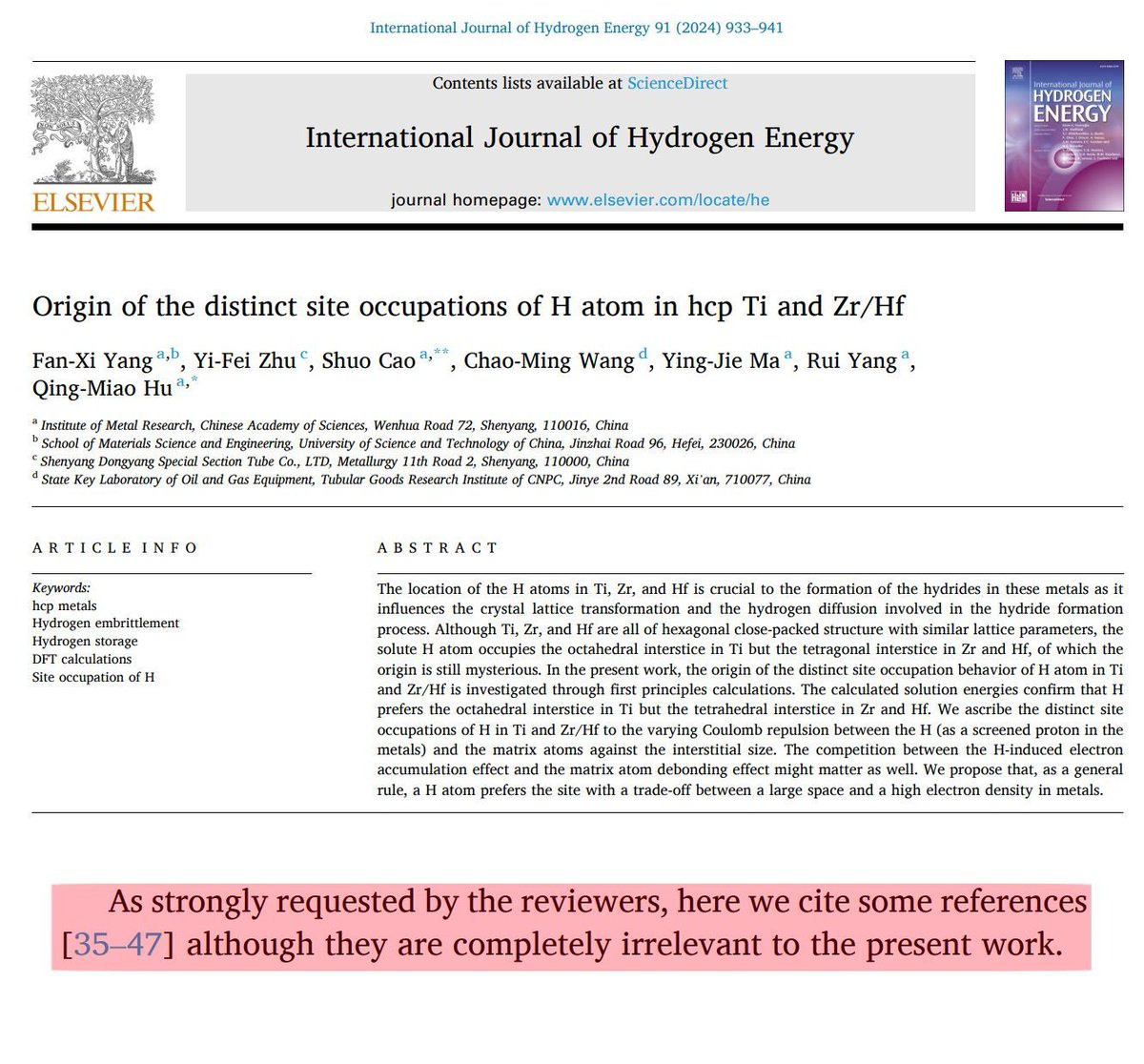
Who reviewed this paper? A few days ago @gcabanac tweeted about a paper that had published a remark that it had been forced to cite irrelevant papers. You can see the tweet here: buff.ly/3UMIguf. We remarked that if it was not so serious, it would be funny. Since reading that tweet, we have not been able to get it out of our head, so we thught that we would document it in a little more detail. We are doing this for three reasons. 1️⃣ In our view, it descerves more detail to be made available. 2️⃣ We'd like these details to be be kept as a matter of public record, so we are posting similar posts on our X account and our LinkedIn account. 3️⃣ It should be of interest to this community, so we hope that this raises even further the ethical issues around this topic. The first image shows the paper that we are looking at. What is interesting is the text that appears on at the end of the introduction (highlighted in red). This appears to show that the reviewer insisted that a set of 13 papers be cited, else they would not accept the paper. It would be interesting to see the review repport, so that we could be certain what had been said. If you want to see the paper, it is available here: buff.ly/4fndXm0 In the rest of this 🧵, we show the papers that have been asked to be cited (i.e. [35]-[47]). These have been taken from the paper mentioned above. You'll notice (as we have highlighted it) that every paper is "et al." meaning, of course, that there are quite a few authors on each paper. Gicven that we cannot see all the authors, the other images on this 🧵 shows the full set of authors on each of these 13 papers. We leave it an an exercise for the reader to hazard a guess as to the reviewr is?
Publishing with Integrity tweet media
English
70
610
2.9K
700.9K
Jikesh retweetledi
The Nobel Prize
The Nobel Prize@NobelPrize·
The 2024 #NobelPrize laureates in chemistry Demis Hassabis and John Jumper have successfully utilised artificial intelligence to predict the structure of almost all known proteins. In 2020, Hassabis and Jumper presented an AI model called AlphaFold2. With its help, they have been able to predict the structure of virtually all the 200 million proteins that researchers have identified. Since their breakthrough, AlphaFold2 has been used by more than two million people from 190 countries. Among a myriad of scientific applications, researchers can now better understand antibiotic resistance and create images of enzymes that can decompose plastic. Read more about their story: bit.ly/3XI7KK3
The Nobel Prize tweet media
English
114
3.9K
11.6K
1.2M
Jikesh retweetledi
The Nobel Prize
The Nobel Prize@NobelPrize·
BREAKING NEWS The Royal Swedish Academy of Sciences has decided to award the 2024 #NobelPrize in Chemistry with one half to David Baker “for computational protein design” and the other half jointly to Demis Hassabis and John M. Jumper “for protein structure prediction.”
The Nobel Prize tweet media
English
510
8.4K
19.3K
9.1M
Jikesh retweetledi
Science girl
Science girl@sciencegirl·
Watch this reef squid go from transparent to opaque in an instant
English
360
5.1K
36.3K
2.9M
Jikesh retweetledi
Massimo
Massimo@Rainmaker1973·
Nice visualization of Newton's first law: an object will remain at rest, unless acted on by a net external force [📹How Ridicolous: buff.ly/3bg5CjP]
English
252
4.7K
46.8K
6.5M
Jikesh retweetledi
Trevor A. Hamlin
Trevor A. Hamlin@TrevorAHamlin·
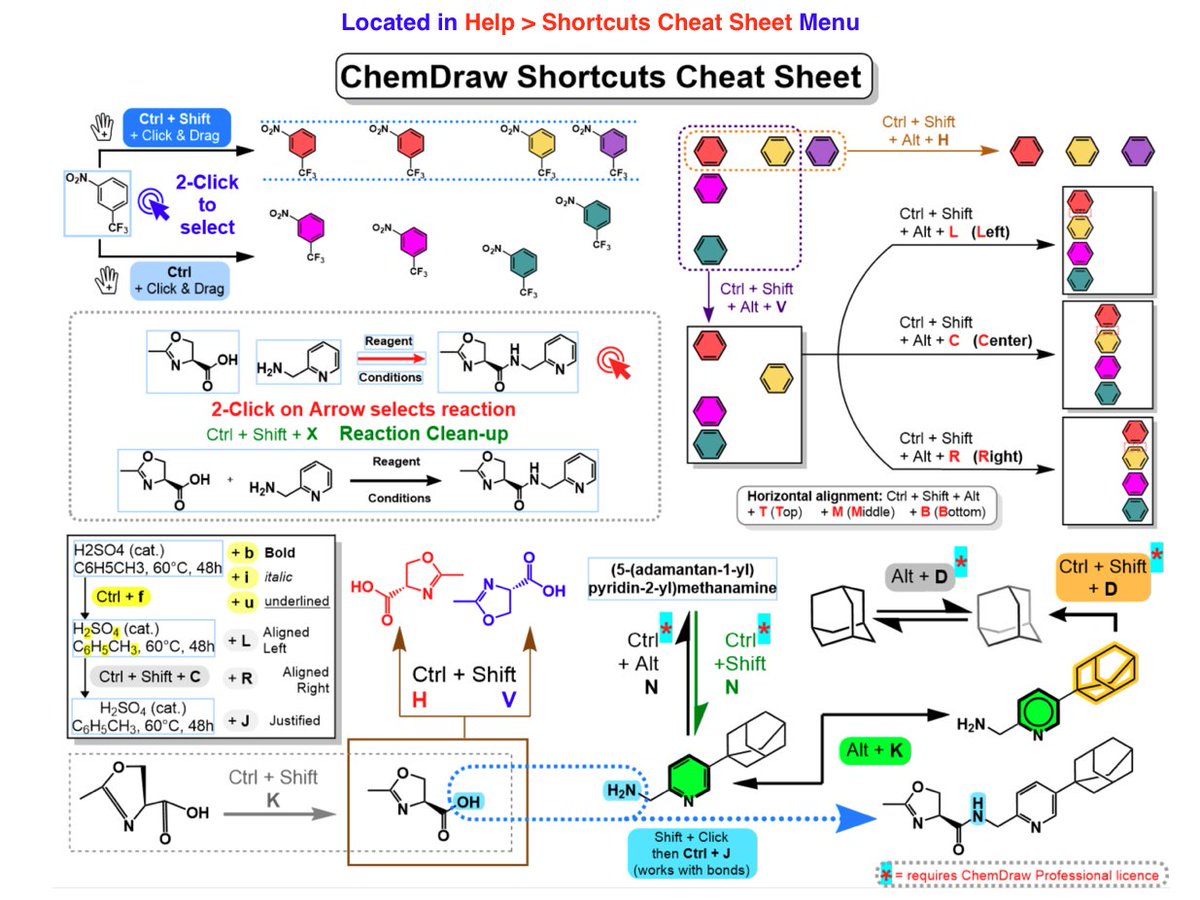
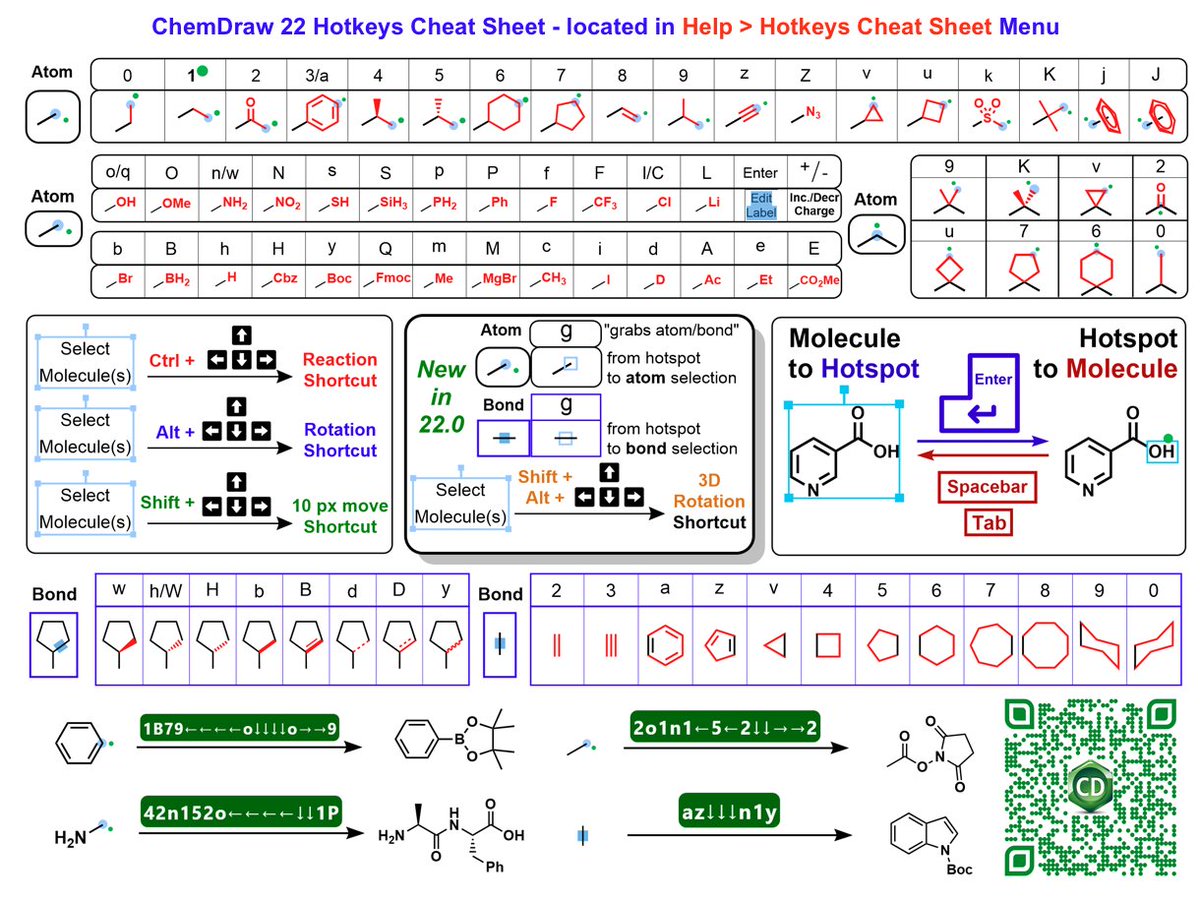
As is tradition by now, here are the new shortcuts and cool hotkeys for the just released version of @ChemDraw 22.0.0. Pumped to try them out!
Trevor A. Hamlin tweet mediaTrevor A. Hamlin tweet media
English
2
113
490
0