
Jill Nottingham 🇪🇺

3K posts

Jill Nottingham 🇪🇺 banner
Jill Nottingham 🇪🇺

Jill Nottingham 🇪🇺

@JillNottingham

#Teacher / Co-founder & Director @TheLearningPit/#consultant / #author 6 books / 3 children / 5 #minidachshunds / #BLM

Northumberland, UK Katılım Aralık 2009
545 Takip Edilen984 Takipçiler
Jill Nottingham 🇪🇺 retweetledi
Sue Cowley
Sue Cowley@Sue_Cowley·
I'm running a webinar on adaptive teaching next Wednesday. Lots of practical advice about inclusive approaches to teaching. Pay what you can to attend. Very grateful for retweets. Thank you! #edutwitter eventbrite.co.uk/e/the-ultimate…
English
1
19
28
7.4K
Jill Nottingham 🇪🇺 retweetledi
Sue Cowley
Sue Cowley@Sue_Cowley·
I'm doing a #giveaway of my latest book to celebrate the Bank Holiday weekend! *Like and retweet to enter.* Winner announced Monday evening. See below for some links to buy it! @BloomsburyEd #free #freebie
Sue Cowley tweet media
English
33
553
641
57.2K
Jill Nottingham 🇪🇺 retweetledi
Dr Jill Berry
Dr Jill Berry@jillberry102·
"How can we get better at diagnosing & supporting pupils with dyslexia to improve their school experience?That was the question debated by a high-profile panel of experts at an event hosted at @KingsCollegeLon last week." @ellencph reports in @tes: tes.com/magazine/analy…
English
0
2
3
455
Jill Nottingham 🇪🇺 retweetledi
Morgan J. Freeman
Morgan J. Freeman@mjfree·
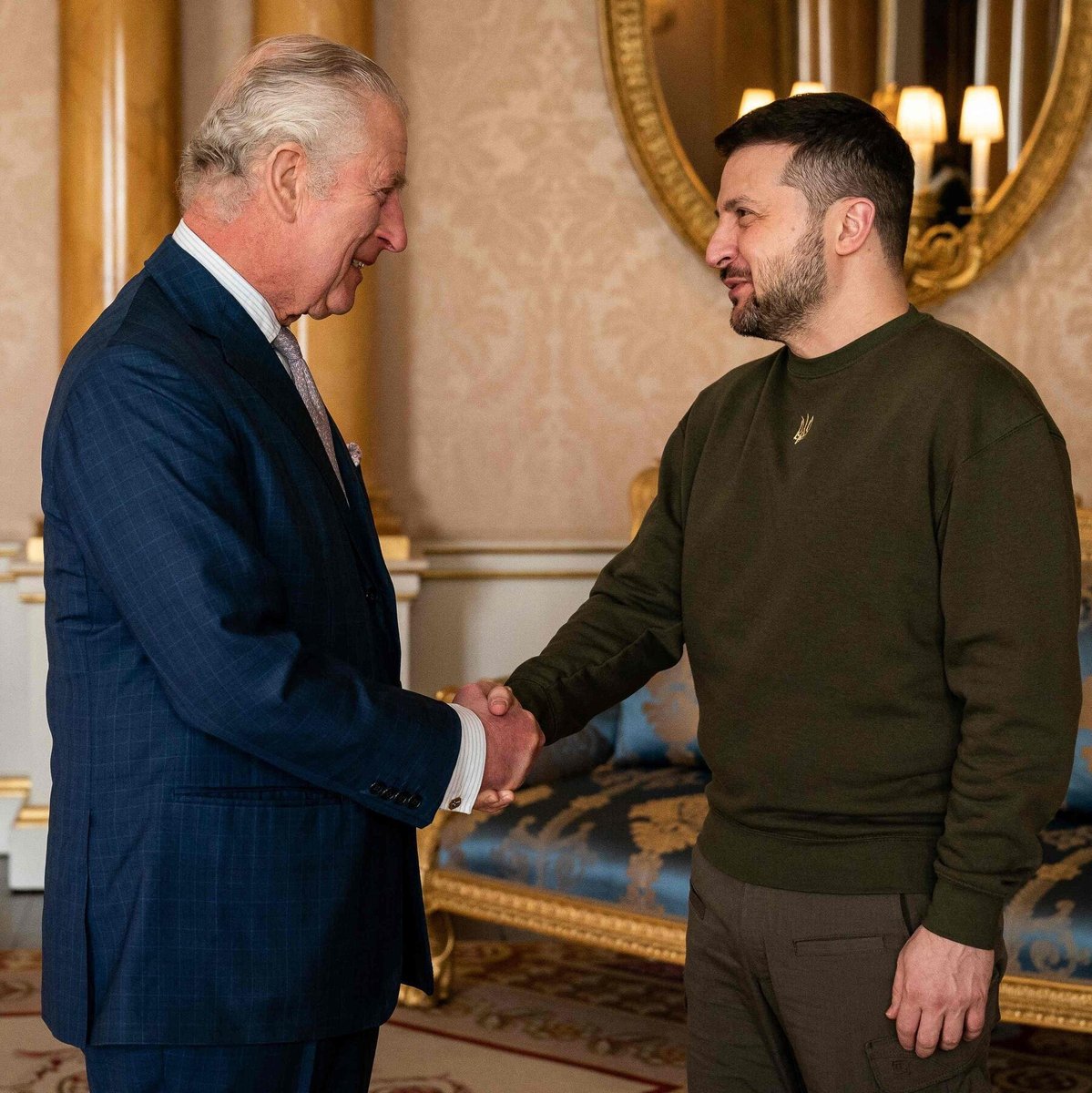
No one follows more etiquette rules than the Royal Family—but notice how King Charles didn’t make any smart-ass or demeaning comments about Zelensky’s attire today. Why? Because respect isn’t about clothes—it’s about character. And that’s something money can’t buy.
Morgan J. Freeman tweet media
English
697
2.9K
20.2K
328.7K
Jill Nottingham 🇪🇺 retweetledi
Help A Teacher
Help A Teacher@HelpATeacher·
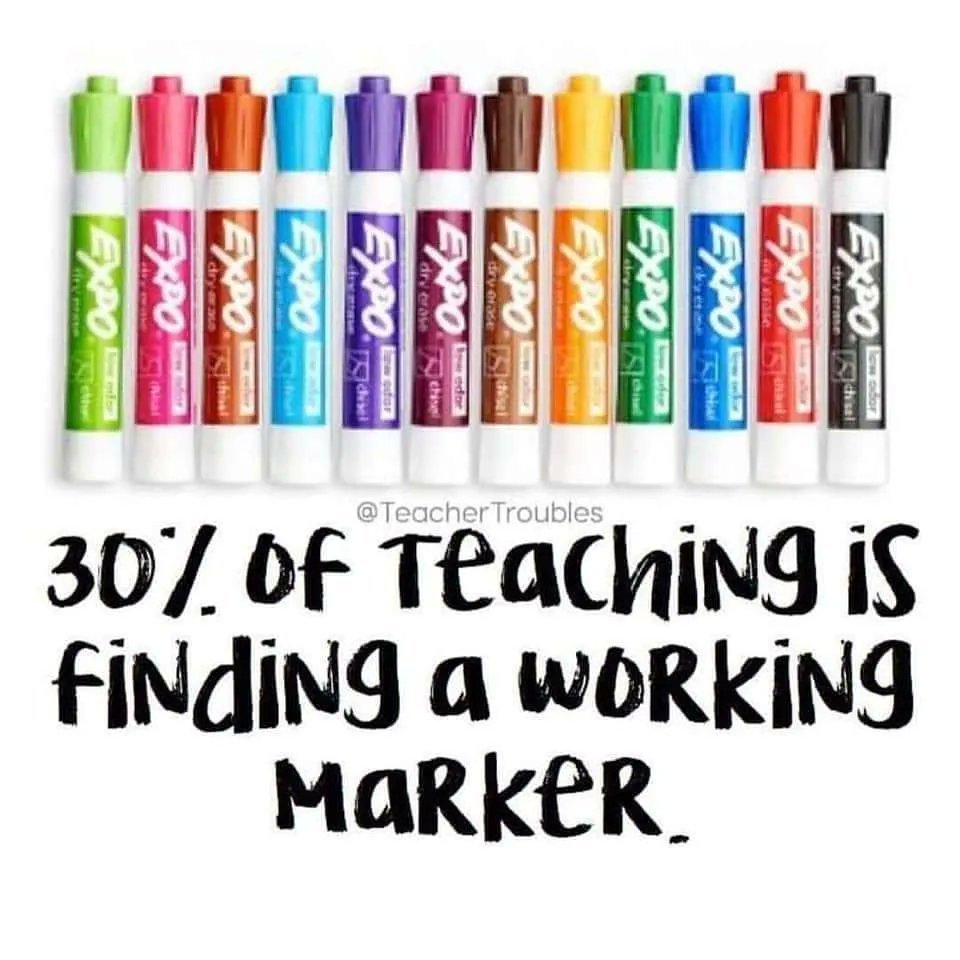
This! 🎄
Help A Teacher tweet media
English
11
192
1.2K
47.4K
Jill Nottingham 🇪🇺 retweetledi
Emma Dickson
Emma Dickson@mrsdicksonteach·
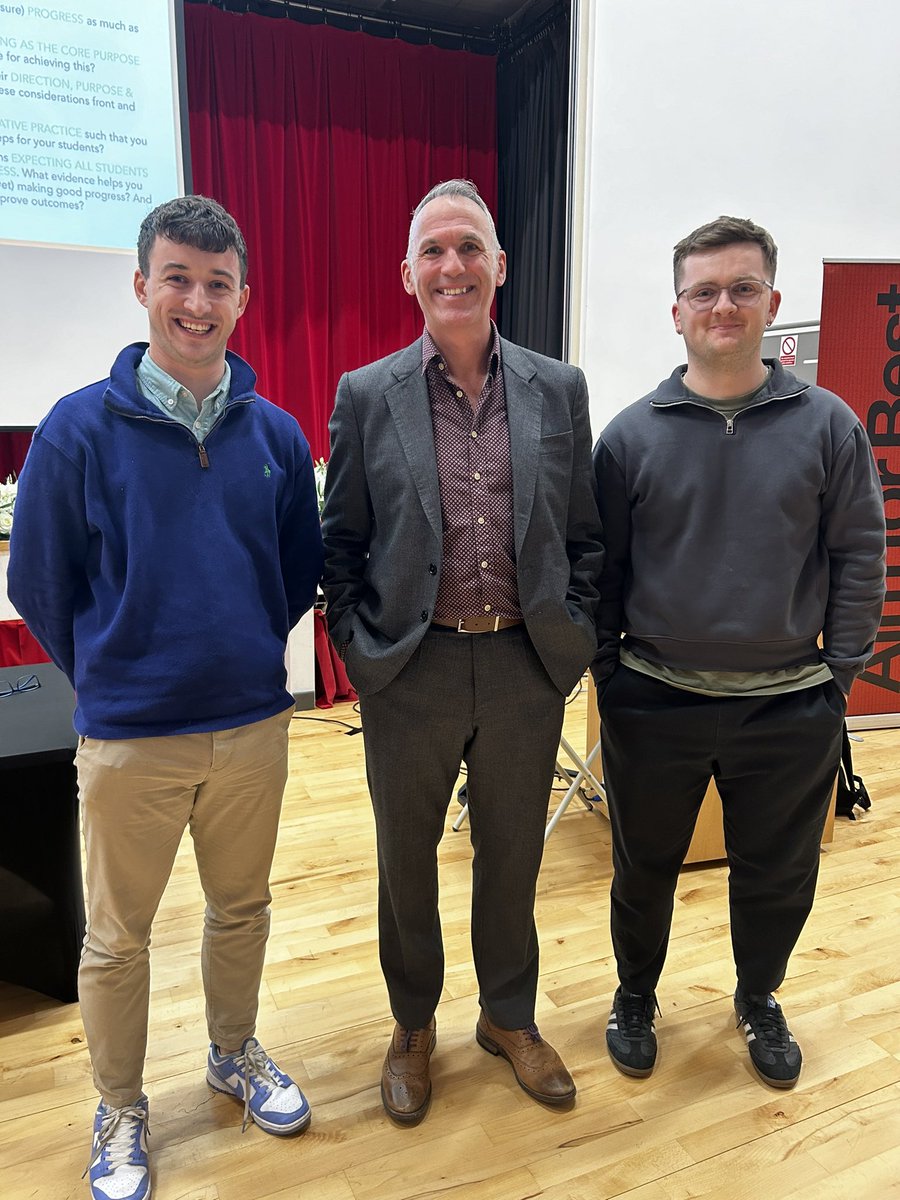
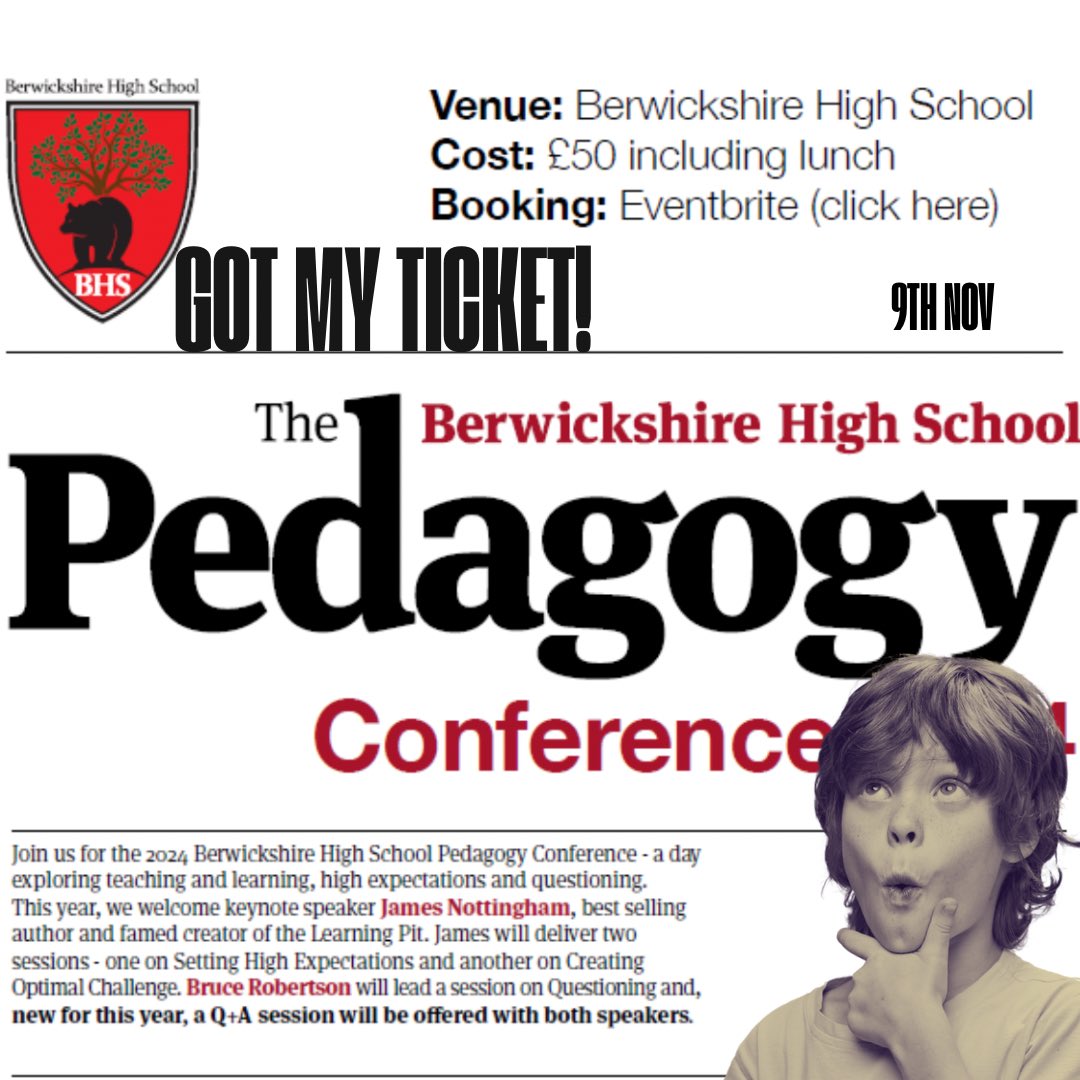
@JamesNottinghm gave two 90 minute sessions where we discussed creating optimal challenge and ambition. I’ve got some great takeaways about celebrating progress to implement, as well as considering the language we use as a school to challenge our students. #BHSpedagogy
Emma Dickson tweet media
English
0
3
9
768
Jill Nottingham 🇪🇺 retweetledi
Mr Hudson
Mr Hudson@PEMrHudson·
Brilliant day at #BHSpedagogy conference. Thank you to @JamesNottinghm for imparting some very useful practical wisdom. Looking forward to next year
Mr Hudson tweet mediaMr Hudson tweet media
English
0
3
6
1.8K
Jill Nottingham 🇪🇺 retweetledi
Emma Dickson
Emma Dickson@mrsdicksonteach·
Have you got your ticket yet? Link in comments! SBC colleagues, email us direct.
Emma Dickson tweet media
English
1
4
7
2.2K
Jill Nottingham 🇪🇺 retweetledi
Help A Teacher
Help A Teacher@HelpATeacher·
Yup.
Help A Teacher tweet media
9
229
1K
35.5K
Jill Nottingham 🇪🇺 retweetledi
Naomi Fisher
Naomi Fisher@naomicfisher·
What’s the problem with the idea that direct instruction is always the most effective way for a person of any age to learn? It seems intuitively to make sense, after all. No messing around with trying to figure things out. Much quicker to just tell them. It certainly feels more efficient as the adult. I have no problem with direct instruction. I prefer to be told the crucial information when I am learning. Tomorrow I am about to start running a training course for therapists – three days of direct instruction and deliberate practice. They want to know how to do something and my job is to help them do that in the most efficient way possible. I am not expecting them to learn how to do therapy through play or through discovery learning. Children’s learning – particularly young children – isn’t the same as adult learning. Their brains work differently. They are less focused, more expansive and they have a shorter attention span. They find it hard to listen to things they find boring and they need to move around a lot. They are ‘into everything’ and full of energy, but they often find sitting still and listening very difficult. In fact, sitting still takes so much effort that they may have nothing left to actually listen. This is completely uncontroversial in the developmental psychology and neuroscience world. Brain development really matters, and four-year-olds (and fourteen-year-olds) are not just non-expert adults. School learning is different to adult learning in other ways. Adults choose what they learn, children are told what they will be learning. Adults often think that children should learn to read (or do maths, or do many other things) before the children themselves see the need. The adults may be right, but again, this means that children’s learning isn’t the same as adults. With adults, you can give them the information because they want to know it. With children, you have to start with helping them understand why this might be useful. Without this, your explanations are unlikely to stick. Learning without a reason for doing so becomes meaningless. Discovery learning is a stage of life. It’s not free of adult input, and it’s not ‘leaving them to figure it out by themselves’. It’s intensely interactive, with the child as an active participant. Once they grow up, they can’t go back and catch up on that time of experiencing the world in a different way. Our children deserve to be allowed their time to play.
English
15
34
174
17.6K