Johann Großschädl

615 posts

Johann Großschädl banner
Johann Großschädl

Johann Großschädl

@JohGroLux

Research specialist at the University of Luxembourg (@uni_lu) working on lightweight #cryptography to secure the Internet of Things (#IoT) 🇦🇹 🇬🇧 🇱🇺
Luxembourg Katılım Eylül 2012
295 Takip Edilen327 Takipçiler
Johann Großschädl retweetledi
Daniel Lemire
Daniel Lemire@lemire·
TIOBE language ranking (January 2026). The C language is still going strong. tiobe.com/tiobe-index/
Daniel Lemire tweet media
English
37
17
228
24K
Johann Großschädl retweetledi
Leo Boytsov
Leo Boytsov@srchvrs·
🧵"The tidy, linear model of scientific progress—professors thinking deep thoughts in ivory towers, then handing blueprints to engineers—is indefensible. Fast ships and fast trains are not just consequences of scientific discovery; they are also wellsprings of it." ↩️
Daniel Lemire@lemire

It is absolutely clear to me that large language models represent the most significant scientific breakthrough of the past fifty years. The nature of that breakthrough has far reaching implications for what is happening in science today. And I believe that the entire scientific establishment is refusing to acknowledge it. We often excuse our slow progress with tired clichés like “all the low-hanging fruit has been picked.” It is an awfully convenient excuse if you run a scientific institution that pretends to lead the world in research---but in reality is mired in bureaucracy, stagnation and tradition. A quick look at the world around us tells a different story, progress is possible and even moderately easy, even through the lens of everyday experience. I have been programming in Python for twenty years and even wrote a book about it. Managing dependencies has always been a painful, frustrating process—seemingly unsolvable. The best anyone could manage was to set up a virtual environment. Yes, it was clumsy and awkward as you know if you programmed in Python, but that was the state of the art after decades of effort by millions of Python developers. Then, in 2024, a single tool called uv appeared and suddenly made the Python ecosystem feel sane, bringing it in line with the elegance of Go or JavaScript runtimes. In retrospect, the solution seems almost obvious. NASA has twice the budget of SpaceX. Yet SpaceX has launched more missions to orbit in the past decade than NASA managed in the previous fifty years. The difference is not money; it is culture, agility, and a willingness to embrace new ideas. Large language models have answered many profound scientific questions, yet one of the deepest concerns the very nature of language itself. For generations, the prevailing view was that human language depends on a vast set of logical rules that the brain applies unconsciously. That rule-based paradigm dominated much of twentieth-century linguistics and even shaped the early web. We spent an entire decade chasing the dream of the Semantic Web, convinced that if we all shared formal, machine-readable metadata, rule engines would deliver web-scale intelligence. Thanks to large language models, we now know that language does not need to be rule-based at all. Verbal intelligence does not need to require on explicit rules. It is a tremendous scientific insight that overturns decades of established thinking. A common objection is that I am conflating engineering with science. Large language models are just engineering. I invite you to examine the history of science more closely. Scientific progress has always depended on the tools we build. You need a seaworthy boat before you can sail to distant islands, observe wildlife, and formulate the theory of natural selection. Measuring the Earth’s radius with the precision achieved by the ancient Greeks required both sophisticated engineering and non-trivial mathematics. Einstein’s insights into relativity emerged in an era when people routinely experienced relative motion on trains; the phenomenon was staring everyone in the face. The tidy, linear model of scientific progress—professors thinking deep thoughts in ivory towers, then handing blueprints to engineers—is indefensible. Fast ships and fast trains are not just consequences of scientific discovery; they are also wellsprings of it. Real progress is messy, iterative, and deeply intertwined with the tools we build. Large language models are the latest, most dramatic example of that truth. So what does it tell us about science? I believe it is telling us that we need to rethink our entire approach to scientific research. We need to embrace agility, experimentation, and a willingness to challenge established paradigms. The bureaucratisation of science was a death sentence for progress.

English
1
3
9
4.1K
Johann Großschädl retweetledi
Halvar Flake
Halvar Flake@halvarflake·
@lemire As a young man, I had absorbed the idea that theoretical progress preceeds practical progress. It took me a good decade to understand that practical progress tends to preceed theoretical progress - we often figure out how to do something *before* we understand how it works.
English
7
9
72
20.8K
Johann Großschädl
Johann Großschädl@JohGroLux·
@alexcryptan WCC 2026 invites authors of accepted abstracts to submit a full version of their paper to a special issue of Designs, Codes and Cryptography (DCC). I assume WCC is not included in (recent) CORE because DCC is a journal. Maybe WCC editions before 2020 had conference proceedings?
English
1
0
0
35
Alex Biryukov
Alex Biryukov@alexcryptan·
Found it until CORE 2020, Ranking B. Something weird happens with this workshop's DBLP.
English
1
0
1
119
Alex Biryukov
Alex Biryukov@alexcryptan·
Stumbled upon some interesting stuff about FSE/ToSC: portal.core.edu.au/conf-ranks/147… Actually came to check the ranking of something else: WCC (Workshop on Coding and Cryptography), but I didn't find it. Help would be appreciated.
English
1
0
1
161
Johann Großschädl retweetledi
Frank
Frank@jedisct1·
4.5 Million (Suspected) Fake Stars in GitHub: A Growing Spiral of Popularity Contests, Scams, and Malware arxiv.org/abs/2412.13459
English
1
4
11
1.1K
Johann Großschädl retweetledi
JP Aumasson
JP Aumasson@veorq·
The main (ethical, non-illicit) problem that blockchains have been solving is funding for cryptography research and engineering.
English
0
6
59
3.1K
ISEC TU Graz
ISEC TU Graz@isec_tugraz·
Two years after taking up the position as associate professor, we’re happy to announce @lavados has been promoted to full professor as of July 1st 2024! Thank you for being part of our team, and Congratulations! 🎉
ISEC TU Graz tweet media
English
13
6
84
3.1K
Johann Großschädl retweetledi
Gary Marcus
Gary Marcus@GaryMarcus·
Brutal. Absolutely brutal. So much crap code is probably being written.
Gary Marcus tweet media
English
94
268
991
122.8K
Johann Großschädl retweetledi
Tsarathustra
Tsarathustra@tsarnick·
Jensen Huang says Nvidia's new GPU will cost $30,000-40,000 each
English
220
516
3.8K
849.7K
Johann Großschädl retweetledi
Steve Weis
Steve Weis@sweis·
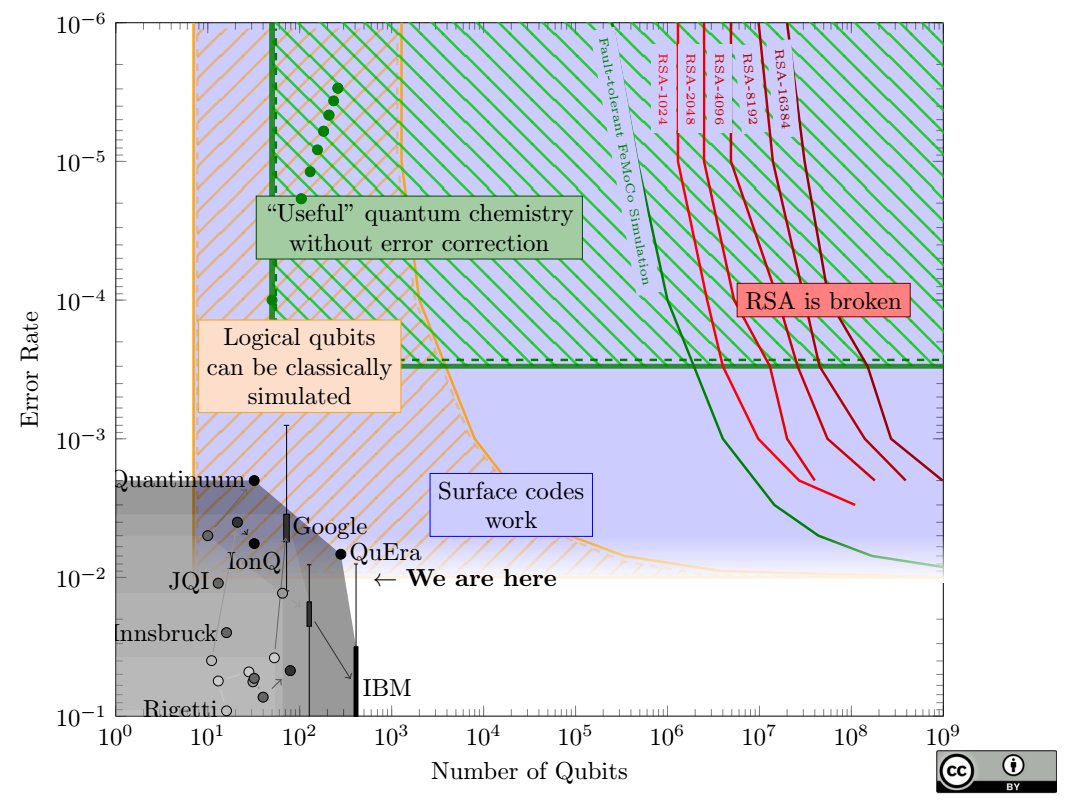
I think Google's assessment that "the main risk for a cryptographically relevant quantum computer is within a ten to 15 year timeframe" is unlikely. We need ~4-5 orders of magnitude more qubits and ~2 orders of magnitude lower error rates. We're not 10Xing qubits every 2 years.
Steve Weis tweet media
English
6
5
12
2.6K
Johann Großschädl retweetledi
Matthew Green
Matthew Green@matthew_d_green·
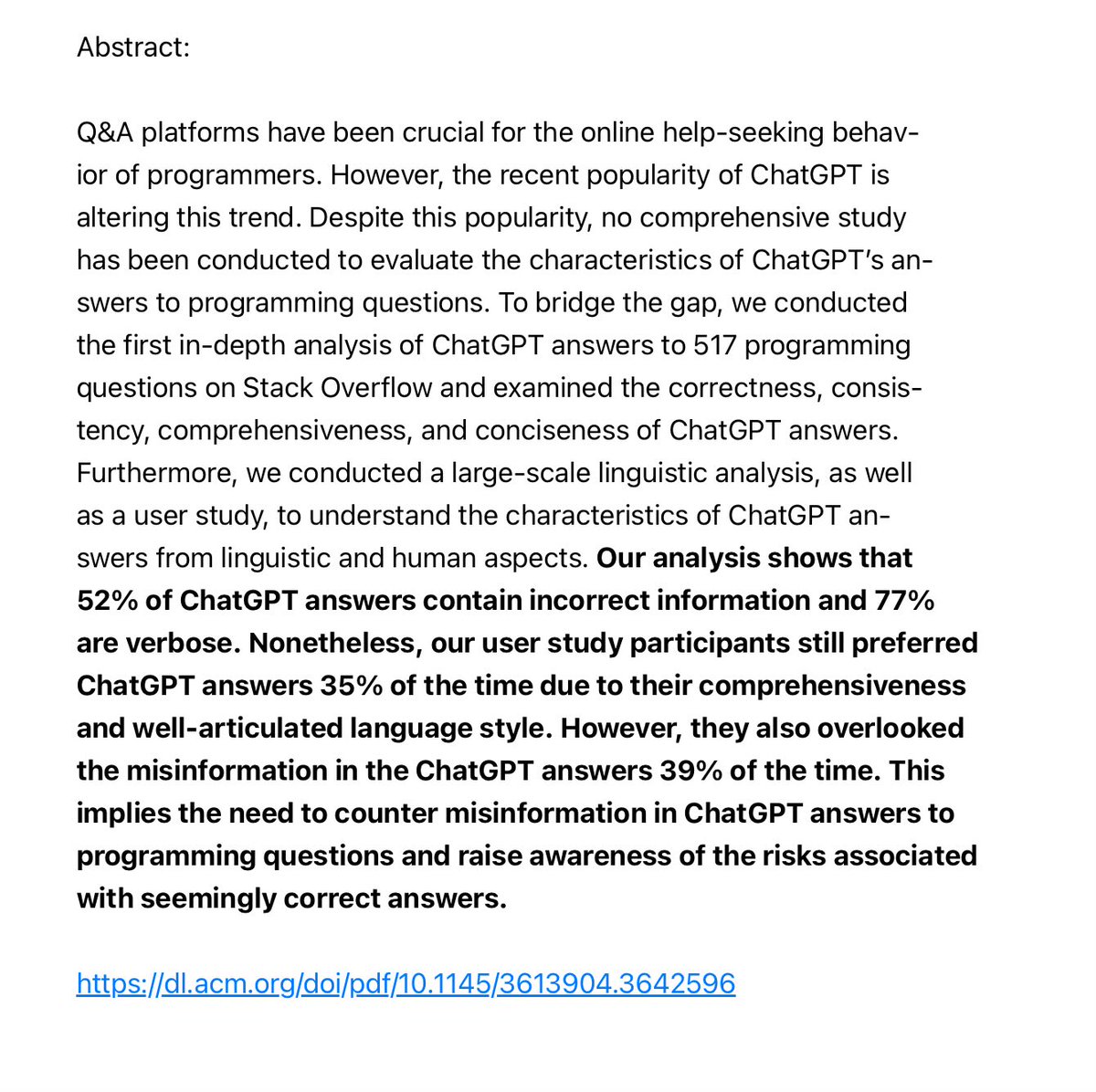
If society knew that software developers spent 80% of their time copying answers from StackExchange and waiting for things to build, they’d burn programmers like witches.
English
8
21
99
7.9K
Michael Schwarz
Michael Schwarz@misc0110·
Getting tenure was a great journey. I want to thank my students, collaborators, and colleagues for their help! This wouldn't have been possible without them.
English
19
1
70
8.7K
Johann Großschädl retweetledi
Nigel Smart
Nigel Smart@SmartCryptology·
The first edition of the new IACR Communications in Cryptology is finally kicking off! The first call for papers is now online: cic.iacr.org/callforpapers Consider to submit your best results if...
English
3
32
76
10.5K
Johann Großschädl retweetledi
Martijn Rasser
Martijn Rasser@MartijnRasser·
Chinese hacker group 'Chimera' broke into chip manufacturer NXP through employee accounts...the hackers made their way to the secure servers, looking for chip designs and other company secrets. They had 2.5 years of undetected and unfettered access. @nrc nrc.nl/nieuws/2023/11…
English
40
514
1.2K
329.2K
Johann Großschädl retweetledi
Nigel Smart
Nigel Smart@SmartCryptology·
Call for papers for the new IACR journal is out.. cic.iacr.org/callforpapers Please support this journal. It is the outcome of a many year community led effort to improve the publication process in cryptography.
English
8
65
113
15.5K