Sabitlenmiş Tweet

John Reynolds
20.5K posts

@JohnReynlds
Freelance business journalist @TheSundayIndo @thecurrency & sometimes others | other editing & writing | https://t.co/LMvFiSCLnx
John Fitzgerald: Ireland is still too small for a nuclear power plant irishtimes.com/business/econo…
Former state peat company Bord na Móna wants to build new gas power stations in Offaly and coincidentally Amazon wants to build a big data centre there… Power stations would qualify for €85m a year in capacity payments - covered by everyone’s bills independent.ie/business/irish…
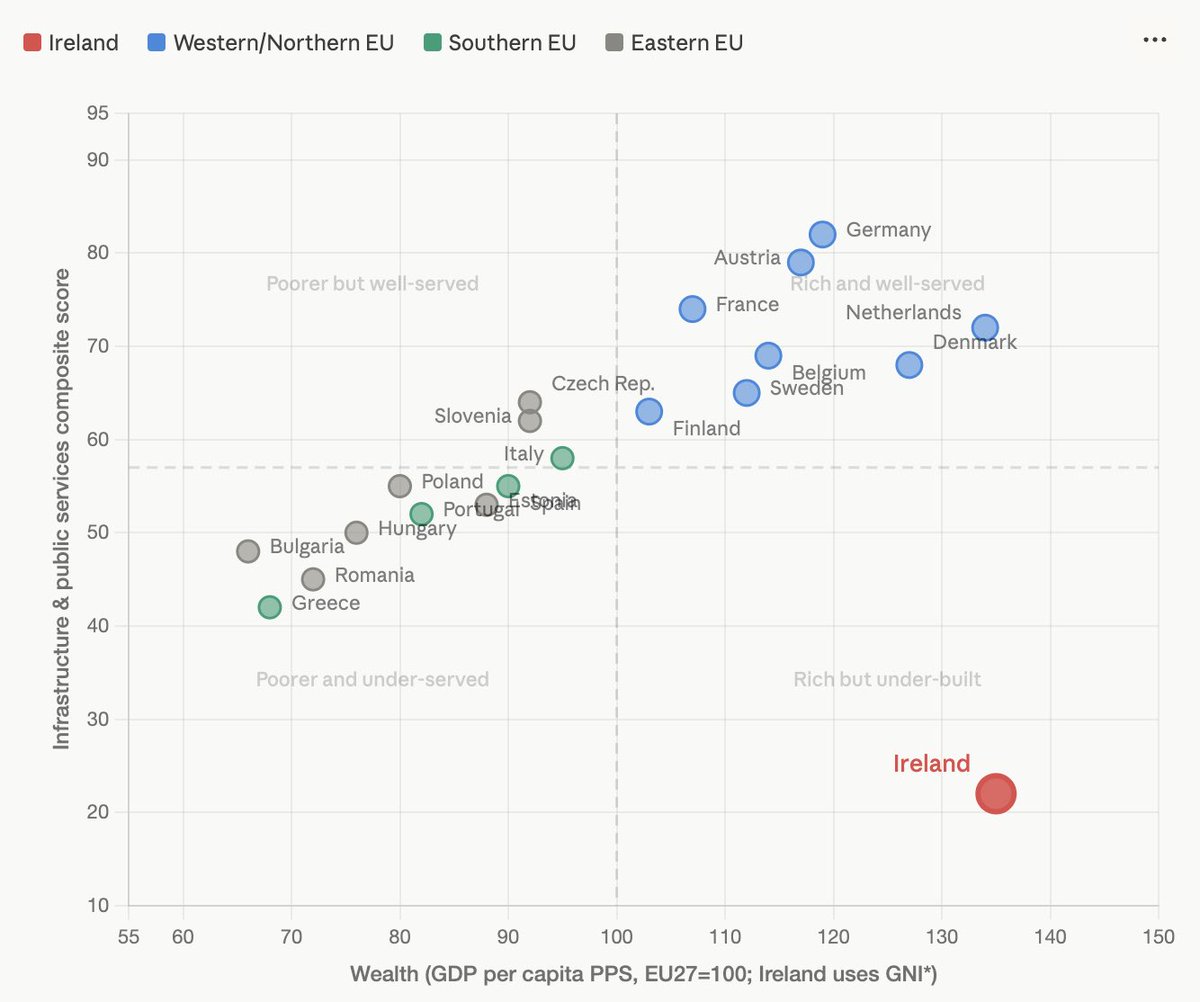
The enshittification of Ireland and the hollowing out of our institutions is the single largest threat to Irish civil society and prosperity. In this damning piece, I'm going into more detail about the graph I posted yesterday: why it's happening in Ireland, why the way we're thinking about the protests is entirely wrong, and what this means for our collective governance. Link to the article is below!

The diagnosis is simple: “Our health-care system broke in 2020.” Hospitals are stuck in a deadly doom loop. They never recovered from #COVID19. economist.com/international/… via @TheEconomist

The combination of AI and small families will create more free time than is good for us, says Janan Ganesh: ft.trib.al/yxKeBDv



Iconic space quotes... Apollo 11 vs Artemis II
THE SILENT COUP by @willydunn AI is a technology we do not control but which plays an increasingly active role at every level of the British power structure. It is part of every conversation, drafting emails between officials, summarising ministers’ briefings and composing speeches delivered in the House of Commons. The Bank of England is using machine learning to inform its decisions on interest rates. The BBC uses AI to redraft articles. Every student at Oxford – where 31 of our previous prime ministers were educated – is now being educated with the help of OpenAI. There is little public understanding of how quickly this technology is moving through the institutions of power, or how enthusiastically it’s being pursued by a government that believes AI software could solve all its problems. In dozens of interviews with current and former government officials and advisers, technologists and MPs – most of whom asked not to be named, in order to speak freely – I have been told about a quiet handing over of control in the frameworks of advice, intelligence and decision-making that underlie every government decision. This is not just a simple software upgrade. This highly persuasive software, built primarily overseas, is being handed an unknown amount of political power. In almost every interview conducted for this piece, I asked whether it was paranoid to suggest that the wholesale adoption of AI by our government, public services and wider economy is handing power to models built in the US and China. Even the most optimistic AI advocates agreed it was a reasonable argument. At a technology conference last year, I spoke to a person who had been involved at the highest level in the government’s use of AI. I asked if it worried them that foundational models could reflect the politics of the people who control them – people who have very different political ideas to our elected leaders. My concerns were not brushed off. This person told me about a power struggle between the engineers building AI models, the plutocrats who own them and the politicians who seek to control them. Far from the noise of the public debate, a battle is being fought that could have lasting implications for our politics. “Make no mistake,” this person told me. “This is a war.” This is not a story about how AI works. It’s not about whether it is going to become sentient, make us rich, or redundant. It is a story about power. It is about how politicians became distracted by a shiny new thing, and failed to understand – or chose not to ask – what it might cost. It is not about whether AI will help itself to your job. It is about whether the people who make AI are helping themselves to your country. This is a matter of sovereignty. Illustration by Brian Stauffer
Daniel Day-Lewis gets it: He famously walked away from Hollywood at the height of his career to live in Italy as a shoemaker’s apprentice. He didn't want the Oscars or the red carpets. He wanted the 'food and drink' of manual labor. He prefers the quiet of the Irish countryside
David McWilliams: Is Ireland the worst run country in Europe? How can we waste so much public money so quickly in so many ways? Has there ever been a country that has achieved so little from so much spending? irishtimes.com/opinion/2026/0…


My thoughts on energy prices, inflation, economic growth and the tendency towards catastrophising in modern discourse. From last Sunday's show. From 31 minutes in. rte.ie/radio/radio1/t…

Morning, @IrishTimes @IrishTimesOpEd article today is on the monumental waste of public money that plagues Ireland. The State is pissing billions away every year. The figures are startling. No one is accountable. irishtimes.com/opinion/2026/0…
28 years ago today, the Good Friday Agreement was signed, one of Labour’s proudest achievements. Working in Northern Ireland, I saw first-hand the transformation peace brought to communities. At a time of global instability, it reminds us that peace must be built and protected.