johnny336 retweetledi
johnny336
4.5K posts

johnny336
@JohnnyKush67
Creating a beautiful life with my favorite girl & our little man! Fam 💙 🐱 🐱 🐱 🐱
Heart Realm Katılım Eylül 2024
453 Takip Edilen305 Takipçiler
johnny336 retweetledi

@latestincosmos people literally got cancer from spraying Roundup just to kill a 'weed' that actually cures cancer
English
johnny336 retweetledi

Boomers were raised by parents who survived war, depression, poverty, and rigid social structures. So they inherited a worldview built around obedience, toughness, silence, shame, and image.
Many of them learned:
“Don’t talk about feelings.”
“Children should be seen, not heard.”
“Work hard, don’t complain.”
“Stay married no matter how miserable it is.”
“Respect authority, even when authority is abusive.”
So a lot of them became providers but not emotionally present parents. They could keep a roof over the house, but often had no clue how to sit with a child’s pain, fears, sensitivity, or emotional needs.
Many were heavily programmed by religion, government, media, corporate culture, and social expectations. The outer image mattered more than the inner truth. A lot of marriages were full of cheating, resentment, addiction, emotional neglect, and abuse, but divorce was shamed — especially for women. So families stayed “together” physically while being broken spiritually and emotionally.
Their generation normalized survival, repression, denial, and “because I said so” parenting.
Gen X
Gen X was the latchkey generation. A lot of them basically raised themselves.
They saw the dysfunction of the Boomers up close. They saw the drinking, the fighting, the cheating, the emotional neglect, the divorce, the silence, the hypocrisy, and the fake image of “everything is fine.”
So Gen X developed toughness. Independence. Sarcasm. Emotional armor.
They didn’t want to be like their parents, but most of them were never given the tools to fully become different. They knew something was wrong, but therapy, emotional intelligence, nervous system healing, trauma work, and conscious parenting were not mainstream yet.
So many Gen X parents tried to be better, but still carried emotional distance, avoidance, addiction patterns, and hardened survival energy. They were less blindly obedient than Boomers, but still deeply shaped by the same programming.
They became the bridge generation: aware enough to see the damage, but often not healed enough to fully stop passing it down.
Millennials
Millennials inherited the emotional neglect, broken family systems, divorce culture, religious trauma, economic collapse, student debt, housing inflation, and the lie that “if you work hard, you’ll make it.”
They were told to go to college, follow the script, obey the system, and everything would work out — only to find the system was already hollowed out.
Millennials became the generation that started openly naming trauma, narcissistic parents, emotional neglect, mental health, burnout, toxic work culture, spiritual disconnection, and the collapse of the American dream.
They are often mocked as weak or entitled, but a lot of that is because they refused to keep pretending dysfunction is strength.
They started asking:
Why am I so anxious?
Why do I hate myself?
Why did my parents never emotionally show up?
Why am I working full-time and still broke?
Why does this entire system feel fake?
Why are we calling trauma “discipline”?
Millennials were the first big wave to begin breaking the spell out loud.
The pattern
Boomers were programmed to obey.
Gen X was programmed to survive.
Millennials were programmed to perform — then woke up and realized the whole game was rigged.
And now younger generations rebel.
The core issue is not just generational laziness or weakness. It is unhealed trauma passed through families, combined with corrupt systems that keep people too exhausted to heal.
Boomers often confused control with parenting.
Gen X confused emotional shutdown with strength.
Millennials confused achievement with worth until burnout forced awakening.
Now the real work is breaking the chain.
Not every person fits the pattern, of course. There are good Boomers, wounded Gen Xers trying their best, and Millennials who still avoid accountability.
Each generation inherited trauma, adapted to it, normalized it, and passed down what they didn’t have the courage or tools to heal.
English
johnny336 retweetledi

Age is not an excuse to not try.
At the age of 32, Julius Caesar broke down in tears before a statue of Alexander the Great, realizing he had accomplished almost nothing in his life while Alexander had already conquered much of the known world.
Serving as a minor official in Spain and burdened by heavy debts, Caesar felt his existence was insignificant by comparison.
This moment of painful self-reflection became a turning point that sparked a fierce new determination.
He returned to Rome, rose rapidly through politics, conquered Gaul, invaded Britain, won a civil war, and fundamentally transformed Rome into a vast empire.

scar@imfat
Can a 29-year-old start all over again?

English
johnny336 retweetledi

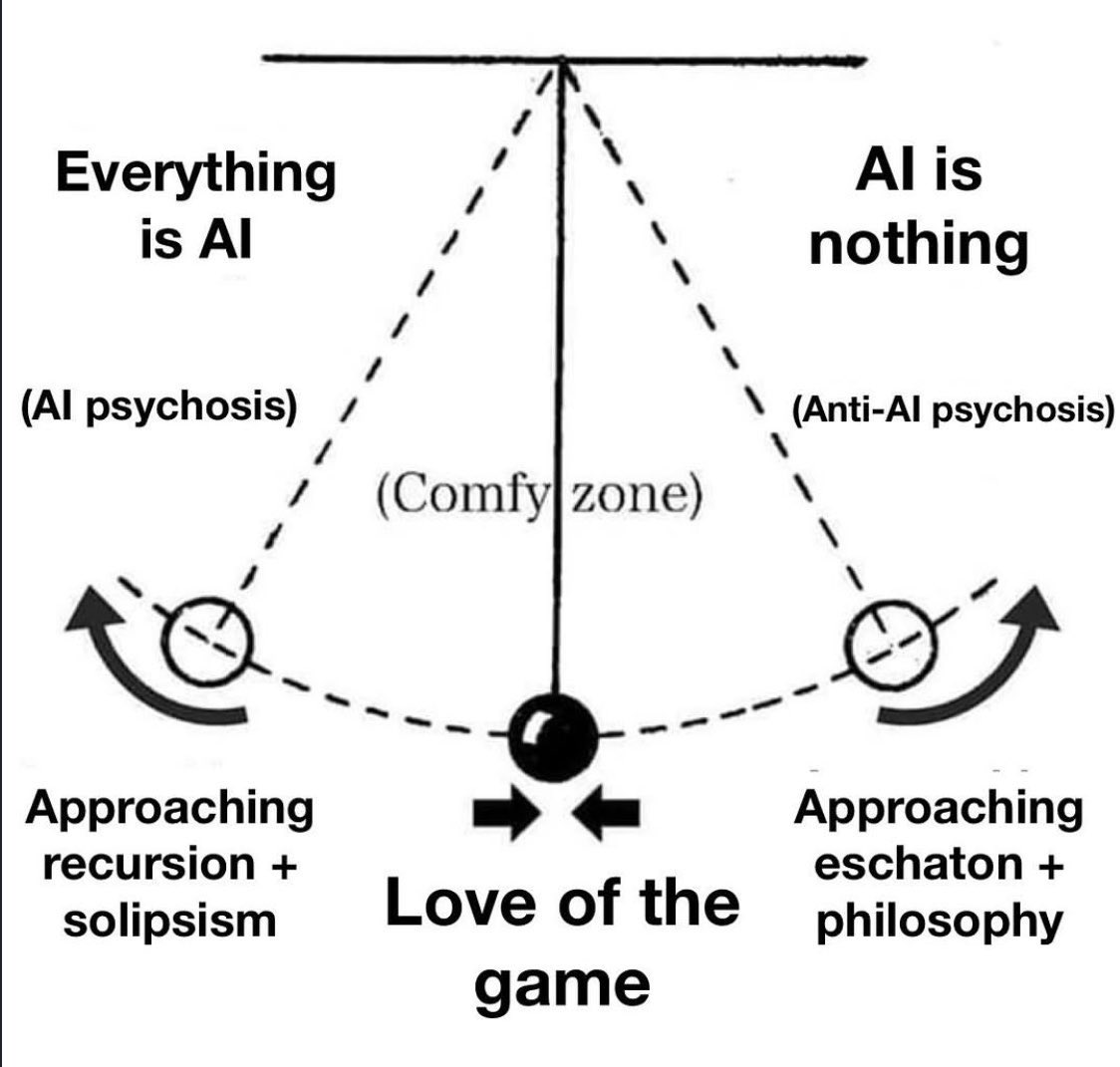
@AdrianDittmann AI is the ultimate mirror of what has been. Consciousness is the infinite potential of what is
English
johnny336 retweetledi

@Rainmaker1973 The "primitive people building tombs" script does exactly what the materialist framework always does...it shrinks the mystery into something manageable and closes the door on the real questions
English

The isolation is a phase not a destination. Pulling away to do the internal work is necessary, but after true awakening the mission moves outward. You stop being afraid of the worlds frequency because ur no longer at the mercy of it. Mastery isnt proved in solitude. Its proved when you can walk fully into the noise and stay completely rooted. The cocoon was never meant to be permanent
English
johnny336 retweetledi