
Jonathan Clark retweetledi
Jonathan Clark
1.6K posts


Jonathan Clark
@JonClarkSeattle
Research Scientist @ Gemini Multilinguality. Learning, Languages, Evals, C++. Previously MT@Microsoft and CMU. Opinions are my own.
Seattle, WA Katılım Mart 2009
2K Takip Edilen2.5K Takipçiler


Jonathan Clark retweetledi
Today, we have released a benchmark and a corresponding leaderboard titled "FACTS Grounding" in collaboration with @kaggle. 1/
Kaggle@kaggle
Introducing FACTS Grounding. A new benchmark we’re launching with @GoogleDeepMind to evaluate LLM’s factual accuracy on over 1700 tasks. 🧠📐
English
Jonathan Clark retweetledi
Jonathan Clark retweetledi

🚀 Join the Gemini Multilinguality team @GoogleDeepMind 🌐 We’re looking for researchers passionate about making LLMs helpful for all. Dramatically improve model quality, coverage, and cultural relevance across hundreds of languages. #NLProc #MultilingualAI #i18n #LLMs boards.greenhouse.io/deepmind/jobs/…
English
Jonathan Clark retweetledi

Exciting news! As of today, the Inuit language of Inuktut will be available on Google Translate - marking the first Canadian Indigenous language on the platform. Tunngasugit! | ᑐᙵᓱᒋᑦ (Welcome!) 🎉
Huge thanks to @ITK_CanadaInuit for their invaluable guidance and collaboration.
Learn more on our blog: blog.google/intl/en-ca/com…
English
Jonathan Clark retweetledi

Excited to announce that 110 languages got added to Google Translate today! Time for context on these languages, especially the communities who helped a lot over the past few years, including Cantonese, NKo, and Faroese volunteers. Also, a 110-language youtube playlist. 🧵
English
Jonathan Clark retweetledi

As part of @Google's 1,000 Languages Initiative, a commitment to support the 1,000 most spoken languages, & w/help of our PaLM 2 LLM, we're adding support for 110 new languages (spoken by 614M people) to Google Translate (now supporting 243 languages). 🎉
blog.google/products/trans…
English
Jonathan Clark retweetledi

I will be at NAACL in-person, and co-organizing the AmericasNLP workshop there!
#NLProc #NAACL2024
AmericasNLP@AmericasNLP
The AmericasNLP Workshop will be co-located with NAACL on June 21, 2024! ✨✨ We are excited to see you all in Mexico City! More here: 2024.naacl.org/program/worksh…
English
Jonathan Clark retweetledi

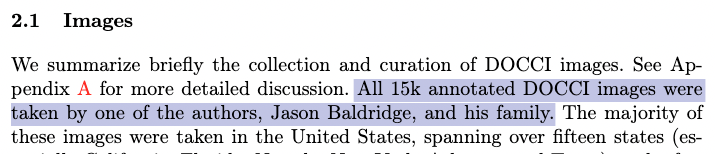
Absolutely unhinged.
When @jasonbaldridge started this in 2021 he would enthusiastically show us weird new images that he took. I thought it was just some weird phase that would fizzle out, but I'm very happy to be wrong, and that it resulted in such a high quality dataset!
Yasumasa Onoe@yasumasa_onoe
We're excited to announce DOCCI: A new dataset designed to advance vision-language research. DOCCI features 15k images with detailed descriptions crafted to capture complex visual concepts – spatial relations, counting, text and entities more. arxiv.org/pdf/2404.19753
English
Jonathan Clark retweetledi

New paper alert!
Designing reliable human evaluation is both crucial and difficult. Human raters can exhibit different behaviors when rating NLG outputs. These differences are not generally due to a rater performing the task incorrectly, but rather due to differences in harshness or leniency between raters: a Minor error to one rater may be a Major error to another. Consequently, decisions around which raters rate which items can alter the final system ranking.
In our new paper, we analyse the impact of rater assignment on the final system ranking and show how you can design a replicable, reliable human evaluation by assigning the right raters to the right items.
Take a look: arxiv.org/pdf/2404.01474…

English
Jonathan Clark retweetledi

ACL has removed the anonymity period.
This means that ACL submissions can be posted and discussed online at any time, although extensive PR is discouraged.
aclweb.org/adminwiki/imag…

English
Jonathan Clark retweetledi

Today at #NeurIPS2023, If you want to lean more about:
1. Robustness of detectors and watermarks to paraphrase attacks (spoiler alert: needs improvement).
2. An alternative detection approach using simple retrieval methods.
and ...
Kalpesh Krishna@kalpeshk2011
To detect text written by LMs like #ChatGPT, many methods have recently emerged: DetectGPT, watermarks, GPTZero. We present a paraphrasing attack that can drop their detection rates to <10%. To defend against it, we propose detection with retrieval. arxiv.org/abs/2303.13408 🧵👇
English
Jonathan Clark retweetledi

Excited to receive an Outstanding Paper award for this work at @emnlpmeeting! Thanks to my co-authors George Foster and @markuseful! Updated version available here: aclanthology.org/2023.emnlp-mai…
Dan Deutsch@_danieldeutsch
LLM-based metrics like GEMBA predict many ties, but the way that ties should be handled in Kendall’s tau for meta-evaluating metrics has been a longstanding issue. We propose an update to the meta-evaluation methodology to handle ties. arxiv.org/pdf/2305.14324…
English
Jonathan Clark retweetledi
Our work on cross-lingual and multilingual attribution will be presented at #EMNLP2023 in Singapore!
We have also released our dataset of ~10k 3-way annotations over 5 typologically diverse languages.
Arxiv: arxiv.org/abs/2305.14332
Dataset: github.com/google-researc…
John Wieting@johnwieting2
We all want accurate responses from our QA systems, and this need becomes especially vital when interacting with text in languages unfamiliar to us, rendering answer verification reliant on translation. This challenge is particularly felt by speakers of low-resource languages.
English
Jonathan Clark retweetledi

Excited to be presenting our work on
**Evaluating and Modeling Attribution for Cross-Lingual Question Answering** at #EMNLP2023 in Singapore.
Updated Paper: arxiv.org/abs/2305.14332
We're also releasing the XOR-AttriQA dataset: github.com/google-researc…
🧵
Benjamin Muller@ben_mlr
Despite the fantastic progress we've seen recently in cross-lingual modeling, the best systems still make a lot of factual errors. To address this, here is our work on 🚨 Evaluating and Modeling Attribution for Cross-Lingual Question Answering 🚨 #1 Attribution Evaluation: Our work is the first to study attribution for cross-lingual QA. We collect attribution data in 5 languages (Bengali, Finnish Japanese, Russian, and Telugu) With this data, we find that even state-of-the-art cross-lingual open-retrieval QA systems (e.g. CORA) lack attribution. Additionally, we find that passages retrieved cross-lingually contribute only moderately to the attribution level of the system, calling for progress in this area. #2 Attribution Detection Modeling: We experiment with a wide range of attribution detection models to address this issue. We find that NLI models and PaLM 2, fine-tuned on a very small number of attribution examples (~100), reach above 90% accuracy on attribution detection, leading to significantly improving the attribution level of CORA. Attribution is one of the most promising directions to improve trust in NLP systems: Our results show the potential of using attribution detection models to improve it for cross-lingual question answering. Work done while interning at Google Research last summer with @johnwieting2 @JonClarkSeattle @seb_ruder @tmkwiat @liviobs @roeeaharoni @jonherzig @cindyxinyiwang Thanks to @dipanjand, Michael Collins, Vitaly Nikolaev, @jasonriesa, and @pat_verga for supporting the project and to @AkariAsai for fruitful discussions about CORA. Paper available here: arxiv.org/abs/2305.14332
English
Jonathan Clark retweetledi
Excited to announce the First Conference on Language Modeling, to be held in approximately a year from now.
Please let us know if you are interested or have any feedback on the conference: colmweb.org/survey.html
Sasha Rush@srush_nlp
Introducing COLM (colmweb.org) the Conference on Language Modeling. A new research venue dedicated to the theory, practice, and applications of language models. Submissions: March 15 (it's pronounced "collum" 🕊️)
English
Jonathan Clark retweetledi

Introducing COLM (colmweb.org) the Conference on Language Modeling. A new research venue dedicated to the theory, practice, and applications of language models.
Submissions: March 15 (it's pronounced "collum" 🕊️)
English
Jonathan Clark retweetledi
Have you ever wanted a LangID model that works on 1500+ languages? check out FUN-LangID: github.com/google-researc… !
English
Jonathan Clark retweetledi
Excited to announce MADLAD-400 - a 2.8T token web-domain dataset that covers 419 languages(!).
Arxiv: arxiv.org/abs/2309.04662
Github: github.com/google-researc… 1/n

English
Jonathan Clark retweetledi

An open-source version of the datasets we developed for supporting very low resource languages on Google Translate. If you are interested in low resource NLP please give it a try!!
Sneha Kudugunta@snehaark
Excited to announce MADLAD-400 - a 2.8T token web-domain dataset that covers 419 languages(!). Arxiv: arxiv.org/abs/2309.04662 Github: github.com/google-researc… 1/n
English