@ForgiatoBlow47 The right to get deported or self-deport out of here.
English
Jonathan Silveira 🇺🇲
14.1K posts

@JonnyBoxxa3232
MAGA is law 🇺🇲 🙏🏻God, Country, Family🇺🇲DADDD🖕🤣🖕Trump won, so now Maura Healey has to go. 🇺🇲 #MAGAGANG #FAFO









How the hell does the city that experienced the biggest Islamic terrorist attack in history vote for a Muslim mayor?

May the Fourth be with You! With just two weeks to go, we’re doing one more MONEYBOMB to finish the fight on May 4. Sign up at the link in the comments to be reminded. We need to raise another $300k to finish our TV and mail plan. We can do this!

💥NEW: Geraldo Rivera says Adam Mockler was "D*CK" to @ScottJenningsKY before he snapped💥 "Chris, the kid was a d*ck ... he was really being a d*ck. Shut up. Go out and get some life experience." "There was a freshness about it."



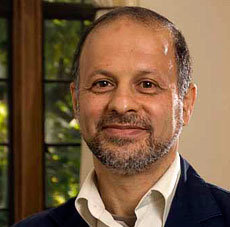
🎥#Consequences_of_the_Strategyless_Israeli/American_Attack_on_Iran: It Strengthened and Radicalized the Islamic Republic — We Should Have Increased Sanctions Instead: The Golden Opportunity to Change the Regime Was Temporarily Lost 👇👇👇 👈 @citrinowicz Danny Satronowitz (Dennis Citrinowicz), senior Iran program expert at the Institute for National Security Studies (INSS) in Israel with 25 years of experience in Israeli military intelligence focused on Iran. On April 15, 2026, when he was accused in Israel of defending the Iranian regime, he tweeted: “My friend, don't underestimate my contribution to the security of Israel and the United States in the campaign against Iran. Unlike you, I have also practically operated in the field (even as a major, believe it or not) and I am familiar with the limits of power when dealing with Tehran.” In this Atlantic Council interview, with a precise analytical approach, he examines the 60-day Iran war, strategic mistakes, regime resilience, and future scenarios. ✅ 1. Main Claims 1.1. The Iranian regime quickly rebuilt its decision-making system after the assassination of its leader — this was surprising. 1.2. The Houthis did not intervene significantly due to their improved relations with Saudi Arabia — this prediction was wrong. 1.3. The war began without a clear strategic objective and has led to a prolonged stalemate. 1.4. The kinetic military attack strengthened the regime instead of weakening it and reduced the chance of regime change. ✅ 2. Arguments 2.1. The system is larger than any individual; despite losing Khamenei, the regime rapidly rebuilt its decision-making process, demonstrating greater resilience than expected. 2.2. The Houthis’ limited involvement shows previous assessments of the Axis of Resistance were incomplete due to their new constraints and relations with Saudi Arabia. 2.3. Starting a war without a clear strategy or plan for “the day after” trapped both the US and Israel in a 60-day stalemate. 2.4. Kinetic military action gave the regime a “lifeline,” unified its supporters, and turned it into a heroic narrative, whereas sustained economic pressure would have exposed its weaknesses. 2.5. The new “Islamic Republic 3.0” is more decentralized, radical, and militarized, making decision-making harder and any future agreement more difficult. 2.6. Without regime change or a deal, Iran will rebuild its missile and nuclear programs, creating a long-term threat to Israel. 2.7. The US now faces only three bad options: economic stalemate, military escalation, or an unsatisfactory agreement — none are ideal. 2.8. The war without strategy wasted a golden opportunity to fundamentally change or significantly weaken the regime. ✅ 3. Evidence and Examples 3.1. Rapid regime reconstruction after leadership decapitation: contrary to predictions of collapse, the system was quickly restored. 3.2. Limited Houthi involvement: despite expectations of full entry into the war, they took only minimal action due to Saudi relations. 3.3. Lack of strategic objective: the war turned into a prolonged stalemate because there was no clear plan for the day after. 3.4. “Lifeline” to the regime: the military attack unified hardliners and gave them a narrative of victory instead of exposing internal weaknesses. 3.5. Decentralized radical regime: without a charismatic leader like Khamenei, power is now spread among IRGC figures, making the system more extreme. 3.6. Current stalemate: both sides believe time is on their side, preventing any decisive outcome. 3.7. Missed golden opportunity: sustained economic pressure (blockade) before kinetic strikes could have created real change. 3.8. Future nuclear and missile threat: Iran is expected to accelerate rebuilding its capabilities. ✅ 4. Results and Implications 4.1. The Islamic Republic emerged stronger and more radicalized. 4.2. The 60-day stalemate imposed heavy costs on the US and Israel without achieving strategic goals. 4.3. The new decentralized regime makes future negotiations and agreements significantly harder. 4.4. The golden opportunity for regime change or major weakening has been lost, forcing consideration of worse future scenarios. 🔴 Final Conclusion: Danny Satronowitz demonstrates with philosophical precision that a war launched without strategy, instead of weakening the regime, strengthened and radicalized it and created the current stalemate. Sustained economic pressure would have been far more effective, but kinetic action gave the regime a lifeline. The time has come for a realistic, analytical approach to avoid repeating past strategic mistakes. 😎