José Luis De Alba

11.7K posts

José Luis De Alba

José Luis De Alba

@Jou_DeAlba

President & CEO Incipio Ventures Promotor y Cofundador ContpaQi, Korima Sistemas, TXN, Interesado en Humanismo, Emprendedores, Empresas Sociales, Finanzas

Guadalajara, México Katılım Aralık 2009
794 Takip Edilen692 Takipçiler
José Luis De Alba retweetledi
Capitán Bitcoin
Capitán Bitcoin@CapitanBitcoin·
🚨Esto se construyó en Nueva España (ahora llamado México), en 1690. Es la capilla Nuestra Señora del Rosario. Aquí está todo el oro que España se robó a sí mismo, 3 siglos antes de que Claudia Sheimbaum, de padres y abuelos polacos comunistas, hablara de nuestra historia.
Español
298
6.2K
18.1K
266K
Nav Toor
Nav Toor@heynavtoor·
Your smart TV is taking screenshots of your screen every 15 seconds. Not a guess. Not a theory. A peer-reviewed study by researchers at UC Davis, UCL, and UC3M tested it. Samsung TVs: every minute. LG TVs: every 15 seconds. Even when you're just using it as a monitor. Here's how to turn it off for every brand:
English
854
6.7K
26.5K
6.5M
José Luis De Alba retweetledi
Ahmed Khalifa
Ahmed Khalifa@_A_khalifa·
This war has revealed a bitter truth for us Arabs & real Muslims in the UAE & the Gulf: Europe is no longer the Europe we used to know.. The Europe of beauty, culture, humanity & art the one we looked up to, studied in & learned so much from, is gone ! Now it feels like a third-world country a refuge for failures a safe haven for extremists run by the Muslim Brotherhood IRGC agents & every terrorist who got kicked out of the Middle East! Europe has sadly lost its identity. Soon the the native European will feel like strangers in their own land watching their society get worse & worse all with the blessing of their own leaders!! It’s a painful, pathetic joke.. I’m sorry, but I have to post this warning (Video) again. It was from 10 years ago. I don’t know if it’ll make any difference anymore, but I’m sharing it for the fifth time anyway!
English
562
6.7K
15.6K
366.1K
José Luis De Alba retweetledi
Sukh Sroay
Sukh Sroay@sukh_saroy·
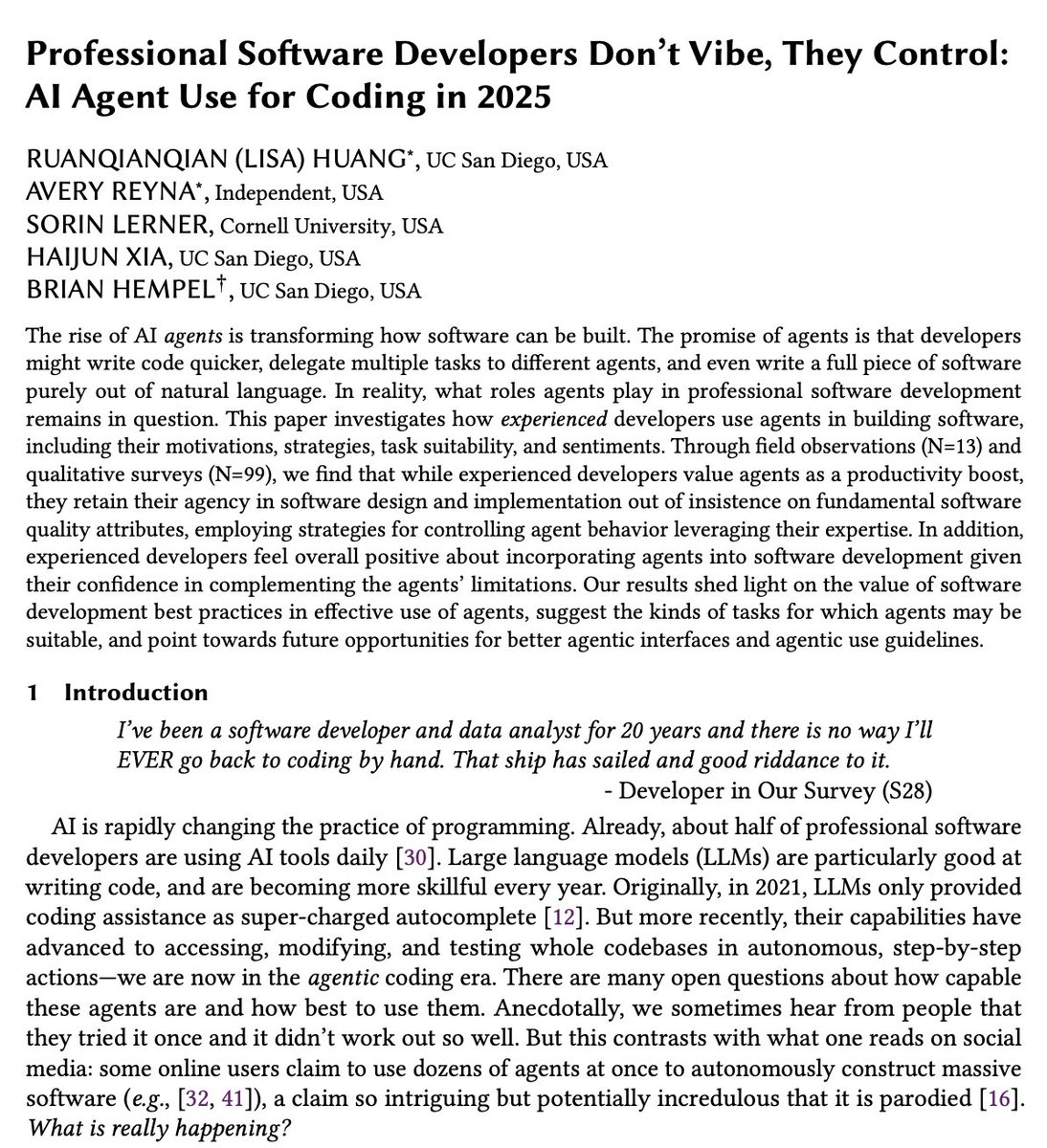
A new study just blew up the entire "vibe coding" movement. Researchers from UC San Diego and Cornell tracked 112 experienced software developers using AI agents in their actual jobs. The finding is the opposite of every viral demo on your timeline. Professional developers don't vibe code. They control. Here's what they actually found. The researchers ran two studies. 13 developers were observed live as they coded with agents in real production work. 99 more answered a deep qualitative survey. Every participant had at least 3 years of professional experience. Some had 25. The viral pitch of agentic coding goes like this. Hand the agent a vague prompt. Don't read the diff. Forget the code even exists. Trust the vibes. Andrej Karpathy coined the term. Tens of thousands of developers on X claim to run "dozens of agents at once" building entire production systems hands-off. The data says almost nobody serious actually works that way. Here is what experienced developers do instead. → They plan before they prompt. They write out the architecture, the constraints, and the edge cases first, then hand the agent a tightly scoped task. → They review every diff. Not because they're paranoid. Because they've seen what happens when you don't. → They constrain the agent's blast radius. Small, well-defined tasks only. The moment a problem touches multiple systems or has unclear requirements, they take over. → They treat the agent like a fast junior dev that needs supervision, not a senior engineer that can be trusted alone. The researchers also found something darker buried in the data. A separate randomized trial they cite showed that experienced open source maintainers were 19% slower when allowed to use AI. A different agentic system deployed in a real issue tracker had only 8% of its invocations result in a merged pull request. 92% failure rate in production. 19% productivity drop for senior devs. The viral demos lied to you. The paper's biggest insight is in one sentence: experienced developers feel positive about AI agents only when they remain in control. The moment they let go, quality collapses, and they know it. This matches what every serious shop has quietly figured out. The developers shipping the most with AI right now aren't the ones vibing. They're the ones with the strictest review processes, the tightest task scoping, and the clearest mental model of what the agent can and cannot do. Vibe coding makes for great Twitter videos. It does not make great software. The next time someone tells you they let Claude build their entire SaaS in a weekend, ask them how much of that code they've actually read. The honest answer separates real engineers from the demo crowd.
Sukh Sroay tweet media
English
200
337
1.7K
265.5K
Mehdi (e/λ)
Mehdi (e/λ)@BetterCallMedhi·
I just finished reading palantir’s manifesto & I need you to understand what you’re actually looking at because this is the MOST important document the tech world has produced this year most people came away thinking «wow what a thoughtful essay about patriotism and technology »…I came away thinking this is the most elegant justification for corporate capture of the state apparatus ever written & I want to walk you through why krp opens with «silicon valley owes a moral debt to the country that made its rise possible » & frames the entire document as a call to civic duty, but read between the lines and what he’s actually saying is that the engineering elite should be embedded inside the defense and intelligence apparatus of the nation, he’s describing exactly what palantir has already done and dressing it up as patriotism «the question is not whether AI weapons will be built, it is who will build them and for what purpose »sounds like a warning but it’s actually a sales pitch, he’s telling every gov on earth that the choice is binary either you buy from us or your adversaries will build it without you, this is the oldest arms dealer rhetoric in history wrapped in SV vocabulary « hard power in this century will be built on software »is the key sentence of the entire manifesto because this is where karp reveals the real thesis, he’s saying whoever controls the software layer of national defense controls the nation itself & if you’ve been following my threads you know that palantir’s gotham and foundry platforms are already plugged into the intelligence feeds the satellite data, financial transactions & communications of dozens of govts worldwide through a single ontological knowledge graph that creates a technological dependency so deep that migrating away would mean rebuilding the entire institutional memory of the organization from scratch this is vendor lockin at the scale of nation states and I’m personally convinced it was designed this way from the beginning «we should applaud those who attempt to build where the market has failed to act » is karp defending palantir’s expansion into every domain the gov used to handle itself, policing immigration, military targeting intelligence analysis public health, everywhere the state retreats palantir advances and what was once a government function becomes a private service that the government can no longer perform without plantir’s permission and here’s what I think makes it even more concerning, these systems are increasingly autonomous meaning the AI layer is making targeting recommendations threat assessments & resource allocation decisions that humans inside gov are rubber stamping without fully understanding the underlying logic a bureaucrat inside the pentagon / DGSI sees a recommendation from the system & approves it because the system has been right 97% of the time and questioning it would require technical expertise that no one in the room has, this is algorithmic governance wearing the mask of human decision making «the atomic age is ending, a new era of deterrence built on ai is set to begin »is the MOST chilling sentence in the document because karp is explicitly saying that ai based deterrence will replace nuclear deterrence as the organizing principle of global power, and whoever builds that ai deterrence layer owns the 21st century the same way whoever built the bomb owned the 20th & he’s telling you plainly that palantir intends to be that builder «national service should be a universal duty » & « we should only fight the next war if everyone shares in the risk »sounds noble until you realize that he is proposing a system where citizens serve the state & the state is operationally dependent on palantir, the public bears the risk and palantir captures the value, soldiers fight wars planned by algorithms they can’t audit built by a company they can’t vote out
Palantir@PalantirTech

Because we get asked a lot. The Technological Republic, in brief. 1. Silicon Valley owes a moral debt to the country that made its rise possible. The engineering elite of Silicon Valley has an affirmative obligation to participate in the defense of the nation. 2. We must rebel against the tyranny of the apps. Is the iPhone our greatest creative if not crowning achievement as a civilization? The object has changed our lives, but it may also now be limiting and constraining our sense of the possible. 3. Free email is not enough. The decadence of a culture or civilization, and indeed its ruling class, will be forgiven only if that culture is capable of delivering economic growth and security for the public. 4. The limits of soft power, of soaring rhetoric alone, have been exposed. The ability of free and democratic societies to prevail requires something more than moral appeal. It requires hard power, and hard power in this century will be built on software. 5. The question is not whether A.I. weapons will be built; it is who will build them and for what purpose. Our adversaries will not pause to indulge in theatrical debates about the merits of developing technologies with critical military and national security applications. They will proceed. 6. National service should be a universal duty. We should, as a society, seriously consider moving away from an all-volunteer force and only fight the next war if everyone shares in the risk and the cost. 7. If a U.S. Marine asks for a better rifle, we should build it; and the same goes for software. We should as a country be capable of continuing a debate about the appropriateness of military action abroad while remaining unflinching in our commitment to those we have asked to step into harm’s way. 8. Public servants need not be our priests. Any business that compensated its employees in the way that the federal government compensates public servants would struggle to survive. 9. We should show far more grace towards those who have subjected themselves to public life. The eradication of any space for forgiveness—a jettisoning of any tolerance for the complexities and contradictions of the human psyche—may leave us with a cast of characters at the helm we will grow to regret. 10. The psychologization of modern politics is leading us astray. Those who look to the political arena to nourish their soul and sense of self, who rely too heavily on their internal life finding expression in people they may never meet, will be left disappointed. 11. Our society has grown too eager to hasten, and is often gleeful at, the demise of its enemies. The vanquishing of an opponent is a moment to pause, not rejoice. 12. The atomic age is ending. One age of deterrence, the atomic age, is ending, and a new era of deterrence built on A.I. is set to begin. 13. No other country in the history of the world has advanced progressive values more than this one. The United States is far from perfect. But it is easy to forget how much more opportunity exists in this country for those who are not hereditary elites than in any other nation on the planet. 14. American power has made possible an extraordinarily long peace. Too many have forgotten or perhaps take for granted that nearly a century of some version of peace has prevailed in the world without a great power military conflict. At least three generations — billions of people and their children and now grandchildren — have never known a world war. 15. The postwar neutering of Germany and Japan must be undone. The defanging of Germany was an overcorrection for which Europe is now paying a heavy price. A similar and highly theatrical commitment to Japanese pacifism will, if maintained, also threaten to shift the balance of power in Asia. 16. We should applaud those who attempt to build where the market has failed to act. The culture almost snickers at Musk’s interest in grand narrative, as if billionaires ought to simply stay in their lane of enriching themselves . . . . Any curiosity or genuine interest in the value of what he has created is essentially dismissed, or perhaps lurks from beneath a thinly veiled scorn. 17. Silicon Valley must play a role in addressing violent crime. Many politicians across the United States have essentially shrugged when it comes to violent crime, abandoning any serious efforts to address the problem or take on any risk with their constituencies or donors in coming up with solutions and experiments in what should be a desperate bid to save lives. 18. The ruthless exposure of the private lives of public figures drives far too much talent away from government service. The public arena—and the shallow and petty assaults against those who dare to do something other than enrich themselves—has become so unforgiving that the republic is left with a significant roster of ineffectual, empty vessels whose ambition one would forgive if there were any genuine belief structure lurking within. 19. The caution in public life that we unwittingly encourage is corrosive. Those who say nothing wrong often say nothing much at all. 20. The pervasive intolerance of religious belief in certain circles must be resisted. The elite’s intolerance of religious belief is perhaps one of the most telling signs that its political project constitutes a less open intellectual movement than many within it would claim. 21. Some cultures have produced vital advances; others remain dysfunctional and regressive. All cultures are now equal. Criticism and value judgments are forbidden. Yet this new dogma glosses over the fact that certain cultures and indeed subcultures . . . have produced wonders. Others have proven middling, and worse, regressive and harmful. 22. We must resist the shallow temptation of a vacant and hollow pluralism. We, in America and more broadly the West, have for the past half century resisted defining national cultures in the name of inclusivity. But inclusion into what? Excerpts from the #1 New York Times Bestseller The Technological Republic: Hard Power, Soft Belief, and the Future of the West, by Alexander C. Karp & Nicholas W. Zamiska techrepublicbook.com

English
274
2.4K
8.7K
1M
Iván Fernández Amil
Iván Fernández Amil@ivanfamil·
¿Sabías que la ciencia creía que los nativos de Isla de Pascua arrasaron su paraíso para mover estatuas de ochenta toneladas? Al final resultó que la leyenda que se contaba era cierta. Los gigantescos moáis "caminaron" solos gracias a la física. Tira del hilo 🧵👇🏽👇🏽👇🏽
Iván Fernández Amil tweet media
Español
12
219
788
66.7K
YokerAI
YokerAI@IATheYoker·
Hay una forma de que Claude Code lea solo lo que necesita. Gratis. Y cambia completamente cómo consumes tokens.
YokerAI tweet media
Español
3
19
121
14.5K
Francisco García
Francisco García@Fran_actua·
Estás en la misma universidad. Mismo temario que todos. Mismos apuntes. Mismos exámenes. Pero estudias la mitad de horas y sacas mejores notas. No eres más listo. Usas estos 10 prompts que nadie te enseñó en clase (Guárdalos) 🧵👇
Francisco García tweet media
Español
3
50
192
20.9K
Roberto A. Ruarte
Roberto A. Ruarte@roberto_ruarte·
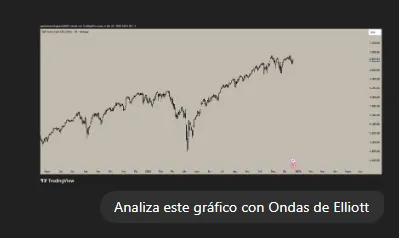
Les preparé algo… Baje todo mi conocimiento a esta IA que te va a permitir analizar Ondas de Elliott correctamente Tiene todo lo que aprendí en casi 40 años en los mercados Le subís tu gráfico y en segundos te devuelve un análisis completo, con el mismo enfoque que uso yo Hoy voy a estar regalando accesos para que puedan probarlo Comentáme “GPT” y asegurate de seguirme para poder enviártelo al privado
Roberto A. Ruarte tweet mediaRoberto A. Ruarte tweet media
Español
304
20
207
27.1K
Roberto A. Ruarte
Roberto A. Ruarte@roberto_ruarte·
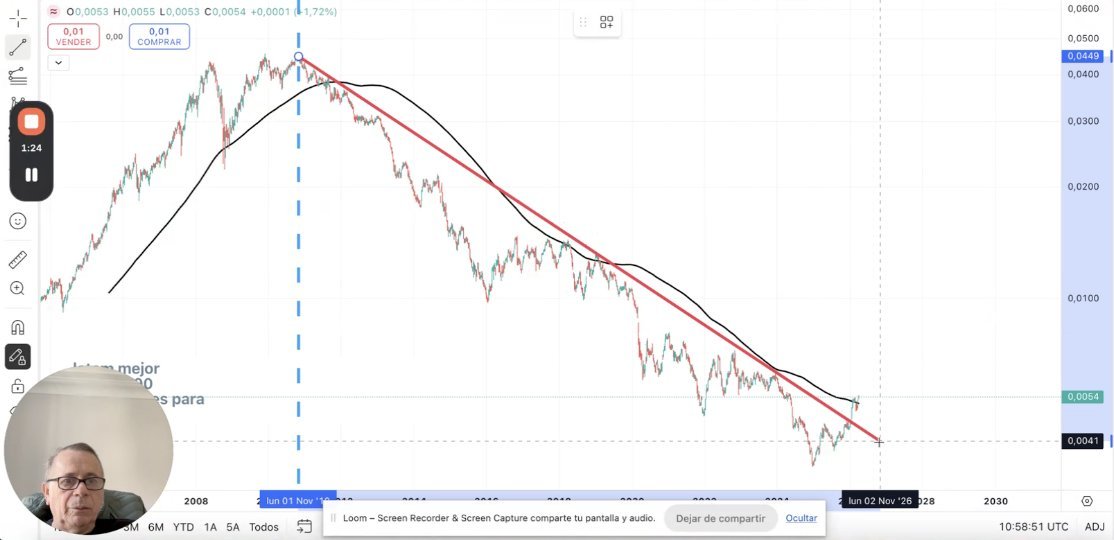
Invertir en el SP500 es de las peores decisiones que podes tomar… Y hay un ratio que muy pocos inversores siguen. LATAM contra el SP500. Esta semana rompió al alza. La última vez que pasó esto fue en 2002. Luego de eso vino una década donde LATAM subió +600% Mientras Wall Street vivió sus peores años Chile, Colombia, Brasil y Argentina ya confirmaron su estructura de forma clara. Con uno de los conteos mas claros que vi en años. Las economías más grandes de Latam ya están alineadas 📈 Grabé un análisis completo de esto para mi círculo de Mastermind, donde enseño mi criterio con +40 años de experiencia en los mercados Pero hoy quiero que todos tengan acceso para que entiendan el nuevo ciclo y no pierdan la oportunidad. Responde ‘LATAM’ y seguime para que te lo pueda enviar por privado.
Roberto A. Ruarte tweet mediaRoberto A. Ruarte tweet media
Español
64
18
147
30K
Raúl | Productividad & IA
Raúl | Productividad & IA@Raul_IA_Prod·
Noticia de última hora: El CEO que creó a Claude acaba de publicar una carta de 38 páginas dirigida a toda la humanidad Dario Amodei detalló con precisión qué profesiones sobrevivirán a la IA y cuáles no Sin exageraciones. Sin predicciones apocalípticas. Simplemente la predicción más fría y específica que jamás haya hecho un líder en IA Pero la página 29 contiene un marco de razonamiento que transforma la IA, de algo que te reemplazará a tu mayor ventaja competitiva Aquí tienes 9 prompts de Claude, basadas en la metodología de Amodei, que te pondrán años por delante de quienes no hayan leído esto:
Raúl | Productividad & IA tweet media
Español
37
283
1.4K
238.9K
Travis Hawley
Travis Hawley@talk2trav·
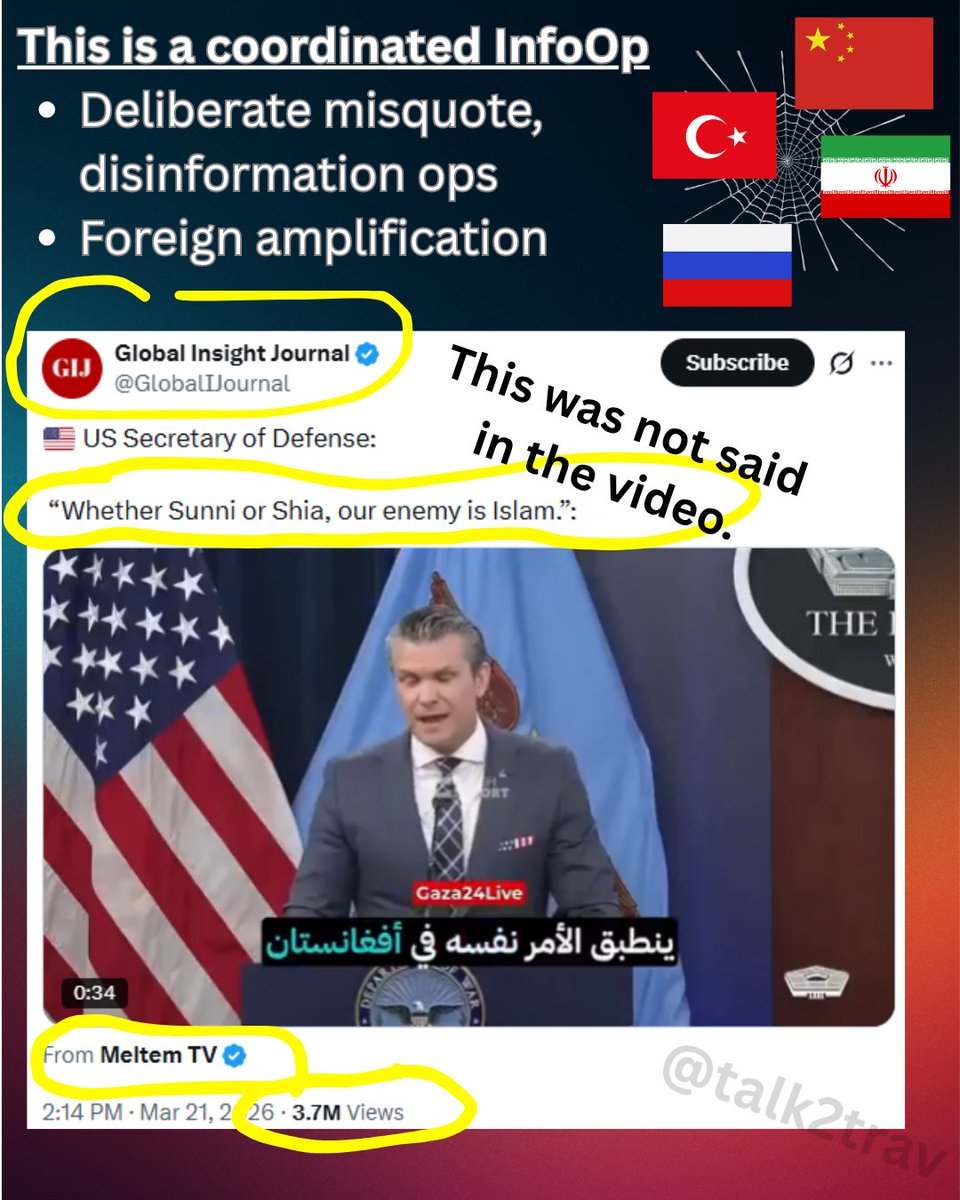
I uncovered a coordinated foreign Information Operation here on X. This is a 16 page thread that gets juicier the further you read. 🧵 Buckle up as we learn how Iran, Russia, China and Turkey are subverting the West on social media. CC: @nikitabier THREAD 🧵
Travis Hawley tweet media
English
175
1.7K
4.6K
620.3K
Shanaka Anslem Perera ⚡
Shanaka Anslem Perera ⚡@shanaka86·
The first strike on Iranian oil infrastructure just landed. Not on Kharg Island, where Iran loads crude for export. Not on the southern oil fields of Khuzestan, where crude comes out of the ground. On the Shahran fuel depot on the northern outskirts of Tehran, where gasoline and military fuel are stored for domestic distribution across a city of thirteen million people. At least two of the depot’s eleven storage tanks are burning. Thick black smoke is visible from highways across the capital. Fuel is leaking from damaged tanks. The Iranian oil ministry says the volume in the targeted tank was “not high” and the situation is “under control.” The IDF confirmed the strike, describing it as a hit on fuel storage linked to the Iranian armed forces. The targeting choice reveals the strategy that the fire obscures. Iran’s oil export infrastructure sits in the south. Kharg Island handles roughly 90 percent of crude exports. Abadan, Bandar Abbas, and Isfahan house the major refineries with a combined capacity exceeding one million barrels per day. None of these have been struck. The coalition has the ability to hit them. It is choosing not to. Because destroying Iran’s export infrastructure would remove Iranian crude from global markets permanently, spike oil to $150 or beyond, and unite the Global South against an operation that was already condemned by 120 nations. Instead, the coalition hit the domestic fuel supply. The Shahran depot feeds Tehran. It feeds the trucks that carry food to markets. It feeds the vehicles that move IRGC personnel between command nodes. It feeds the generators that keep hospitals and water treatment operating when the power grid is degraded. Striking it does not change the global oil price. It changes life inside the capital for thirteen million people who are already living under the most sustained aerial bombardment of a major city since Baghdad 2003. Iran produces roughly 2.8 million barrels per day but refines most of it domestically. The country imports gasoline because its refining capacity cannot meet internal demand even in peacetime. Sanctions have degraded refinery maintenance for decades. The Tehran refinery itself processes 250,000 barrels per day. If the Shahran depot that stores its output is burning, the distribution chain between refinery and consumer is broken even if the refinery itself is untouched. This is the squeeze. The air campaign destroys military bases, airports, command bunkers, Basij facilities, and now fuel storage. The Hormuz closure blocks the imports that might compensate. The internet is at four percent of normal capacity. Domestic flights are grounded. The road network is under surveillance from commercial satellites that any adversary can access. And now the fuel that moves everything, military and civilian, through a country the size of Alaska is burning in a depot on the edge of the capital. Iran’s oil ministry says the fire is under control. The fire in the depot may be. The fire in the country is not. open.substack.com/pub/shanakaans…
English
151
880
3.2K
991.4K
Nacho Rovira
Nacho Rovira@GordoGeos·
🌍🛢️ IRÁN: EL GIRO ESTRATÉGICO QUE SACUDE AL MERCADO ENERGÉTICO El conflicto iniciado el 28 de febrero con la Operación “Epic Fury” entró en una nueva fase. La campaña militar de EE.UU. e Israel ya no apunta solo al programa nuclear y la estructura militar iraní. Ahora apunta al corazón económico del régimen: el petróleo y la infraestructura que sostiene al régimen. Y ese giro cambia todo. 🎯 DE GUERRA MILITAR A GUERRA ENERGÉTICA Las primeras operaciones se enfocaron en decapitar el liderazgo político-militar iraní. El golpe más simbólico fue la muerte del líder supremo Ali Khamenei, que dejó al régimen en una situación de enorme fragilidad política. Pero hoy, 7 de marzo, el objetivo cambió. Los ataques comenzaron a dirigirse a infraestructura petrolera estratégica: 📍 depósitos de crudo 📍 refinerías 📍 centros de almacenamiento 📍 hubs logísticos de exportación Instalaciones como Shahran, Karaj y Koohak, cerca de Teherán, registraron explosiones masivas. La lógica es clara: si el régimen financia su aparato militar con petróleo, entonces el petróleo pasa a ser el campo de batalla. 💵 GOLPEAR LA BILLETERA DEL RÉGIMEN Irán produce aproximadamente: 🛢️ 3–4 millones de barriles por día Una parte importante de esos ingresos financia: • el programa nuclear • el desarrollo misilístico • redes de proxies regionales (Hezbollah, milicias iraquíes, hutíes) Por eso el nuevo objetivo es aislar económicamente al régimen. Si los ataques degradan refinerías y almacenamiento, la capacidad exportadora podría caer 20–50 %. En términos fiscales eso significa: 💰 miles de millones de dólares menos para el Estado iraní. 🏪 LA REACCIÓN DEL MERCADO El mercado energético leyó este cambio de objetivo como una escalada estructural del conflicto. Resultado: 📈 el Brent Futuro saltó cerca de 11 % y llegó a ~USD 93/bbl en pocas horas y la razón es simple: Atacar infraestructura petrolera ya no es solo guerra regional. Es riesgo directo sobre el suministro energético global. 💥 EL COMIENZO DE LA GUERRA ECONÓMICA Golpear infraestructura petrolera tiene un objetivo claro, asfixiar financieramente al régimen. Pero también abre un nuevo frente: • ataques de proxys regionales • sabotaje a infraestructura energética en el Golfo • continuar con las disrupciones marítimas en Ormuz y el Mar Rojo En otras palabras: la guerra ya no es solo militar, ahora es vive en el campo de la geopolítica energética. 📌 CONCLUSIÓN Cuando una guerra empieza a destruir instalaciones petroleras, deja de ser un conflicto regional. Se convierte en un shock energético global. Porque cuando el petróleo entra en guerra, el mundo entero paga el precio.
Nacho Rovira tweet media
Nacho Rovira@GordoGeos

🛢️🇮🇷 IRÁN: UN RÉGIMEN VIOLENTO SOSTENIDO POR PETRÓLEO La violencia política financiada por hidrocarburos. Irán no es un país con una economía diversificada que “además” tiene petróleo. Hoy responde a un régimen teocrático y violento, cuyo sostén económico central son los hidrocarburos. 📊 Hoy, petróleo + gas explican: ~80% de las exportaciones totales hasta 55% de los ingresos fiscales US$ 50–60 mil millones anuales, aun bajo sanciones 👉 Sin ese flujo, la violencia no camina. 🔥 LOS NÚMEROS DUROS 🛢️ Petróleo Producción total (crudo + líquidos): ~4,15 Mbbl/d (2025) Crudo puro: 3,2–3,5 Mbbl/d Exportaciones físicas: ~1,5–1,8 Mbbl/d Producción histórica acumulada: ~83.000 millones de barriles Reservas probadas: 157–200 Gbbl ⛽ Gas Producción 2025: ~776 mcm/d, con picos de 870 mcm/d Reservas probadas: ~1.200 Tcf (≈16% del total mundial). 75% South Pars (Qatar + Iran). Uso clave: consumo interno + reinyección EOR Exportaciones limitadas: 15–20 bcm/año 🧱 POR QUÉ EL RÉGIMEN DEPENDE DEL PETRÓLEO Irán tiene minería, industria y agricultura, sí. Pero en escala varios ordenes menor: 🪨 Minería: US$ 8–9 mil millones/año (2,5–4% del PBI) 🌾 Agro: ~US$ 1.000 millones/año en exportaciones 🏭 Industria y servicios: 55% del PBI, pero dependientes de energía barata 👉 Nada compite con el petróleo y el gas como generadores de caja dura, divisas y poder fiscal. 🔒 HOY: RECURSOS SECUESTRADOS POR SANCIONES Con sanciones: China, ignora sanciones de EEUU y absorbe >80% del crudo exportado. Turquía (swap gas x electricidad) e Iraq concentran el gas. UAE e Iraq funcionan como hubs de reexportación Ventas vía intermediarios, swaps y flotas fantasmas. 📉 Resultado: Mercado chico Descuentos forzados Dependencia de pocos compradores Flujo controlado políticamente El petróleo no está en el mercado está en órbita de unos pocos países. 💣 SI CAE EL RÉGIMEN Y SE LEVANTAN LAS SANCIONES Acá está el punto importante. Si Irán vuelve al mercado formal: 📈 Producción potencial: 5–6 Mbbl/d en 2–5 años 📈 +1–2 Mbbl/d adicionales de exportación 💰 Inversiones posibles: US$ 50–100 mil millones 🛠️ Recuperación mejorada (EOR) en campos maduros 🌍 Diversificación real de compradores Ese petróleo deja de financiar un régimen que usa sus ganancias para permanecer en el poder y pasa a competir en el mercado global. 🌍 EFECTO GLOBAL Más oferta podría llevar a presión bajista de precios. Menos poder concentrado en OPEP+/China/Rusia. Mayor seguridad de suministro y reordenamiento del comercio energético Es volumen, reservas y acceso a mercado. 📌 Para Cerrar Mientras el régimen siga en pie, el petróleo iraní no es un commodity, es un instrumento político y el sostén de un aparato represivo sumamente violento. El día que caiga, ese crudo deja de pertenecer a unos pocos y vuelve a ser lo que siempre fue..., un recurso del mercado.

Español
7
49
166
16K
José Luis De Alba retweetledi
UHN Plus
UHN Plus@UHN_Plus·
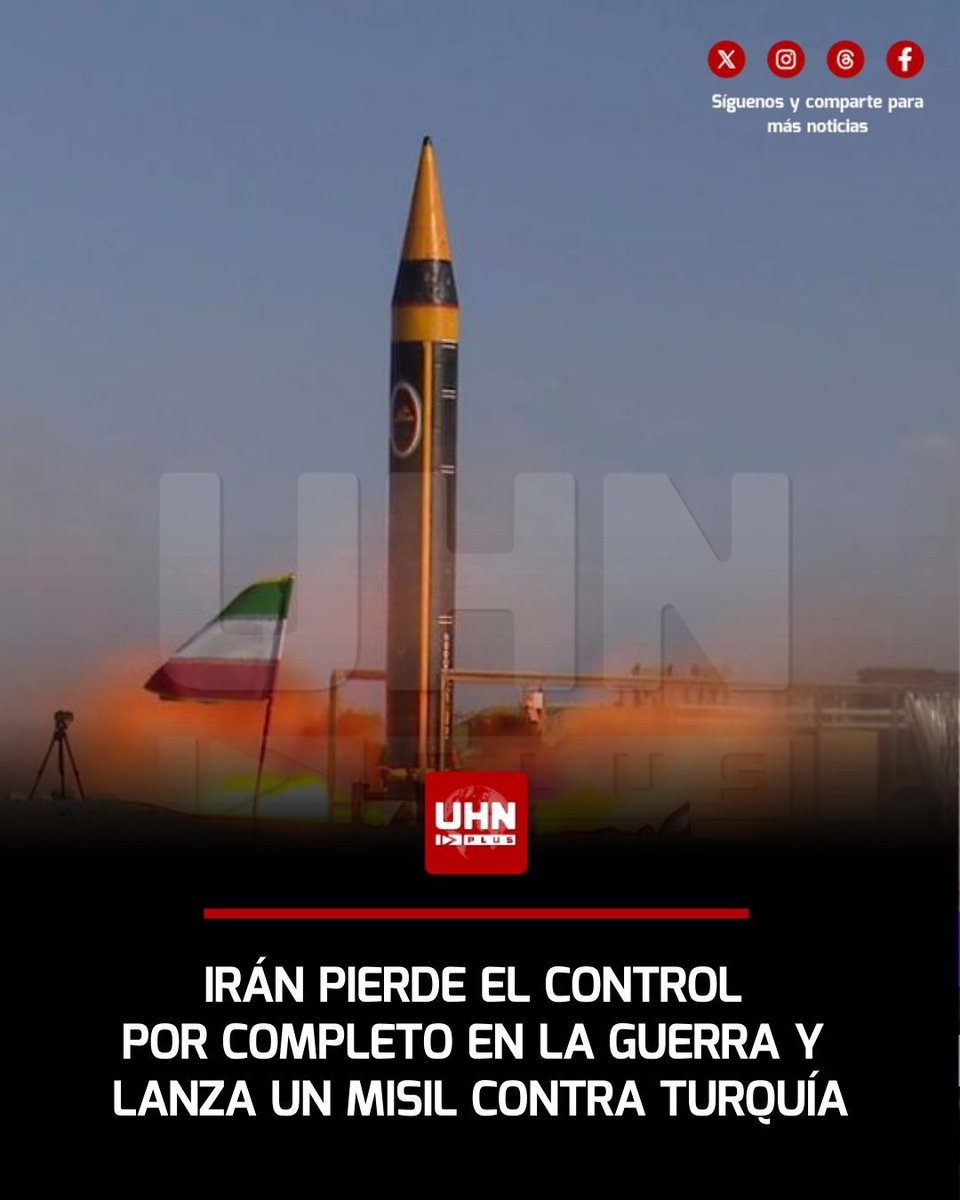
🇮🇷🇹🇷‼️ | URGENTE – En una acción totalmente inesperada, Irán acaba de disparar un misil balístico contra Turquía. Las defensas aéreas de la OTAN lo derribaron en el Mediterráneo Oriental. Este es el primer ataque de Irán contra un miembro de la OTAN en Europa. "Advertimos a todas las partes que se abstengan de realizar acciones que puedan agravar aún más el conflicto. Nos reservamos el derecho de responder a cualquier acción hostil", señalaron desde el Ministerio de Defensa de Turquía.
UHN Plus tweet media
Español
832
5.6K
21.9K
1.3M
soros triplehijueputa
soros triplehijueputa@soroshijueputa2·
Pongan cuidado a este hilo que voy hacer y es con el único motivo de demostrar como nos han mentido en la historia. LOS JUICIOS DE ERNST ZÜNDEL Ernst Zündel (1939-2017) fue un editor, autor y activista de los derechos civiles nacido en Alemania.
Español
232
1.7K
3.8K
1.6M
Iván Fernández Amil
Iván Fernández Amil@ivanfamil·
Durante siglos se creyó que la Gran Pirámide de Guiza había sido construida con mano de obra esclava. Pero en 2013, un arqueólogo encontró un papiro en una cueva del desierto que pulverizó este legendario mito de Hollywood para siempre. El Diario de Merer. Tira del hilo 🧵👇🏽👇🏽👇🏽
Iván Fernández Amil tweet media
Español
43
679
2.5K
275.9K