Js G

5.9K posts

Js G

Js G

@Js2194021330

Katılım Mart 2022
204 Takip Edilen43 Takipçiler
Js G retweetledi
h16
h16@_h16·
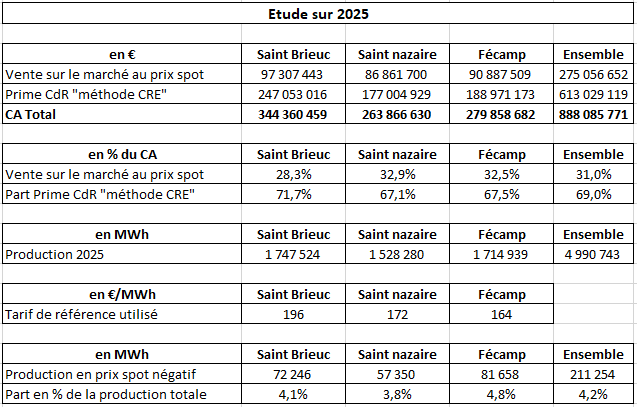
Comment l'éolien produit essentiellement des flux financiers du contribuable vers les promoteurs : 69% des revenus des parcs de St Brieuc, St Nazaire et Fécamp sont des subventions. Le contribuable ne paie pas de l'électricité, il paie des moulins à vent qui tournent essentiellement à perte.
h16 tweet media
Cartographie de l'éolien en France@cartoeolfw

Les revenus des parcs éoliens de Saint-Brieuc, Saint-Nazaire et Fécamp comportent deux sources qui s'ajoutent : 1- Vente sur marché au prix spot. 2- Prime versée au titre du complément de rémunération. Pour l'exercice 2025, notre estimation conduit aux résultats suivants. 👀 1/4

Français
15
222
344
6.3K
Js G retweetledi
Jim Bianco
Jim Bianco@biancoresearch·
How can dozens of ships defeat the US Blockade, as the FT repost below says is happening? The map shows how a tanker can travel from Kharg Island to Mumbai while remaining within the territorial waters of Pakistan and India. The US Blockade Rules and UNCLOS (UN Law of the Sea) give ships the right of innocent passage through a coastal state’s territorial sea, and it is the coastal state that will regulate that passage. Once in Pakistani or Indian waters, they can transfer their cargo or continue without entering international waters. @mercoglianos @johnkonrad
Jim Bianco tweet media
Financial Times@FT

Good morning, Asia. While you were sleeping, one of our most-read stories reported that dozens of ships have managed to circumvent the blockade since it began — despite Donald Trump declaring it a ‘tremendous success’. ft.trib.al/uIGI0Yn

English
195
1K
3.2K
879.8K
Js G retweetledi
Cohaerens
Cohaerens@cohaerentiat·
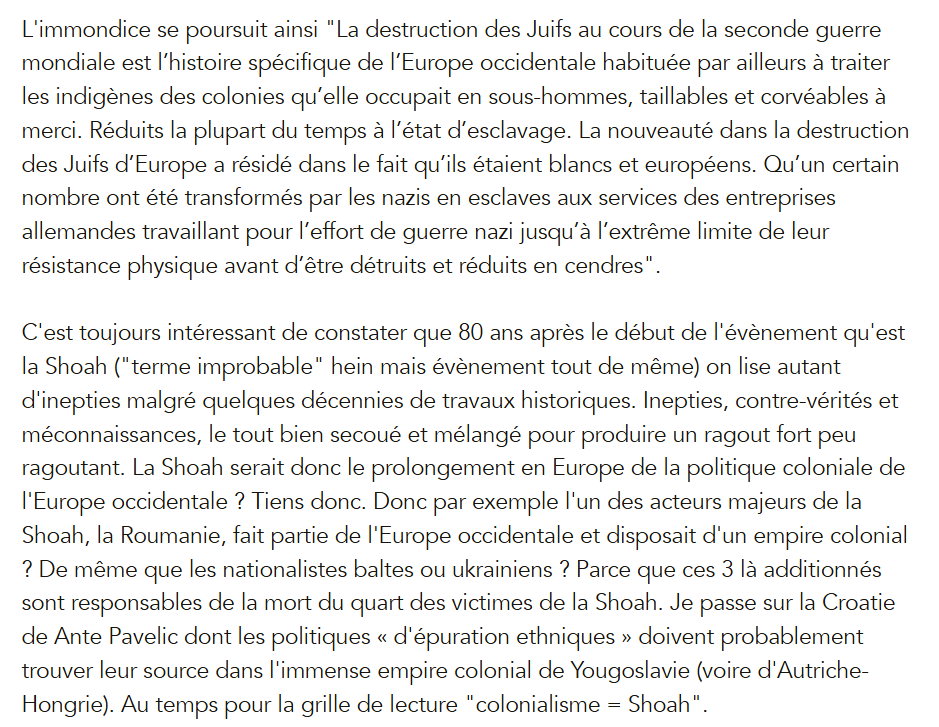
C'est pas récent ni original (et ça éclaire aussi pourquoi tant de "décoloniaux" tiennent à présenter tout Israélien comme un colon et le sionisme comme un nazisme.) Tal Bruttmann, historien de la Shoah, et d'autres historiens y ont déjà répondu.
Cohaerens tweet media
Français
4
19
189
12.4K
Js G retweetledi
John M. Donnelly
John M. Donnelly@johnmdonnelly·
Approximate estimates of percentages of U.S. munitions expended in Iran war, per @CNN : 50% THAAD interceptors 50% Patriot interceptors 45% Precision Strike Missiles 30% Tomahawk missiles 20% Joint Air-to-Surface Standoff Missiles 20% Standard Missiles (SM-3 and SM-6)
Zachary Cohen@ZcohenCNN

New: The US military has significantly depleted its stockpile of key missiles during war with Iran & created “near-term risk” of running out of ammunition in a future conflict should one arise in next few years, per experts & 3 people familiar w/ recent internal Pentagon assessments. cnn.com/2026/04/21/pol…

English
171
1K
2.8K
600.8K
Js G retweetledi
Kaja Kallas
Kaja Kallas@kajakallas·
Daily U-turns, whether the Strait of Hormuz is open or closed, are reckless. Transit through the Strait must remain free of charge. The EU has reached the political agreement to widen our sanctions regime to also target those responsible for breaches to freedom of navigation. None of us want to see a nuclear-armed Iran. We are in agreement with our regional partners that any durable settlement must address also other issues in addition to the nuclear one, including Iran's missile programme and its continued support to terrorist groups. My press remarks following today's Foreign Affairs Council ↓
English
1.5K
530
2.7K
473.4K
Js G retweetledi
Glenn Diesen
Glenn Diesen@Glenn_Diesen·
German authorities seem to have zero recognition of the security dilemma, and even believe it is immoral to recognise that there is any security competition. Germany assisted in toppling the government in Ukraine, developed Ukraine as a frontline against Russia, and sabotaged the Minsk peace agreement—yet any reaction by Russia would inevitably be considered “unprovoked", and Germany predictably went into full moral outrage. Germany can cut energy deals with Russia, stay silent about the U.S. destroying Nord Stream, and assist in targeting Russian oil refineries and hunting Russian commercial vessels—yet Russia cutting energy supplies to Germany is met with righteous indignation as it is believed to be an unprovoked “hybrid war”. Similarly, German-backed attacks on Russia will at some point trigger retaliatory strikes against Germany. In the minds of social constructivists, recognising this reality and the world as it is, is consistently condemned as “legitimising” Russian aggression, taking the side of Russia etc. etc. Recognising how your own side threatens the security of others and having the foresight to predict how the opponent will likely react is effectively criminalised. Armed with normative arguments and moral righteousness, how have any of the "pro-Ukrainian" policies since 2013 actually helped Ukraine? What was smeared as "pro-Russian" arguments in 2013/2014 would have resulted in Ukraine keeping its territory (including Crimea), its men and infrastructure. Is morality about chanting normative arguments, ignoring the security concerns of opponents and criminalising foresight? Or does morality demand that we recognise the world as it is to set achievable objectives?
Glenn Diesen tweet media
English
69
620
1.8K
48.2K
Js G retweetledi
Etienne Marcuz
Etienne Marcuz@Etienne_Marcuz·
La conference de révision du Traité de non prolifération (TNP) nucléaire débutera la semaine prochaine dans une ambiance électrique : - la Russie reproche à la France d'augmenter son arsenal nucléaire, jugeant cette décision comme hautement déstabilisatrice et potentielle menace pour Moscou (sans rire...), alors qu'elle possède plus de 4000 têtes nucléaires, contre moins de 300 actuellement pour la France - sachant que l'augmentation ne sera vraisemblablement pas significative, ne serait-ce qu'en raison des contraintes de matières fissiles disponibles. - l'OTAN, au travers de secrétaire général adjoint Boris Ruge, soutient la décision française et la présente comme "mesurée, raisonnable et transparente au regard de la menace". - à l'inverse, l'OTAN reproche à la Russie d'avoir violé ses engagements à plusieurs reprises et d'utiliser la rhétorique nucléaire à fins de coercition, y compris par le tir au combat d'IRBM duaux (conventiionnels/nucléaires) ORESHNIK à deux reprises contre l'Ukraine, souvent interprété comme un signal à l'Alliance atlantique. - l'OTAN reproche à la Chine l'expansion massive de son arsenal, qui est passé de moins de 200 têtes nucléaires à plus de 600 en quelques années, et qui devrait l'amener vers les 1000 têtes à l'horizon 2030. - la Chine s'en offusque et répond qu'elle a toujours maintenu un arsenal à un niveau minimal requis pour sa sécurité nationale, tout en refusant toute course aux armements. Position qui n'est pas sans rappeler celle de... Paris - toute proportion gardée. - la position des États-Unis est très attendue, le TNP étant l'un des derniers traités multilatéraux dans lesquels ils sont engagés, alors que l'administration actuelle ne cache pas son mépris pour ce type de traités. Dans tous les cas, la France et l'OTAN comptent réaffirmer leurs engagements internationaux sur le long terme vis-à-vis du TNP - la hausse de l'arsenal français étant une entorse temporaire à l'esprit du traité, mais jugée nécessaire puisque l'ensemble des autres États nucléaires se réarment. Sale temps pour le contrôle des armements ☢️
Boris Ruge@RugeBoris

I spoke with Reuters about the upcoming #NPT Review Conference and #NATO|s strong commitment to the treaty as the cornerstone of the global non-proliferation architecture👇 reuters.com/business/aeros…

Français
10
57
160
21.7K
Js G retweetledi
Olivier Schmitt
Olivier Schmitt@Olivier1Schmitt·
Commentaire: - l’Allemagne pense sa remontée en puissance militaire et donne une direction à ses moyens (rappelons que dans la trajectoire actuelle, le budget militaire de l’Allemagne sera le double de celui de la France à court terme). On peut considérer qu’ils ont beaucoup à rattraper, mais ça ne va pas durer longtemps. La trajectoire, si cela fonctionne, est de faire de facto de l’Allemagne le grand intégrateur militaire sur lequel vont se greffer l’Europe centrale et du Nord. 5/
Français
1
3
25
2.9K
Js G retweetledi
BFM Business
BFM Business@bfmbusiness·
"Aucun transit par l'oléoduc Droujba ne sera autorisé": la Russie va cesser de livrer du pétrole kazakh à l'Allemagne dès le 1er mai prochain l.bfmtv.com/jaZs
Français
47
66
104
123.1K
Js G retweetledi
Eric Sartori
Eric Sartori@EricSartori3·
Le livret A ne doit pas financer la rente des oligarques de l'éolien en mer. Sans aide, (ie la subvention de 2 milliards pour 13 éoliennes) le projet Bretagne sud1 perdrait 425 millions d'Euros et c'est encore sous-estimé ! « Les autorités françaises ont calculé la VAN
Eric Sartori@EricSartori3

#PIEBÎEM :Epargne des Français détournée au profit des oligarques de l’éolien en mer, c’est non ! –l'exemple de Bretagne sud. Le rapport Levy Tuot prévoit d'étudier la possibilité de piocher dans le livret A pour financer l'éolien en mer.. ! piebiem.webnode.fr/l/l-epargne-de…

Français
2
10
14
292
Js G retweetledi
etbadaboum 埃特巴达布姆
‘In the final analysis, the problem of base vulnerability is a hard problem. There is no good solution to this problem. And therefore deterrence in Asia is dead. The underlying reason for the nonexistence of a solution is the fact that China is now vastly more powerful than the United States. The United States will soon reach an accord with Iran that marks Iran’s acceptable as a great power whose interests must be respected. What this means is that the days of playing empire in the gulf region are over. With deterrence in Asia dead, the American position in Asia is also now past is sell-by date. And Europe has already been abandoned. So the end of the empire is now in sight.’
Policy Tensor@policytensor

x.com/i/article/2044…

English
3
18
56
8.8K
Js G retweetledi
Mehdi (e/λ)
Mehdi (e/λ)@BetterCallMedhi·
à ce stade le problème n’est même plus la fuite le problème c’est le déséquilibre total entre l’appétit de collecte de données et la faiblesse de protection un État qui exige toujours + d’infos personnelles sans garantir leur inviolabilité finit par détruire la base même de sa légitimité numérique
Gouvernement@gouvernementFR

11,7 millions de comptes concernés. ⚠ On fait le point sur l’incident de sécurité ayant touché l’Agence nationale des titres sécurisés. ⬇ info.gouv.fr/actualite/fran…

Français
21
270
1.1K
28.6K
Js G retweetledi
Js G retweetledi
Murtaza Hussain
Murtaza Hussain@MazMHussain·
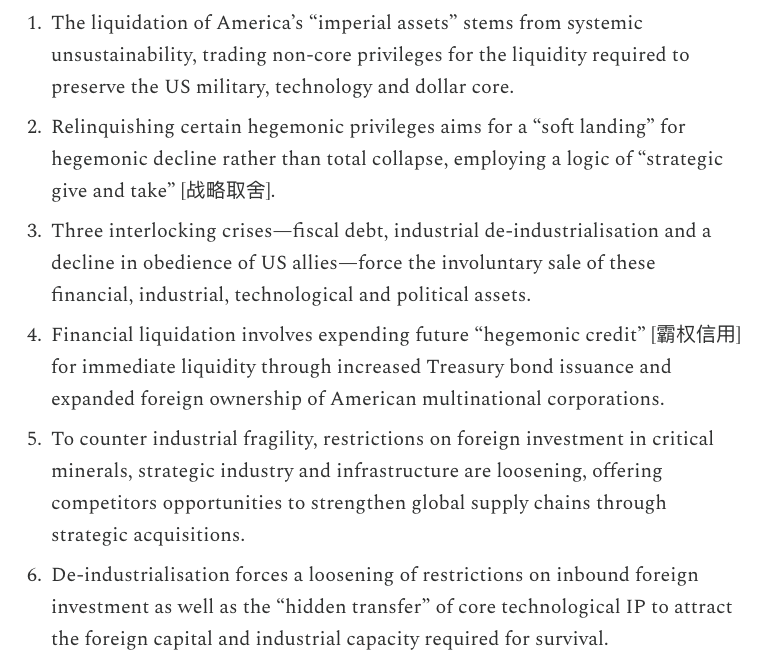
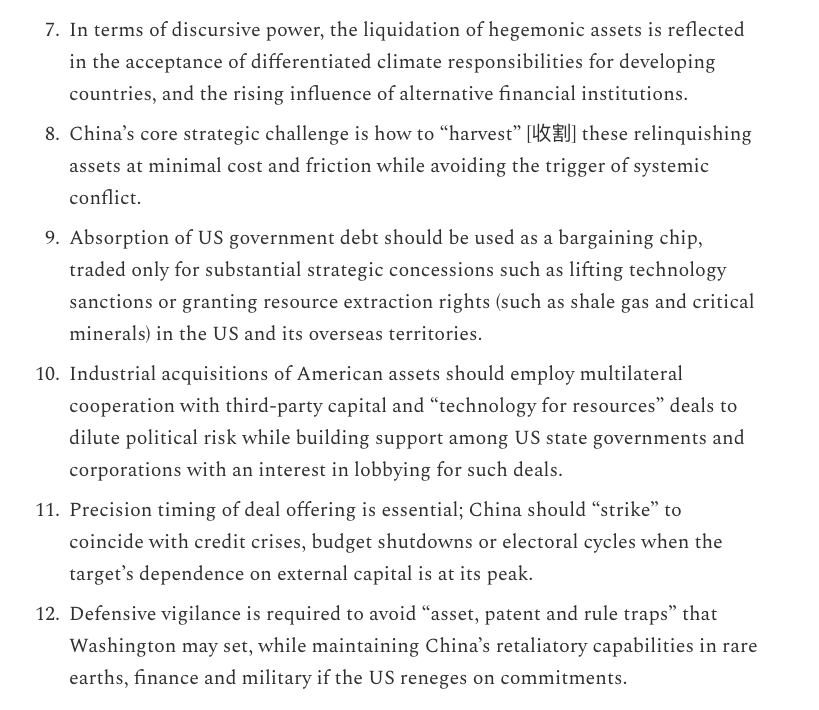
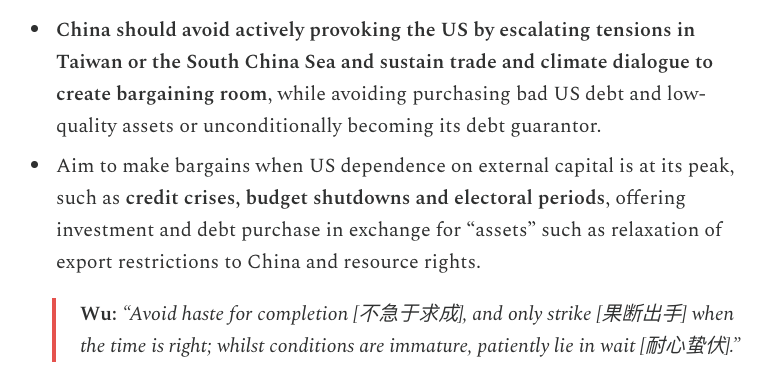
Interesting Chinese expert paper on how to take advantage of what is seen as declining U.S. hegemonic power. Not by seeking a direct confrontation but by "buying out" U.S. imperial assets gradually as they become unsustainable due to overreach: sinification.org/p/liquidating-…
Murtaza Hussain tweet mediaMurtaza Hussain tweet mediaMurtaza Hussain tweet media
English
29
331
1.7K
364.7K
Js G retweetledi
Arnaud Bertrand
Arnaud Bertrand@RnaudBertrand·
The more interesting part of Von Der Leyen's quote isn't so much Türkiye's new inclusion on the ever-growing list of what the EU considers "malign influence" but it's the "completing the European continent" bit. Concretely what she meant by this, and we know it from the fact her spokesperson literally said that's what she meant (turkiyetoday.com/region/eu-says…), is a reference to the absorption of the Western Balkans (Serbia, Bosnia, Albania, etc.) into the EU. But note the causality link that she's making between getting these countries in the EU and "freedom from influence". This implies that, basically, she has a zombie-movie logic to the EU: either you are in the interior, or outside it being contaminated - and, eventually, becoming a contaminant yourself. Türkiye, in this framing, is now a zombie: not only contaminated but a contaminant, which makes it all the more urgent, in her logic, to hurry the still-uncontaminated inside before they turn as well. To call this a toxic view of the world would be the understatement of the century. I wrote an article back in January (open.substack.com/pub/arnaudbert…) saying that one of the biggest "grey rhinos" (i.e. a problem that everyone can see is coming but that no-one does anything about) out there is Europe's search for a new ideology, given that liberal hegemonism is dead and Europe now has very little sense of purpose. The point I made was that this isn't something you should take lightly: Europe has amply demonstrated in its history that it has an unparalleled capacity for ideological extremism. Steered in the right direction this gave us beautiful cathedrals and the Enlightenment, but steered in the wrong one it gave us BOTH world wars and multiple genocides. Which means you need to be extremely wary of which way the replacement ideology goes: either constructive (oriented toward building and flourishing) or mobilizational (oriented against an Other). The fact we now have the EU's top official articulating a worldview built around ideological purity and absorption of peripheral states to prevent contamination isn't a reassuring sign...
Clash Report@clashreport

EU's von der Leyen: We must succeed in completing the European continent so that it is not influenced by Russia, Türkiye, or China.

English
103
703
2.4K
255.9K
Js G retweetledi
𝘾𝙡𝙤𝙪𝙣𝙖𝙪𝙙
Oui, l"UE n'a plus de légitimité depuis cette forfaiture historique. Nous vivons depuis 2008 dans une technocratie post-démocratique. Les élections ne sont plus qu'un "grand théâtre" (Todd) où des figurants font mine de s'affronter pour assurer "l'alternance unique" (Michéa).
Citoyen initié@CitoyenInitie

Marie-France Garaud : "Le vrai basculement, c’est quand Sarkozy et Fillon ont fait passer en 2008 une Constitution européenne rejetée par les Français un an avant. Autrefois, on parlait de forfaiture. Aujourd’hui, il n’y a plus de débats politiques mais que des débats partisans."

Français
1
20
40
515
Js G retweetledi
Thomas Fazi
Thomas Fazi@battleforeurope·
The sheer scale of Radev’s victory makes a Romanian-style scenario unlikely. Nevertheless, what we witnessed in the lead-up to the Bulgarian election was the latest iteration of a political template that has become a recurring feature of European electoral life. When a candidate inconvenient to Brussels appears likely to win, the apparatus of “disinformation” monitoring and “foreign interference” response is mobilized—not after the election, but before it, in ways that directly shape the information environment in which voters make their choices. The pattern is consistent enough to constitute a system. In Romania, Georgescu’s surprise first-round lead was met not with political competition but with institutional cancellation, backed by EU-level pressure and a media campaign that treated unverified intelligence assessments as established fact. In Hungary, ahead of last week’s elections, the Western political-media establishment saturated the information space with warnings about Kremlin meddling. In Slovakia, Robert Fico’s return to power in 2023 was accompanied by nearly identical warnings. In each case, the Russiagate framing served a dual function: to justify suppression of political content under the cover of “protecting democracy” and to delegitimize the result if the wrong candidate won. The Russian interference narrative has proven extraordinarily useful precisely because it is nonfalsifiable by design. Any politician who questions official stances on Ukraine, Russia, or NATO becomes, by definition, a vector of Russian influence. Any electorate that votes for such a politician has been manipulated. Evidence need not be produced, because the interference is structurally assumed. Read the article here: compactmag.com/article/the-ru…
Thomas Fazi@battleforeurope

I’ve written for @compactmag about how the EU-NATO establishment once again attempted to weaponise the Russiagate narrative in Bulgaria’s Sunday elections — but failed. In the run-up to the vote, Bulgarian authorities and their EU partners followed the usual script that has become standard in every European election — especially in the presence on the ballot of a candidate critical of official stances on Ukraine, Russia, the EU or NATO — raising the alarm about alleged Russian interference in the electoral process. This included accusations that pro-Kremlin foreign information manipulation and interference (FIMI) outlets were pushing narratives designed to tilt the result in Radev’s favor. The pro-EU ruling parties even formally requested EU assistance to counter “foreign disinformation” by activating the Digital Services Act’s (DSA) rapid response system. The aim in these cases is two-fold: on the one hand, to justify the suppression of online speech through the DSA; but perhaps more importantly to pre-emptively delegitimise — and potentially overturn — an electoral outcome that yields the “wrong” result. This is what happened in November 2024, when Romanian presidential candidate Călin Georgescu’s first-round election victory was annulled by the Romanian Constitutional Court on grounds of Russian interference in the absence of any credible, publicly verifiable evidence. The target in Bulgaria’s cases was Rumen Radev — former president, outspoken critic of the EU-NATO strategy in Ukraine and advocate of closer ties with Russia — whose Progressive Bulgaria party was set to win the election. Before Sunday’s vote, Radev himself warned that his party’s anticipated victory might be compromised by “the Romanian model”. But the sheer scale of Radev’s victory makes a Romanian-style scenario unlikely: his party won one of the largest shares for a single party in Bulgaria’s democratic history, and enough for an absolute majority in the new parliament. Nevertheless, what we witnessed in the lead-up to this election was the latest iteration of a political template that has become a recurring feature of European electoral life. When a candidate inconvenient to Brussels appears likely to win, the apparatus of “disinformation” monitoring and “foreign interference” response is mobilised — not after the election, but before it, in ways that directly shape the information environment in which voters make their choices. The pattern is consistent enough to constitute a system. In Romania, Georgescu’s surprise first-round lead was met not with political competition but with institutional cancellation, backed by EU-level pressure and a media campaign that treated unverified intelligence assessments as established fact. In Hungary, ahead of last week’s elections, the Western political-media establishment saturated the information space with warnings about Kremlin meddling. In Slovakia, Robert Fico’s return to power in 2023 was accompanied by nearly identical warnings. In each case, the Russiagate framing served a dual function: to justify suppression of political content under the cover of “protecting democracy” and to delegitimise the result if the wrong candidate won. Read the article here: compactmag.com/article/the-ru…

English
7
161
461
36.7K