Judiciary Uganda

8K posts

Judiciary Uganda banner
Judiciary Uganda

Judiciary Uganda

@JudiciaryUG

The Judiciary is one of the three arms of the State and compliments the two other arms i.e Legislative and the Executive.

Uganda Katılım Aralık 2012
596 Takip Edilen89.2K Takipçiler
Sabitlenmiş Tweet
Judiciary Uganda
Judiciary Uganda@JudiciaryUG·
We appreciate feedback from the public especially court users. Reach us any time on our toll free line 0800111900/0800225587 to give us feedback about our services or staff. Help us to serve you better.
Judiciary Uganda tweet media
English
223
88
385
0
Judiciary Uganda
Judiciary Uganda@JudiciaryUG·
Eid Al-Fitr Message From The Chief Justice
Judiciary Uganda tweet media
English
1
9
41
832
Judiciary Uganda
Judiciary Uganda@JudiciaryUG·
Earlier, the Chief Justice, Justice Dr. Flavian Zeija, met with members of the Performance Enhancement Tool (PET) Committee at the Court of Appeal, Judiciary Headquarters in Kampala, to review the PET assessment framework and ensure alignment with the core functions of the Judiciary. The meeting focused on strengthening the accuracy of performance measurement and ensuring that assessment tools appropriately reflect the responsibilities of both judicial and non-judicial officers. During the engagement, the Chief Justice emphasized that adjudication remains the central mandate of the Judiciary and should carry the greatest weight in evaluating judicial officers. He expressed concern that the current PET model could allow officers to attain satisfactory scores through peer or stakeholder ratings despite underperformance in case disposal, thereby undermining the primary responsibility of judicial officers. He cautioned that the 360-degree appraisal system may be susceptible to bias, noting that peer assessments can be influenced by personal relationships, while external stakeholders such as advocates may not always provide objective evaluations, particularly where judicial officers make unpopular but necessary decisions. He further observed that some officers have limited interaction with certain evaluators, creating inconsistencies in the assessment process. To address these concerns, the Chief Justice proposed a stronger emphasis on measurable and objective indicators, particularly case disposal and overall case management. He recommended increasing the weight assigned to core judicial functions, while reducing reliance on peer, public, and subordinate assessments. He also underscored the need to strengthen the role of supervisors in the appraisal process, noting that they are best placed to assess performance against established targets and outputs. Providing clarification on the current framework, Mr. Joseph Ssinabulya, Principal Information Management Officer, explained that the PET scoring model was developed following a consultancy study and already places significant weight on core performance indicators through self-assessment and supervisor evaluation. He noted that peer and subordinate assessments are intended to measure behavioural competencies such as teamwork, accountability, and time management, rather than technical judicial performance. Mr Ssinabulya acknowledged concerns regarding potential bias in peer evaluations and highlighted measures introduced to mitigate this, including involving supervisors in the selection of peer evaluators to reduce the risk of favouritism or collusion. He further explained that the “public” assessment category is being refined to reflect actual service beneficiaries across different roles. For officers who do not directly interact with court users, such as researchers and ICT staff, evaluators are drawn from those they routinely support, including judicial officers, registrars, and administrative personnel. Members observed that any adjustment to increase the weight of core functions will require more tailored profiling across the diverse categories of staff within the Judiciary. The meeting was attended by HW Lamunu Pamella Ocaya, Acting Chief Registrar; HW Agnes Alum, Registrar Magistrates’ Affairs and Data Management; HW Mwesigye Julius, Personal Assistant to the Chief Justice; and Mr. Isaac Bbossa Sserunkuma, Senior Statistician
Judiciary Uganda tweet mediaJudiciary Uganda tweet mediaJudiciary Uganda tweet media
English
0
1
17
2.2K
Judiciary Uganda
Judiciary Uganda@JudiciaryUG·
The Court of Appeal is set to conduct a two-day criminal appeals session in Mbale from 24 to 25 March 2026, during which 30 appeals will be heard. The session will be presided over by a panel comprising Lady Justice Hellen Obura, Lady Justice Eva Luswata, and Lady Justice Florence Nakachwa. In preparation for the session, the Justices convened a pre-hearing meeting to assess the readiness of key stakeholders and address any potential gaps that could affect the smooth conduct of proceedings. The meeting was attended by HW Rukundo Allen Owembabazi, Registrar of the Court of Appeal, Magistrates Grade I (Research) attached to the panel, Mr. Ivan Wolimbwa, Systems Administrator, and Mr. Experito Ssebayigga, Clerk. The Office of the Director of Public Prosecutions was represented by Mr. Kulu Idambi J.B., Assistant Director of Public Prosecutions. All appellants, currently held at Mbale Main Prison, participated in the pre-hearing session virtually. Their legal representatives also joined virtually, with the exception of Counsel Susan Wakabala, who attended physically. The hybrid arrangement is intended to enhance participation while minimizing logistical challenges associated with transporting inmates. According to the cause list signed by the Registrar, the majority of appeals scheduled for hearing are in respect to Murder convictions (12 cases), followed by Aggravated Defilement (10 cases) and Aggravated Robbery (4 cases). The Court will also hear two appeals on Kidnap with Intent to Murder, and one appeal each for Rape and Manslaughter convictions. Among the matters listed are four appeals in which the State is challenging acquittals, two involving Murder, one on Aggravated Defilement, one on Murder and another on Aggravated Robbery
Judiciary Uganda tweet media
English
0
2
16
940
Judiciary Uganda
Judiciary Uganda@JudiciaryUG·
Earlier today, a team from the Registry of Magistrates’ Affairs and Data Management, led by Assistant Registrar HW Okumu Jude Muwone, conducted a support supervision visit at Nakawa Chief Magistrates’ Court. The visit aimed to authenticate data collection processes, assess performance management reporting systems, and verify the locus in quo of individual judicial officers. The team was received by the Chief Magistrate in-charge, HW Gakyaro Mpirwe Allan, who briefed them on the general status of the court. He highlighted recent achievements, ongoing operational challenges, key priorities, and formally presented the Court’s Performance Report for February 2026. Also present during the engagement were HW Esther Nyadoi, Chief Magistrate, and HW Frank Namanya, Magistrate Grade One, alongside other staff. The supervision team later conducted an inspection focusing on verification of data collection processes, review of performance management records, and assessment of operational systems supporting reporting and case management. The visit forms part of the Judiciary’s broader efforts to strengthen performance monitoring, enhance accountability, and ensure effective implementation of data management and reporting systems across Magistrates’ Courts
Judiciary Uganda tweet mediaJudiciary Uganda tweet media
English
0
1
5
657
Judiciary Uganda
Judiciary Uganda@JudiciaryUG·
Earlier, the Chief Justice, Justice Dr. Flavian Zeija, met members of the Executive of the Uganda Judicial Officers Association (UJOA) at the Judiciary Headquarters in Kampala, where discussions centred on leadership, welfare, and strengthening collaboration between the Judiciary administration and judicial officers. During the meeting, the Chief Justice commended UJOA for sustaining dialogue engagements and urged judicial officers to embrace the Judiciary’s digital transformation agenda. He cited the successful transition to a paperless system at the Court of Appeal as a clear sign that the institution is capable of adapting to change and called for continued support towards modernization across the Judiciary. He also emphasized the importance of Alternative Dispute Resolution (ADR), noting that many disputes can be concluded through mediation, thereby reducing case backlog and minimizing the number of appeals. On staff wellness, the Chief Justice observed that judicial work is demanding and often stressful, and encouraged judicial officers to actively participate in activities such as aerobics and other fitness programmes. He welcomed the idea of establishing a Judicial Officers’ Rotary Club, describing it as a positive initiative that could promote health, wellness, and collegiality within the profession. The Chief Justice further expressed support for regional engagements with judicial officers, saying these are important in identifying and responding to the unique challenges faced in different parts of the country. On infrastructure, he outlined ongoing efforts to improve working conditions, including the construction of court buildings with residential accommodation for both judicial and non-judicial officers, particularly in hard-to-reach areas. Addressing concerns over institutional support to UJOA, the Chief Justice explained that existing legal and policy limitations make direct funding difficult because the Association is structured as a private entity. He, however, noted that alternative avenues, including support through corporate social responsibility, could be explored depending on resource availability and further discussion by Top Mmanagement. On the issue of deducting membership dues at source, he said the process is technically possible but remains subject to legal requirements, particularly the need for individual consent. He also explained that provision of vehicles for judicial officers other than judges remains constrained by limited resources, with current priority being given to hard-to-reach areas. He urged patience as the institution continues to engage within available means. The Chief Justice added that benefits such as fuel allowances and housing are tied to the terms of appointment, and any review of those benefits would have to be considered within broader salary and policy processes. In her remarks, Lady Justice Olive Kazaarwe Mukwaya, the President of UJOA, raised the challenges the Association faces in collecting member dues, particularly the procedural difficulties involved in enabling deductions at source, and requested the Chief Justice’s support in resolving the matter. She stressed the need to strengthen membership and sustain the Association’s work, noting that UJOA largely depends on subscriptions from members despite its many activities. She also briefed the Chief Justice on the Association’s follow-up regarding a government pledge to provide UJOA with a vehicle, and requested support towards Uganda’s obligations to the East African Magistrates and Judges Association (EAMJA). Lady Justice Kazaarwe further invited him to officiate at UJOA’s leadership dialogue on 25 April 2026 and to attend its Annual General Meeting scheduled for 9 May
Judiciary Uganda tweet mediaJudiciary Uganda tweet mediaJudiciary Uganda tweet media
English
0
5
17
1.3K
Judiciary Uganda retweetledi
NTV UGANDA
NTV UGANDA@ntvuganda·
The Judiciary's Performance Enhancement Tool (PET) comprises five key models: Performance Planning, Monitoring, Evaluation, Reporting, and Development and Capacity Building, aimed at enhancing the professional performance of judiciary and court officials. ~ Joseph Ssinabulya , Principal Information Management Officer, @JudiciaryUG #MorningAtNTV #NTVNews
English
0
1
2
1.8K
Judiciary Uganda retweetledi
NTV UGANDA
NTV UGANDA@ntvuganda·
'Each official's performance will be evaluated against the Judiciary's core values.' ~ Joseph Ssinabulya , Principal Information Management Officer, @JudiciaryUG #MorningAtNTV #NTVNews
English
0
3
11
2.1K
Judiciary Uganda retweetledi
NTV UGANDA
NTV UGANDA@ntvuganda·
"A performance enhancement tool is a web-based platform designed to help judiciary and court officials access, monitor, and improve their professional performance." ~ @ereemyejumire24, Spokesman @JudiciaryUG #MorningAtNTV #NTVNews
English
0
2
6
1.7K
Judiciary Uganda retweetledi
NBS Television
NBS Television@nbstv·
Chief Justice Dr. Flavian Zeija has inaugurated the Criminal Justice Health Rights Committee, a body established to integrate health services into Uganda’s criminal justice system. @MugenyiHenry_ #NBSLiveAt9 #NBSUpdates
English
1
13
48
5.1K
Judiciary Uganda
Judiciary Uganda@JudiciaryUG·
The Principal Judge, Lady Justice Jane Frances Abodo, today inspected Nakasongola Chief Magistrate’s Court, Kiryandongo Chief Magistrate’s Court, and Kigumba Magistrate’s Court, where she called for stronger case management, wider adoption of judicial innovations, and practical solutions to operational challenges affecting service delivery. *At Nakasongola Chief Magistrate’s Court*, the Principal Judge commended the Chief Magistrate, HW Hope Bagyenda, for maintaining a clean court environment, organised archives, and a well-managed exhibit room. She encouraged the Court to hold regular monthly staff meetings and to sustain judicial innovations such as plea bargaining, mediation, and the Small Claims Procedure. She also stressed the importance of identifying staff training gaps in order to strengthen service delivery. Addressing staff concerns on recruitment, Lady Justice Abodo said she would engage the Judicial Service Commission on the possibility of exploring internal recruitment mechanisms or direct submissions, similar to arrangements in the Public Service. She noted that progress on the matter could be realised through continued dialogue. On salary enhancement, the Principal Judge observed that support staff, who play a vital role in the administration of justice, should also be considered. She, however, emphasised that such interventions must go hand in hand with greater accountability, zero tolerance to corruption, consistent attendance, good customer care, and sustained implementation of judicial innovations. The Chief Magistrate, HW Bagyenda, reported that the court currently has a caseload of 280 cases with zero backlog. HW Hillary Tanazio Murangira, Magistrate Grade I, called for the operationalisation of gazetted courts to take services closer to the people, as well as the establishment of more High Court circuits to reduce the number of committals. Among the key challenges raised at the court were lack of air conditioning, an inadequately stocked library, insufficient furniture, lack of staff accommodation, insecurity, water shortages, poor network connectivity, absence of State Brief and legal aid services, lack of staff uniforms, and staff shortages. *At Kiryandongo Chief Magistrate’s Court,* the Principal Judge urged judicial officers to take the lead in plea bargaining and to identify mediators who can be trained and accredited to support Alternative Dispute Resolution. She also encouraged the promotion of diversion in juvenile matters in order to reduce injustices that may arise from the formal justice process. The Principal Judge further pledged support for scaled-down training on the Performance Enhancement Tool and Information and Communication Technology to benefit support staff who are expected to be appraised under these systems. On staff welfare, she noted that peer committees are an important wellness initiative that promotes collegiality within the Judiciary. Lady Justice Abodo also directed the Court to develop a concrete plan for clearing critical backlog cases through innovations such as mobile courts and ADR. The Chief Magistrate, HW Abiti Samson, reported that the Court has a caseload of 613 cases, including a backlog of 136, handled by eight staff members. He cited several challenges, including lack of a fence around judicial staff quarters, limited office space, absence of a secretary, lack of staff uniforms, need for ICT and PET training, and lack of air conditioning. *At Kigumba Grade I Court,* the Principal Judge commended the cleanliness of the court, as well as its well-maintained exhibit room and archives. She encouraged HW Bogere Rachael, Magistrate Grade I, to follow up on land allocations so that both judicial and non-judicial staff can access accommodation. She also urged the court to continue promoting ADR and plea bargaining. HW Bogere informed the Principal Judge that the Court has a caseload of 124 cases with zero backlog and is supported by two office attendants
Judiciary Uganda tweet mediaJudiciary Uganda tweet media
English
0
3
18
1.7K
Judiciary Uganda
Judiciary Uganda@JudiciaryUG·
This morning the Chief Justice, Justice Dr. Flavian Zeija, presided over the inauguration of the Criminal Justice Health Rights Committee (CJHRC) at Skyz Hotel in Kampala, in a significant step towards advancing health equity within Uganda’s criminal justice system. Upon arrival, the Chief Justice was received by the Director of Public Prosecutions, Mr. Lino Anguzu, reflecting the strong inter-institutional collaboration driving the initiative. The Committee has been established under the “Breaking Down Barriers” initiative, a programme aimed at addressing structural and systemic challenges that hinder access to health services within the criminal justice sector. The initiative is being implemented through a partnership between the Office of the Director of Public Prosecutions, the Ministry of Health, and the Global Fund. The CJHRC brings together leadership from key justice sector institutions, including the Judiciary, Uganda Police Force, and Uganda Prisons Service, among others. Its core mandate is to spearhead coordinated efforts to promote equitable access to health services for all individuals within the justice system, particularly vulnerable populations. As part of the inauguration activities, committee members are holding a half-day meeting to define their roles and responsibilities in implementing the initiative. The meeting is expected to culminate in the adoption and signing of the Committee’s Terms of Reference, setting a clear roadmap for its operations. The event attracted a wide range of stakeholders, including representatives from the criminal justice chain, Ministry of Health officials, civil society organisations, and members of the media
Judiciary Uganda tweet mediaJudiciary Uganda tweet mediaJudiciary Uganda tweet media
English
0
7
30
2.4K
Judiciary Uganda
Judiciary Uganda@JudiciaryUG·
The Principal Judge, Lady Justice Jane Frances Abodo, today visited the Gulu Court of Appeal construction site, inspected Omoro Magistrates Court and paid a courtesy visit to the Ministry of Justice and Constitutional Affairs, Gulu Regional Office as part of her ongoing tour of the Gulu High Court Circuit. *Visit to Gulu Court of Appeal Construction Site* The Principal Judge inspected the Gulu Court of Appeal construction site to assess the progress of works. She was taken on a guided tour by the Project Manager, Mr. Samuel Okello, who reported that the project is on course. Adding that the project remains on course for handover within the projected 18 months. *Courtesy visit to Ministry of Justice and Constitutional Affairs – Gulu Regional Office* The Principal Judge paid a courtesy visit to the Ministry of Justice and Constitutional Affairs, Gulu Regional Office, where she commended the dedication and service of the five State Attorneys serving 21 districts within the region. She was received by Ms. Nyakwebera Elizabeth, Principal State Attorney in charge of the station, who congratulated the Principal Judge upon her appointment and expressed confidence in her leadership, particularly in advancing staff welfare and promoting the well-being of justice sector actors. *Inspection of Omoro Magistrates Court* During the visit at Omoro Court, the Principal Judge engaged Judicial officers and key stakeholders and emphasised the importance of involving them in the promotion and implementation of Alternative Dispute Resolution (ADR). She encouraged the court to prioritise the hearing of cases originating from within the district in order to promote community participation and enhance public confidence in the justice system. “When we deploy judicial officers, we encourage them to reside within the communities they serve and to familiarise themselves with how those communities perceive justice. Hearing cases from Gulu would defeat the purpose of taking the court closer to the people,” she noted. The Principal Judge commended the Deputy Registrar, HW Ebong George, for his strong presence on the ground and for fostering constructive relationships with stakeholders across the Circuit, observing that his impact is widely felt. He was encouraged to follow up on the processing of the land title. She further appreciated stakeholders for their continued support to the court, particularly through the provision of land, and urged them to extend similar support to other justice sector institutions, including the Office of the Director of Public Prosecutions and the Uganda Prisons Service, in order to strengthen the justice system. HW Akol Bonny the Magistrate Grade One at Omoro informed the Principal Judge that Omoro Magistrate’s Court, located in Laroji Sub-county, Omoro District, has a caseload of 181 cases and is supported by three staff members. He further explained that the Court handles all criminal matters from Gulu Chief Magistrate’s Court due to the absence of State Attorneys and a prison facility within Omoro District. Civil matters are handled partly in Gulu and partly in Omoro, depending on the sub-county of origin, in consideration of the district’s geographical coverage. The Resident District Commissioner, Mr. Okot Emmanuel, welcomed the Principal Judge and reaffirmed the district’s commitment to supporting the Judiciary. He pledged to engage local leadership to secure office space for justice sector actors to ensure the effective functioning of the justice chain. The Chief Administrative Officer, Mr. Oola Danito, informed the Principal Judge that 2.3 acres of land have been allocated for the court and later led her on a guided visit to the proposed site. In attendance were the Deputy Chief Administrative Officer, the District Internal Security Officer, the District Police Commander, and the District Planning Officer for Omoro District. Also in attendance were HW Ebong George, Deputy Registrar, Gulu, and HW Nyakairu Edgar
Judiciary Uganda tweet mediaJudiciary Uganda tweet media
English
0
3
26
3.7K
Judiciary Uganda
Judiciary Uganda@JudiciaryUG·
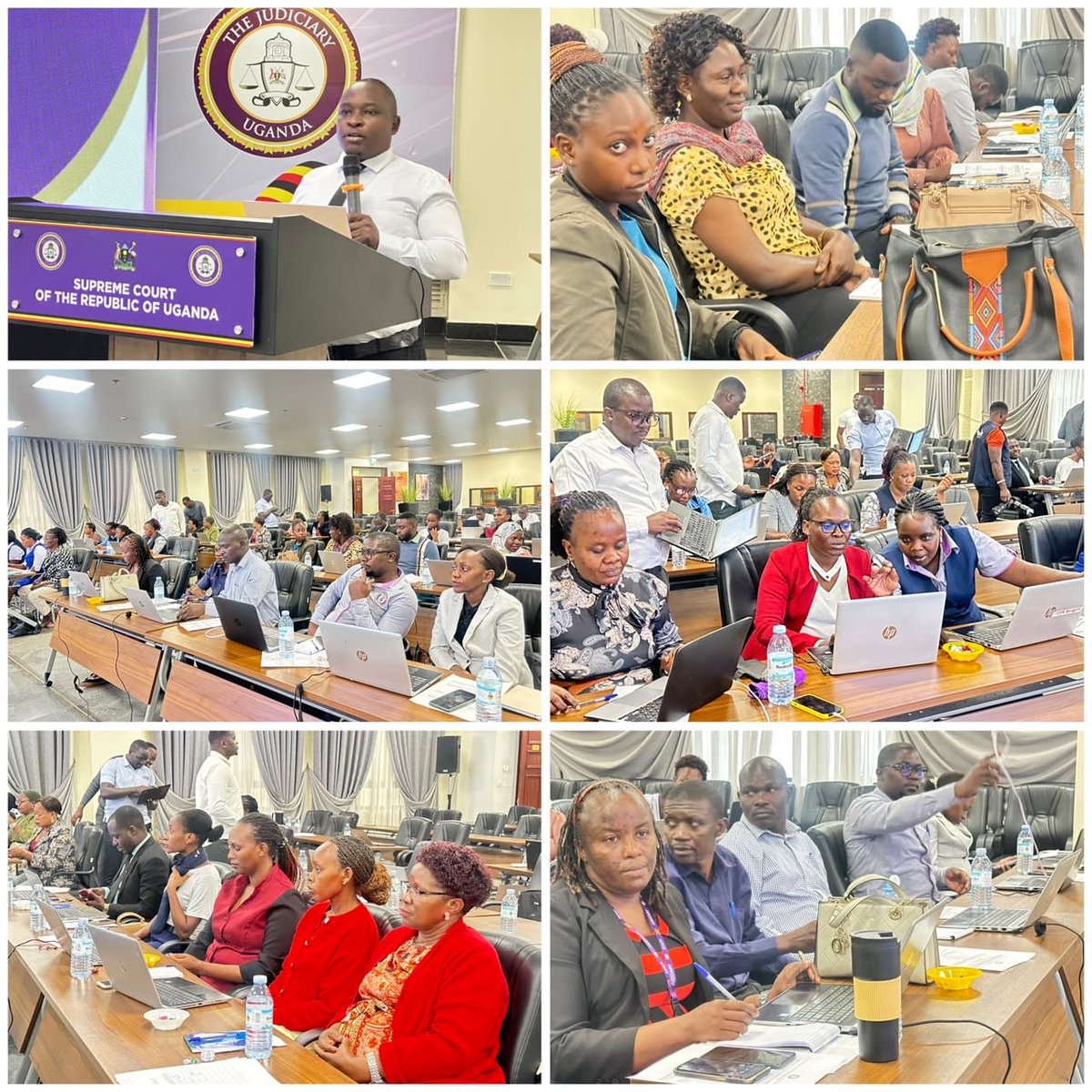
Earlier: The Registrar for Magistrates Affairs and Data Management, HW Agnes Alum, today welcomed cohort four of select Chief Magistrates, particularly those recently elevated, to a one-day training on the Performance Enhancement Tool (PET) at the Supreme Court Building in Kampala. In her remarks, HW Alum emphasized that the Performance Enhancement Tool is a critical instrument for strengthening accountability, improving efficiency in judicial service delivery, and enabling judicial officers to systematically track and enhance their performance in line with the Judiciary’s strategic objectives. She noted that the Judiciary’s transformation agenda places a premium on measurable performance, data-driven decision-making, and continuous improvement, all of which are anchored in the effective utilisation of the PET. The Principal Information Management Officer, Mr Joseph Ssinabulya, alongside the Performance Management and Awards Secretariat, provided hands-on technical support to the Chief Magistrates. The support focused on developing performance appraisal plans, including activation and computation of Key Performance Indicators (KPIs) aligned to individual and institutional targets. Further, Mr Isaac Bbossa Sserunkuma, Senior Statistician, guided participants through the Survey Tool embedded within the System, while Mr Brian Oryema provided a comprehensive overview of the theoretical framework underpinning the Performance Enhancement Tool
Judiciary Uganda tweet mediaJudiciary Uganda tweet mediaJudiciary Uganda tweet mediaJudiciary Uganda tweet media
English
0
0
7
1.2K
Judiciary Uganda
Judiciary Uganda@JudiciaryUG·
On Thursday March 12, the Hoima High Court Circuit held a Bar-Bench meeting chaired by the Resident Judge, Justice Opyene Vincent. At the meeting the Judge thanked the members for embracing new ways of doing things such as online hearings which are allowed under the law and filing of submissions online to the Hoima High Court email address. The Judge noted that hearing and judgment in civil cases had stalled due to the High Court criminal sessions but this was about to change. In that spirit, Justice Opyene noted that hearing of cases would commence at 9:00am, and that notice of absence of counsel must be communicated on time or else a defaulting party risks being condemned to costs of the day and that counsel on watching brief must appear with instructions to proceed. Justice opyene re-echoed the Judiciary’s commitment to reduce backlog and laid out strategies to reduce at Hoima high court. First, a session was coming up for civil cases older than 10 years in the court register. Second, mediation of case files with a proposal of award of certificates for counsel, law firms and stakeholders supporting mediation. Third, hearing approximately 20 bail application per month. Lastly, hearing criminal case files every other afternoon and plea bargain. He concluded by urging the advocates to act professionally, desist from the temptation to pick money in the name of a judicial officer and to beware of court brokers who tarnish the name of lawyers, state attorneys and judicial officers. HW Bamwiite Emmanuel, the Court’s Assistant Registrar briefed the meeting with an update on the Hoima High Court case disposal performance for the period 12 March 2025 to 28 March 2026 under the reign of Resident Judge, Vincent Opyene. The breakdown of cases concluded are; 124 land cases, 61 civil cases, 70 family causes for grant of probate and letters of administration, 189 plea bargains, 4 mediation case files by the Judge and 347 criminal cases files. He summed up by thanking counsel on state brief for representing the accused in capital case files and announced that registration for lawyers on state brief was ongoing in his office. Counsel Isaac Karekona from the Attorney General’s chambers informed the members that he is the Head AG’s chambers in Hoima, ready to receive service for case files where the Attorney General is a party. Mr. Karekona proposed a meeting between the Court and the lawyers from the Attorney General Chambers to discuss mediation and other administrative issues. The Chief Magistrate, Hoima, HW George Kunihira reported that he was now caretaking Buliisa Chief Magistrates Court and that HW Kimono Juliana was also caretaking Buliisa Magistrate’s Court. He also reported that the counsel were now scheduling their cases before the High Court keeping in mind they must appear in the lower court case files where they are instructed. HW Kunihira proposed that appearing in criminal case files ought to file notice of instructions for bail and or defence of accused where appropriate to avoid unnecessary adjournment. The advocates complained of congestion at the prison at Hoima proposing strategies to reduce congestion through grant of bail and plea bargain. They suggested that a visit of judicial officers and state attorneys at the Hoima prison to assess the situation first hand after lockdown would be welcome. Some advocates decried late start of court on criminal case hearing days and requested that their case files be called first because they are committed in other courts and in chambers. Despite the complaints, the advocates commended Justice Opyene for prompt start of hearing of cases at 9:00am both online and face-to-face. They also thanked the Chief Magistrates Court registry staff for improvement on receipt and filing on court record of pleadings for the respective chambers of the magistrates. The Judge in his closing remarks thanked the members for being open and that the feedback received would be used to improve
Judiciary Uganda tweet media
English
0
2
17
1.4K
Judiciary Uganda
Judiciary Uganda@JudiciaryUG·
The Court of Appeal has commenced a two-day Civil Appeals and Applications session in Kampala, with 26 matters lined up for hearing as part of ongoing efforts to enhance efficiency and reduce case backlog. The session opened today and will run until Wednesday, 18 March 2026. Proceedings are being presided over by a panel of three Justices comprising Justice Moses Kazibwe Kawumi, Justice Dr. Asa Mugenyi, and Justice John Mike Musisi. According to the cause list signed by the Registrar of the Court of Appeal, HW Rukundo Allen Owembabazi, the matters scheduled for hearing span a broad range of civil disputes, including applications for stay of execution, stay of court orders, contempt of court, and other interim applications. Appellants and their legal representatives are present in Court for the proceedings. The session forms part of the Court’s ongoing efforts to reduce case backlog and enhance efficiency in the administration of justice
Judiciary Uganda tweet mediaJudiciary Uganda tweet media
English
1
3
24
1.9K