Sabitlenmiş Tweet

Everything is more beautiful because we’re doomed. You will never be lovier than you are now. And you will never be here again.
-The Iliad by Homer
Happy New Year
English
Justin Jones
10.7K posts

@Justin_W_Jones
Mostly listening to and reading the Twitterverse. Occasionally sharing thoughts, often retweeting others. Here to learn and share.

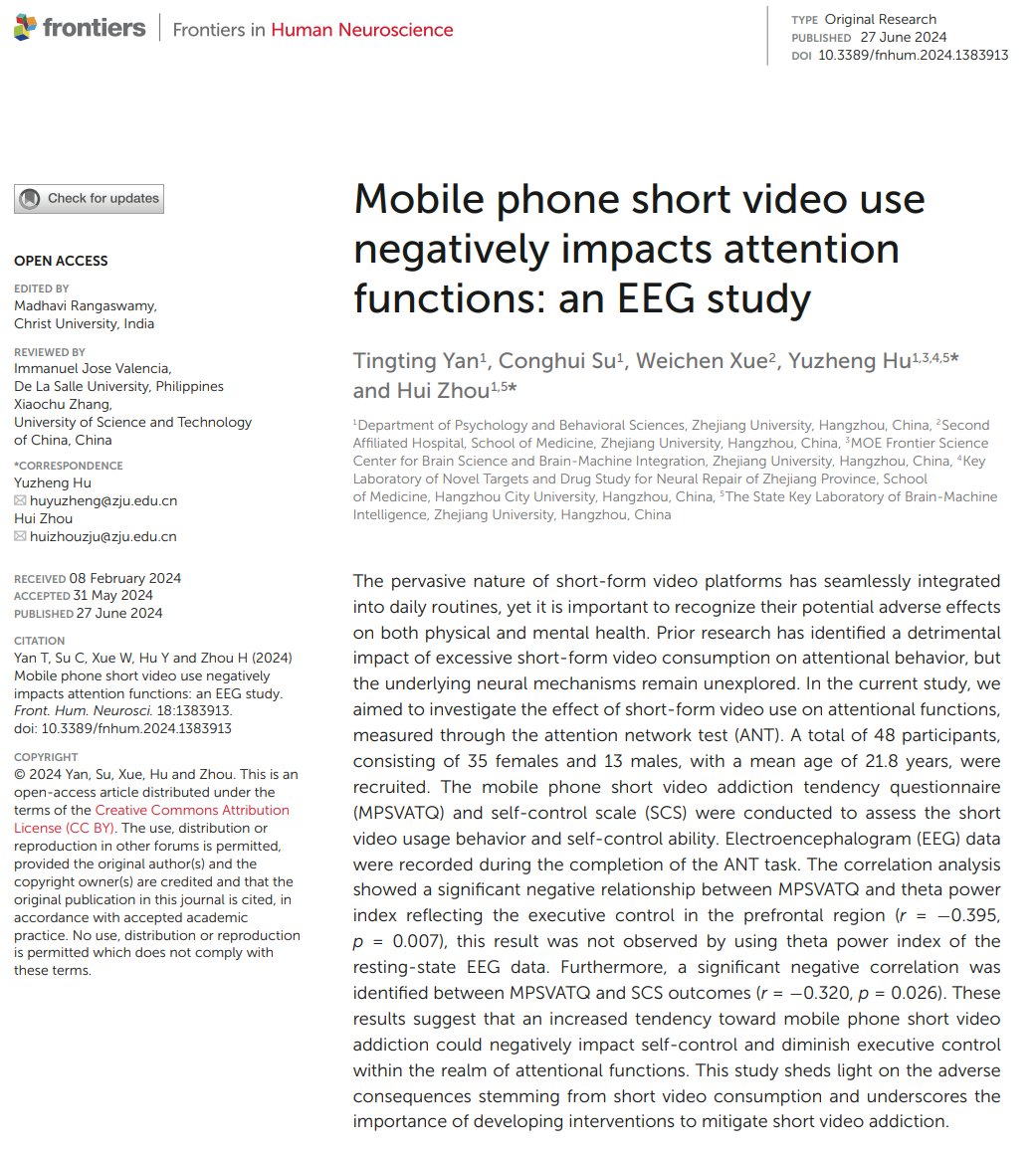
Addiction to short-form videos is associated with reduction of brain activity in the frontal lobe and weakened focus.





NEWS: Mercedes has unveiled the VLE, a new all-electric van that will launch in the U.S. in 2027. • Price (estimate): $100,000+ • Up to 370 mile range • 300kW peak charging. 189 miles in 15 mins • 31" rear retractable panoramic screen (8K resolution, split-screen capable) with 8-megapixel camera for rear-space video feed • 115 kWh battery • Sensors: 10 cameras, 5 radars, 12 ultrasonic sensors • 800v architecture • 0-60 mph: As low as 6.4s • 93% battery-to-wheel efficiency • Up to 408 hp • Drag coefficient: 0.25 Cd • Rear-axle steering: Up to 7-degree steering angle • AIRMATIC air suspension with intelligent damping. Predictive height adjustment using Google Maps data • Seating capacity: Up to 8 passengers • Cargo volume with seats up: Up to 28 cubic feet • Grand Comfort Seats (includes additional pillow, wireless charging, lumbar support, massage function, calf support) • Panoramic roof: Sky View one-piece fixed-glass roof from B-pillar to rear with electric sunshade • Additional features: Folding tables, wireless charging, Bluetooth gaming controller support • Displays: 10.25" driver display, 14" central, 14" front passenger • Audio: 22 speakers and Dolby Atmos • Head-up display: Augmented reality navigation (virtual 23" image appearing ~13 feet ahead) • Systems: MB. DRIVE with Distance Assist DISTRONIC, Lane Change Assist, semi-autonomous steering on motorways Pricing will be announced later, but Mercedes said North American will only get the long wheelbase version and higher spec trims. Deliveries start in the U.S. in 2027. More photos of the Van in the thread below:


China added more solar capacity in 2025 than America has installed in its entire history. That's the most important energy chart you'll see today. And 2025 was also the first year when small-scale distributed solar pulled in more investments than utility-scale solar farms globally. Considering that the U.S. has hundreds of GW stuck waiting for grid connections, the conditions are aligned to start putting solar + storage on every American home. My research team put together a Deep Dive on solar, if you want the full breakdown. Here’s the link: chamath.substack.com/p/solar-deep-d…
The Magnolia house was a Sears kit home, 1918 For nearly 30 years, people could order a piece of the American dream through the mail. A buyer could leaf through a Sears, Roebuck and Co. catalog, choose a house and mail in the order. In time, a railroad boxcar would chug into town, carrying a ready-to-assemble house — complete with nails and a 75-page instruction book. Most of the house kits came in a single box car. The model, named the Magnolia, sold between 1918 and 1922. Throwback Thursday 🔙 🕒 🔥!!
Bears fans, As loud as you were for opening day this year, as much energy as there was in the stadium, do you think Sunday you will be even louder when we rock the anthem for the @ChicagoBears vs @RamsNFL game? I bet so and I can’t wait!! #gobears #beardown

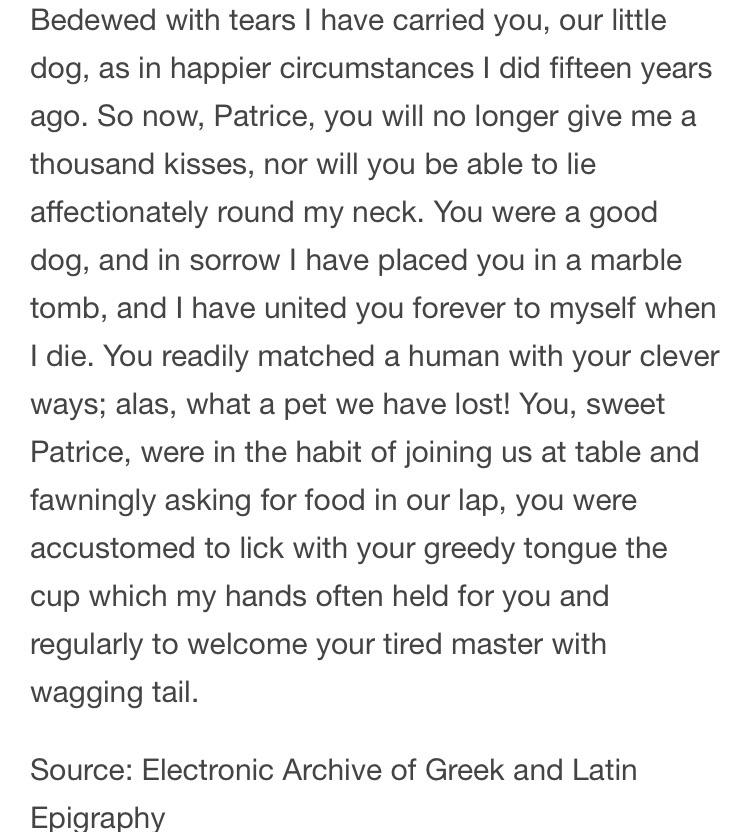
A common assumption is that throughout history, people have experienced the same basic range of emotions. A radical field of history now challenges this assumption, Gal Beckerman reports. theatln.tc/KD2QRX9Y People tend to imagine that other people “have the exact same set of emotions that we have,” Beckerman writes. “We perform this projection on any number of human experiences: losing a child, falling ill, being bored at work. We assume that emotions in the past are accessible because we assume that at their core, people in the past were just like us, with slight tweaks for their choice of hats and of personal hygiene.” Rob Boddice, a leader in the field of the history of emotions and senses, mistrusts this universalism, a philosophy that emerged during the Enlightenment, when European intellectuals began to assume that all people share a common nature. Many critics now understand that they were attempting to exert power and order over a world that had recently become bigger and stranger. “By the time we get to our current globalized culture, in which a Korean thriller can win Best Picture at the Oscars and Latin pop stars dominate the U.S. charts, the notion that our emotional registers are all essentially alike feels self-evident,” Beckerman continues. “Boddice starts with the opposite premise, that we are not the same,” Beckerman writes. “Rather than being a constant—extending across space and time—human nature for Boddice is a variable and unstable category, one with infinite possible shades.” Although his approach might seem “squishy and postmodern,” Beckerman writes, Boddice’s research layers his own thinking on top of the most recent advances in neuroscience. At the link, read more about the field of study that is pushing historians to reconsider their assumptions about the people of the past. 🎨: Nicolás Ortega

This is really interesting. I've long argued that even though we elevate "freedom" as our cardinal value in the West, boasting that we're the "free world" vs the supposedly unfree one, we in fact largely don't understand what freedom is. We typically mix up "freedom" with *personal freedom*, that is your right to act on individual desires (what philosophers call "negative liberty"). But we typically forget that this "freedom" is largely meaningless if you concretely don't have the material conditions to exercise it. Take the latest Gallup "Global Safety Report" which was published recently (news.gallup.com/poll/695240/pe…). They look into "freedom from fear", whether people feel safe or not. And, stunningly but perhaps unsurprisingly, the U.S. - supposedly the "freest" country in the world - scores pretty badly. For instance when it comes to how safe people feel "walking alone at night where they live", the U.S. is 64th in the world, scoring even worse than India (59th), whereas China is 3rd (right behind Singapore and Tajikistan). It's even worse when one looks specifically at women feeling safe to walk alone at night where they live: on this metric the U.S. is 77th in the world, with only 58% of women saying they feel safe. In fact, incredibly, out of the 10 countries globally with the worst gender gap in the percentage of men vs. women who feel safe walking alone at night, 8 of those countries are part of the supposed "free world": the United States, New Zealand, Italy (the worst-scoring of the group with just 44% of women feeling safe), Malta, Australia, Cyprus, Greece and the Netherlands. In practice, what this means is that women in these countries are technically "free" to walk alone at night - as in they have the right to do so - but they concretely can't because the material conditions to exercise that right are simply not there. They're afraid to do so, and probably justifiably so. Is this "freedom" if women in the "free world" are concretely less free to walk their own neighborhoods than women in countries we routinely condemn as unfree? China, for instance, has many measures we consider restrictive on "freedom" - such as ubiquitous security cameras - but the end result is that it ranks 3rd in the world in personal safety and 4th in the world in Gallup's "Law and order" index, safer than ANY country in the "free world". In concrete terms it has secured "freedom from fear" when the "free world" hasn't. We could also speak about other dimensions of freedom, such as freedom from need: what good does it do to a homeless person to know they're technically free to buy a house, or a diabetic to know they're free to purchase insulin they can't afford? The right exists; the freedom doesn't. Real freedom - the kind you can actually live - requires material conditions: safety, healthcare, shelter, dignity. As such, I'd argue we need to completely redefine what we mean by "freedom" by measuring lived reality rather than the mere absence of restrictions on paper. If that became the measure, we'd have to redraw the map of the actual "free world" entirely, and likely confront some uncomfortable realities about which countries are in it or not...