Sabitlenmiş Tweet

This is my trading journey from 2024 -> now
Every thing I’ve did in the past has been a learning experience which got me to where I am now. There has been days where I felt like giving up, hopeless, & defeated, but I stayed true to myself because I knew there was much to learn. Every opportunity whether it’s a fail or win, is a learning experience.
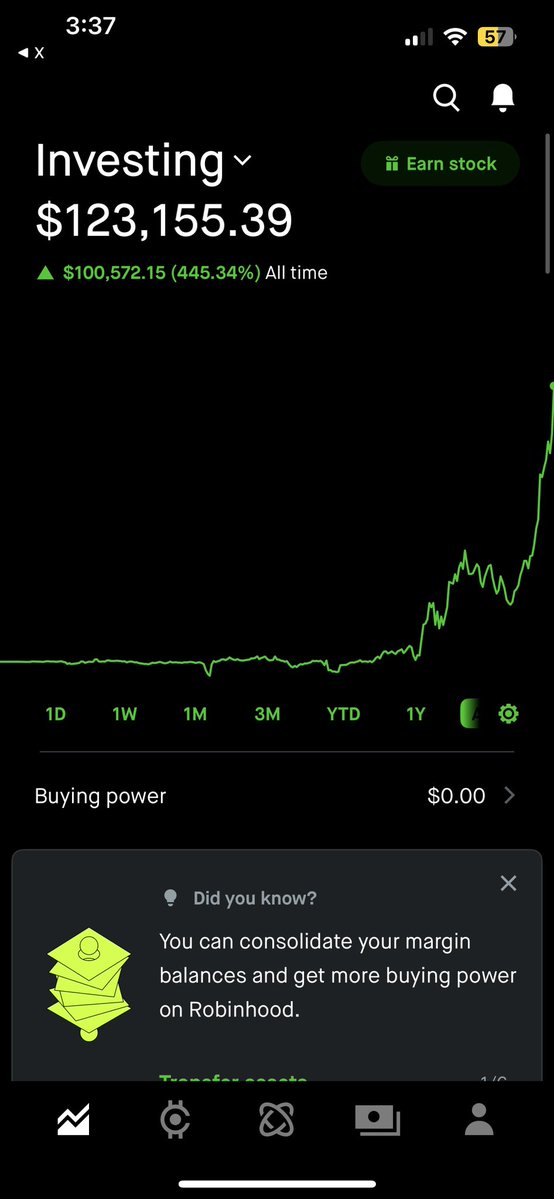
I first started with around $10,000 and fast forward to now I sit around $1.5m. I didn’t get this overnight, I got to where I am by staying dedicated to learning and never gave up over my four years in the market.
I do not sell a course and I do not look forward to selling a course. When I started posting on X, I enjoyed posting about my knowledge and helping people learn things about the market. I give my honest opinions, I share my holdings (with receipts) and I do like sharing my technical analysis completely free.
My first big play was $pltr which I got in around $16 with 500 shares. It ran all the way up to around $80 before I started taking my first big profits. It now sits around $130 & I still hold shares for the long term. My second big hit was $hims which ran all the way up to $70. I first got in before they first added compounded glp1 which is what started the run. My first buy was in the single digits around $8. As it got to around $15 I had around 1500 shares. I took my first profits around $40-$50, kind of missed a lot on the run to $70 but it ended up falling all the way down to $15.
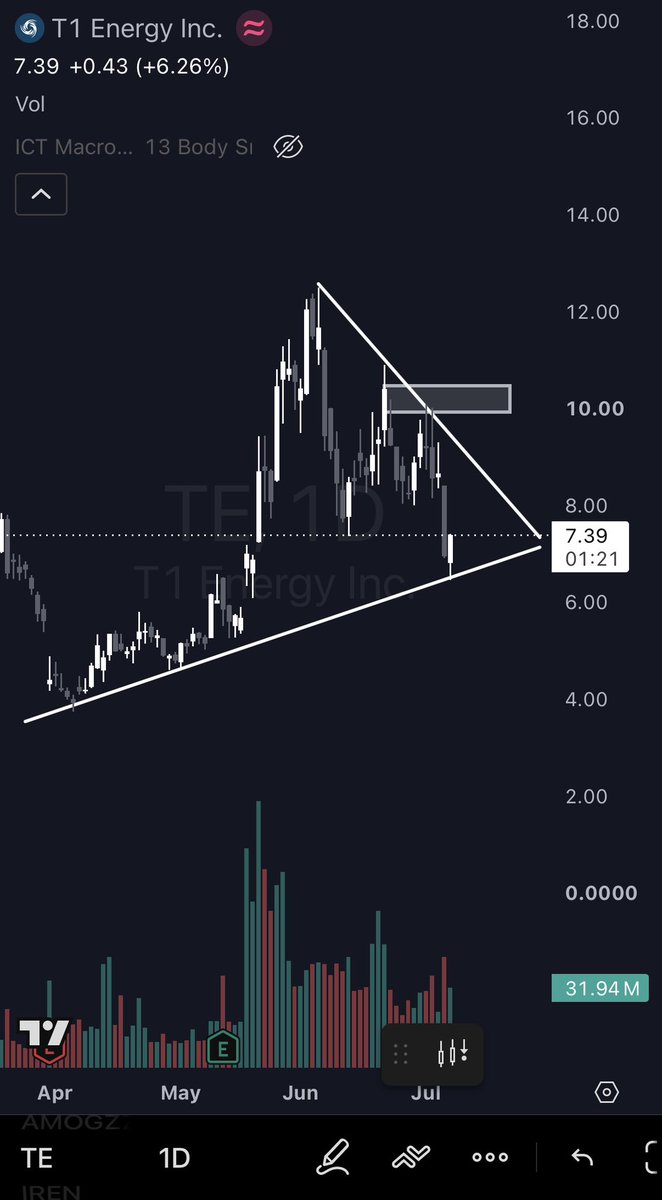
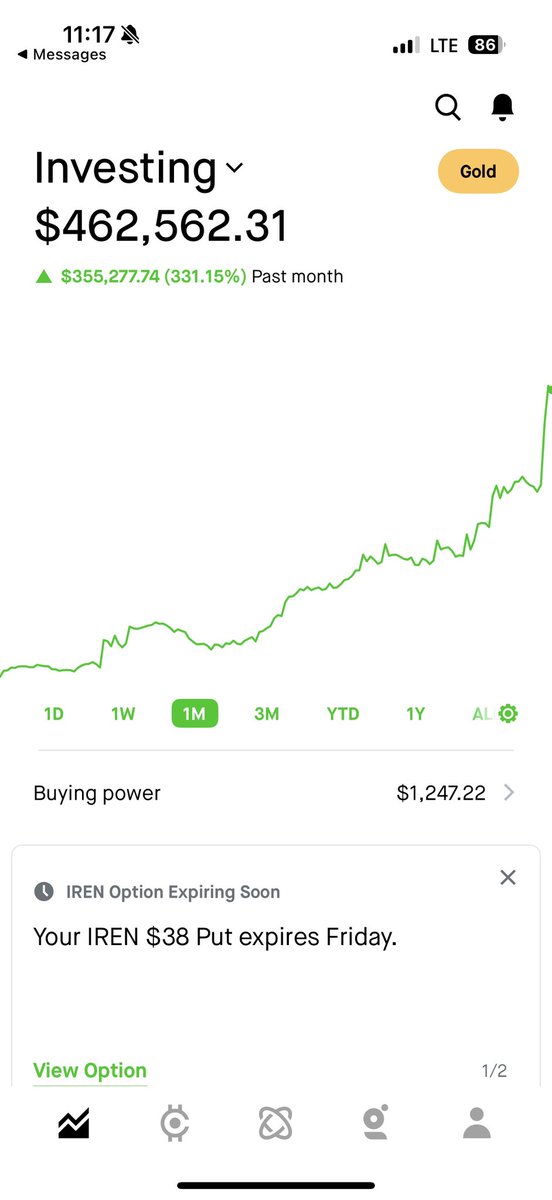
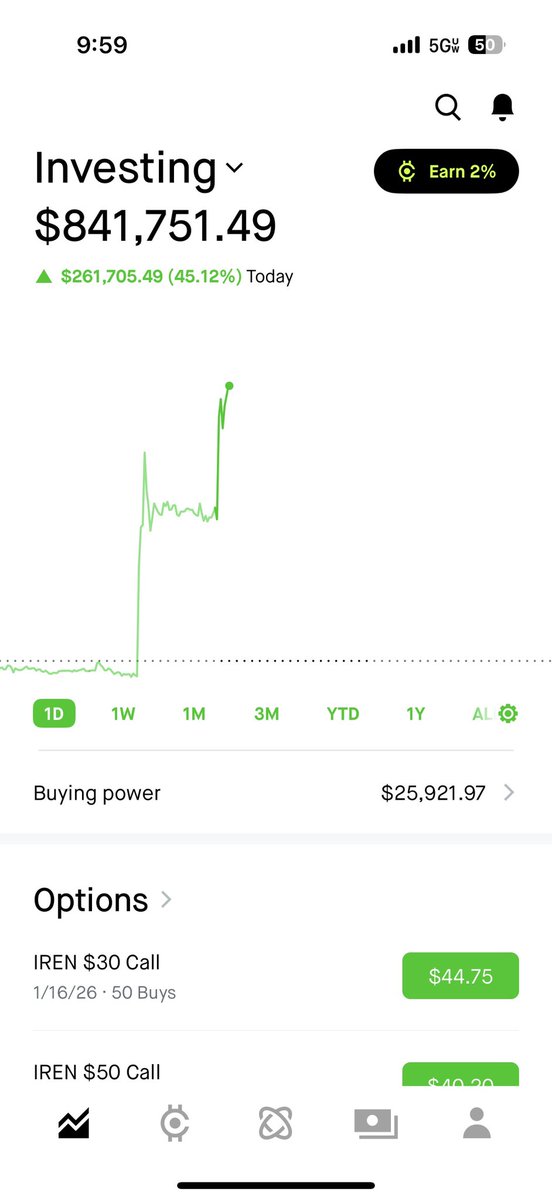
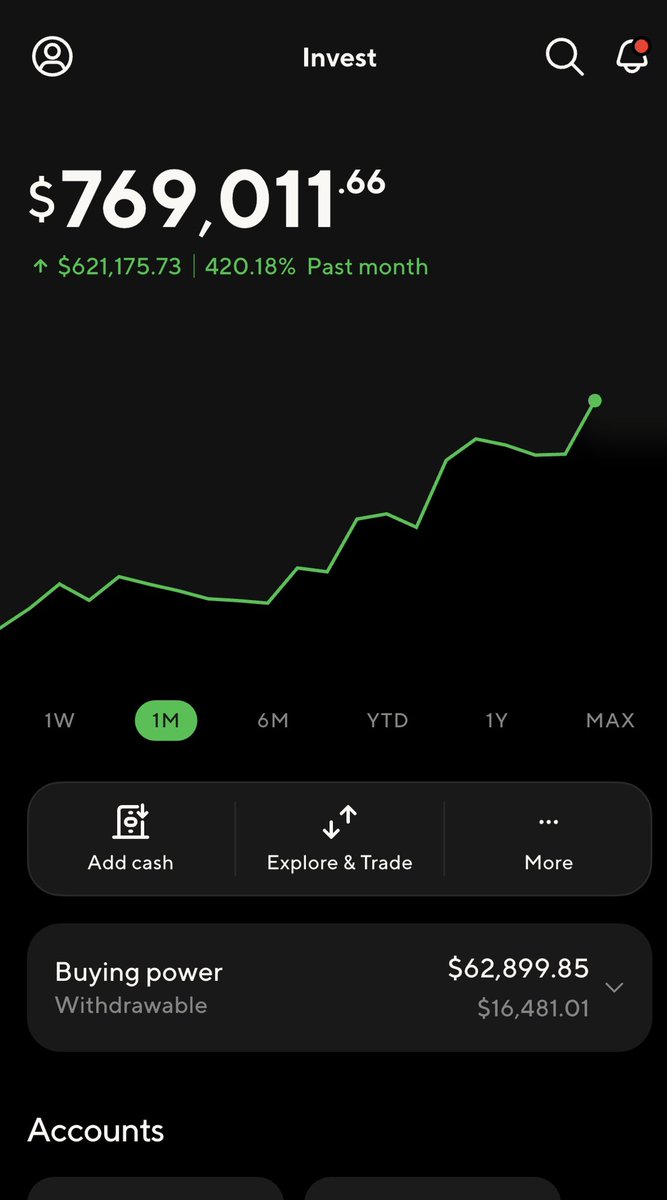
I have 2 main brokerages, which are Robinhood & SoFi. Robinhood is more of my trading brokerage where I trade my options and also wheel options. I do use leverage, but mainly for selling options which net me great premiums. My biggest gain in a day was close to $300k which was from $iren. I had over 5k shares around $10 and a shit ton of calls at the time because I was starting to understand that data centers would be the bottleneck of Ai because ai needs energy. I still hold more than 4k shares of iren today. SoFi is more of my investing account but I do use leverage here and there which the most I made in a single month was $620k from mainly $Te, $oss, & $ampg shares + calls & $nbis, $mu, & $amd calls.
I did not start seeing these numbers overnight. It took countless days & nights learning about the companies I hold now, learning the basics of support & resistance levels, and overall knowing my entries & exits.
Disclaimer: I can only show up to 4 pictures on x so here is 4 of my biggest gains
English