
Anger Issues 🇪🇺 retweetledi
Anger Issues 🇪🇺
2.2K posts


Anger Issues 🇪🇺
@KGhinn
Spheniscidae 🐧 EU 🇪🇺 Nationalist 🐘@[email protected]
Planet Heart 💚 Katılım Ocak 2021
98 Takip Edilen11 Takipçiler

@The_Whole_Daisy All good software engineers keep relearning all life long
English
All of the best software engineers in 5 years are in college right now. They're learning while everyone else is relearning
English
@CelesteSenadora No excuses for what you did. No matter why you did it. A senator of whatever nation should have never reacted to a provocation the way you did. You threw yourself in the mud together with your Country. He is right, you are unworthy.
English


@CuriosityonX That's why our internal organ do not actually touch each other, nor the cells or the atoms we believe form our body. We are just disassembled atomic puppets floating in space time, lured to think that we are one entity, and have a conscience. But in fact there is no spoon.
English
Hi friends! I've just donated to the DEC Venezuela Earthquake Appeal to help provide lifesaving food, water, cash and medical care in Venezuela. You can donate here, and your donation will be doubled! dec.org.uk
English
@sonukg4india By symmetry of the problem, no matter how you rotate the cracker, it will overlap 1/4 of the cheese area, that is 4^2 / 4 = 4
Check with the special case rotation = 0 and 45 degrees. Not difficult to convince yourself that in all other cases the area covered is a constant
English


"I don't have any magical ability. I look at a problem, play with it, work out a strategy."
— Terence Tao

English
Anger Issues 🇪🇺 retweetledi

Anger Issues 🇪🇺 retweetledi
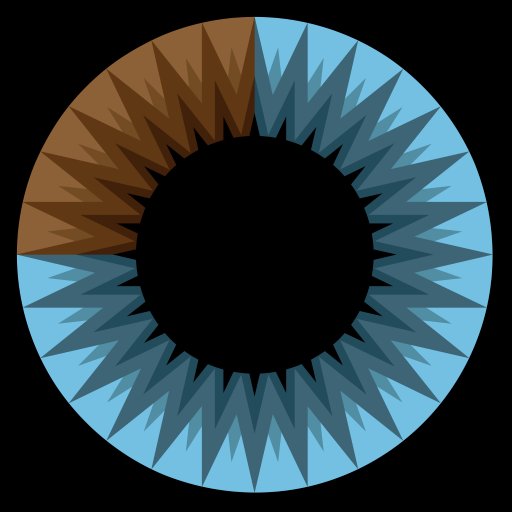
Suppose you wanted to reinvent the idea of Shannon Entropy for yourself. This puzzle is a good place to start (Full video on YouTube).
English

Dennis Ritchie invented C in 1972, co-built Unix in 1969, and his code is running inside every device you are reading this on right now and the colleague who announced his death had to do it through a Google+ post because no journalist thought to check.
He worked at Bell Labs in New Jersey for 44 years. He never gave a keynote. He never ran a company. He never appeared on a magazine cover. He just wrote code that became the invisible foundation everything else is built on.
Here is what he actually built, and why it matters more than almost anything that happened in tech.
In 1969, Bell Labs had just walked away from one of the most ambitious computing projects in history. The Multics project, a joint effort between MIT, Bell Labs, and General Electric, had collapsed under its own weight. Too complex. Too expensive. Too slow. Bell Labs pulled out.
Ken Thompson and Dennis Ritchie refused to let the ideas die.
Working in a small office in Murray Hill, New Jersey, Thompson wrote the first version of Unix in three weeks during the summer of 1969. One week for the file system. One week for the process management. One week for the command shell. Ritchie was working alongside him, and when the system needed a language that could express what they were building, he built one.
In 1972 he completed C.
C was not just another programming language. It was a different philosophy about what a programming language should be. Before C, most systems code was written in assembly, which meant every program was tied to the specific hardware it ran on. You could not move code between machines. You rewrote it from scratch every time.
C changed that. It sat close enough to the hardware to be fast, but abstract enough to run on anything. When Thompson rewrote the Unix kernel in C in 1973, it became the first operating system that could be picked up and moved to a completely different machine without starting over. Portability was a new idea. Ritchie made it real.
The branching that followed is almost impossible to overstate.
Unix spread from Bell Labs to universities. At Berkeley, it became BSD. BSD became the foundation of macOS and iOS. Unix influenced Linus Torvalds, who built Linux in 1991. Linux now runs every Android phone, every major web server, every supercomputer on the Top500 list, and the overwhelming majority of cloud infrastructure at AWS, Google, and Microsoft.
C became the parent language of C++, Java, JavaScript, Python, and Objective-C. Rob Pike, who worked across the hall from Ritchie at Bell Labs for 20 years, said it plainly: "The browsers are written in C. The Unix kernel that the entire internet runs on is written in C. Web servers are written in C, and if they're not, they're written in Java or C++, which are C derivatives, or Python or Ruby, which are implemented in C."
Ritchie won the Turing Award in 1983. He won the National Medal of Technology in 1998, presented by President Clinton. He was head of System Software Research at Bell Labs for decades.
He answered emails from strangers with technical questions until the end of his life. His home address stayed listed in the phone book. His colleague Brian Kernighan, who co-authored the definitive C textbook with him, said Ritchie was a private person who did no self-salesmanship. That was not false modesty. It was just who he was.
He died on October 12, 2011, at his home in Berkeley Heights, New Jersey. He was 70. He had been ill for some time. The world did not notice until Rob Pike posted a quiet announcement on Google+, and the news spread through the programming community in hushed tones.
No front pages. No tributes from heads of state. No candlelight vigils outside corporate campuses.
The device you are reading this on runs code that traces directly back to what he built. So does the server that delivered it to you. So does the browser or app you opened to get here.
Most people will never know his name.
The ones who built everything you use every day do.

English
@probnstat Dos not the bonus hint spoil the answer? Now even without thinking I see the answer is B. Unless of course, I am wrong
English

Probability MCQ:
Let X and Y be independent standard normal random variables.
Define R = X/Y. What is the distribution of R?
A) Normal(0,1)
B) Student's t with 1 degree of freedom
C) Exponential(1)
D) Logistic
Reply with your answer.
Bonus:
Why does R fail to have a finite mean, even though both X and Y individually have finite moments of all orders?
English
Anger Issues 🇪🇺 retweetledi
Mysterious ‘cold blob’ in the Atlantic suggests the AMOC is weakening
A patch of ocean south-east of Greenland is the only place on Earth that is cooling, and it could be a sign that the warm water “conveyor belt” in the Atlantic is slowing down
newscientist.com/article/252907…
docs.google.com/document/d/1JV…

English
@paulg I suppose you talk of Anglo-American #university Model. Where culture is a business and access is only for the rich. You should adopt the #European model, universities are cheap and in some countries free. The knowledge of graduates is the same or superior. But no #debts to repay
English

@Techweek_ @Liv_Lanes @IBM I think to arrange 10 people around a table the correct number of combination is 9! since you lose a degree of freedom due to circular symmetry
English

“Anybody can learn quantum.” @Liv_Lanes, @IBM Quantum Content and Education, breaking down quantum computing for #NYTechWeek
English

Can someone just figure out how to kill all the ticks already.
I would trade literally every LLM and every “builder in the arena” to never see another tick again in my life.
Get on this.
English

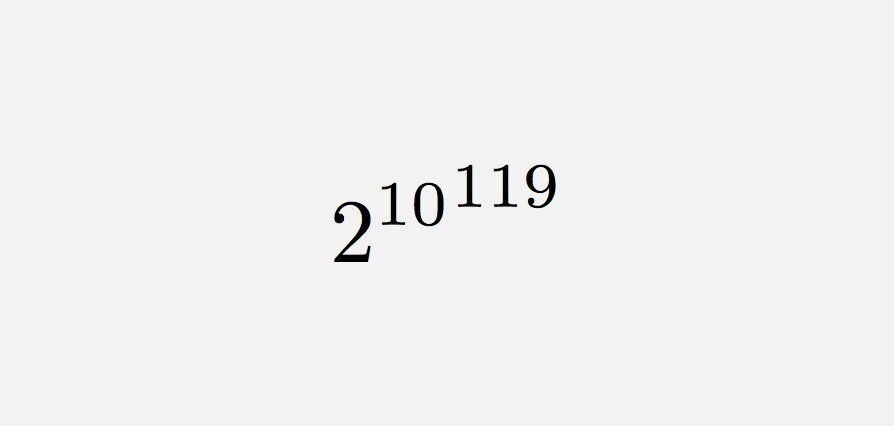
This is one of the biggest numbers you can find in a physics paper. It's the expected distance one would travel before encountering another visible-universe-sized region of space with an identical quantum state as ours.
English
@davidbessis This was answered by Democritus in the 5th century BC
English

Nice one! The coolest I've heard is: "You take an iron rod. You give it a bend. What happened?"
Adrian Cohen@acohen
@davidbessis Mine was “ a UFO is in the ionosphere - at what moment does the radar detect it”
English

Note for less-cultured Europeans: you can only call it Kirkland Cabernet Sauvignon if it comes from the Costco region of the United States.
Rare 🇺🇸@RareImagery
For serious winos, you can now buy a bucket of wine from Costco.
English

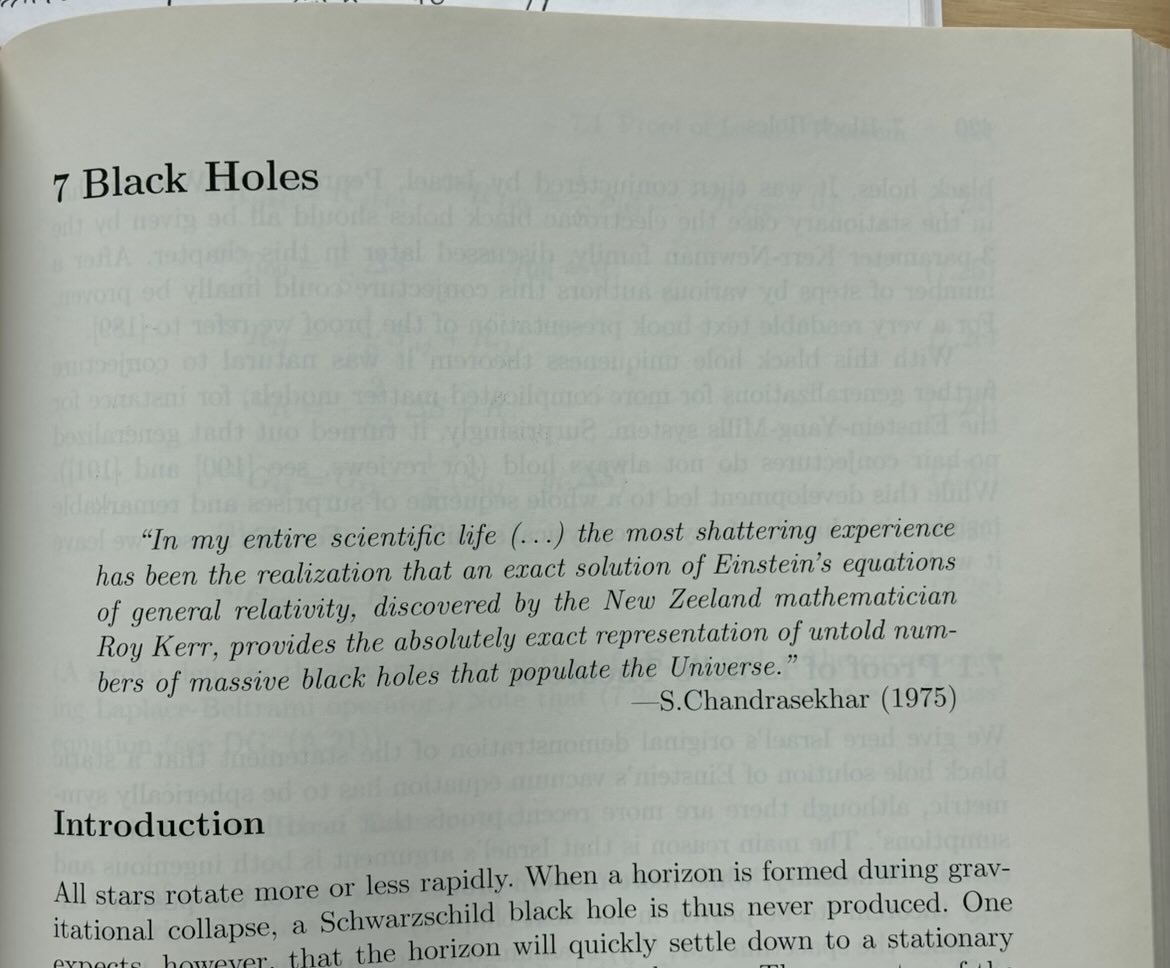
If this doesn’t give you goosebumps you’re not a physicist
English