Ancient Biology

1.2K posts

Ancient Biology banner
Ancient Biology

Ancient Biology

@KacarLab

Origins & Early Life Laboratory at the @UWMadison Account managed by the lab. 🦋 ➡️ https://t.co/Ipy4aKRtg2

Madison, WI Katılım Haziran 2020
314 Takip Edilen2.7K Takipçiler
Sabitlenmiş Tweet
Ancient Biology
Ancient Biology@KacarLab·
🧪🪐 Big week for ancient nitrogen! Checkout these three papers from our lab: 1️⃣ Rucker et al.: Engineered ancient nitrogenases to trace 2 billion years of biosignature reliability ➡️biorxiv.org/content/10.110…
English
2
10
24
2.4K
Ancient Biology retweetledi
ASM
ASM@ASMicrobiology·
By bridging molecular, ecological and planetary scales, planetary microbiology illuminates life’s past while critically informing strategies for the environmental and exploration challenges of our future. Read the #AppEnvMicro editorial: asm.social/2CJ
ASM tweet media
English
1
7
16
10.1K
Ancient Biology retweetledi
John Templeton Foundation
John Templeton Foundation@templeton_fdn·
By studying the way life once endured a frozen, unstable planet, @NASA astrobiologist @betulland is hoping to find clues for how we might face environmental challenges today—and prepare for what’s coming next.
English
0
9
23
7.3K
Ancient Biology retweetledi
Tanentzapf Lab
Tanentzapf Lab@TanentzapfLab·
The goal of a PhD is not to learn some facts or read a few papers or learn a bunch of techniques. The goal of a PhD is to learn independence, problem solving, how to finish things you start, resilience, & gain the ability to adapt & think creatively. Learning these things is hard
English
24
498
3.1K
115.2K
Ancient Biology retweetledi
Breakthrough
Breakthrough@brkthroughprize·
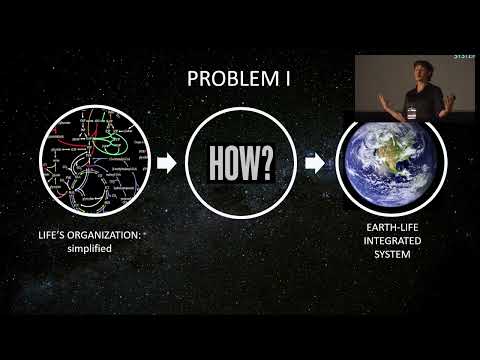
At Breakthrough Discuss 2025, Betül Kaçar (@UWMadison & @NASA ) explored “Ancient Biological Signatures,” revealing how resurrecting Precambrian enzymes in living cells reveals Earth’s early biosignatures. Her innovative fusion of synthetic biology and ancestral reconstruction advances our understanding of life’s origins and promises new tools for detecting life beyond Earth. Watch talk here: youtu.be/JHVV12V6_bA
YouTube video
YouTube
English
0
19
75
11.2K
Ancient Biology
Ancient Biology@KacarLab·
A day to remember: @PBS visited our lab to film a documentary on life's history. We explored everything - microbes, ancient rocks and engineered plants & more! So lucky to share what we learn and love. Huge thanks to @UWBact and @UWMadison community for the support! Onward!
Ancient Biology tweet mediaAncient Biology tweet mediaAncient Biology tweet mediaAncient Biology tweet media
English
0
2
22
2.8K
Ancient Biology
Ancient Biology@KacarLab·
🚨 Our new Origins Chemistry Database in the spotlight! Preprint link: biorxiv.org/content/10.110…
Biology+AI Daily@BiologyAIDaily

ChemOrigins: A community curated database for origins of life chemistry 1.ChemOrigins is a new open-access, community-curated knowledge graph focused on prebiotic chemistry. It organizes over 300 experimentally supported chemical reactions linked to the origin of life, enabling detailed, structured exploration of how life's building blocks could have emerged. 2.Unlike generative or predictive models, ChemOrigins focuses on experimental evidence. Each entry links chemical reactions with conditions, agents, and sources via a graph database, emphasizing scientific rigor and traceability. 3.The database uses a graph-based structure where molecules, reactions, catalysts, and literature references are interconnected. This design mirrors the complexity of real-world chemistry and allows efficient traversal of reaction networks. 4.To lower the technical barrier, ChemOrigins provides a user-friendly annotation app. Contributors can upload curated reactions without knowing version control systems, simplifying participation in community-driven data curation. 5.Querying capabilities include text search, network expansions from seed molecules, and curated modules. These features allow users to identify plausible reaction pathways and explore chemical space with just a few clicks. 6.Modules are especially powerful: they group reactions into meaningful clusters such as biosynthetic routes to amino acids or nucleotides. For example, alanine can be synthesized via pyruvate, Strecker synthesis, or serine reduction—each mapped in a separate module. 7.ChemOrigins facilitates hypothesis generation. One module starts from CO₂ and traces a multi-step path to methanol, highlighting how cross-environmental chemistry might have powered early carbon fixation—even if not experimentally confirmed as a one-pot process yet. 8.The platform complements existing resources like KEGG or PubChem but is specifically tailored to prebiotic contexts. It’s interoperable, machine-readable, and can be used for education, data mining, and model validation. 9.While LLMs promise automatic knowledge extraction, ChemOrigins argues for curated, human-verified datasets. In a field rife with uncertainty and competing theories, such scholarly curation is essential for quality and consensus. 10.ChemOrigins is not just a database—it’s an infrastructure to organize prebiotic chemistry knowledge, invite community participation, and support the growing field of origins-of-life research with accessible, credible, and structured data. 💻Code: github.com/brunocuevas/ch… 📜Paper: biorxiv.org/content/10.110… #OriginsOfLife #PrebioticChemistry #KnowledgeGraph #OpenScience #ChemicalBiology #SystemsChemistry #GraphDatabase #Chemoinformatics

English
0
1
7
695
Ancient Biology retweetledi
Biology+AI Daily
Biology+AI Daily@BiologyAIDaily·
ChemOrigins: A community curated database for origins of life chemistry 1.ChemOrigins is a new open-access, community-curated knowledge graph focused on prebiotic chemistry. It organizes over 300 experimentally supported chemical reactions linked to the origin of life, enabling detailed, structured exploration of how life's building blocks could have emerged. 2.Unlike generative or predictive models, ChemOrigins focuses on experimental evidence. Each entry links chemical reactions with conditions, agents, and sources via a graph database, emphasizing scientific rigor and traceability. 3.The database uses a graph-based structure where molecules, reactions, catalysts, and literature references are interconnected. This design mirrors the complexity of real-world chemistry and allows efficient traversal of reaction networks. 4.To lower the technical barrier, ChemOrigins provides a user-friendly annotation app. Contributors can upload curated reactions without knowing version control systems, simplifying participation in community-driven data curation. 5.Querying capabilities include text search, network expansions from seed molecules, and curated modules. These features allow users to identify plausible reaction pathways and explore chemical space with just a few clicks. 6.Modules are especially powerful: they group reactions into meaningful clusters such as biosynthetic routes to amino acids or nucleotides. For example, alanine can be synthesized via pyruvate, Strecker synthesis, or serine reduction—each mapped in a separate module. 7.ChemOrigins facilitates hypothesis generation. One module starts from CO₂ and traces a multi-step path to methanol, highlighting how cross-environmental chemistry might have powered early carbon fixation—even if not experimentally confirmed as a one-pot process yet. 8.The platform complements existing resources like KEGG or PubChem but is specifically tailored to prebiotic contexts. It’s interoperable, machine-readable, and can be used for education, data mining, and model validation. 9.While LLMs promise automatic knowledge extraction, ChemOrigins argues for curated, human-verified datasets. In a field rife with uncertainty and competing theories, such scholarly curation is essential for quality and consensus. 10.ChemOrigins is not just a database—it’s an infrastructure to organize prebiotic chemistry knowledge, invite community participation, and support the growing field of origins-of-life research with accessible, credible, and structured data. 💻Code: github.com/brunocuevas/ch… 📜Paper: biorxiv.org/content/10.110… #OriginsOfLife #PrebioticChemistry #KnowledgeGraph #OpenScience #ChemicalBiology #SystemsChemistry #GraphDatabase #Chemoinformatics
Biology+AI Daily tweet media
English
0
7
28
2.5K
Ancient Biology
Ancient Biology@KacarLab·
How did life begin, and why does it matter today? Proud to be one of the organizers of a new @ASMicrobiology report supported by the @MooreFound, exploring microbial origins & how they inform biotech, climate, and search for life in the universe. ➡️ asm.org/reports/early-…
English
2
20
46
2.5K
Ancient Biology
Ancient Biology@KacarLab·
@AnnualReviews By tracing 3 pivotal moments in Earth’s history—the origin of prokaryotic cells, the emergence of eukaryotic complexity and the rise of multicellularity—the report offers fresh insight into life’s origins and a bold vision for future scientific discovery. Hope you enjoy it!
English
0
0
0
182
Ancient Biology
Ancient Biology@KacarLab·
Microbial life underpins all living systems and understanding its origins could help solve today’s biggest challenges. As a companion, we previously published an @AnnualReviews piece on reconstructing early microbes, providing key context & insights! ➡️ annualreviews.org/content/journa…
English
1
0
1
207
Ancient Biology retweetledi
Hypothesis Fund
Hypothesis Fund@Hypothesisfund·
🤩 Beautiful video capturing @HypothesisFund Awardee @betulland's research on Earth's ancient microbes! We're a proud early supporter of this pioneering research, and can't wait to see what Betül discovers next! 💫
Ancient Biology@KacarLab

Excited to share a new Big Think + John Templeton Foundation interview featuring work from our lab: “Meet the survivors of Earth’s worst days.” @betulland unpacks how life persisted through catastrophe! @bigthink @templeton_fdn Watch here: bigthink.com/the-well/earth…

English
0
2
9
3.7K
Ancient Biology
Ancient Biology@KacarLab·
@kamgorecki We are always glad to see our framework on ancient nitrogenases inspiring others! More labs invited to the conversation, welcome aboard!
English
0
0
1
115
Kamil Górecki
Kamil Górecki@kamgorecki·
You may ask: “why study ancient enzymes? Who cares what life looked like 3 billion years ago?” Because evolution may hold answers to problems we still struggle with, and it can guide our efforts. New paper from our lab! 🧵
Kamil Górecki tweet media
English
9
85
468
41.7K
Ancient Biology retweetledi
Ancient Biology
Ancient Biology@KacarLab·
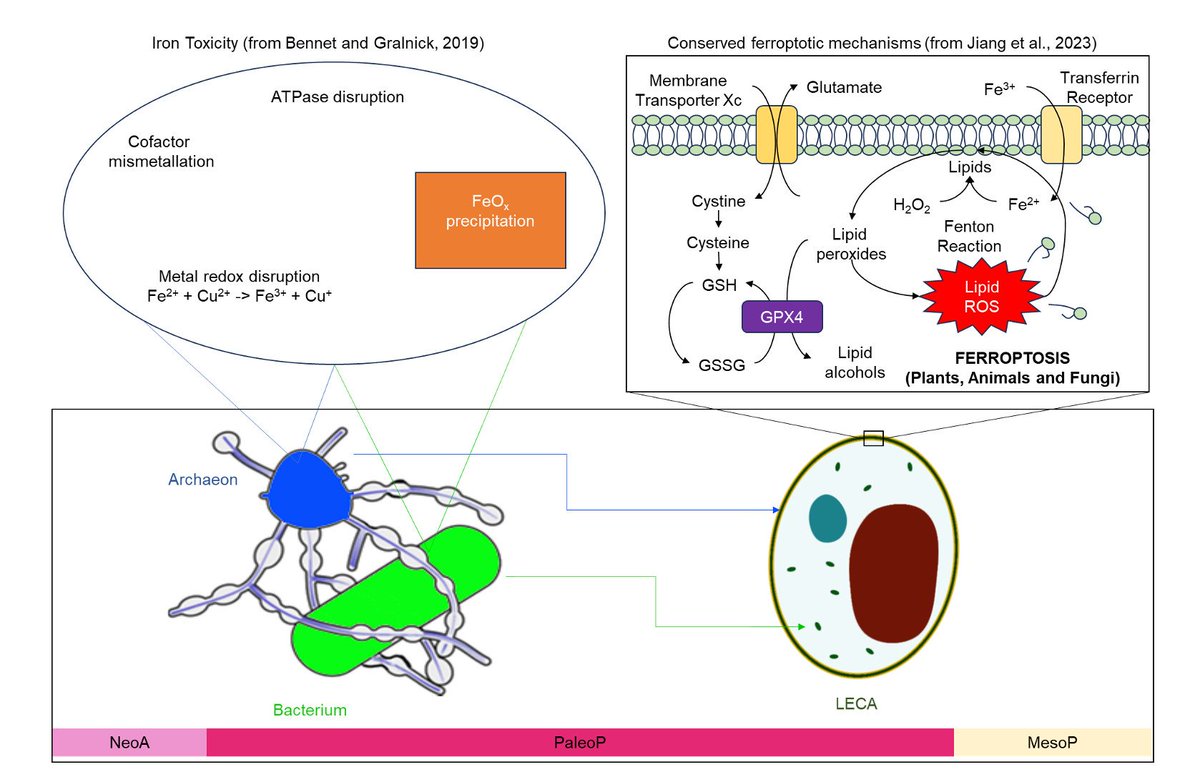
New work: Eukaryotic origins! 🥁 We propose that iron -not oxygen- delayed the rise of complex life. Our model reframes the “oxygen delay” puzzle: the gap between atmospheric O2 and early eukaryotic fossils may reflect iron (not O2)-mediated stress: biorxiv.org/content/10.110…
Ancient Biology tweet media
English
2
25
94
12.8K