
Kathryn Howe
1.2K posts
Kathryn Howe
@kat_howe
Vascular Surgeon-Scientist
University Health Network, University of Toronto Katılım Ekim 2012
365 Takip Edilen926 Takipçiler

Kathryn Howe retweetledi

Genome editing can be risky. Meet the epigenome editors (from @TheEconomist) economist.com/science-and-te…
English
Super exciting work. There is so much power in our endothelium. Just need to harness it! Congratulations on a brilliant story. Exciting chapter ahead for cardiovascular research.
Endothelial Cell News@endothelialnews
Drs. Zoltan Arany and Wencao Zhao, together with their @Penn team, show in @Cell_Metabolism that metabolic rewiring during proliferation to #Quiescence renders #EndothelialCells sensitive to oxidative stress. 📚 Learn more: bit.ly/4n4qhMH
English
And now Dan! Great job vascular at UofT! @TorontoVascular Gallie Day 2026. Congrats to the team!

English
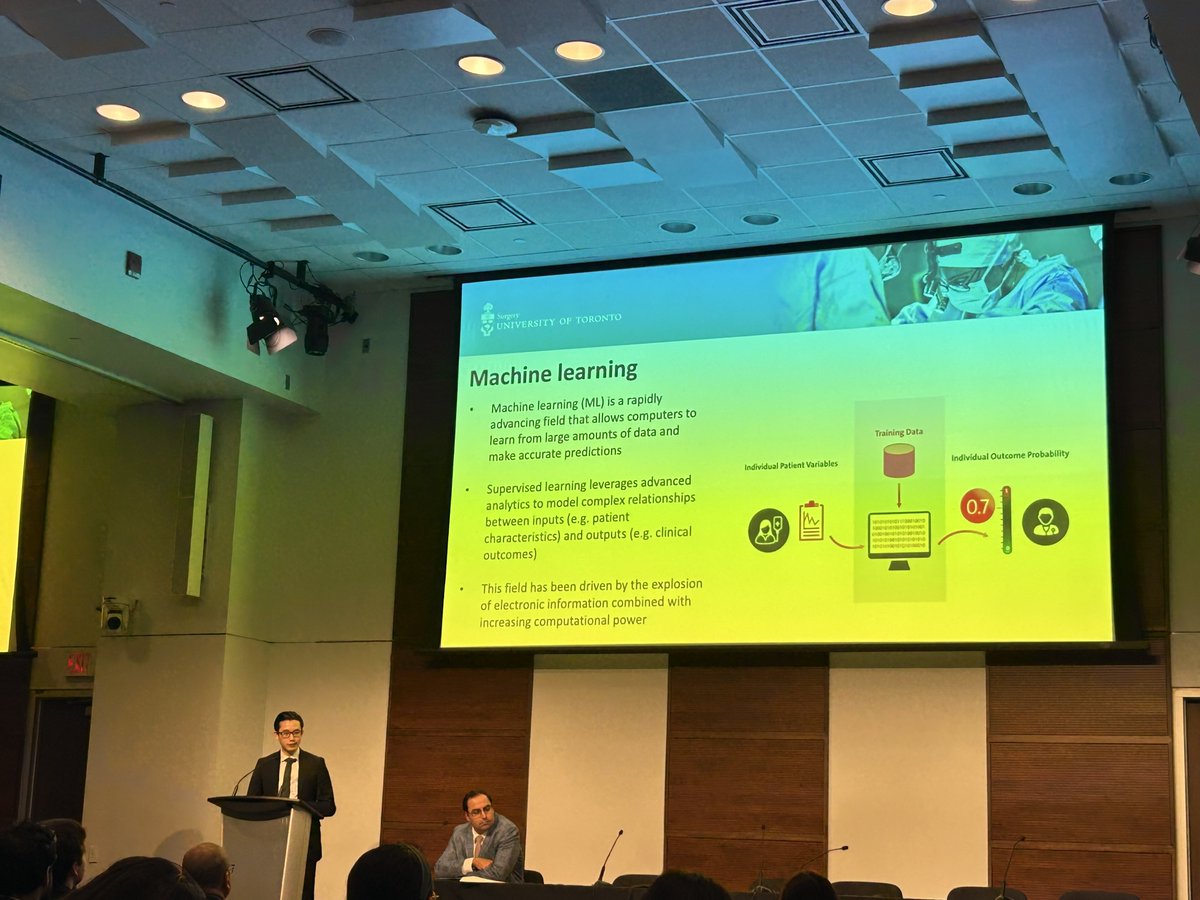
On now! Ben Li from vascular surgery at UofT. Always a superstar.
English
Congratulations to this stellar team! Thank you Kristen, Steve and Kai. @SRBotts - wonderful thread to share the news with clarity. @FishLab_UHN and @kat_howe - we LOVE this work. 🙏support from @UHN_Surgery @UHN_Research @PMunkCardiacCtr @UofT @CIHR_IRSC
Steven Botts@SRBotts
Very excited to share chapter 1 of our endothelial identity story out now in @GenomeMedicine !! Here we show that ERG governs dynamic and reversible EndMT in arterial ECs to limit endothelial dysfunction: link.springer.com/article/10.118… @FishLab_UHN @kat_howe @Kristen_ESchulz
English
Kathryn Howe retweetledi

Very excited to share chapter 1 of our endothelial identity story out now in @GenomeMedicine !!
Here we show that ERG governs dynamic and reversible EndMT in arterial ECs to limit endothelial dysfunction: link.springer.com/article/10.118…
@FishLab_UHN @kat_howe @Kristen_ESchulz
English
Kathryn Howe retweetledi
Moving fast. At least two generations of model improvement since then. We are at the phase of implementation now.
Eric Topol@EricTopol
New @ScienceMagazine The o-1 reasoning model (text only, from @OpenAI, released, Sept 2024) exceeded performance cf GPT-4 and physicians for clinical vignette management reasoning and in a real-world emergency department assessment for initial triage @AdamRodmanMD @PeterBrodeurMD @arjunmanrai @jonc101x science.org/doi/10.1126/sc…
English
Kathryn Howe retweetledi

Lifestyle and fatty acid profiles influence systemic thromboxane generation and identify individuals at higher risk for future CVD and heart failure @frankq1368
ahajrnls.org/42DRQmy

English
Elated to be among this group - thank you @atvbahajournals What a community you’ve built - grateful to be part!
ATVB: An AHA Journal@atvbahajournals
Join us at Vascular Discovery, May 13–16, as we recognize outstanding research through the ATVB Journal Awards, honoring impactful contributions in atherosclerosis, thrombosis, and vascular biology. 🔗 Learn more: ahajrnls.org/3QDNIQP #VascularDiscovery26 #ATVBJournal
English
English
Kathryn Howe retweetledi
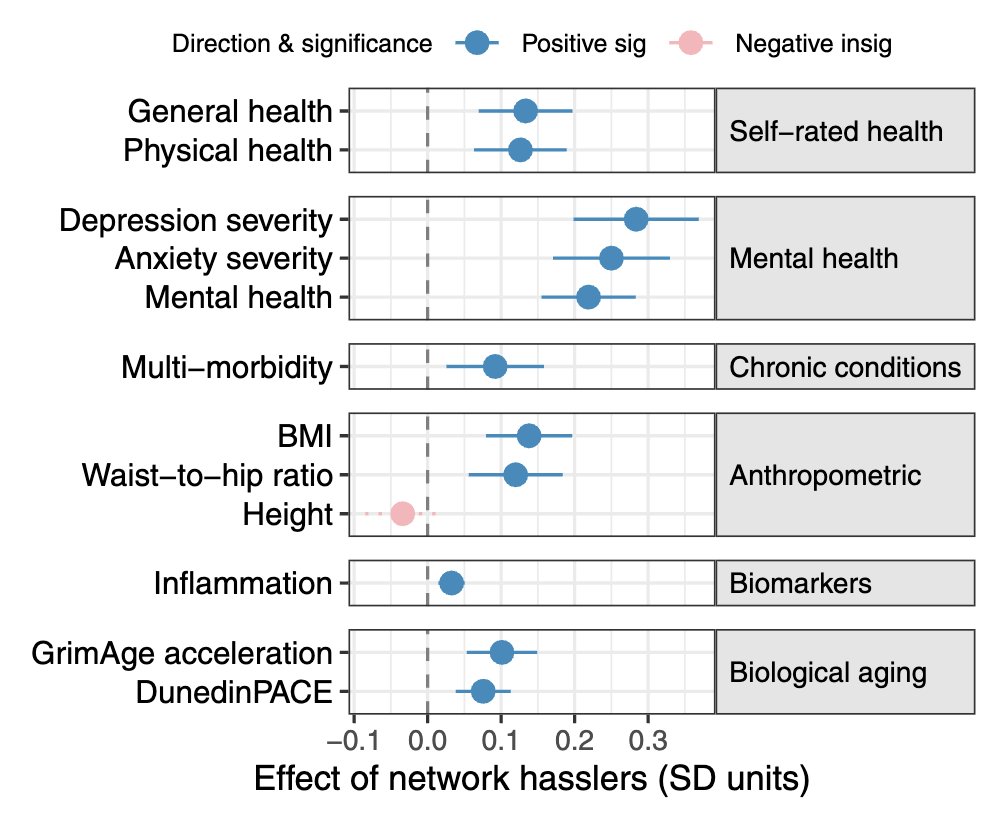
A new PNAS paper says the people around you may literally accelerate your biological aging.
Each additional “hassler” in your social network was linked to:
• 1.5% faster epigenetic aging
• ~9 months older biological age
• higher inflammation
• worse physical + mental health
Choose your circle carefully.
Paper: pnas.org/doi/10.1073/pn…
English
Kathryn Howe retweetledi

Intrinsic intracellular uncoupled eNOS with superoxide and peroxynitrite in a loop creating more uncoupling is the greatest injury to the endothelium
On the other hand
early extrinsic injurious forces on the glycocalyx from HTN , smoking AGEs inflammation and mechanical hemodynamics initially only reduce nitric oxide from reduced shear stress - not uncouple eNOS which is much more damaging and
creates / enables lipoprotein retention Chemistry
Later of course extrinsic and intrinsic actions feeds into each other to increase this highly injurious uncoupling
‘Endothelial dysfunction’ as a moniker doesn’t seem to do justice to the injury to the endothelium from this superoxide and peroxynitrite release - definitely earning the response to injury label
Then we have all the responses to retention that go on to make atherosclerotic plaque but all this happens only after retention and doesn’t describe any of the actual processes that lead to lipoprotein retention
( if I had a dollar for everytime someone just says ApoB ‘enters the wall’ and gets ‘trapped in the wall ‘ glossing over the all the important first part that leads to retention-especially considering 99.9% of ApoB that is physiologically trancytosed leaves the subendothelial space again unremarkably)
Noting the mechanisms it appears both ‘response to injury’ and ‘response to retention’ are required for atherosclerosis
Some confusion may be in that intrinsic eNOS uncoupling by the risk factors can occur in the intact non denuded endothelium
English
Kathryn Howe retweetledi
Response to Injury vs Response to Retention
-why can’t it be both?
These are thought of as competing hypotheses but rather they work together
Risk factors uncoupling eNOS producing superoxide and peroxynitrite which injures the endothelium also causing increased PDGF and TGF-b which then elongate proteoglycan GAG chains to bind with LDL creating retention
…and then once retained the response is the LDL undergoes oxidative modification , the modified LDL triggers monocyte recruitment, macrophage differentiation, scavenger-receptor uptake, foam-cell formation, and the full inflammatory/fibroproliferative plaque response.
English
2026 Vascular Research Initiatives Conference (VRIC) vascular.org/vascular-speci… REMINDER! Theme entitled Metabolomica - check the site and register. Vascular surgeon-scientist conference for basic and translational researchers! @VascularSVS @AHAScience
English
Kathryn Howe retweetledi

Can a smartwatch detect signs of heart failure?
A UHN‑led study published in @NatureMedicine found that smartwatch data can flag worsening heart failure risk before unplanned care is needed, opening the door to earlier treatment.
Read more: bit.ly/4dGnczH

English
Kathryn Howe retweetledi
What's it like to present your abstract at the ESVS Annual Meeting?
Out of the 180 accepted abstracts to #ESVS2025 in Istanbul, @trisharoymd made it to the Prize Session and won 3rd place for Best Abstract Presentation 👏
In our quick interview with her, she shares her experience presenting her research at the ESVS Annual Meeting, and seeing her post-graduate, Alexander win the Best Abstract Presentation.
Do you know someone who could be the next Trisha Roy? Tag them in the comments!
ESVS is currently accepting abstracts for the ESVS 40th Annual Meeting in Belgrade!
esvs.org/event/esvs-40t…
English
Kathryn Howe retweetledi
🚨 New preprint -- Predicting evolutionary rate as a pretraining task improves genome language model representations led by my phd student, Micaela Consens during her internship at @Microsoft
👉 paper: biorxiv.org/content/10.648…
Genome language models keep getting bigger — but are we training them on the right objectives?
This paper makes a strong case that biology already gives us the answer:
🧬 evolutionary rate = functional signal
Instead of only doing sequence reconstruction (NTP / MLM), the team pretrains models to predict evolutionary rate — and combines it with standard objectives in a clean, controlled way.
The result?
🔥 Better representations
🔥 Stronger zero-shot performance
🔥 Big gains in functional region discovery & variant effect prediction
🔥 Small models competing with much larger gLMs
Key insight:
Evolution isn’t just a benchmark — it’s a training signal.
Even more impressive: the paper introduces biologically grounded zero-shot evaluations that avoid many pitfalls of existing gLM benchmarks.
Big picture:
We won’t get better genome models by scaling alone.
We get them by aligning learning objectives with biology.
Micaela@micaelanonsense
Announcing our preprint: Predicting evolutionary rate as a pretraining task improves genome language model representations: biorxiv.org/content/10.648… Genome language models (gLMs) have the potential to further understanding of regulatory genomics without requiring labeled data...
English
#BREAKING 2026 Vascular Research Initiatives Conference (VRIC) vascular.org/vascular-speci… Metabolomica: Entering the Era of Reprogramming to Resolve Inflammation and Prevent Disease
English
A celebratory moment for Dr Steven Botts. Newly minted PhD! Congrats @SRBotts - you are an asset to every team you join. Our lab has been enriched by you. Looking forward to showcasing your exciting work!

English