Katie Clarke

11.5K posts

Katie Clarke banner
Katie Clarke

Katie Clarke

@KatieTraining

Mum with 6 kids and 2 dogs. Works with Bloody Awesome Parents of disabled children/young people. Director at Bringing Us Together and Visits Unlimited.

Yorkshire and The Humber Katılım Şubat 2012
4.3K Takip Edilen2.1K Takipçiler
Sabitlenmiş Tweet
Katie Clarke
Katie Clarke@KatieTraining·
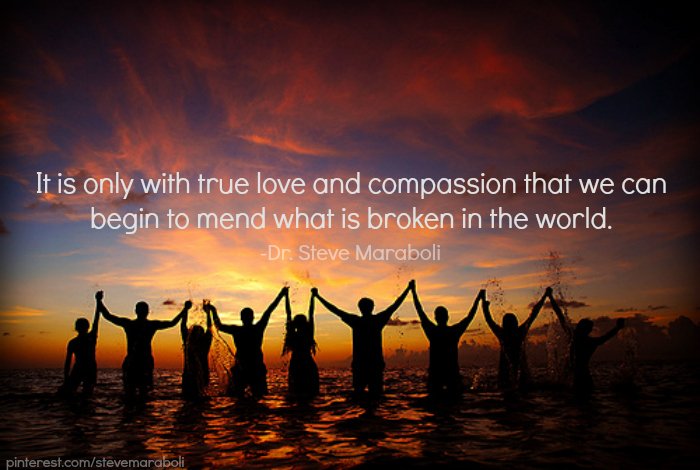
#JoCoxMP May your legacy of compassion and humanity live on in our hearts to combat any hate and fear
Katie Clarke tweet media
English
7
16
59
0
Katie Clarke retweetledi
B'Tselem בצלם بتسيلم
As of March 2026, some 9,446 Palestinians are held in Israeli prisons; 4,691 of them are under administrative detention, imprisoned without charge, trial, or the ability to defend themselves. Even during the illegal and deadly Israeli-American attack on Iran, Israel continues to operate a network of torture camps for Palestinian prisoners from north to south, where they are subjected to systematic abuse, including physical and psychological violence, inhuman conditions, starvation and denial of medical treatment. 84 identified Palestinians, including one minor, have died in Israeli torture camps over the last two years, and there is grave concern that the real number is higher. This policy persists with the full support of Israel’s political establishment, judicial system, prison authorities and media. The Israel Prison Service and the Minister for National Security have publicly bragged about the harsh conditions imposed on Palestinian prisoners. These torture camps are part of the planned, extensive assault Israel is waging against Palestinian society, intended to break down and destroy Palestinians as a group. Link to our report “Living Hell” >> btselem.org/publications/2…
B'Tselem בצלם بتسيلم tweet media
English
207
3.6K
4.4K
557.9K
Katie Clarke retweetledi
sarah
sarah@sahouraxo·
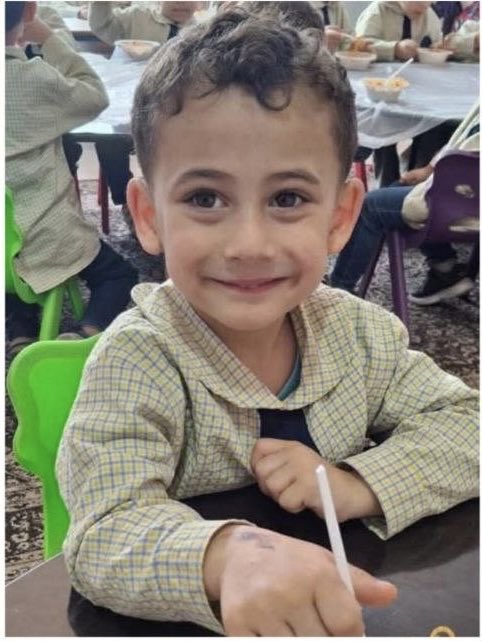
Israel killed little Qassem today in South Lebanon — with his entire family.
sarah tweet media
English
388
6K
11.6K
126.4K
Katie Clarke retweetledi
Howard Beckett
Howard Beckett@BeckettUnite·
While the world is watching Iran 🇮🇷, Lebanon 🇱🇧 and the Gulf States Israel 🇮🇱 bombs a displacement camp of Palestinians (in tents) west of the Gaza City 🇵🇸 Thousands flee, with nowhere to go Israel’s 🇮🇱 racist genocide goes on.
English
338
11.2K
14.3K
136.5K
Katie Clarke retweetledi
sarah
sarah@sahouraxo·
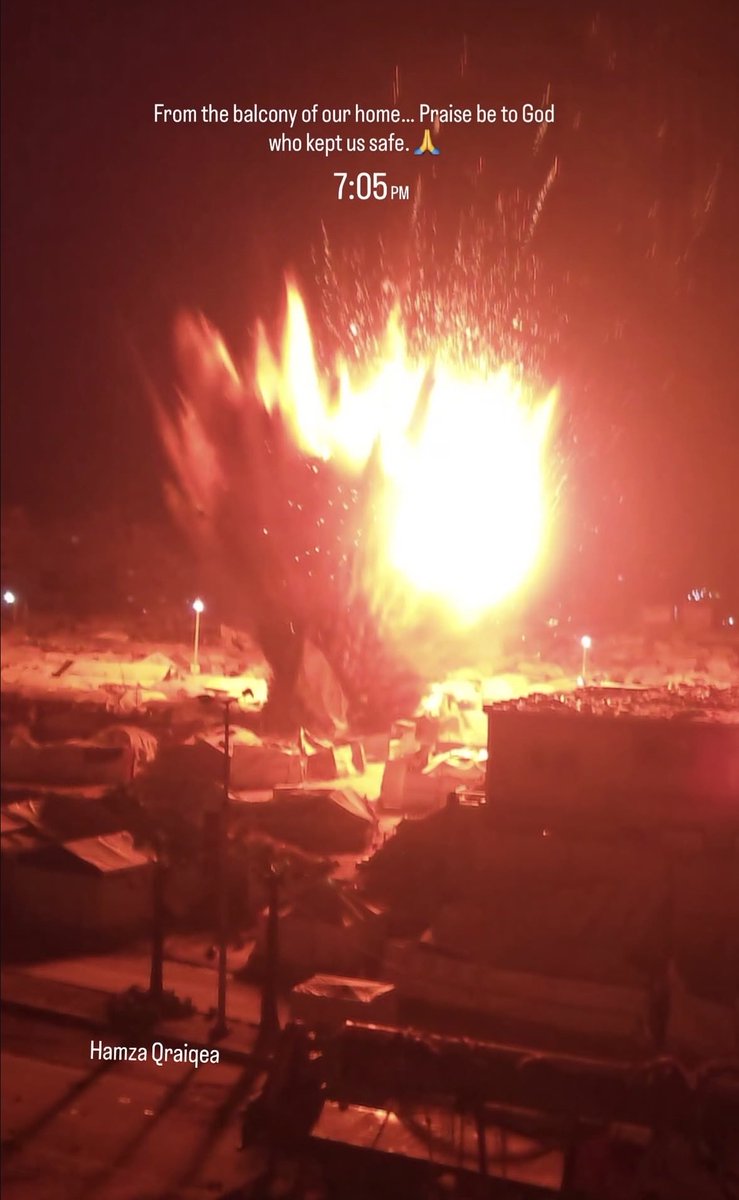
This is not Iran. This is not Lebanon. This is Gaza tonight. Israel is currently raining bombs on 3 different countries, targeting civilians and vital infrastructure. This is not the behavior of a “victim.” This is terrorism.
sarah tweet media
English
1.7K
56.3K
104.9K
1M
Katie Clarke retweetledi
Dr. Ezzideen
Dr. Ezzideen@ezzingaza·
🚨 A famine is beginning to form in Gaza. Not suddenly and not with a dramatic proclamation, but slowly and almost invisibly, in the ordinary places where life once continued without thought. In the markets, for example. Only a few days ago the stalls were still crowded with the small evidence of daily life: tomatoes piled in red heaps, cucumbers laid carefully beside them, onions hanging in bundles, frozen foods stacked in quiet rows. Nothing abundant and nothing luxurious, but enough for people to pass through the market with the familiar question of every household: What shall we cook today? Now that question has begun to disappear. Over the past days the number of trucks permitted to enter Gaza has declined sharply. Each truck that does not arrive leaves behind an absence that is immediately felt. First the variety of goods diminishes, then the quantity, and soon even the simplest foods begin to vanish. For three days vegetables and fruits have become rare. Frozen foods, once ordinary and unremarkable, have almost disappeared. The vendors remain behind their stalls, but many of them now stand beside tables that are nearly empty. It is a strange sight and a painful one. The habit of selling remains, but the goods themselves are gone. Yesterday traders received another piece of news. The coordination fees required for trucks entering Gaza will rise again. To those outside this system, the word coordination may sound administrative and harmless. In practice it means that intermediaries in Israel and Egypt demand enormous sums of money in order for trucks to pass. The cost for a single truck can reach a quarter of a million dollars. Thus a situation emerges in which food may exist just beyond the borders of Gaza and yet remain inaccessible to those who need it. Gas is also becoming scarce. Since the beginning of the war between Iran and Israel, only ten gas trucks have entered Gaza. Ten trucks for a population of more than two million people. Under normal circumstances this quantity would sustain life for less than a day. At the same time the World Food Programme has begun reducing its operations in community kitchens across the territory because supplies are running dangerously low. These kitchens have become the final thread holding together the daily survival of many families. Tens of thousands of people depend entirely on these meals. During the war they lost their work, their businesses, their farms, or the small incomes that once allowed them to buy food in the markets. Even when food appears in the market, many can no longer afford it. For them these prepared meals are not assistance. They are life itself. When the markets empty, when gas disappears, and when humanitarian kitchens begin to reduce their work, a pattern begins to reveal itself. These are not simply shortages. They are the first quiet movements of famine. Famine rarely announces itself loudly. It does not arrive with a declaration that the world can easily recognize. Instead it approaches gradually through the accumulation of small and seemingly ordinary changes. A truck that does not come. A stall that stands empty. A meal that cannot be cooked. Only later, when the suffering becomes undeniable does the world understand that famine had already begun long before anyone spoke its name. For this reason it is necessary to watch Gaza carefully now. Because famine never begins with death. It begins with silence. And that silence has already begun. #WoundedGaza
English
62
1.8K
2.6K
102.7K
Katie Clarke retweetledi
sarah
sarah@sahouraxo·
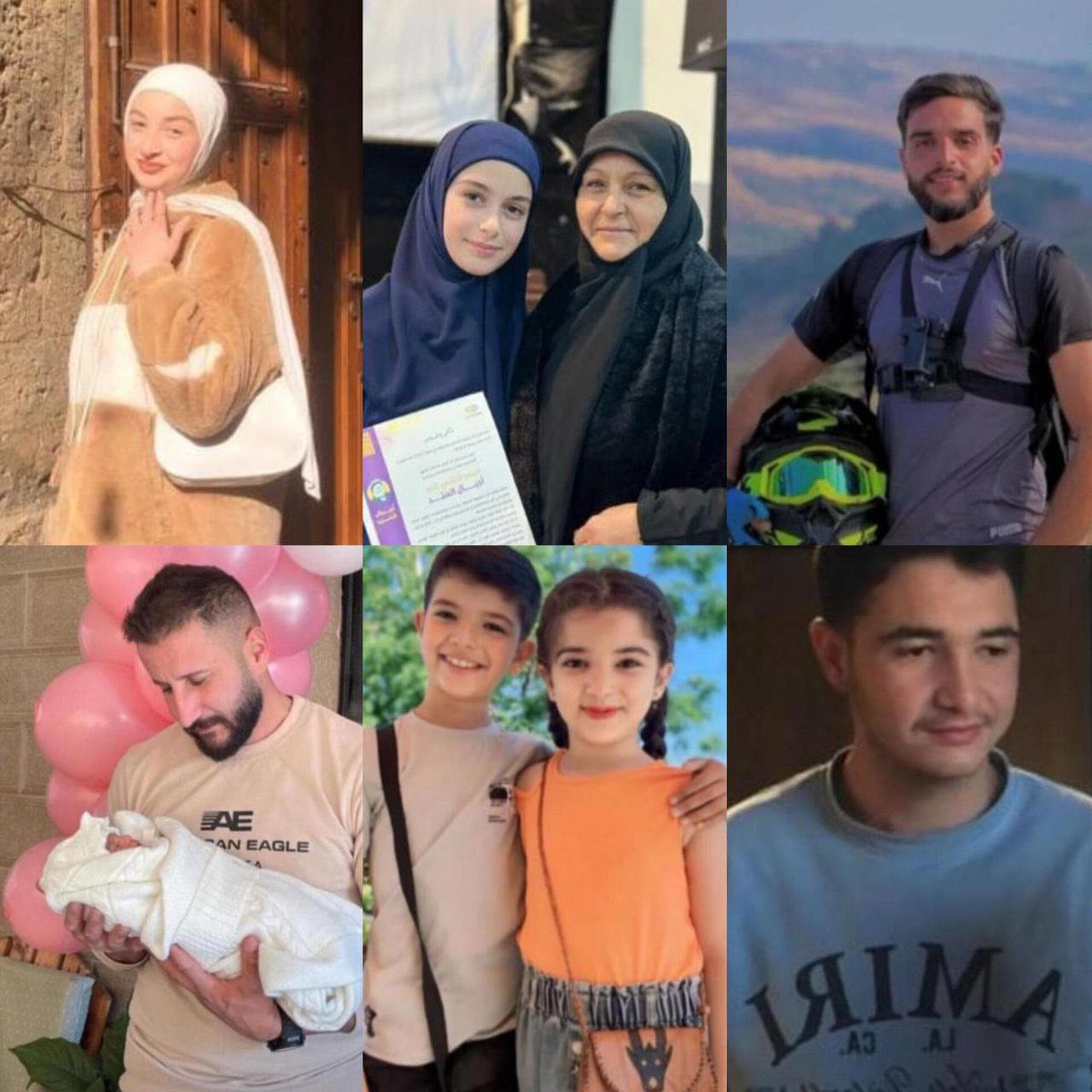
Israel wiped out this entire family in South Lebanon today. 20 civilians murdered in their sleep — in a single Israeli strike. Not militants. Children. Women. Innocent people.
sarah tweet media
English
97
2.5K
4.5K
48.6K
Katie Clarke retweetledi
Husam Zomlot
Husam Zomlot@hzomlot·
There is a dangerous silence surrounding what is happening in Palestine right now. As international attention has shifted to Israel’s wars across the region, state-backed settler militias are intensifying their campaign of terror in the occupied West Bank — such systematic terror attacks are being almost entirely ignored by UK and global media. Last night, three Palestinians were murdered in Abu Falah. Days earlier, settlers killed two brothers — Mohammad Taha Maamar (52) and Faheem Taha Maamar (48) — in Qaryut. Let us be clear: these settler militias are acting in accordance with the policies of the government of Israel. Operating under cover of occupation forces, they are an arm of the Israeli state, advancing a single goal: the annexation of the West Bank and the systematic erasure of Palestinian national life. While regional wars dominate the headlines, Israel is accelerating its assault on Palestine — a genocide in Gaza and ethnic cleansing in the West Bank — shielded by the deafening silence of the global media. History may not repeat. But it definitely rhymes. Demand your media covers Palestine. Demand your representatives act. Silence is complicity. #Palestine #Gaza #WestBank english.wafa.ps/Pages/Details/…
Husam Zomlot tweet mediaHusam Zomlot tweet media
English
440
7.8K
11.5K
315.6K
Katie Clarke retweetledi
Dr. Ezzideen
Dr. Ezzideen@ezzingaza·
She entered the room quietly. At first glance I thought she was forty. Perhaps a little more. The kind of face one sees on women who have already lived through many winters. I asked her age. She answered softly: “Twenty-six.” For a moment I did not understand the words. Twenty-six. I looked again at her face, as if time had written the wrong number upon it. She was younger than me. And suddenly an uncomfortable thought came to me. If she is younger than I am, and this is her face what must my own face look like? Perhaps I should go home and look in the mirror again. What has this young woman already seen in her short life for time to leave such marks on her face? What burdens has she carried for her voice to sound like the voice of someone who has already lived fifty years? This was not the first time I had noticed such a thing. In the clinic I often try to guess the age of those who sit before me. It has become a quiet habit. I look at the face. I choose a number. Then I ask. In Gaza the numbers rarely match. But there is something else. It happens most often with women. War claims to strike everyone equally. But suffering, it seems, knows how to choose its shoulders. The hands of these women were not meant to spend their days lighting small fires beneath metal pots beside thin tents. They were meant to be held. They were not meant to stand in crowded lines for bread. Bread was meant to be placed before them with kindness. They were not meant to carry whole families upon their backs while the earth trembles beneath them. And yet they do. Women who wake before dawn searching for water. Women who cook beside fragile tent walls while smoke climbs slowly into the sky. Women who quiet their children during bombardments while their own hearts tremble in silence. Women who grow old before their time. When I look at their faces I remember another moment in history. A man was walking toward his execution. Women were weeping in the crowd. He turned to them and said: “Daughters of Jerusalem, do not weep for me; weep for yourselves and for your children.” Luke 23:28 Sometimes, when I sit in the clinic and look at the faces of the women here, I feel that those words have never stopped echoing. They have simply found a new place to live. Today the world calls it Women’s Day. Peace to the women of this earth. And peace, all peace, to the women of Gaza. #WomensDay #WoundedGaza
English
35
364
931
28.8K
Katie Clarke retweetledi
sarah
sarah@sahouraxo·
This is Beirut today. Israel is systematically wiping out entire apartment blocks in Lebanon’s capital — a historic city that has stood for more than 5,000 years. Not military targets. Civilian homes. Residential buildings.
English
610
26.5K
49.9K
2.3M
Katie Clarke retweetledi
The National
The National@ScotNational·
Tomorrow's paper 📰 This is the human cost
The National tweet media
English
54
672
2.1K
76.4K
Katie Clarke retweetledi
roqayah chamseddine
roqayah chamseddine@roqchams·
From the Israeli attack on the hotel on Hazmieh road. Another likely massacre
English
1
26
68
2.5K
Katie Clarke retweetledi
Sarah Wilkinson
Sarah Wilkinson@swilkinsonbc·
The death toll at Shajareh Tayyebeh girls’ primary school in Iran rises to 148 with 95 wounded — most of the killed are between 7 & 12 years old dropsitenews.com/p/iran-minab-e…
English
41
960
1.3K
21.1K
Katie Clarke retweetledi
Robert Martin 🇵🇸
Robert Martin 🇵🇸@Robert_Martin72·
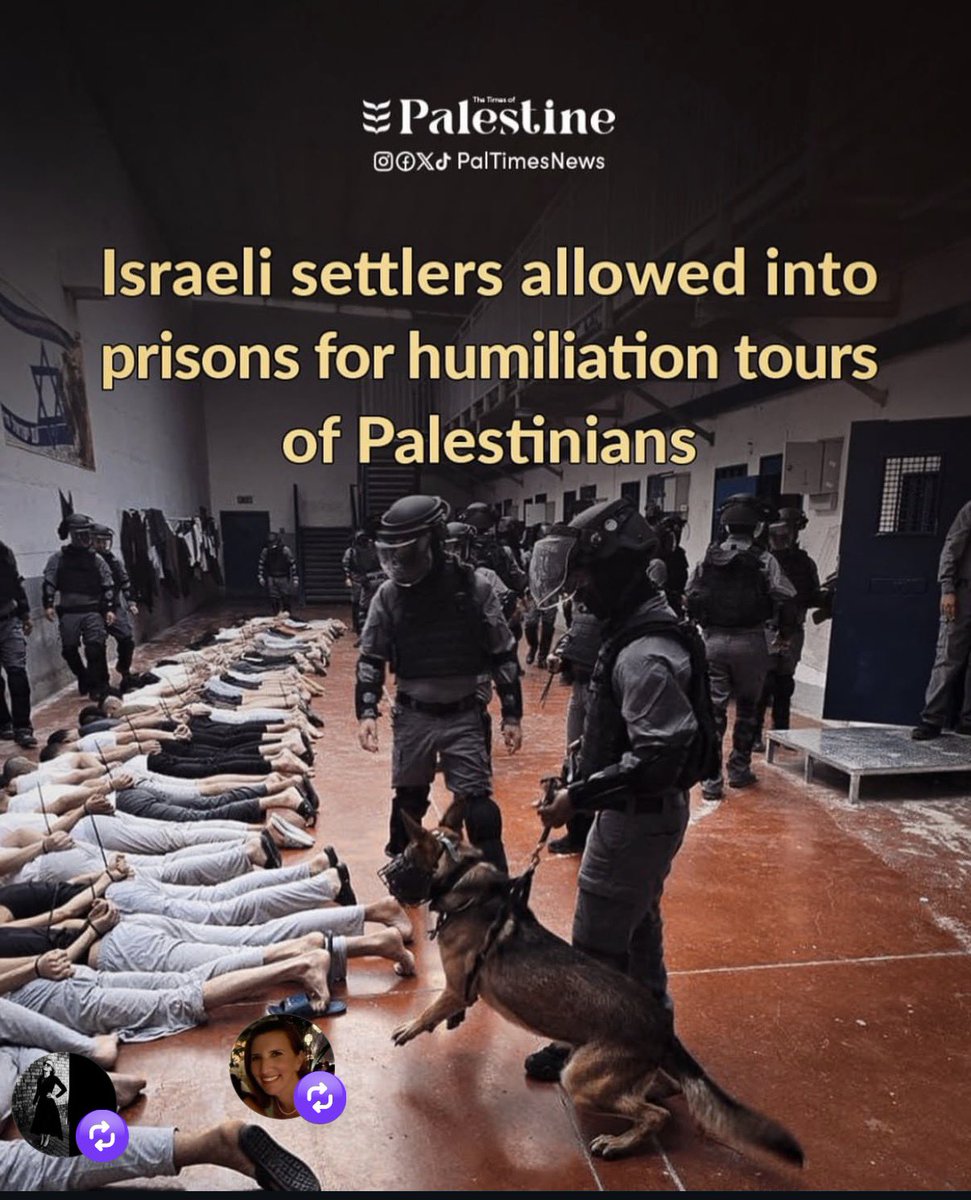
Israel Prison Service Chief Commissioner Kobi Yaakobi allowed extremist Israeli settlers to enter facilities where Palestinian detainees were being held. The settlers participated in humiliating and abusing detainees while they were handcuffed, blindfolded, and forced to the ground. Via paltimesnews
Robert Martin 🇵🇸 tweet media
English
116
2.1K
2.4K
33.6K
Dr. Ezzideen
Dr. Ezzideen@ezzingaza·
Yesterday, Malak returned from her lesson unlike herself. She did not fling herself into my arms as she always does. She did not steal the quick kiss she thinks she is stealing, when I am, in truth, the one rescued by it. She came straight to me, her eyes carrying something too heavy for childhood, and said, “Baba… there is a girl in my class. Her mother fasts all year.” At first I smiled. I thought it was a child’s exaggeration, as if innocence could not be accurate, as if truth must arrive signed and stamped. But Malak did not smile. She began listing the small details children notice. Her friend does not buy from the canteen. Sometimes she misses the first lesson because she leaves early to search for bread for her sisters. Once, when the call to prayer echoed in school, she whispered, “Everyone eats the tastiest food when it calls for iftar… except Mama. She drinks water and one date only.” Then her voice rose, sharp with both plea and anger: “Baba, you have to go see them.” I did not want to go. Not because I lacked pity, but because I knew what pity becomes when it turns into sight. There are journeys that rearrange the soul. We arrived at what was supposed to be a home: two walls still standing, and between them a blue tarp stretched on thin ropes, trying to pass as shelter. The wind entered freely. Dust covered everything, even the girls’ faces. We were allowed inside. Tala, Malak’s friend, was there. She laughs like my daughter, lifts her hand quickly in class, lowers her gaze shyly when pocket money is mentioned. Yet notebooks do not show hunger. Ink does not record cold. Her mother sat on the ground, no chair, no table. Four girls circled one plate. The eldest was Tala. The youngest, Mais, two years old, watched each bite as if food must prove itself before it could be trusted. Tala ate slowly, as if giving her sisters more time. There was not enough for a full meal. The mother divided the food with heartbreaking precision, mathematics against starvation. When the portions became smaller still, her hand quietly withdrew. I tried to persuade her. “Auntie, you look unwell. God is kind. Eat with the little ones.” She smiled gently and said, calm as a verdict, “I am fasting.” Mais tugged at her dress and said with certainty, “Mama is always fasting.” It was not a complaint. It was a fact, like nightfall, like power cuts, like this home that is no longer a home. A new law of the poor: the mother disappears so the children remain. There was no refrigerator, no Eid clothes waiting, no door that closes. Only space between two walls and a mother erasing herself each evening so her daughters may stay bright. I left carrying something heavier than sadness. Sadness can be endured. But to see a human body remove itself from the table so others may eat is a different kind of knowledge. On the way back Malak asked quietly, “Baba… does Tala’s mother have to keep fasting all year?” I had no answer. Today I sent some of our iftar food with her. I wanted to see if Tala’s mother could sit down, just once, and eat. But the question keeps striking my head: Who will change this small law named “Mama is always fasting”? - My friend Raed shared this story with me. #WoundedGaza
English
25
271
681
17K
Katie Clarke retweetledi
Novara Media
Novara Media@novaramedia·
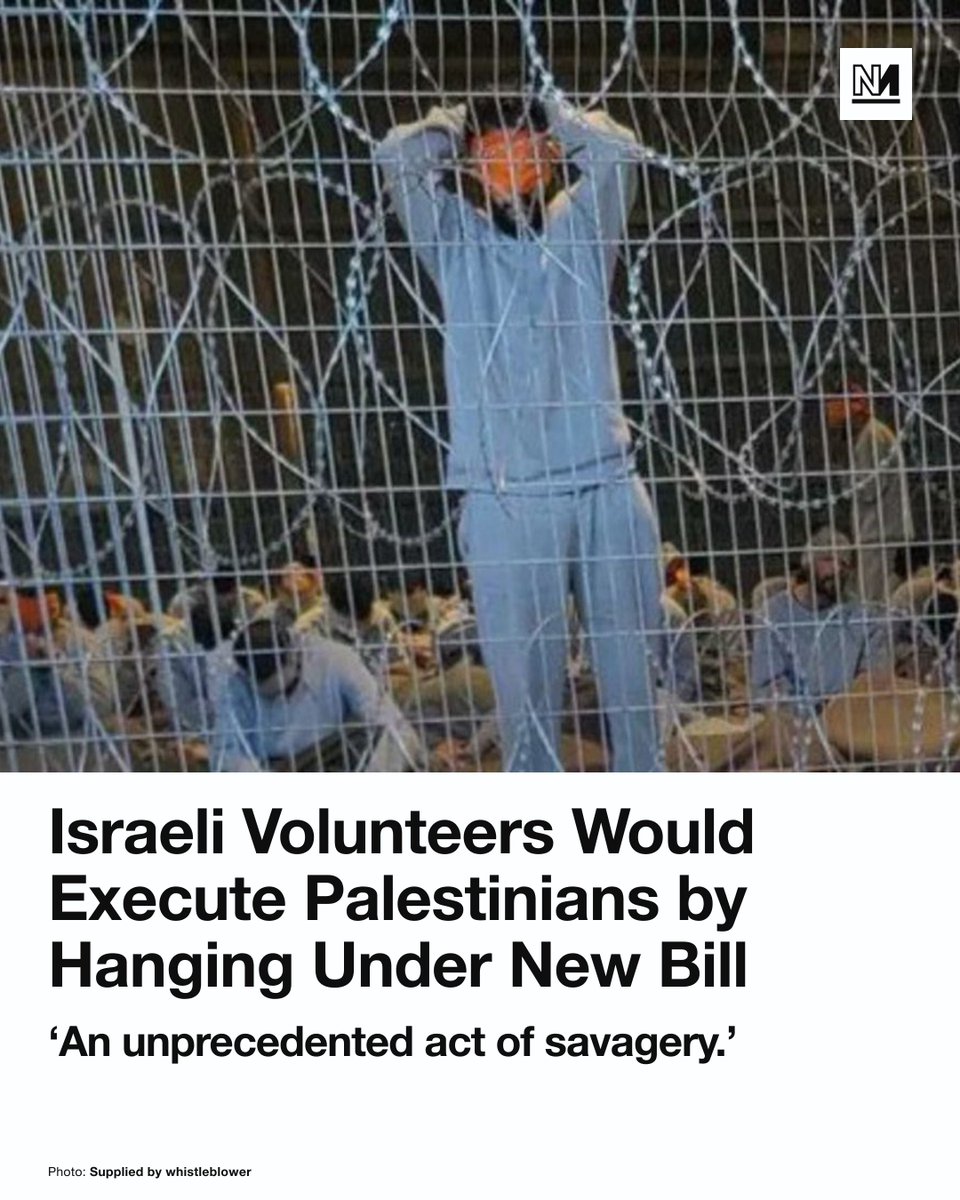
Israel’s prison authorities have begun preparations for executing Palestinians under a proposed law condemned by Amnesty International and UN experts. The preparations include the construction of a “green mile” facility to carry out the hangings, with groups of three volunteer executioners simultaneously pressing a trigger, Israel’s Channel 13 reported. Two prison rights groups described the death penalty bill as an “unprecedented act of savagery”. Meanwhile, eight UN experts last week called on Israel to withdraw the bill, which mandates executions within 90 days of a guilty verdict. The bill, which must pass two more readings in the Israeli Knesset to become law, introduces two tracks for the death penalty. In the illegally occupied West Bank, Israeli military courts would impose the death penalty for “terrorist” acts that cause someone’s death, even if it was unintentional; while in Israel and occupied East Jerusalem, the death penalty would apply under Israeli criminal law, and only for the “intentional killing of Israeli citizens or residents”. Only Palestinians will be executed, while Israelis convicted of similar offences will face prison sentences. If passed, the Israeli government intends first to target the law at the elite Hamas military unit that conducted the 7 October 2023 attacks. Palestinians in Israeli detention camps are subject to systemic torture, including rape, genital mutilation, sleep deprivation, electrocution and beatings. Many are held without charge, while those who are charged are routinely denied fair trials: the conviction rate of Palestinians in Israel’s military courts is over 99%. The expansion of Israel’s death penalty laws is a long-held dream of several members of its cabinet, notably national security minister and far-right settler Itamar Ben-Gvir. The country has never formally abolished capital punishment, though it has only ever meted it out twice: once in 1948, when it executed army officer Meir Tobianski for espionage; and once in 1962, when it hanged Nazi leader Adolf Eichmann.
Novara Media tweet media
English
356
2.5K
2.9K
247.1K
Katie Clarke retweetledi
Suppressed Voices
Suppressed Voices@supressedvoic·
This is not Hiroshima, this’s Gaza Gaza is nearly 3 times smaller than Hiroshima, and Israel dropped ~200,000 tonnes of explosives, equivalent of ~14 ATOMIC BOMBS, on Gaza in 2 years.
English
810
5.4K
8.2K
103.7K
Katie Clarke retweetledi
Tamer Nahed
Tamer Nahed@Tamer_Alnoaizy·
For those who don’t know, Gaza is a small, confined area of just 365 square kilometers. Before the war, more than two and a half million people lived there in extreme overcrowding. Life was already difficult, yet people still tried to live with dignity. Today, the same population has been forcibly confined to less than half of that space. What remains is not fit for life. Large areas are destroyed, reduced to rubble and overcrowded tents. There is no safety, no privacy, and no basic sense of humanity. Millions of people are trapped under a complete siege by land, sea, and air, with no safe passage and no way out. There are no functioning hospitals, no medicine, and no proper medical care. Schools and universities no longer exist. Clean water is scarce, food is limited, and disease is spreading. Even a moderate injury can mean death simply because treatment is unavailable. After what was falsely called a ceasefire, homes were suddenly confiscated and entire areas were declared red zones without warning. Houses were destroyed, families forcibly displaced, and people were prevented from returning. Construction materials are not allowed in not for rebuilding, not even to build basic shelters. Caravans, medicine, and emergency aid are blocked. For nearly two and a half years, there has not been a single day without fear. Fear defines daily life. Even escape is forbidden no travel, no study, no medical treatment, no choice. This is not a life. It is punishment for existing.
English
45
412
621
10K