Kavedog retweetledi
Kavedog
34.8K posts

Kavedog
@KdKavedog
Nomad, photographer, philosopher, member of Citizens Against Virtually Everything (C.A.V.E.)

Katılım Nisan 2016
501 Takip Edilen279 Takipçiler
Kavedog retweetledi

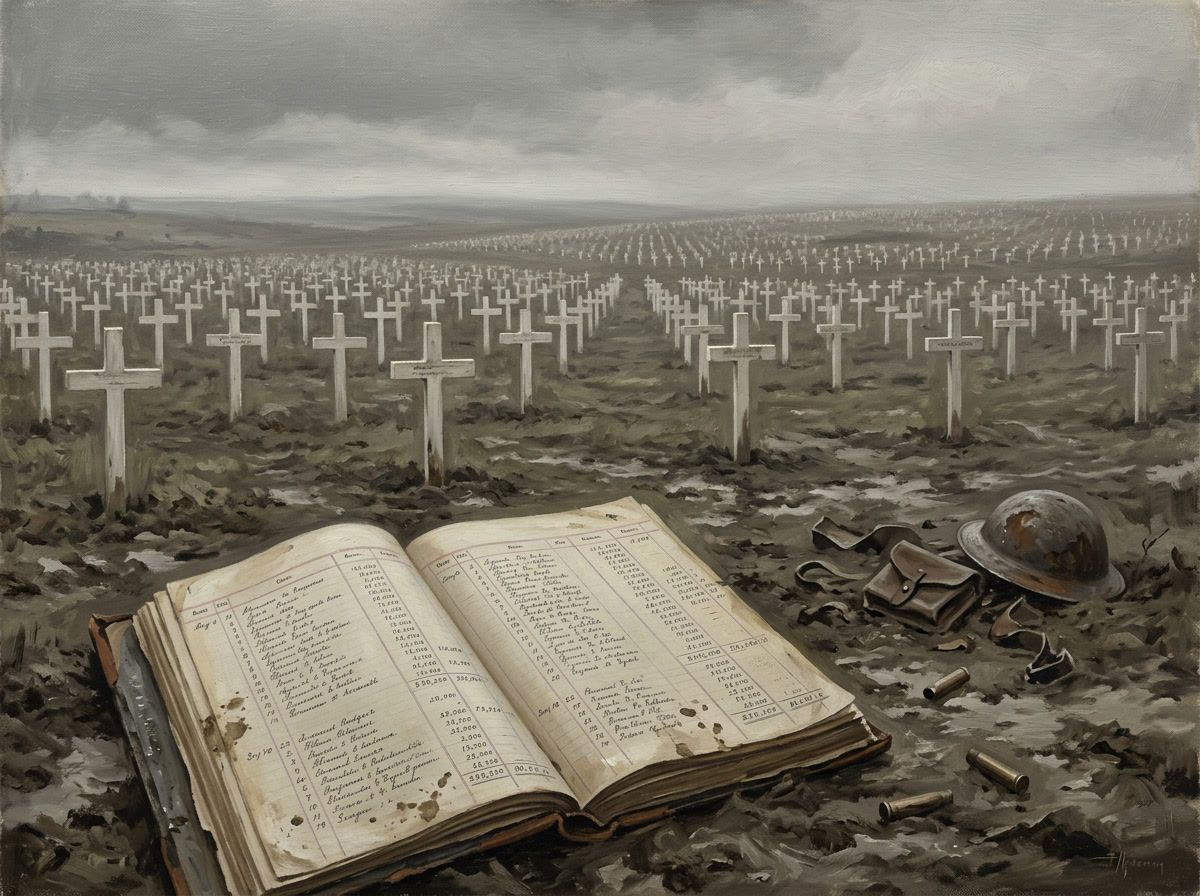
The war delivered exactly what its architects intended.
Continental Europe was destroyed. Germany, France, Austria-Hungary, Russia, and the Ottoman Empire were all shattered.
The British Empire emerged with greater global dominance than ever.
The financiers who backed the conflict profited on every side: J.P. Morgan as sole Allied purchasing agent, Bernard Baruch controlling U.S. war contracts, the Warburg brothers on both sides of the Atlantic.
The Federal Reserve (created just one year before the war) managed the debt. The income tax (ratified the same year) serviced it.
20 million dead. An entire civilization demoralized. And the parallel state stronger than ever.
H.G. Wells (wartime director of British propaganda) later wrote: “We don’t approve of independent sovereign states. We mean to stop them.”

English
Kavedog retweetledi
Kavedog retweetledi
Kavedog retweetledi
Kavedog retweetledi
Kavedog retweetledi
Kavedog retweetledi

251 years ago this week, a 6'2" Vermont moonshiner with no military experience and no authorization from anyone captured the most strategically important fort in North America at dawn, and accidentally won the Revolutionary War before it had really started.
It's May 1775. Lexington and Concord happened three weeks ago. The colonies have muskets but almost no cannon. The British, sitting in Boston, have plenty. Everyone knows that without artillery, the rebellion is over by autumn.
Everyone also knows where to get artillery: Fort Ticonderoga. A stone star-fort on Lake Champlain, bristling with roughly 80 heavy guns. The British call it "the Gibraltar of America." It's the bottleneck of the entire continent. Whoever holds it controls the invasion route between Canada and New York.
What the rebels don't know, but Ethan Allen has heard, is that "the Gibraltar of America" is, by 1775, mostly held together by moss. The walls are crumbling. The garrison is 48 men, many of them invalids and pensioners. The commander hasn't even been told a war started.
Allen is not a soldier. He's a frontier land speculator who runs an armed militia called the Green Mountain Boys, originally formed not to fight the British, but to beat up New York surveyors trying to seize Vermont farms. New York has literally put a bounty on his head. He decides to go take the fort anyway.
Halfway there, a man named Benedict Arnold shows up on horseback with a Massachusetts colonel's commission, waving paperwork, demanding command of the expedition. The Green Mountain Boys threaten to go home if Arnold is in charge. Allen and Arnold agree to "joint command," which mostly means walking next to each other in furious silence.
They reach the lake at midnight. Problem: they have 200 men and exactly two leaky boats. By 3 AM only 83 have made it across. Dawn is coming. Allen decides to attack with what he has, meaning roughly 1 American for every half-cannon inside the fort.
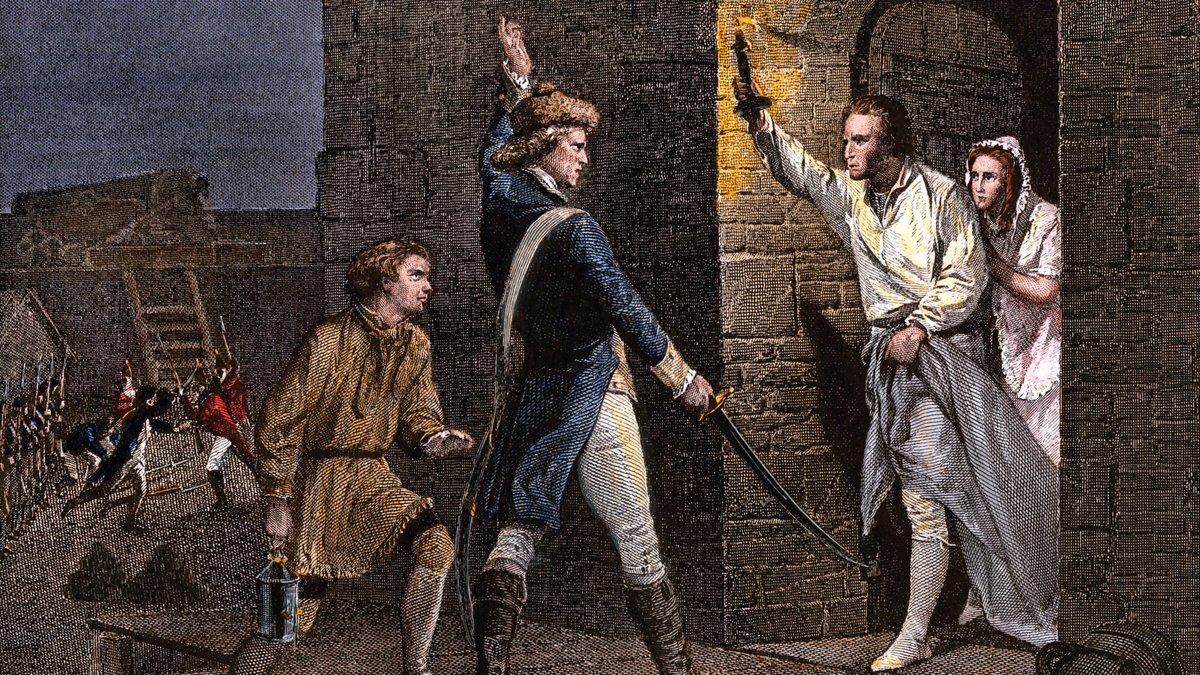
A lone British sentry sees them coming through the wicket gate, levels his musket at Allen's chest, and pulls the trigger. The musket misfires. He runs. The Americans pour in. Total resistance to the capture of British North America's most important inland fortress: one wet flintlock.
Allen pounds on the officers' quarters with the flat of his sword. Lt. Jocelyn Feltham stumbles out half-dressed, asking by what authority Allen is there. Allen, by his own later account, roars: "In the name of the Great Jehovah and the Continental Congress!" (Other witnesses remembered the wording as substantially more profane. The Continental Congress, for its part, had no idea any of this was happening.)
Captain Delaplace, the actual commander, emerges still buttoning his trousers and surrenders the fort, its 78 cannons, its garrison, and roughly 30,000 musket flints without a shot fired by either side. Casualties: zero. Time elapsed: about ten minutes.
But here's the part that actually changed history. Those cannons sat at Ticonderoga for six months until a 25-year-old, 280-pound Boston bookseller named Henry Knox, who had learned artillery from books in his own shop, volunteered to go get them.
In the dead of winter, Knox and his men dragged 59 cannons weighing 60 tons across 300 miles of frozen rivers, the Berkshires, and unbroken snow, on 42 ox-drawn sleds. One gun fell through the ice of the Hudson. They fished it out and kept going. It took 56 days.
On the night of March 4, 1776, those cannons were hauled silently up Dorchester Heights overlooking Boston Harbor. The British woke up on March 5 to find every ship in the harbor and every redcoat in the city under the muzzles of guns that, six months earlier, had belonged to them.
Eleven days later, the British evacuated Boston. They would never hold it again.
An unauthorized raid by 83 backwoodsmen, led by a wanted man and a future traitor, against a fort defended by a captain in his pajamas, became the artillery that drove the British army out of the largest city in the American colonies.
Easiest W in American history. Possibly the most consequential ten minutes of the 18th century.

English
Kavedog retweetledi
Kavedog retweetledi

Tetsu Nakamura was a Japanese doctor who went to Pakistan in 1984 to treat leprosy. Twenty years later he was driving a bulldozer through the Afghan desert, building a 25 km canal that today feeds 650,000 people.
He spent the 1980s and 90s running clinics for Afghan refugees and Pakistani villagers, funded by a small charity he had set up in Japan. Then in 2000 a drought hit eastern Afghanistan. He watched children die of dehydration and dirty water faster than his clinics could treat them. He said, "One irrigation canal will do more good than 100 doctors." The problem was that he had no engineering training, so he flew home and spent weeks walking the rivers near his hometown, studying a farm canal villagers had built in 1790 using only hand tools. The canal still works today.
He brought the design back to Afghanistan and broke ground in 2003. Instead of pouring concrete, he stacked wire cages packed with river stones, a trick Japanese farmers had used for centuries. If a flood broke a section, any Afghan villager could repair it with rocks from the riverbed. Nakamura drove the bulldozers himself. American military helicopters mistakenly opened fire on his crews twice while they hauled boulders.
The canal opened in 2009. It turned 3,000 hectares of dust, a stretch locals called the Valley of Death, into wheat fields. Eight more canals followed. By 2023 the network was watering 23,800 hectares of farmland, roughly four times the size of Manhattan, and supporting around 650,000 Afghans who would otherwise have become refugees.
The whole project ran on tiny monthly donations from Japanese citizens. After his death the Japanese government committed $9.5 million through the UN to keep the canals running. Over the same two decades, the United States spent between $760 billion and $2 trillion in Afghanistan.
On December 4, 2019, two months after the Afghan president made him a citizen of the country, gunmen ambushed his car on his way to work. He was 73. His engineers are still building canals.
English
Kavedog retweetledi
Kavedog retweetledi
Kavedog retweetledi

"Nah I don't believe in superstitious stuff like communal visualization and tonal chanting and symbolic mudras"
well that's why you can't fly supersonic stealth dragons buddy
Buzz Patterson@BuzzPatterson
Watch the Navy Blue Angels choreographing their air show performance. It’s that precise! Absolutely zero wiggle room involved in performing these maneuvers. Crazy.

English
Kavedog retweetledi
Kavedog retweetledi

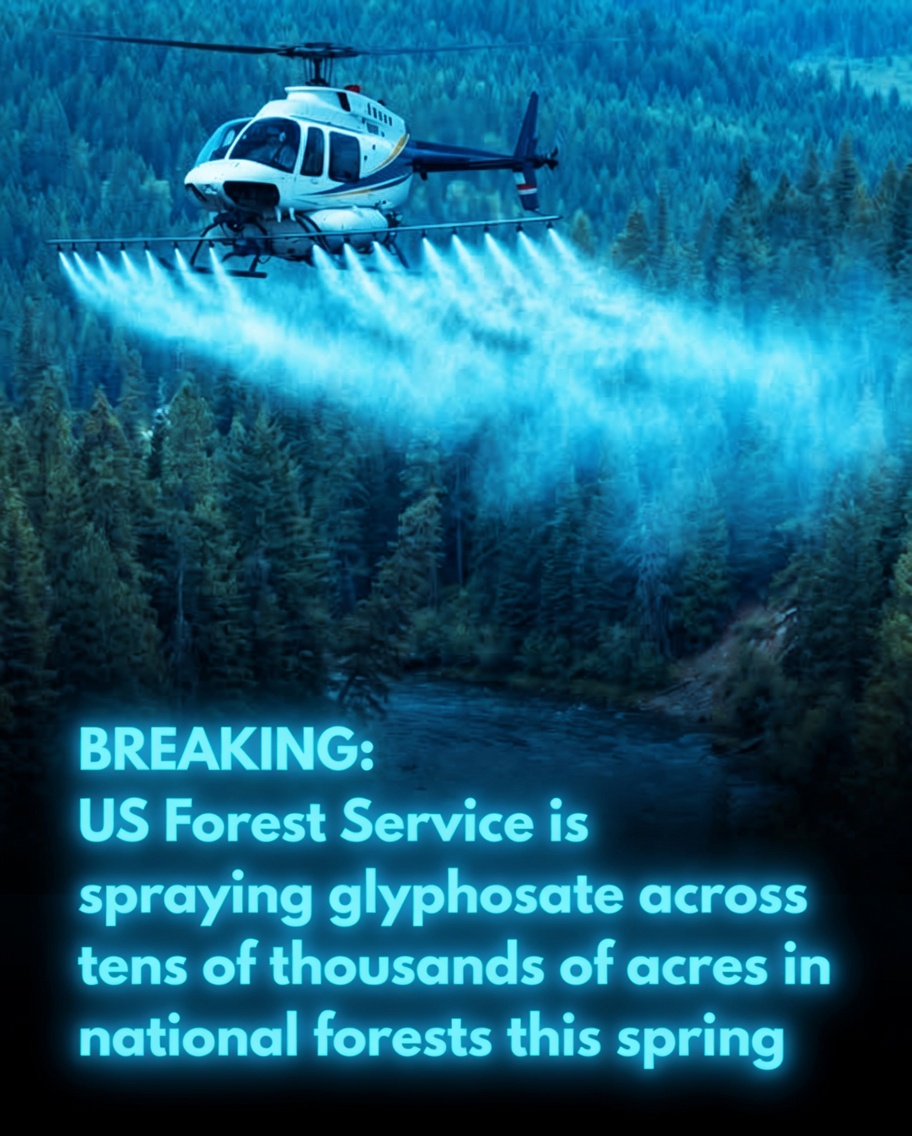
The U.S. Forest Service is spraying glyphosate (Roundup) across tens of thousands of acres of national forests this spring to support commercial timber production.
Following wildfires, forests naturally regenerate with diverse shrubs, wildflowers, and wildlife. However, a recent investigation reveals that the Forest Service and private logging companies are routinely applying the herbicide to eliminate competing native vegetation, favoring commercially valuable species such as Douglas fir and sugar pine.
This practice has created large areas with significantly reduced biodiversity, often described as "dead zones", where insect, bird, and plant populations have sharply declined. Glyphosate, classified by the World Health Organization as a probable human carcinogen, has seen its use in California national forests quintuple over the past two decades, reaching a record 266,000 pounds in 2023.
Local communities, environmental groups, and residents are raising concerns about potential impacts on water quality, endangered species (including salmon and rare foxes), and public health. Critics argue that prioritizing industrial timber production over ecological diversity conflicts with the broader mission of national forests as public lands.
The issue has intensified debates over forest management, balancing economic interests with long-term environmental and community health.

English
Kavedog retweetledi

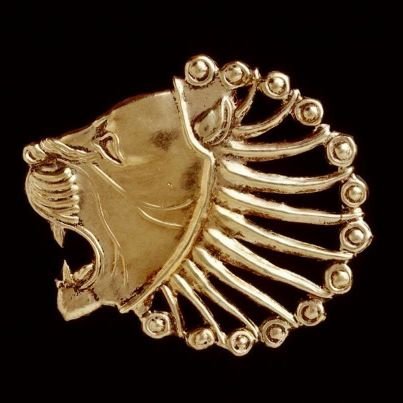
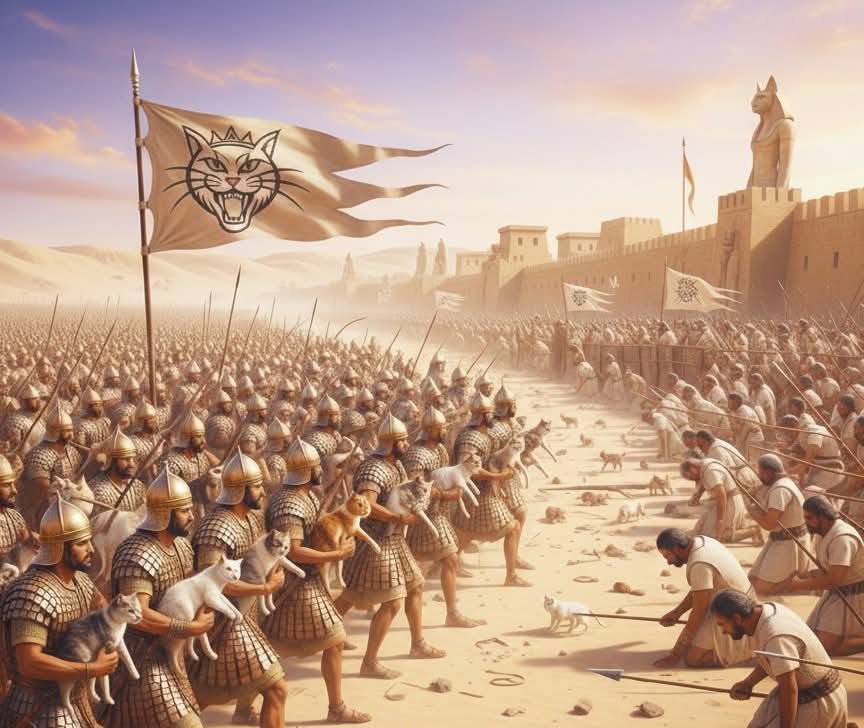
At the Battle of Pelusium, Persian king Cambyses II faced a problem: the Egyptians were fierce warriors who would defend their land to the death. But he also knew something deeper — they worshipped cats as sacred beings of the goddess Bastet, protectors of home, fertility, and life itself. Harming one was seen as blasphemy.
So Cambyses devised one of the most cunning psychological strategies in history. His soldiers painted cats’ faces on their shields and drove live cats and other sacred animals before their advancing lines. The Egyptians, terrified of offending their gods, could not bear to strike. The battlefield turned into chaos — not of blood, but of hesitation.
The Persians seized that moment. The Egyptians faltered, and Pelusium fell. The conquest of Egypt was achieved not by brute force, but by turning its deepest faith against itself.
The story remains one of the most brilliant — and unsettling — examples of how human belief can become both a shield and a weapon. Cambyses didn’t just win a battle; he redefined warfare by using culture and religion as tools of power.
#drthehistories

English
Kavedog retweetledi

To get any book you want on the internet, type the name of the book followed by doctype:pdf
E.g The Alchemist doctype:pdf
Dr. Shak🩺@realbig_shak
Tell us a simple life hack.
English
Kavedog retweetledi
Kavedog retweetledi
Kavedog retweetledi