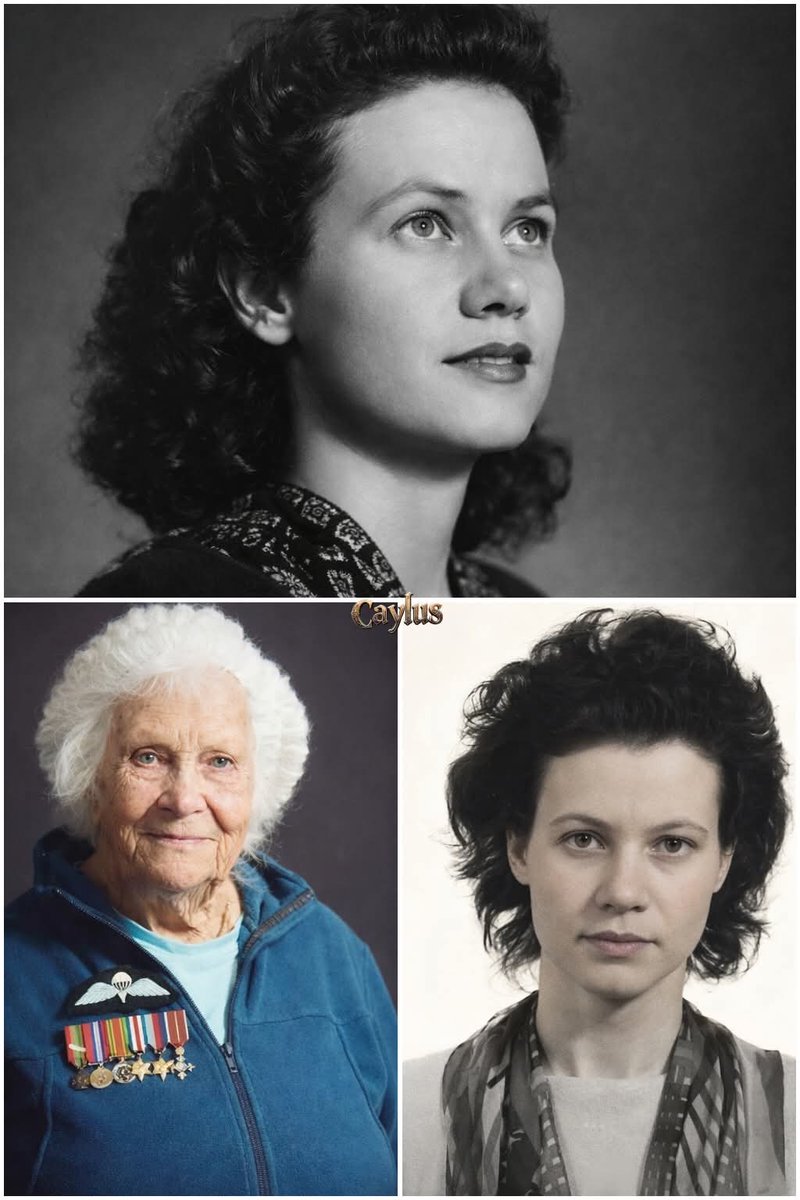
The male agents kept dying in the shadows, so British intelligence disguised a 23-year-old woman as a village girl, trained her to kill, and dropped her into Nazi-occupied France — where she outwitted the Third Reich for 135 days.
May 1, 1944. Five days before D-Day would crack open Nazi Europe.
A dark bomber sliced through the sky over Normandy. At its open door stood Phyllis Latour — tiny, calm, and impossibly brave, staring at occupied France thousands of feet below her.
No rifle. No platoon. Just a parachute, a cover story, and a battered bicycle waiting to become her execution — or her legend. She was 23. And the Nazis had already eliminated every male spy sent in her place.
Churchill’s Special Operations Executive needed someone invisible. Someone the Gestapo would dismiss before they feared. They needed a ghost dressed as a child.
They chose her.
She had trained until her knuckles split on cold stone. Morse code until her fingertips bled. Silent killing. Disappearing. Climbing walls with a cat burglar. Resisting torture.
This wasn’t duty. This was vengeance — the Nazis had murdered her godfather.
Then she jumped into the darkness.
She buried her British gear. Brushed her hair into a little girl’s ribbon — codes hidden inside — and pedaled into occupied towns selling soap, giggling like someone too innocent to fear war.
“The men before me were caught and killed,” she later murmured, calm as a winter lake. “I would be less suspicious.”
For 135 days, that “harmless peasant girl” memorized troops, tanks, bunkers, fuel lines. Then she vanished into forests to send lifelines to London at a speed most wireless operators never reached.
She never transmitted twice from the same place. If she did, a German detection truck would find her, torture her, erase her. So she slept in barns, fields, empty rooms — hunger and death whispering beside her.
Once, soldiers stopped her. Searched everything. A Nazi officer reached for her ribbon — the one hiding silk codes.
She untied it playfully, hair falling, eyes wide and childish.
They laughed and let her pass. Life and death swayed by a smile.
135 messages.
135 blows against the Nazi war engine.
D-Day’s success carried her fingerprints.
When Paris was liberated, she didn’t stand on a parade truck or write a memoir. She went home. Married. Raised four children. Told none of them.
Her son only learned the truth 56 years later — from a book.
In 2014, France finally placed the Légion d'honneur around her neck. She accepted it like someone who’d simply done laundry, not saved lives.
Phyllis Latour Doyle lived to 102. Quiet. Gentle. Deadly when history needed her.
She didn't win the war with bullets.
She won it with innocence, courage, and a bicycle.
When every man they sent was killed —
she went anyway.
And the world changed because a young woman pretended to be a child and rode through hell with soap in her basket and fire in her heart.
May we never forget her name.
Phyllis Latour Doyle.
Chittor V Nagaiah:
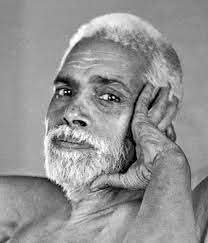
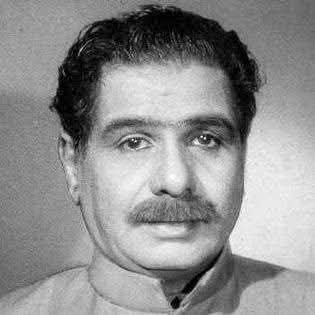
30th December is the English birth date of Bhagavan Sri Ramana Maharshi. 30th December is also the date of the passing away of the renowned yesteryear actor/producer/director Chittoor V Nagaiah (1904-1973). It is 52 years today.
Fine, but what is the connection between a Supreme Jnani and a film thespian? There is, and here it is.
Nagaiah lived in Chitoor, now in Andhra Pradesh, with his parents and wife. His wife died suddenly after giving birth to a girl. Nagaiah was distraught and sank into deep misery. He was persuaded by friends to give music concerts. He married again but the second wife also passed away due to miscarriage. His daughter by his first wife also died of an illness. Not finding solace in anything worldly Nagaiah left home on an impulse and wandered about.
One day he found himself in Ramanasramam, Tiruvannamalai. It was the early 1930s.
Nagaiah’s experience is best described in his own words,
“To me, Sri Ramanasramam was like entering heaven on earth. The atmosphere of profound peace which surrounded the Maharshi and which enveloped the place sank into me. At long last, my mind knew some rest. The majestic silence of Bhagavan ended my suffering and my self-concern about the bereavement.”
Nagaiah became friends with Paul Brunton, British writer and author of the eternal bestseller ‘A Search in Secret India’ which book describes Brunton’s experiences with Bhagavan and did much to make him known throughout the western world. Brunton was staying next to Ramanasramam then. Time passed happily and in absolute peace for Nagiah at the ashram.
One day a friend of Nagaiah’s from Chittoor came to Ramanasramam and spotted him. He cajoled Nagaiah into accepting a recording program for a film that he was making. Nagaiah told him that unless the Maharshi gave his consent, he could not agree to the proposal.
Says Nagaiah,
“I had not spoken a single word to Bhagavan all this while nor had he to me. But there was some imperceptible yet strong bond of love between us. To leave the majestic master who filled my heart with peace was unthinkable. Still, the seeds of desire had been sown. I was looking for an opportunity to get the Maharshi’s permission. When I sought his permission, Bhagavan said,
‘Yes, you can go. There is still a lot of work for you to do.’ I could not comprehend the implications of his statement at that time. The recording assignment took me to the film world where name and fame came to me in a big way.”
Thus was Nagaiah pushed into the tinsel world where he acted and made some epoch-making films like Potana (the great poet, author of the Telugu Bhagavatam) and Thyagayya, a musical masterpiece on the great composer Thyagaraja. In both he played the title roles. Nagaiah went on to act in several Telugu and Tamil films, acting mainly as an elderly patriarch. He was also a singer, music composer and director.
Some of his actions in life proved that Nagaiah lived a life befitting a devotee of Bhagavan. A moving incident proves this.
Once, in the 1940s Nagaiah was returning in his car after attending a concert of GNB in Mylapore and he saw many people walking in the rain after the music concert. He got down and on enquiry discovered that they all lived in the T.Nagar/Mambalam area. Nagiah made several trips from Mylapore to T.Nagar to drop the rasikas home. This incident set Nagiah thinking.
He immediately set to work on establishing a Sabha in the T.Nagar area and also to build an auditorium. Thus was born the Thyaga Brahma Gana Sabha and the Vani Mahal on G.N.Chetty Road. It was Ariyakudi Ramanuja Iyengar who named the Sabha as Thyaga Brahma Gana Sabha. Nagaiah had an open house and close to 50 people would have food every day at his home. The man with all these philanthropic acts didn't save for a rainy day. Again, the hallmark of a true devotee of Bhagavan.
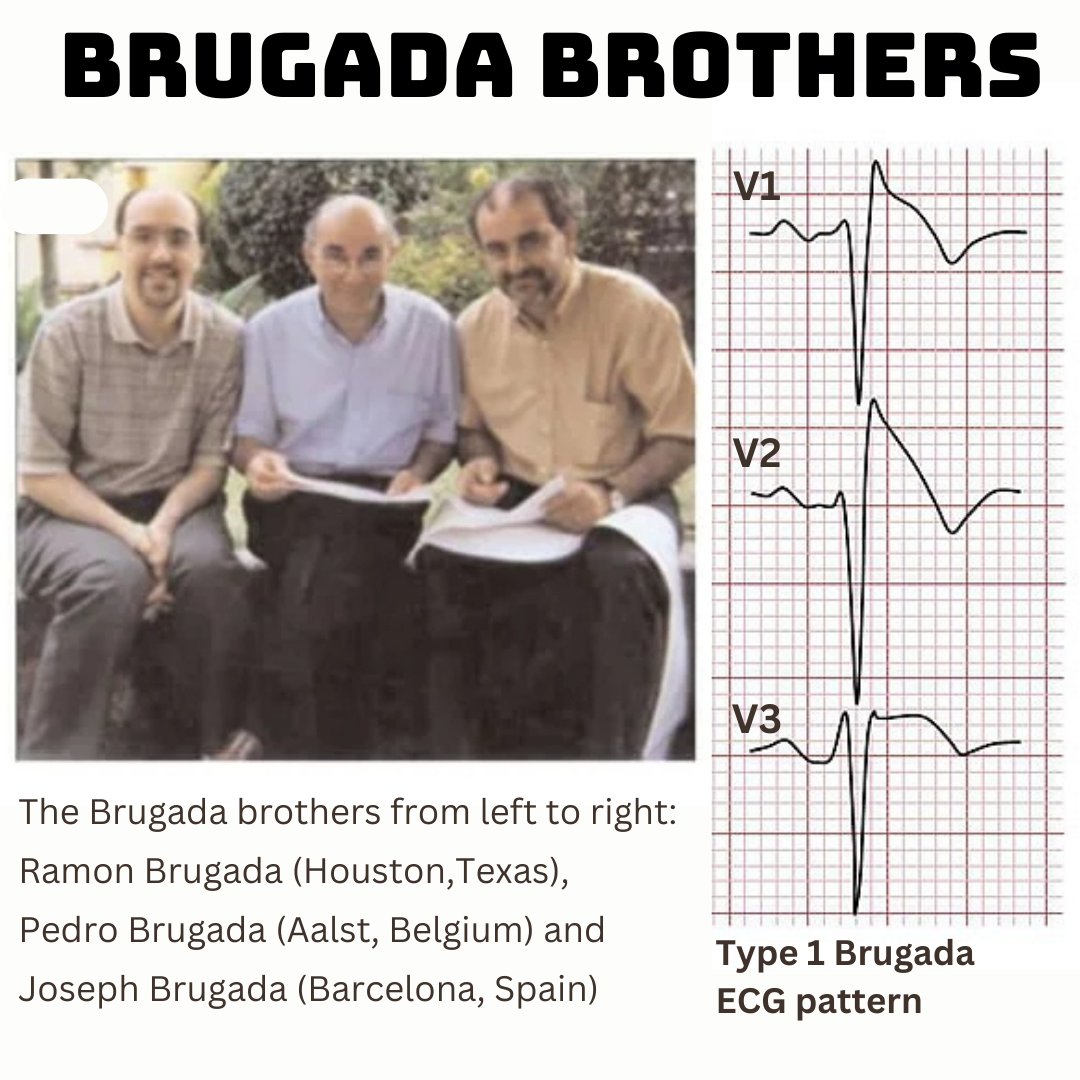
The BRUGADA family has contributed immensely to field of
🫀Cardiology & Electrophysiology
A 🧵 on
💥𝗕𝗥𝗨𝗚𝗔𝗗𝗔 𝗘𝗣𝗢𝗡𝗬𝗠𝗦
☑️Brugada Syndrome
✅️Brugada Pattern
☑️Brugada Phenocopy
✅️Brugada Algorithm
☑️Brugada Criteria
✅️Brugada Sign
#MedTwitter#MedX
Read on👇
My mother started working in @RBI Reserve Bank of India (RBI) in 1965! Yes 1965- 60 years ago !
In our family she was the only working woman of her generation!
After me and my brother were born in the 70s decade, I saw her managing work and family in an era which did not have Internet, mobile phones and online deliveries!
All her friends from the bank also did the same. Everyone kept up family ties, raised children with great values , pursued a fulfilling professional career and most importantly kept up their friendships!
This week I met some of them - all in the age group of 75-80 . Many have some kind of physical health challenge but in heart, mind and spirit- all are full of life, cheer and positivity! Most live by themselves, are independent and living life with contentment and joy.
Meeting them always leaves me deeply humbled and inspired. Life should be like this - simple and beautiful!
#women#india#inspiration#happiness#gratitude#life#rolemodel
Osteogenesis imperfecta (OI) - means, imperfect bone disease. OI is a rare genetic defect in collagen, a protein that strengthens the bone. The poorly formed collagen in OI, causes the bones to break easily. The same disease can affect the teeth and cause the sclera to be blue.
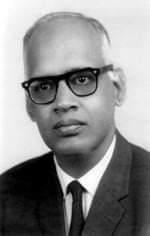
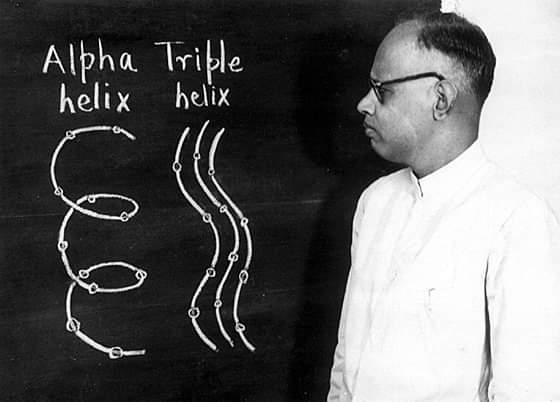
Almost all doctors know about this disease or have at least heard of it. But most have never heard of the man who discovered the structure of collagen. The double helical structure of DNA and Watson & Crick are household names, while the triple helical structure and the man behind its discovery are obscure, even though he worked, right here in Chennai.
GN Ramachandran was born in Ernakulam in the Kingdom of Cochin in 1922 . His father was a Mathematics professor who shaped his son's interest in the queen of sciences.But Ram, as he was known to his friends, had different plans. He completed BSc Physics(Honors) at the top of his class from St Joesph college, Trichy in Madras University in 1942.
After that he joined Masters in Electrical Engineering in Indian Institute of Science in Bangalore. Fate intervened at this point - in the form of a man, no less than Sir CV Raman, who pulled Ramachandran back to the physics stream from Engineering. Sir CV Raman was a giant in physics, already with a Nobel prize in his kitty for discovering the Raman effect. With such an illustrious mentor, Ramachandran worked on optics and the X ray topography of diamonds, culminating in a DSc in physics in 1947.
Like most scientists of that era, Ramachandran went to Britain - and worked with Linus Pauling and Sir Lawrence Bragg, in the Cavendish lab in Cambridge. With a PhD from Cambridge and an interest in crystallography he came back to Bangalore.
At that time, Sir AL Mudaliar was searching for a suitable candidate to head the experimental physics division in Madras University. He invited Sir CV Raman, who graciously declined, but sent his protege, Dr GN Ramachandran, who became a professor of physics at the age of 29.
With his whole life ahead, GNR had trouble choosing suitable projects. He was toying with the idea of biopolymers and structure of biological macromolecules,and gravitated towards collagen. With his post-doc Gopinath Kartha, he discovered the triple helical strucutre of collagen, after years of painstaking work with stick and ball models.
He also developed the Ramachandran plot,a framework for understanding peptide structure. It was breakthrough, and Janet Thornton said, "It never fails to excite me, when I see the Ramachandran plot and realize how much of the beauty and order of protein structures is encapsulated by this plot. I also think that this major discovery highlights the importance of clear thought and vision that do not always need expensive equipment and huge teams of people".The work he started with diamonds had taken him to bone proteins.
His contribution didn't end there though. He went to the Biophysics department of University of Chicago, in 1970.During this visit,he devised a method to reconstruct 3D images from 2D data, which laid the foundations of computerized tomography -CT scan.
After returning, his health started failing. He developed Parkinson's disease and was cared for by his wife Rajam. Her death, was a mortal blow to Dr Ramachandran, from which he never really recovered.
While he received numerous awards and accolades, for his work in the intersection of mathematics, physics and biology - few medical students have heard of him. After all doing great work and being forgotten, is the cliched curse of Indian scientists.
The next time, you look at a bone on a CT scan, remember the name GN Ramachandran. Today is his death anniversary.
She Was Sentenced to Die. What Happened Next Defied Everything
In the autumn of 1942, a slight 32-year-old Polish social worker named Irena Sendler walked through the gates of the Warsaw Ghetto carrying a carpenter’s toolbox. Inside, hidden beneath tools, lay a sedated six-month-old baby. One small cry could have doomed them both. Irena greeted the guards with a calm smile, and they waved her through. They had no idea she would repeat some version of this rescue more than two thousand times.
Life inside the ghetto was a slow and deliberate destruction. Hunger, disease and arbitrary killings haunted every corner. Jewish parents faced an impossible decision. They could keep their children and watch them fade away, or hand them over to a stranger who offered only the faint possibility of survival.
Irena entered the ghetto under the official task of checking for typhus outbreaks. In truth, she came to pull children out of death’s reach.
Infants were hidden in toolboxes or carried out in ambulances with false compartments. Toddlers were drugged and slipped into sacks of potatoes. Older children crawled through foul, pitch-black sewers while German patrols thundered above them. Irena whispered to them to stay silent as rats brushed against their legs.
She knew the children would receive new identities and new families. Their real histories could vanish unless someone preserved them. On tiny pieces of tissue paper, she wrote each child’s birth name, their parents’ names and the location where the child had been placed. She rolled the papers, sealed them in glass jars and buried them beneath an apple tree in a friend’s garden. If she died, the truth might still remain.
Then the Gestapo caught her.
On October 20, 1943, they broke into her home and took her to Pawiak Prison. They demanded the names of the children. When she refused, they shattered her legs with iron bars. They crushed her feet. They broke her arms. The torture continued for weeks, yet she never revealed a single name. Eventually, the Germans scheduled her execution. On the morning she was to be killed, guards dragged her from her cell.
Instead of facing a firing squad, she suddenly found herself outside the prison walls. Żegota, the Polish underground rescue council, had bribed a guard to mark her file as “shot while trying to escape.” To the Nazis, she no longer existed. Irena, though nearly crippled, returned to her work in secret.
When the war ended, she went back to the apple tree, dug up the jars and began the painful task of trying to reunite each child with surviving relatives. Almost no parents were left. The children, however, had lived. Because of her, roughly 2,500 Jewish boys and girls survived to build families of their own, creating an entire branch of humanity the Nazis failed to erase.
Her story remained largely unknown for decades until 1999, when four high school students in Kansas discovered a brief reference to her name. They tracked her down in Warsaw and helped bring her heroism into public view.
Journalists later called her one of the greatest rescuers of the Holocaust. Irena rejected the praise. She simply said, “I could have saved more. That regret follows me to the grave.”
Armed with nothing more than a work permit, a toolbox and an unbreakable conscience, Irena Sendler showed that even in the deepest darkness, one person’s courage can still protect the light.
This is Andhra Pradesh’s first-ever cinematic wildlife glimpse. #DiscoverAndhra showcases the rich wilderness and magical heritage of our state
The tireless efforts of #Srikanthmannepuri deserve all your love and appreciation what incredible vision and eye..
Take a moment to dive into a new side of AP. This beautiful attempt is backed by the AP Forest Department and supported by my dearest Chinna Mama, Hon’ble Deputy CM of AP, Sri @PawanKalyan garu
@pnavdeep26 thank you for getting me this opportunity to be of help 🤗
On the night of May 20, 2025, a little girl in a faded pink frock fell asleep on her mother’s lap at Chhatrapati Shivaji Maharaj Terminus. Her parents, simple people from Solapur, had come to Mumbai for her father’s treatment. They were exhausted. Just for a moment, the mother closed her eyes.
When she opened them, her daughter was gone.
Six months.
Six months of walking from police station to police station.
Six months of showing the same crumpled photograph to strangers on trains, in slums, in orphanages.
Six months of the father not sleeping, the mother not eating, both of them growing hollow-eyed, whispering the same name into the dark: “Aarohi… Aarohi…”
In Varanasi, a thousand kilometres away, a tiny girl with no memory of her real name was learning to call herself “Kashi.” She had been found crying near the railway tracks in June, barefoot and terrified. The orphanage gave her food, a bed, and a new name. She smiled easily, because children always do, but sometimes at night she clutched the edge of her blanket and asked for “Aai” — Marathi for mother — and no one understood.
Back in Mumbai, the police refused to close the file. They printed posters with Aarohi’s face, stuck them on every platform from Lokmanya Tilak Terminus to Bhusawal to Varanasi Cantt. They ran newspaper ads, knocked on doors, begged journalists for help. Six months is a long time for hope to stay alive, but some officers carried her photograph in their shirt pockets like it was their own child.
Then, on November 13, a local reporter in Varanasi saw the poster. Something clicked. He had seen a girl who spoke Marathi words in her sleep. He made a phone call.
The next morning, a Mumbai Police inspector sat in front of a laptop in Varanasi and opened a video call. On the screen appeared a little girl in a pink frock — the same colour she was wearing the day she vanished. The mother, standing behind the officer in Mumbai, saw her daughter and collapsed without a sound. The father just kept repeating, “That’s my Aarohi… that’s my baby…”
They flew her back on Children’s Day — November 14.
When the plane landed, the entire Mumbai Crime Branch was waiting. They had bought her balloons and a new frock, sky blue this time. But the moment the little girl stepped out and saw the sea of khaki uniforms, she did something no one expected.
She ran.
Not away — toward them.
Tiny legs pumping, arms outstretched, she threw herself at the nearest officer and laughed — the purest, clearest laugh that had been missing from the world for half a year. The officer, a tough man who had seen everything, felt his eyes burn. He lifted her high, and she wrapped her arms around his neck like he was family.
Her parents were crying too hard to walk. So the policemen carried their daughter to them.
The mother touched her face again and again, as if checking she was real. The father fell to his knees and pressed his forehead to his child’s tiny feet, sobbing words no one could understand except God.
And the little girl? She just kept smiling, looking from her parents to the officers and back again, completely unaware that she had turned an entire police station into a sobbing, laughing, praying family.
Six months of darkness ended in one hug.
Aarohi is home now.
The kidnapper is still out there, but that is tomorrow’s fight.
Today, a mother is singing lullabies again.
Today, a father is smiling in his sleep.
And somewhere in Mumbai, there are policemen who will never forget the weight of a four-year-old girl in their arms — the weight of an entire life returned.
Sometimes the uniform doesn’t just catch thieves.
Sometimes it carries lost children all the way back to their mothers’ hearts.
When I started MBBS at Calicut Medical College, everything was new to me — even normal English. Most people won’t believe this..
In 1st year MBBS, I truly learned only one subject — Anatomy.
During dissections, I used to read the part in advance and explain it to my friends.
Slowly, students from other tables joined our discussions. That gave me a little dopamine — the joy of learning through teaching.
For the first time, I studied for understanding, not for exams.
At the end of every chapter, “Clinical Anatomy” sections fascinated me — they told me why I was studying something.
Most of my batchmates followed Chaurasia, but I didn’t connect with it.
Instead, I spent long hours in the library, reading everything from Grant’s Anatomy to Snell’s Neuroanatomy and The Developing Human by Keith L. Moore.
Grant’s, though small and simple, was special — every chapter began with a case that provoked thought. It made me feel the subject.
Anatomy fascinated me so much that I completely neglected Physiology and Biochemistry.
Maybe because no one made them interesting. Everything felt monotonous.
Before university exams, I just used capsule books — Jolia Physiologica for Physiology and a small Biochem guide — enough to pass.
After exams, I stayed on campus and watched Something the Lord Made.
That movie changed me. I felt guilty that I never really learned Physiology or Biochemistry.
So I went back searching for meaning.
I picked up Lippincott’s Biochemistry — finally, I understood the logic.
For Physiology, I turned to Dr. Najeeb’s lectures, and he changed everything.
He taught concepts, connected ideas, and made me love the subject I once hated.
That was the turning point.
The moment learning stopped being about marks — and started being about meaning.
And why am I telling you all this?
Because learning through ChatGPT or flashcards won’t make you a good doctor.
They can help you remember, but not realize.
Some books, some teachers, some late-night thoughts — they teach you the art of medicine, not just the facts.
I’m not against technology.
Use it — but never let it replace the curiosity that books can awaken.
That’s what truly makes a doctor. 🩺
#Rheumatology#Immunology#Sullysrounds#MedX#Medtwitter#Mnemonics#Medicine#History@DrAkhilX@IhabFathiSulima@Janetbirdope#MedTwitter#RheumTwitter@CelestinoGutirr#neetpg#neetug#USMLE@SeeFisch