
Sabitlenmiş Tweet

Kevin | Aftermath (🥚, 🥚)
481 posts

@KevinAftermath
Co-Founder and CTO of @AftermathFi | Building on @SuiNetwork | The future is EggFi


Update: Great news. Thanks to support from @Mysten_Labs and @SuiFoundation all users will be made whole ZERO losses for anyone. Aftermath will be up and running again soon. Thank you to both teams and to @blockaid_ for the rapid response. For clarity: this was not a Move contract-language security issue.

You can now long or short $URA perps with up to 3x leverage. af.lol/perpetuals/USD…
i work in a company where cryptography speaks and i cannot talk about cryptography publicly(i have zero to none information other than basic cryptography) people somehow talk about cryptography without any knowledge, interesting composabilitymaxxing though
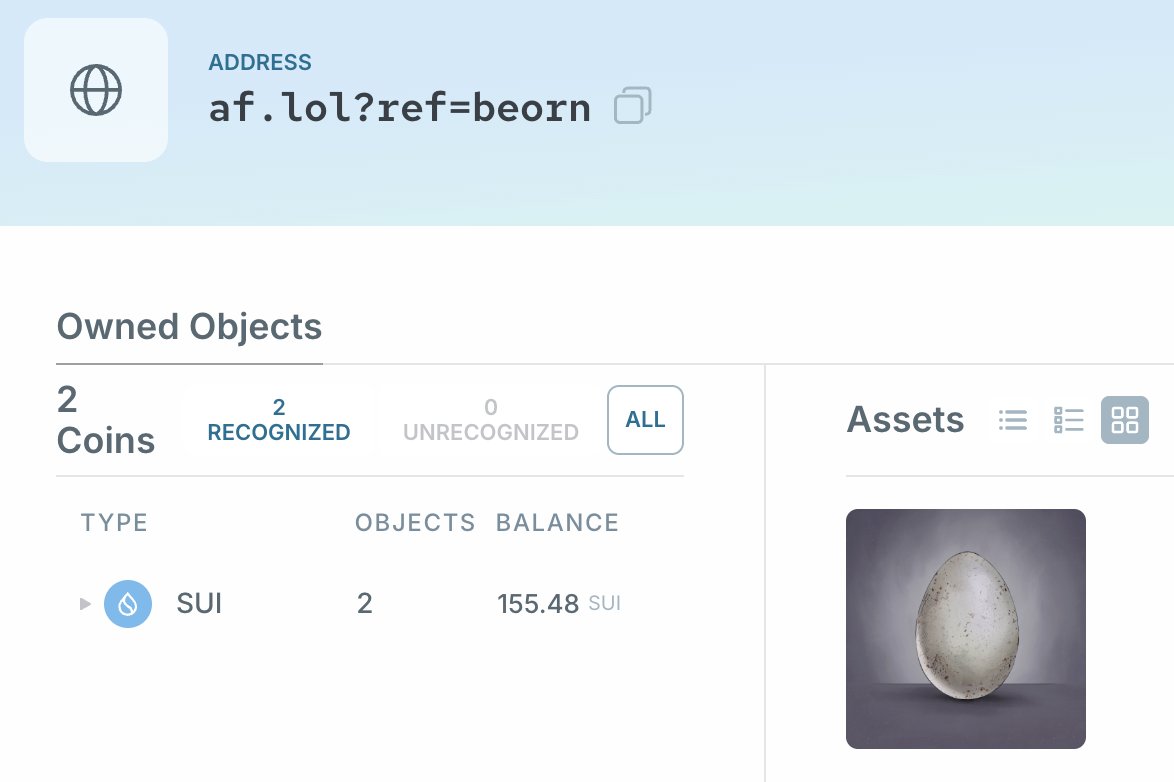

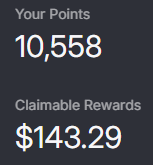

Slowly, then all at once



Aftermath (@AftermathFi) is now live on tread.fi! Read the docs to learn how to connect your Aftermath account docs.tread.fi/account-creati…
You can now long or short ethereum:0x0c1c1c109fe34733fca54b82d7b46b75cfb71f6e perps with up to 3x leverage. aftermath.finance/perpetuals/USD…



We are excited to announce that @AftermathFi, the perp exchange and @SuiNetwork validator, are proposing an 80% cut to Sui's RGP. We ask all @SuiNetwork validators to reduce their RGP to ≤ 100 MIST. We believe that this is both the right step and the right moment to align Sui with the rest of the market. Here's why: Sui today charges ~6x more than Solana for a simple transfer, despite having the competitive edge when it comes to faster finality, parallel execution, and greater flexibility through PTBs. A single order on Phoenix (Solana) costs $0.0011. On Aftermath, $0.0018. Both products have been heavily optimized for their respective stack. The remaining cost imbalance is due to how either chain charges for computation. Shouldn't we be incentivizing on-chain activity? After less than two months, Aftermath already consumes ~10% of Sui's daily gas. ~216k txs/day, ~2.1M on-chain events/day, 15 live markets across crypto, equities, and commodities. All fully on-chain. All paying gas on every quote, cancel, and fill. Lowering gas doesn't just save money for existing users; it unlocks entirely new participants - market makers, institutions, agents traders - who were previously priced out of high-frequency trading on Sui. Let's make Sui the home for onchain financial trading.

We are excited to announce that @AftermathFi, the perp exchange and @SuiNetwork validator, are proposing an 80% cut to Sui's RGP. We ask all @SuiNetwork validators to reduce their RGP to ≤ 100 MIST. We believe that this is both the right step and the right moment to align Sui with the rest of the market. Here's why: Sui today charges ~6x more than Solana for a simple transfer, despite having the competitive edge when it comes to faster finality, parallel execution, and greater flexibility through PTBs. A single order on Phoenix (Solana) costs $0.0011. On Aftermath, $0.0018. Both products have been heavily optimized for their respective stack. The remaining cost imbalance is due to how either chain charges for computation. Shouldn't we be incentivizing on-chain activity? After less than two months, Aftermath already consumes ~10% of Sui's daily gas. ~216k txs/day, ~2.1M on-chain events/day, 15 live markets across crypto, equities, and commodities. All fully on-chain. All paying gas on every quote, cancel, and fill. Lowering gas doesn't just save money for existing users; it unlocks entirely new participants - market makers, institutions, agents traders - who were previously priced out of high-frequency trading on Sui. Let's make Sui the home for onchain financial trading.

We are excited to announce that @AftermathFi, the perp exchange and @SuiNetwork validator, are proposing an 80% cut to Sui's RGP. We ask all @SuiNetwork validators to reduce their RGP to ≤ 100 MIST. We believe that this is both the right step and the right moment to align Sui with the rest of the market. Here's why: Sui today charges ~6x more than Solana for a simple transfer, despite having the competitive edge when it comes to faster finality, parallel execution, and greater flexibility through PTBs. A single order on Phoenix (Solana) costs $0.0011. On Aftermath, $0.0018. Both products have been heavily optimized for their respective stack. The remaining cost imbalance is due to how either chain charges for computation. Shouldn't we be incentivizing on-chain activity? After less than two months, Aftermath already consumes ~10% of Sui's daily gas. ~216k txs/day, ~2.1M on-chain events/day, 15 live markets across crypto, equities, and commodities. All fully on-chain. All paying gas on every quote, cancel, and fill. Lowering gas doesn't just save money for existing users; it unlocks entirely new participants - market makers, institutions, agents traders - who were previously priced out of high-frequency trading on Sui. Let's make Sui the home for onchain financial trading.

