Kevin Bijan Givechian

417 posts

Kevin Bijan Givechian

Kevin Bijan Givechian

@KevinGivechian

MD-PhD student @Yale | Co-founder @AscentBio | Exploring cancer bio, ML, protein engineering, & immunotherapy with @KrishnaswamyLab and @VirusesImmunity

Katılım Haziran 2019
1.5K Takip Edilen780 Takipçiler
Kevin Bijan Givechian retweetledi
Chen Liu
Chen Liu@ChenLiu_1996·
We're excited to share that the data and model weights for #ImmunoStruct are now open-sourced. This includes the multimodal data with sequences and structures, along with all preprocessing scripts including the folding pipeline we used. All available at: github.com/KrishnaswamyLa…
Chen Liu tweet media
English
0
9
50
3.8K
Kevin Bijan Givechian retweetledi
Yun S. Song
Yun S. Song@yun_s_song·
Can we simulate realistic evolutionary trajectories and “replay the tape of life”? In this work, we propose a flexible, generalizable framework for modeling how the entire protein seq evolves over time while capturing complex interactions across sites. 1/n doi.org/10.64898/2026.…
English
5
82
289
33.6K
Kevin Bijan Givechian retweetledi
Chen Liu
Chen Liu@ChenLiu_1996·
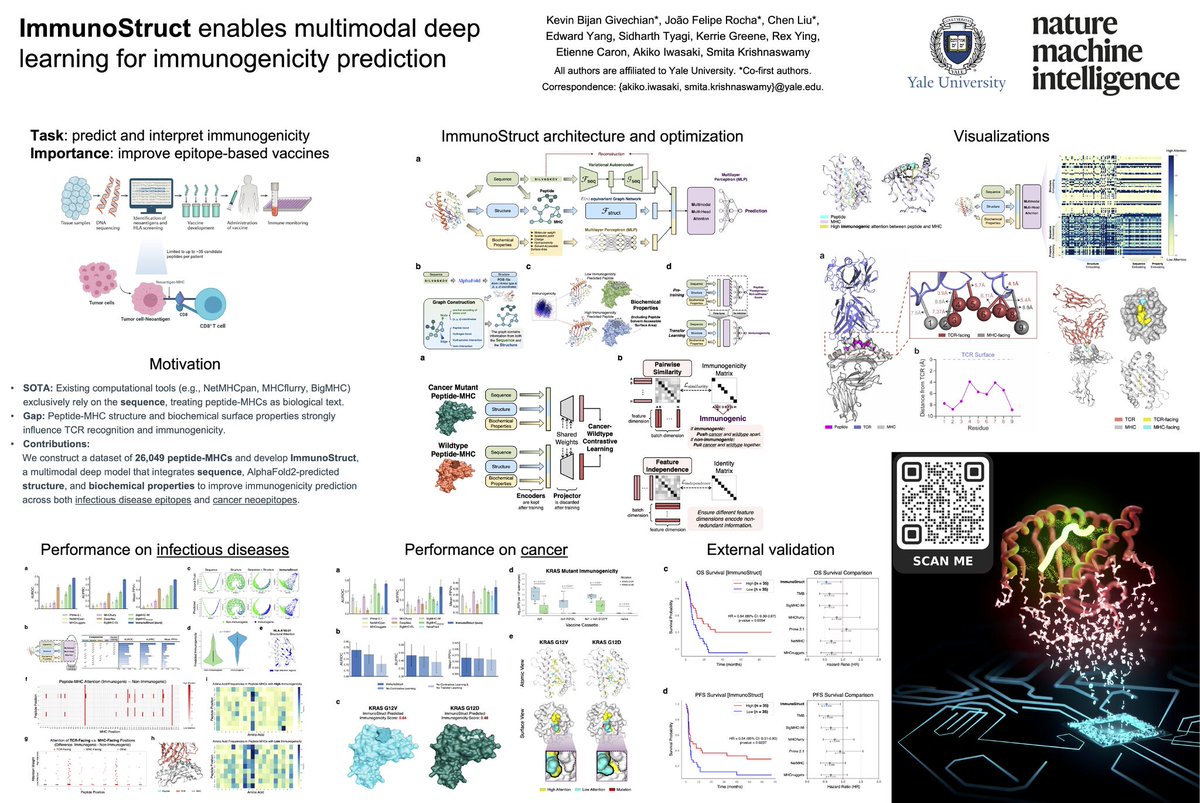
Did something brave and fun at @NeurIPSConf. I found an empty poster stand to present ImmunoStruct — a project that wasn’t even submitted to NeurIPS. Many people loved it, and I ended up talking for 2.5 hours straight. Only mistake: printed the poster too small. (1/n)
Chen Liu tweet mediaChen Liu tweet media
English
1
1
1
181
Kevin Bijan Givechian retweetledi
Chen Liu
Chen Liu@ChenLiu_1996·
Really nice way to mark the end of 2025 and celebrate the new year! Paper: lnkd.in/eisa_y7H Code: lnkd.in/evWbrRRj Immunostruct integrates information from peptide-MHC sequence, structure, and biochemical properties to predict class I immunogenicity.
Chen Liu tweet media
English
0
1
2
164
Kevin Bijan Givechian
Kevin Bijan Givechian@KevinGivechian·
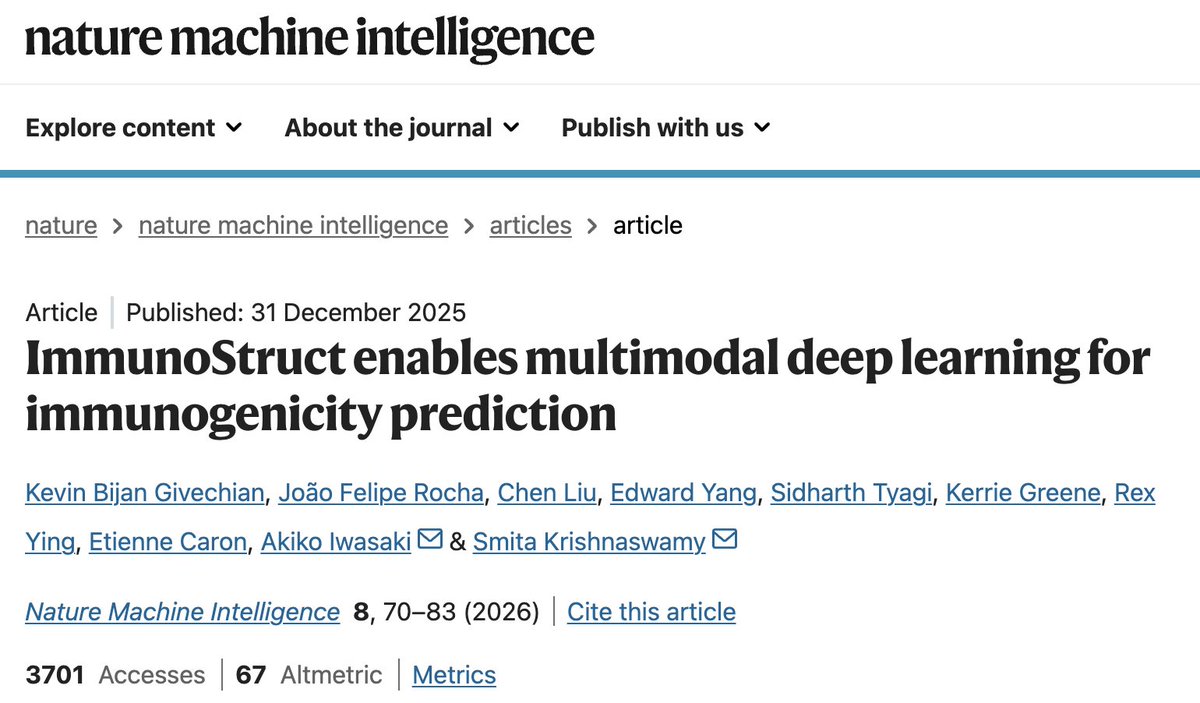
My MD-PhD work is officially out today in Nature Machine Intelligence @NatMachIntell, co-advised by Smita Krishnaswamy @KrishnaswamyLab and Akiko Iwasaki @VirusesImmunity at @Yale. The project centered around multimodal ML for immunogenicity modeling, tweetorial below!
Krishnaswamy Lab@KrishnaswamyLab

(1/n) Just in time for New Years! #ImmunoStruct, our multimodal model that predicts class I peptide-MHC immunogenicity is out at @NatMachIntell ! nature.com/articles/s4225…

English
2
1
12
1.4K
Kevin Bijan Givechian retweetledi
Krishnaswamy Lab
Krishnaswamy Lab@KrishnaswamyLab·
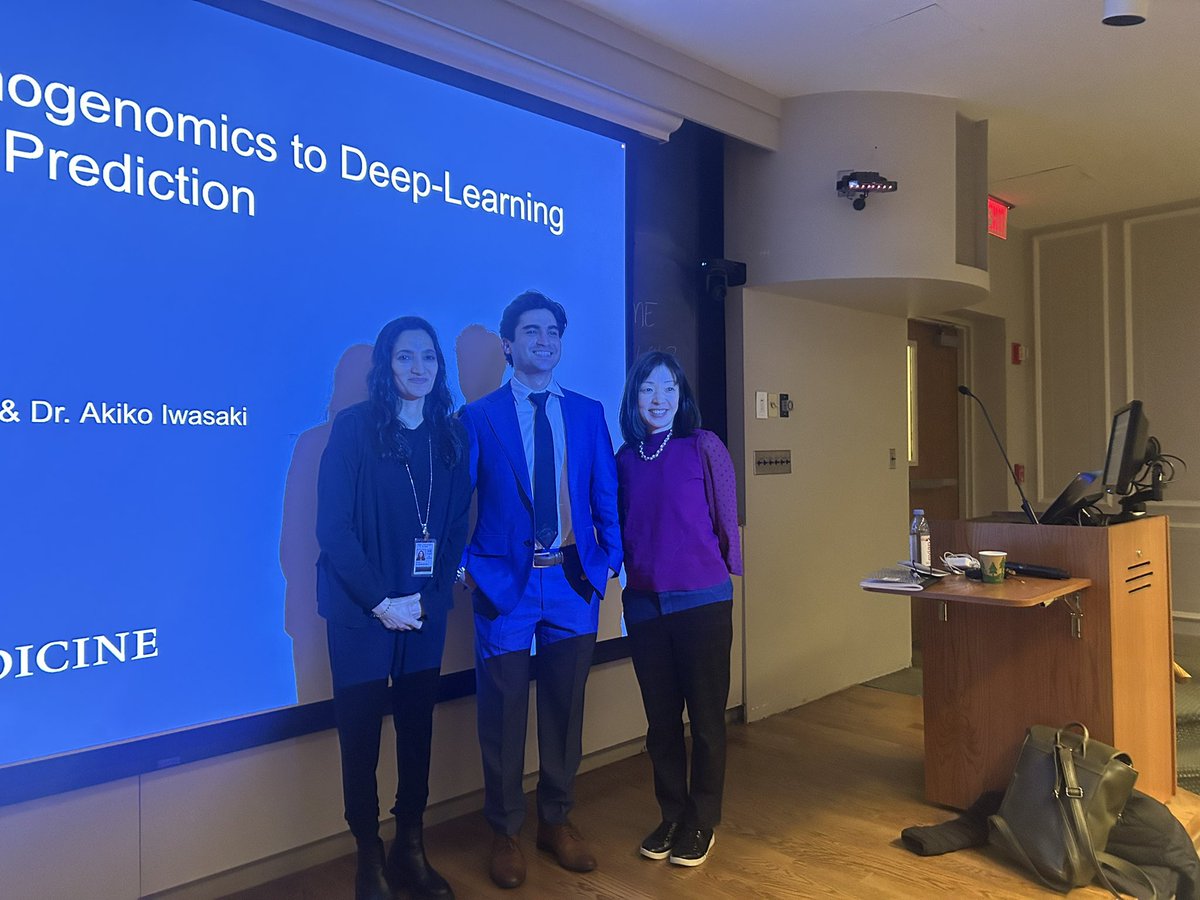
Join us PhD thesis defense #11 from our lab, joint with @VirusesImmunity --- Kevin Bijan Givenchian! Reception afterwards!
Krishnaswamy Lab tweet media
English
1
9
30
13.3K
Kevin Bijan Givechian retweetledi
Andrew Ng
Andrew Ng@AndrewYNg·
Some people today are discouraging others from learning programming on the grounds AI will automate it. This advice will be seen as some of the worst career advice ever given. I disagree with the Turing Award and Nobel prize winner who wrote, “It is far more likely that the programming occupation will become extinct [...] than that it will become all-powerful. More and more, computers will program themselves.”​ Statements discouraging people from learning to code are harmful! In the 1960s, when programming moved from punchcards (where a programmer had to laboriously make holes in physical cards to write code character by character) to keyboards with terminals, programming became easier. And that made it a better time than before to begin programming. Yet it was in this era that Nobel laureate Herb Simon wrote the words quoted in the first paragraph. Today’s arguments not to learn to code continue to echo his comment. As coding becomes easier, more people should code, not fewer! Over the past few decades, as programming has moved from assembly language to higher-level languages like C, from desktop to cloud, from raw text editors to IDEs to AI assisted coding where sometimes one barely even looks at the generated code (which some coders recently started to call vibe coding), it is getting easier with each step. I wrote previously that I see tech-savvy people coordinating AI tools to move toward being 10x professionals — individuals who have 10 times the impact of the average person in their field. I am increasingly convinced that the best way for many people to accomplish this is not to be just consumers of AI applications, but to learn enough coding to use AI-assisted coding tools effectively. One question I’m asked most often is what someone should do who is worried about job displacement by AI. My answer is: Learn about AI and take control of it, because one of the most important skills in the future will be the ability to tell a computer exactly what you want, so it can do that for you. Coding (or getting AI to code for you) is a great way to do that. When I was working on the course Generative AI for Everyone and needed to generate AI artwork for the background images, I worked with a collaborator who had studied art history and knew the language of art. He prompted Midjourney with terminology based on the historical style, palette, artist inspiration and so on — using the language of art — to get the result he wanted. I didn’t know this language, and my paltry attempts at prompting could not deliver as effective a result. Similarly, scientists, analysts, marketers, recruiters, and people of a wide range of professions who understand the language of software through their knowledge of coding can tell an LLM or an AI-enabled IDE what they want much more precisely, and get much better results. As these tools are continuing to make coding easier, this is the best time yet to learn to code, to learn the language of software, and learn to make computers do exactly what you want them to do. [Original text: deeplearning.ai/the-batch/issu… ]
English
514
2.8K
11.9K
2.1M
Kevin Bijan Givechian retweetledi
Biology+AI Daily
Biology+AI Daily@BiologyAIDaily·
De novo design of high-affinity single-domain antibodies 1. The study introduces "EvolveX," a computational pipeline for de novo design of high-affinity single-domain antibodies (VHHs), capable of targeting predefined epitopes with remarkable precision and stability. 2. EvolveX excels in three critical challenges: optimizing VHH stability and affinity for original targets, designing VHHs for human orthologs, and targeting new epitopes like the human Interleukin-9 receptor alpha (IL-9Ra) with nanomolar affinity—all in a single design cycle. 3. Key innovation: By leveraging tools like FoldX for thermodynamic stability and TANGO for aggregation propensity, EvolveX combines molecular docking and sequence optimization to ensure highly specific antibody-antigen interactions. 4. Experimental results highlight that EvolveX achieves single-digit nanomolar affinity for novel targets, outperforming traditional antibody design approaches in both efficiency and reliability. 5. Structural and thermodynamic analysis of designed VHHs reveals significant improvements in stability and folding, enabling potential applications in drug discovery and precision medicine. 6. A major breakthrough includes targeting hIL-9Ra, a therapeutic target for asthma, achieving a best affinity of 1.3 nM, while maintaining specificity and avoiding cross-reactivity with unrelated proteins. 7. The pipeline also demonstrates flexibility in redesigning antibodies to enhance affinity for species-specific orthologs, paving the way for broad applications in diagnostics and therapy. 8. EvolveX's approach is validated through phage display, crystallography, and biophysical methods, confirming its robustness and scalability for future use cases. @SavvidesLab @cifnik1 @MarkovichIva 📜Paper: biorxiv.org/content/10.110… #AntibodyDesign #Biotechnology #ComputationalBiology
Biology+AI Daily tweet media
English
2
38
138
10.1K
Kevin Bijan Givechian retweetledi
Sam Sinai
Sam Sinai@samsinai·
Was fun to reflect on this amazing work from the @Dyno_Tx team in the past year. We often cover our capsid results, and sometimes we write ML papers. This post is connecting the dots between our ML work and its impact in physical experiments. Here, GPUs and rigorous modeling replace an animal experiment. If you are interested in exploring partnerships to use this tech, don't hesitate to reach out. See link below.
Sam Sinai tweet media
English
1
7
57
5.6K
Kevin Bijan Givechian retweetledi
Alex Rives
Alex Rives@alexrives·
Introducing ESM Cambrian. Unsupervised learning can invert biology at scale to reveal the hidden structure of the natural world. We’ve scaled up compute and data to train a new generation of protein language models. ESM C defines a new state of the art for protein representation learning.
English
26
161
633
206.5K
Kevin Bijan Givechian retweetledi
David K. Yang
David K. Yang@davidkmyang·
De novo binders for pMHC-1 complexes I particularly like this work because it answers two questions I often have about de novo binders: 1) Does this unlock a new set of targets? 2) Why can't we just use antibodies? pMHC-1 is a key target class that we're just starting to crack with the recently approved KIMMTRAK. But developing high-affinity & specific binders is hard - native TCRs are typically at micromolar affinity that's tricky to engineer, and TCR mimetic antibodies still struggle to access the binding groove and often interact extensively with the MHC. The authors here used de novo design to generate a backbone that maximize extensive contact with the exposed peptide residues while minimizing MHC interactions, overcoming inherent limitations of the scaffolds provided by evolution. Excited about the translational applications of this paradigm to develop better binders for pMHC-targeted BiTE/CAR drugs. We also lack a good warchest of reagent binders to study pMHC-1, which approaches like these could help generate at scale
David K. Yang tweet media
English
3
16
122
14.9K