
AdvMaple retweetledi
AdvMaple
205 posts


AdvMaple
@KieuDungg
Hay sai chính tả "ch" và "tr"
Hanoi, Vietnam Katılım Eylül 2013
442 Takip Edilen16 Takipçiler

AdvMaple retweetledi


AdvMaple retweetledi


AdvMaple retweetledi

you can now write React in Lua...?
Roblox has successfully ported all of React 17.x to Lua
It's 80k lines of JS translated to Lua
It appears most of this is driven by their JS -> Lua compiler
This is totally cursed, but I guess an impressive feat of engineering

English
AdvMaple retweetledi

Seriously - this is great. I can't overstate how good it is. I spent a LONG time to get a half-decent run with Opus back then. Other models could barely draw a frame. GPT-4o just... plays the game. This is Pokémon Red. In a terminal. To details. It remembers everything I do, it gets the maps right, it emulates the battles accurately. It is not good. It is greatness. Humanity is headed towards a beautiful place. I'd not be underwhelmed if this was called GPT-5. Good job @OpenAI. You're a good company.
(Err I hope Nintendo doesn't sue you.)
Taelin@VictorTaelin
Pokémon Red gameplay
English
AdvMaple retweetledi


AdvMaple retweetledi

We're going to get a lot of applications I'm sure but please don't feel like the odds of getting noticed are against you.
It's wild but 90% of applicants don't even follow the application instructions!
The last time we ran a hiring process like this, we interviewed and eventually hired @malfaitrobin based on this great application he put together:
…t-tailwind-job-application.vercel.app
A tiny bit of effort to stand out has outsized rewards when applying for a job — 10% more effort doesn't increase your chances by 10%, it increases them by more like 1000%.
If you send us a real application we'll notice it, I promise 🙏🏻
English
AdvMaple retweetledi

Today we're excited to introduce Devin, the first AI software engineer.
Devin is the new state-of-the-art on the SWE-Bench coding benchmark, has successfully passed practical engineering interviews from leading AI companies, and has even completed real jobs on Upwork.
Devin is an autonomous agent that solves engineering tasks through the use of its own shell, code editor, and web browser.
When evaluated on the SWE-Bench benchmark, which asks an AI to resolve GitHub issues found in real-world open-source projects, Devin correctly resolves 13.86% of the issues unassisted, far exceeding the previous state-of-the-art model performance of 1.96% unassisted and 4.80% assisted.
Check out what Devin can do in the thread below.
English
AdvMaple retweetledi

This was bothering me so I found every single artist in the video and credited them.
Eko@Eoe224
i love this post
English
AdvMaple retweetledi

A rite of passage in design engineering: implement the safety triangle for hover interactions
English
AdvMaple retweetledi
AdvMaple retweetledi

AdvMaple retweetledi

The top 100 Food & Drink apps in the App Store––August 2023
◆ React Native - 30/100
◆ Cordova - 9/100
◆ Flutter - 1/100
English
AdvMaple retweetledi

Still the coolest and most challenging thing I’ve ever built.
Threejs (r3f) + arduino simulation + analog simulation all happening in the browser simultaneously.
It was a wild ride to say the least.
English
AdvMaple retweetledi

DHH is the midwit meme personified
DHH@dhh
ONCE #1 is completely #NoBuild for the front-end. No bundling, no transpiling, no nothing. Just individual, vanilla CSS and JavaScripts served over HTTP/2. It's amazingly light and amazingly fast with exquisite cache expiration dynamics. Bliss to develop for too!
English
AdvMaple retweetledi

We created a blueprint of the Airbnb experience and used it to improve our service end-to-end
English
AdvMaple retweetledi

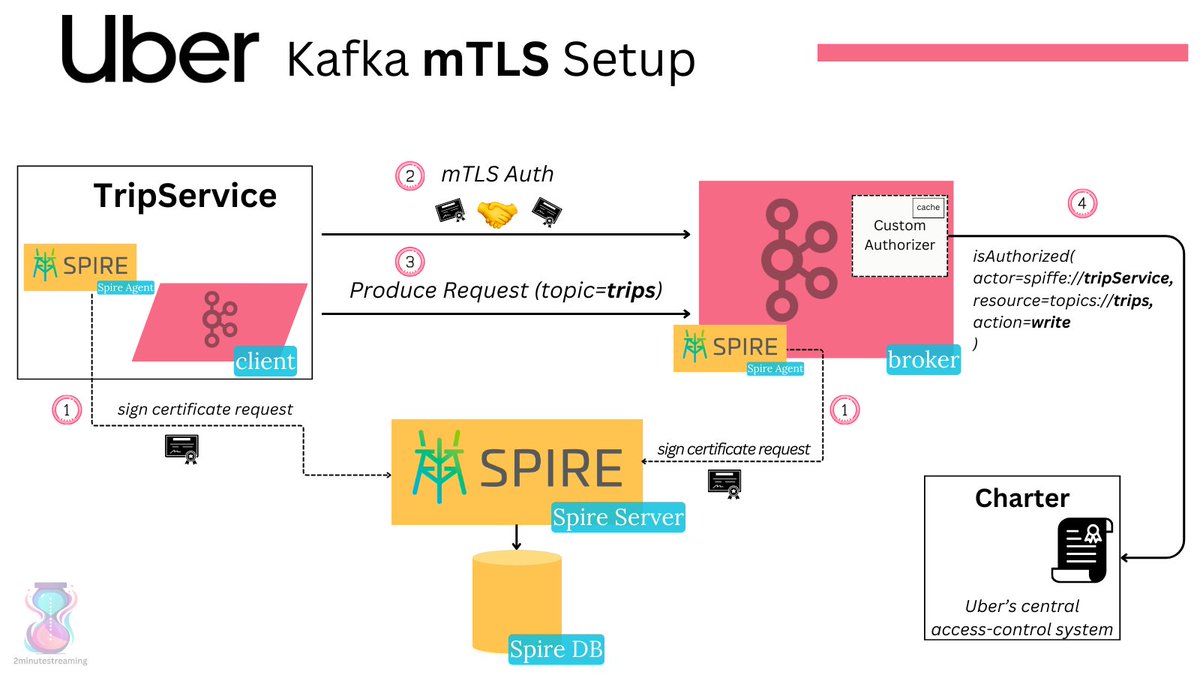
Uber has one of the largest Kafka deployments in the WORLD…
So how do they secure it?
mTLS and strong authorization rules.
Uber models its production environment as a zero-trust network. Since any host can be compromised, they rely on strong cryptographic primitives to establish trust between services. 🥷
uPKI is Uber’s identity platform, based on top of Spire. It’s responsible for issuing short-lived, auto-rotated cryptographic key pairs. Those pairs consist of an X.509-SVID, a private key and a trust bundle. 🔐
With this setup, the system automatically refreshes (rotates) its certificates once they’re near expiry.
The Spire agent keeps a long-lived connection open to the Spire server and proactively generates a new cert when the time is right.
💡 This is key, because it allows Uber to issue very short-lived certificates which then bound the time a bad actor has to make use of any leaked credentials.
mTLS gives Uber authentication, confidentiality via encryption, and data integrity. 👍
What’s missing is authorization now.
Similar to checking in to a flight after they’ve verified your ID (you are who you say you are) - the next check is:
✋ are you actually allowed to board this flight? (do you have the ticket with the right permissions)
For this, Uber has a service named Charter. Similar to AWS IAM, it’s a framework allowing you to specify who and what can access specific services and resources.
Kafka has a pluggable authorization framework, where you can configure a custom Authorizer class to do the authz for you (`authorizer_class_name`).
This authorizer gets called as part of any request flow. In Uber’s config, it’s called with a pair of actor, resource and operation.
🎬 actor - the entity that is the subject of the authorization decision (e.g you at an airport). Also called a KafkaPrincipal in Kafka.
🪨 resource - the resource upon which the authorization decision is made (e.g the flight)
🔧 operation - the operation performed on the resource (e.g boarding). Also called an ACLOperation in Kafka
The Authorizer makes a remote RPC call to Charter to figure out the decision for this pair, and from then-on it caches the result.
Simple, right?
English
AdvMaple retweetledi

Taking things up a notch, we're releasing the text-to-diagram feature! 🔥
Using AI to generate diagrams from plain text. 🧠
Unlike wireframe-to-code previously, you don't need your own API token — everyone can start generating right away! 💪
excalidraw.com
English
AdvMaple retweetledi

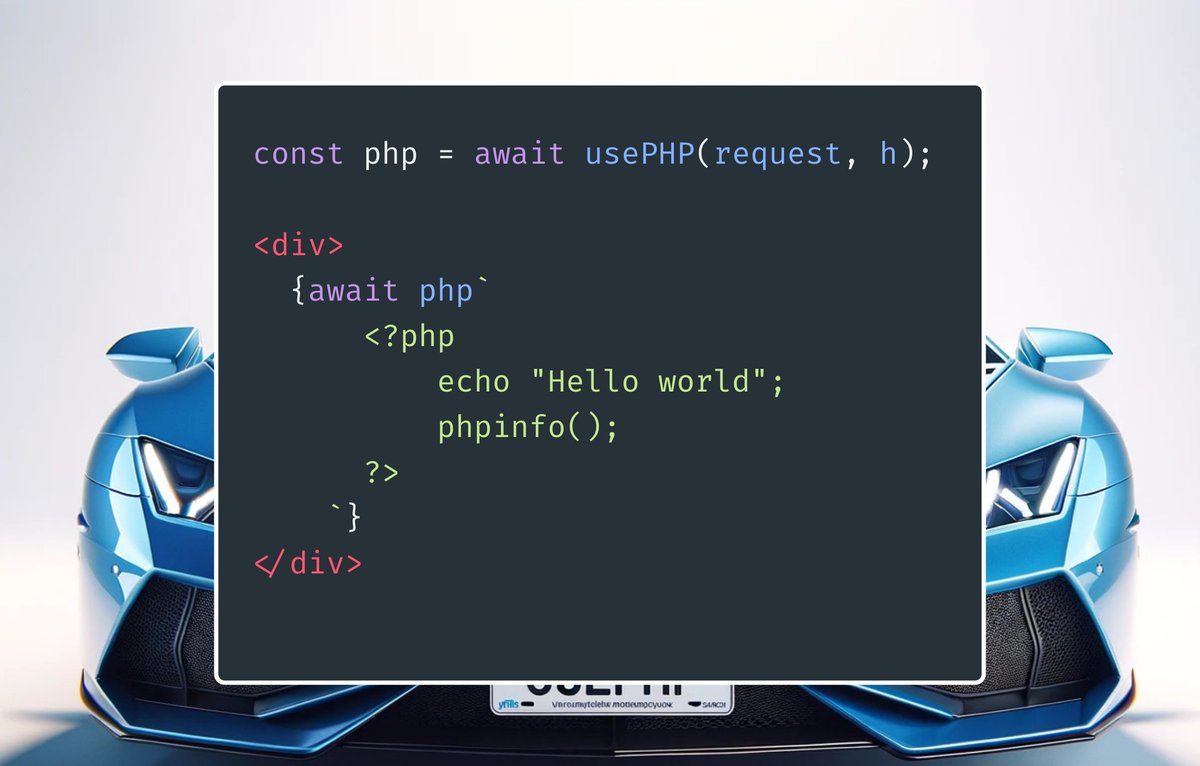
Fire up the Lambos and meet usePHP. Run PHP in React, with edge SSR. Extracts your PHP code, executes it in WASM, and injects the result into your React code.
English
AdvMaple retweetledi

𝗛𝗼𝘄 𝘁𝗼 𝗟𝗲𝗮𝗿𝗻 𝗦𝘆𝘀𝘁𝗲𝗺 𝗗𝗲𝘀𝗶𝗴𝗻?
If you're working as a software developer and you want to move towards a software architect role, or you're preparing for coding interviews for more senior roles, systems design is an important skill you need to have. Without knowing it, you will have a hard time designing new software systems and understanding existing ones.
System design refers to 𝘁𝗵𝗲 𝗽𝗿𝗼𝗰𝗲𝘀𝘀 𝗼𝗳 𝗱𝗲𝗳𝗶𝗻𝗶𝗻𝗴 𝗮 𝘀𝘆𝘀𝘁𝗲𝗺'𝘀 𝗰𝗼𝗺𝗽𝗼𝗻𝗲𝗻𝘁𝘀. Architecture, modules, components, interfaces, and data are a few examples of these aspects. The process of defining, creating, and designing systems that suit the particular objectives and requirements of an organization is what you need to understand when it comes to system design.
To understand system design, you will need to know the following:
𝟭. 𝗣𝗲𝗿𝗳𝗼𝗿𝗺𝗮𝗻𝗰𝗲 𝘃𝘀 𝗦𝗰𝗮𝗹𝗮𝗯𝗶𝗹𝗶𝘁𝘆
𝟮. 𝗟𝗮𝘁𝗲𝗻𝗰𝘆 𝘃𝘀 𝗧𝗵𝗿𝗼𝘂𝗴𝗵𝗽𝘂𝘁 𝗮𝗻𝗱 𝗔𝘃𝗮𝗶𝗹𝗮𝗯𝗶𝗹𝗶𝘁𝘆 𝘃𝘀 𝗖𝗼𝗻𝘀𝗶𝘀𝘁𝗲𝗻𝗰𝘆 (𝘄𝗶𝘁𝗵 𝗽𝗮𝘁𝘁𝗲𝗿𝗻𝘀)
𝟯. 𝗔𝘃𝗮𝗶𝗹𝗮𝗯𝗶𝗹𝗶𝘁𝘆 𝗽𝗮𝘁𝘁𝗲𝗿𝗻𝘀
𝟰. 𝗕𝗮𝗰𝗸𝗴𝗿𝗼𝘂𝗻𝗱 𝗷𝗼𝗯𝘀
𝟱. 𝗗𝗼𝗺𝗮𝗶𝗻 𝗡𝗮𝗺𝗲 𝗦𝘆𝘀𝘁𝗲𝗺𝘀
𝟲. 𝗖𝗗𝗡𝘀
𝟳. 𝗟𝗼𝗮𝗱 𝗕𝗮𝗹𝗮𝗻𝗰𝗲𝗿𝘀
𝟴. 𝗖𝗮𝗰𝗵𝗶𝗻𝗴
𝟵. 𝗔𝘀𝘆𝗻𝗰𝗵𝗿𝗼𝗻𝗶𝘀𝗺
𝟭𝟬. 𝗖𝗼𝗺𝗺𝘂𝗻𝗶𝗰𝗮𝘁𝗶𝗼𝗻 𝗽𝗮𝘁𝘁𝗲𝗿𝗻𝘀
𝟭𝟭. 𝗣𝗲𝗿𝗳𝗼𝗿𝗺𝗮𝗻𝗰𝗲 𝗮𝗻𝘁𝗶𝗽𝗮𝘁𝘁𝗲𝗿𝗻𝘀
𝟭𝟮. 𝗠𝗼𝗻𝗶𝘁𝗼𝗿𝗶𝗻𝗴
𝟭𝟯. 𝗖𝗹𝗼𝘂𝗱 𝗱𝗲𝘀𝗶𝗴𝗻 𝗽𝗮𝘁𝘁𝗲𝗿𝗻𝘀
To learn this, here are some 𝗯𝗼𝗼𝗸𝘀 where you can start learning:
𝟭. 𝗦𝘆𝘀𝘁𝗲𝗺 𝗗𝗲𝘀𝗶𝗴𝗻 𝗜𝗻𝘁𝗲𝗿𝘃𝗶𝗲𝘄
One of the best books in this field, where you will learn how to design systems such as web crawlers or even YouTube.
Link: amzn.to/3lefBiD
𝟮. 𝗗𝗲𝘀𝗶𝗴𝗻𝗶𝗻𝗴 𝗗𝗮𝘁𝗮-𝗜𝗻𝘀𝗲𝗻𝘀𝗶𝘁𝗶𝘃𝗲 𝗔𝗽𝗽𝗹𝗶𝗰𝗮𝘁𝗶𝗼𝗻𝘀
In this book, the author writes about different technologies used to store and process data. By reading it, you will gain insight into different algorithms used in the database world.
Link: amzn.to/3Y7l61c
𝟯. 𝗛𝗲𝗮𝗱 𝗙𝗶𝗿𝘀𝘁 𝗗𝗲𝘀𝗶𝗴𝗻 𝗣𝗮𝘁𝘁𝗲𝗿𝗻𝘀
A great book on OO design patterns, written in a simple style with examples in Java.
Link: amzn.to/3Ymwq9w
𝟰. 𝗖𝗿𝗮𝗰𝗸𝗶𝗻𝗴 𝘁𝗵𝗲 𝗖𝗼𝗱𝗶𝗻𝗴 𝗜𝗻𝘁𝗲𝗿𝘃𝗶𝗲𝘄
It is a general-purpose coding interview book where the author shares her insights into programming interviews at big tech companies like Microsoft and Google. It covers all basic topics like algorithms, data structures, SQL, etc.
Link: amzn.to/3E4TTEH
𝟱. 𝗙𝘂𝗻𝗱𝗮𝗺𝗲𝗻𝘁𝗮𝗹𝘀 𝗼𝗳 𝗦𝗼𝗳𝘁𝘄𝗮𝗿𝗲 𝗔𝗿𝗰𝗵𝗶𝘁𝗲𝗰𝘁𝘂𝗿𝗲
As System Design is related to Software Architecture, this book will give you an introduction to how to architect software systems. This book examines architecture patterns, components, soft skills, modernity, architecture as engineering, and many more.
Link: amzn.to/3JJLKco
Check the System Design Roadmap in the image (by roadmap .sh).
#softwareengineering

English