Sabitlenmiş Tweet
Musa Kika
2.6K posts


Musa Kika
@KikaMusa
Husband | Harvard (LLM), Cape Town (PhD), KwaZulu-Natal (LLB) Law | Mandela Rhodes Scholar | Ford Global Fellow | Harvard Kaufman Public Service Fellow
On earth, with everyone else. Katılım Temmuz 2011
945 Takip Edilen7.4K Takipçiler

News from Seychelles: Our very own Dr. Justice Alfred Mavedzenge @Dr_JAMavedzenge has been appointed by the President of Seychelles, Patrick Herminie to chair an independent Commission of Inquiry.
The Commission will investigate the high profile incidents of 6 and 7 December 2024 at Montagne Posee Prison involving a hostage situation, security breaches and the death of inmates.
Justice, one of Zimbabwe's finest legal exports, will lead the three member Commission which includes Supreme Court judge Hon. Judge Melchior Vidot and former Superintendent of Prisons and security expert Mr Vic Tirant.
seychellesnewsagency.com/public/article…
English
Walking into the unknown: The instability of regular constitution change
What are the consequences of frequent amendments to a national constitution?
Zimbabwe reels under perennial uncertainty, inconsistency, and instability. At the center of this is politics always in a state of flux, and the never-ending changes in rules, laws and policies. The point has been made about an overkill of Statutory Instruments that change everything and anything overnight. The result is an unsustainably high country political risk premium. As if we have not had enough, our Constitution is always up for grabs.
A young Constitution of 2013, largely untested, nascent and as yet afforded little runway to deliver on its promises, is already under sustained incineration. Three omnibus bills within a 13-year space, changing everything from judicial selection to the state of independent commissions, to electoral system to electoral cycle, to role of traditional leaders, to independence of prosecution, to role of parliament and to the composition and election of the presidium. This is not reform; this is uprooting of a constitutional order and creation of a new one outside the structures of constitution-making.
Constitutions can and often do change, but there is a method to it that builds. What society can possibly be built without certainty, consistency, predictability, and stability of its affairs? When a new law and a new system are put in place, it takes time for the dust to settle, for people to understand, grow accustomed to, and believe and trust in the new law and system. Now, how about before that dust settles, the law and system are changed again? And then again?
Trust is built over time through consistency. And I am talking about trust in anything and everything: in the political system, judicial system, tax system, banking system, education system, monetary system, and the constitutional system.
How does one trust the courts when the selection of judges can and will be changed any day? How can there be trust between leadership and citizens if the leadership can change the rules? How can players trust the political system when the rules are changed frequently?
Zimbabwe’s political risk premium is so high. It makes investments and capital expensive, keeping development away. It keeps relationships unstable. Even our would-be partners get weary, skeptical, tired, unsure, unclear.
Tomorrow the currency changes; the following day the tax system changes; next week the banking rules change; the following month the company laws change; then the education curriculum changes; then the export and import rules; then the systems of payment of government service providers and the currency changes; then the rules of remittance of foreign exchange change; then the election cycles changes, as well as how we elect the president, and the appointment of judges and the jurisdiction of the courts. All in a short space of time. How do we do business, and investment, and long-term planning? Is there any assurance of what tomorrow might look like? What protection is there to dreams, investments, visions and hope?
Now, this is not to say reform must not happen. Reform is the very bedrock of progress and even the seemingly advanced and settled countries are engaged in reforms every day. But there is a manner of handling and managing reforms that is not disruptive, that gives due notice, that gives due consideration to consultation and a wide array of views, and that builds confidence, trust and assurance, and carries the people with them. But not when the very rules of change are manipulated and any contrarian debate is shut down, and when indefensible changes are clothed under the cover of flawed and supposed sleek legal arguments that defy logic.
The big picture must not be lost, all in pursuit of short-term political power by a few who have hijacked the Zimbabwean state – which power we all know will be lost anyway. It’s not worth it.

English
Musa Kika retweetledi
The Oped “ Unconstitutional presidential term extension in Zimbabwe and the serious challenges that lie ahead for President Emerson Mnangagwa.” is now live. You can read it here👇🏾@daddyhope @DavidColtart @Sophie_Mokoena @BitiTendai @edmnangagwa @KikaMusa @BBCWorld @Chimwaura
justicemavedzenge.com/unconstitution…
English
Myths and realities: Demystifying Africa's relationship with the International Criminal Court (ICC) linkedin.com/pulse/myths-re… via @LinkedIn
English
Why introduce a Bill to amend the national Constitution and then stifle debate and discussion? Why the verbal and physical violence? Why the abuse of the long-suffering police to ban gatherings?
The fear is palpable for a group that purports to act for the people.
English
@Jamwanda2 Exactly my point! There is nothing you don't know about what happened on this ZimInd story, and how the apology and the AMH panic is coming from. And I'm saying AMH must not be scared of your lot!
English

There is a backstory to this. Intimidation, threats, invoking the name of the President, and now an over-reaction to make amends.
AMH should not open itself up to such abuse and muzzling. Neither should it sacrifice its journalists under political pressure. Defend your space.
The Standard Zim@thestandardzim
🔵Alpha Media Holdings’ independent Editorial Advisory Board of Trustees will set up a panel of three eminent people to investigate the production of a story about ZBC handling of licensing fees by one of the group’s publications. thestandard.co.zw/news/article/2…
English
This doesn't stop us from calling out warped up views Matigary. We have a big issue of self-benefit thinking, and we have to discourage this from our leaders across the board.
Now, intelligent persuasion? These amendments are unnecesary because they fix nothing. They advance destructive power hold and increase our country risk premium. This Constitution we now want to distort was a product of so much thought-leadership and soul-searching. We haven't even yet tested it and its potential to the fullest. Surely our energies are better spent doing development and not undoing what we have built already?
English
I am not hearing any intelligent propositions from those opposing the constitutional amendments. It’s all just bashing and attacking and trying to shame this or that person for supporting the propositions. It’s not a clever argument to say “mutilating the constitution this and mutilating the constitution that.”
The notion that a head of state is elected is a post unity accord development, only kicking in the 90s. Before that there was no direct election of a President or Prime Minister.
People really need to learn the art of persuasion.
@KikaMusa there over 30 courses on persuasion and negotiation at Harvard across all Harvard schools and I am wondering if you took any one of them.
@tawandan1 is an influencer on legal matters - whether you think it’s a good thing or not. You can’t win him over by trying to shame him, because his views are an aggregation of his relationships and experiences. Like it or not, his personal interests play a huge part on his decisions.
So persuade people to your side, intelligently!
Musa Kika@KikaMusa
Me, myself and I. I am fine because I know him personally and he has done me favours, so I am biased in his favour and he is a good man etc. My law practice. My farms. Nothing about the country and how it is governed and implications to business and entrepreneurship and to the generality. What myopic thinking is this from our business leaders?
English
Zim Constitution Amendments: A futile bid to coup-proof power
newsday.co.zw/theindependent…
English
Musa Kika retweetledi

English
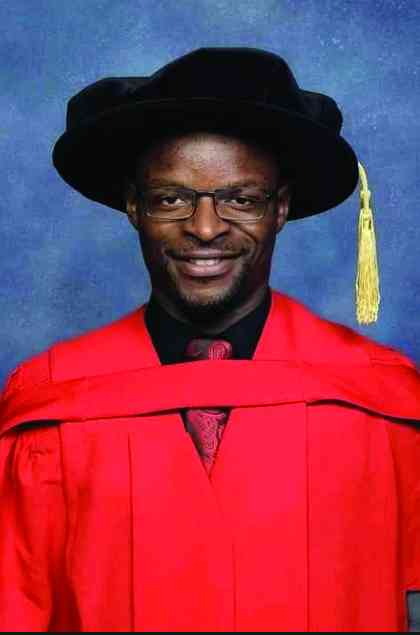
@Jamwanda2 It's because my LLM graduation certificate was in there Chief. Why they use those folders, I'm unsure.
English

Robbing Zimbabwe of a chance under the sun: Dark days of constitutionalism
The law is an ass. It has no intrinsic values, nor does it have any inherent moral content. It’s a tool; a weapon. And there are mercenaries, men and women ready, willing and able to lend service to other men and women of wicked intent and evil schemes. These can argue anything, the absurd even. They write laws, they interpret laws and they enforce laws under the guise of constitutional office and just ‘doing my job’. They are undertakers; enablers; conspirators; accomplices.
Then there is the other side. The law can be engineered into a tool for justice; for the fair regulation of the interaction and affairs of a people; for the collective progress of a society. And there are men and women, ready, willing and able to lend service to these ideals.
Why possibly would a person choose the former variety of the law and legal operation? Justice Minister Ziyambi Ziyambi chose that route when he presented himself as a willing legal mercenary to shepherd on his boss’ behalf, a coterie of proposed amendments to the Constitution under Constitution of Zimbabwe Amendment No. 3 Bill of 2026, that go above and beyond the treacherous resolution 1 at the 2024 ZANU PF National People’s Conference. Men and women who oversee Zimbabwe’s governance in Cabinet on 10 February 2026 chose to join Ziyambi, and lent their souls, wits and all to Zimbabwe’s most audacious constitutional scheme yet since the November 2017 coup.
The struggle for a new constitution has been long and odious, from the women’s movement of the 1980s, to the economic-led discourses of the early 1990s, to the civil society-led movement that culminated in the referendum of 2000, to the political party-led processes that eventually birthed the 2013 Constitution. There are so many Zimbabweans who died for a new constitution, literally. They are dead and buried.
Imperfect as that 2013 document was, at long last we had made remarkable progress. The ink had yet to dry when by 2017 we were witnessing a reversal of gains with the first regressive amendments to the Constitution. 2021 was to see another round of the same breed: controversy, regression, manipulations, process violations, and so on. Now 2026, we are back at it again. But now it is different. It is not an exaggeration to say the 2017 coup and the now-approved Cabinet memo detailing proposed amendments to the Constitution of Zimbabwe are the most defining constitutional moments in Zimbabwe’s history since 2013 when that Constitution was voted for by 94.4% of our people.
Men who came to power through a coup are now moving to remove the powers of the miliary to “uphold” the Constitution – as if anyone had told the coup-plotters in the first place that the army had any business stepping into civilian governance and taking over power. They now want to change the electoral system: remove popular participation in electing the president and place the responsibility on parliament – a borrowed concept from electoral systems that operate at a totally different wavelength to ours. They want a 7-year term for the president and parliament – a total of 14 years if one does two terms. They are incentivizing parliamentarians to vote for an extended presidency for selfish reasons.
They now want to bring back even greater opportunities to manipulate the voters roll and engage in gerrymandering. They now want to remove transparency by removing the public interviews in the selection of all judges of the Labour Court, Administrative Court, High Court and Supreme Court, having removed such transparency in the appointment of the Chief Justice Deputy Chief Justice and Judge President under Amendments 1 and 2. They want to expand senate by allowing the president to appoint 10 senators - whatever benefit that brings to Zimbabwe! They want to eliminate the Zimbabwe Gender Commission.
I dare say, of all the actions of President Mnangagwa since the coup in November 2017, this is the darkest move in his governance agenda. Whatever rules of engagement we thought as a nation we had agreed to in 2013, and whatever route we had decided for our nation, Mnangagwa and team have arrived to change course at will.
When we write a constitution, we do so for the nation and country. Far from cosmetics, a constitution is an existential issue. How can a group of men and women be so evil to bury the prosperous future of a nation for short and immediate power gain? Oh, what vanity; oh, what iniquity!
Long after Mnangagwa and all those who will mutilate the constitution are dead and buried, there shall remain a country called Zimbabwe. Surely, what possible wisdom could there be to take Zimbabwe decades back to the day of imperial presidency, nebulous ‘tap-on-the-shoulder’ judicial appointments, manipulated elections, long-term presidency and other such dictatorship-like trappings?
There is nothing admirable, defensible, honorable and legal about this entire process. This is not good or proper law; this is not good politics. This is not societal progress. There is no economic, social or political benefit to Zimbabwe as a country from this constitutional manipulation.
This whole process is not people-driven, is anti-people, is anti-progress, is a naked breach of the social contract, is a subversion of the will of the people, and violates the spirit of the Constitution. The Constitution has a spirit; it is not just about the words written on paper and what the dictionary says they mean. There is something called unconstitutional constitutional amendments; there is something called the basic structure doctrine. When a constitution has now been mutilated out of recognition, it is no longer the original document; it is now something else.
These regressive amendments is not what Zimbabweans want or asked for - not even the poor, helpless, hapless long-suffering foot soldiers of ZANU-PF forever played by their elite masters.
However ZANU PF’s spin-doctors come and justify their own annihilation by their masters - for whatever pay and reward, and however ZANU-PF, Mnangagwa and Ziyambi drink champagne to celebrate their victory over the people, they have just committed a grave betrayal to Zimbabwe’s future that will take long to reverse.
On days like these, I am ashamed to be a lawyer in Zimbabwe, and I am ashamed of my government. I am proud I never voted for them, but I am ashamed of them. Yet for my country, people, beliefs and values, I will remain an active, vigilant and resourceful citizen in search of the Zimbabwe we want. Many other citizens too. And I have faith that Zimbabwe will be found through the mobilization, action, and perseverance of its patriotic children.
English
Musa Kika retweetledi

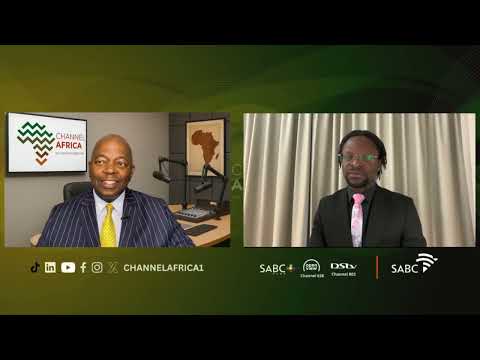
“Where communities are not speaking out, violations will thrive in silence.”
IHRDA ED Dr. @KikaMusa spoke with Peter Ndoro on Channel Africa’s Rise and Shine. Governments, businesses and communities must work together to protect children.
youtu.be/UbLBRe0YO0U?si…
YouTube
English
Musa Kika retweetledi

Children across Africa deserve protection, not silence. Dr @KikaMusa's message is a timely call for stronger accountability from all of us | Watch: youtu.be/UbLBRe0YO0U?si…
YouTube
English
Musa Kika retweetledi

Dr. Musa Kika of @IHRDAfrica delivered a powerful briefing as an Organization with Observer Status before the committee, reinforcing commitment to advancing children’s rights. #ACERWC46 #AfricaFit4Children
English
Musa Kika retweetledi
Strengthening child protection in business requires a coordinated, multi-pronged approach at the @AfricanUnion level, says IHRDA ED @KikaMusa.
More via @RFI
rfi.fr/en/africa/2025…
English
Musa Kika retweetledi
In a discussion on “Selective Solidarity? Public Responses to Walter Mzembi’s Detention,” Dr. Musa Kika stressed that weaponising the criminal justice system for political ends is never acceptable.
Regardless of who is involved, the rule of law must stand above politics. @citezw

English
Musa Kika retweetledi