
Sabitlenmiş Tweet
Seun
588 posts


@eruan20 @david_ingya @ShangguanJiewen @scarfizal Pls tell him. BAT protested against subsidy removal in 2012. 11yrs later, That was the first thing the crook removed when he became President.
English

@david_ingya @ShangguanJiewen @scarfizal Tinubu and APC bigwigs also fought fuel subsidy removal. Stop reporting half truths
English

China built a $20 billion oil refinery in Nigeria
Western nations kept Nigeria dependent, refining it abroad, and selling it back to them.
Now Nigeria is exporting refined gasoline.
This is what economic sovereignty looks like.
English
@HQNigerianArmy Good job. Let's maintain the energy. Not defensive, find them and send more terrorist to the great beyond.
English

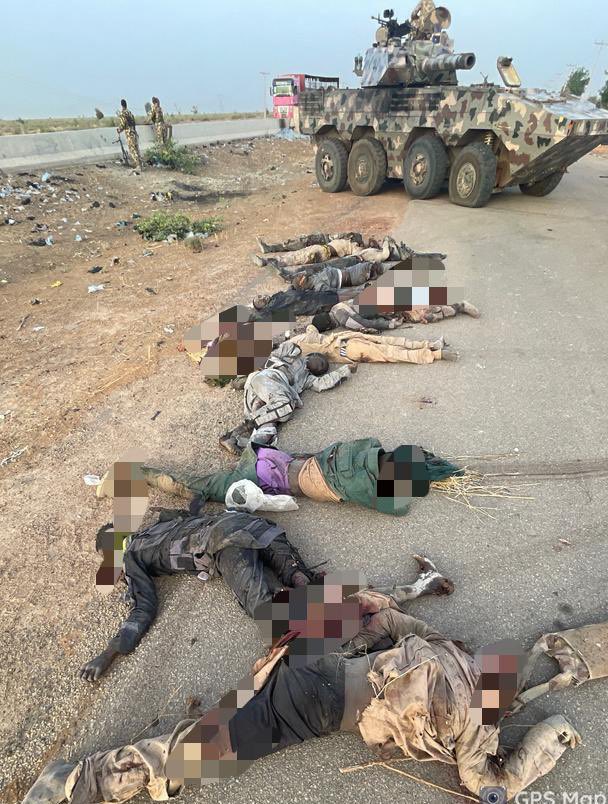
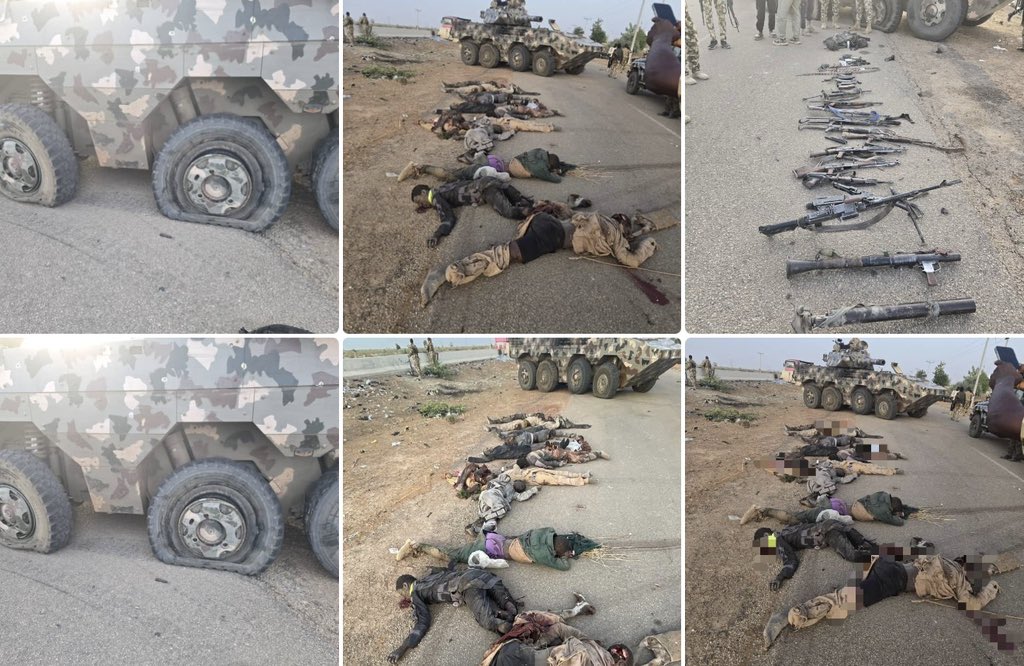
OPERATION HADIN KAI TROOPS FOIL TERRORIST ATTACK AT KUKARETA, INFLICT HEAVY LOSSES, RECOVER ARMS CACHE
Troops of the Joint Task Force (North East) Operation HADIN KAI (OPHK), under Sector 2 in the early hours of 23 April 2026, successfully repelled a determined terrorist attack on KUKARETA location. The attack, which commenced shortly after midnight and lasted until about 0300 hours, was met with a swift and coordinated response by vigilant troops who executed a deliberate offensive-defensive action, effectively containing the assault and forcing the terrorists into a disorderly withdrawal.
During the engagement, troops inflicted heavy casualties on the attackers, with 24 terrorists neutralised so far. Ongoing exploitation of the battlefield has led to the recovery of a significant cache of arms and ammunition, including 18 AK-47 rifles, 3 General Purpose Machine Guns (GPMG), 2 PKT automatic anti-aircraft guns, 3 RPG tubes, 2 mortar tubes, 4 hand grenades, 18 AK-47 magazines, and large quantities of belted 7.62mm ammunition for PKT systems.
Troops recorded 2 personnel wounded in action, who have been stabilised, while one reinforcing armoured tank sustained damage with all tyres blown out during the engagement. Exploitation operations are ongoing to recover additional bodies and equipment along the terrorists’ withdrawal routes littered with blood trails and medical consumables. This successful operations highlights the resilience, combat readiness and fire superiority of OPHK troops in denying terrorists freedom of action. Operations will continue with sustained offensive pressure to consolidate gains and decisively defeat all terrorist elements across the Joint Operations Area.
SANI UBA
Lieutenant Colonel
Media Information Officer
Headquarters Joint Task Force (North East)
Operation HADIN KAI
23 April 2026


English

The Islamic cleric who placed a million naira bounty on the head of the pastor accused of blasphemy has restated his resolve:
“…whoever fulfills that requirement (beh3ading the pastor), I swear to Allah I’ll give him that money (one million naira), no retreat… we have nothing to lose if after beh3ading this pastor Arewa plunges into chaos…”
Is it not amazing how sheer hate and incitement to violence is spewed with so much zeal and utmost disregard to constituted authority!
Well, let’s pretend the government/security agencies of this “secular state” don’t know about this.
English
@ruffydfire I put it to you, if you're humble. You should learn one or two from Mehdi.
English

To a lot of people, Medhi can hold politicians accountable because he’s a white man, but a lot of Nigerians are not wired to see a black man like Rufai holding politicians accountable.
Today, when Rufai said, “Don’t interrupt me” to a white man, they lost their minds because of colonialism.
How dare Rufai say to a white man, “Don’t interrupt me”?
So to them, he must be rude, especially when the white man is from a nation that Christianity has taught them to worship!
The problem with Nigerians is in their heads.
It will take years to change!
English

Honourable Minister thank you for the initiative of making payment at the airports cashless.
Yes, this will help to eliminate corruption and optimize revenue. But you failed to let Nigerians know that you have also increased the toll gate fee.
For example at Hajj Camp (popularly called Nahco in Lagos), we used to pay #300 for cars and the subsequent hourly rate was #100. But to my surprise as I drove to work on Monday, I was told the rate has changed from #300 to #1,000 and hourly rate now has #300. This happened the same day the cashless payment was introduced. Therefore, I indulge you to emphasize that you have also increased this fare too and not just hide under the guise of cashless payment to curb corruption alone.
We hate pretence here. Come clean and clear and let Nigerians know where you stand. The increment of fare was not necessary. And if at all, shouldn't be more than a hundred naira or two.
English
By the end of this week, I, along with my team, will be reviewing the first one week of our going cashless at all our payment points at airports across the country in order to eliminate corruption and optimise revenue.
We will surely improve the efficiency of the new system as time progresses by developing new ideas, but this government is determined to end the practice of collecting cash at our gates. Kindly bear with us, please.

English
Seun retweetledi
When kidnapped in Nigeria, do the following.
1. Do not resist armed kidnappers.
2. Keep calm and be patient.
3. Do not antagonize your captors; be polite and operate with reasonable regards. Give reasonable cooperation to your abductors.
4. Establish a personal relationship with your captors as early as possible.
5. If the kidnappers ask for contact persons, do not mention your place of work; mention only your close friends and parents. They will reach them to negotiate for your release.
6. Advise your friends involved in the negotiation to be friendly with your captors.
7. Be prepared for the natural reaction of the shock.
8. Mentally note all you can about your abductors and, if moved, the length of time in transit, directions, sounds, smells, and any other information.
9. Take no risk by attempting to escape. DO NOT BE A HERO.
10. Keep fit with mental exercise.
11. Make no statement to the media after your release without official clearance, but share your experience with close associates.
This is from the NYSC handbook.
This is the “advice” that the Nigerian government is giving to young people that are compulsorily relocated into dangerous bloodthirsty zones and forcefully made to live in for 1year.
This is not a sane country.This is not a safe country. This is a captured jungle where terrorists are sovereign, where human life is worthless and human value is a myth.

English
@LegendaryJoe Some folks are of the opinion that you'd have just dm fatoyinbo this letter. Jokers.
This is so apt. Enough is enough!!!
English

OPEN LETTER TO BISHOP OYEDEPO - FATOYINBO'S RECKLESSNESS 03
These men - all of them - have openly professed themselves as sons of Bishop David Oyedepo. And in unity, they carry forth a gospel stripped bare of the Cross, dressed instead in the glitter of gold. Their prosperity message, in its extreme form, is a dangerous distortion - a gospel that measures the worth of a soul by the weight of a wallet.
If indeed a tree is known by its fruit, then Bishop Oyedepo must call his sons to order. Otherwise, the world may conclude that their message is but a mirror of what the Bishop himself believes. And yet, as one who has long been an ardent listener to the Bishop, I can attest: his teaching on prosperity is almost always wrapped in the linen of Matthew 6:33 - seek first the kingdom of God - and success, when defined, is tethered to justice, decency, and moral bounds. If this is so, then one must ask: from what well are these sons drawing their extreme doctrines?
Meanwhile, there are missionaries today scattered like seeds across violent and hostile lands - preaching the gospel with their very lives at stake. Their days are marked by danger, their nights by uncertainty. Many have paid the ultimate price for the kingdom. They may never be known beyond the dusty paths they tread, never be immortalized in glossy biographies, and never be hailed in the chronicles of church history. Yet in heaven’s ledgers, they rank no less than the overseers of mega-churches. But to Fatoyinbo and his ilk, these soldiers of the Cross are invisible - dismissed as unworthy of divine notice simply because they are not billionaires.
A man’s life does not consist in the abundance of his possessions (Luke 12:15).
I close with this: true legacy is not etched in marble mansions or measured in fleets of luxury cars. In the economy of the kingdom, legacy is weighed by the depth of our relationship with God and the faithfulness with which we execute our divine assignment.
“…let not the rich man glory in his riches:
But let him that glorieth glory in this, that he understandeth and knoweth me, that I am the LORD which exercise lovingkindness, judgment, and righteousness, in the earth…” (Jeremiah 9:23–24)
Joseph Ayo Babalola left this world in 1959, and yet in 2025 - sixty-six years later - his name still rolls off tongues with reverence, his life still testifies to the raw power and heavenly grace he bore. The Christ Apostolic Church may today be splintered into countless fragments, each with its own overseers and principles, yet all still proudly trace their spiritual ancestry to the Great Revivalist and that extends to all denominations that carry the Pentecostal mantle.
But this enduring testimony is not guaranteed for many modern founders, especially the merchants of prosperity gospel. Their messages, shallow as a puddle after the first drizzle, may glitter under the sun but will evaporate long before the noonday heat. Many will yet draw breath while their ministries lie cold and forgotten - because what is built on Mammon cannot withstand the storms of time.
Shalom
----
3/3

English
MY OPEN LETTER TO BISHOP OYEDEPO – FATOYINBO’S RECKLESSNESS
His exact words –
“I dedicated 2 jets before coming here… I told Rev KK that when I’m 40, I’m going to buy a Rolls-Royce… I have 3 right now… some 15 years ago..., we paid $20,000 per night for a hotel room…”
“Poverty destroys ministries… I was studying recently about what Apostle Babalola did… Anointed man… Heavy Duty Grace – BUT! NO MONEY. So all the grace just went like that… Where are his children? I’m sure some of them will hate God.”
2 Timothy 3:16 declares –
“All scripture is given by inspiration of God, and is profitable for doctrine, for reproof, for correction, for instruction in righteousness.”
If indeed God dwells in us, and we in Him (John 4:15), then our speech - especially from the sacred pulpit - ought to be rivers flowing from the wellspring of His Spirit. Our utterances should serve as compass and anchor, as lamp and plumbline, fulfilling the fourfold ministry of scripture: doctrine, reproof, correction, and instruction in righteousness.
So, I ask without malice but with earnest trembling: in Pastor Fatoyinbo’s opening declarations, which facet of 2 Timothy 3:16 shone through?
Is the “dedication of two jets, the ownership of three Rolls-Royces, and the lavish payment of $20,000 for a night’s lodging” inspired utterance or sanctified boasting?
Can such words be enshrined as doctrine?
Do they pierce as reproof?
Do they mend as correction?
Do they guide as righteous instruction?
Brethren more seasoned in the fine letters of scripture than I, pls lend us your wisdom - where does such rhetoric find its place in the sacred canon?
And why do I write this? What stake do I have in this disturbing sea of controversy?
Shall I begin?
I have read the articulate thunderbolt issued by the CAC - a response so well-forged I feel incompetent to attempt to polish it, in actual fact, it needs no further embellishment. Their arguments stand like granite pillars, unshaken and unshakable.
Yet I write - painstakingly - to the Body of Christ, and in particular to Bishop David Oyedepo, one of the patriarchs of faith in our generation. Pastor Biodun Fatoyinbo, along with others of similar persuasion, has long proclaimed the presiding bishop of the Winners Chapel, Bishop Oyedepo as his spiritual father.
I do not just write as one who sometimes identify as a Christian, but I pen this piece as one whose roots run deep into the soil watered by the prayers of Apostle Joseph Ayodele Babalola; as one who walked the very mountains where the Apostle, like Saul on the Damascus road, encountered the blinding call of God. Ikeji Arakeji, Osun State, was not just my academic dwelling - it was my holy backdrop, my living testimony to the footprints of a man who carried “Heavy Duty Grace” without flaunting it in the marketplace of vanity.
Shall I Begin?
WHO WAS APOSTLE JOSEPH AYODELE BABALOLA?
He was not merely a preacher; he was the blazing torchbearer who lit the Pentecostal flame in Nigeria. The revival fire of 1928–1930 that birthed Christ Apostolic Church was not just a spark - it was the very dawn of Pentecostalism in Nigeria, West Africa, and among the earliest tremors on the entire African continent.
And then came the 1930 Oke Oye Revival in Ilesa - led by none other than that apostolic colossus, Joseph Ayo Babalola. That revival did not just stir hearts; it rattled the very earth. Thousands trekked mile after weary mile, driven by a hunger no bread could satisfy, in pursuit of the one true God. And they found Him - in healing that dissolved infirmities like morning mist, in deliverance that shattered chains of ancestral spirits, in salvation as pure as spring water gushing from the rock. Idolaters, witch doctors, and sorcerers - once lords of their dark arts - came kneeling, laying their fetishes at the feet of Christ, and surrendering their lives in total abandon.
----
1/3
English

My bundle of joy came today, make man utd crown am for me.

English
Seun retweetledi

Dear ministers,
Remember the poor!
One of the most grievous distortions of Pauline revelation today is not only in the areas of grace or prosperity, but also in how the poor are perceived, spoken about, and treated within the body of Christ. This distortion, though less discussed, is equally destructive. It creates a gospel of exclusion, a spiritual elitism where the poor are dishonoured, sidelined, and falsely positioned as spiritually inferior. This is not just bad theology—it is a violation of the heart of God.
The Apostle Peter’s warning that the unlearned and unstable twist Paul’s writings (2 Peter 3:15–16) applies directly here. Many twist Paul's balanced teaching on work, provision, and giving, to paint the poor as cursed, unfaithful, or rejected by God.
Let us now examine how the message concerning the poor has been twisted, what Paul (and indeed the Lord Jesus) actually taught, and the dangerous consequences of such distortion.
1. The Poor in the Heart of God and the Theology of Christ
The first thing to settle is that the poor have never been outside the reach of God's affection and plan.
The Gospel is Good News to the Poor:
Jesus, quoting Isaiah, declared:
“The Spirit of the Lord is upon Me, because He has anointed Me to proclaim good news to the poor…”
(Luke 4:18)
The first audience of the gospel were not the wealthy or the powerful but the poor. They were not told that their poverty was a curse but that the kingdom had come near to them.
Blessed Are the Poor:
“Blessed are you who are poor, for yours is the kingdom of God.”
(Luke 6:20)
Jesus did not add, “…if you can sow your way out of it” or “…if you repent of your poverty.” Instead, He acknowledged their inheritance regardless of material status.
The Poor You Will Always Have With You:
When Jesus responded to Judas, who pretended to care for the poor, He affirmed an important reality:
“The poor you will always have with you…”
(John 12:8)
This was not a dismissal of the poor but an acknowledgment of their enduring presence and inclusion in the divine economy. The remark was made, not against the poor, but against Judas’ hypocrisy, who did not care for the poor at all.
The Poor Have the Gospel Preached to Them:
One of the testimonies of Christ's ministry was this very statement:
“…the poor have the gospel preached to them.”
(Matthew 11:5)
This was a mark of authenticity, a seal of divine approval on the mission of Christ.
Go, Sell All You Have and Give to the Poor:
To the rich young ruler, Jesus did not demand more temple offerings but rather said:
“Go, sell all you have and give to the poor, and you will have treasure in heaven. Then come, follow me.”
(Mark 10:21)
In this instruction, Jesus exposed the idolatry of wealth and reaffirmed the place of the poor at the heart of kingdom ethics.
2. The Pauline Theology on the Poor: Remember the Poor
Paul, the same apostle whose teachings are often misrepresented, did not ignore the poor. In fact, the apostolic handshake of agreement between Paul and the Jerusalem church hinged on one simple charge:
“James, Cephas, and John… agreed that we should go to the Gentiles, and they to the circumcised. All they asked was that we should continue to remember the poor, the very thing I had been eager to do all along.
(Galatians 2:9–10, NIV)
Paul’s passion for doctrinal purity was not separate from his commitment to economic justice. In the same letters where Paul defends justification by faith, he defends the honour and care of the poor.
Paul echoes the Old Testament generosity ethic when he writes:
“As it is written: ‘They have freely scattered their gifts to the poor; their righteousness endures forever.’”
(2 Corinthians 9:9, quoting Psalm 112:9)
Notice this carefully: The Jerusalem apostles did not tell Paul, “Make sure you keep the Gentiles giving”—they said, “Remember the poor.”
3. How This Teaching Has Been Twisted Today

English
Seun retweetledi
Unbelief is not merely a passive doubt; it is a profound conceptual anomaly—an affront to the very integrity of God. It is, in essence, calling God a liar, rejecting His infallibility, and questioning His sovereignty. This is why, in response to the Israelites' persistent unbelief, God swore in His wrath, “They shall not enter into My rest” (Hebrews 3:11). Their refusal to trust His word rendered them unfit to partake in the promise, not because the promise was withheld but because they disqualified themselves through hardened hearts.
Hebrews 4 unveils a sobering truth: this is not just an ancient narrative but a present-day reality. There exists a "today’s version" of this spiritual anomaly, where many are unable to enter into what has already been finished. The tragedy is not that the promise is absent but that access is denied to those who refuse to align with faith. Just as the Israelites, through unbelief, failed to transition from the wilderness into the Promised Land, many today struggle to step into the fullness of the finished work of Christ.
This is the difference between manna and harvest. Manna was a maintenance ration—a divine sustenance given in the wilderness to a people unfit for inheritance. It kept them alive but never empowered them to thrive. However, Canaan was a land of cultivation and harvest, where they were to eat from what had been sown, reaped, and multiplied. Likewise, in Christ, we are called not to survive on a rationed existence but to enter into the abundance of what has already been secured for us. Yet, many remain in a wilderness mindset, still expecting daily handouts rather than stepping into the responsibility and dominion that come with inheritance.
Unbelief, therefore, is more than doubt; it is the barrier between subsistence and inheritance between survival and dominion. It is the unseen force that locks many out of what is already theirs in Christ. The question remains: will you be content with the wilderness of maintenance, or will you step into the fullness of what has already been finished? The rest of God is available, but only those who mix the promise with faith will enter in.
Today, if you hear his voice. !
English

💪 I submitted my wallet for @wodiu_os from @wodiu_os on #Alphabot
🎉 LFG #Alphabot 🎉
alphabot.app/wodiu-mdb81q
English
Seun retweetledi
Beloved,
"Let us therefore fear, lest, a promise being left us of entering into his rest, any of you should seem to come short of it." (Hebrews 4:1)
God’s promise was never just to lead His people; it was to bring them into His rest, a place of inheritance and dominion. But many experience only the lowest form of His leading and provision, mistaking divine maintenance for divine fulfilment.
Israel was delivered, yet God took them through a longer route. Not because the Philistines were stronger, but because they were too weak to handle war. The journey should have been forty days, yet it became forty years. God still led them, but at the lowest level! This was not a reward—it was a default response to their lack of capacity.
"For we which have believed do enter into rest: as he said, As I have sworn in my wrath, if they shall enter into my rest: although the works were finished from the foundation of the world." (Hebrews 4:3)
Many are stuck in cycles, thinking they are led by God, when in reality, they are just being managed at the lowest form. They call it “God’s process,” but it is actually a delayed journey, not by divine design, but by weakness!
Even in provision, God fed Israel with manna. But what was manna? A humbling provision for those not yet ready to own land and cultivate it. It was supernatural, yes—but it was also the lowest form of sustenance! A people of inheritance were being fed like wanderers, not owners. The day they entered Canaan, the manna ceased—because it was never meant to be permanent! Yet some people would rather stay in the wilderness, eating what falls, instead of stepping into their own harvest.
"Seeing therefore it remaineth that some must enter therein, and they to whom it was first preached entered not in because of unbelief." (Hebrews 4:6)
They had a promise, but they could not enter. They had God’s presence, but not His pleasure. They were led, but never possessed. Because they lacked the faith and capacity to step into what was already finished!
"There remaineth therefore a rest to the people of God. For he that is entered into his rest, he also hath ceased from his own works, as God did from his." (Hebrews 4:9-10)
The rest of God is not survival—it is inheritance! But many are still wandering when they should be reigning. They are still praying for manna when they should be harvesting wheat. They are still fighting battles that should have been won years ago, because they have refused to shift dimensions.
"Let us labour therefore to enter into that rest, lest any man fall after the same example of unbelief." (Hebrews 4:11)
There is a level of work needed—not to strive in human strength, but to grow into capacity! The same God who led them in circles was ready to lead them in conquest, but they had to shift! You have compassed this mountain long enough! MOVE!
You must refuse the lowest form of God’s dealings. Refuse to be maintained when you should be manifested. Refuse to be led at the weakest level. Step into inheritance! Step into dominion! For the promise still stands!
Regards

English
@sfojoemmanuela Imagine what this king will be doing privately. 😳. Its crazy enough to have a king as a child, but as a beast - It's insane.
English

I came across a disturbing video online showing Chief Arinola Abraham Love (JP) being subjected to public humiliation and physical assault. In the video, he was seen kneeling on the road while being slapped and verbally abused by someone identified as Ọba Semiu Olawale Ogunjobi, the Oloorile of Orile Ifo. This incident reportedly stemmed from a kingship supremacy dispute.
The king allegedly took offense at Chief Arinola Abraham Love’s perceived support for a coronet Oba named Wasiu (as mentioned in the video). In response, he confronted the elderly man in his area and treated him in a manner unbefitting of a traditional ruler.
Such an act is highly condemnable and completely unjustifiable, regardless of the underlying issues. There are more dignified and lawful ways to address disputes, especially among traditional leaders. Resorting to force, assault, and public humiliation is unacceptable and must be strongly denounced.
English
Seun retweetledi

ABOKI means friend NOT illiterate
MALAM means teacher NOT mumu
ALMAJIRI means student NOT a begger
So take note please.
Retweet to educate someone
English
Seun retweetledi
Jesus
“There is salvation in no one else, for there is no other name under heaven given among men by which we must be saved.” Acts4:12
English
Seun retweetledi
“A word fitly spoken is like apples of gold in a setting of silver.” Proverbs 25:11
This is wisdom.
Pray for it.
Lord, cause me to know what and when and how to speak.
English
“But you are a God ready to forgive, gracious and merciful, slow to anger and abounding in steadfast love, and did not forsake them.” Nehemiah 9:17
Have you loved and prayed and hoped and waited for the wandering one?
Do not lose heart.
English