PKprincipal

3.1K posts

PKprincipal banner
PKprincipal

PKprincipal

@KprincipalP

Principal of École Paul Kane High School.

Katılım Ağustos 2019
76 Takip Edilen323 Takipçiler
PKprincipal retweetledi
Humboldt Broncos
Humboldt Broncos@HumboldtBroncos·
Today, we remember the 2017–2018 Humboldt Broncos — and all those forever connected to our team. 💚💛 Never forgotten. Forever Broncos. #WePlayForThem
English
70
1K
4.5K
172.9K
PKprincipal retweetledi
ABC News
ABC News@ABC·
A growing number of U.S. college instructors are turning to oral exams to help combat an AI crisis in higher education. abcnews.link/DZrsx7D
English
39
165
474
96.1K
PKprincipal retweetledi
Brad Weinstein
Brad Weinstein@WeinsteinEdu·
One of the hardest parts of being an educator is the lack of downtime. You have to be on all day long. This is mentally and physically draining.
English
114
108
1.2K
37.5K
PKprincipal retweetledi
Andrea Dekeseredy
Andrea Dekeseredy@AndieWinnipeg·
The government of Alberta is looking to add teachers to the province through "expedited" training programs that will allow graduates to teach in classrooms without education degrees. ctvnews.ca/edmonton/artic…
English
119
82
132
23.1K
PKprincipal retweetledi
Dog Lovers
Dog Lovers@DogLovers03·
Dog Lovers tweet media
ZXX
28
112
1.5K
13.1K
PKprincipal retweetledi
James E. Thorne
James E. Thorne@DrJStrategy·
For the record. Another Year in Paradise. Canada is edging toward recession, and no amount of spin can hide it. Productivity has turned negative, the housing market is in recession, youth joblessness is climbing, food inflation leads the G7, and the deficit has nearly doubled, yet Bay Street applauds, demanding more rate hikes while Main Street quietly gets crushed. all while Ottawa blames Trump and the United States for what is, in reality, decades of homegrown mismanagement. Interprovincial trade barriers still choke the economy despite triumphant proclamations that they’ve been swept away, the tariff position with the United States has deteriorated, and the vaunted “transformational” projects remain stuck on the launchpad, while Prime Minister Carney works the global conference circuit and leaves domestic stagnation on autopilot. Canada now faces a toxic mix of negative productivity growth, a housing‑led downturn, stubbornly high food prices, rising youth unemployment, internal trade barriers, worsening frictions with its largest trading partner, and elevated interest rates that are squeezing over‑leveraged households and small businesses alike. Yet the official narrative insists the country is “on the right track” under a globe‑trotting prime minister and a central bank that alternates between complacency and overcorrection, an increasingly surreal disconnect that would be darkly funny if real people weren’t paying the price. The central bank has become an enabler rather than a check. Tiff Macklem waved away inflation as “transitory,” then admitted a major forecasting failure only after prices exploded and he unleashed the most aggressive rate‑hike cycle in a generation, crushing mortgage holders and household spending while assuring Canadians the pain was both necessary and under control. In an economy dangerously dependent on real estate, he now defends Powell’s spending‑driven stance, questions serious oversight, and shrugs that rate cuts “can’t help” just as what remains of the productive economy struggles to rebuild its capital stock, a posture that once would have sparked outrage but now barely registers. Meanwhile, the government wraps itself in geopolitics. Military bases in the Middle East are attacked, and Ottawa’s reflex is to blame Trump and the war for Canada’s very local economic failures. MPs crossing the floor to join the government raise basic questions about democratic health that the political class refuses to ask. As other countries quietly retreat from climate‑handcuffed industrial policy, Canada clings to it with devotional zeal, putting its manufacturers at a built‑in disadvantage, yes another Carbon Tax hike April 1st! All while its posture toward Tehran edges the country toward becoming a convenient safe haven for elements of the Iranian regime. Above it all floats a media narrative so disconnected from reality it borders on self‑parody. Much of the press still treats Carney as a secular saviour, the enlightened technocrat who can do no wrong, even as the data scream that almost everything is going wrong. Critical thinking in Canada’s public discourse is on life support; inconvenient facts are treated as rude interruptions to the story the political and financial class prefers to tell itself. But economic gravity does not care about talking points or photo‑ops. Facts eventually matter, and when they do, the reckoning will be especially unkind to those who insisted, with a straight face, that this was just another year in paradise.
James E. Thorne tweet media
English
158
688
1.6K
49.9K
PKprincipal retweetledi
Keanu Reeves
Keanu Reeves@KeanuReevesKRV·
Keanu Reeves tweet media
ZXX
332
1.6K
9K
110.1K
PKprincipal retweetledi
Edmonton Sun
Edmonton Sun@Edmontonsun·
An Alberta judge has rejected a bid by teachers to suspend the provincial government’s back-to-work legislation that imposed a new contract and mandated them back to classrooms last October. edmontonsun.com/news/politics/…
English
0
1
4
638
PKprincipal retweetledi
Dr. Sally Sharif
Dr. Sally Sharif@Sally_Sharif1·
I just gave a closed-book, pen-and-paper midterm exam in my 300-level course at UBC with 100 students. All exams were graded by an experienced graduate-level TA according to a rubric. *** The average was 64/100.*** My class averages at UBC are usually 80-85. Context: • This was the first midterm, covering ONLY 4 weeks of material. • Students had a list of possible questions in advance: no surprise questions. • Questions included (a) 3 concept definitions, (b) 3 paragraph-long questions, and (c) a 1.5-page essay. • I have taught this class multiple times. Nothing in my teaching style changed this semester. • We read entire paragraphs of text in class, so students don't have to do something on their own that wasn't covered during the lecture. • Students take a 10-question multiple-choice quiz at the end of every class (30% of the final grade). • Attendance is 95-99% every class. Attention during lectures and participation in pair-work activities are very high → anticipating the end-of-class quiz. *** But unfortunately, I suspect many students are not reading the material on the syllabus. They are asking LLMs to summarize it instead.*** After the midterm, students reported: • They thought they knew concept definitions but couldn't produce them on paper. • They thought they understood the arguments but struggled to connect them or identify points of agreement and disagreement. My view: It might be “cool” or “innovative” to teach students to summarize readings with ChatGPT or write essays with Claude. But we may be doing them a disservice: reducing their ability to retain material, think creatively, and reason from what they know. If you only read what AI has summarized for you, you don’t truly "know" the material. Moving forward: We have a second midterm coming up. I don't know how to convey to students that the best way to do better on the exam is to rely on and improve their own reading skills.
David Perell Clips@PerellClips

Ezra Klein: "Having AI summarize a book or paper for me is a disaster. It has no idea what I really wanted to know and wouldn't have made the connections I would've made. I'm interested in the thing I will see that other people wouldn't have seen, and I think AI typically sees what everybody else would see. I'm not saying that AI can't be useful, but I'm pretty against shortcuts. And obviously, you have to limit the amount of work you're doing. You can't read literally everything. But in some ways, I think it's more dangerous to think you've read something that you haven't than to not read it at all. I think the time you spend with things is pretty important." @ezraklein

English
527
2.5K
16.1K
3.5M
PKprincipal retweetledi
OutKick
OutKick@Outkick·
He didn’t just say it… he meant it. Remembering the great Lou Holtz
OutKick tweet media
English
28
1.1K
7.5K
153K
PKprincipal retweetledi
Jamy Bechler
Jamy Bechler@CoachBechler·
“My best skill was that I was coachable. I was a sponge and aggressive to learn.” ~ Michael Jordan
Jamy Bechler tweet media
English
3
139
1K
28.8K
PKprincipal retweetledi
𝐁𝐫𝐚𝐝 𝐉𝐨𝐡𝐧𝐬𝐨𝐧
We don’t have a classroom management problem. We have an emotional regulation crisis that teachers are being asked to handle. Somehow, “classroom management” has turned into: • de-escalating trauma • supporting anxiety and depression • calming panic attacks • being the counselor, social worker, and crisis team • carrying emotional loads no one sees And then we remove the very things that help like recess, movement, art, play, connection. Teachers aren’t trained for that. They shouldn’t have to be. Classroom management is about relationships, structure, routines, and connection. It was never meant to replace what families, communities, and systems failed to provide. And until we stop offloading every societal failure onto schools, teachers will keep drowning under expectations no human can meet.
English
65
317
1.5K
85.2K
PKprincipal retweetledi
St Albert Gazette
St Albert Gazette@stalbertgazette·
NEWS: BREAKING: Premier Danielle Smith calls for fall referendum on immigration and constitutional reform dlvr.it/TR3dGW
English
4
3
5
963
PKprincipal retweetledi
Hoop Herald
Hoop Herald@TheHoopHerald·
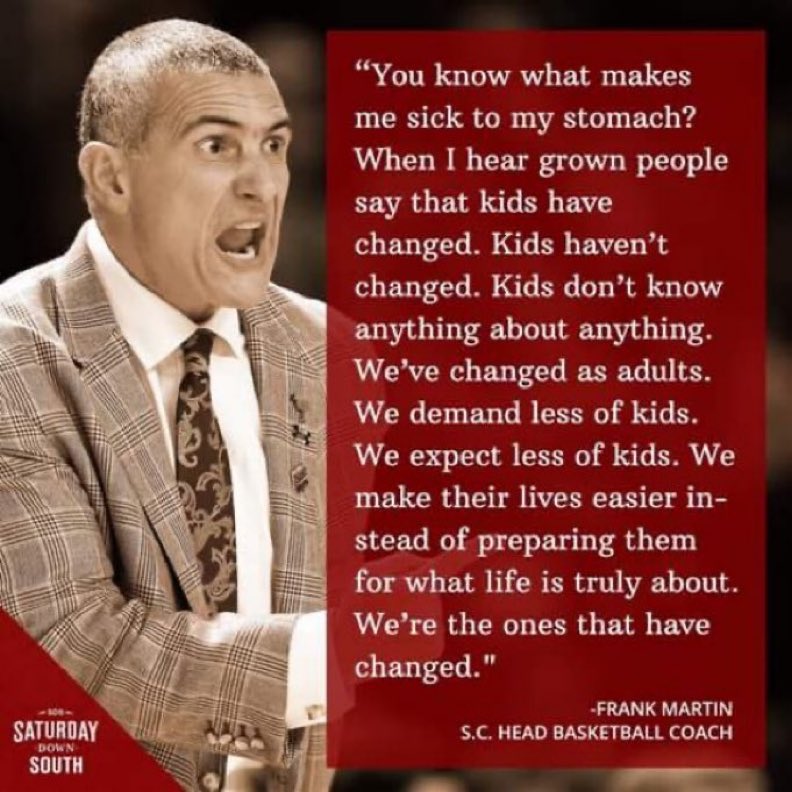
Throwback to this quote from Frank Martin that still holds true
Hoop Herald tweet media
English
23
316
1.5K
78.6K
PKprincipal retweetledi
Massimo
Massimo@Rainmaker1973·
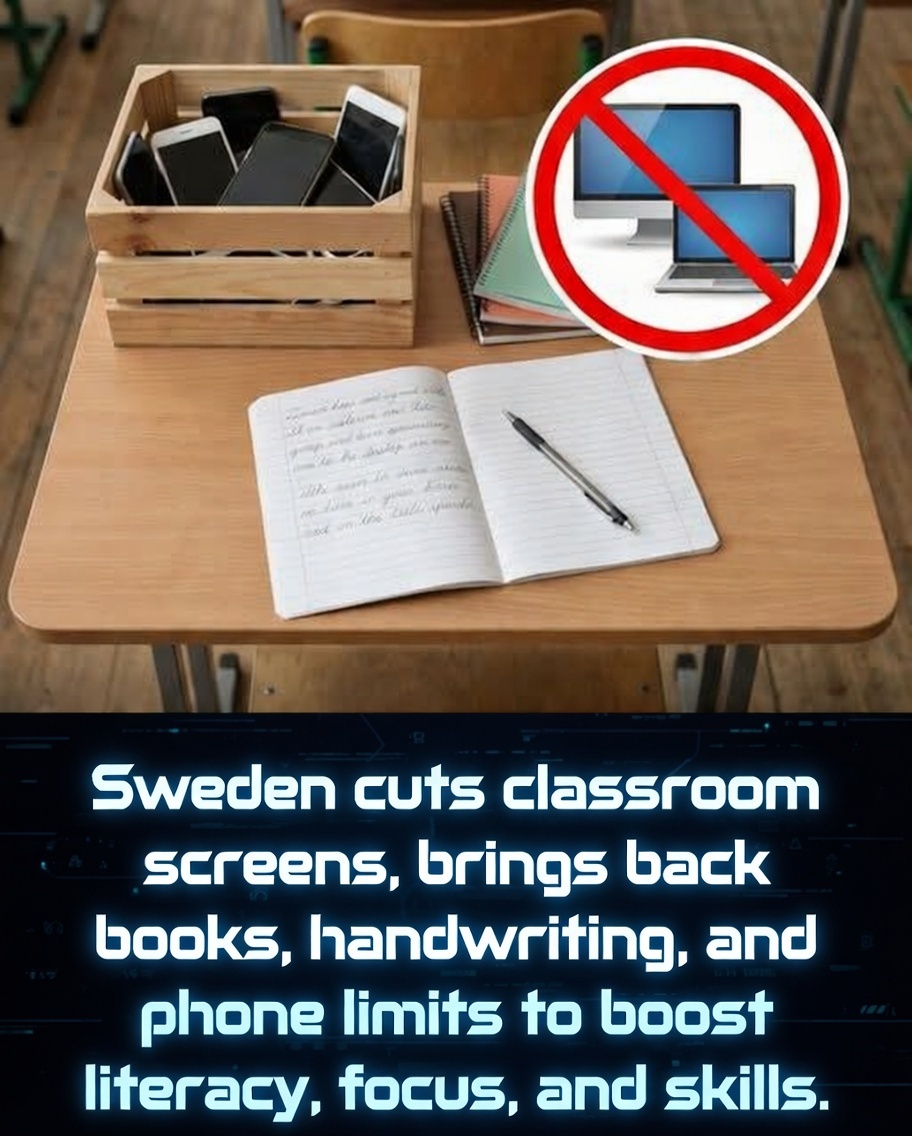
Sweden is committing more than €100 million to a sweeping classroom overhaul: replacing tablets and screens with traditional printed textbooks to help reverse falling student performance and sharpen focus. After more than a decade of embracing digital-first education, Swedish authorities are now pivoting back to paper-based learning. Official data and recent studies cited by the Ministry of Education show that prolonged screen use in class has been linked to shorter attention spans, weaker reading comprehension, and reduced critical-thinking abilities. Research consistently finds that reading on illuminated screens requires greater mental effort and invites more distractions compared to the calm, linear experience of physical books—factors believed to have contributed to declining academic outcomes in recent years. Under the new plan, every student will receive printed textbooks for all core subjects, restoring books as the central learning tool. Digital devices and online resources will remain available as supportive tools, but they will no longer dominate daily instruction. This bold €100+ million investment signals Sweden’s leadership in rethinking the role of technology in education. It underscores a broader, growing recognition worldwide: while screens provide speed and access, the hands-on, distraction-free engagement of physical books supports deeper concentration, stronger memory retention, and more effective long-term learning. By choosing paper over pixels, Sweden is charting a path toward a more balanced, evidence-informed classroom future—one that puts proven pedagogical principles ahead of unchecked digital trends.
Massimo tweet media
English
672
8.7K
23.8K
1.4M
PKprincipal retweetledi
Hoop Herald
Hoop Herald@TheHoopHerald·
Mick Cronin talking about the lack of accountability young people have in AAU Basketball “Letting them do whatever they want is not helping them”
English
41
133
720
119.5K
PKprincipal retweetledi
Sean Amato
Sean Amato@JSJamato·
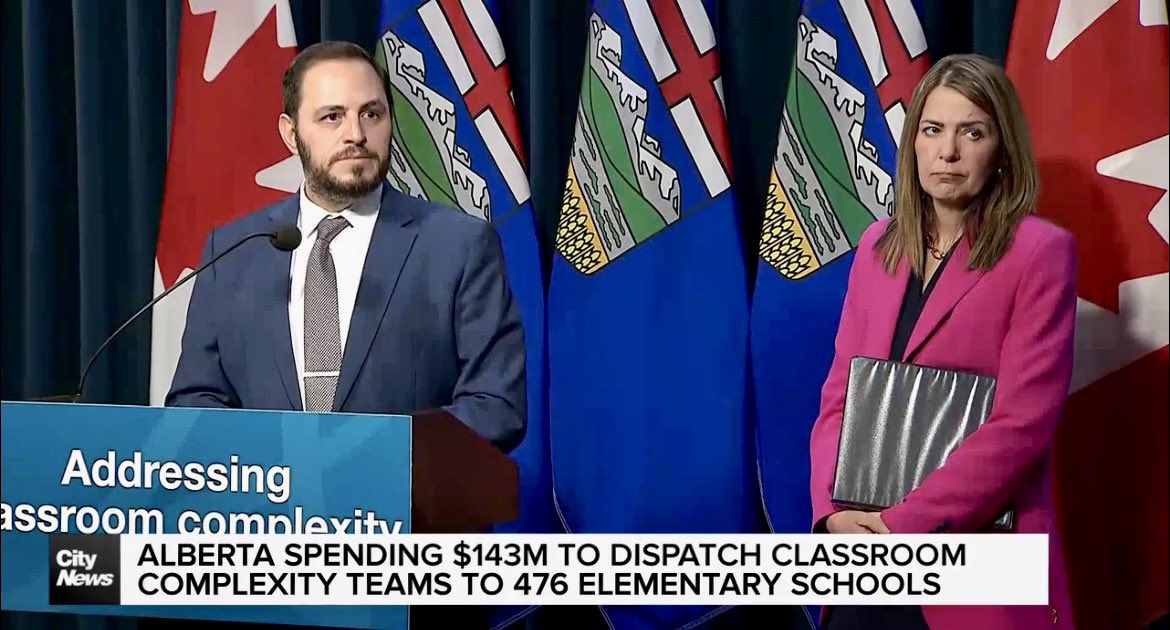
More than 400 Alberta schools are getting classroom complexity teams as part of a $143M investment. But as Sean Amato reports, the plan falls about 200 schools short of what the government’s own data says is urgently needed. #ableg #cdnpoli edmonton.citynews.ca/video/2026/02/…
Sean Amato tweet media
English
24
56
121
4.6K