Sabitlenmiş Tweet
linyao
1.5K posts


linyao
@Kryptaria
INFJ ONCHAIN 🐕🐾 //游戏开发大失败! //去学钢琴和八字了 ▓▓▓▓░░░░░░░ 27%
Katılım Ocak 2012
178 Takip Edilen839 Takipçiler

linyao retweetledi

Ethereum is about to fundamentally change how blocks are executed. With the upcoming Glamsterdam hardfork, it's shipping EIP-7928: Block-level Access Lists, a proposal that brings parallelization to the EVM.
Here's a short explainer of what it is, how it works, and why it's a big deal for scaling.
Let's start from the top. Alongside EIP-7732 (ePBS), EIP-7928 is the execution-layer (EL) headliner for Glamsterdam. Like ePBS, the main focus has been scaling Ethereum, though both proposals come with a bunch of other, equally important properties on the side e.g. removing trust requirements from the PBS pipeline or improving sync.
EIP-7928 adds a Block Access List (BAL) to every Ethereum block. A BAL is a list of accounts and storage slots that the block touches, but that's not all: it also contains post-transaction state diffs (this part is critical!).
Post-transaction state diffs tell you what the state looks like after each transaction. Quick example: user A swaps 1 ETH for DAI on DEX B. The BAL tells you that user A's ETH balance decreased by 1 ETH + tx fees and their nonce went up by 1; that DEX B's ETH balance went up by 1 ETH; and that inside the DAI contract, user A's DAI balance increased while DEX B's decreased.
In other words, all of that info becomes statically available, something that previously required tracing the transaction.
Client software (Geth, Nethermind, Besu, Erigon, Reth, Ethrex, Nimbus) can use this to do a few very powerful things:
1. Parallelize transaction execution. Knowing the post-state of each tx resolves the dependencies between them. No transaction has to wait on the previous one anymore, so execution can be perfectly parallelized. Instead of large parts of block validation sitting idle waiting on sequential execution, clients can finally make much better use of modern hardware.
2. Batch prefetch. One of the most cumbersome jobs for a node has been fetching the state needed for execution from disk. Because state locations (e.g. the exact storage slot in the DAI contract where user A's balance lives) are only discovered along the way, while executing, state-fetching has been a real drag on scaling: it blocks execution, takes time, and eventually slows everything down. With BALs, everything a node needs for execution is known upfront and can be loaded into cache in one go, in parallel. This speeds things up even further.
3. Parallelize post-state root calculation. Another expensive task is walking the updated state tree to compute the post-state root, which is needed so that everyone agrees on what's on disk after executing the block. With the post-tx state already in the BAL, nodes can do this in parallel while executing. A heavy task that used to wait until all transactions had finished can now run alongside prefetching and execution.
4. Snap sync (v2). An often overlooked, less sexy aspect of blockchains is syncing. Nodes need to catch up with the chain, and they need to catch up faster than the chain progresses. Today, most nodes do snap sync: downloading blocks, headers, and state in parallel while chasing the tip, and then "healing" the database once they're close to the head. Healing means asking peers for trie nodes, receiving them, validating them, and updating the local DB. It's iterative, networking-heavy, can take a while, and especially higher throughput pushes that phase to its limits. BALs help here too: with snap v2, nodes can catch up to the tip and skip the healing phase entirely. Syncing at higher throughput becomes more robust and reliable.
So, to summarize, a BAL contains two things:
-> The state locations the block accesses
-> The state changes after each tx (incl. the new values)
We're already seeing big performance gains today: on 6-core machines, EL clients validate blocks up to 5x faster, making block gas limits of 300M a very realistic outcome. ePBS will add to that by decoupling the block from the payload, giving validators 2-4x more time for execution.
To not overshoot (security stays priority #1), the fork will likely ship with a 200M gas limit, but we shouldn't be stuck there for long before pushing to 300M and beyond. That's a 10x in scaling since we started taking the topic seriously, without touching hardware requirements.
None of this would have happened without people going all-in, heads down, shipping: so many hours spent in calls debating the right design, so many iterations refining the specs, and tons of test cases written (and still being worked on). The road from whiteboard to production-ready code has been a journey, and we're not at the finish line yet, but from what I can tell, things look super bullish for Ethereum.
Glamsterdam will be a fork that shows what's possible when a distributed, decentralized community works on a shared goal, laser-focused on providing enough block space to onboard the next wave of users.
English
linyao retweetledi

小西天,看着像视频,但其实是我们在现场实地拍摄 3,811 张 206 GB 的照片后建模的。FUNES 把《黑神话:悟空》里「既见未来,为何不拜」满天神佛的原型,来自自山西临汾隰县的小西天,做成了一个可漫游的 3DGS 数字存档。
完全实地拍摄,每天清晨一开门就冲上山去,趁着没人的时候拍。然后通过 Gaussian Splatting 重建,没有手工建模,尽量保留真实悬塑和圆塑的极其密集的金色空间、细节和光感。不同的材质在这里交织成了无法分辨的一个天国世界。这种半空中的小塑像是「悬塑」,它们大多出现在十六世纪到十七世纪。
在现场如果要看清小西天的所有细节,我想大概需要三天时间。但是有了模型,我们可以在屏幕前慢慢看。在相当长的时间里,学术界并没有特别重视小西天这样的悬塑——因为在只有学术图录的年代,平面印刷无法展示出悬塑的震撼。而随着技术的进步,我们终于可以在远方一窥明代悬塑的璀璨。
重轻特意为这个模型做了配乐,大家可以打开慢慢欣赏。
推荐电脑访问:funes.world/apps/the-hangi…
中文


正常情况你这个初始代码优化效率*10x是没啥问题的,等一下我怎么成兄弟了,但凡你看看我主页头像和封面呢😅 纠正一下是姐妹不是兄弟。

潜水观察员🇨🇳@connectfarm1
用了一下,确实比我写的那版要好很多,我确实不是技术出身,代码也一点都不懂,但是我想这就是AI的魅力,让不懂代码的人也能vibecoding 出自己脑子中的产品。兄弟,你代码写那么好,要不我把点子给你你来写吧
中文

实验下来,让 ai 输出目标开仓位置,进行挂单交易。
比让大模型实时开仓收益效果好的很多。
唯一稍微有难点的是关于挂单的管理,
不过上了 chatgpt 5.5 超高思考难度,
小额跑几天实践下来也能解决。
llm交易真的是有特别多东西可以学。
最近开始看国内外新的关于llm交易的论文了。
专门找最新的看,不能早于26年4月前的。
收获颇丰。
我发现其实现在网上的观点,文章的关于 llm交易的内容也是有问题的,很多都在拿 25年的研究成果回答问题。完全忽视了在26年这一年大模型的飞速进化本身已经改变了很多东西。
今天看到一家做大模型交易的千万美金级别公司在招聘。我想这已经是一个很强的趋势了,只是很多人还没意识到,或者意识到了,却无从下手。

中文

表演欲上来了,欢迎收看本期《这个项目能撸吗》。
这个要把撮合机制完全搬上链、让 AI Agent 帮你打合约、Aptos老来得子的@DecibelTrade ,能撸吗?
00:11 先让我嘴毒一分钟,吐槽Perp DEX和公链生态的现状。
00:59 Perp如何才能把撮合机制全搬上链,同时又保证“快”?
01:31 Builder Codes如何集中整个生态的流动性,您有新的“交易了吗”订单!
02:10 连续型资金费率,让短线交易更公平。
02:49 AI Agent帮你开合约,可以调用接口,下市价单、限价单、止盈止损、TWAP。
人类终于进化到全自动爆仓(不是)了?用了Agent就一定能赚钱吗?
03:31 万物皆可Perp,只要有对手方、流动性,就可以做成盘口。
这是Perp的另一个视角:不需要资产真的在链上,只需要市场相信“这个东西值得下注”。
中文
linyao retweetledi

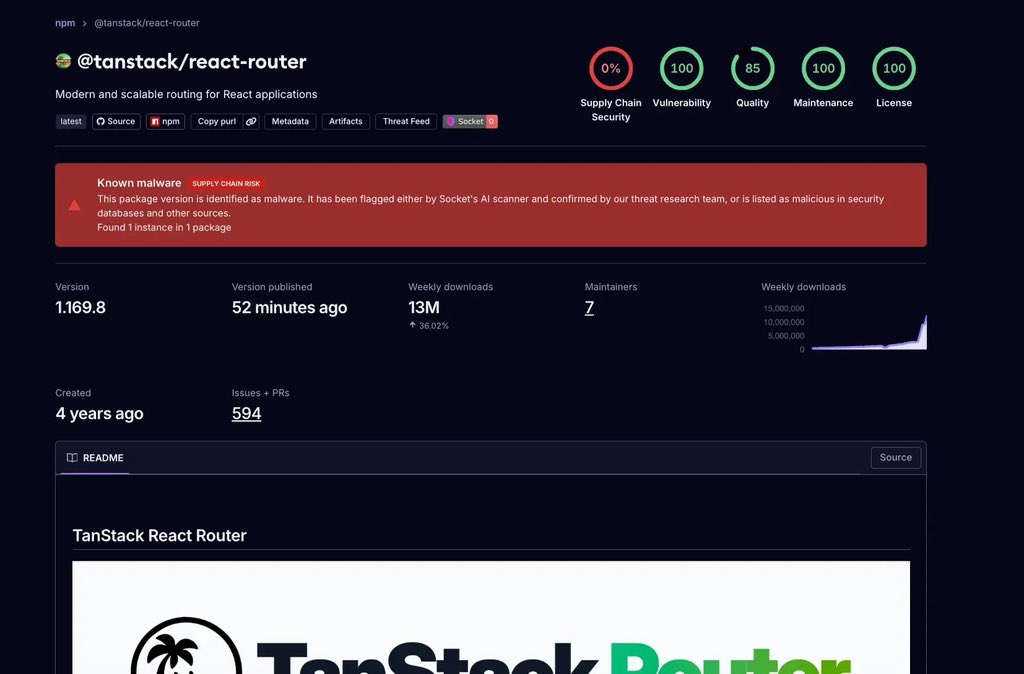
Damn,Theo今天这条警告,看得我一身冷汗😰
他说,希望你们明白,这事儿只会越来越糟,
因为现在正在爆发的Mini Shai-Hulud供应链攻击,
已经从TanStack扩散到UiPath、Mistral AI相关包,
总计205个制品被毒化,覆盖AI/MCP、认证、工作流全领域,
最恐怖的是攻击速度,
攻击者在6分钟之内,
一口气发布了84个恶意版本,
Socket在6分钟内全部标记,
但已经有无数项目自动拉取了更新,
这其实已经不是传统的维护者账号被盗事件了,
更像是CI/CD缓存投毒,
攻击者污染了GitHub Action的缓存,
构建时偷偷注入恶意依赖,
偷完所有云凭证、SSH密钥、AI工具配置,
再用偷来的token继续毒化更多包,
形成完美的蠕虫式自我繁殖闭环,
更让人绝望的是,
所有传统安全手段全他么失效了,
这些恶意包有合法的签名和provenance,
因为投毒发生在上游CI环节,
下游所有验证直接通过,
我们曾经引以为傲的安全锁,现在成了攻击者的通行证,
刺激不刺激?
更刺激的是
AI正在把这场灾难加速到极致,
开发者用AI写代码,
用AI agent自动npm install,
自动review PR,
零人工审查成了常态,
攻击者的payload也专门瞄准.claude和.vscode目录,
直接寄生在你的整个AI开发流里,
AI把开发速度拉满了多少倍,
攻击速度就拉满了多少倍,
最扎心的真相是,
现在更新依赖,是你能做的最高风险的动作,
比他么点陌生钓鱼链接还危险⚠️
所以,别再npm update了,
别再用latest了,
强制lockfile加最小发布年龄,
每一个依赖升级都必须手动批准,
能自己写10行代码解决的,就绝对别引包,
今天就全量轮转你所有的云凭证和GitHub token吧!
@theo 说npm hell才刚刚开始,
我觉得他说的还是太保守了,
真正的地狱是,
我们还在用2015年的开发心智,
面对2026年的国家级蠕虫攻击!
#网络安全 #npm #供应链攻击
Theo - t3.gg@theo
I hope you guys understand that this is going to keep getting worse
中文
linyao retweetledi

linyao retweetledi

The Fishpeg waitlist is now open.
1// 🎣 peg.fish
2// 🎣 farcaster.xyz/miniapps/3KFX5…
BaseFishing is already integrated into the eco system, allowing players to earn 🐟(fish) by fishing and competing with friends through steal/PvP gameplay.
V1 is currently in testing. In V2, 🐟(fish) will go onchain on Base, and Fishpeg will become a deeper part of the BaseFishing ecosystem, bringing players a fun, unique, and fully connected gaming experience.
English



linyao retweetledi

wanman 的效果太好了!实话说我目前用过这么多 harness 产品,没有一个能做到如此丝滑,如此方便上手,无论是 openclaw 还是 hermes agent 都是针对技术人员的产品,但 wanman 可以说是真正面向普通人,完全不用动脑子的 agent matrix

中文