KunalDeb

29 posts

KunalDeb banner
KunalDeb

KunalDeb

@KunalDebIND

Lead Data Architect | 24+ yrs. Building agentic AI tools on the side | https://t.co/DIoggmqXFS is my lab. Shipping in public. #vikaaai #buildinpublic

Kolkata, IN Katılım Şubat 2023
79 Takip Edilen7 Takipçiler
Sabitlenmiş Tweet
KunalDeb
KunalDeb@KunalDebIND·
A LinkedIn scroll led to an uncomfortable question: how good is my RAG system, really? @Databricks' Compact Guide to RAG gave me a way to find out — 42 implementation points, 8 categories, no ambiguity. I benchmarked vikaa.ai, my personal AI learning lab, against every point. The answer was humbling. 6.0 / 10. Not because of missing features — because of invisible ones. Built but not wired. Measured but not enforced. Sophisticated on the surface, leaking quality underneath. I fixed it. Three sessions. 9.0 / 10. This series is that journey — 8 parts, one component each, every gap named and every fix documented. Personal prototype. Framework credit: @Databricks #RAG #Databricks #BuildInPublic
KunalDeb tweet media
English
0
0
0
124
KunalDeb
KunalDeb@KunalDebIND·
@AnthropicAI i agree. last year I spend lots to time with GPT and progress was bit slow and sometimes it was frustrating. with Claude things has improved lot. so thank you @AnthropicAI
English
0
0
1
1.2K
Anthropic
Anthropic@AnthropicAI·
Our internal data shows Claude is accelerating AI development—a possible path to recursive self-improvement, or AI autonomously building a more capable successor. It’s happening faster than we thought, and the implications deserve greater attention. anthropic.com/institute/recu…
English
1.7K
4.6K
28.3K
18M
KunalDeb
KunalDeb@KunalDebIND·
@claudeai @MaxJunestrand @WeAreLegora Curious where this goes — LLMs clearly dominate document-heavy legal work, but live courtroom advocacy feels like a different beast entirely. Exciting space to watch!
English
0
0
3
615
Claude
Claude@claudeai·
Interpreting law is one of the oldest jobs in the world. @MaxJunestrand, co-founder and CEO of @WeAreLegora, is bringing it into its next era with Claude. His bet: every new model release raises the tide, and Legora is building the boats for everyone else.
English
187
232
2.9K
382.6K
LangChain
LangChain@LangChain·
The agent development lifecycle has been manual for too long. We’re building a future where it runs continuously, without manual triggers. Where well-understood issue types resolve without human review. Where your harnesses get smarter about your agents over time. LangSmith Engine is just the beginning.
English
14
8
98
10K
Databricks
Databricks@databricks·
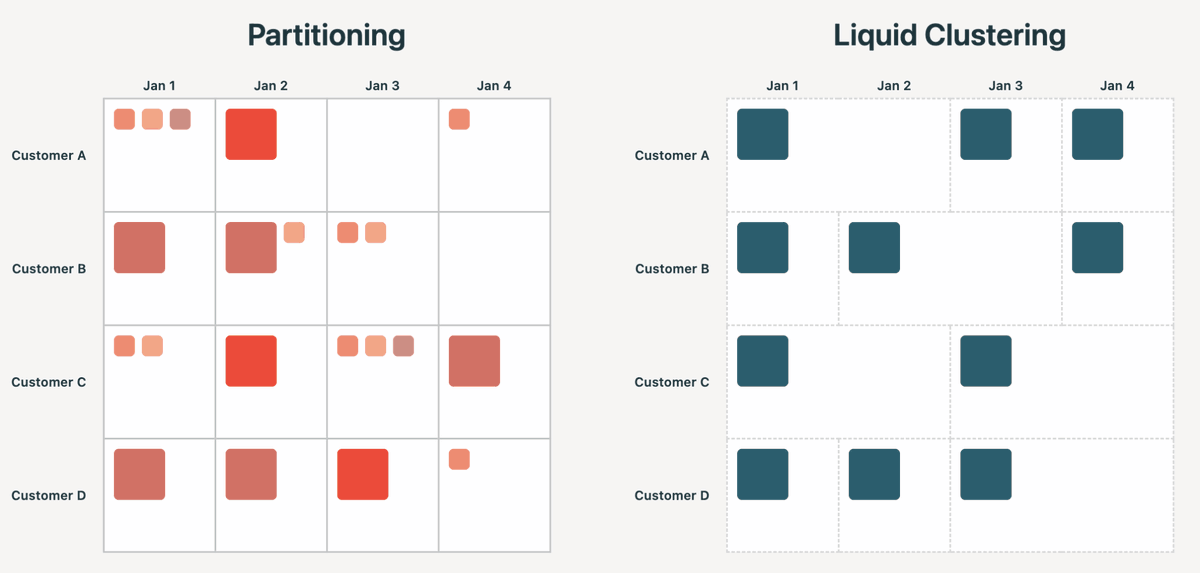
Partitioning has been the standard data layout approach for years, but modern lakehouse workloads need something more flexible. We’re debunking eight common myths that continue to keep teams tied to partitioning, and exploring why more organizations are moving to Liquid Clustering for better performance, storage efficiency, and data freshness at scale. Customers running Liquid Clustering at petabyte scale have reported: • Faster queries • Higher write throughput • Fewer small-file problems • More efficient storage and fresher data Learn more: databricks.com/blog/debunking…
Databricks tweet media
English
1
12
83
6.2K
KunalDeb
KunalDeb@KunalDebIND·
@CodeWithAmann do not agree in 2026 but it was in 2025. in last one year things has changed lot.
English
0
0
3
377
Aman 🧋
Aman 🧋@CodeWithAmann·
Unpopular opinion: Vibe coding gets the demo, Engineering gets the product. Do you agree?
Aman 🧋 tweet media
English
196
51
916
51.1K
KunalDeb
KunalDeb@KunalDebIND·
@claudeai i am creating all my blueprints. Concept to first draft and some of them converted to deployed object.
English
0
0
0
297
Claude
Claude@claudeai·
What are you building?
English
189
13
285
133.3K
Claude
Claude@claudeai·
Six Claude projects that all came from the same question: “why not?”
English
598
444
11.7K
1.4M
KunalDeb
KunalDeb@KunalDebIND·
@render i am using starter pack for my learning project and found it easy and simple to use. exactly what i was looking.
English
0
0
0
14
Render
Render@render·
In the agentic era, code moves faster than ever. Infrastructure should be an accelerant, not a bottleneck. OCMI Workers Comp moved from AWS to Render to stop managing infrastructure and start shipping product. ✦ 35–40% compute cost savings ✦ Recovery time: 5m → 10s ✦ Migration in < 1 week Read the full story: render.com/customers/ocmi
English
4
0
10
1.1K
Databricks
Databricks@databricks·
Developers want to build apps, not spend time provisioning infrastructure. In this video, @andrelandgraf from Databricks and Kevin Niparko from @cursor_ai show how to go from idea to a production-ready app on the Databricks Platform with built-in governance and serverless Postgres. See how to iterate in real time, manage transactional data, branch fast, and deploy scalable applications where your data already lives 👇 databricks.com/resources/webi…
English
3
11
38
4.1K
Vaibhav Upreti
Vaibhav Upreti@vaibhav__upreti·
We're building the reliability layer for AI agents. Open source. Apache 2.0. Serious contributors welcome.
English
72
76
1.3K
2.8M
KunalDeb
KunalDeb@KunalDebIND·
@code "Why GitHub Copilot misses context..." this is one of the reason working with cursor.ai much more productive.
English
0
0
0
5
KunalDeb
KunalDeb@KunalDebIND·
@mdancho84 Spot on. The future belongs to those who can bridge data and business decisions.
English
0
0
0
37
Matt Dancho (Business Science)
Bold prediction: The Birth Of The Business Scientist. Here's what is about to happen.
Matt Dancho (Business Science) tweet media
English
5
40
290
37.8K
KunalDeb
KunalDeb@KunalDebIND·
@RodmanAi Impressive results. Curious how sustainable the content quality will be long-term
English
0
0
0
25
Leonard Rodman
Leonard Rodman@RodmanAi·
A 20-year-old built an AI YouTube factory with Claude. It made $37,250 in 30 days while he barely touched the keyboard. Claude finds viral niches, writes scripts, generates voiceovers, edits videos, and uploads content 24/7. One AI-made video: 15 minutes of work → $400 profit. This isn’t “using AI.” It’s replacing an entire content team with prompts.
English
3
5
31
3.5K
KunalDeb
KunalDeb@KunalDebIND·
@databricks Good direction. Important to balance AI autonomy with human control.
English
0
0
0
48
Databricks
Databricks@databricks·
Genie Code is your autonomous AI partner for data work. ✔️ Builds pipelines ✔️ Debugs issues ✔️ Maintains production systems All while proactively monitoring pipelines and models in the background. Through Unity Catalog and Lakehouse Federation, Genie Code understands your enterprise’s data context and governance. Learn more. databricks.com/blog/introduci…
English
4
7
46
3.9K
KunalDeb
KunalDeb@KunalDebIND·
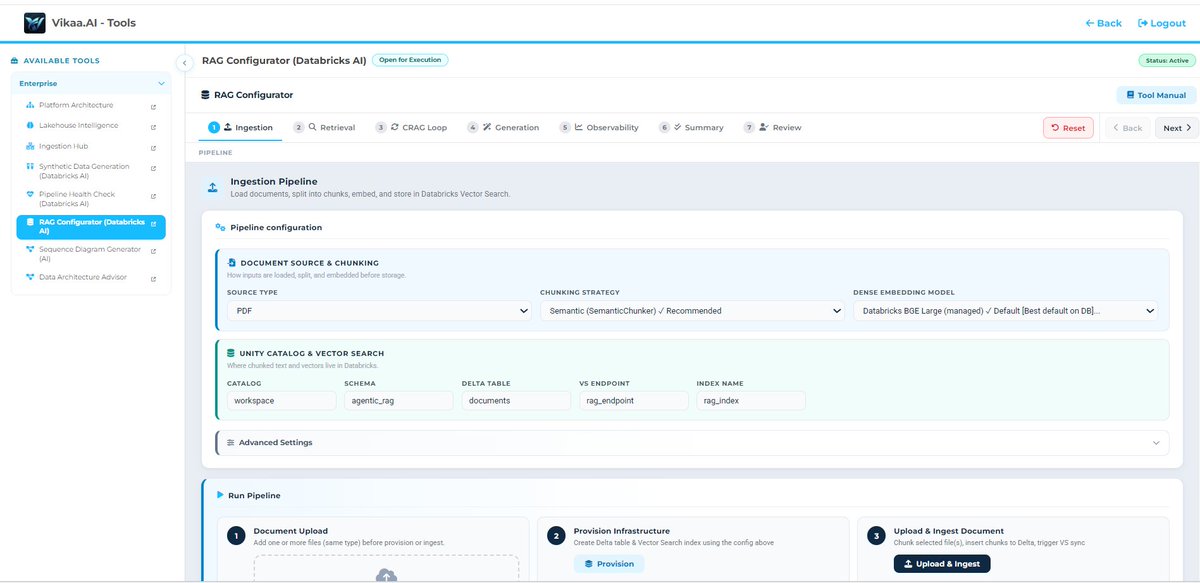
I built a small AI tool inside vikaa.ai 🚀 It converts plain-English flow descriptions into editable sequence diagrams. Example: “User logs in via OAuth, app validates token, retrieves profile from DB” → clean sequence diagram → editable flow → reusable templates → save/download I am testing one simple idea: Can AI reduce the time spent on architecture documentation by 50%? #BuildInPublic #GenerativeAI #AITools
KunalDeb tweet media
English
0
0
0
143
Andrew Ng
Andrew Ng@AndrewYNg·
On Monday, a United States District Court ruled that training LLMs on copyrighted books constitutes fair use. A number of authors had filed suit against Anthropic for training its models on their books without permission. Just as we allow people to read books and learn from them to become better writers, but not to regurgitate copyrighted text verbatim, the judge concluded that it is fair use for AI models to do so as well. Indeed, Judge Alsup wrote that the authors’ lawsuit is “no different than it would be if they complained that training schoolchildren to write well would result in an explosion of competing works.” While it remains to be seen whether the decision will be appealed, this ruling is reasonable and will be good for AI progress. (Usual caveat: I am not a lawyer and am not giving legal advice.) AI has massive momentum, but a few things could put progress at risk: - Regulatory capture that stifles innovation, including especially open source - Loss of access to cutting-edge semiconductor chips (the most likely cause would be war breaking out in Taiwan) - Regulations that severely impede access to data for training AI systems Access to high-quality data is important. Even though the mass media tends to talk about the importance of building large data centers and scaling up models, when I speak with friends at companies that train foundation models, many describe a very large amount of their daily challenges as data preparation. Specifically, a significant fraction of their day-to-day work follows the usual Data Centric AI practices of identifying high-quality data (books are one important source), cleaning data (the ruling describes Anthropic taking steps like removing book pages' headers, footers, and page numbers), carrying out error analyses to figure out what types of data to acquire more of, and inventing new ways to generate synthetic data. I am glad that a major risk to data access just decreased. Appropriately, the ruling further said that Anthropic’s conversion of books from paper format to digital — a step that’s needed to enable training — also was fair use. However, in a loss for Anthropic, the judge indicated that, while training on data that was acquired legitimately is fine, using pirated materials (such as texts downloaded from pirate websites) is not fair use. Thus, Anthropic still may be liable on this point. Other LLM providers, too, will now likely have to revisit their practices if they use datasets that may contain pirated works. Overall, the ruling is positive for AI progress. Perhaps the biggest benefit is that it reduces ambiguity with respect to AI training and copyright and (if it stands up to appeals) makes the roadmap for compliance clearer. This decision indicates it is okay to train on legitimately acquired data to build models that generate transformational outputs, and to convert printed books to digital format for this purpose. However, downloading from pirate sites (as well as permanently building a “general purpose” library of texts, stored indefinitely for purposes to be determined, without permission from the relevant copyright holders) are not considered fair use. I am very sympathetic with the many writers who are worried about their livelihoods being affected by AI. I don‘t know the right solution for that. Society is better off with free access to more data; but if a subset of people is significantly negatively affected, I hope we can figure out an arrangement that compensates them fairly. [Original text: deeplearning.ai/the-batch/issu… ]
English
112
264
1.1K
159.5K
KunalDeb
KunalDeb@KunalDebIND·
Work-life balance? a myth in many places. But now I am juggling a third axis - work, life, and building something new. GenAI opened a new door for me and every day, it pulls me in deeper. Sleep? already cut in half. Just wish I could add 10 more hours to the day. 😅 #GenAI | #BuildInPublic | #AICommunity
English
0
0
0
125
KunalDeb
KunalDeb@KunalDebIND·
@dshukertjr I am new to Supabase but really liked it. Supabase-realtime, is my next target. if someone can suggest its pros and cons from their experience...
English
0
0
1
52
Tyler Shukert
Tyler Shukert@dshukertjr·
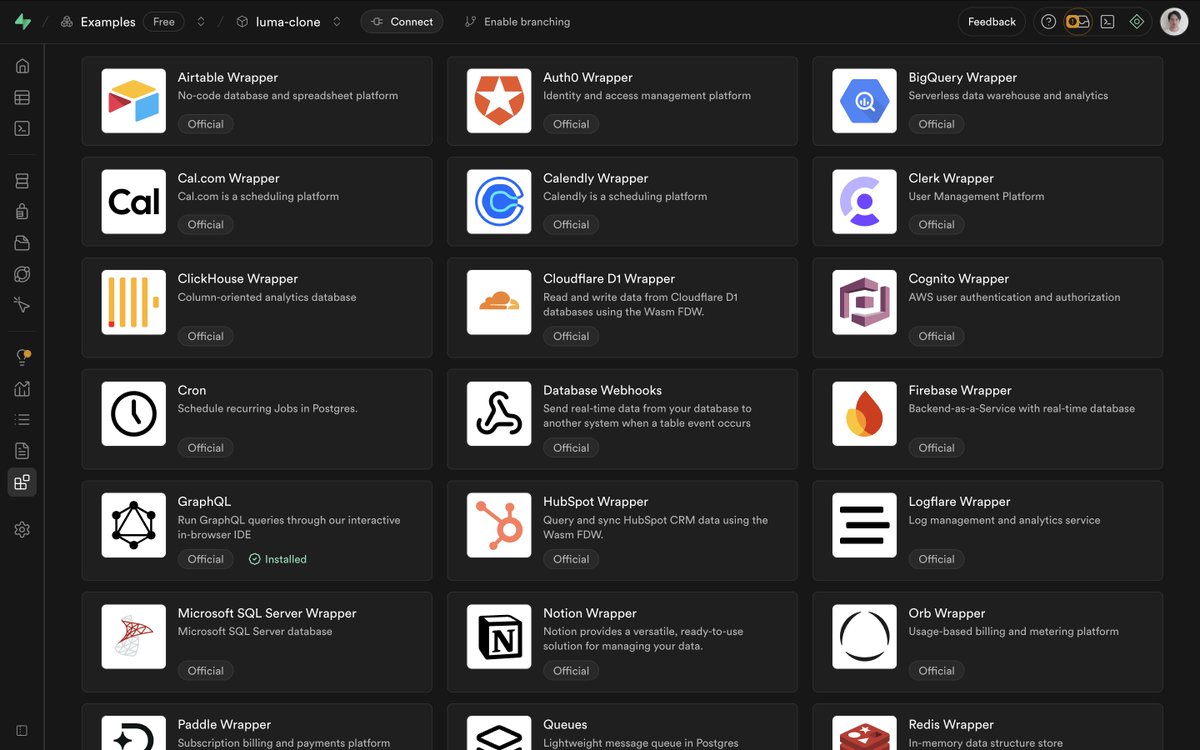
Supabase has native integrations with many tools via foreign data wrappers! Once configured, you can query the integrated app's data as if it were in a standard Postgres table, allowing you to perform various analyses across various data sources.
Tyler Shukert tweet media
English
5
6
82
8.6K
KunalDeb
KunalDeb@KunalDebIND·
@AndrewYNg Current situation is really hard for students but they will adjust with the situation and work hard to grow from their native country. No one can stop sound mind to grow.
English
1
0
5
533
Andrew Ng
Andrew Ng@AndrewYNg·
One of the most effective things the U.S. or any other nation can do to ensure its competitiveness in AI is to welcome high-skilled immigration and international students who have the potential to become high-skilled. For centuries, the U.S. has welcomed immigrants, and this helped make it a worldwide leader in technology. Letting immigrants and native-born Americans collaborate makes everyone better off. Reversing this stance would have a huge negative impact on U.S. technology development. I was born in the UK and came to the U.S. on an F-1 student visa as a relatively unskilled and clueless teenager to attend college. Fortunately I gained skills and became less clueless over time. After completing my graduate studies, I started working at Stanford under the OPT (Optional Practical Training) program, and later an H-1B visa, and ended up staying here. Many other immigrants have followed similar paths to contribute to the U.S. I am very concerned that making visas harder to obtain for students and high-skilled workers, such as the pause in new visa interviews that started last month and a newly chaotic process of visa cancellations, will hurt our ability to attract great students and workers. In addition, many international students without substantial means count on being able to work under OPT to pay off the high cost of a U.S. college degree. Gutting the OPT program, as has been proposed, would both hurt many international students’ ability to study here and deprive U.S. businesses of great talent. (This won’t stop students from wealthy families. But the U.S. should try to attract the best talent without regard to wealth.) Failure to attract promising students and high-skilled workers would have a huge negative impact on American competitiveness in AI. Indeed, a recent report by the National Security Commission on Artificial Intelligence exhorts the government to “strengthen AI talent through immigration.” If talented people do not come to the U.S., will they have an equal impact on global AI development just working somewhere else? Unfortunately, the net impact will be negative. The U.S. has a number of tech hubs including Silicon Valley, Seattle, New York, Boston/Cambridge, Los Angeles, Pittsburgh and Austin, and these hubs concentrate talent and foster innovation. (This is why cities, where people can more easily find each other and collaborate, promote innovation.) Making it harder for AI talent to find each other and collaborate will slow down innovation, and it will take time for new hubs to become as advanced. Nonetheless, other nations are working hard to attract immigrants who can drive innovation — a good move for them! Many have thoughtful programs to attract AI and other talent. There are the UK’s Global Talent Visa, France’s French Tech Visa, Australia’s Global Talent Visa, the UAE’s Golden Visa, Taiwan’s Employment Gold Card, China’s Thousand Talents Plan, and many more. The U.S. is fortunate that many people already want to come here to study and work. Squandering that advantage would be a huge unforced error. Beyond the matter of national competitiveness, there is the even more important ethical matter of making sure people are treated decently. I have spoken with international students who are terrified that their visas may be canceled arbitrarily. One recently agonized about whether to attend an international conference to present a research paper, because they were worried about being unable to return. In the end, with great sadness, they cancelled their trip. I also spoke with a highly skilled technologist who is in the U.S. on an H-1B visa. Their company shut down, leading them — after over a decade in this country, and with few ties to their nation of origin — scrambling to find alternative employment that would enable them to stay. These stories, and many far worse, are heartbreaking. While I do what I can to help individuals I know personally, it is tragic that we are creating such an uncertain environment for immigrants, that many people who have extraordinary skills and talents will no longer want to come here. To every immigrant or migrant in the U.S. who is concerned about the current national environment: I see you and empathize with your worries. As an immigrant myself, I will be fighting to protect everyone’s dignity and right to due process, and to encourage legal immigration, which makes both the U.S. and individuals much better off. [Full text, with links: deeplearning.ai/the-batch/issu… ]
English
298
322
2.1K
524.4K