
Sabitlenmiş Tweet
kurt meer
4.3K posts



@BickerinBrattle And your analysis was generous. So is Trump holding the blackmail info or is he being blackmailed? Likely both sides have agreed to continue the grift. Mutually assured destruction.
English
Have had such thoughts maybe 2 times in past 40 years. Big hits coming.
Trump Unitary Executive and private army of ICE will not stand. He blows up. He won't go with out a Jan 6 like go at it.
Midterms destroy MAGA Trump certain to be impeached and his obvious insanity finds the 2/3 votes to convict.
Fed system banks are aiding in a uncontrolled AI financing boom that is at least 2/3 Ponzi. Be a normal problem just is a 1 tril or so hit. At that size no such thing as NDFI or "private" all lands on the Fed.
Incredible levels of grifting and corruption never been experienced in US.
Idiocy abounds in all parties or views as been terrible lack of not non existent civic education for last 30 years.
Congress been bought off by crypto Israel and AI techno such as useless and cannot, will not fulfill their 1st Article function.
Executive is also corrupt and has neutered destroyed necessary integrity and Article II capability.
Basically US is under control and governance of several extra state parties with in the main techno monarchists, Israel, crypto, and pharma. US government is non functioning now and all agencies severely handicapped from SEC to OCC to... So on.
This all adds up to likely bank failures, incredible indictments, strife, and SP towards 3000. US Treasury 10y towards 2%.
All Trump conflicts are a bluff without substance to US and very real to the "subject" . It is evil. And through this the US Constitution under stress to levels last experienced in events up to and during Civil War.
Dark days.
English

We got three parties, explicitly, in #IranWar, at each others' throats, conducting a religious war for the plebs but all three religions are a different variation of the same storyline.
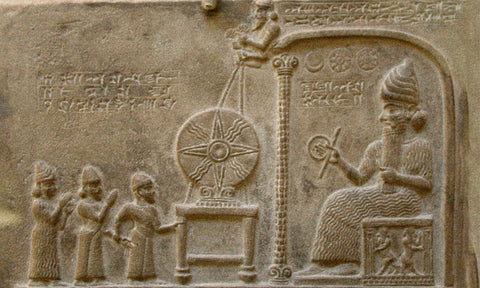
Moreover, the original story does not even have the God Jews, Christians and Muslims believe in. They are all Sumerian stories... like the Flood... but Abrahams followers believe it was created by God... 4000 years before Jews started to copy paste the stories in Babylon, it was Enlil who sent the Flood and Enki saved humanity by ordering Utnapishtim to create a big boat. U know him as Noah.
Humans have to live with stories. Stories create the domain for what humans really need: Hero. No one understood this better than Joseph Campbell, who wrote a great book about this: The Hero With a Thousand Faces. Campbell did a lot of research before releasing that book that shows a global pattern in transforming a man into a hero.
Campbell's student was George Lucas. He was fascinated with Campbell's work on heroes and created his first book arount it, using a ghostwriter. The name of the book was "Adventures of Skywalker".
When he risked everything to make a movie about it, they decided to name the movie #StarWars.
Star Wars was released in 1977, it created a cult never seen before for a movie. In fact, in some places like Australia, people started to believe in Jedi Religion. The interest in Star Wars never died, therefore Lucas had to come back in 1999 to release another movie, going back to the childhood of Darth Vader.
Why did Star Wars have such an amazing effect on humans until it was sold to #Disney and died? It was the hero.... and the hero was not Luke Skywalker as Lucas intended... it was Darth Vader... his father.
Humans have this never ending thirst for a hero in their lives. They are ready to sacrifice everything for that hero and the story he belongs to.
It sounds very stupid for a species that have the technology of Artificial Intelligence to have such a need and be ready to sacrifice everything for it but that's what we know as human.
English

okay I guess I have to talk about Péter Magyar here.
Let me just start with saying, in a very unladylike way, that you guys seem to have zero clue what happened in Hungary in the last two years, you completely miss the point, and you're a disappointing bunch.
Let's go.
English

Zelensky:
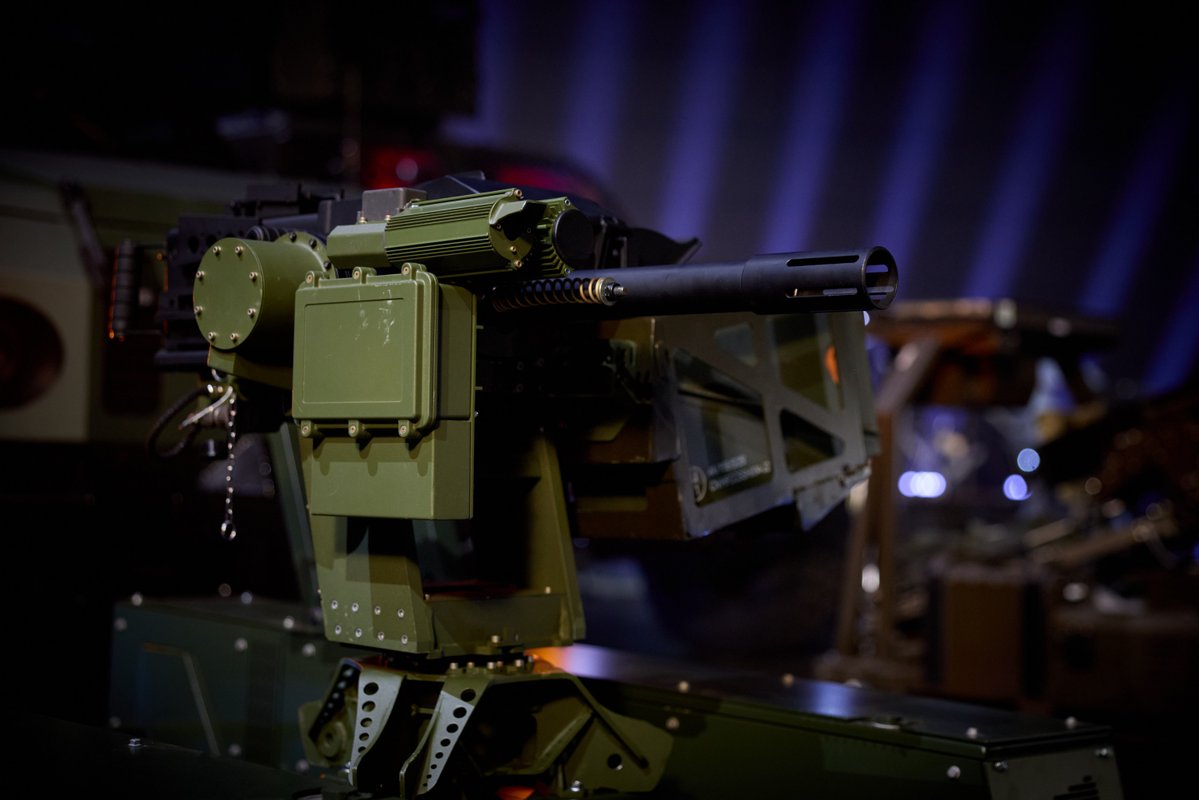
"For the first time in the history of this war, an enemy position was taken exclusively by unmanned platforms – ground systems and drones. The occupiers surrendered, and the operation was carried out without infantry and without losses on our side."
Ukraine's ground robotic systems have carried out over 22,000 missions in just three months.

English
kurt meer retweetledi

My documentaries are trending on X!
Thank you everyone for sharing them ❤️
x.com/i/trending/204…
Jay Anderson@TheProjectUnity
Here is an almost 2-hour long documentary, filmed, edited & narrated by me. ZERO STOCK FOOTAGE. I literally went to these places to show you the mainstream historical narrative in Peru doesn't make sense. If this work matters to you support it with a like/comment/repost
English
kurt meer retweetledi

They've just invented a new way to stop environmental activists throwing paint over artwork
English

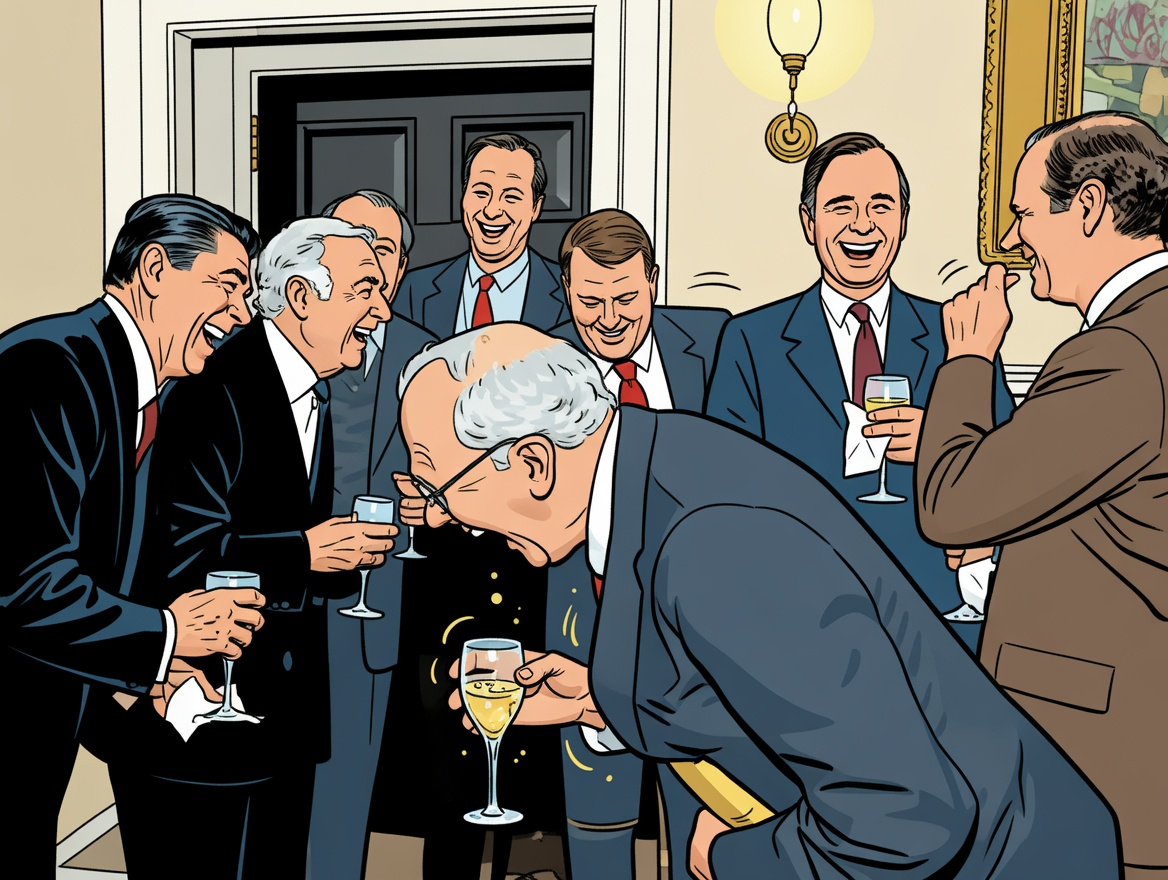
For decades everybody said the one thing elites fear is exposure. Well now they've been exposed and every conspiracy we heard of turned out to be true.. and what happened. Nothing. So with that in mind how do you think they are going act now without any fear?
English
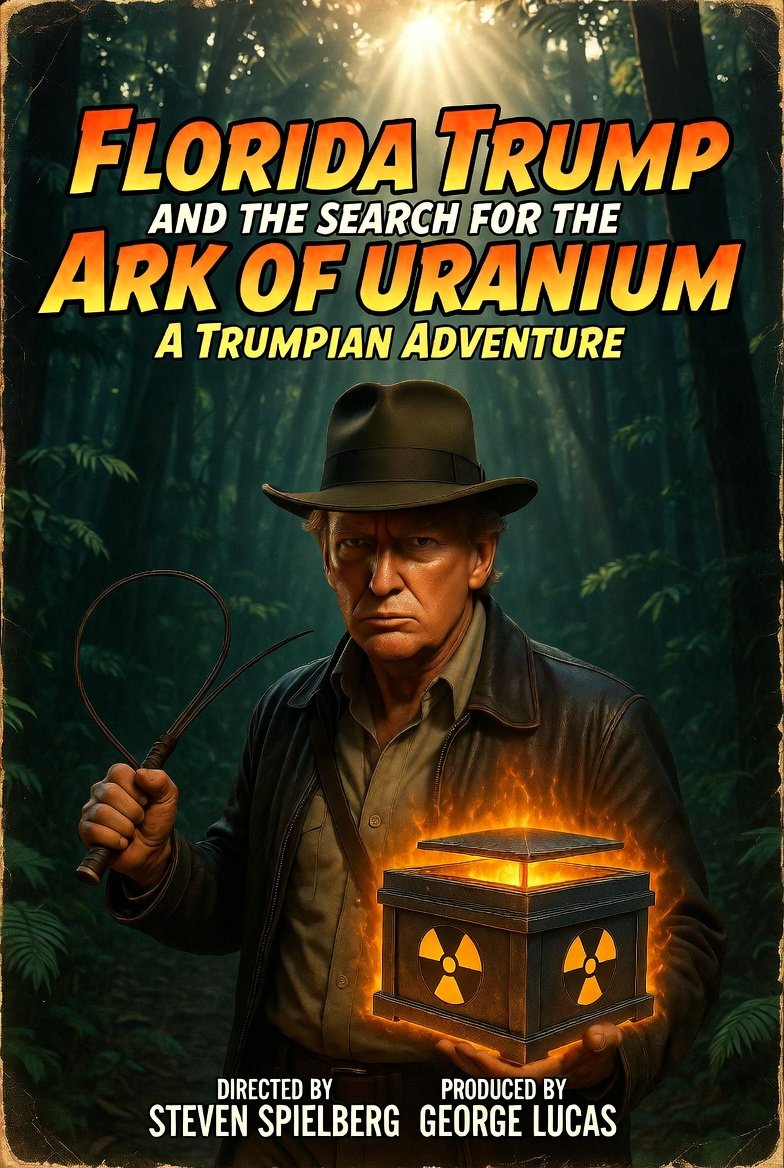
The only opposition Iran has is being a major role in the reality TV show Trump seeks to present all issues as - dramatic narrative gives semblance of real but not really real. Trouble is Iran does not see this as reality TV.
English
@BickerinBrattle Damn. I like your viewpoint. Sinking of the Lusitania? Gulf of Tonkin? What’s next? Mysterious ark of the enriched uranium buried in a boobytrapped cave? Ghost murmur antigravity ufos? Colin Powell is smiling.
English
@BickerinBrattle Is Trump more insane now? Yes. He will try to preserve his personal business empire over everything though- which for me is troop restraint. ?? No fucking way a full ground operation in Iran would work. They are worse than WW2 Japanese.
English
The man who could order and the military might obey, 10,000 USMC to their peril with many dead is insane. Of course that is my opinion. What is yours? What should be done?
English
@BickerinBrattle Bush simply did not care about humans at all. Pure sacrifice. I still think Trump has a bit of restraint with regard to troop deployment and risk of life. Of course I think he will send troops in, just not meat grinder fashion. That’s my bet. And I have family in army & navy.
English
@acrossthecurve Correction. It never got really started. Only about 25% to date of AI claimed is online. And if it reaches 100% in 3 to 7 years will be a 50% overcapacity. In current form be it OpenAI or in Google AI will not survive.
English

AI Is Using So Much Energy That Computing Firepower Is Running Out wsj.com/tech/ai/ai-is-…
English
Nothing from Liar in Charge yet... but #WSJ uttered some nonsense that diplomacy with Iran remains open.... and Financial Juice posted that half a dozen times...
Some expect #Trump to let the markets dive in Asia and Europe and lie right before stocks open in New York... to help his buddies to accumulate positions during overnight session.
Very possible... we don't have a real government, senate or congress anymore... it is more like Sheikhdom in Deserts... but not even with a serious Sheikh.
Bogachan Ozdemir@Bogachan_1971
So-called "markets" will try to react to Clown's blockade. What will he do as Asian Mkts open?
English
Thanks for talking about this old painting I did in 1982, more than 40 years ago, before any of us had desktop computers, laptops, cellphones, or any digital options. All I had was a fire-burned memory of seeing Blade Runner, a piece of board, and a drawer full of gouache paints.
Wetterschneider@Stretchedwiener
I don't know this artist but this image is a great example of how to tell when something is or isn't AI generated, because finger weirdness will not always be around. What jumps out in this image that makes it feel (because it is) human made? cont...
English
@BickerinBrattle Musk vs. Altman. Misstep in IPO?
George Noble@gnoble79
Sam Altman has cultivated an image as the AI whisperer of our generation. But his mask just got RIPPED OFF. What's underneath should terrify anyone who believes in OpenAI at an $852 billion valuation... Multiple OpenAI engineers revealed that Altman can barely code and routinely confuses basic machine learning concepts. This isn't a hit piece from a rival. These are his OWN people. A senior Microsoft executive (OpenAI's largest partner) went on record saying: "I think there's a small but real chance he's eventually remembered as a Bernie Madoff- or Sam Bankman-Fried-level scammer." That's from the company with a 27% stake. Former OpenAI researcher Carroll Wainwright described the pattern: "He sets up structures that, on paper, constrain him in the future. But then, when the future comes and it comes time to be constrained, he does away with whatever the structure was." Insiders call it "Jedi mind tricks." I call it something older: the con. Now look at what's actually happening at OpenAI right now. Jury trial begins April 27 in Oakland. Musk vs Altman. Musk is seeking up to $134 billion in damages and wants Altman and Brockman removed from their positions. The key piece of evidence? Brockman's own 2017 handwritten diary, surfaced in discovery: "I cannot believe that we committed to non-profit if three months later we're doing b-corp then it was a lie." A co-founder. In writing. In 2017. Using the word "lie." The judge cited that entry directly when she ruled there was "ample evidence" for a jury. Now the financial reality nobody wants to talk about: OpenAI just raised $122 billion at an $852 billion valuation. 2025 revenue: ~$13 billion 2026 projected loss: $14 billion Cumulative losses through 2028: $44 billion Cash burn projected to hit $57 billion annually by 2027 Path to profitability: 2030, maybe That's 65 times sales for a company losing more money than it earns. Traditional SaaS trades at 5-10x ARR. To justify this valuation, OpenAI needs to hit $100 billion in annual revenue by 2029. Nvidia did $130 billion in 2025 with a near-total monopoly on the largest hardware boom in human history. OpenAI is supposed to match that in four years. Selling subscriptions. And that's the BULL case. The bear case? DeepSeek launched a 1 trillion parameter model priced at one-sixth the cost of US rivals. Chinese AI has erupted into a full price war. ChatGPT's web share collapsed from 86.7% to 64.5% in 12 months. Models are commoditizing. Moats are evaporating. Compute costs are structural, not temporary. And the man steering this $852 billion ship allegedly can't explain gradient descent to his own engineers. I've seen guys like this many times. I watched it in 1999. I watched it in 2007. The pattern is always the same: A charismatic frontman. A "new paradigm" story. Valuations disconnected from cash flow. Insiders quietly cashing out while retail investors chase the narrative. Board structures designed to be "unwound" the moment constraints become inconvenient. When Microsoft executives are whispering "Madoff" and co-founders are writing "it was a lie" in their diaries, you don't even need 45 years on Wall Street to know how this ends. You just need to have been paying attention. I've been bearish on the Mag 7 AI capex story for months. $380 billion spent in 2025 with CFO surveys showing "no change" in productivity. The earnings have accrued to the picks-and-shovels guys, not the dreamers. OpenAI is the purest expression of this mania. And the jury selection on April 27 may be the moment the story finally cracks. Caveat emptor.
Deutsch
One misstep in AI financing and IPOs and this market plunges 30% in a few days. If all goes well we stay unchanged or up about 10% over 6 months
English
Today, crooks hit #OIL futures down with headlines about allowing #Russian oil..... extending it...it lasted about 30 mins...
Rest of today, you will get more bs headlines to keep WTI oil futures down..... required by the masters of the kabuki.
Believe it or not.... there is a majority of fools who actually think we are near the bottom of the crises and all will be good soon... GCC will magically built everything in a month... Hormuz will be open immediately.. #Israel will become angels and accept some sort of a peace and oil prices will immediately go down... they actually believe this.
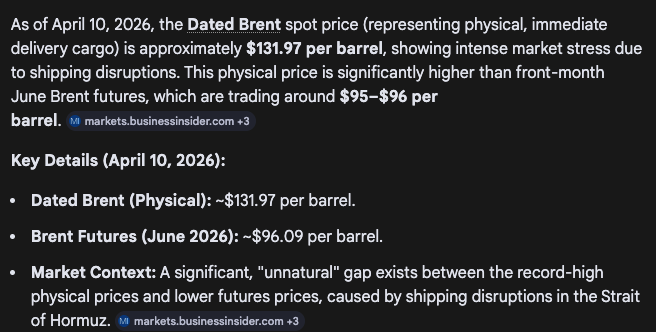
Today, in real world, real oil costs $132....
in a month or two, it will not be lower than $100....
Then what will Bessent do with all those short futures? He will roll to next month... if he cannot keep it low anymore, he will buy back and charge it to some off coupon swap and tax payers pay the loss next 30 years.
Since auditors know nothing about derivatives, no one can find it.
No matter what WTI futures show, what you pay at the pump will keep going down... but nearly 100% increase can move CPI only 0.9% after hedonism... so bond market can be ok especially if Bessent can get the Fannie and Freddie IPOs done and his crooks stuff them with mortgae bonds they bought.
You see... buy #GOLD. Physical... away from crooks.
English
@lizaadamczewski I followed you on instagram. You’d like my paintings too!
English

Today’s moment of calm
I’m going to stop now and put my brushes down. After lunch I will return to paint the whiskers on this sleeping dormouse.
English
Today’s moment of calm is this recent commission for a collector in America.
If you commissioned me to paint your personal Icon, what creatures would you choose?
English

JUST IN: While every camera in the world is pointed at the Serena Hotel in Islamabad today, Xi Jinping shook hands with KMT Chairwoman Cheng Li-wun at the Great Hall of the People in Beijing. The first high-level KMT-CCP leadership meeting in nearly a decade. Xi told her: “Compatriots on both sides of the strait are all Chinese, one family.” He added: “Taiwan independence is the chief culprit undermining peace.” Cheng called her six-day trip a “journey for peace” and invoked the 1992 Consensus.
This did not happen by accident. It happened today.
The Iran war pulled American military assets out of the Pacific. Carriers, Marines, THAAD, Patriots, all redeployed to the Middle East since February 28. Brookings explicitly identified this as “strategic space” for Beijing. China then used its leverage over Iran (1.5 million barrels per day, Tehran’s largest customer) to nudge Tehran toward the ceasefire. Trump confirmed: “I heard yes” when asked if China persuaded Iran. The ceasefire was the entrance fee for the May 14-15 Beijing summit. Today’s KMT meeting is the pre-summit positioning play.
The sequence is architectural. China vetoed the UN Hormuz resolution on April 7 (preserving Iran’s leverage and its own intermediary status). China nudged Iran toward the bilateral ceasefire the same day (building goodwill with Trump). China scheduled the Xi-Cheng meeting for April 10 (the day Islamabad talks begin, when US attention is maximally diverted). And the May summit sits five weeks away, where Taiwan language will be tested in a room where China arrives with three diplomatic receipts: we helped you get the ceasefire, we kept the KMT dialogue alive, and we are the only power that can deliver Iran.
Meanwhile, the KMT-controlled legislature has stalled Taiwan’s $40 billion special defense budget for asymmetric capabilities. The same party whose chairwoman is shaking Xi’s hand today is the party blocking the weapons purchases Washington needs Taiwan to make to sustain the First Island Chain deterrence strategy that underpins US containment of China. Bloomberg reported that Beijing will “use the sitdown to argue that Taiwanese people are in favor of closer ties, sending a key signal to the US.” The New York Times said Xi is using the meeting “to cast Beijing as a peacemaker and squeeze the island’s president.”
Taiwan produces over 90 percent of the world’s most advanced semiconductors. TSMC commands 72 percent of the global foundry market. A full conflict over Taiwan would erase $10.6 trillion in global GDP in year one. This is not a sideshow. This is the main event wearing a mask.
Trump is a transactional president. He has already shown willingness to use allies as leverage (NATO “freeloaders,” Greenland, Panama Canal). China is betting that a president who just watched his NATO allies refuse to join the Iran war, who needs rare-earth supply chains for AI and defense, who wants a trade deal before midterms, will be receptive to a framing in which Taiwan is “handled” through dialogue rather than deterrence.
The Islamabad talks are about Iran. The Beijing handshake is about everything else. And the country that brokered the ceasefire, blocked the UN vote, moved its tankers freely through a closed strait, and met the opposition leader of America’s most strategically vital partner all did it in the same week.
The real negotiation is not at the Serena Hotel. It is already underway at the Great Hall of the People.
open.substack.com/pub/shanakaans…
Shanaka Anslem Perera ⚡@shanaka86
While the world watches Hormuz reopen, the opposition leader of Taiwan is in China. Cheng Li-wen, chairwoman of the KMT, arrived in Shanghai on April 7th for a six-day visit that will take her to Nanjing and Beijing, where she is expected to meet Xi Jinping. It is the first visit by a sitting KMT leader in a decade. She calls it a journey for peace. She frames it through the 1992 Consensus, the formula that says both sides belong to one China with respective interpretations. President Lai Ching-te’s government rejects the formula entirely and says neither the Republic of China nor the People’s Republic is subordinate to the other. Nobody in the Western press is connecting this visit to the Iran war. They should be. The connection runs through molecules. Taiwan imports 95 percent of its energy. Seventy percent of its crude oil comes from the Middle East. Thirty-eight percent of its liquefied natural gas comes from Middle Eastern suppliers, with Qatar providing roughly a third of total LNG imports. LNG generates 40 to 48 percent of Taiwan’s electricity. TSMC consumes nine to ten percent of the island’s total power output. Taiwan’s LNG security stockpile covers 11 days, the lowest buffer in East Asia. The Hormuz crisis did not just threaten Gulf petrochemicals. It threatened the electricity supply of the most important semiconductor manufacturer on earth. TSMC produces 92 percent of the world’s most advanced chips below seven nanometres. Every major AI model, every advanced weapons system, every flagship smartphone runs on silicon that was fabricated in facilities powered by gas that transits through the strait that Iran closed for 39 days. Qatar also supplies 60 to 70 percent of the helium TSMC uses in its fabrication process. Helium is essential for chip lithography cooling and cannot be substituted. When Hormuz closed, that supply stopped. Taiwan’s Ministry of Economic Affairs secured alternative LNG through April and contracts with the United States and Australia from May, but helium has no equivalent fallback at scale. Beijing sees all of this. The PLA resumed large-scale air incursions into Taiwan’s air defence identification zone on March 14, two weeks after the Iran war began, once it became clear that American attention was consumed by the Gulf. China applied last-minute pressure on Iran to accept the ceasefire, not to help the United States, but to protect its own ghost fleet and the 1.22 million barrels per day of Iranian crude flowing to Shandong teapot refineries. And while the ceasefire buys time for Hormuz, it does nothing to resolve Taiwan’s structural energy vulnerability, which Beijing can exploit at any moment through a blockade that would make Hormuz look like a rehearsal. Cheng’s visit to Beijing occurs at the precise moment when Taiwan’s energy fragility is exposed, America’s military is committed to the Gulf, and the KMT is blocking a $40 billion special defence budget in the legislature. Xi does not need to invade. He needs to demonstrate that Taiwan’s survival depends on supply chains that pass through chokepoints China can influence, and that the opposition party is willing to discuss terms. The molecule crisis is not confined to the Gulf. It runs through every LNG tanker, every helium shipment, and every kilowatt that keeps a TSMC fab operational. Taiwan is Hormuz with semiconductors. Full analysis: open.substack.com/pub/shanakaans…
English

