
Lorenzo AlvarezFilip

314 posts

Lorenzo AlvarezFilip banner
Lorenzo AlvarezFilip

Lorenzo AlvarezFilip

@LAlvarezFilip

Coral reef ecologist

Puerto Morelos, Mexico Katılım Ağustos 2014
490 Takip Edilen710 Takipçiler
Sabitlenmiş Tweet
Lorenzo AlvarezFilip
Lorenzo AlvarezFilip@LAlvarezFilip·
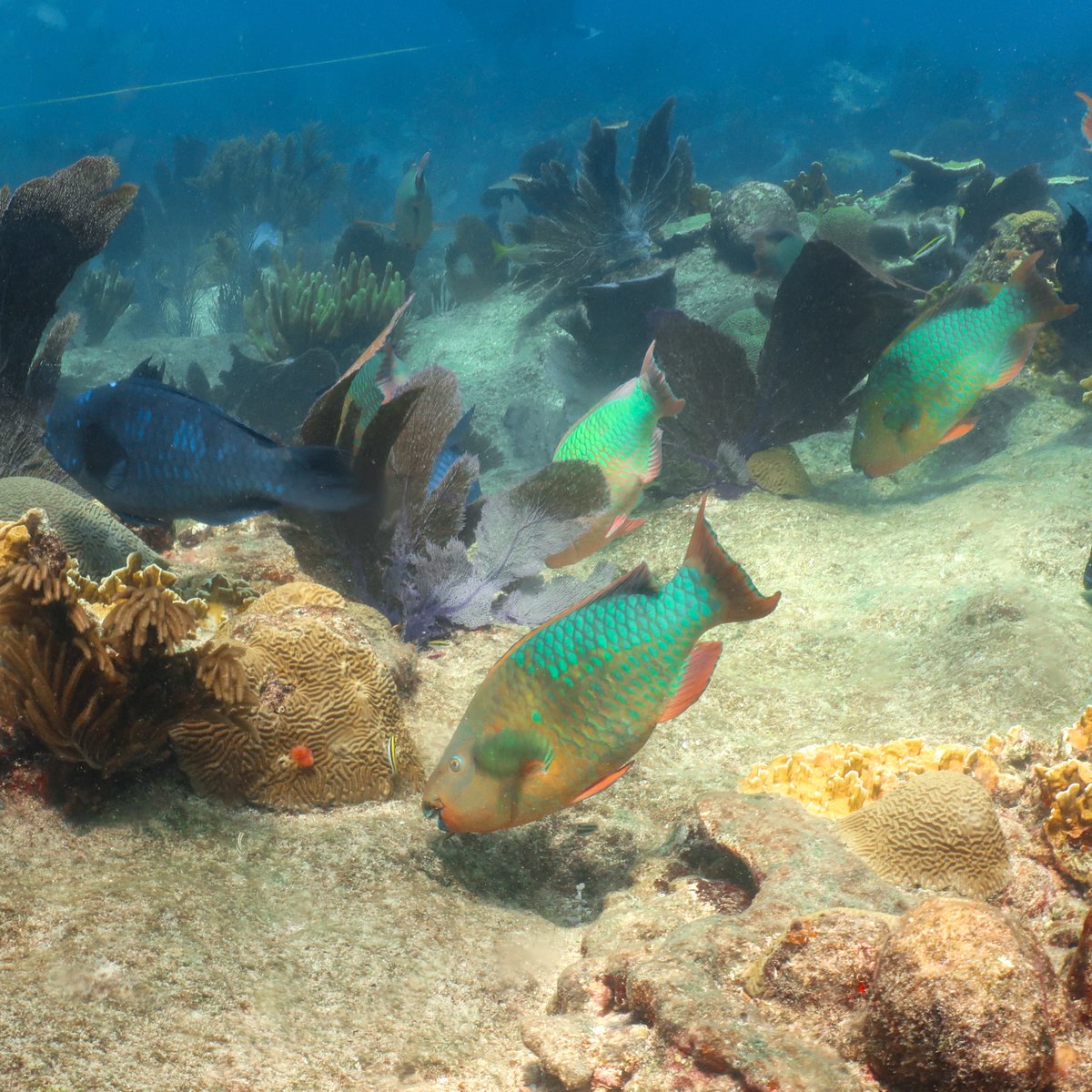
🪸🐟Our new paper is out in @ConLetters this week. In it, we review and discuss in a broader context one of the most fundamental paradigms in reef management and conservation—the parrotfish paradigm: doi.org/10.1111/conl.1… with @ANAMLHZ
Lorenzo AlvarezFilip tweet media
English
2
11
37
2.4K
Lorenzo AlvarezFilip retweetledi
Francisco Medellín
Francisco Medellín@FRAME5_7·
🚨 Paper Alert! In 2023, Mexican coral reefs experienced an unprecedented bleaching event But bleaching wasn’t the biggest issue Our study in Proceedings B @RSocPublishing shows a marine heatwave caused massive coral mortality and pushed reefs from production to net erosion 🧵
Francisco Medellín tweet mediaFrancisco Medellín tweet media
English
1
4
7
760
Lorenzo AlvarezFilip
Lorenzo AlvarezFilip@LAlvarezFilip·
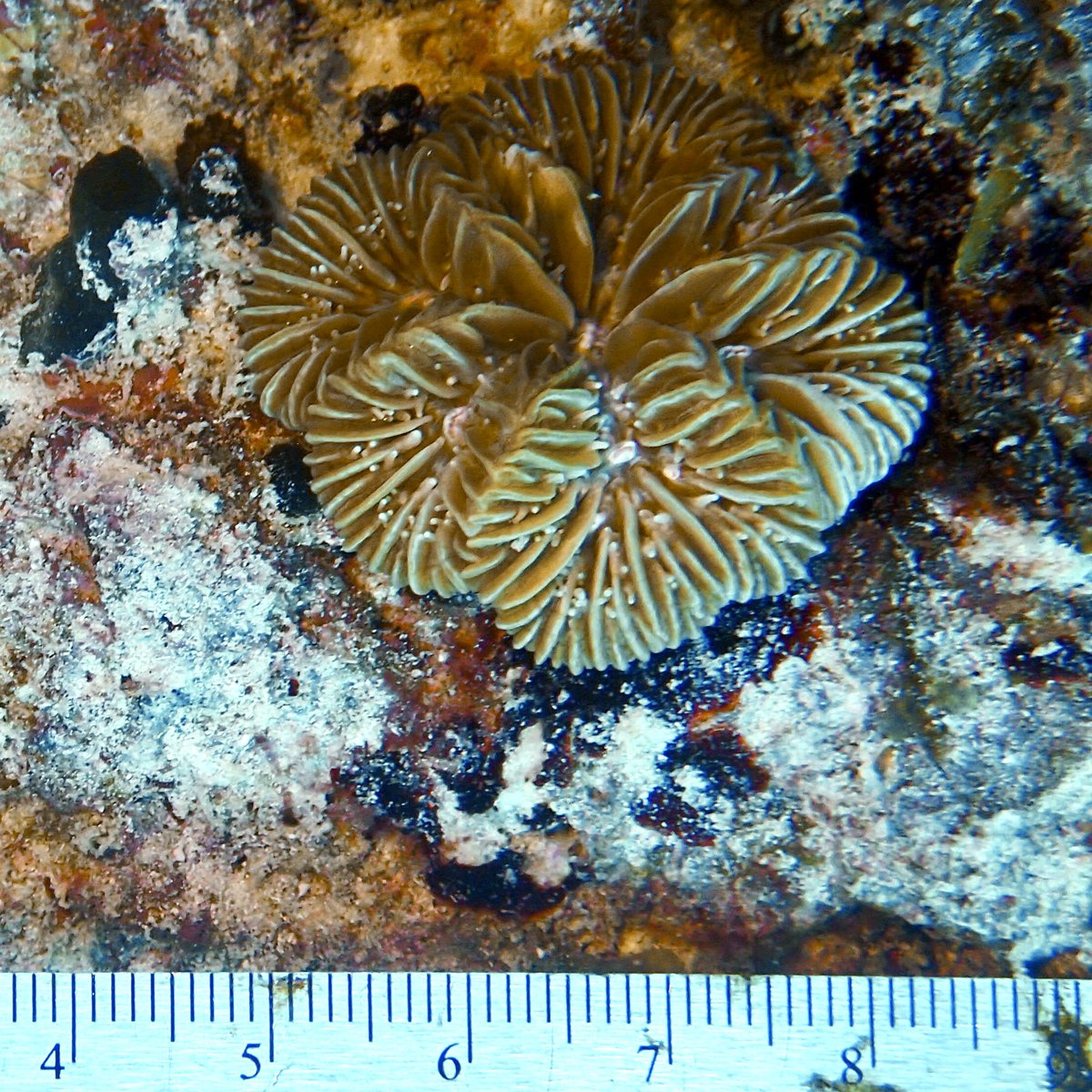
While these signs of recruitment are encouraging, they are not uniformly distributed among all species. Notably, some of the most severely affected corals—such as Dendrogyra cylindrus (pillar coral) and Meandrina meandrites (maze coral)—are showing limited signs of recovery.
Lorenzo AlvarezFilip tweet media
English
1
0
0
26
Lorenzo AlvarezFilip
Lorenzo AlvarezFilip@LAlvarezFilip·
👶🪸 Can Caribbean corals recover naturally after the devastating effects of SCTLD? - Our new study in @CommsEarth reveals that corals in their early life stages—either survived the outbreak or recruited afterwards—offering a positive sign of resilience at regional scales
Communications Earth & Environment@CommsEarth

Juveniles reveal natural recovery potential of Caribbean coral species after a widespread disease die-off bit.ly/45cURMm

English
1
0
0
44
Lorenzo AlvarezFilip retweetledi
The Conversation U.S.
The Conversation U.S.@ConversationUS·
Parrotfish support healthy coral reefs, but they’re not a cure-all, and sometimes cause harm buff.ly/4bf5iRB
English
0
1
1
379
Lorenzo AlvarezFilip retweetledi
Bob Berwyn
Bob Berwyn@bberwyn·
The world’s 10 deadliest climate disasters of the past two decades killed more than half a million people, and a new study by @WWAttribution found global warming fingerprints on all of them, from cyclones and hurricanes, to heatwaves, droughts and floods. insideclimatenews.org/news/31102024/…
English
3
24
26
5.6K
Lorenzo AlvarezFilip retweetledi
Bill Precht
Bill Precht@BillPrecht·
Really excited to see this paper published. This was one of Victor’s dissertation chapters. Great job. Proud to be part of this amazing team Spatial variability of sedimentary assemblages reflects variations in bioerosion pressure of adjacent coral reefs journals.plos.org/plosone/articl…
English
1
3
9
409
Lorenzo AlvarezFilip retweetledi
The Coral Reef Research Hub
The Coral Reef Research Hub@reef_research·
NEW CORAL REEF RESEARCH: Incorporating parrotfish bioerosion into the herbivory paradigm of coral reef resilience (OPEN ACCESS) conbio.onlinelibrary.wiley.com/doi/10.1111/co… Promoting resilience is highly relevant to preserving biodiversity and ecosystem functioning. For coral reefs, parrotfish protection emerged as a mainstream action for reversing the degradation experienced by these systems. The rationale is that restoring their populations will increase grazing activity and reinforce control of fast-growing macroalgae, facilitating coral cover recovery. A lack of a link between parrotfish trends and macroalgae and coral cover trends at a large scale has, however, often been the case. Suggesting more complex underlying dynamics that should be reexamined. In this review, we discuss how lumping parrotfish species as if they were functionally redundant may obscure trends. And how a lack of appreciation of other functions around the parrotfish paradigm, specifically bioerosion, may have unforeseen and potentially adverse effects on degraded reefs. We show that bioerosion responded more directly and quickly to spatial and temporal changes in parrotfish assemblages than macroalgae consumption, arguably due to the varying vulnerability among Caribbean parrotfishes to fisheries and habitat loss. For highly degraded reefs, positive changes in parrotfish populations could hence compromise the remaining coral skeleton structures and the reef framework, further accentuating reef degradation, where increases in macroalgae consumption could not necessarily compensate for higher rates of bioerosion. #coralreefs #parrotfish #coralreefresearch #reefresilience #bioerosion #coralreefecology #marinescience #marineecology #marinebiology
The Coral Reef Research Hub tweet media
English
0
2
9
792
Lorenzo AlvarezFilip
Lorenzo AlvarezFilip@LAlvarezFilip·
Overall, we show how lumping parrotfish species as if they were functionally redundant may obscure trends. And how a lack of appreciation of other functions, specifically bioerosion, may have unforeseen and potentially adverse effects on degraded reefs.
English
0
0
2
163
Lorenzo AlvarezFilip
Lorenzo AlvarezFilip@LAlvarezFilip·
This paradigm has led to management regulations worldwide. Yet, there has often been a lack of a link between parrotfish recovery and coral cover increase. This suggests complex dynamics that led us to re-examine this paradigm's theoretical and methodological aspects.
English
1
0
2
170
Lorenzo AlvarezFilip retweetledi
Smithsonian Panama
Smithsonian Panama@stri_panama·
❗ Job Opportunity 🐠 Marine Scientist The Smithsonian Tropical Research Institute seeks a marine scientist for the position Natural Science, with an interest in tropical research For more information visit: stri.si.edu
Smithsonian Panama tweet media
English
0
90
137
12.1K
Lorenzo AlvarezFilip retweetledi
Bill Precht
Bill Precht@BillPrecht·
From one extreme to the other. Uggggg. Coral restoration is, at best, a feel-good measure – and at worst, a dangerous distraction from climate action. Source: The Conversation search.app/X1D6h9chCQupJS…
English
1
7
21
1.4K
Lorenzo AlvarezFilip retweetledi
Prof. Ryan Katz-Rosene
Prof. Ryan Katz-Rosene@ryankatzrosene·
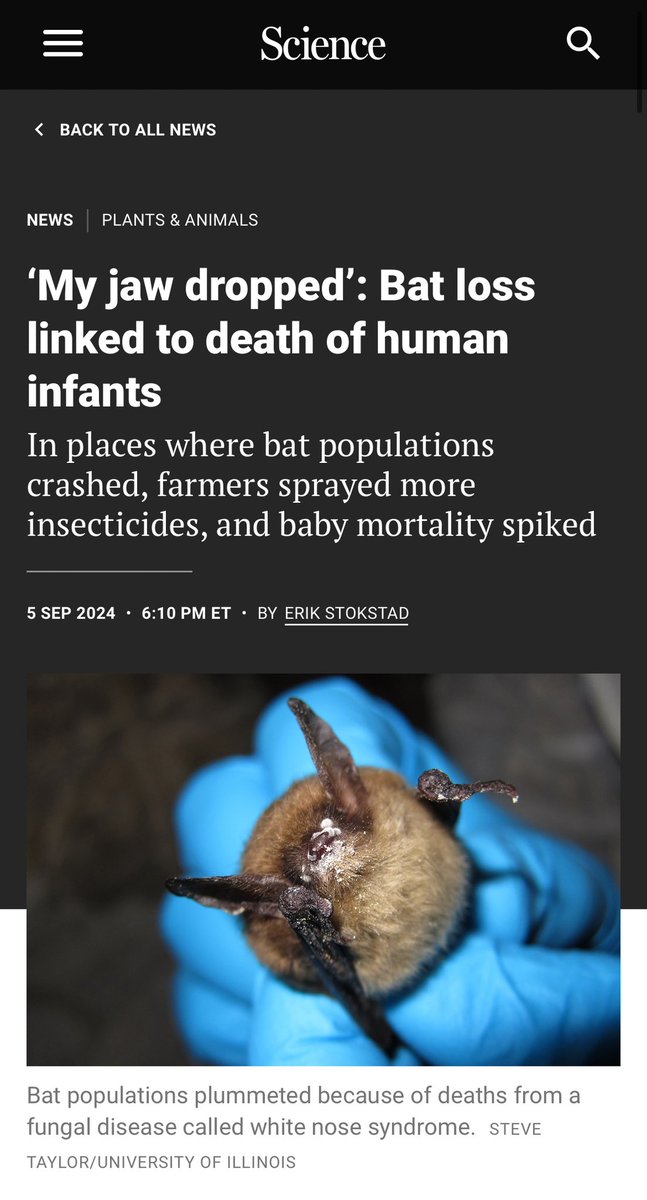
Woah! New research shows how vital biodiversity is to thriving humanity: In US counties where bats declined from white-nose syndrome, insect numbers surged, leading to a 31% rise in pesticide use and subsequently *an 8% increase in infant mortality*! #Biodiversity #Conservation
Prof. Ryan Katz-Rosene tweet media
English
53
4.2K
12.3K
441.8K