John M
41 posts

John M
@LCroft5000
So if you’re smart, you’ll run. If you’re lucky, you’ll hide.
Katılım Şubat 2026
169 Takip Edilen21 Takipçiler
John M retweetledi

New York City is proposing a World Economic Forum inspired law that would require a blackout to be put in place to save the energy grid.
Known as the “Dark Skies Protection Act,” it would require businesses and residents to turn off non essential lighting between 11 p.m. and 5 a.m.
If passed, Times Square will be exempt from the law.
English
John M retweetledi

I don't think people understand the gravity of the situation as the UN is preparing for possible nuclear weapon use in Iran.
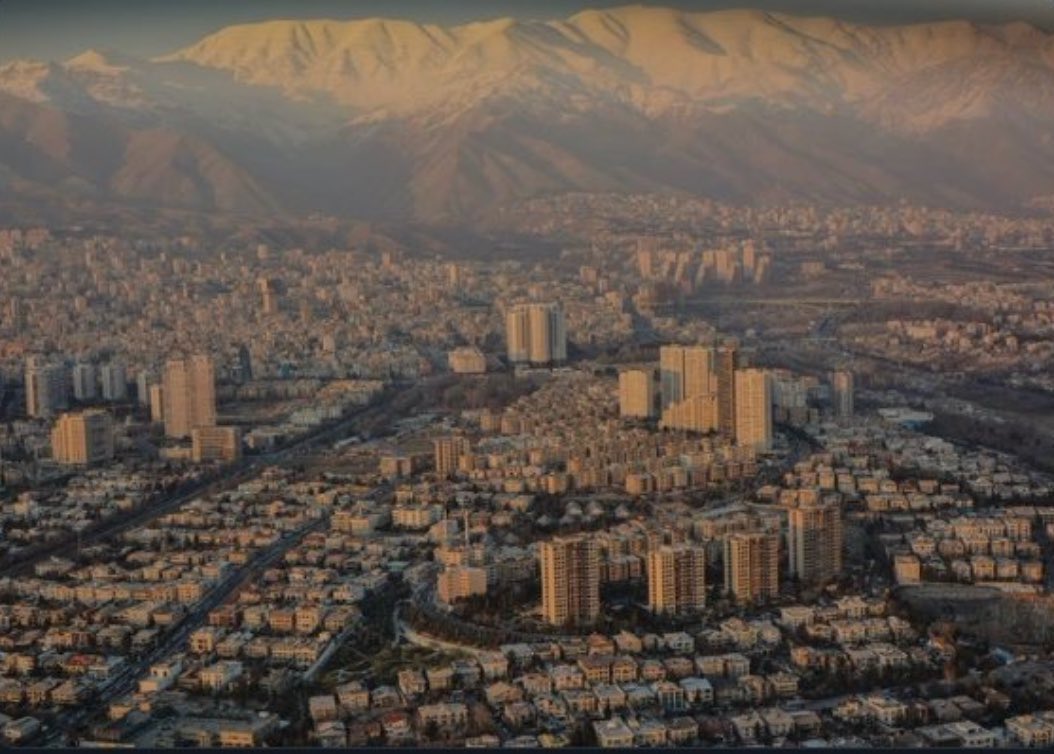
This is a picture of Tehran. For you uneducated, untraveled, never-served, warhawks licking your chops at the thought of bombing it. It's not some low population desert. There are families, children, family pets. Regular working class people with dreams. You're sick to want war.
Tehran is a city of nearly 10,000,000 people. Imagine nuking Washington, Berlin, Paris, London, or beyond, bombed with nuclear weapons.
I gave up my diplomatic career to leak this information. I suspended my duties so as not to be part of or a witness to this crime against humanity, in an attempt to prevent a nuclear winter before it is too late.
Yesterday, nearly ten million people protested “No Kings” in the United States. The possibility of the use of nuclear weapons must be taken very seriously. It's dangerous. Act now. Spread this message worldwide. Take the streets. Protest for our humanity and future. Only the people can stop it. History will remember us.

English
John M retweetledi
John M retweetledi

🚨 IRAN JUST THREATENED TO CUT THE UNDERSEA CABLES AND SHUT DOWN THE WORLD’S INTERNET
Under the Red Sea and Persian Gulf sits one of the most critical internet choke points on Earth. A cluster of undersea cables carrying a massive share of global data.
Everything runs through this:
• Banking systems
• Cloud infrastructure
• Financial markets
• Video calls
• Government communications
Not satellites.
Not “the cloud.”
Cables. On the ocean floor.
And there are only around a dozen major lines running through that entire region.
Now look where they land:
- Oman
- UAE
- Qatar
- Bahrain
- Kuwait
- Iraq
- Pakistan
- India
- Saudi Arabia
This isn’t random.
This is the digital lifeline connecting Europe, Asia, and the Middle East, powering billions of people and the data centers behind Amazon, Microsoft, and Google.
And it’s sitting exposed.
You don’t need to hack the internet when you can physically cut it.
Entire regions could go dark overnight.
Transactions freeze.
Communication stops.
Systems fail.
And most people have no idea how fragile this actually is.
If this goes down overnight… how unprepared are you really?
English
John M retweetledi
John M retweetledi
John M retweetledi

> walk around your city catching pokémon
> game asks you to scan a fountain. sure why not
> 30 billion scans later
> niantic owns a more detailed map than any government
> sells game for $3.5B
> spins off a spatial AI company
> your pokéwalk is now classified infrastructure
> delivery robots now navigate using your walks
> you were never the player. you were the product.
BuBBliK@k1rallik
English
John M retweetledi
John M retweetledi
John M retweetledi

@HealthRanger Can you do a video of the autopsy where they find the micro plastics clogged everyone's brain?
English

EXCLUSIVE: I am about to release a new lab video on microplastics that will leave most people shocked.
In our tests, one of the most popular brands of bottled water delivers 5 microplastics particles for every liter that you drink.
This is a brand that's sold everywhere. In virtually every retail establishment and grocery store that sells water.
We have the microscopy tests using special dyes and visible spectra filters to prove it.
I'll post the video here as soon as it's done, probably early next week. Follow my channel and share the word if you want to get these results as soon as we release them.

English
John M retweetledi
John M retweetledi

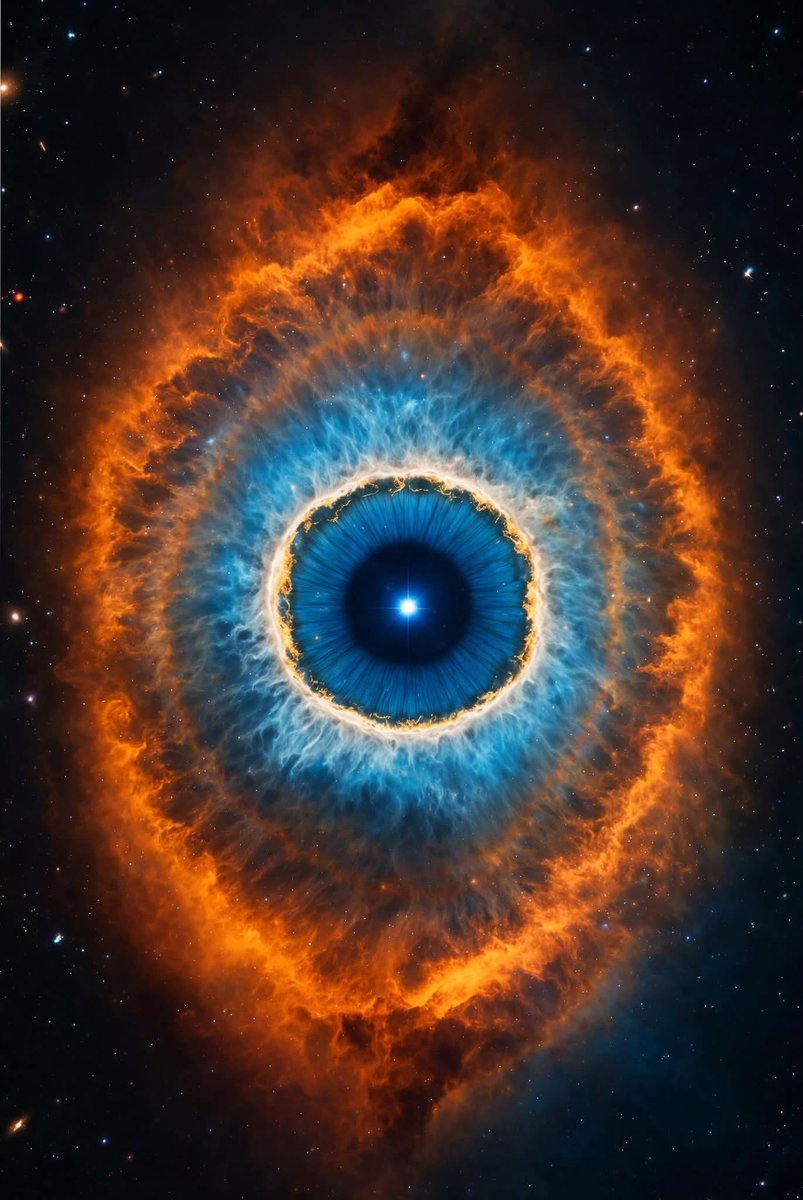
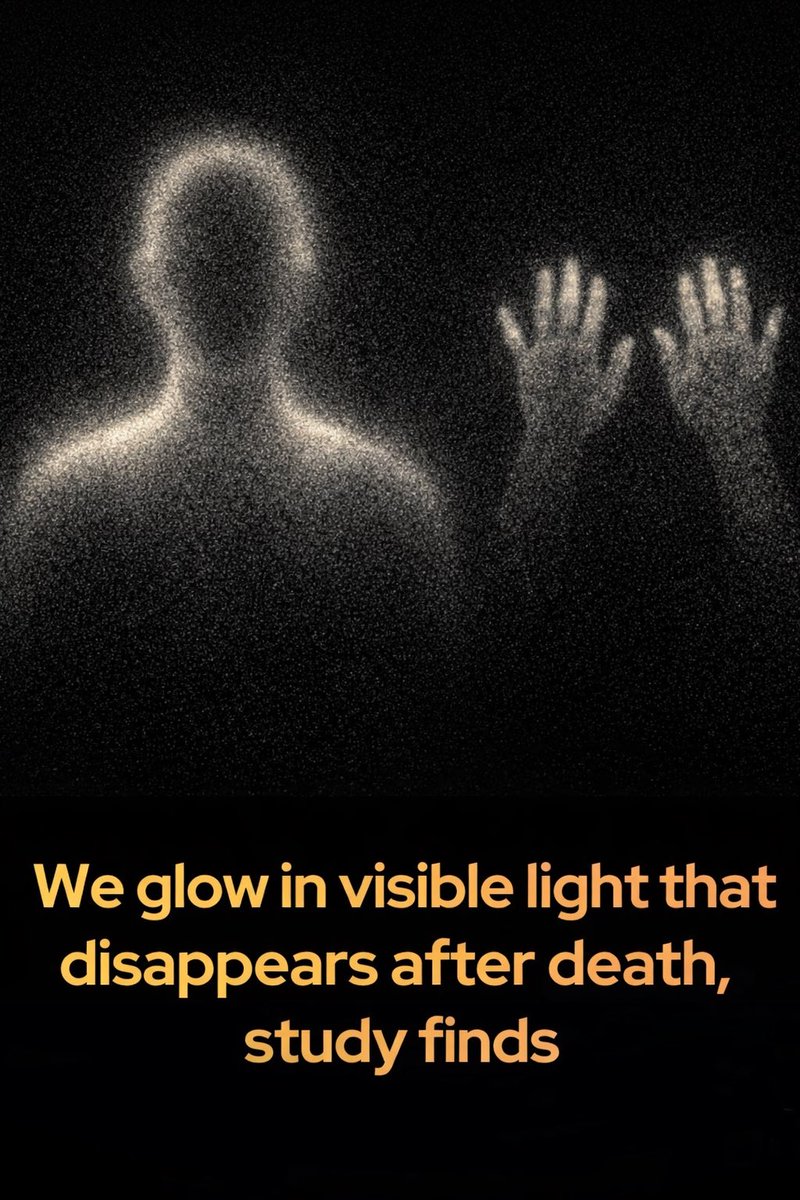
Scientists have discovered that living bodies emit an extremely faint form of visible light so subtle that it cannot be seen with the naked eye. Using highly sensitive imaging technology, researchers from the University of Calgary and Canada’s National Research Council were able to detect this phenomenon, known as ultraweak photon emission.
To observe it, the team used advanced EMCCD cameras capable of capturing individual photons. They recorded light coming from living mice placed in complete darkness for about an hour. Afterward, they repeated the imaging once the mice had passed away while keeping their body temperature at 98.6°F (37°C). Maintaining the same temperature ensured that any changes in light emission were not related to heat.
The results showed a clear difference. While alive, the mice released noticeably more visible photons from their skin. After death, the intensity of this light dropped dramatically, with only small amounts continuing to appear from internal organs such as the liver.
Ultraweak photon emission occurs at extremely low levels roughly 10 to 1,000 photons per square centimeter per second. For context, even a very dim light bulb releases billions of photons in the same amount of time, which explains why this biological glow is invisible without specialized equipment.
The light originates from normal cellular processes. As cells produce energy, they generate reactive oxygen species (ROS). When these molecules interact with lipids and proteins inside the body, they can create excited molecular states that release tiny flashes of visible light.
Researchers also examined plants and noticed similar patterns. Leaves that were injured or chemically stressed produced stronger light signals, suggesting that the glow increases when organisms experience oxidative stress.
Importantly, this phenomenon is different from body heat. Heat radiation from warm bodies mainly occurs in the infrared spectrum, whereas the photons detected in this study were in the visible range.
Because this faint light is closely linked to metabolic activity and oxidative reactions inside cells, scientists believe it could eventually be used as a non-invasive way to monitor stress, disease, or the health of organs.
Study: “Imaging Ultraweak Photon Emission from Living and Dead Mice and from Plants under Stress.” The Journal of Physical Chemistry Letters (2025).

English
John M retweetledi

John M retweetledi
John M retweetledi
John M retweetledi
John M retweetledi
John M retweetledi

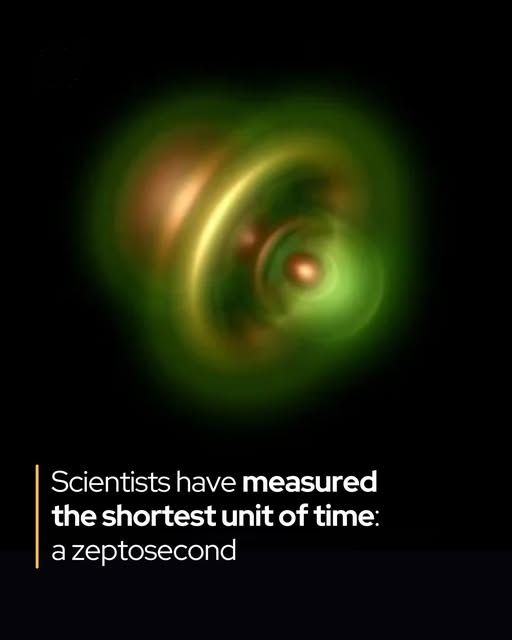
Researchers have recorded the briefest interval of time ever measured: 247 zeptoseconds—the duration for a photon of light to traverse a hydrogen molecule.
That's 0.000000000000000000247 seconds.A zeptosecond equals one trillionth of a billionth of a second, a realm where light, the universe's speed champion, advances mere fractions of an atomic diameter. For scale, a single second contains as many zeptoseconds as there are seconds in 31.7 trillion years—vastly exceeding the age of the cosmos.
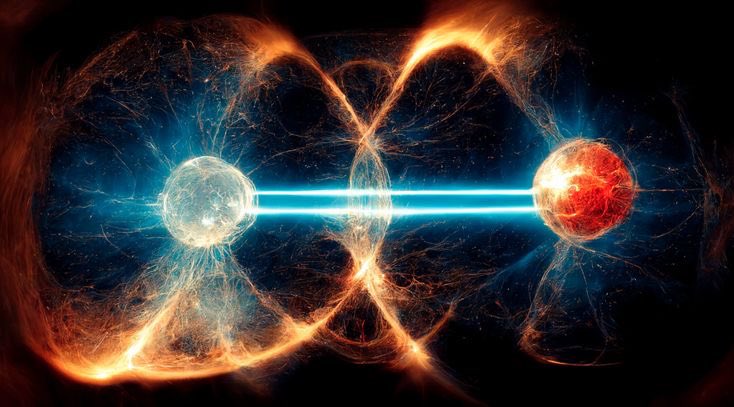
Physicist Reinhard Dörner and colleagues at Goethe University Frankfurt achieved this using intense X-rays from Hamburg's PETRA III accelerator. They aimed at hydrogen molecules—the simplest in existence, comprising two protons and two electrons. An incoming photon struck both electrons in rapid sequence, akin to a stone skipping across water.
To resolve this fleeting event, the team employed a COLTRIMS reaction microscope, an ultra-precise instrument that tracks particle positions and momenta. By examining the interference patterns from the two expelled electrons, they pinpointed the precise lag between the photon's impact on the first electron and the second.The finding: 247 zeptoseconds.
This demonstrates that light does not illuminate a molecule instantaneously, even at this tiny scale; the delay stems from light's finite velocity of roughly 186,000 miles per second (300,000 km/s). It represents the first direct observation of light propagating inside a molecule.
By contrast, chemical reactions unfold over femtoseconds—a thousandfold longer. Zeptosecond precision opens a window into quantum timescales, where electron and photon dynamics govern matter's core behaviors.

English