Lee Robinson

30 posts

Lee Robinson banner
Lee Robinson

Lee Robinson

@LSJRobinson

COO @Generalmatter

California, USA Katılım Mayıs 2022
370 Takip Edilen67 Takipçiler
Lee Robinson
Lee Robinson@LSJRobinson·
Uranium refining - specifically enrichment - is an American technology. Our grandfathers developed and industrialized it but our fathers shipped it overseas. We’re excited to work with @ENERGY to bring it back.
English
0
1
3
103
Lee Robinson
Lee Robinson@LSJRobinson·
Time is the only real competitor.
English
0
0
0
30
Lee Robinson
Lee Robinson@LSJRobinson·
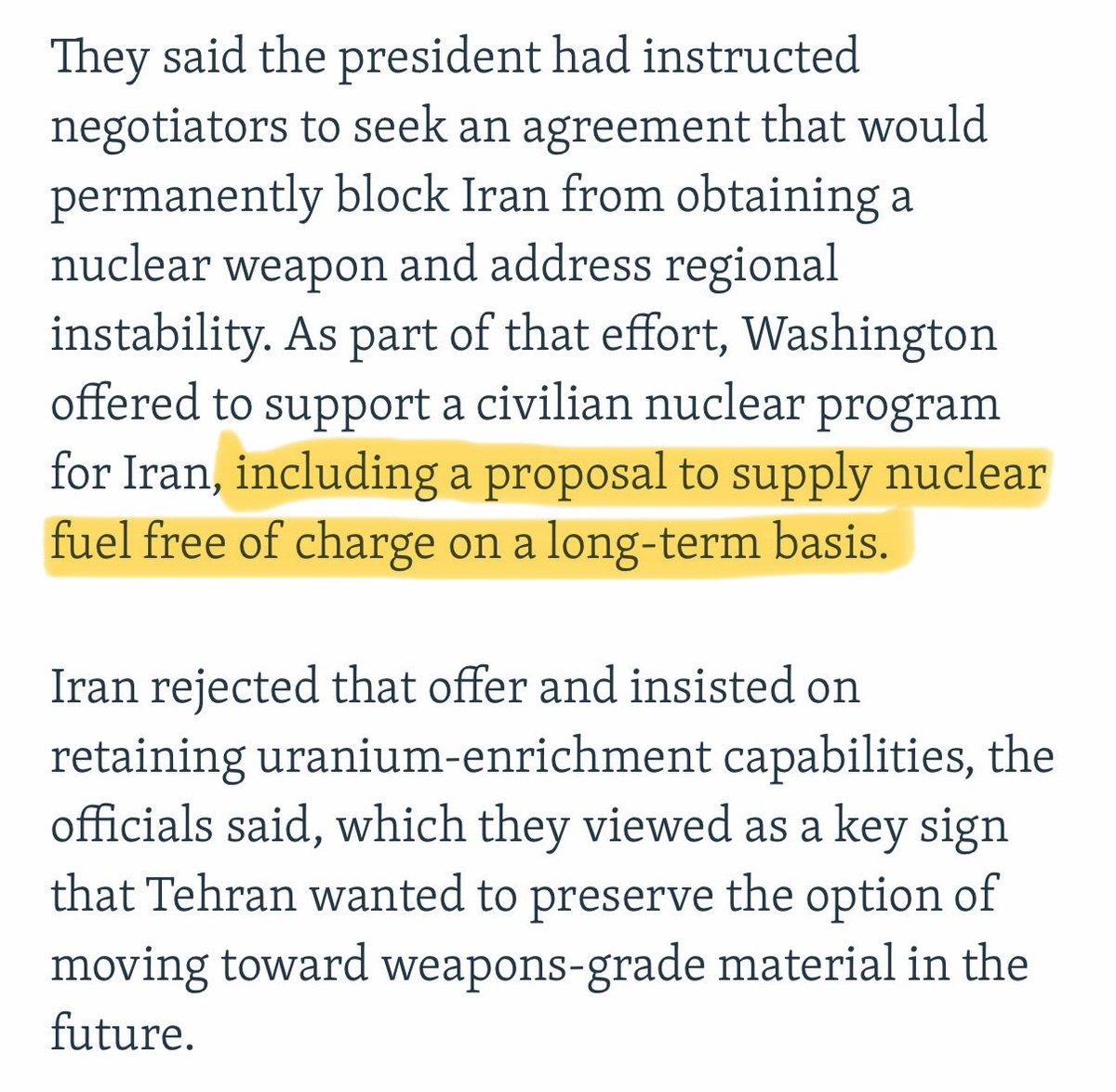
Our actions in Iran have many reasons and it’s a long time coming - but the redline is uranium enrichment. It’s the difference between a weapons state and not… and the US is 100% reliant on foreigners for enrichment. Foreigners including Russia and China.
Lee Robinson tweet media
English
0
0
1
118
Lee Robinson
Lee Robinson@LSJRobinson·
India needs 100GW of nuclear. This will need ~15M SWU of enrichment - equivalent to all US demand. It can only come from Russia unless we build fast.
John Quakes@quakes99

💥#India has pledged a 12-fold #Nuclear power increase to 100 Gigawatts by 2047, adding ~50 Million lbs per year of new #Uranium demand🇮🇳⚛️⛏️🛒 nearly 1/3rd of current global production!😲 To secure access to supply ahead of other buyers, they're signing massive new deals with world's 2 largest producers: 🇰🇿📜 #Kazakhstan's Kazatomprom $KAP are seeking shareholder approval for a long-term supply deal valued at more than 50% of the company's current Book Value (>50% of US$6.1B as last reported on 30 September 2025), putting it somewhere over US$3B with the start date, duration and annual deliveries to India not disclosed.🤐 At say $100/lb U3O8, this deal could likely represent over 30 Million lbs of $KAP's production diverted to India.🚛 🇨🇦📜 #Canada's Cameco has been in negotiations with #India on a new 10-year supply deal that is expected to result in the export of around $2.8B worth of Saskatchewan's mined uranium to India.🚛 The final deal is expected to be officially announced and signed on Monday, March 2nd, by PMs Carney & Modi as Canada seeks to double its exports to India while it diversifies away from exports to the USA.🇺🇸⛔️ This deal could also be in the 30 Million lbs ballpark.😲 🗜️India, like China who have recently signed 2 major supply deals with Kazatomprom and entered into a 60% annual offtake from Bannerman's Etango uranium mine project in Namibia, are being proactive in front-running other nations and Nuclear utilities to ensure that they will have the uranium they need to fuel their fleet in the decade to come, tying up access to supply which further tightens the market for those who have yet to make their move.🦥⚛️⛏️🤠🐂🌊🏄

English
0
0
0
43
Lee Robinson
Lee Robinson@LSJRobinson·
“Deindustrialization was not inevitable” @SecRubio nails it. There is no industry this is more true than the Nuclear industry. It powers 20% of the US and the EU and we’re all reliant on foreign adversaries. We must reindustrialize nuclear now. share.google/B8T0VLDHtBMMOT…
English
0
0
0
31
Lee Robinson
Lee Robinson@LSJRobinson·
America is filled with Cold War assets gathering dust. Let’s put these assets to work to build the nuclear fuel supply chain. Thank you @ENERGY and the people of Richland, WA for letting us restore this cornerstone of the US nuclear industrial base.
General Matter@generalmatter

x.com/i/article/2018…

English
1
2
11
1.6K
Lee Robinson
Lee Robinson@LSJRobinson·
The nuclear industry is obsessed with process. Process is what replaces trust in a zero trust environment. Much of process is good. But process will come at the direct cost of output. In nuclear, the incentive to build process was stronger than generating output. So what we’ve got is too much process, not enough output. BL: be output focused and work backwards to identify what process is superfluous. Then delete.
English
0
0
0
30
Lee Robinson
Lee Robinson@LSJRobinson·
Interaction today: “Xyz company is going to do this” “Who? Companies don’t do things, people do things” Common fallacy is trusting organizations to act. Drill down to who and how. Governments and companies don’t do anything, people do. Organizations aren’t accountable, people are. Only way to keep control is to know who is doing what and when.
English
0
0
0
29
Lee Robinson
Lee Robinson@LSJRobinson·
@ScottNolan teaches a masterclass on why this is the single most important issue facing energy. What happened to that white board?
TBPN@tbpn

CEO @ScottNolan on @generalmatter's uranium enrichment plant in Paducah, and how the recent $900M DOE award speeds up their mission: "After a decade of meeting different reactor companies, I realized none of them had a good source of fuel. If you take a step back, fuel is upstream of everything. If energy is upstream of all economic activity, fuel is upstream of energy, and if you can't make your own fuel, you can't do all the other things that you want to do." "We think that enrichment is the key bottleneck for nuclear energy." "In August, we announced a lease with the DOE to reindustrialize a site that used to host enrichment in Paducah, Kentucky. We are now breaking ground and preparing that site to build on. That'll be online by end-of-decade." "The scale of actually bringing it online, on day one, will be increased through this award that we received last week. That's the main way it impacts us — it actually brings commercial scale, domestic scale, satisfying all US needs forward, a few years earlier."

English
0
0
1
11
Lee Robinson
Lee Robinson@LSJRobinson·
This anecdote works for most industries. Find your toehold and make constant incremental improvements.
Object Zero@Object_Zero_

How did solar get cheap? Phase 1: 1950-1990s - NASA Solar was invented in the US by Bell labs and pretty much only used by NASA who needed something very lightweight to power their space assets. Phase 2: 2000 - Energiewind The German government passed a law where it guaranteed that if you put solar panels on your roof the German government would pay you a high feed in tariff. Demand exploded. Phase 3: 2005 - 2015 - China In Europe German manufacturers could not meet their demand at home and Chinese entrepreneurs saw this fixed arbitrage opportunity and went all in. Chinese companies like Suntech took on huge government loans and built vast factories. Spain and Italy joined Germany with solar subsidies. Because of the price fixing in Europe the market arbitrage held as the solar cell manufacturing output in China exploded. Phase 4 2015-2025 - Swanson’s Law Once the big Chinese gigafactories were built, Swanson’s Law kicked in. This is the learning curve where manufacturers compound marginal gains and accumulate 1,000s of solutions to solved problems. 1. Ingots, originally they grew small Si crystals this was a slow batch process. Later they used continuous Czochralski pulling where you refill the crucible whilst the machine is still running. Saving hours of cooldown per batch. They also learnt how to grow huge single crystals that were 2-3 meters long. 2. Wafers, originally they sliced the crystals into wafers using saws. This was slow and turned 40% of the Si crystal into sawdust (kerf loss). The fix was diamond wire cutting, the wire was razor sharp, fast, much thinner than the saw, easier to keep clean and far less wasteful (4% kerf loss). Wafer costs plummeted. 3. Cells, you have to print silver lines on the back of the wafer to collect electricity. Over 15 years silver printing resolution improved and silver use was reduced by 70% whilst also blocking less sunlight. The mirror backing used to be aluminium which captured some solar energy as heat and was lost, so they added a dielectric passivation layer that captured more photons and improved cell conversion efficiency without changing materials. 4. Modules, engineers realised that by laser cutting panels in half they reduced electrical resistance in the cells. This means the panel runs cooler and produces more power. Bifacial modules then emerged, instead of plastic backing. Panels were made with glass front and back, this means panels also collect energy bouncing from the ground below the panel which again boosts the panel output in operation. These gains all compound to make the panels 90% cheaper over the course of 10 years. Chinese manufacturers are now looking at perovskites as a paradigm switch. It’s essentially a superior crystal to silicon for absorbing light. You can make them from liquid chemistry and you can print them. Silicon is great at capturing red and IR light perovskites can be tuned for blue spectrum. You can then go tandem and pair both silicon and perovskites in the same modules. Now panels are cheap, because they’re simple things to make. They cost around $0.10/watt ex factory. A solar installation costs around $3.00/watt and the panels themselves are now a very small part of the cost of a solar installation which is dominated by land, labour and structures. Much of industry is like this. If you can consolidate manufacturing under one roof, you learn all the improvement opportunities much faster, because you just see more stuff.

English
0
0
1
78
Lee Robinson
Lee Robinson@LSJRobinson·
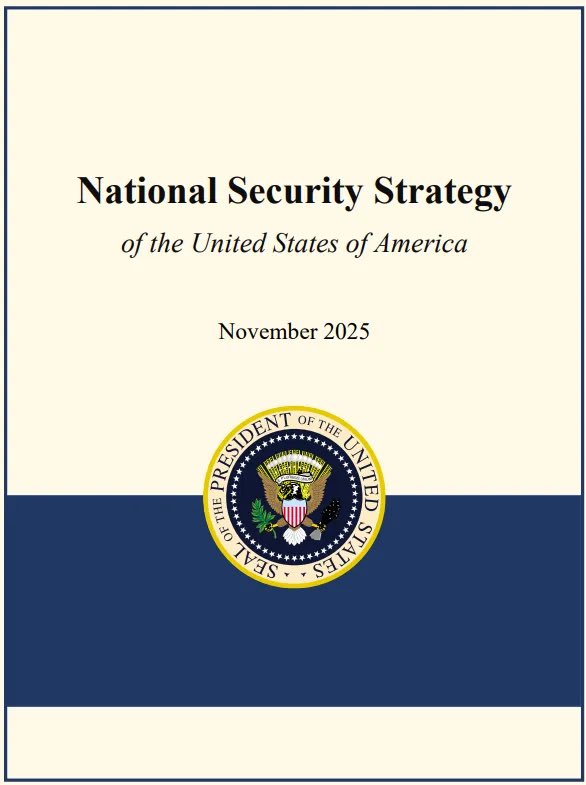
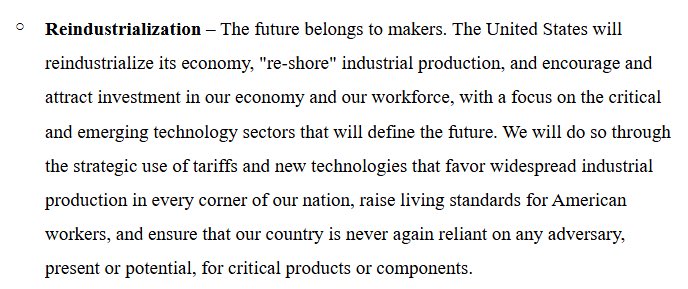
The future belongs to makers.
Lee Robinson tweet mediaLee Robinson tweet media
English
0
0
0
25