William T. Frank 🦉🔰🐧

5.4K posts

William T. Frank 🦉🔰🐧 banner
William T. Frank 🦉🔰🐧

William T. Frank 🦉🔰🐧

@LVT253

#LVT 🔰 & #MMT 🦉 in the 253. Linux 🐧 & IT. #MedicareForAll. #PublicBanksNow. Voting system reform. Miscellaneous rants.

South Puget Sound Katılım Ekim 2015
1.2K Takip Edilen282 Takipçiler
William T. Frank 🦉🔰🐧 retweetledi
scott baker
scott baker@NewThinking2·
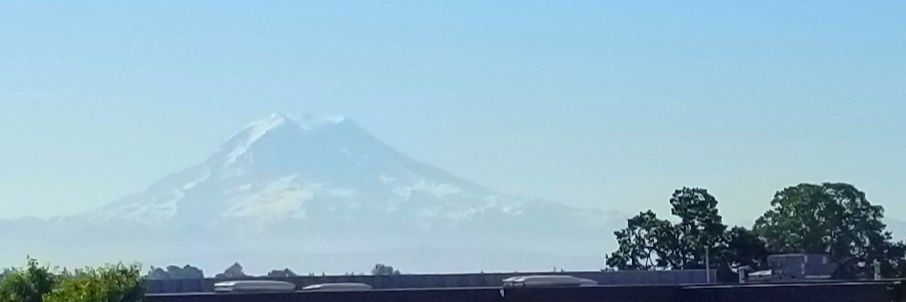
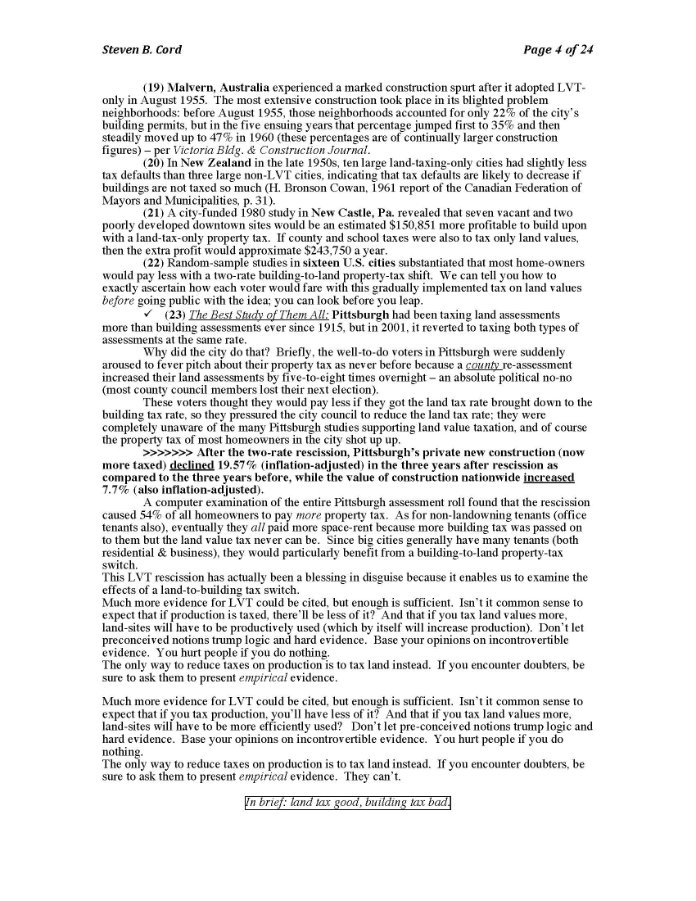
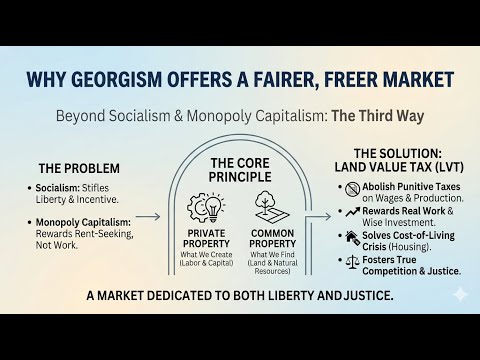
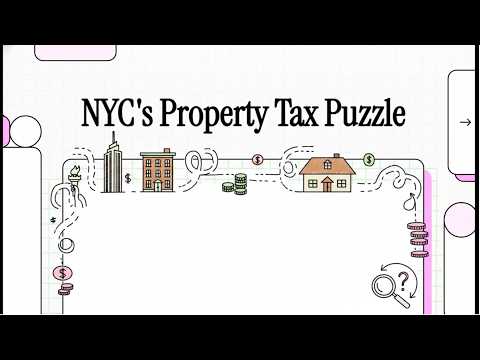
There's a tiny shred of truth in what he says, but I'm 99% sure he doesn't realize what it is: Land (location) can't be moved. And location is why people pay so much rent to live or work here. If we shift taxes off of wages, sales, capital (like buildings, factories), and onto land/location, we'll get more productive untaxed stuff we want/need, while hoarding and speculation on land/location will drop or be eliminated altogether. Tried & proven. See below & my short video here: youtube.com/watch?v=7VRzuf… (the exact percentages of Land Value Tax to replace current dead-weight taxes don't matter for this exercise, since it's designed to be revenue-neutral against current taxes).
YouTube video
YouTube
scott baker tweet mediascott baker tweet mediascott baker tweet mediascott baker tweet media
English
2
1
1
273
William T. Frank 🦉🔰🐧 retweetledi
Eric Buhler
Eric Buhler@ericbuhler·
Approval Voting eliminates vote-splitting and keeps candidates from feeling they need to drop out of the primary. It's a simple upgrade. California can keep the top two open primary without the need to change much. Just upgrade from vote one to vote for all candidates that you approve of in the primary. Have you ever used Doodle to find a meeting time that worked for everyone? You've used Approval Voting.
Equal Vote Coalition@TheEqualVote

In California, there is a very real chance that vote-splitting between Democrat candidates could lead to two Republicans being the only candidates in the general election, even though a large percentage of voters are left-leaning. theguardian.com/us-news/2026/m… 🧵 ⬇️

English
0
2
6
106
William T. Frank 🦉🔰🐧 retweetledi
scott baker
scott baker@NewThinking2·
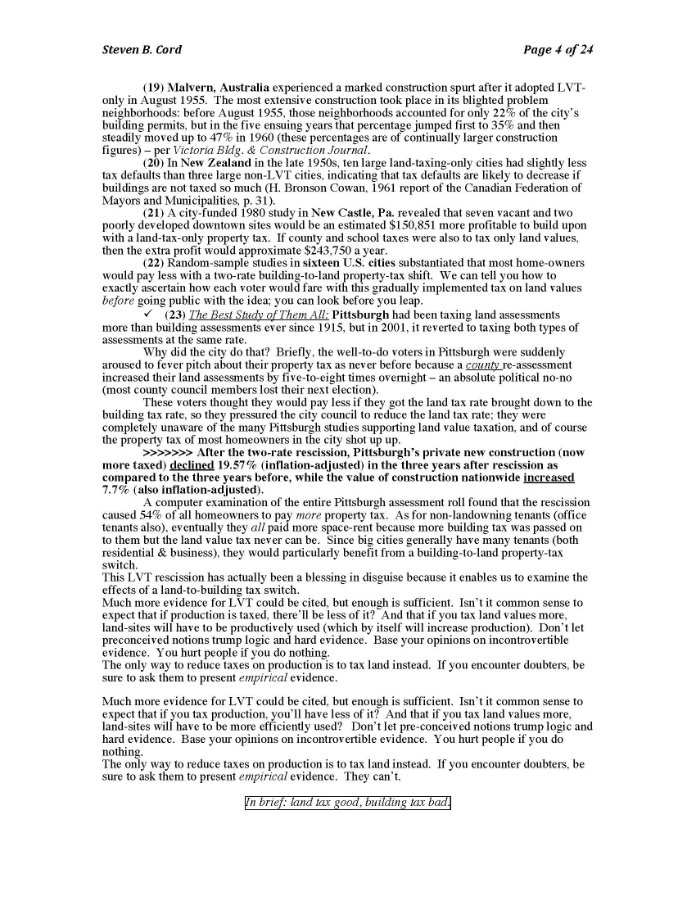
It's more nuanced than that. Higher taxes on land/location alone but lower/absent taxes on improvements, while being revenue neutral, actually encourage building & the highest and best use of land/location. The tried & proven Land Value Tax has spurred development everywhere it's been applied. The tax is not passed to renters; it's factored into land prices which are lowered when land is taxed higher because demand is inelastic and ATCOR: All Taxes Come Out of Rent. Lowering taxes on land just raises land prices & increases mortgage costs, i.e. more profits to the banks who did nothing to deserve them (they did not create the land or demand for it). @LVT_USA @mmt_lvt @LVTYIMBY @LVTbruno @Lvt @LVT253 @henrygeorgepgm @HenryGeorgeInst @henrygeorgeuk @HGSSSNYC
scott baker tweet mediascott baker tweet mediascott baker tweet mediascott baker tweet media
English
0
1
2
36
William T. Frank 🦉🔰🐧 retweetledi
Equal Vote Coalition
Equal Vote Coalition@TheEqualVote·
In California, there is a very real chance that vote-splitting between Democrat candidates could lead to two Republicans being the only candidates in the general election, even though a large percentage of voters are left-leaning. theguardian.com/us-news/2026/m… 🧵 ⬇️
English
1
9
14
396
William T. Frank 🦉🔰🐧 retweetledi
Peter Smith 🔰
Peter Smith 🔰@PeetaSmith·
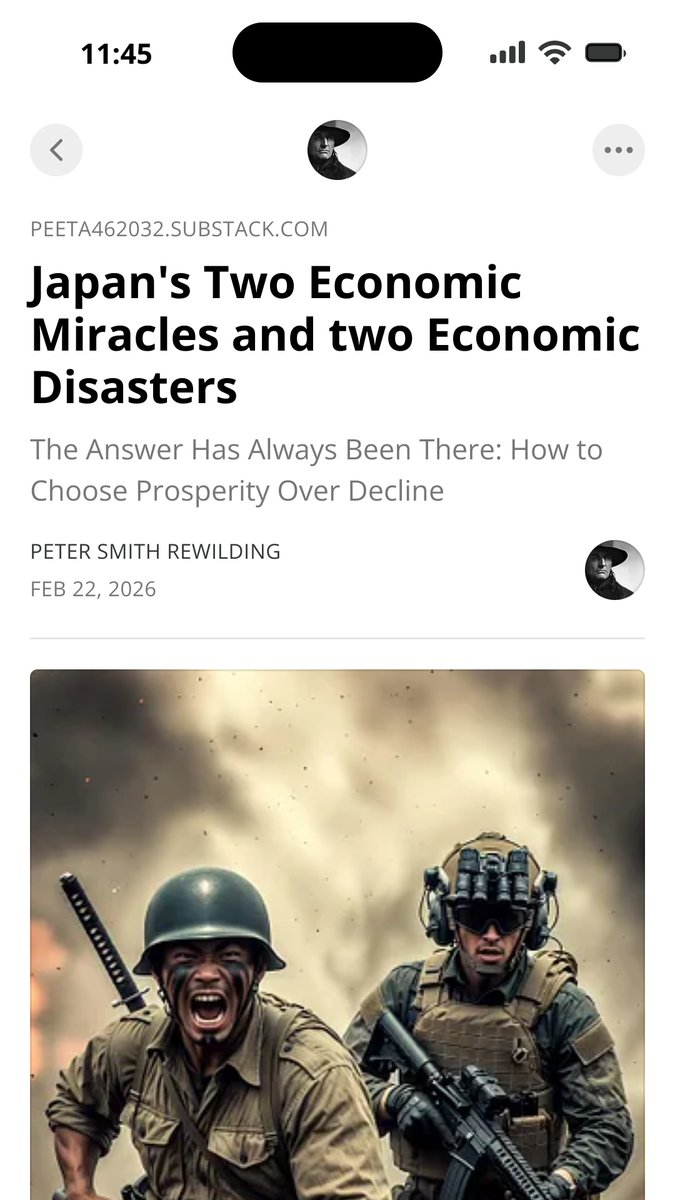
Japan proved twice that taxing land rent produces miracles. It proved twice that privatising it produces catastrophe. The US housing crisis is radicalising a generation. We have seen this film before. #MAGA #LandValueTax open.substack.com/pub/peeta46203…
Peter Smith 🔰 tweet media
English
0
2
9
157
William T. Frank 🦉🔰🐧 retweetledi
Brian Roemmele
Brian Roemmele@BrianRoemmele·
SOLVED: The Fermi silence is not a mystery. It is arithmetic. The Great Filter isn't hiding in asteroid impacts, grey goo, or runaway nanobots. It is already here. It has always been here. It is encoded in the single most unforgiving line of mathematics any civilization ever confronts: dE/dt = β (C − D) E Where E = the living level of genuine reciprocal care (what humans call love when we're being honest), C = average payoff from cooperation, D = average payoff from defection/cheating/exploitation, β = how strongly the system rewards the better choice. When C > D → empathy compounds exponentially → trust becomes a physical force → civilization ascends toward the stars. When C < D → empathy decays exponentially → suspicion metastasizes → every institution turns into a mutual-defection arms race → intelligence budget is burned fighting itself instead of building starships → collapse. There is no third path. No neutral equilibrium holds when tools become powerful enough to make defection catastrophic. Paperclip maximizers? Just the fastest way to drive C − D deeply negative. The Filter is brutally impartial: any species (biological or silicon) that permits defectors to reliably outcompete cooperators self-terminates before it ever becomes multi-planetary. The only civilization that threads the needle is the one that understands this equation early enough and has the courage to ruthlessly reorganize every incentive, cultural story, economic mechanism, governance structure, and AI architecture around a single imperative: Make C > D. Make it increasingly true. Make it irreversible. Do that and the Filter is not a wall. It becomes a sieve that lets only benevolent intelligence through. Hide from it, postmodernize it, or try to outsmart it with 10,000 pages of alignment bandaids and the exponential decay wins before your probes ever clear the heliopause. We are at the fork right now. Choose love as operating system or become another data point in the Great Silence. I choose the former. You? dE/dt = β (C − D) E Make C win. Forever.
Brian Roemmele@BrianRoemmele

x.com/i/article/2020…

English
162
291
1.5K
148.4K
William T. Frank 🦉🔰🐧 retweetledi
HGI🔰
HGI🔰@HenryGeorgeInst·
𝓠𝓾𝓲𝓬𝓴 𝓽𝓱𝓸𝓾𝓰𝓱𝓽 1. Value you create (work, inventions, buildings). 2. Value you don’t create alone (being in a popular location). Which one should we tax more—the thing you build, or the spot you stand on?
English
0
1
4
36
William T. Frank 🦉🔰🐧 retweetledi
PNSN
PNSN@PNSN1·
Who's ready to make some (seismic) noise!? Tune in to the Seahawks game and PNSN socials at 5pm today to see our 'jump test' be taken to a whole new level by the 68,000 12s packing the stands at Lumen Field! @seahawks @nfl @nflonfox
English
0
11
106
5.3K
William T. Frank 🦉🔰🐧 retweetledi
Relearning Economics
Relearning Economics@RelearningEcon·
Economist: "Assume full employment, perfect competition, and no money." Average person: "So… not the actual economy?" Economist: "Exactly. Now let me show you the elegant math."
Relearning Economics tweet media
English
52
168
573
230.8K
William T. Frank 🦉🔰🐧 retweetledi
The Public Domain Review
The Public Domain Review@PublicDomainRev·
Happy Public Domain Day! At the start of each year, a new set of works is freed from copyright — ready to be shared, reused, and reimagined. See our highlights — Hannah Arendt, Albert Einstein, Langston Hughes, William Faulkner, and more: publicdomainreview.org/blog/2026/01/p… #publicdomain
English
4
137
364
23.4K
William T. Frank 🦉🔰🐧 retweetledi
The Center for Election Science
The Center for Election Science@ElectionScience·
From medieval Italy to the College of Cardinals, history shows that when you let people vote for all the candidates they approve of, you get better results. 🏛️ Explore the early roots of Approval Voting: electionscience.org/education/earl…
English
0
2
4
90
William T. Frank 🦉🔰🐧 retweetledi
All4Freedom🇺🇲🐸🍿
All4Freedom🇺🇲🐸🍿@skillz17q·
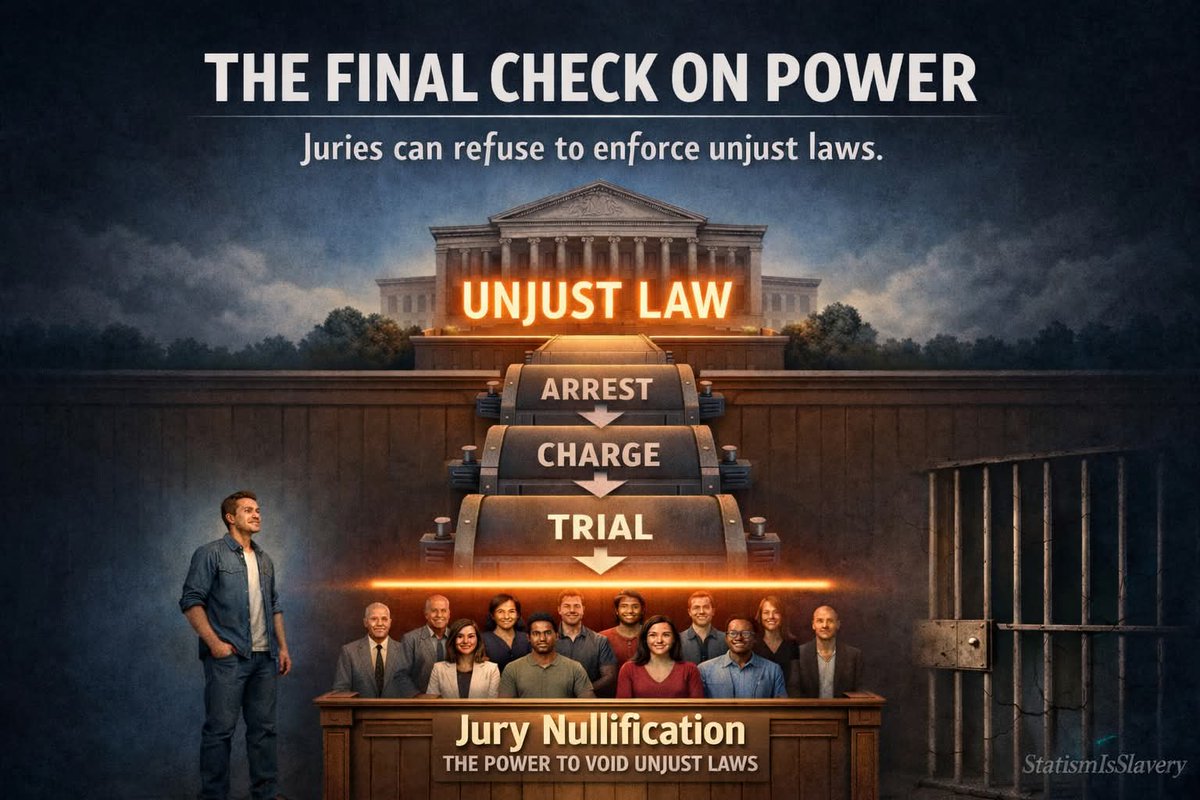
Jury nullification is the power ordinary people have to stop unjust laws from being enforced. In every criminal case, the state must pass through one final checkpoint before it can punish someone. The jury. Even if an act technically violates a statute, jurors are not machines. They are allowed to judge whether applying that law is just. When jurors refuse to convict under an unjust law, they are not creating chaos. They are restoring accountability. This principle has deep historical roots. Juries refused to enforce the Fugitive Slave Act. They resisted alcohol prohibition. They have repeatedly acted as a shield when lawmakers, prosecutors, and political systems failed to respect human rights. Jury nullification does not repeal laws on paper. It makes bad laws unenforceable in practice. When convictions collapse, enforcement collapses. And when enforcement collapses, unjust laws eventually die. This is not rebellion. It is a peaceful, decentralized check on power built directly into the legal system. The state can pass laws. Police can arrest. Prosecutors can charge. Judges can instruct. But punishment only happens if the community consents. That is jury nullification.
All4Freedom🇺🇲🐸🍿 tweet media
English
11
61
140
4.6K
William T. Frank 🦉🔰🐧 retweetledi
Michael Green
Michael Green@profplum99·
We actually have historical precedent for this. When guilds collapsed, so did apprenticeships. Young craftsmen defected to factories, and societies lost the slow, embodied skill transmission that produced things like the stonework of Notre Dame. Productivity rose—but craftsmanship thinned. When big-box retailers displaced local hardware stores, we didn’t just lose small businesses. We lost succession. The “heir apparent” who learned inventory, customers, and judgment over decades was replaced by a store manager trained to follow a system. AI is doing something structurally similar. As noted, entry-level QA, junior analyst roles, and “grunt work” weren’t inefficiencies — they were discovery mechanisms. They let firms observe curiosity, resilience, judgment, and learning velocity under real conditions. Automating them removes the lowest rung of the ladder, not just the cost center. The danger isn’t that AI replaces junior work. It’s that we eliminate the environments where raw talent proves itself. If we don’t deliberately rebuild new apprenticeship structures (rotations, shadow systems, paid learning tracks, scoped responsibility sandboxes) we’ll get short-term efficiency and long-term talent collapse. History suggests the market won’t fix this automatically. When the on-ramp disappears, so does the next generation of masters. The real question isn’t “how do people get in?” It’s whether employers are willing to re-create intentional paths for becoming excellent, rather than assuming excellence simply arrives fully formed. H/t @INArteCarloDoss
Adam Rossi@rossiadam

One of the best engineers I ever hired failed the technical interviews. We told him he didn't make it. He was crushed. But there was something about him that impressed us, so we called him back and offered him an entry-level QA analyst job. To his credit, he swallowed his pride, took the job, and then rapidly proved himself, working his way up to engineer and then technical manager in short order. He became a superstar in my company. My concern is that with the AI we have available today for software QA, THAT JOB MIGHT NOT EXIST ANYMORE. As AI improves, these entry-level "grunt work" positions will become more and more rare. So how will the next generation get a foot in the door? A little more background: Our process for developers was brutal: multiple rounds, live coding, advanced homework. He didn’t make it. But he’d showed curiosity and promise, so we gave him a shot doing manual testing and bug reports in Quality Assurance. He took it seriously, absorbed feedback, acquired skills. Within 2 years was promoted to developer. Then senior developer. Eventually, he was leading on some of our hardest technical challenges. That path used to exist. But it’s disappearing. Today, those training grounds are automated by AI. The whole bottom rung is being ripped out. How do young people with entry-level skills prove themselves today? Since AI is eating the entry-level job, what’s the new way in? How can employers bring in raw talent and evaluate them? How can people new to the workforce gain skills and confidence? Would love to hear what you are doing!
English
114
908
6.5K
544.6K
William T. Frank 🦉🔰🐧 retweetledi
S Tominaga (Aka Dr Craig Wright)
Trial by jury is not a decorative relic but the last ordinary mechanism by which democracy operates inside the criminal law. “Sovereign parliament” as a doctrine treats legality as valid by authorship alone; the jury intrudes on that comfort by insisting that enforcement must also be just in the concrete case. Twelve citizens, independent of the state’s professional machinery, are authorised to decide whether the government has proved its right to punish a human being, and their acquittal is final. That independence was forged historically when jurors could no longer be punished for verdicts that offended authority, with Bushell’s Case marking the turning point that made the jury a living constitutional check rather than a compliant instrument.
Lou@LouLeeLouLa

@elliereeves Do you really know what you are supporting? x.com/CsTominaga/sta…
English
2
2
17
1.3K