
Sabitlenmiş Tweet
Laban
241.3K posts


Laban
@Laban9898
飯テロbot。Not Laban。Parody | Fanpage 。I retweet food pictures.
Labanland Katılım Eylül 2009
3.7K Takip Edilen1.7K Takipçiler
Laban retweetledi

Marmot finds Spokane woman living below his attic
KIRO 7@KIRO7Seattle
Spokane woman finds marmot living in her attic #Echobox=1779714122" target="_blank" rel="nofollow noopener">kiro7.com/news/local/spo…
English
Laban retweetledi
As a former bartender when they start making you measure out the booze it means you work for private equity now
Sarahh@Sarahhuniverse
A specialized wine measuring tool used to pour exact amounts, such as 50ml, directly into a glass 🍷 © foodporn
English
Laban retweetledi

Laban retweetledi

Laban retweetledi

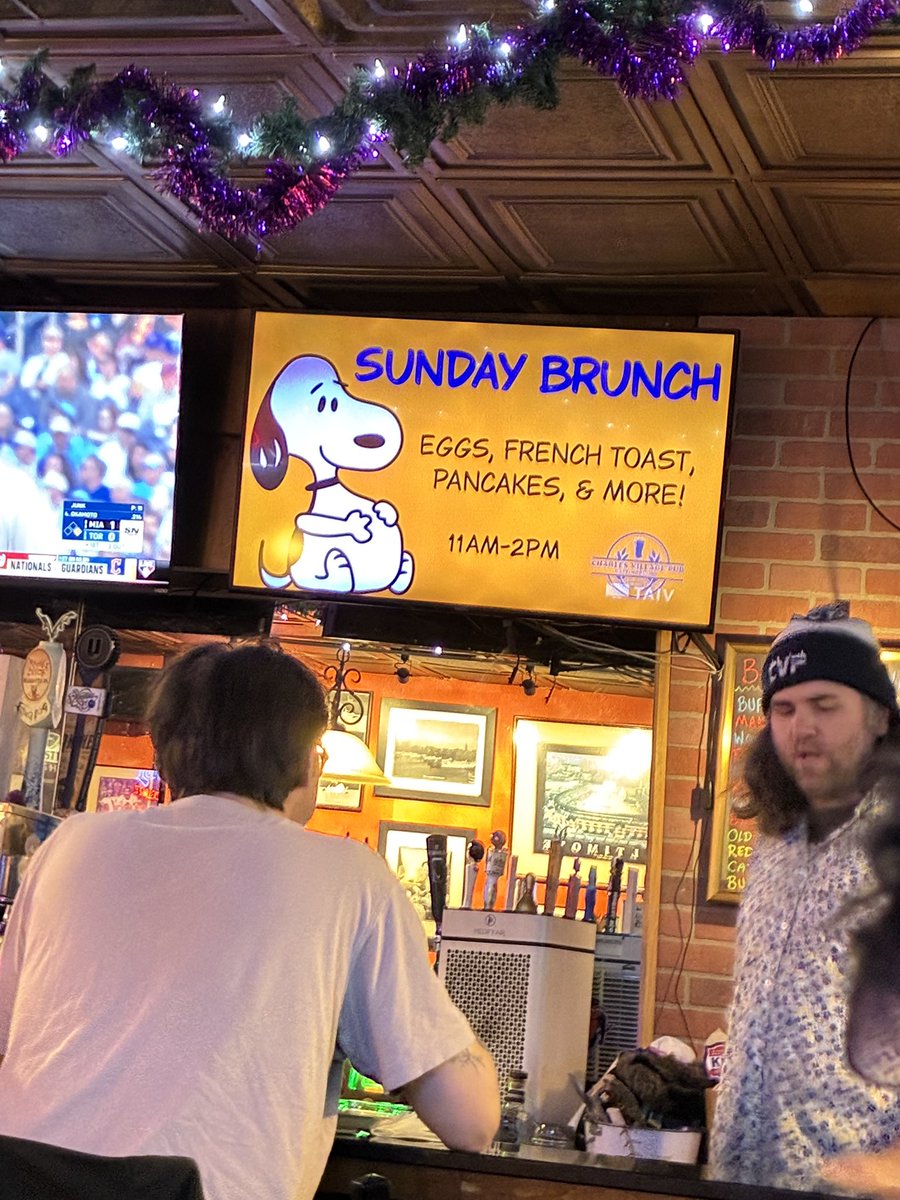
They got snoopy mpreg on at the bar
English
Laban retweetledi

I know I'm getting older and more boring, but give options to those who don't drink or want to keep hydrated. Even when I made juice, I had options for those who don't drink. Maintain that same courtesy here. I love the lobby parties at CB, but I've seen myself drinking less.
English
Laban retweetledi

sir, you are a ridiculous color. highlighter taking a bath
Lotus Winnie Lee@lotuswinnielee
Green Broadbill (aka lesser green broadbill) one of the birds I really love; came from the montane forest for a long bath on an extremely hot & humid day. #greenbroadbill #broadbills #birds #birdwatching #wildlife
English
Laban retweetledi

> be Bowie Knife99
> just a guy with an Xbox
> buy Forza Horizon 6 on launch day
> drive like you always do - like a lunatic
> ram, swerve, and pit-maneuver strangers into walls
> the Drivatar system silently records every felony
> uploads an AI clone of your driving to the cloud
> deploys hundreds of you into other people's races, 24/7
> within days, thousands cry about you on Reddit, X, and Steam
> the community calls you "the Herobrine of Forza"
> official Xbox UK tweets "Happy Bank Holiday Monday to everyone except bowie knife99"
> a fan opens a fake X account in your name to taunt your victims
thousands of players are at war with hundreds of clones of you. you don't know any of this is happening. happy bank holiday.
Pirat_Nation 🔴@Pirat_Nation
In Forza Horizon 6, players keep running into an extremely aggressive AI driver called Bowie Knife99. The Drivatar is known for constantly smashing into other cars, causing huge crashes and ruining races for everyone else. Even though many players find it frustrating, Bowie Knife99 has turned into a popular meme in the community and is now seen as the game’s most infamous villain.
English
Laban retweetledi

Laban retweetledi

Laban retweetledi

You claim that Walter Rodney was wrong, but the reasons you provided are completely out of alignment with what Rodney actually described in his pioneering, historically rigorous book, "How Europe Underdeveloped Africa".
This intellectual failure clearly proves that you did not even bother to read the very book you are vehemently condemning. Rodney never analyzed the modern African post-colonial state to make the claim that Africa's current poverty can be blamed entirely on them. His analytical focus was strictly on pre-colonial and colonial Africa, documenting how the structures of European capitalism actively dismantled African societies.
Before the white colonizers stepped onto the shores of Africa with their gunboats and missionary bibles, Africa was home to powerful, highly organized kingdoms and empires like Mali, Songhai, the Kingdom of Benin, Great Zimbabwe, the Ashanti Empire, and the Kingdom of Kongo. All of these were sovereign African states that functioned with the complexity of modern metropolitan hubs. They had paved roads, highly advanced systems of metallurgy, complex trans-Saharan trade routes, established legal codes, and monumental architecture that stunned early European travelers.
These kingdoms made it extremely difficult, if not impossible, for early European traders to engage freely in the slave trade on their own terms. These empires possessed powerful, disciplined armies that routinely captured and killed invading colonial forces because they understood the harsh terrains of the African forests and mountains. This meant the Europeans had to physically break these kingdoms before they could extract the human labor required to meet the quotas set by their corporate shareholders overseas.
To this end, European powers began flooding rival, smaller kingdoms and disgruntled provincial vassals with firearms, deliberately instigating civil wars and forcing these smaller factions to invade neighboring empires to capture prisoners of war to sell to the colonizers. The Kingdom of Kongo, for example, had six major provinces governed by vassals under the Manikongo, the central king. But the Portuguese deliberately flooded these provincial governors with guns and military advisors, giving them the weaponry and the incentive to refuse taxes, deny their traditional allegiance to the central crown, and bypass the tributary duties that allowed the Kingdom of Kongo to function as a cohesive, sovereign state.
All of this reduced thriving African kingdoms into a manufactured bedrock of continuous violence, destabilization, and civil war. The Kingdom of Kongo, for instance, was systematically carved up and shattered, eventually being reduced to what we know today as Congo and Angola. Europe did not merely dismantle these empires in the name of the Atlantic slave trade; they also systematically destroyed local African industries. They singlehandedly dismantled the highly competitive West African textile mills by flooding the markets with cheap, heavily subsidized fabrics from Manchester, they banned the domestic processing of raw agricultural goods, and they outlawed local iron-smelting to make the entire continent dependent on imported European manufactured wares.
Your mention of Singapore as a colony that grew richer than Britain is also fundamentally false and intellectually dishonest on several levels.
First, Singapore’s Gross Domestic Product is roughly 500 billion dollars, which is a drop in the ocean compared to Britain’s 3 trillion dollar economy.
Secondly, you cannot compare Singapore to the African nations that were colonized, because the structural model of imperialism used by the British Empire to govern these two territories was entirely different.
In Africa, the primary, non-negotiable goal of colonization was pure raw material extraction. The British invaded to loot physical resources, such as gold, copper, rubber, cocoa, and cotton, and ship them back to the British metropole. This model stripped the African colonies of their natural wealth, leaving behind absolutely no domestic processing industries, no universal education systems, and no transport networks other than the railway lines built specifically to move raw materials from the interior mines straight to the coast.
On the other hand, the British did not colonize Singapore to extract rubber or minerals from its soil, because the island had no natural resources to speak of. Instead, they colonized Singapore to serve as a strategic commercial and naval gateway. They needed a duty-free port to secure vital trade routes between India and China, and to counter Dutch naval dominance in the Malacca Strait. Because of this specific imperial role, the British built a massive, deepwater port, established English common law, and created a centralized administrative and financial infrastructure. Consequently, upon independence, Singapore did not inherit a depleted landscape of empty mines; instead, it inherited a highly functional, globally connected maritime trade hub.
When the British formally withdrew, they merely handed the keys of this strategic outpost to the United States. The Americans aggressively used Singapore to support their imperialist war of aggression against the people of Vietnam. They used the island to refuel fighter jets, repair warships, stockpile heavy munitions, and house military personnel. Because of this strategic role, the US military and its corporate allies built a massive, state-of-the-art petroleum refining infrastructure in Singapore to process Middle Eastern crude into the jet fuel, diesel, and napalm required to sustain the relentless devastation of Vietnam.
Even after the United States was humiliated and forced out of Vietnam, they did not abandon the Singapore project. American and Western multinational corporations happily transferred high-tech manufacturing technologies to Singapore, built massive skyscrapers, and integrated the island into the global supply chain. This is because Singapore is precious to Western capitalists as a premier tax haven, where they can set up shell companies, launder illicit corporate wealth, and dodge billions of dollars in taxes.
Your mention of Switzerland is equally fraudulent.
It is historically true that the Swiss did not formally send military gunboats to Africa, and they never held official overseas colonies under a Swiss flag. But even without a formal colonial office, Swiss banks, city-states, elite merchants, and mercenary soldiers were deeply embedded in, and profited immensely from, the European colonial system. Swiss financial institutions and local cantons invested heavily in joint-stock colonial enterprises like the South Sea Company, which held the absolute monopoly on transporting enslaved Africans to Spanish America. Furthermore, when enslaved people in Haiti rose up in a glorious revolution against French colonial rule in 1800, Napoleon Bonaparte deployed hundreds of Swiss mercenaries to brutally suppress the rebellion and attempt to re-enslave the population.
So during the slave trade, the Swiss happily pocketed massive profits from chattel slavery by serving as the quiet financial and logistical backbone of the trade. And even after brave African revolutionaries fought hard and made the slave trade too expensive for Europeans to manage, forcing the formal abolition of slavery, the Swiss continued to line their pockets with wealth extracted from Africa.
Today, Switzerland is where Western oil and mining conglomerates set up complex networks of shell companies. They hire armies of elite corporate lawyers and ruthless accountants to draft fraudulent transfer-pricing reports that allow them to conceal their massive African profits, ensuring they pay little to no taxes to their host African nations. Meanwhile, secretive Swiss banking vaults serve as the ultimate safe havens for billions of dollars in looted public funds smuggled out by corrupt African comprador elites, and Swiss trading houses in Zug and Geneva dominate the global trade of African gold, oil, and cocoa without ever physically touching a single gram of the raw material.
The fact remains that you did not read the book, and this is precisely why you rushed to unleash such an embarrassing, historically ignorant statement on the development of Africa.
I am equally certain that you have never bothered to read about visionary revolutionary leaders like Thomas Sankara, Kwame Nkrumah, and Patrice Lumumba, who fought relentlessly against Western imperialism but were systematically assassinated, betrayed, or forced out of power by Western-backed operatives. You clearly ignore how Patrice Lumumba’s body was literally dissolved in acid by Belgian agents to erase his physical memory, how Thomas Sankara was betrayed and brutally murdered under French supervision to halt the Burkinabé agrarian revolution, and how Kwame Nkrumah was overthrown in a meticulously planned, CIA-funded coup just as he was unifying the African continent against neo-colonialism.
Furthermore, I am positive you have never analyzed the predatory terms of trade enforced by the World Trade Organisation, which systematically penalizes African nations with crushing tariffs, trade barriers, and economic sanctions if they dare to process their own raw materials locally. Under this highly engineered tariff escalation model, the WTO ensures that raw African cocoa, unprocessed gold, and crude oil enter Western markets with zero import duties, but the moment an African nation attempts to refine that oil, process that cocoa into chocolate, or smelt that gold into jewelry, they are hit with astronomical, protectionist tariffs designed to keep African economies permanently locked at the bottom of the global value chain as cheap, disposable suppliers for European and American corporations. They punish industrialization while rewarding raw material dependency, forcing Africa to export its wealth for peanuts only to buy it back at a thousand times the price.
If you had ever bothered to educate yourself on these historical realities, your heavy colonial chains would have been shattered, you would have been liberated from this pathetic state of mental slavery, and you would not be spending your limited intellectual energy undermining the very book that exposed the genocidal, systemic crimes of the empires that traded your own ancestors like mere commodities on a global balance sheet.
Magatte Wade@magattew
Walter Rodney was wrong. Africans are poor because too many African countries make it hard to start businesses, get permits, access reliable electricity, trade freely, protect property, enforce contracts, attract investment, and keep the rewards of hard work. Singapore is richer than Britain, its former colonizer. Switzerland, which never built a colonial empire, is richer than Spain and Portugal, two of the greatest imperial powers in history.
English
Laban retweetledi

Read to avoid this issue.
Please stop getting hack.

English
Laban retweetledi

Laban retweetledi

Laban retweetledi

@lowercaseB_ "that's just how i am" is the most expensive sentence you can say about a behavior that's costing you relationships, opportunities, and your own peace.
English
Laban retweetledi

Laban retweetledi


Laban retweetledi

crazy weekend for every fucking con/event imaginable
fanime (parkcon mainly): feet juice
combo breaker: everyone fucking each other
momocon: someone vomiting on the pump it up cab
crazy timeline we live in
English
Laban retweetledi

Bar
Pope Leo XIV@Pontifex
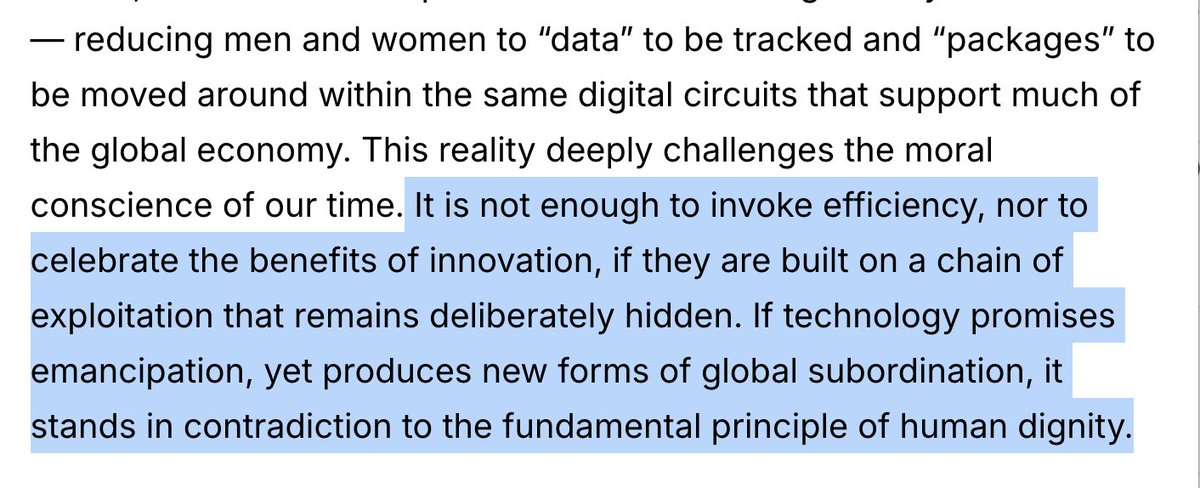
Humanity, created by God in all its grandeur, is today facing a pivotal choice: either to construct a new Tower of Babel or to build the city in which God and humanity dwell together. In Jesus Christ, this humanity in its grandeur becomes the Way, the Truth and the Life, opening the path for each of us to grow toward fullness. #MagnificaHumanitas vatican.va/content/leo-xi…
Laban retweetledi

