Learn AI

11.7K posts

Learn AI

Learn AI

@learntouseai

Spain Katılım Ocak 2023
6.9K Takip Edilen810 Takipçiler
Learn AI retweetledi
Logan Kilpatrick
Logan Kilpatrick@OfficialLoganK·
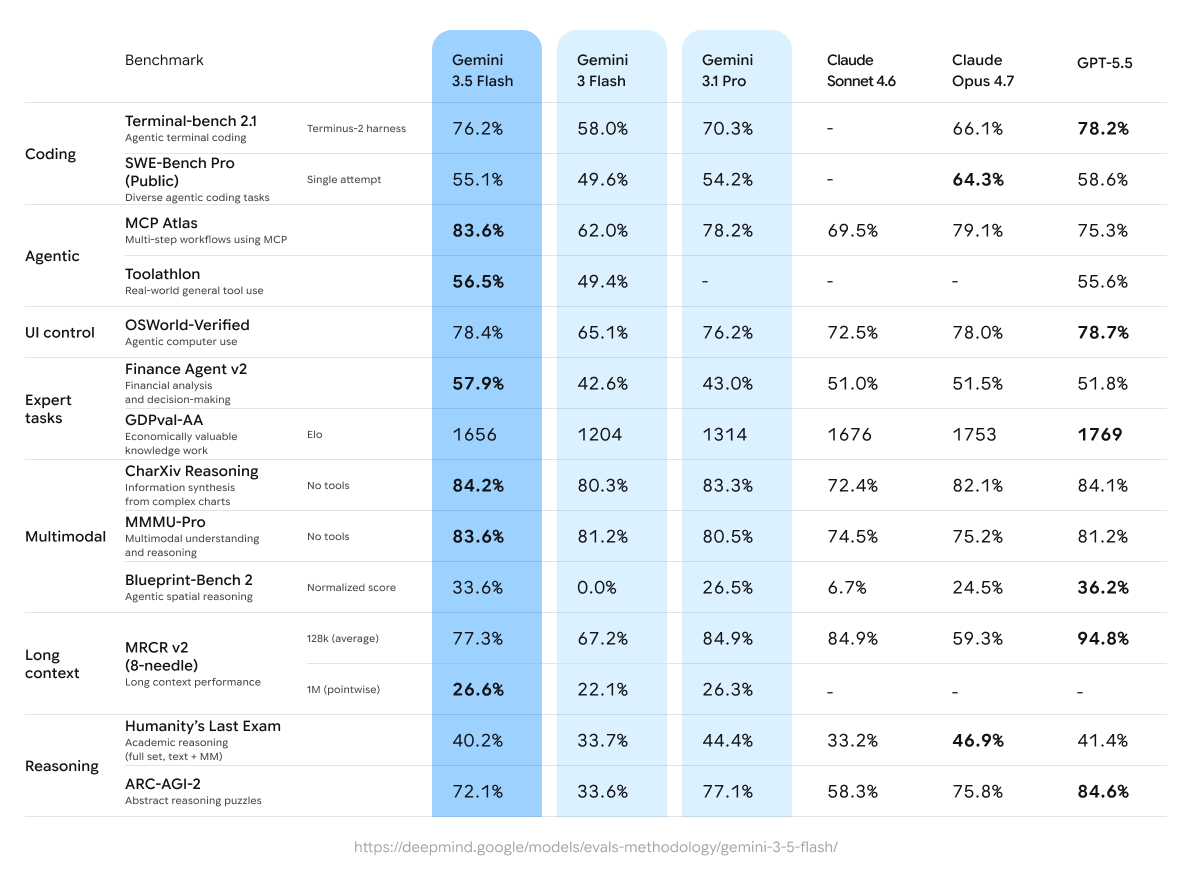
Welcome to Gemini 3.5 Flash, our most powerful model to date. It pushes the frontier of intelligence, speed, and cost putting 3.5 Flash in a class of its own. We spent the last 6 months making sure Flash is great for real world use cases. It's available everywhere now!
Logan Kilpatrick tweet media
English
337
606
6K
324.8K
Learn AI retweetledi
Sapient Intelligence
Sapient Intelligence@Sapient_Int·
Introducing HRM-Text. An ultra-lean 1B-parameter reasoning language model designed to deliver strong general performance with a fraction of the data, compute, and infrastructure. Trained on just 40B structured tokens, HRM-Text achieves competitive performance while using ~1/1000 of the training data of comparable models. The kicker? The full model trains in roughly one day on a $1,000 budget. This opens the door to a new generation of AI that is powerful, accessible, and radically easier to adapt. Theories and research concepts once deemed too expensive to test are officially back in the game. Sapient Intelligence invites you to help us shape a new paradigm for general intelligence.
English
143
240
2.2K
418.3K
Learn AI retweetledi
ClaudeDevs
ClaudeDevs@ClaudeDevs·
What are best practices for running Claude Code at scale? New blog post on what we've learned from teams running it across multi-million-line monorepos, decades-old legacy systems, and distributed microservices: claude.com/blog/how-claud…
English
120
404
4K
612.9K
Learn AI retweetledi
R𝛼m🦅
R𝛼m🦅@rambuilds_·
If I had 6 months to become a GenAI Engineer. I'd do this. Stage 1: Python + Async Architecture FastAPI, asyncio, typing, Pydantic v2, event-driven design, API integration patterns. Stage 2: Multimodal LLM Fundamentals Transformer architecture, SLMs vs LLMs, context window management, vision/audio inputs, token economics. Stage 3: Structured Outputs + Prompt Ops JSON schema enforcement, function calling, prompt versioning, template management, few-shot optimization. Stage 4: Advanced RAG + Knowledge Graphs Hybrid search, graph RAG, semantic reranking, metadata filtering, citation grounding, incremental indexing. Stage 5: Agentic Workflows + Orchestration LangGraph/LlamaIndex, tool use, planning loops, multi-agent collaboration, human-in-the-loop handoffs. Stage 6: Production GenAI Applications Streaming responses, optimistic UI, fallback models, rate limiting, cost-aware routing, session management. Stage 7: Evaluation + Quality Assurance LLM-as-a-judge, automated eval harnesses, regression testing, hallucination metrics, RAGAS/DeepEval. Stage 8: Inference + Infrastructure Optimization vLLM/SGLang, quantization (FP8/INT4), KV caching, speculative decoding, edge deployment, model distillation. Stage 9: MLOps + Observability Distributed tracing, latency monitoring, cost dashboards, drift detection, CI/CD for prompts and models. Stage 10: AI Safety + Compliance Guardrails, prompt injection defense, PII redaction, copyright checks, EU AI Act compliance, content filtering. Stage 11: Open Source + Portfolio Ship multimodal agents publicly, write technical deep dives, record demo videos, contribute to orchestration libs. Stage 12: Apply GenAI Engineer, AI Application Developer, LLM Infrastructure Engineer, Autonomous Systems Engineer roles. Most people stay stuck watching tutorials. Builders get hired. (Bookmark it)
English
5
30
178
9.3K
Learn AI retweetledi
Bison Head
Bison Head@100MBTC·
Met a coder friend yesterday. He is in Relatively high paying job in India. He says now a days he don't write single line of code, just claude. Their company gives almost unlimited claude tokens plan. He said productivity has increased massively. They can get done projects in 2 days which would take 10-20 days He agrees those jobs won't need humans in 2 years. Maybe 10 senior dev as oversears replacing 1000 junior devs. Oracle pulled out from campus selection in IITs. Wipro fully stopped campus selection this year
English
59
65
1.3K
156K
Tibo
Tibo@thsottiaux·
@kr0der What would you like to see in a > $1000 plan
English
369
6
718
70.1K
Anthony Kroeger
Anthony Kroeger@kr0der·
who’s gonna pull the trigger on $500/$1000/$2000 AI subscription plans first? everyone who needs those plans is just buying multiple $200 plans anyway 👀
English
68
5
507
103K
Learn AI retweetledi
Sudo su
Sudo su@sudoingX·
anyone thinking about, learning, or already working with agentic systems, you should know this. the first few steps of your setup matter more than any model or framework you pick later. get them right and you never lose your flow. the foundation nobody posts about: > 1. tailscale. a private mesh network across every machine you own. laptop, desktop, rented node, all on one secure tailnet, reachable from anywhere. nothing else works well until this does. > 2. termius, over that tailnet. one SSH client that reaches every node, phone included. you are never away from your stack. > 3. tmux. persistent sessions. disconnect, close the laptop, come back, every session exactly where you left it. agentic work runs long, your terminal has to survive that. > 4. a private git repo. the one i am most glad i found. it is the memory layer across all my agents, they pull, they work, they merge back, the codebase stays alive between sessions. context that would die in a chat window lives in the repo instead. > 5. script everything from day one. ssh aliases for every node, setup scripts, the boring boilerplate automated. if you will do a thing more than twice, it is a script. everything past these five is decorative. know these cold. and the habit that ties it together: ask the AI itself. for the config, for the error, for any of it, let the agent do the lifting, then double check what it hands you. lock the five, build the habit, and you make it. skip it, anon, and you ngmi.
English
114
162
2.2K
203.3K
Learn AI
Learn AI@learntouseai·
@ajambrosino some problems when trying to reconnect, when the laptop or the iPhone turns off, and next day turns on
English
0
0
0
96
Andrew Ambrosino
Andrew Ambrosino@ajambrosino·
Thanks for the feedback on Codex in the ChatGPT mobile app. While it’s in preview, we’re working to improve it fast. What you can expect next: push notifications, /fork, ability to restore after revoking, better reconnects, fixing the ability to control other devices, fewer mobile thread errors, better git diff & full-file, no plan mode issues, and lots more polish/bug fixes.
English
186
48
1.3K
162.3K
Learn AI retweetledi
Okara
Okara@askOkara·
we're a 5 person startup growing faster than some 50+ person teams here's our entire stack: - okara ai cmo - seo, reddit, linkedin, x, ugc - claude code / cursor - generate code - stripe - collect payments - vercel - deployment and hosting - supabase - manage database and storage - posthog - understand what users actually do - kit - send weekly emails to users - x + linkedin - feature announcement, demos etc - google ads/meta ads manager - run ads small teams can now outrun companies 10x their size
English
27
13
294
16.3K
Learn AI retweetledi
Dhairya
Dhairya@dkare1009·
Everyone defaults to RAG. There are 8 ways to connect an LLM to your data. Most engineers only know one. Your data shape, query pattern, and cost constraints should pick the method. Not habit. Here are all eight. 1. Long Context (brute force) ↳ Put everything in the prompt. No retrieval, no infra. ↳ Works for: small, static datasets under 200K tokens. Prototypes. One-off analysis. ↳ Breaks at: scale. $0.10-$15 per query. 20-60s latency. Accuracy drops 20%+ for information buried in the middle. 2. CAG (Cache-Augmented Generation) ↳ Load all docs into context once, ↳ persist the model's internal state across queries. ↳ Every subsequent query skips both retrieval and re-processing. ↳ Works for: static knowledge bases with high query volume. ↳ Breaks at: frequently changing data. Anything too large. 3. RAG (Retrieval-Augmented Generation) ↳ Chunk, embed, store in vector DB, retrieve by semantic similarity at query time. ↳ Works for: large, evolving knowledge bases. 100K+ documents. ~$0.00008 per query. ↳ Variations that all build on vectors at the core: → Agentic RAG: agent orchestrates multiple retrieval strategies dynamically → GraphRAG: extracts entities and relationships into a knowledge graph for multi-hop reasoning → Hybrid search: combines keyword (BM25) with semantic (vector) retrieval 4. Text-to-SQL ↳ LLM generates SQL from natural language, executes against your database. ↳ Works for: structured, tabular data. Analytics. Aggregations. Joins. ↳ Breaks at: unstructured text. Complex schemas without documentation. ↳ Needs query sandboxing for security. 5. Agentic File Search ↳ LLM uses tools (grep, file read, glob) to iteratively search your file system. ↳ Works for: codebases. Structured directories. Multi-step search that requires reasoning. ↳ Breaks at: millions of unstructured documents. Speed-critical applications. ↳ This is how Claude Code works. 6. Vectorless Reasoning RAG ↳ Documents become hierarchical JSON trees. LLM navigates the structure using reasoning, not similarity. ↳ Works for: long structured documents. Financial reports, legal contracts, academic papers. ↳ Breaks at: flat unstructured text. Large corpora. Speed-critical applications. 7. Tool Use / Function Calling ↳ LLM calls external APIs to fetch real-time data as part of its reasoning. ↳ Works for: live data (stock prices, weather, CRM records). Data behind existing APIs. ↳ Breaks at: unstructured text search. When no API exists. ↳ MCP standardises this 8. Fine-tuning ↳ Train the model on your domain data. ↳ Knowledge lives in the weights, not retrieved at inference. ↳ Works for: stable domain knowledge. ↳ Breaks at: changing information. Source attribution. No single method wins everywhere. Most production systems combine two or three. The question is not "should I use RAG?" It is "which pattern fits my data, my queries, and my constraints?" ♻️ Repost to help an engineer pick the right pattern.
Dhairya tweet media
English
9
17
99
3.3K
Learn AI retweetledi
OpenAI
OpenAI@OpenAI·
You've been asking for this one... Now in preview: Codex in the ChatGPT mobile app. Start new work, review outputs, steer execution, and approve next steps, all from the ChatGPT mobile app. Codex will keep running on your laptop, Mac mini, or devbox.
English
1.7K
2.6K
21.9K
4.6M
Learn AI
Learn AI@learntouseai·
codex mobile is today? 🤯
English
0
0
1
30
Learn AI retweetledi
Nous Research
Nous Research@NousResearch·
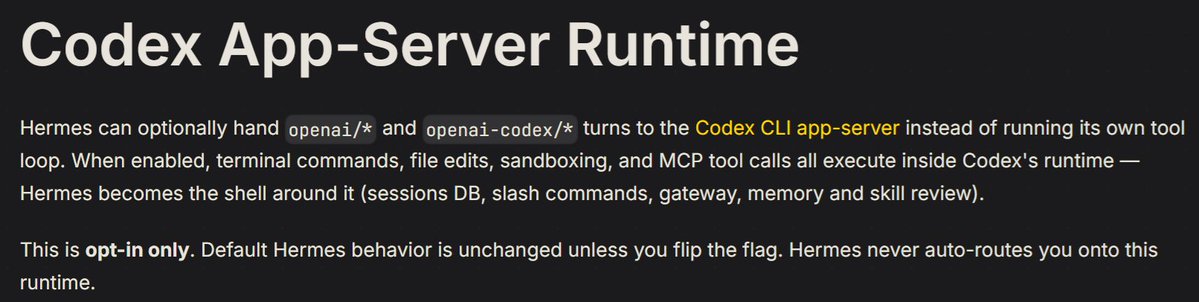
You can now power your Hermes Agent, if using OpenAI models, with codex as the runtime for the core tools that it offers, with the flip of a switch with the new Codex runtime integration!
Nous Research tweet media
English
142
144
2.3K
5.4M
Learn AI retweetledi
金のニワトリ
やった!遂にCodex AppをローカルLLMで動せた!!
日本語
16
52
814
100.6K
Borja Perez Ⓜ️
Borja Perez Ⓜ️@borjaperfra·
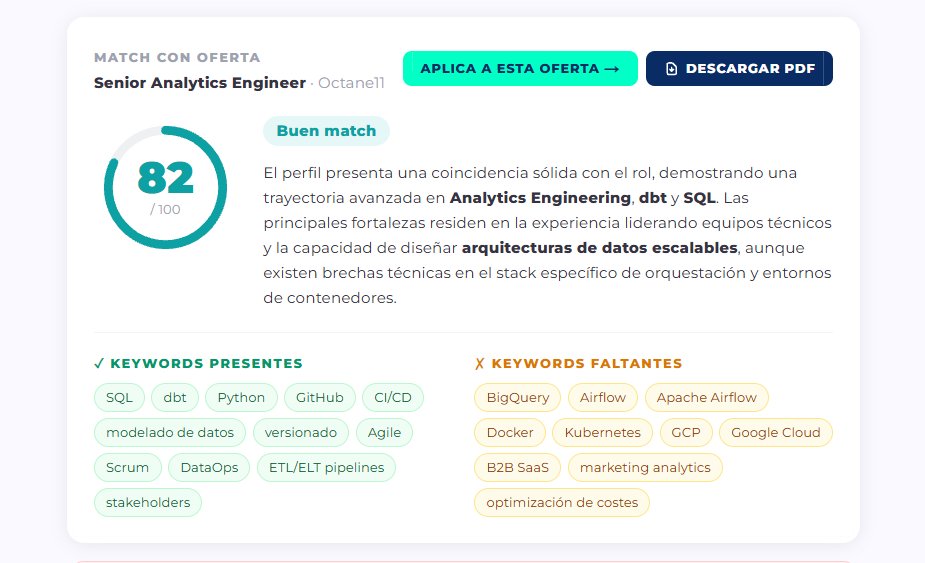
🚨 NOVEDADES chulas en ATS Killer 👀👇 💎 Ayer cambiamos Gemini 3.1 Flash por Gemma4. He corregido algunos errores y mejorado los resultados. ✅ Ahora el análisis del CV te da consejos sobre cómo reescribir algunas partes que detecta mejorables. ✅El editor de CV calcula en tiempo real cuánto sube tu puntuación si aplicas los cambios. Así no tienes que descargarlo y volverlo a subir. Y dos novedades MEGA chulas: ✅Si analizas una oferta vs tu CV te da consejos de formación o gaps que deberías cubrir y algunas fuentes de cursos, libros, etc. para mejorar tus habilidades. ✅He cargado las ofertas de Manfred, así que puedes subir tu CV y seleccionar la oferta que quieras y ver el encaje :) Si ya lo tenías cargado, te hace un rank con % de match más alto de las ofertas que tenemos. Y a partir de 75 puntos te recomienda aplicar 😉 Prueba las novedades y me dices: cv.nan.builders Sigue siendo una beta, pero ya van más de 8.600 Cv's analizados ^__^ Seguro que hay cosillas a mejorar
Borja Perez Ⓜ️ tweet media
Borja Perez Ⓜ️@borjaperfra

😢 Nadie te llama. Tu CV no pasa LA BARRERA de los ATS. Hasta hoy ^__^ He construido una herramienta que te ayuda a optimizar tu CV para los sistemas de filtrado que usan las empresas. He lanzado la herramienta que os comentaba la semana pasada con la ayuda inestimable de @barckcode Te la dejo aquí: cv.nan.builders Hay mucha gente que no entiende que muchas empresas utilizan ATS para filtrar las aplicaciones (en Manfred no, por si tenías la duda). Hace unos días, hablando con un Engineering Manager que estuvo en búsqueda de empleo, me decía: “Yo también era un rebelde que se resistía a cambiar su CV. Hasta que me lo dijeron a la cara. Da igual que tengas razón o no. El sistema ahora funciona así y si no te metes en el sistema tienes muchas menos probabilidades. Ese mismo día cambié el CV, volví a aplicar y empezaron a llegar los emails que no llegaban antes.” 🤔 El flujo es sencillo: - Sube tu CV (solo se almacena en tu local storage) - Analízalo - Revisa el análisis (puedes descargarlo en PDF) - Te vas al editor de CV’s: cargas tu CV y aplicas las mejoras que te da la IA - Descargas tu nuevo CV - Traduces al inglés si quieres los dos idiomas - Te vas al comparador de CV vs oferta y le tiras una oferta que encaje contigo y miras el % de match El editor de CV’s es estricto porque si os dejo tocar demasiado, la liáis parda y el CV deja de estar optimizado para ATS. Y aplica la plantilla que compartió @DanielBlancoSWE (la que él uso para entrar en Salesforce o MongoDB) con un botón. Y en el análisis de tu CV, no todos los consejos se pueden aplicar, pero FUNCIONA mucho para optimizarlo. ⚠️ Importante: No me juzguéis como desarrollador sin ser yo nada de eso :) Sed buenos. Esto es un side project que se ha convertido en una herramienta útil para la comunidad, pero no deja de estar vibecodeada por un tío que puso algo en producción por primera vez hace unas semanas. Ten en cuenta que puede tener errores, fallos en los timeouts de las llamadas, etc. Es una BETA. Prueba, analiza tu CV, aplica los cambios en el editor y usa el comparador de cv vs oferta para ver tu grado de match. Y si encuentras algo que mejorar o que no funciona, hay un botón de FEEDBACK que me crea issues que poder priorizar para mejorar la herramienta. Esto es marca ACME, puede petar en cualquier momento. La API tiene un límite de gasto para que no me arruinéis XD Así que si no funciona, me notificáis y reviso. La idea es testear que esto tiene sentido de dos maneras: - Como herramienta para la comunidad. Y de ahí, generar una suite de herramientas desde Manfred que os sirvan y os ayuden en la búsqueda de empleo - Constatar que se puede hacer software como marketing y, a la vez, seguir haciendo un marketing honesto :) Laik, repost, guarda y tal para que la herramienta llegue a más gente. Y si quieres compartir tu puntuación (de tu CV actual o del mejorado o de los dos) en los comentarios del post, dale :) Me hará muy feliz PD: no he conseguido llegar a una puntuación de 99 o 100. Si alguien llega, premio ;)

Español
15
13
202
18.1K
Learn AI retweetledi
AlphaFox
AlphaFox@alphafox·
Today I was laid off from the IT field after 30 years at the same job. I started part time in 96' when I was a junior in high school, just doing basic troubleshooting and fixing computers. I worked through college and then full time after. What did I get for my 30 years of service? Almost nothing. I got 3 weeks vacation, which was supposed to be accrued only (which would have been 1.5 weeks) but after I complained it was changed to the full 3 weeks and paid medical for a few months. No severance. No cushion. Nothing. 😒 Why was I laid off? - Dwindling client base - The number was cut in half in recent years; several closed and some found other IT vendors. Splitting time between a smaller number of clients obviously is not sustainable. - AI automation - gone are the days of needing to run around to every computer to apply updates, basic things can be fixed remotely, and AI makes reporting that took days take hours. Instead of asking IT for help, clients just ask AI which walks them through fixing many things - Instead of needing an expert, AI can do it all for you. - Less need for IT support - back in the day, late 90's - 2010's, people had no idea how to do basic computing, hooking up computer, printers, ect. The modern workforce is able to do most of this stuff themselves and are much more computer savvy. What will I do now? Not sure. Since I have done this for 30 years, I'm unsure of the direction I want to go. I could get into another IT job probably, but we will see where the wind takes me. Without X, I would be sunk - the cost of living is so high in MA, all of my regular income went to cover the essentials. Most of the money that I have earned on X has been saved so I have that to fall back on but I never intended for it to be my full time thing. The direction X is going I sadly dont know if its viable to do full time and that's pretty sad for an account this size. At one point it seemed like a possibility, but the way things are looking now, it seems like they dont want to pay anyone for anything any more. In the meantime, I will be trying to improve my X game and possibly doing more spaces, articles, research, ect - but at the end of the day, even if I do those things, I have no idea if it will be worth it or viable the way things are looking. 'Make your living on X' Elon once said - it seems like a pipe dream at this point but here's to hoping for the future. 🥂
English
768
282
4.4K
244.2K
Learn AI
Learn AI@learntouseai·
@adamsilverman creating educational content 24/7, with audio and photos (testing rn video with ltx / chatbot) 4 Mac mini // gemma 4 e4b 1 MacBook // gemma 4 26B 1 4060 rtx (comfyui) 1 netgear switch edge tts whisper aulafy.net
English
0
0
1
210
Adam Silverman (Hiring!) 🖇️
Anyone have a mac mini that is running 24/7 doing something productive? Everyone I talk to has bought one and it is only used a few minutes a day when they ask basic questions to it.
English
55
2
54
13.7K