

Manuel_Leccese
536 posts


@myplace_myworld samsung has an excellent quality, and they also already have a triple stack cmos structure which is better suited for lofic than sony's dual stack with exmor, but even sony is migrating to triple... omnivision is a big no for me, too many quality problems at the moment
English

@LecceseManuel That's gone... I've hinted several times that Sony is taking its time this year... Or maybe Samsung and Omnivision are just too fast...😊
English
Don't think of HPA as a telephoto lens; that will significantly increase the price...
OVB0D > LYT 901...

English
@myplace_myworld mostly because i don't understand why they didn't use hpc as a solution for the next generation periscopes instead of staying on 1/1.4"
English


@ISAQUES81 @evgeny_makarov7 please, stop comparing the useless long range on smartphones, focus on long focal length lenses 😭
English

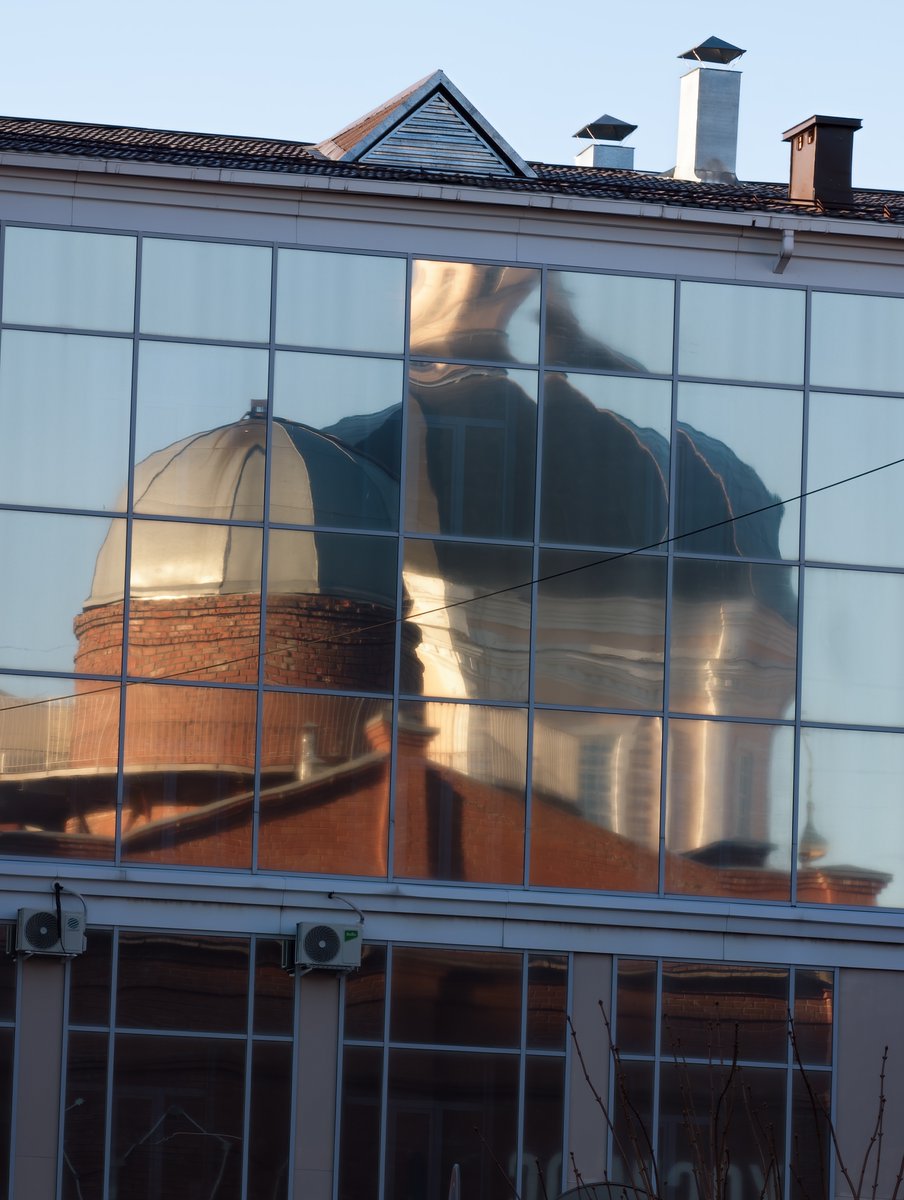
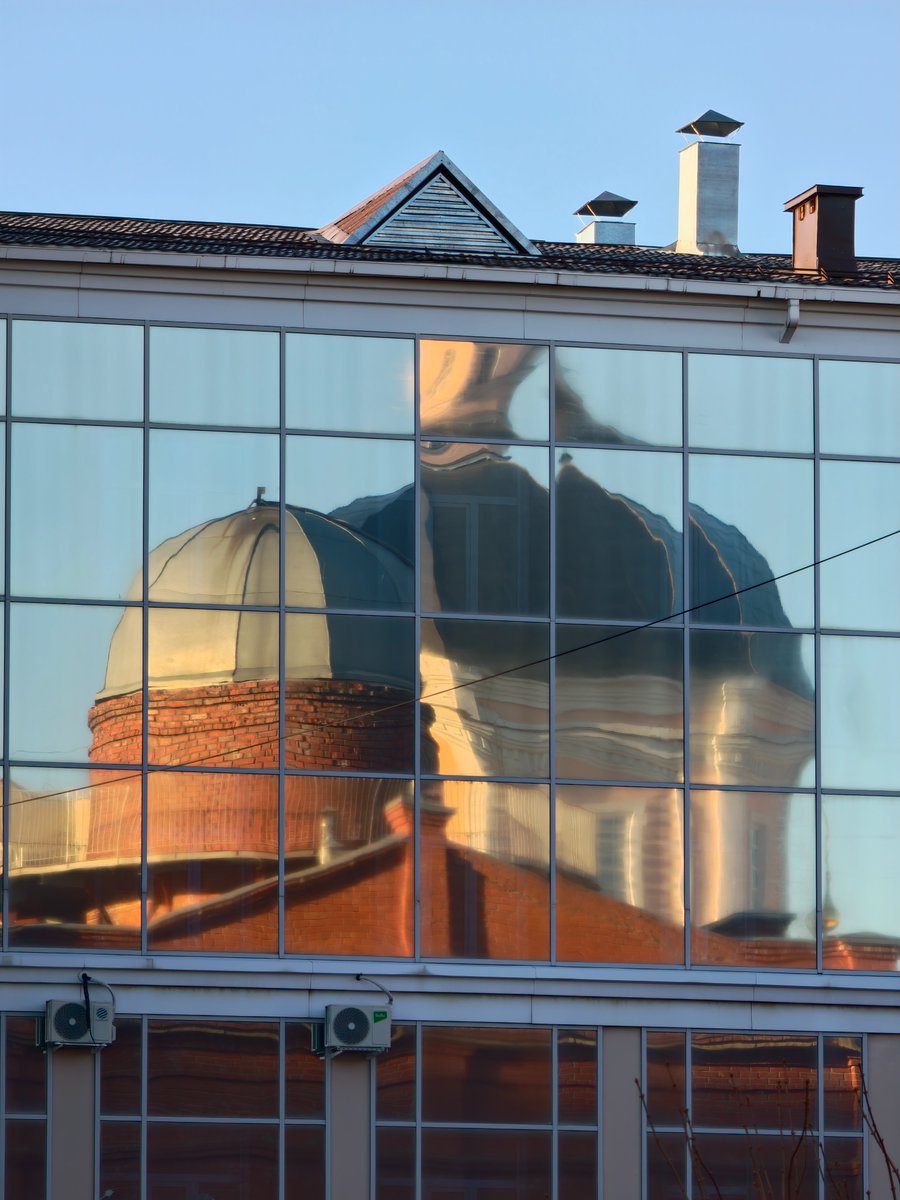
Vivo X300 Ultra vs Oppo Find X9 Ultra - 10x Zoom Shots
* Which one is the best?
Credits: @evgeny_makarov7
English
@MyDaebakCafe @Wvisioncreation you're an idiot, sony's first lytia sensor with lofic will be the 838, 1/1.28'', 50 MP, which will debut on the vivo x500 pro max... stop using gemini and learn to read, the lytia 901 uses the classic dcg to do hdr, not lofic... the lytia 902 will have lofic
English

That’s a lot of confidence for a take that’s factually dead on arrival.
The Sony LYT-900 sensor used in the Oppo Find Ultra series is literally the poster child for LOFIC technology. It’s a 1-inch type stacked CMOS sensor built on a 22nm process specifically designed to handle a massive full-well capacity via that capacitor to reach 14 stops of dynamic range.
If you’re going to come in that hot, you might want to check the spec sheet for the Sony LYTIA flagship line first. LOFIC is the fucking defining feature of the hardware. Soooo, demonstrating you the OPPO’S sensor uses LOFIC is much easier than trying to figure out if there's a brain in your skull... really!
English

Why does the OPPO Find X9 Ultra keep shooting darker images than the Galaxy S26 Ultra… even at higher ISO?
This may reveal something much bigger about how modern computational photography actually works behind the scenes.
Full breakdown 👇
sammyguru.com/oppo-find-x9-u…
English
@MyDaebakCafe @Wvisioncreation but if no oppo sensor uses lofic, what the fuck are you saying
English
Great article as usual. The article's observation regarding "computational exposure attenuation" is quite correct, as it captures a fundamental shift in how flagship smartphone manufacturers are prioritizing data over aesthetics at the point of capture. But, based on my research and observations so far, the "darker" behavior described in the Oppo Find X9 Ultra is likely a direct result of LOFIC technology, which is becoming standard in top-tier LYTIA sensors.
Instead of a traditional "digital ND", LOFIC adds a high-capacity capacitor to each pixel. When a pixel reaches its saturation point (the "full well capacity"), the excess charge overflows into this capacitor instead of clipping. The result is the sensor can capture highlights that are significantly brighter than traditional sensors without "blowing them out." The image appears darker because the pipeline is intentionally mapping the "mid-tones" lower to make room for this massive increase in highlight headroom. It isn't just "underexposing" imho, it is shifting the entire dynamic range curve to preserve data.
There's also a part in the article where you wonder why higher ISO leads to darker images. This is best explained by ISO invariance. In modern high-end sensors, the difference between analog gain (ISO) and digital gain is increasingly blurred. Oppo and Vivo are using a "Dual Conversion Gain" strategy where they use a higher ISO setting to reduce read noise in the shadows, but then "pull" the digital exposure back down to protect highlights. Therefore, a higher ISO with a darker output often results in a cleaner image in the shadows (less floor noise) compared to a lower ISO that is "pushed" digitally later.
There's also a display consideration. While these cameras are capturing massive amounts of data (RAW MAX / Expert RAW), the Galaxy S26 Ultra for example uses an 8-bit + FRC display panel and while it simulates 10-bit color, the way it renders the "immediate" brightness and contrast in the preview will differ from a device using a native 10-bit panel. This can lead to a perception that the Samsung image is "punchier" or "brighter" in the viewfinder, even if the underlying RAW data in the Oppo has more recoverable information.
There's another mention in the article that the "live viewfinder preview" is darker. This is a deliberate choice for temporal consistency. By keeping the preview exposure closer to the "raw" sensor state (darker/protected), the AI can more accurately predict where motion blur or ghosting will occur during the multi-frame reconstruction. Samsung’s approach is more user-centric, prioritizing a WYSIWYG experience that feels more like a traditional SLR, even if it requires more aggressive tone-mapping later to "fix" the highlights.
SO, The Oppo isn't "failing" to get light, it's just maximizing the linearity of the sensor to avoid the "digital look" of clipped highlights. While Samsung's sensor (mainly the 200MP one), uses a different sub-pixel structure (Tetra2pixel) that favors resolution and mid-tone clarity, which naturally results in the "brighter" look described in the article.
Thank you @Wvisioncreation for sending me your articles for a reading. This is not a total refute of your observation but merely some kind of addendum. 😅
English

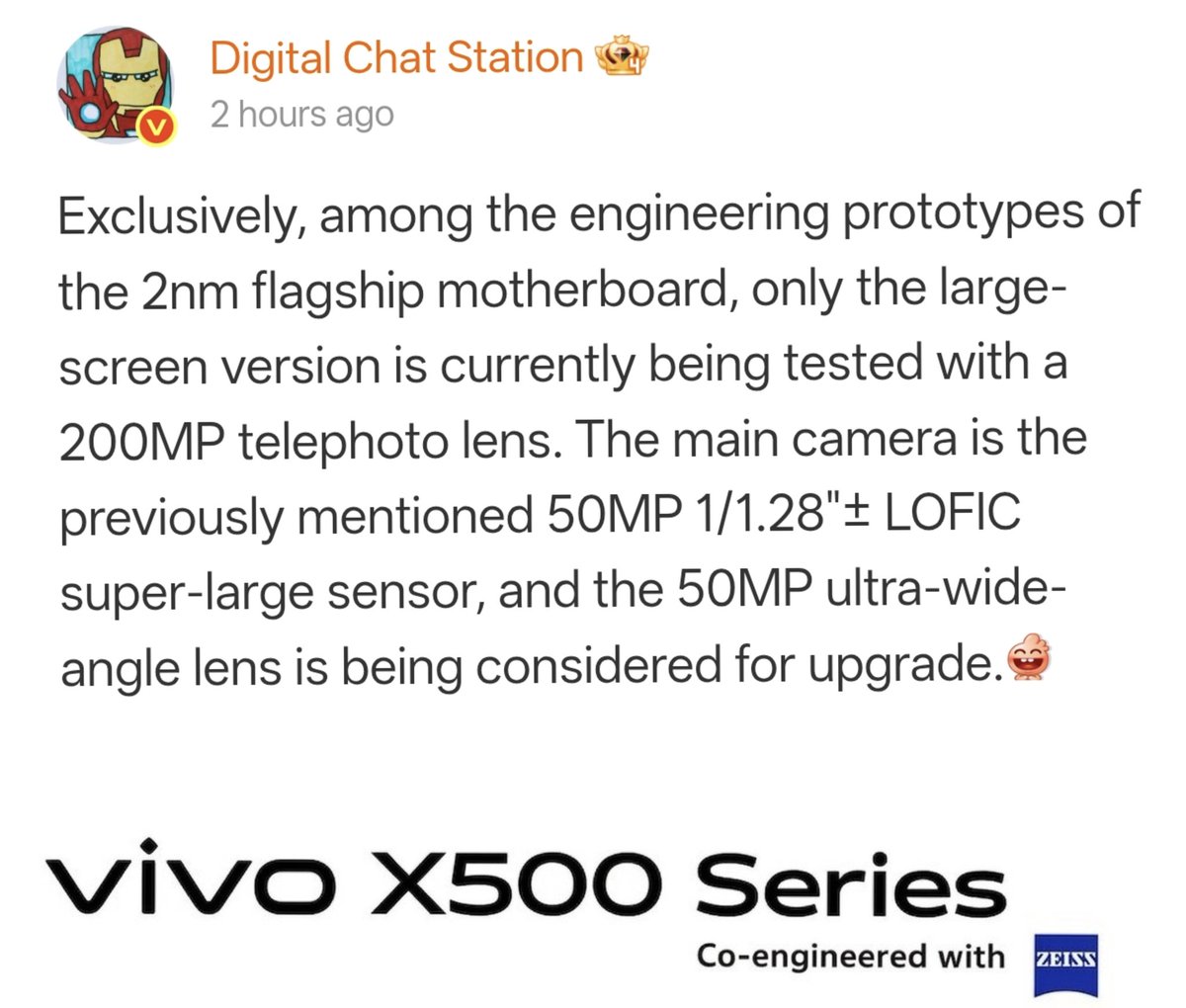
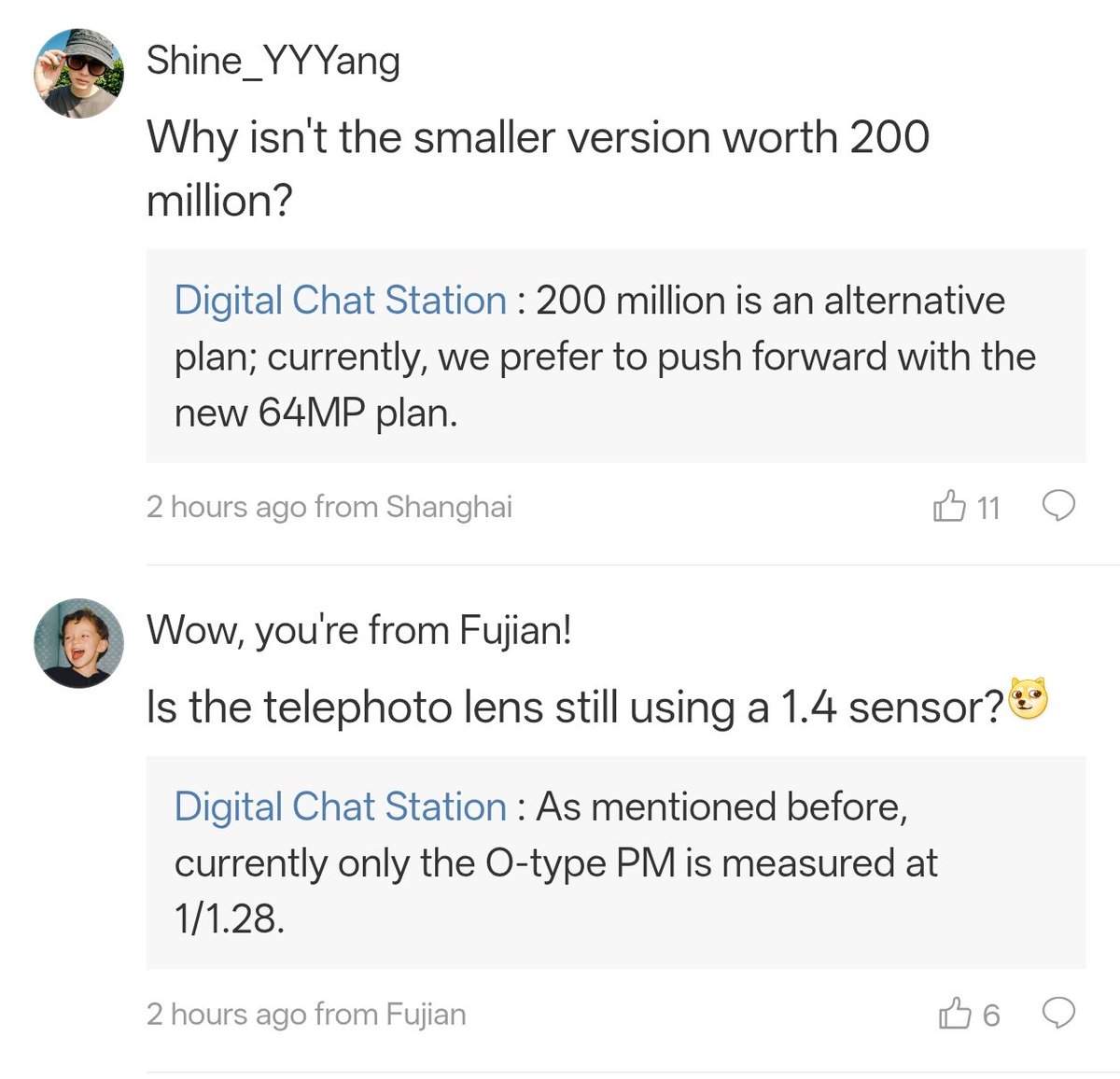
Vivo X500 Series 🚨
✅ #vivoX500
50MP 1/1.28" Main 📸
64MP 1/2" Periscope
✅ #vivoX500Pro
50MP 1/1.28" LOFIC Main 📸
200MP 1/1.4" Periscope
✅ #vivoX500ProMax
50MP 1/1.28" LOFIC Main 📸
200MP 1/1.28" Periscope
Pro & Pro Max will get Upgraded UW Sensor❗
#vivo
English
@myplace_myworld @toolate0007 so, confirm pls
x10 pro max > hpc main + ov52b tele
x500 pro max > 838 main + hp9 reboot tele
magic 9 pro > ov50? main + hp9 reboot tele
English
LOFIC Pro Max OV52B telephoto lens...
OVB0D can be used as a wide-angle lens (more than one manufacturer)
English
@myplace_myworld @toolate0007 ahhhhh, i thought you were talking about a 1/1.4" sony telephoto lens with lofic... now it's clear
English
@toolate0007 @LecceseManuel If there's an Ultra version, it will be improved; everyone will use Samsung 1/1.4" except Oppo.
English
@myplace_myworld it will be a sort of "lytia 750" so, between lyt-700 and lytia 838
English
@myplace_myworld another custom iteration besides the main lyt-838?
English
@HappyNaClO1 @Abhinov_v @ISAQUES81 a crashed shadow or a jagged micro texture aren't choices, they're mistakes you can't recover from
English

@LecceseManuel @Abhinov_v @ISAQUES81 But a lot of those decisions are based on what actual camera rendering does ... So it makes a lot of sense. Alternatively shoot in raw and no problems there
English
Oppo Find X9 Ultra - Telemacro Shot
* Guys, honestly, IMO this is a disaster... please let me know what you think.

English
@HappyNaClO1 @Abhinov_v @ISAQUES81 i focused on xiaomi because you mentioned it, but i have no problem telling you about oppo's too... including the same vignetting, the total crash of blacks and shadows, micro texture resolution issues etc.
English
@LecceseManuel @Abhinov_v @ISAQUES81 And some of what you described is Leica authentic. It's on both phones and cameras. There are legitimate issues with some of the rendering. Other decisions however are by design.
English
@HappyNaClO1 @Abhinov_v @ISAQUES81 they are all there and you know it very well, any comparison can show you some or all of them
English
@LecceseManuel @Abhinov_v @ISAQUES81 Some of the issues aren't that in fact. Some are deliberate. You may not like it and that's fine but some of what you're describing is the OEMs decision to tune in that process. If you don't like that tuning you don't have to get the device. It's really that simple
English
@HappyNaClO1 @Abhinov_v @ISAQUES81 bro, many don't know how to use it, but if xiaomi continues to have obvious problems with the consistency of color rendering and hdr, obvious vignetting phenomenon, only the vivid option to remove it m but it changes the colors etc., the users' fault goes up to a certain point
English
@Abhinov_v @LecceseManuel @ISAQUES81 The thing is there's a real level of stupidity with users. On the telegram group there is consistently someone coming in there who doesn't know how to use the camera expecting the auto mode to just work. And while the 17 ultra improves that it still occurs
English
@HappyNaClO1 @Abhinov_v @ISAQUES81 because 1% of smartphone users are photographers, the remaining 99% are ordinary people who want the best possible photo... furthermore, mixing professional photography with amateur smartphone photography is the first step towards talking bullshit
English
@LecceseManuel @Abhinov_v @ISAQUES81 It's not really a preference. It's actually a disservice to rely on auto mode if a user wants the best image possible. That's with any phone. Hell it's also with most standard cameras so why do we create this fictitious argument when whole ass photographers do their work in raw
English