legendxkilla.eth

3.2K posts

legendxkilla.eth banner
legendxkilla.eth

legendxkilla.eth

@Legendxkill

Crypto since 2020 | Web3 Investor | Small-time Degen | Decentralization Maxi | Airdrops & Insights | All posts = NFA + Always DYOR 🧠

Somewhere on Ethereum Katılım Şubat 2022
570 Takip Edilen208 Takipçiler
Sabitlenmiş Tweet
legendxkilla.eth
legendxkilla.eth@Legendxkill·
THREE WAYS TO DO P2P (Especially in INDIA, Without getting your bank account frozen or begging a Telegram admin) Everyone’s trying to move USDT to INR or back, but the options are either sus, overregulated, or straight-up bank-risky. Here’s what I’ve tried, what worked (for a while), what broke, and what might actually be heading in the right direction. 1. Traditional P2P (aka “bro, send UPI”) ➜ You send USDT to someone you know ➜ They send you INR via UPI or bank Sounds simple. And it is, when you trust the other person. No platform, no fees, no drama… until the drama starts. ➜ Works well with friends/mutuals ➜ Super quick ➜ No exchange middleman But... ➜ Very limited liquidity ➜ If they ghost, it’s game over ➜ No dispute support ➜ Repeated unknown INR credits = bank’s favorite red flag I used this after the 1% TDS rules kicked in, not hoping to dodge tax... But headaches from it (I file tax regularly 💪). Worked… until Kotak said “nah” and locked my account. Took mild heart attack to unfreeze it. 2. CEX P2P (Binance, WazirX, etc.) ➜ You post an offer ➜ Buyer or seller matches ➜ INR is paid manually, USDT released via escrow This one feels safe. And for the most part, it is. ➜ Escrow protects both sides ➜ Good liquidity ➜ Ratings help avoid shady traders But... ➜ Full KYC, your entire identity’s out there ➜ Every transaction is traceable ➜ Banks still freeze accounts ➜ 1% TDS, PAN uploads, Form 26QE… this isn’t crypto anymore, it’s clerical work Used to be smooth back in the no-tax days. I’d withdraw straight from WazirX and sleep peacefully. Now it’s like doing a GST filing just to sell $200 worth of coins. 3. P2P(.)me (The new model that isn’t pretending to be Coinbase Lite) This one’s... different. Not another exchange or app. ➜ It’s a decentralized protocol ➜ Smart contracts handle the crypto leg (USDC) ➜ Fiat leg (INR) is handled by liquidity providers (LPs) off-chain ➜ You stay anonymous but verified using ZK-KYC (zero-knowledge identity proof) ➜ LPs are rated, and reputation actually matters You create your own smart wallet → place a trade → an LP accepts → INR/USDC flows happen The crypto side is trustless, the INR side is peer-to-peer, but with actual filters and safety nets. ➜ You never touch INR from random wallets ➜ No one sees your PAN, Aadhaar, etc ➜ RP system rewards good actors (both LPs and users) Let’s be real though.. it’s not some utopian fix: ➜ Liquidity still depends on LPs ➜ You need to know how smart wallets work (or at least follow instructions) ➜ It's early, not something your uncle is gonna use yet My friend used it to pay a restaurant bill via UPI after sending USDC on Base. No CEX, no Telegram guy, no “bro sent?” screenshots. Looked smooth, but yeah... niche for now. Where I Stand: ➜ Started with CEX P2P — worked great before tax rules nuked it ➜ Switched to traditional P2P — got my account frozen, 0/10 experience ➜ Went back to CEXs like CoinDCX — safe but annoying ➜ Watching @P2Pdotme now — haven’t used it yet since my @AviciMoney AVICI card handles INR<>crypto for now, but keeping an eye on it It’s not perfect. Still rough at the edges. Most P2P flows in India either risk your bank, your data, or your sanity. Only a few are trying to actually fix the root problem, and P2P(.)me might be one of them...
legendxkilla.eth tweet media
English
1
6
26
7.7K
P2P.me (TGE arc)
P2P.me (TGE arc)@P2Pdotme·
A note on the Polymarket positions you've seen on-chain - the account named "P2P Team" is ours. We wanted to come out honestly. The capital came from our foundation account and all proceeds return to it. Here's the full picture. 10 days before our raise went live, we placed bets that we'd hit our $6M+ target. At that point we had one oral commitment from Multicoin ($3M) - no signed term sheets, no guaranteed allocations, nothing binding. We were betting on ourselves. We'd told the market we were raising over $6M. We believed we could. That bet was our way of backing our word with our own money at a moment when the outcome was genuinely uncertain. Over the following 10 days we made our case, secured commitments, and the raise closed at $5.2M - entirely from outside investors we don't control. We understand why this raises questions. Trading on an outcome you can influence erodes trust. We don't believe we were trading on a done deal, but we recognize reasonable people can see it differently. We named the account "P2P Team" deliberately - to give a marketing signal of our presence to the community and reflect our intent to be transparent. But intent isn't the same as action. Not disclosing at the time was a mistake we own. We took time to study the legal implications before speaking, which is why we stayed silent until now with a "No Comments" stance! - that too is a fair criticism. All proceeds go back into our futarchy-governed MetaDAO treasury. We will be liquidating all positions in the next few hours and are putting together a formal company policy on prediction market trading going forward. One thing we want to be unambiguous about: MetaDAO (@MetaDAOProject ) had zero knowledge of or involvement in these bets. We're genuinely excited to join this community and wanted to start on the right note - which means being straight with you about this.
English
296
19
298
601.8K
legendxkilla.eth
legendxkilla.eth@Legendxkill·
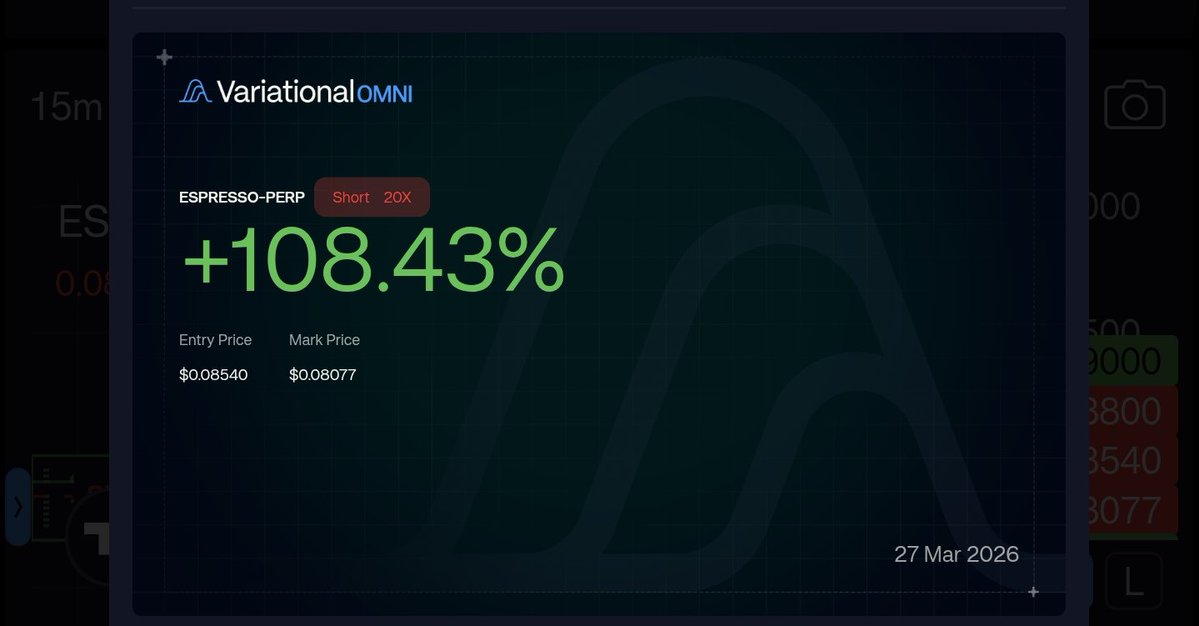
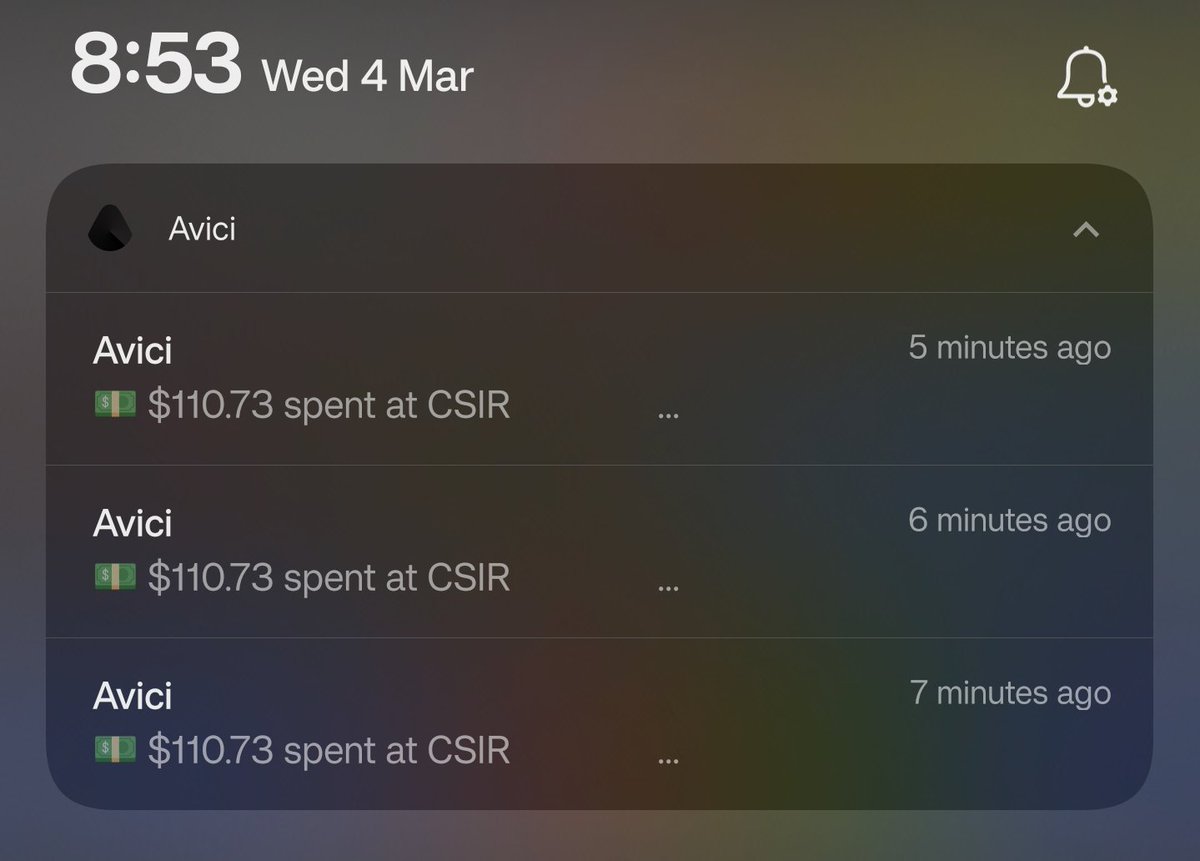
Small Trade after a long... Weekend party secured
legendxkilla.eth tweet media
English
0
0
0
8
BitWizards
BitWizards@BitWizards__·
Introducing BitWizards -- a 10k NFT collection on @bittensor tao inscriptions protocol 🪄 24H mint window with a max supply of 10k / mint out or cut supply / WL = GTD Public = FCFS Comment wallet address for WL ( RANDOM )
BitWizards tweet media
English
4.1K
975
2.5K
99.2K
Zun
Zun@Zun2025·
gm everyone, testing 𝕏's new reply feature this tweet is set to "accounts you follow and who they follow can reply" can you reply?
English
976
6
1.4K
42.4K
legendxkilla.eth
legendxkilla.eth@Legendxkill·
@AutoPilot_xyz Wtf bro, I’m way more comfortable with autopilot. Can’t imagine going back to manually voting every week, claiming, and swapping… that too at untimes 😭
English
3
0
9
608
Autopilot
Autopilot@AutoPilot_xyz·
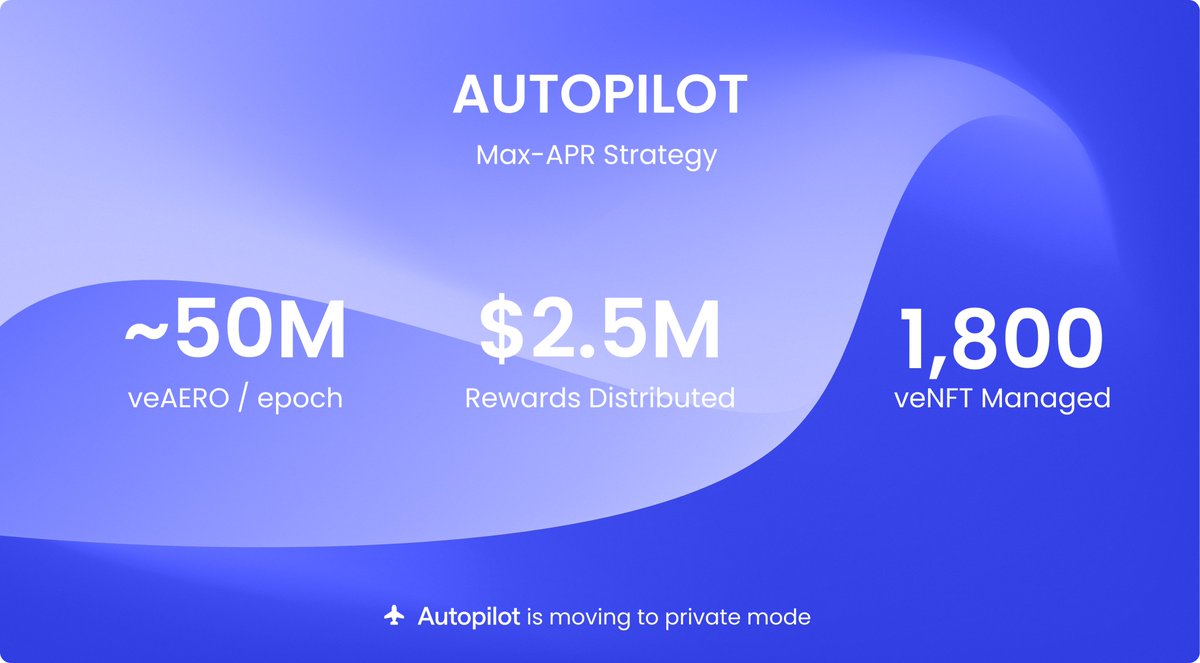
Autopilot is transitioning to private mode. Over the past months: 🔹 ~50m veAERO managed per epoch 🔹 $2.5m rewards distributed 🔹 1,800 veNFTs optimized per epoch After careful evaluation of the current landscape and where we can create the most impact, we’ve decided to conclude the public operation of Autopilot in its current form. The system will remain fully operational for one final epoch, ending march 25. this will be the last active voting and reward cycle. Important details: 🔹 All user funds remain safu at all times 🔹 Positions are fully controlled by users via the underlying veNFT structure 🔹 Users have 30 days (until april 25) to withdraw through the interface After that, withdrawals can always be executed directly via the contracts or with our assistance if needed. From a technical standpoint, nothing changes in terms of safety or access. The system continues to function as designed through the final epoch and beyond at the contract level. Autopilot has processed significant capital across multiple cohorts, including large veAERO holders, funds, DAOs, and individual participants. The trust placed in the system and in us as operators is something we take seriously. This transition is not driven by limitations, but by focus. We are reallocating our efforts toward areas where we see higher leverage, stronger product-market alignment, and the ability to build at a larger scale. We’re not stepping back from crypto. We’re moving forward with intent. Appreciate everyone who participated, provided feedback, and pushed the system forward with us. More to come, Pilots 🫡 .
Autopilot tweet media
English
8
6
41
14.6K
pika2zero
pika2zero@ruggedpikachu·
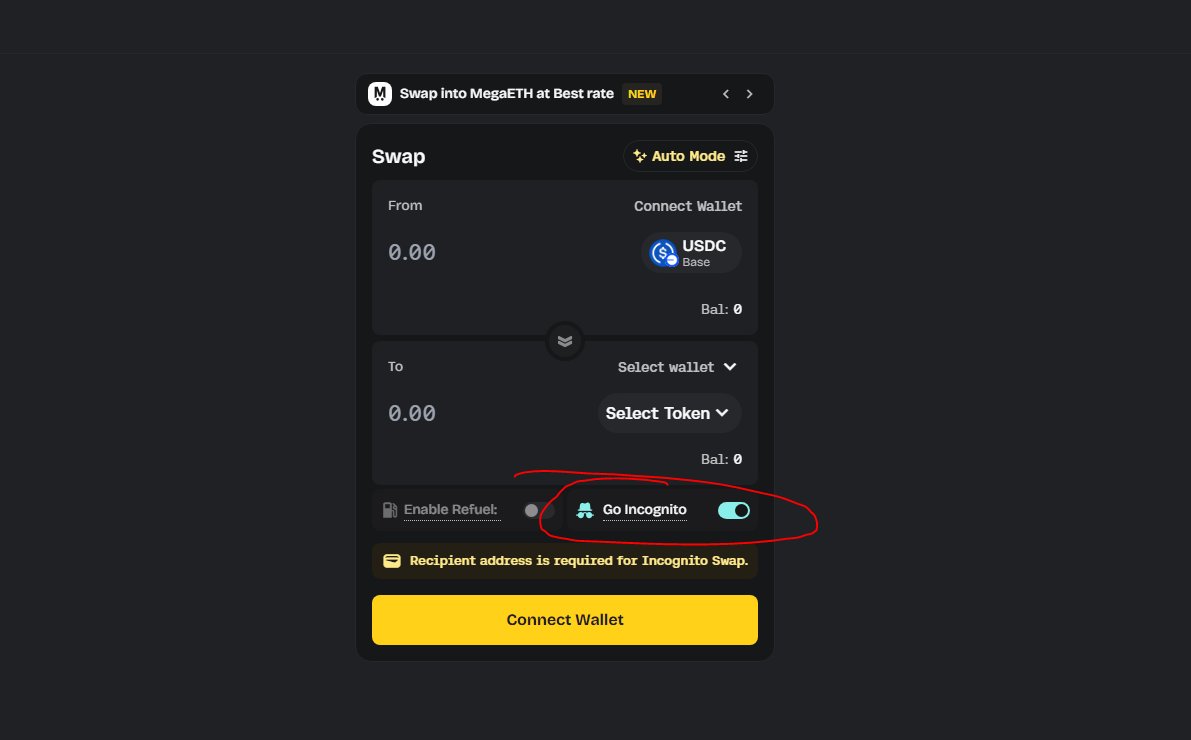
Bungees Incognito mode is pretty cool. Lets you send ETH or even USDC anonymously between your wallets. Leaving no onchain link. I read up how it works and its like a normal swap, but instead of routing onchain your deposit gets sent to a CEX (through houdini swap) and then deposited to your second wallet via said CEX. Leaving no onchain links between your wallets. The swap is done offchain. Sounds cool, better than any mixer or anything like that. Will have to test it.
pika2zero tweet media
English
15
2
44
7.3K
Zerion
Zerion@zerion·
@BR4ted You missed the best wallet
English
5
0
35
2.1K
₿
@BR4ted·
Rating crypto wallets and i will not be taking questions Metamask → 2/10 (somehow still the most used kek) Phantom → 8.5/10 Solflare → 6/10 Coinbase → 7/10 Backpack → 8/10 Rabby → 9/10 (genuinely underrated, try it) Rainbow → 4/10 Jupiter → 8.5/10 Metamask users i'm sorry but you have to do better Which one are you using?
English
341
4
546
33.3K
legendxkilla.eth retweetledi
Stani.eth
Stani.eth@StaniKulechov·
Private credit is in a strange place today. The economy is tied to the cost of money. Low interest rates mean cheap borrowing, which in theory should lead to higher utilization of credit facilities. Conversely, high interest rates mean less affordable borrowing and, in theory, reduced demand for credit. We've been living through a high-interest-rate environment since the Federal Reserve began its aggressive tightening cycle in March 2022, raising rates from near zero to over 5% by mid-2023, the fastest hiking cycle in four decades. Rates have remained elevated through early 2026, with only modest cuts. For many consumers and businesses that initiated borrowing during the low- or mid-rate era, and whose obligations remain outstanding, this translates into a significantly higher cost of capital, a burden that compounds over time. This all sounds normal. Finance is part of almost every phase of a company's lifecycle, from growth to maturity. The problem arises when the cost of capital stays elevated for too long, creating unmanageable expenses for borrowers. Businesses typically borrow from financial institutions like banks, or from asset managers in the form of private credit. How do private credit funds work? Private credit funds are typically either closed-end or semi-liquid vehicles managed by asset managers. This structure makes sense: the funds need to deploy capital into lending opportunities to generate returns. Investors in private credit range from pension funds, insurance companies, and family offices to, increasingly, retail investors. Closed-end funds don't allow redemptions until maturity, usually 7 to 10 years. Semi-liquid funds offer quarterly redemption windows with limits. BDCs (Business Development Companies), which are publicly traded, provide liquidity via daily trading on exchanges. In essence, private credit funds function as private banks: they lend capital to businesses and collect interest. What does private credit fund? Typically, private credit finances leveraged buyouts for private equity, middle-market corporate loans for companies that lack access to public bond markets, certain asset-backed lending (such as aircraft, shipping, and consumer loans), and real estate credit. Private credit funds generally fill the funding gap that banks have vacated. This shift has been driven primarily by post-2008 regulation, particularly Basel III, which pushed banks out of riskier corporate lending. Today, private credit finances an estimated 80 to 90% of leveraged buyouts in the U.S. middle market. Who are the players? Apollo ~$460B AUM Blackstone ~$330B AUM Ares ~$280B AUM KKR ~$220B AUM Carlyle ~$190B AUM Blue Owl ~$170B AUM What's going on? Recently, distress has emerged across private credit. The persistent cost of capital driven by high interest rates remains a reality, and AI is reshaping perceptions of many software companies that private credit has funded, creating uncertainty about these borrowers' futures. The market has already begun repricing private credit: VanEck BDC Income ETF: ~15% decline over the past year Blue Owl Capital: ~50% decline over the past year, with ~30% of that during 2026 Apollo, Blackstone, Ares, KKR: shares down ~20% on private credit concerns The average BDC now trades at roughly a 20% discount to NAV while offering 10 to 11% yields, signaling that loan portfolios may be overvalued, defaults could rise, or liquidity risk is building. What makes this even more concerning is that historically, these funds traded at a premium. Some funds' monitored loan default metrics have risen to as high as 9%. Blackstone's flagship private credit fund, BCRED, is a notable example. BCRED recently limited its redemptions. The fund manages roughly $82B, and during Q1 2026, redemption requests reached $3.7B, approximately 8% of NAV. Blackstone injected $400M of its own capital to support liquidity. Technically, the fund was not gated, but it came very close. Meanwhile, BlackRock's HPS Corporate Lending Fund (HLEND), a $26B fund, received $1.2B in redemption requests, reaching the point where gating was necessary. Roughly $580M in requests could not be honored. Blue Owl's retail private credit vehicle experienced $2.9B in redemptions during Q4 2025, with redemption requests reaching 15% of NAV, largely driven by exposure to software lending. Can the market handle a private credit fund default? While total redemptions have been around $7B+ (5 to 10% of NAV) and public alternative managers are down 20 to 30%, the overall private credit market is still $1.8 to 2T in size. Even the largest funds top out at $20 to 80B, compared to the global bond market at $130T or banking assets at $180T. A single fund default would most likely not collapse the broader market or trigger the kind of contagion that amplifies crises. Large funds also hold diversified portfolios of hundreds of loans, and the semi-liquid or closed-end structure naturally forces investor lock-up, acting as a buffer against bank-run dynamics. I've mapped out three scenarios of increasing severity: Scenario A: One large fund defaults (~$50B)Investors lose capital, some companies lose financing, and credit spreads widen. The system likely absorbs the shock. Scenario B: Several funds fail simultaneouslyCredit markets freeze, leveraged companies cannot refinance, and defaults cascade. This could trigger a credit-cycle downturn. Scenario C: Private credit + leveraged loans collapseA broader corporate credit crisis unfolds: private equity deals fail and banks become exposed. This would be genuinely systemic. Fortunately, private credit funds remain relatively small in the broader picture and are unlikely on their own to pose systemic risk. However, the most worrisome scenario is one where loss of confidence begins in private credit markets, particularly around lending to businesses vulnerable to AI disruption, and then bleeds into public bond markets. This contagion path is plausible because the larger corporates in bond markets are arguably more exposed to automation and AI disruption than the leaner, high-growth businesses that private credit typically funds. How does this affect RWAs and DeFi? The most immediate impact of private credit distress falls on capital allocators. Many private credit funds have been distributed to retail investors via publicly traded BDCs, private credit ETFs, or semi-liquid funds like Blackstone's BCRED, Apollo's Debt Solutions BDC, and BlackRock's HPS Corporate Lending Fund. These funds share common characteristics: quarterly (or monthly) redemption windows, redemption limits typically capped at 5% of NAV per quarter, and target returns of 8 to 11%. Recently, some funds have also begun gating redemptions. From a DeFi capital allocator's perspective, the biggest risk I see is structural: private credit is packaged in DeFi in ways that many retail-oriented users don't fully understand before committing capital. We've seen countless examples of DeFi users eagerly supplying funds into high-yielding RWA strategies, only to discover later that the underlying exposure carries significant duration risk. I believe RWAs represent the biggest opportunity for DeFi in the near term. However, my greatest fear is that institutional opportunists could view DeFi as a channel to offload illiquid and distressed products that Wall Street has already soured on, effectively using DeFi participants as exit liquidity. This risk is amplified by the fact that assessing RWA allocation opportunities is inherently harder: they don't carry the same transparency or onchain verifiability that native DeFi opportunities provide. That said, private credit done well onchain offers something traditional finance fundamentally cannot: smart contract-enforced guarantees. Redemption windows, withdrawal limits, collateral ratios, and distribution rules can be encoded immutably, meaning fund managers cannot arbitrarily change the terms after capital has been committed. In traditional private credit, investors discovered the hard way with BCRED and HLEND that redemption policies can be tightened or gated at the discretion of the manager when conditions deteriorate. Onchain, those rules are transparent from day one and enforced by code, not by a fund administrator under pressure. This is precisely where RWAs and DeFi can outperform the traditional model for this asset category. For RWAs to succeed in DeFi, and for DeFi to scale meaningfully through real-world assets, the industry needs deliberate and careful structuring of opportunities that bridge TradFi and onchain markets. That means robust transparency standards, proper risk disclosure, independent verification of underlying collateral, and governance frameworks that protect onchain participants from asymmetric information disadvantages. Without these safeguards, the convergence of TradFi and DeFi risks becoming extractive rather than additive. DeFi should not become Wall Street's exit liquidity.
English
129
74
717
125.8K
krest
krest@krestnetwork·
The KREST migration portal is live If you held KREST onchain at the snapshot, you can now: → Connect your krest wallet → Link your EVM wallet NOTE: Claims are only open for 1 month Claim your PEAQ here 🔽 claim.krest.network For tech support: discord.gg/b78dmNC3q2
English
9
6
18
2.9K
tervelix
tervelix@tervelix·
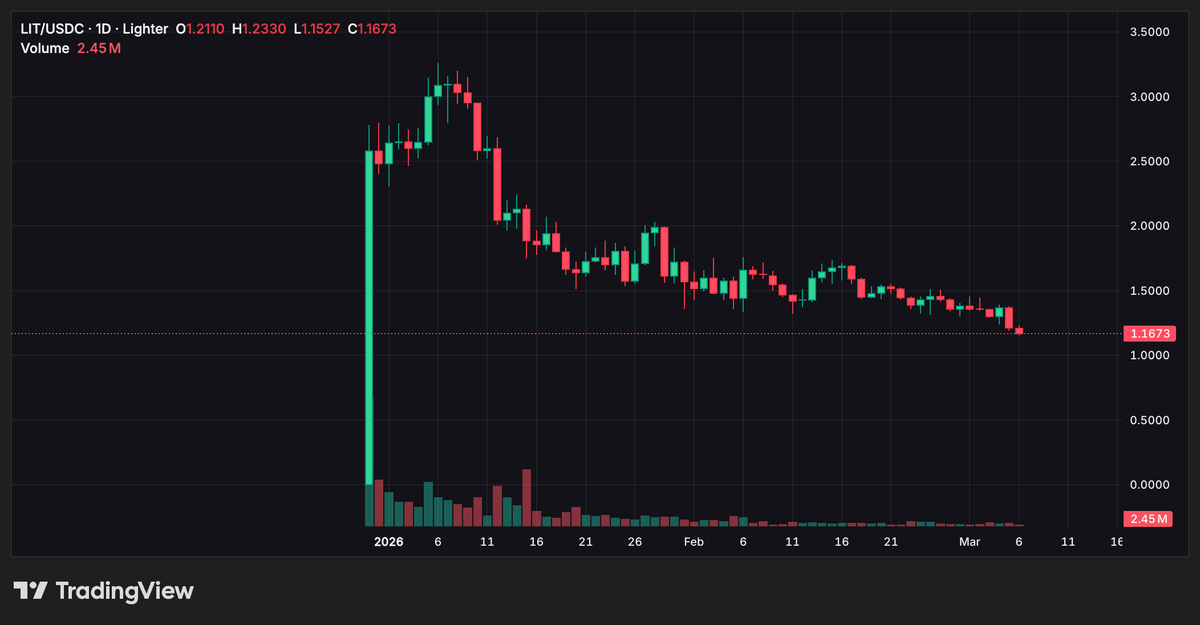
People knows me as i have hold airdrops to zero. $ZK, $ARB and many others was same. Now is it gonna be $LIT? At this rate i realized i am an idiot and don't know anything about the markets.
tervelix tweet media
English
10
0
45
7K
legendxkilla.eth
legendxkilla.eth@Legendxkill·
@Crypto_Zh0u Personally experienced the same... It happens to everyone. It’s part of the learning phase. Over time, you start picking up the nuances, even if you don’t fully know how to read charts yet. So yeah… just keep going 💪 Make mistakes, learn from them, and keep improving 🏃🏃
English
2
0
1
27
Zh0u
Zh0u@Crypto_Zh0u·
Nice, that killer wick down hit my stop-loss again for today Just for transparency sake, so far I've put $250 into my trading experiment/journey, I've made a total of... -$189 Gg sorry for my loss, journey might end soon & reaffirms that trading isn't for me
Zh0u tweet media
English
36
1
58
4.9K
Sam (Interop Enjoyoor 💜)
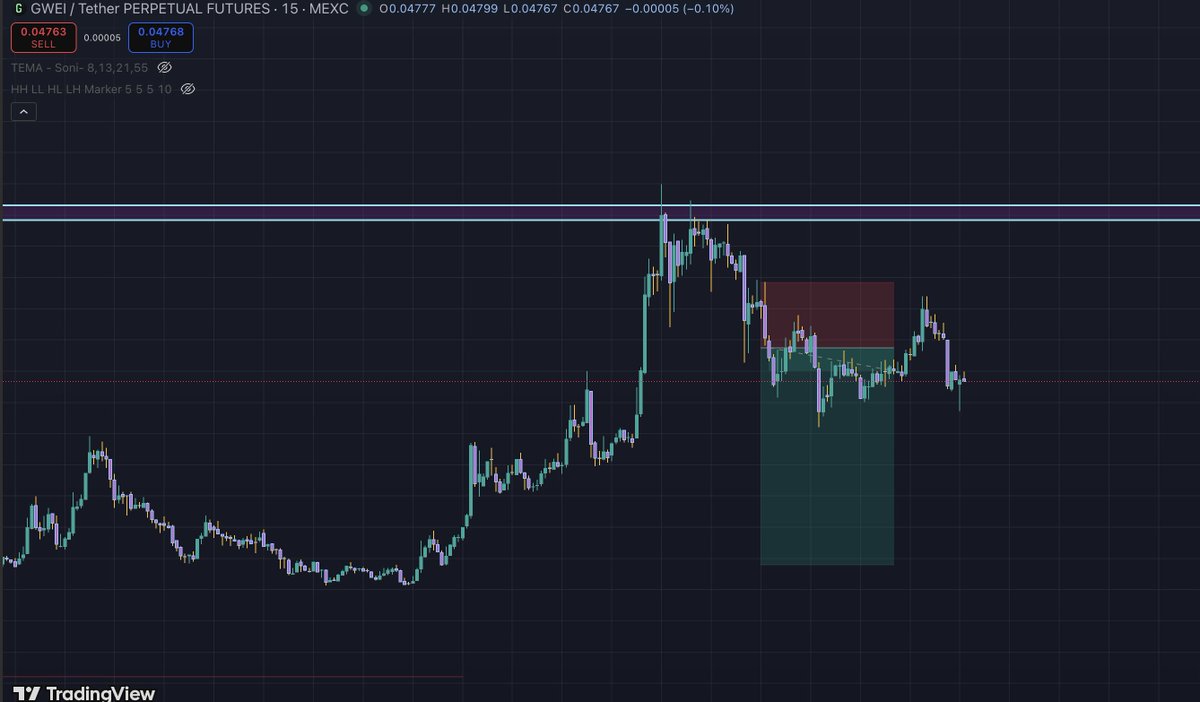
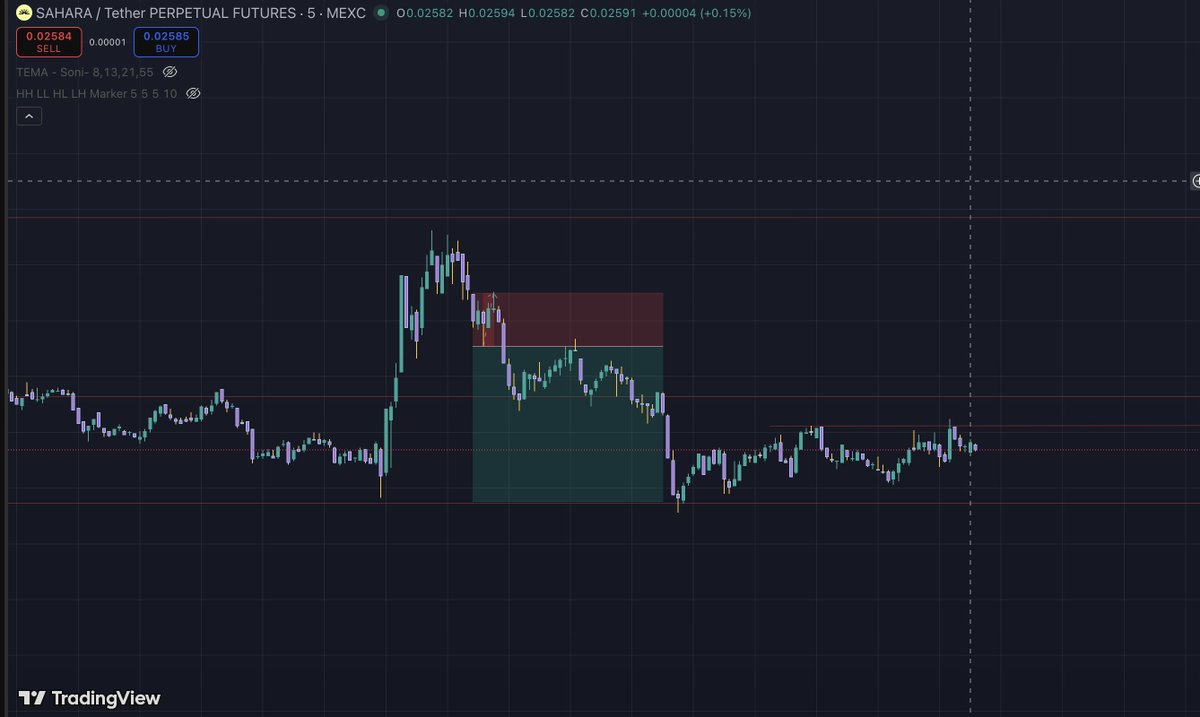
I analyzed two different charts yesterday- $GWEI/ $USDT and $SAHARA/ $USDT The major reason why I selected these charts is because there were crimed recently. For the $GWEI/ $USDT chart, price rotated from being in profit into being in loss but it is presently in profit now. I think the reason is because I did not wait for the trend to change. (A LL has not been created on the 1 hour yet) I am looking to see how this one plays out though. Maybe I am going to hit TP or SL. For the $SAHARA/ $USDT chart, price went straight to my TP. The reason for this is that because the trend is already down so it was easier to find an entry instead of hoping for the trend to change. BTW, I use the ICC (Indication, Correction, Continuation) strategy to analyze my trades and pardon me for the messy chart markups.
Sam (Interop Enjoyoor 💜) tweet mediaSam (Interop Enjoyoor 💜) tweet media
English
11
0
33
1.7K
legendxkilla.eth
legendxkilla.eth@Legendxkill·
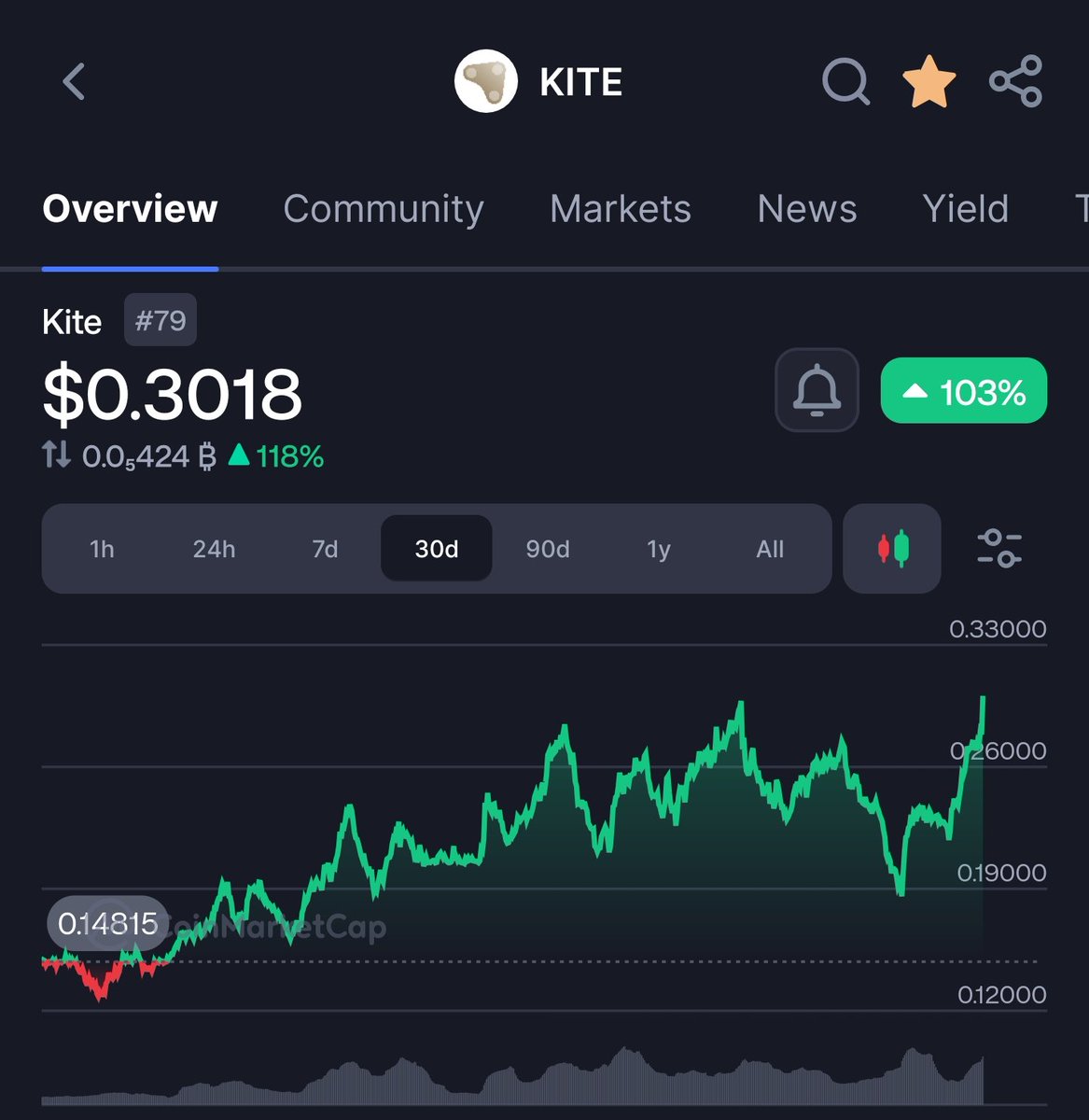
Bruh, this sitting at $3B+ FDV. Insane Looks very similar to @solayer_labs MM behavior, slow grind up, whenever X turns negative (people start shorting), it pumps even harder and wipes the shorts Major unlock is only NOV, so it’s still unclear what the exact game plan is $KITE
legendxkilla.eth tweet media
English
0
0
0
65
legendxkilla.eth
legendxkilla.eth@Legendxkill·
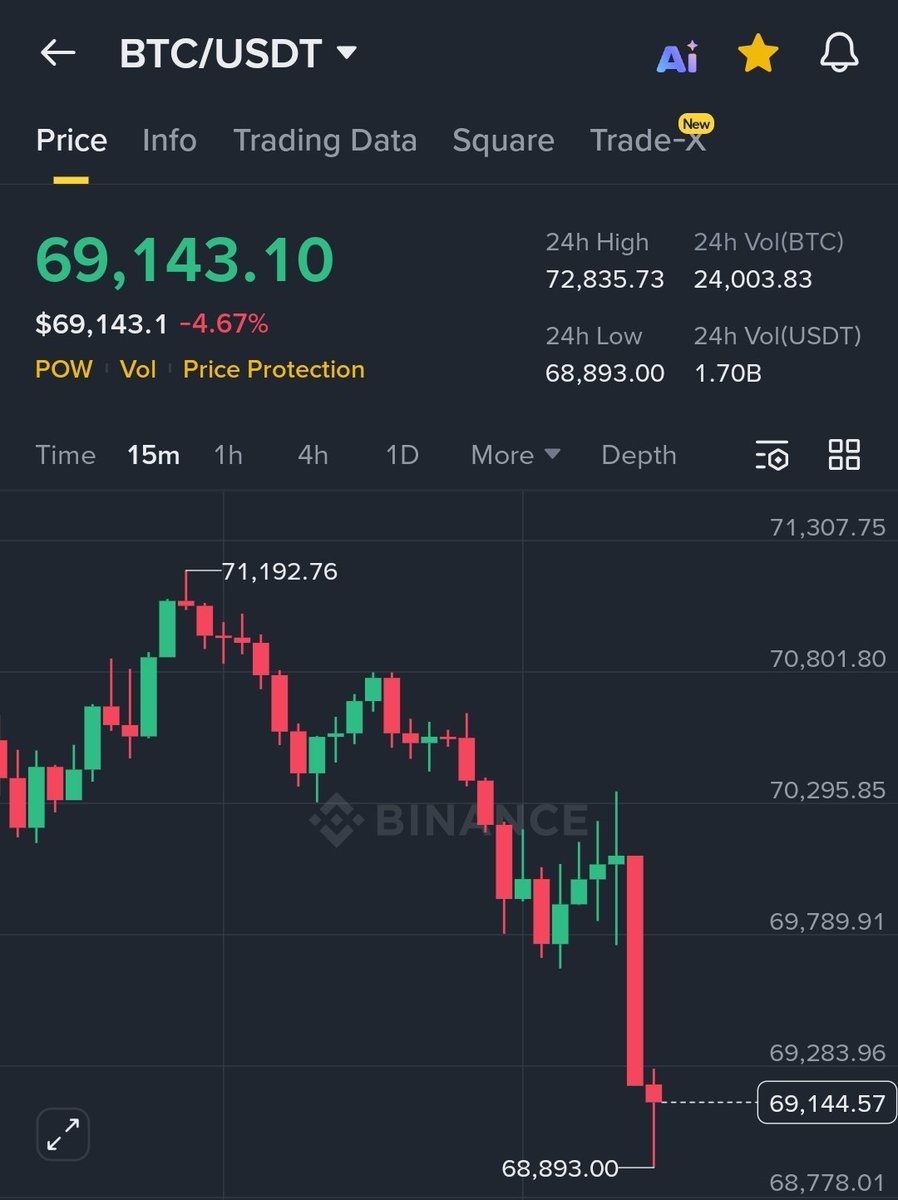
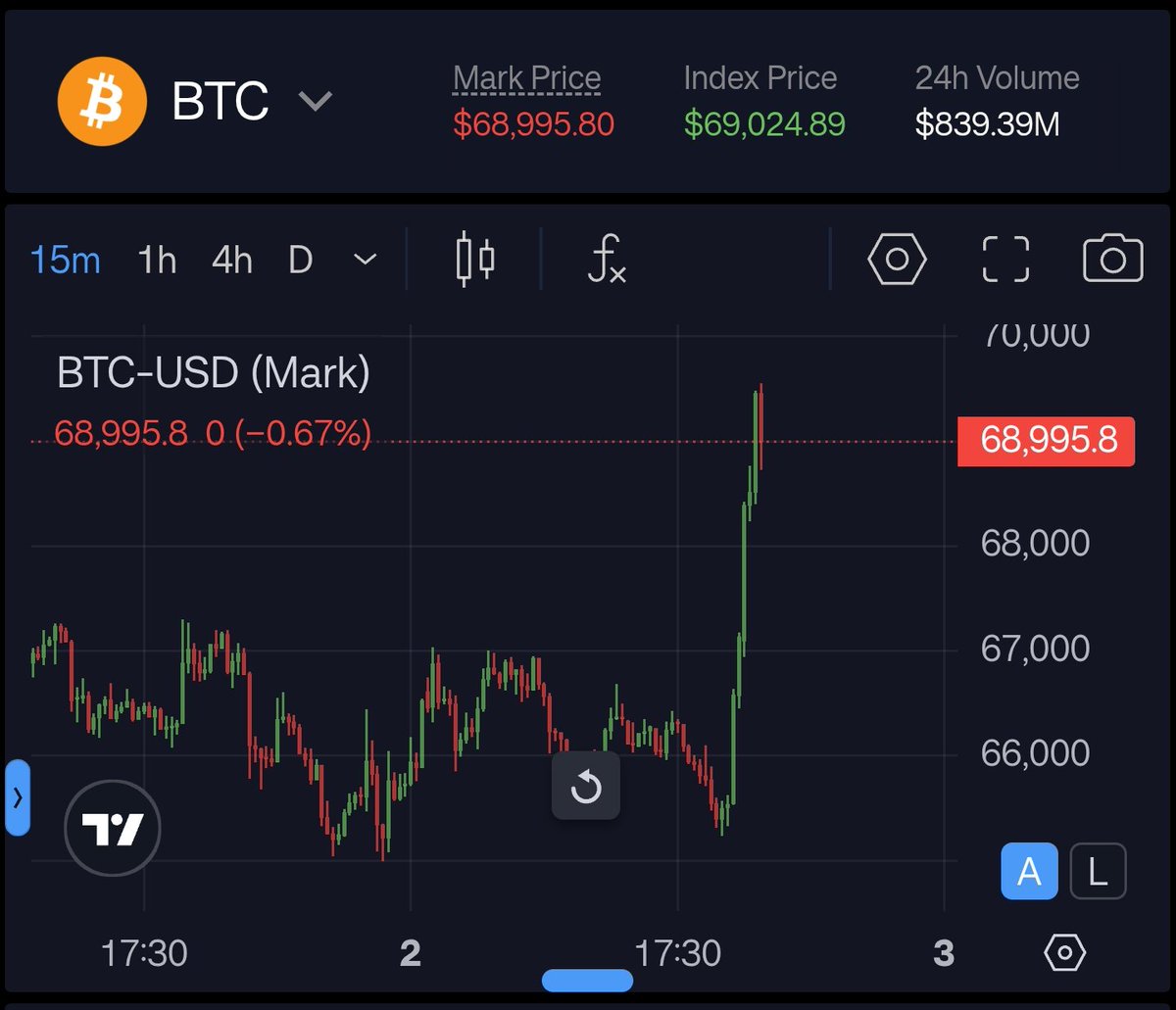
The world's on fire. Bad news everywhere. Yet $BTC climbing up 🫡
legendxkilla.eth tweet media
English
0
0
1
62
Avici
Avici@AviciMoney·
💳 5 Signature Avici cards giveaway → Follow @AviciMoney and like this post to enter 📷5 winners will each get Signature Virtual and Physical card delivered to their location 🕗Closes on March 7th, full details in the next post
Avici tweet media
English
242
188
909
35.7K
Layer3
Layer3@layer3·
gm! We’re lining up something for CUBE holders. How many CUBEs do you have?
English
92
18
163
23.8K