Sabitlenmiş Tweet

Ahead of the launch of the DSM-5-TR it seems we're gonna be getting much more ignorance and much less bliss for quite some time...
overland.org.au/previous-issue…
English
𝒮𝒶𝓂 𝐿𝒾𝑒𝒷𝓁𝒾𝒸𝒽
1K posts

@LieblichSam
a psychiatrist fed up with psychiatry as usual || All my tweets are regular



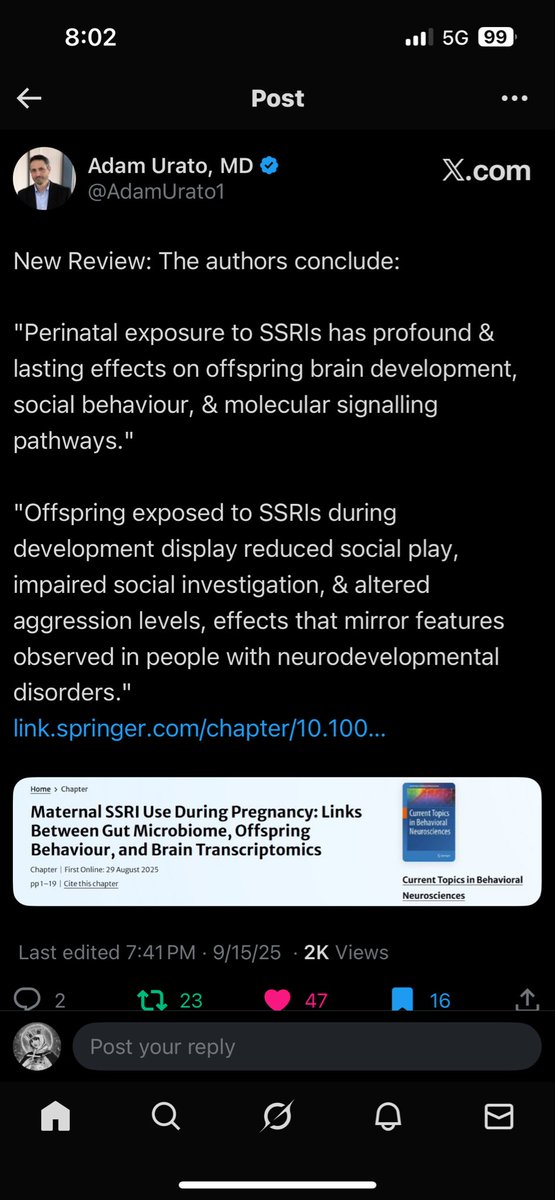





🧠 Antidepressants: Myths vs. Evidence 📘 As a Professor of Psychiatry in a public hospital, I’m deeply concerned by recent viral claims suggesting antidepressants are “ineffective,” “dangerous,” or even “worse than the illness.” Let’s address these claims with evidence—not fear or anecdote. 🔹 Myth 1: “Antidepressants increase suicide in youth.” ✅ Reality: In 2004, the FDA issued a black-box warning based on increased suicidal thoughts (not deaths) in under-25s. 📚 Lu et al., BMJ (2014): After the warning, prescriptions dropped—and suicide attempts rose. 📚 Gibbons et al., Am J Psychiatry (2007): No rise in actual suicides. 🟰 Monitoring is essential, not avoidance. 🔹 Myth 2: “No benefit for adults, only slight in elderly.” ✅ Reality: In moderate to severe depression, antidepressants work. 📚 Gibbons et al., Arch Gen Psychiatry (2012): SSRIs reduce suicidal ideation across age groups. 📚 Coupland et al., BMJ (2011): Lower suicide risk in those over 65. 🟰 Antidepressants are effective when used appropriately. 🔹 Myth 3: “Only a 2-point gain—hardly meaningful.” ✅ Reality: 📚 Jakobsen et al., BMC Psychiatry (2017) reported a 2-point gain in mild cases. 📚 Cipriani et al., Lancet (2018): In 522 RCTs, all 21 antidepressants beat placebo. 📚 Fournier et al., JAMA (2010): Benefits increase with depression severity. 🟰 Clear evidence for moderate and severe depression. 🔹 Myth 4: “No long-term safety data.” ✅ Reality: Long-term RCTs are rare (due to ethics), but real-world studies are reassuring. 📚 Geddes et al., Lancet (2003): Maintenance treatment cuts relapse by ~70%. 📚 Viguera et al., Am J Psychiatry (1998): Sustained use extends remission. 🟰 Long-term treatment is often protective, not harmful. 🔹 Myth 5: “More antidepressants = fewer suicides? Just correlation.” ✅ Reality: While not proof of causation, the patterns are consistent. 📚 Isacsson, BMJ (2000): As SSRI use rose in Sweden, suicide rates declined. 📚 Ludwig & Marcotte, J Health Econ (2005): U.S. adolescent suicides fell with higher SSRI use. 🟰 These are credible, repeated observations. 🔹 Myth 6: “They cause akathisia, mania, numbness, withdrawal.” ✅ Reality: These can occur, but are uncommon and manageable. 📚 Baldwin et al., Int J Neuropsychopharmacol (2007): Discontinuation symptoms can be prevented with gradual tapering. 🟰 Careful prescribing and follow-up minimize risks. 🔹 Myth 7: “They should be a last resort.” ✅ Reality: Global guidelines recommend SSRIs as first-line treatment for moderate to severe depression. 📚 NICE (UK), APA (USA), Indian Psychiatric Society: SSRIs plus psychotherapy = optimal care. 🟰 Not last resort—often a necessary one. 🧠 Final Word Antidepressants aren’t for everyone. But they are scientifically validated, globally endorsed, and often life-saving when used responsibly. Let’s replace stigma with science—and judgment with empathy. 📣 Share facts. Save lives. Support mental health. #MentalHealthAwareness #DepressionHelp #Antidepressants #PsychiatryMatters #EvidenceBasedMedicine #IndiaMentalHealth #SSRI #ScienceNotStigma








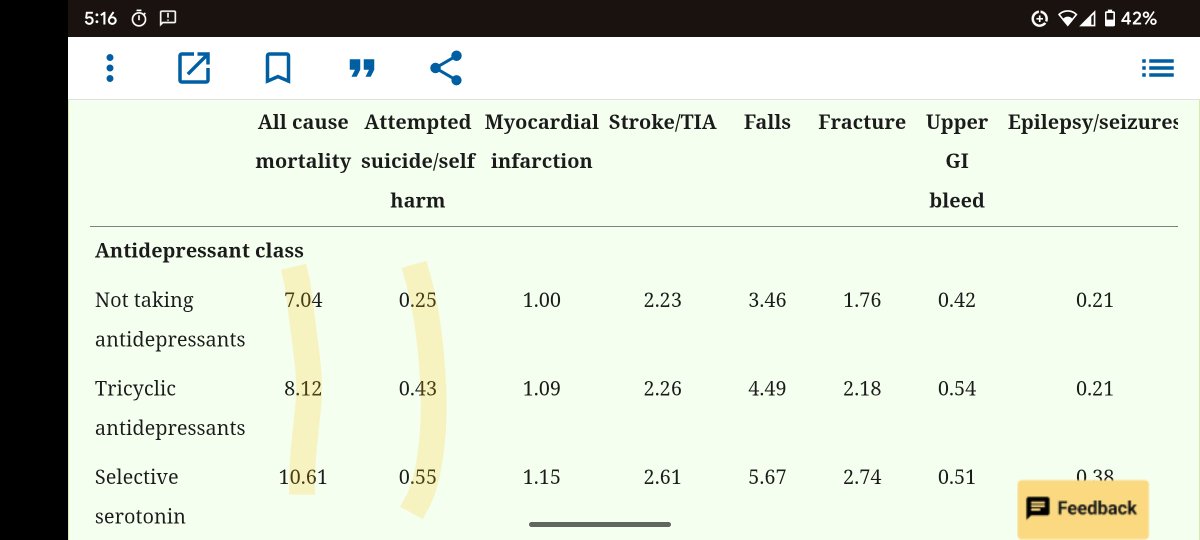
Psychiatry professor Robert Howard says at Royal College of Psychiatrists International Congress that depression drugs are no better than placebo in people with dementia but he uses the drugs as placebos because “people get better.” He ignores the drugs have serious harms!