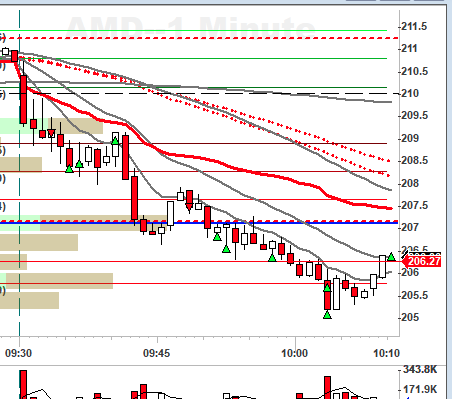
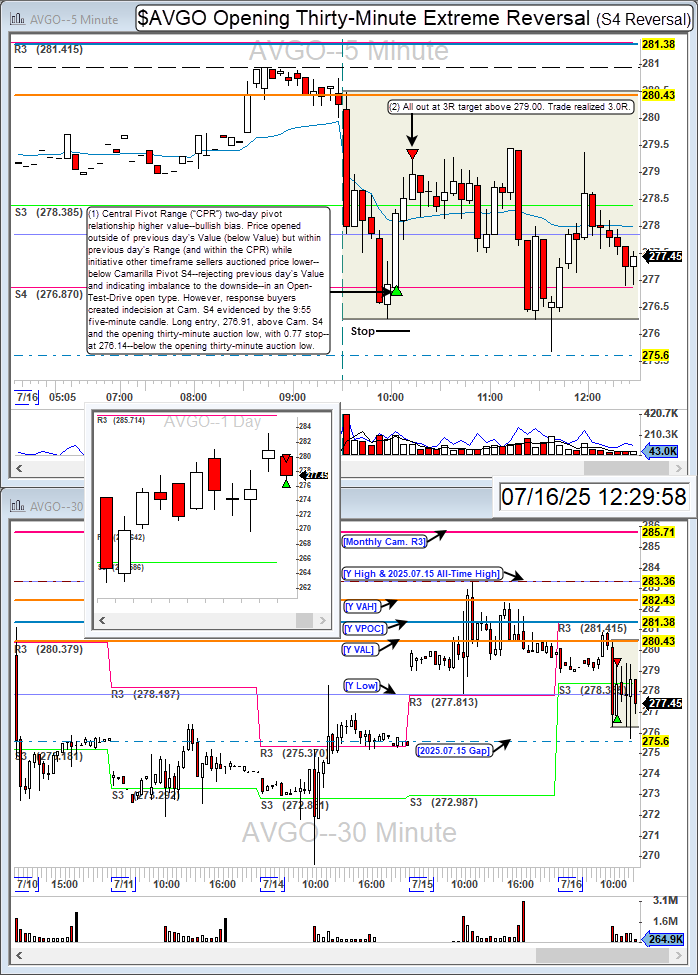
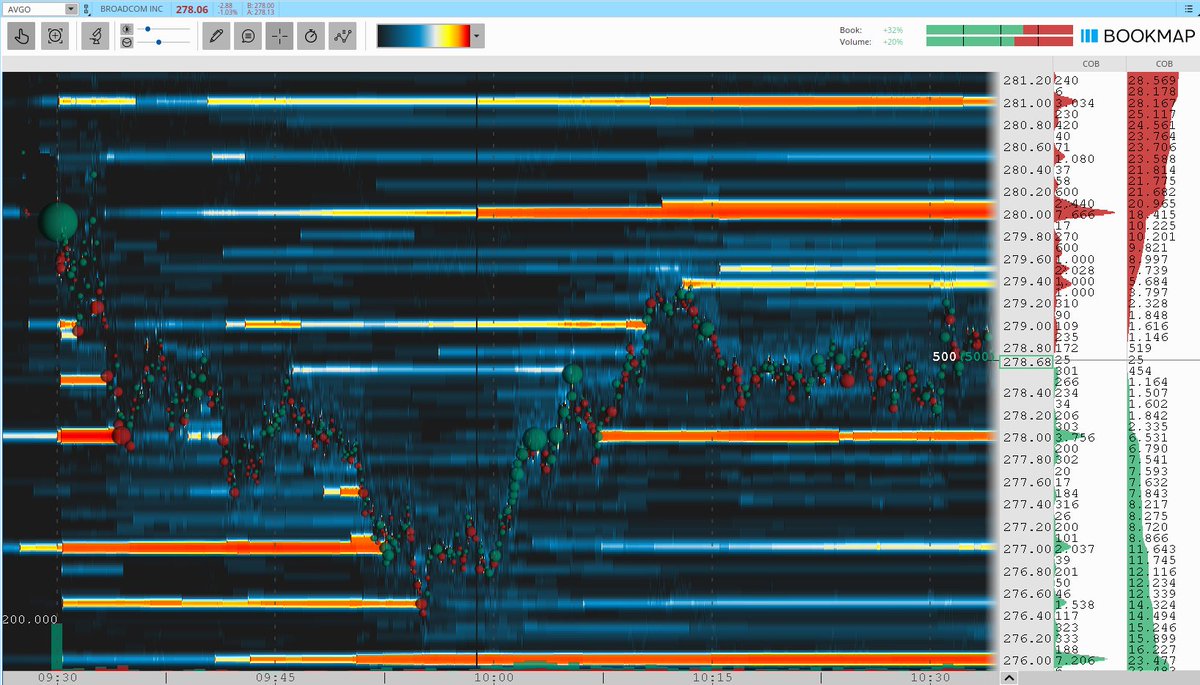
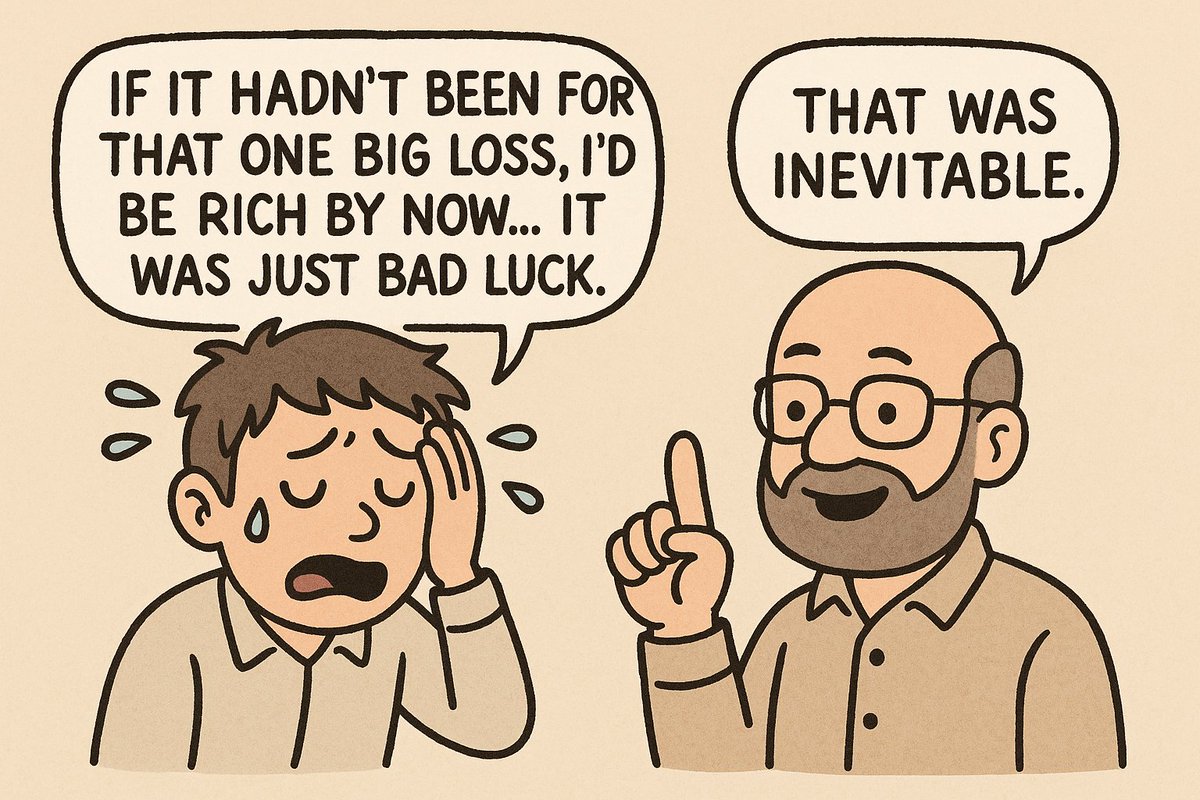
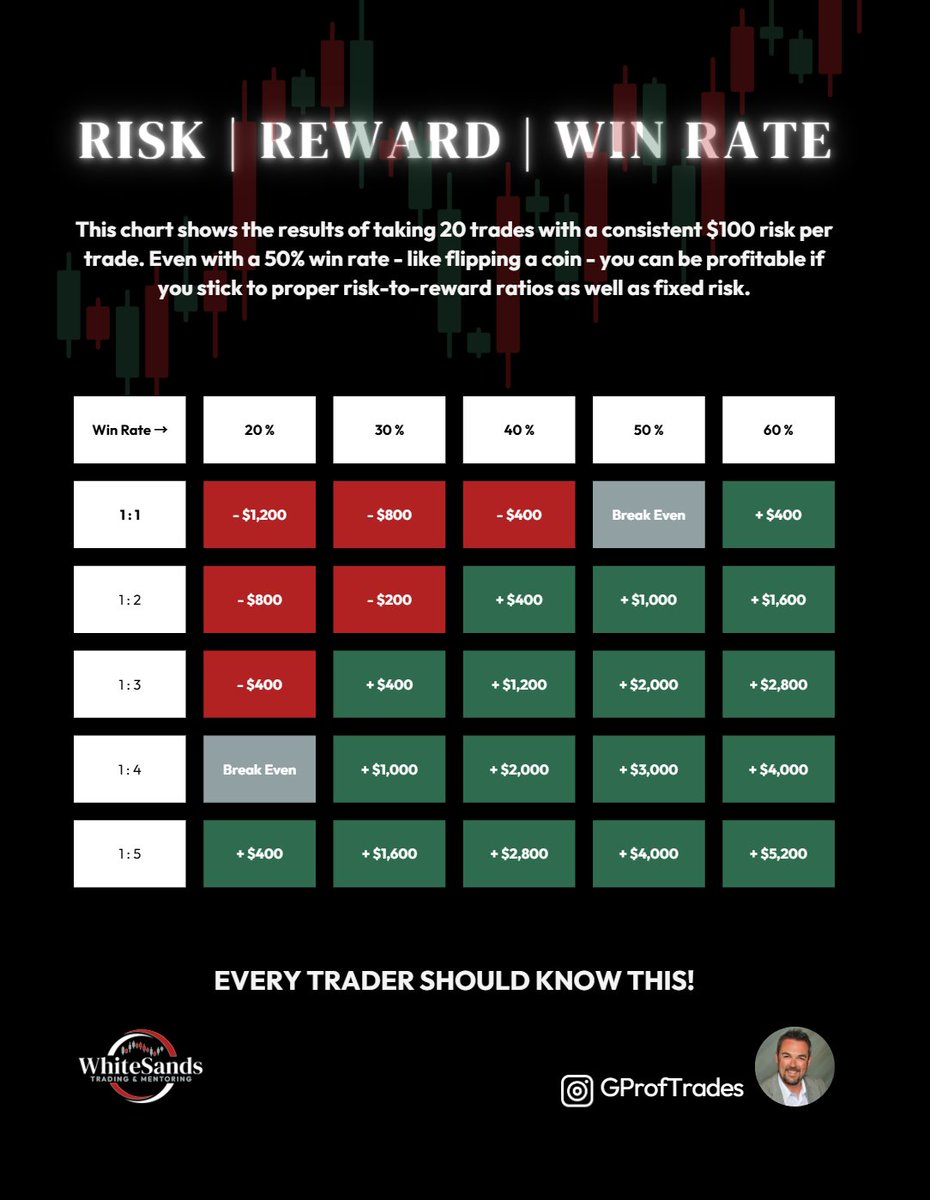
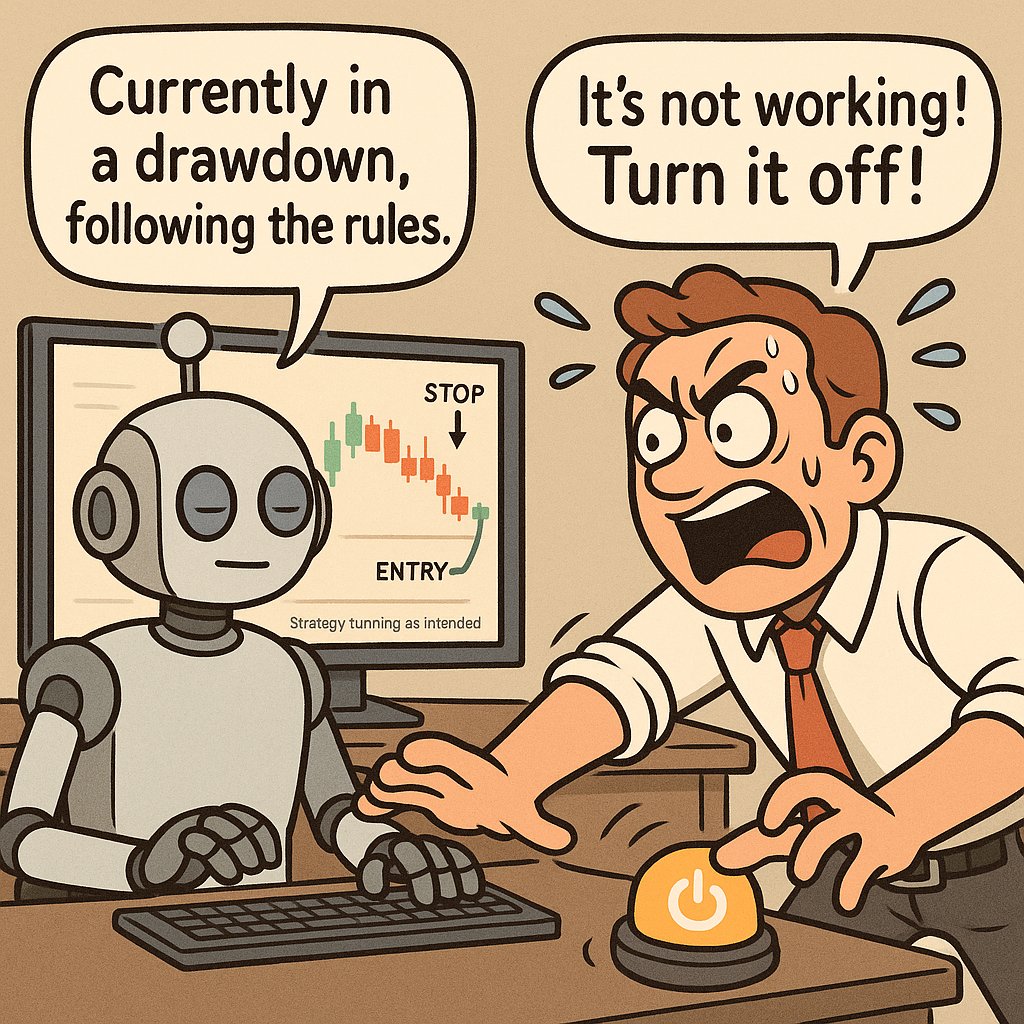
The youtube channel that represents my entire trading existance. ♥️
@TheMarketAlchemists" target="_blank" rel="nofollow noopener">youtube.com/@TheMarketAlch…
@samuraipips358 I backtested my strategy for 2 years back on 16 tickers (US large stocks). These are the results. Would be grateful for any views!
Trades: 4,053
Realized R: +539.86R
Win Rate: 37.3%
Expectancy: +0.133 R
Av Win: +2.29 R
Av Loss: -1.00 R
R:R Ratio: 1 : 2.20
Profit Factor: 1.48
Let me explain the rules of the “game of probabilities.”
First, there are two games in trading.
The “win or lose game” and the “game of probabilities.”
Naturally, probability only works when you are operating under the rules of the “game of probabilities.”
Yet many traders who are playing the “win or lose game” talk about probability.
That is not probability.
There are proper rules that must be in place for probability to function.
Many traders are playing the “win or lose game.”
The rule of this game is that “winning is good, and losing is bad.”
Under this rule, the win or loss right in front of you takes top priority, so you casually throw away your plan and act however you want.
You talk about probability based on a small recent sample size.
You talk about probability even though your behavior is not consistent.
Even when you learn something, the standard is always the win or loss right in front of you.
You study technical analysis in order to win the trade in front of you.
The rules of this “win or lose game” are highly incompatible with trading.
Because trading is a world of uncertainty.
Short term outcomes are heavily influenced by randomness.
As long as you act under the rules of the “win or lose game,” you will remain trapped in randomness.
By contrast, the rules of the “game of probabilities” are simple.
Consistency and sample size.
It is a game of using the statistical tendencies that emerge when you keep repeating actions based on the same conditions over a large number of occurrences.
When you are operating under the rules of this game, the right answer is not to prioritize the win or loss in front of you, but to keep executing without deviating from the plan.
You do not study technical analysis in order to win the trade in front of you.
You study it for statistical edge, for a large sample size, and for consistency.
In a world of uncertainty like trading, the rules of this “game of probabilities” are highly compatible.
Because you cannot control any single outcome in front of you.
Continuing to bet on statistical edge.
That is what trading is.
However, simply learning these ideas while still operating under the rules of the “win or lose game” is of no use.
That is exactly what many people are doing.
If you prepare a coin that is more likely to land heads, then all you need to do is keep saying “heads,” and your ability to call heads correctly is not the issue.
If you keep saying “heads,” there will naturally be times when heads comes up, but there is no meaning in pulling out one such result, celebrating it, or boasting about it to someone.
What is necessary is to prepare a coin that is more likely to land heads, to have the consistency to keep saying “heads,” to have risk management that allows you to stay in the game continuously, and finally, time.
I want you to think carefully about this once again.
Which game’s rules are you actually playing by?
If you say it is the rules of the “game of probabilities,” are you truly acting in accordance with those rules?
If not, why not?
Is it not actually the case that the rules of the “win or lose game” are what is driving you?
Are you being influenced on social media by people who are playing the “win or lose game”?
The starting point is how you define trading, what kind of game you believe it is, and what kind of preparation you make.
Everything you go on to learn from here will change completely if that rule changes.
If you do not yet have a system with a tested edge
→ payhip.com/b/bqKpV
@samuraipips358 If I am trading large cap US stocks (the same pool of ~10 tickers) for the first 3 hours after the open (in general terms, it is momentum continuation strategy), what should be the sample size for backtesting. Is going 365 days back for each ticker a decent amount?
If you could have just one of the abilities required for trading, which one would you want?
I wanted consistency.
I had suffered from the emotions that surfaced whenever I tried to be consistent, and I spent years seriously thinking about how to deal with it.
Without consistency, you cannot even get to the starting line in trading.
It does not even begin.
Without consistency, you cannot even learn anything.
Without consistency, you cannot put what you have learned into practice.
Trading is "a game of probabilities," and the two things that matter are "edge" and "sample size."
A trader is a player in "a game of probabilities," and the one who executes it through consistency.
In other words, if you keep looking at the chart and acting differently each time without any consistency, you are just going in circles and making no progress at all.
I gained consistency by building a structure, and through the experience of preparation, testing, and practice that came with it.
As Mark Douglas says, consistency is a psychological state, and once you have it, you can no longer remain in any other state.
The person I am now no longer needs to make an effort to be consistent.
If anything, I cannot deviate from my rules.
A powerful sense of aversion arises and stops me.
The state I am in now is exactly the kind of state that made my past self think over and over, "Is something like that really even possible?"
I look back nostalgically on the days when I used to stick all kinds of notes on my desktop every week, and it hits me how enormous that problem actually was back then.
Consistency can be attained.
And it will probably not feel the way you imagine it does now.
It will feel completely natural.
Settle in and approach this as a long term game.
Preparation in advance really matters.
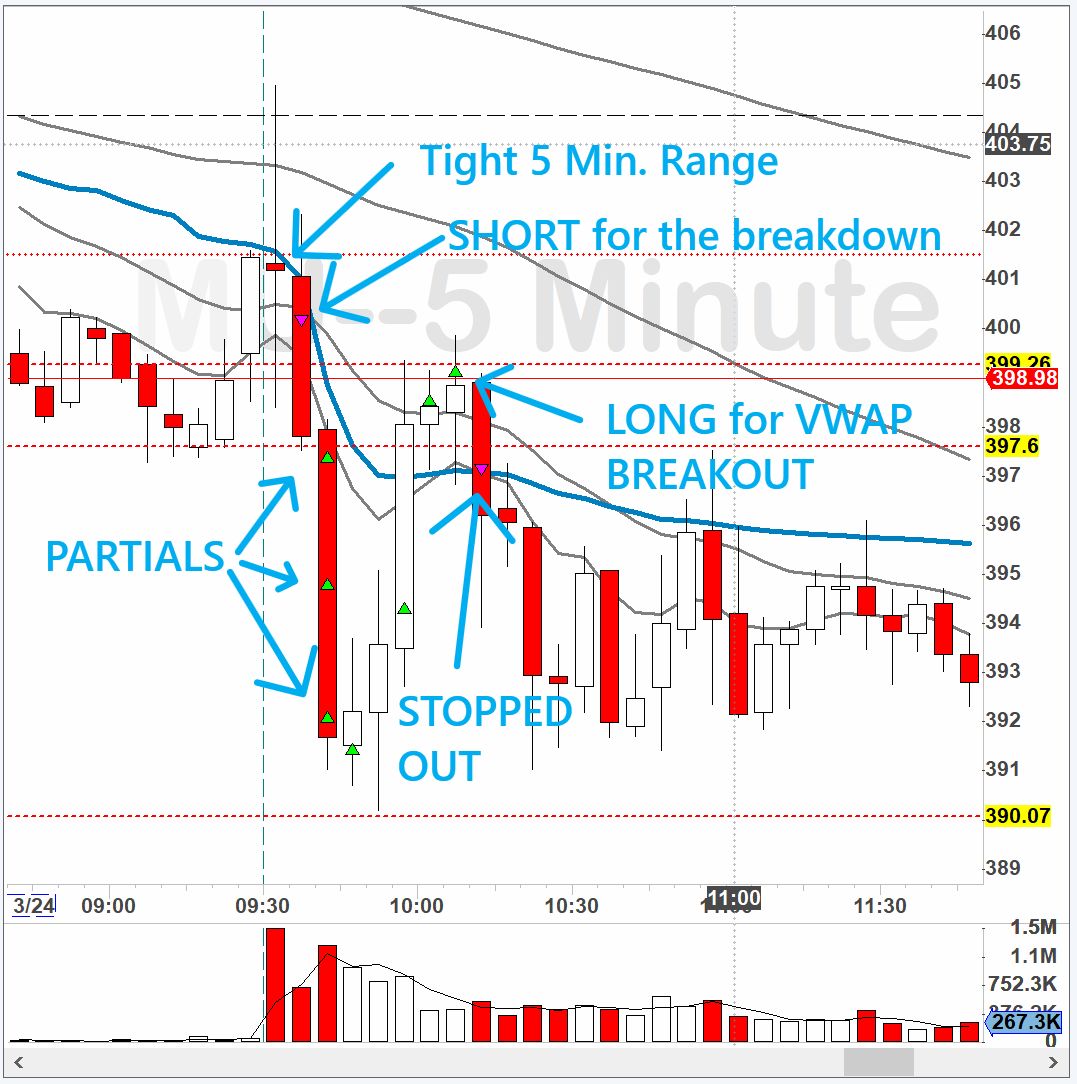
Fantastic day trading $MU — two trades: we shorted a 5‑min ORB at the open and rode the market sell‑off, then went long on a VWAP breakout that failed into a small loss. Overall a great session; pumped for tomorrow. Watch us live at 8am EST on X @BearBullTradersx.com/i/broadcasts/1…
It’s disappointing that changes in X’s algorithm are making it harder even for my followers to see my posts.
That said, I’m not trying to chase virality.
Of course, I’m happy when something takes off.
But even knowing that most people will not read long posts, I will still explain what needs to be explained in full, and I will never dilute the substance, trim the content down, lean into edginess or provocation, or use abstract wording that leaves room for misreading at the expense of quality.
I’ll continue to aim for high quality posts, and what matters to me is putting out content that is genuinely useful for people who are seriously committed to trading.
I do promote my own books and content from time to time, but if you feel you do not need them, then you do not have to buy them.
For some people, the free content I share here alone will already be more than useful enough.
Only those who feel they need them should buy them.
But I do stand behind the quality of what’s inside.
And for people who have only just started trading, or who are still playing a "win or lose game," or who have no intention of ever breaking out of that, what I share may feel difficult to understand, and they may feel that what I say is wrong.
But I have no intention of making posts that appeal to everyone, and I understand that what I put out will resonate more with serious traders.
I only care that it reaches those who truly need it and are taking this seriously.
So if my posts have been useful to you, please add my account to the X list you regularly read, or turn on notifications so the algorithm does not stop showing them to you.
I’ll keep putting out high quality content, so stay with me.
Thanks, as always.
@Wordsofrizdom I personally use a system of a predefined dollar amount risk - to enter the trade you must to mouse click on the chart where your stop is placed (and then click hotkey). So it is impossible to start a trade without a predefined dollar amount stop.
Professional traders usually start with the downside.
In many conversations with experienced traders on Words of Rizdom, the same habit keeps coming up. Before they think about profit, they define the risk.
Early on, most traders do the opposite. The focus is on how much the trade could make, how far price might move.
But over time the approach changes.
The first question becomes simple: what happens if this trade is wrong?
Position size is decided.
The stop is defined.
Exposure to the account is clear.
Only then does the entry make sense.
Once the risk is accepted beforehand, the trade becomes easier to manage. If it works, it follows the plan. If it fails, the loss is already controlled.
That mindset is what helps professionals stay in the game longer.
Before your next trade, have you defined the exact loss you’re willing to accept?
Since November if you took every call we made on the Camarilla Pivot Plays you would be up 100R. If you joined @DrCharland and myself in #MarketAlchemists and learned how to use it. Then you could be like many of our subscribers that are finally finding simplicity in #Daytrading. Go to my profile for links to mentoring and our Access+ indicators on @tradingview. #futurestrading
I see a lot of tweets/screenshots of green "one and done" trades. But I have NEVER seen a RED "one and done". It is easy to stop when you are green, but incredibly difficult when you start the day red, especially if you break your rules.
Don’t focus on the outcome and think, “Was this good or bad?”
Focus on the process and think, “Was this good or bad?”
If you acted according to your rules, that’s a good trade.
The more you focus on the outcome, the more your thinking becomes short-term, and you’ll end up playing a “win-or-lose game” instead of a “game of probabilities.”
The more you focus on the process, the more the law of large numbers works on the large sample size that comes from consistently repeating your rules, allowing you to play a “game of probabilities” that gives you a probabilistic edge.
Whether you focus on “outcome or process” determines what kind of game you’re playing.
Good night 😴
@samuraipips358 Key thing is volume creating price movement. As AI-supported systems will compete against other AI, it might be actually very beneficial for traders, helping to spot patterns/moves. Also, the majority of market is already controlled by "AI" algos.
3/5
For example, there are traders who try to buy early at a low price, traders who confirm the actions of those first movers are reflected on the chart and try to catch the initial move as quickly as possible, traders who join after it becomes clear that the chart has moved, traders who want to jump on the bandwagon after a large move, and traders who aim for a contrarian sell, targeting the traders who are taking profits after that large move.
Furthermore, since these traders exist on charts of all timeframes, they constantly create price fluctuations and trends.
They are always trying to take advantage of other traders.
As long as that is the fundamental principle of making a profit in the market, an imbalance will always be maintained in the market.
As long as the time difference and other participants are the source of profit in trading, traders will always act in a way that seeks imbalance, and that action will in turn continue to create more imbalance.
This will not change, no matter how much AI develops or what the situation becomes.
This is because the objective of making a profit in the market is the same for AI or anyone else, and everyone needs to take advantage of the time difference and other participants.
This is not a video game you play alone.
In other words, the market is a constant "game of cat and mouse" between buyers and sellers.
Alternatively, one could say that trading is similar to poker.
It is a game where you are constantly trying to gain a positional advantage (acting after others) against other players.
The equally distributed randomness, combined with the fact that the game requires opponents, is what establishes this never-ending game of cat and mouse.
The market doesn't change, and edges don't disappear 🧵
Worries like "Edges will disappear if AI develops" or "Edges will disappear if everyone uses the same strategy" are unnecessary.
You should be more worried about your inability to maintain consistency.
🧵1/5
It seems there are several misunderstandings, so I will explain.
Firstly, I have not said that systems are complex.
Rather, by using rules of verbalization or visualization, these rules, while difficult for robots, I am saying are "easy" for humans.
And I also haven't said that "even using the same system, two trades will never be exactly the same".
What I am stating is that the market chart situation itself is always unique and lacks reproducibility, but by using things like "verbalized rules" in response to that, a trader can easily and consistently repeat "judgments based on the same criteria and the same type of actions".
In other words, if I were presented with the exact same chart, I could make the exact same trade every time.
However, the point is that it would be very difficult to have a robot do the exact same thing.
This is because it is difficult to obtain flexibility with rules based on quantification.
Rules based on verbalization and visualization are the key to achieving both flexibility and rigor.
For example, to give one easy-to-understand illustration, if we consider the "W-bottom" chart pattern, we can recognize a pattern through the verbalization "W-bottom", but the countless "W-bottoms" that exist on charts are all unique, and the numerical values of all "W-bottoms" are different.
However, rules based on verbalization allow for flexibility while simultaneously enabling the rigor of trading based on the same criteria.
I hope this is conveyed well.
The misconception that "If it's just following rules, even a robot can do it"🧵
When I say, "Continuing to follow rules is essential for success," people occasionally appear who say, "In that case, even a robot can do it," but this is a complete mistake.
🧵1/5
2/5
Most people overthink and make things unnecessarily complicated.
In trading, the more complicated your thinking and the more complex your chart analysis becomes, the less it leads to profit.
The more you complicate your thinking, the more cluttered your chart gets, the lower your strategy's reproducibility becomes, and the easier it is to get confused when making decisions.
The more points you try to watch, the more the information starts to conflict with itself, causing hesitation — “Should I buy now, or should I wait?”
Hesitation delays your entry, makes you reluctant to cut losses, and ultimately breaks your consistency.
Before piling lines and indicators on your chart, ask yourself, “Can I describe what this strategy is watching in one sentence?”
Let's narrow down what to focus on🧵
Stuffing your head with knowledge and learning various approaches doesn't necessarily lead to profits.
One strategy with an edge, where you've narrowed down what to look at and kept what to do simple, is enough.
🧵1/5
@samuraipips358 Great post! Q:on one hand, you advocate to have a very clear system and repeat the same action over and over; on other hand, like in this post, you agree that most systems are complex (with qualitative elements) so 2 trades using it will never be the same. How to reconsile this?
5/5
The opinion that "If it's just following rules, even a robot can do it" is rooted in the misconceptions that "rules are things that can be quantified" and "rules are only for strategies."
Rules belong to us humans, or rather, they are "personal things."
How you perceive the market and how you are thinking determines what emotions manifest in you.
Your repeated emotional actions also mean, in other words, that you are repeatedly following "implicit" rules.
And charts are complex; not everything can be resolved through quantification.
There are many things in this world that are difficult for robots but easy for humans.
One must understand that rules based on verbalization and rules based on visualization also exist, and this is extremely important in trading.
Thanks for reading!
If you enjoyed this thread, check out my books on trading.
E-book
payhip.com/YumiSakura
Paperback
【THE PATH TO SUCCESS IN TRADING】
a.co/d/fXmRhIa
【Trading Psychology】
a.co/d/d0QJMxK
Hope these insights help your trading journey😊
Big news! 🎉 The WhiteSands Trading & Mentoring community is now public and open to anyone passionate about learning how to trade!
If you’re serious about mastering Saving, Investing, and Trading, this is the place for you. Our goal is to create a supportive, knowledge-driven space where traders of all levels can grow, refine their strategies, and achieve consistency.
🔹 What You’ll Learn Here:
✅ Saving & Investing fundamentals
✅ Trading setups & execution strategies
✅ Risk management & discipline techniques
✅ Real-time discussions & trade insights
📢 Help us grow this community! If you know someone who is passionate about trading, share this invite link and bring them in! Let’s build a group of dedicated learners and traders together.
➡ Join us here: discord.gg/jGgyaXRDEt
🔥 What one person can do, another can do.
The rules I built a 41-year career and a personal fortune on.
1. always use a stop loss
2. define your stop before you enter a trade
3. never risk more than you expect to gain
4. nail down decent profits
5. never let a good size gain turn into a loss
6. never average down
7. never get bold when running cold
8. Have a system that trades the largest when you're trading your best and the smallest when you are trading your worst.
9. As a trade progresses and improves, so does your worst-case scenario
10. Avoid style drift
minervini.com