Elisabeth Rumetshofer
26 posts

Elisabeth Rumetshofer
@LizRumetshofer
PhD candidate @ JKU Linz, Institute for Machine Learning.


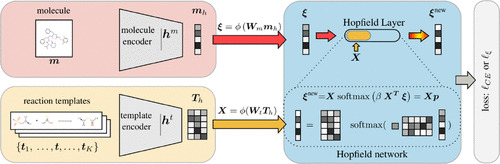
Very excited to share that our work, CLOOME, has been now published in @NatureComms! CLOOME introduces chemical structure querying for bioimaging databases. 🧵

Excited to present Amumo at this year’s @VISxAI workshop! Our interactive article sheds light on Multi-Modal Models. To learn more about modality gaps and visualizing inter-modal pairs of data, check out our article and tune in to our presentation! 📰jku-vds-lab.at/amumo


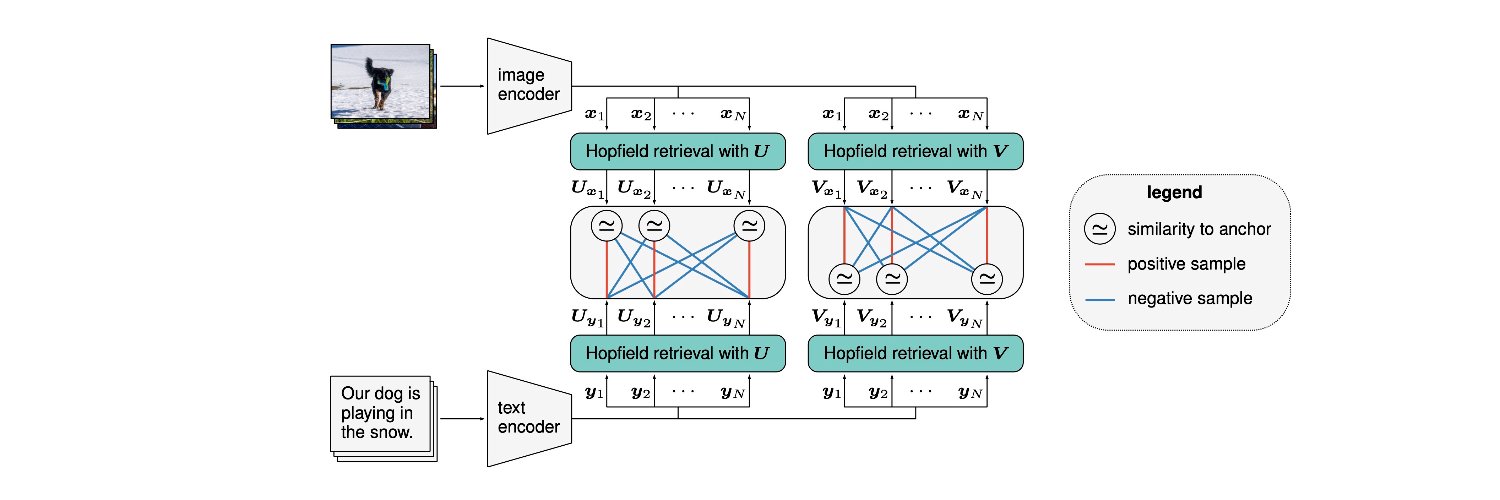
SITTA: A Semantic Image-Text Alignment for Image Captioning paper page: huggingface.co/papers/2307.05… Textual and semantic comprehension of images is essential for generating proper captions. The comprehension requires detection of objects, modeling of relations between them, an assessment of the semantics of the scene and, finally, representing the extracted knowledge in a language space. To achieve rich language capabilities while ensuring good image-language mappings, pretrained language models (LMs) were conditioned on pretrained multi-modal (image-text) models that allow for image inputs. This requires an alignment of the image representation of the multi-modal model with the language representations of a generative LM. However, it is not clear how to best transfer semantics detected by the vision encoder of the multi-modal model to the LM. We introduce two novel ways of constructing a linear mapping that successfully transfers semantics between the embedding spaces of the two pretrained models. The first aligns the embedding space of the multi-modal language encoder with the embedding space of the pretrained LM via token correspondences. The latter leverages additional data that consists of image-text pairs to construct the mapping directly from vision to language space. Using our semantic mappings, we unlock image captioning for LMs without access to gradient information. By using different sources of data we achieve strong captioning performance on MS-COCO and Flickr30k datasets. Even in the face of limited data, our method partly exceeds the performance of other zero-shot and even finetuned competitors. Our ablation studies show that even LMs at a scale of merely 250M parameters can generate decent captions employing our semantic mappings. Our approach makes image captioning more accessible for institutions with restricted computational resources.


Introducing Thought Cloning: AI agents learn to *think* & act like humans by imitating the thoughts & actions of humans thinking out loud while acting, enhancing performance, efficiency, generalization, AI Safety & Interpretability. Led by @shengranhu arxiv.org/abs/2306.00323 1/5


The ViT-B/16 CLOOB we're training is coming along nicely! Here's a duck drawn with Deep Image Prior at various checkpoints: "a moody painting of a lonely duckling"