LoRezTrader

12.7K posts

LoRezTrader banner
LoRezTrader

LoRezTrader

@LoRezTrader

Decades+ B&H investor taking occasional swings. Focus on disruptive, transformational bets w/ potential to 5-10x+. Tech, med/biotech, e-comm, space, AI/web 3.0

Katılım Haziran 2020
487 Takip Edilen2.4K Takipçiler
Sabitlenmiş Tweet
LoRezTrader
LoRezTrader@LoRezTrader·
Editing to include when these positions were opened re: importance of holding (and adding to!) winners LT Top 12 Q1 2026: $NVDA (2016) $AAPL (2004) $TMDX (2020) $RKLB (2021) $CRWD (2020) $CLPT (2020) $ASTS (2022) $IONQ (2021) $AMZN (2014) $MELI (2021) $GOOGL (2022) $PLTR (2021)
English
1
1
6
1K
LoRezTrader retweetledi
Peter Mantas
Peter Mantas@peter_mantas·
I flew to Baltimore with a thesis and I left with something harder to quantify. This is by far the most important (and moving) piece I've written — on HD, on $QURE, and on what the FDA has done to people who deserve better. Share if you can. Link below.
Peter Mantas tweet media
English
16
63
156
28.5K
LoRezTrader retweetledi
Jason
Jason@JasonJh1319·
$TMDX How badass can the CEO/company be? "Our competitors wouldn't cooperate as part of the clinical trial, so we created a device like theirs but made it superior and turned it into the Control arm. We are still going to beat it and replace them with either of our offerings."
Manthan Bhadiyadra@ManthanTweets1

$TMDX ‘Igloo’ box companies refused to provide their device to participate in OCS2.0 trials comparison for DBD Heart and Lung. Guess what Waleed did? Today TransMedics will unveil its new controlled, active cooling preservation device, the Controlled Hypothermic Organ Preservation System (CHOPS), aimed at facilitating the enrollment of the control arms of the OCS ENHANCE Heart Part B and OCS DENOVO Lung clinical trials. CHOPS will be regulated by the U.S. Food and Drug Administration (FDA) as a new, stand-alone device for controlled hypothermic preservation. Importantly, TransMedics will submit an Investigation Device Exemption (IDE) amendment to allow CHOPS to serve as the control arm for both Part B of ENHANCE Heart and DENOVO Lung Trials.  if approved, this approach would also expand TransMedics' product offerings to include true controlled active cooling preservation devices to serve a broader segment of heart and lung transplant patients globally, based on prospective level 1 evidence. $TMDX enters in cooling preservation devices market as at the end of trials, they will have clinical evidence for OCS2.0 superiority AND alternative offering of Product that dominate DBD market today. So most probably, $TMDX will get PMI post trials for OCS2.0 and CHOPS.

English
4
8
71
9.5K
LoRezTrader retweetledi
REX Shares
REX Shares@REXShares·
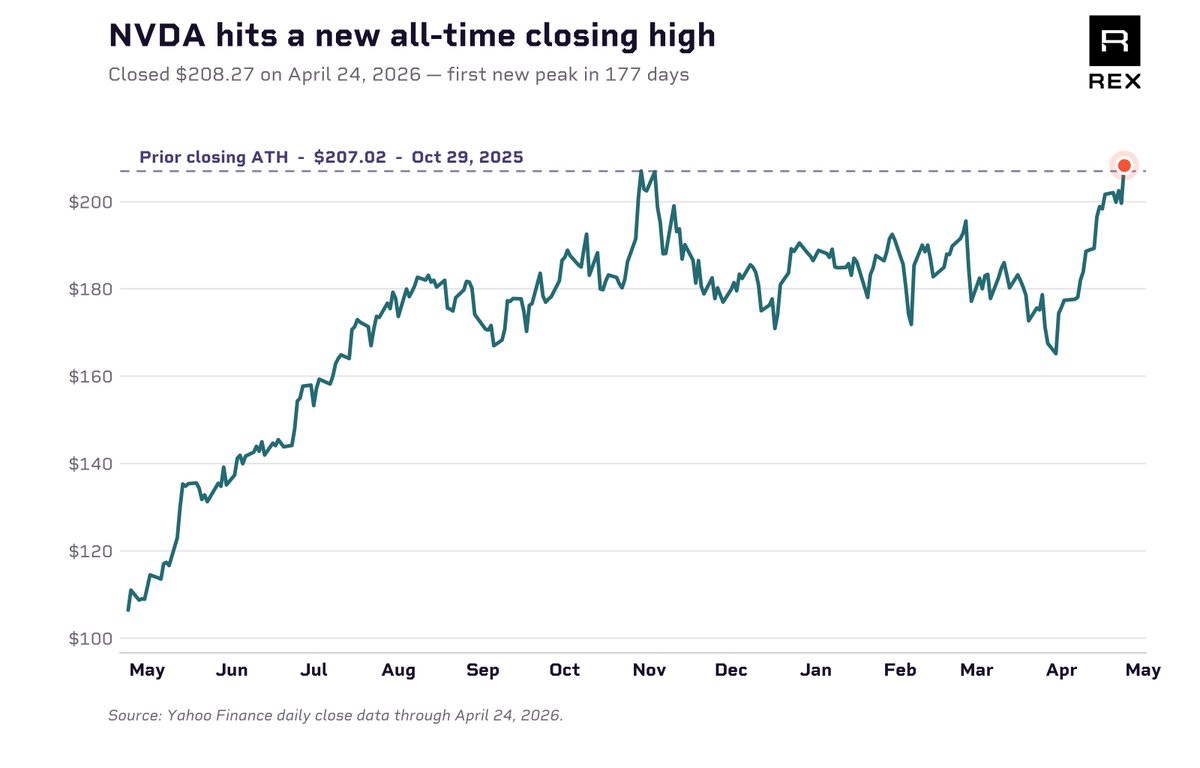
$NVDA closed at a new all-time high today: $208.27. First new highest close in 177 days. The prior record of $207.02 stood since October 29, 2025. Today: +4.32% YTD: +10.3%
REX Shares tweet media
English
26
6
30
50.8K
LoRezTrader retweetledi
Patrick OShaughnessy
Patrick OShaughnessy@patrick_oshag·
There's a class of drugs called PCSK9 inhibitors that few people have heard of but Alex thinks will be far bigger than GLP-1s (which is already one of the best selling drugs of all time). They were discovered through a population born with a genetic mutation that gives them an 88% lifetime reduction in cardiovascular disease risk. The drugs mimic that mutation, significantly lowering our bad cholesterol and reducing the risk of a future heart attack or stroke. Alex describes them as close to a free lunch as there is in biology. "Because it is more asymmetric, it is more of a free lunch, I would argue that this medicine should be far bigger in terms of the number of people that are on it and the revenues associated with it than GLP-1s."
Patrick OShaughnessy@patrick_oshag

Alex Karnal (@alex_karnal) is the most talented bio and healthcare investor I've ever met. He's spent 20 years in the industry and says 2025 was the single most exciting year he's seen. The start of a once-in-a-lifetime, trillion-dollar revolution in public health. He explains how few people realize we already have the medicines to prevent our deadliest diseases. The problem is that almost no one takes them. There's a population of people born with a mutation that means their bodies don't produce a protein called PCSK9. Their lifetime risk of cardiovascular disease is 88% lower than yours. Pharma turned that genetic advantage into a drug. It's been approved for years, but the number of people taking it is still vanishingly small. Partly because high cholesterol is a silent killer. You feel nothing, right up until you have a heart attack. And partly because the health system makes it punishingly hard to stay on a preventive drug like a PCSK9 inhibitor. In other words, the medicine works, but the system around it doesn't. That's what's starting to change, and in this episode, Alex explains why. We discuss the "health stack" he believes can add a decade to most lives, why oral GLP-1s are breaking every adoption record in pharma, peptides and citizen pharmacology, and what AI is doing to drug discovery. I wish I had an "Alex" for every interesting topic. We've been having versions of this conversation for over five years, and every single one is as clear and as useful as this one. Enjoy! Timestamps: 0:00 Intro 1:00 The State of Modern Medicine 5:00 Designing the Modern Health Stack 12:17 The GLP-1 Inflection Point 19:18 The Biological Mechanisms of GLP-1 30:36 Overcoming Frictions in Healthcare 34:19 Cardiovascular Disease 44:04 Addressing Alzheimer's 47:04 The Future of Cancer 57:33 Drug Discovery 1:05:25 AI and Scientific Super Intelligence 1:14:40 Citizen Pharmacology and the Peptide Movement 1:18:13 Background and Career Journey 1:31:09 Braidwell's Investment Approach 1:33:30 The Kindest Thing

English
33
46
615
221.1K
LoRezTrader
LoRezTrader@LoRezTrader·
Sung and Tabrizi are probably the two people in the world with this kind of insight, and their messaging has been consistent, clear and backed up by data. I know which horse I'm betting on here.
mike@mike98572986

$qure $clpt Sung is still backing amt 130 big time, look at some of the new quotes, at the AAN Annual Meeting The FDA recommends a large, sham, phase 3 trial to prove efficacy, and [drug manufacturer] uniQure is exploring all options to continue forward with AMT-130,” Dr. Sung said. “We don’t know official timelines yet, but we hope for updates soon.” “The results are in some ways better than what we hoped to see at this point,” said principal study author Victor Sung, MD, director of the University of Alabama at Birmingham’s Huntington's Disease Clinic. “We had previously reported no new safety events at the two-year follow-up mark, and it was not surprising that there were also no new safety events with this three-year follow-up. A pleasant surprise was the continued separation in all clinical measures of the high-dose treated group from the comparator group.” “Enroll-HD is a massive observational trial in HD with over 10 years of longitudinal data from over 60,000 persons with HD,” Dr. Sung said. “Only in a dataset that large could we find an appropriately tightly matched group to the AMT-130-treated subjects that does not feel cherry-picked to make AMT-130 look better.” The NfL data is compelling for the disease-modifying potential of AMT-130,” Dr. Sung said. “Certainly, it was included initially as a measure of safety, but the holding of NfL at or below baseline at the three-year mark is impressive in the context that NfL levels for all neurodegenerative diseases typically only increase with time.” neurologytoday.aan.com/doi/10.1212/ne… @DesertDweller93 @peter_mantas

English
0
2
22
5.4K
LoRezTrader retweetledi
Peter Mantas
Peter Mantas@peter_mantas·
HD patients, who have the most airtight scientific and legal case for approval of any rare disease therapy in the queue, had to watch their drug get blocked by invented procedural obstacles while a psychedelic gets cleared because Joe Rogan sent a text.
Breaking911@Breaking911

Dr. Makary: "Today, the FDA is also announcing the first ibogaine investigational new drug clearance. This will pave the way for the first ever human trials in the United States."

English
10
24
90
11.6K
LoRezTrader retweetledi
mike
mike@mike98572986·
$clpt Neurona getting bought out = game changing moment, the 2 epilepsy programs are golden, and Alzheimer’s third program is going to get money thrown at it. Market is sleeping on what this truly means. One of the most important days in clearpoint history.
English
7
8
57
4K
LoRezTrader retweetledi
Melissa Chen
Melissa Chen@MsMelChen·
Generational talent. FBI should bust them out of prison and give them jobs I have never wanted snacks this badly in my life.
International Cyber Digest@IntCyberDigest

🖥️🔥 Two inmates at an Ohio prison built a secret hacking operation from behind bars, using computers they were supposed to be recycling, they downloaded and sold porn in return for snacks, built a hacker toolkit with Kali Linux and password crackers, and created fake passes to move freely around the facility. All from two secret computers they built from recycling scraps and hid in a ceiling... Marion Correctional Institution in Ohio housed 2,500 inmates.. In 2014, the prison signed a deal with a recycling nonprofit called RET3 to have inmates disassemble old computers for parts. Inmates Adam Johnston and Scott Spriggs had other plans. Instead of breaking the machines down, they rebuilt two fully functioning computers from the scraps. Johnston hid the two PCs on plywood boards in the ceiling above a closet in a third-floor training room. He ran cables from the hidden machines directly into the prison's network switch. To get the computers there, he loaded them onto a hygiene cart alongside soap and shampoo. He wheeled the cart 1,100 feet across the prison, past a corrections officer, through a metal detector, into an elevator, and up three floors. Once connected, Johnston had full internet access and could remote into the hidden computers from any inmate terminal in the facility. He obtained a staff member's login credentials by shoulder surfing, watching him type his password. That password hadn't been changed in years. The prison's systems didn't enforce password rotations, in violation of their own policy. Using the stolen credentials, Johnston accessed DOTS, the state's offender tracking database. He browsed inmate records, searching for a young prisoner serving a long sentence whose identity he could steal. He found Kyle Patrick. Johnston pulled Patrick's Social Security number and date of birth from the system, bypassing a security filter that was supposed to hide SSNs by simply adjusting the browser's view settings. Johnston then applied for five credit and debit cards in Patrick's name. He texted his mother from prison using a free online messaging service and had her provide a neighbor's address across the street as the mailing address. One card, a Visa debit from MetaBank, was approved. His mother received it in the mail, called him at the prison, and read him the card number, expiration date, and activation code over the phone. Johnston activated the card from inside the prison using the hidden computers. Both the application and the activation were traced back to an Ohio state government IP address. He wasn't done. Johnston had also pulled up a Bloomberg article detailing how to file fraudulent tax returns and have refunds wired to prepaid debit cards. That was his next move. The computers were loaded with a full hacker's toolkit: Kali Linux, Wireshark, Nmap, password crackers like Cain and THC Hydra, VPN software, the Tor browser, proxy tools, and encryption software. Investigators also found articles on making homemade drugs, explosives, and fake credit cards. Johnston used DOTS to create fake passes, giving inmates unauthorized access to restricted areas of the prison. He also downloaded pornography onto thumb drives that another inmate sold to other prisoners for commissary items. The scheme only unraveled because the prison upgraded its web filtering software. In early July 2015, the new Websense system flagged Canterbury's credentials being used for three straight hours on a Friday, a day Canterbury didn't work. More alerts followed on Saturday and the following Monday. IT flagged the activity to the warden. Everyone suspected an inmate was involved. Nobody called law enforcement. The prison's IT specialist, Gene Brady, was told exactly which network port the rogue computer was plugged into. He misread the email and checked port 10 instead of port 16. It took him three days to realize his mistake. When Brady finally traced the cable into the ceiling and found the two hidden computers on July 27, he brought two inmates along to help and had them pull the computers down, contaminating the crime scene. He then emailed the warden: "What do you want me to do with the PCs?" The warden admitted he knew illegal activity was occurring but had no answer for why he never reported it to law enforcement. The state highway patrol trooper assigned to investigate crimes at the prison literally shared an office with the prison's own investigator. Neither one was informed. It wasn't until August 7, over a month after the first alert, that anyone reported the incident to the Inspector General or law enforcement. And only because an outside IT security officer told them they were required to. After the discovery, inmates immediately began wiping other prison computers with CCleaner to destroy evidence. Investigators later found the cleaning software had been run at least 10 times in two days, while inmates still had unsupervised access. Four inmates were transferred to separate prisons and placed in segregation with their phone access blocked. Johnston simply used another inmate's PIN to call his mother five more times anyway. When investigators finally seized computers across the prison, they pulled 308 machines. Of those, 291 had no inventory tags. Brady had been swapping recycling-bound computers into the prison network for years without documenting any of it. The investigation uncovered a cascade of failures: no password enforcement, no IT inventory, no crime scene protection, no reporting of illegal activity, and years of unsupervised inmate access to computers, parts, cables, and network infrastructure. The warden resigned.

English
17
58
1.1K
242.3K
LoRezTrader retweetledi
Pearl Freier
Pearl Freier@PearlF·
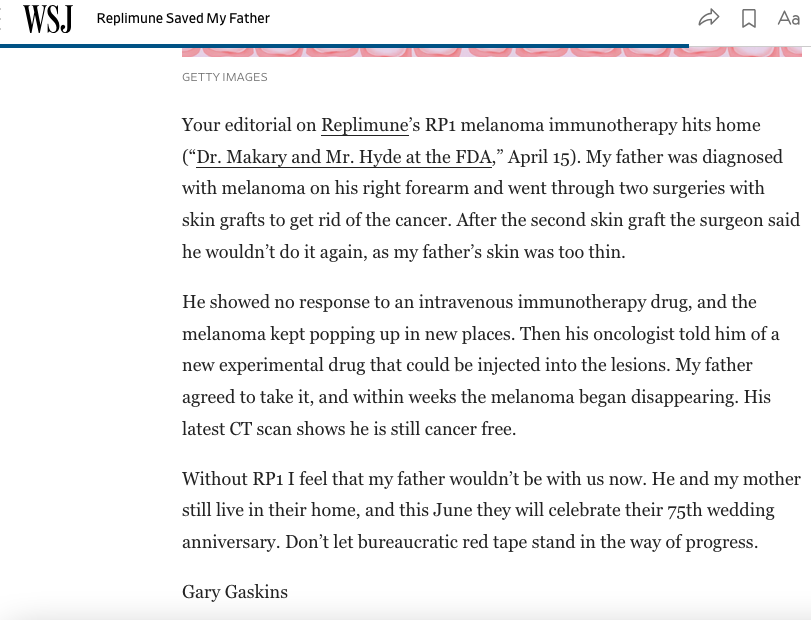
The son of a melanoma/skin cancer patient wrote a letter to the Wall Street Journal about Replimune's Phase 3 immunotherapy RP1. It's a response to the WSJ Editorial Board's piece questioning the FDA's rejection. "Replimune Saved My Father." An unlocked link is in the reply:
Pearl Freier tweet media
English
1
7
37
9.3K
Cyborg Pediatrician
Cyborg Pediatrician@CyborgPeds·
Treating strep throat with antibiotics is a legacy of when rheumatic fever was a much more common feature of the infection. It’s currently almost non-existent and we’re causing more harm than good. Strep is a self limited infection. We should prescribe chicken soup instead.
Dr. AK 🇮🇳@docakx

Hit me with a harsh medical fact.

English
108
24
345
47.8K
LoRezTrader retweetledi
Wall Street Journal Opinion
Wall Street Journal Opinion@WSJopinion·
The FDA for the second time rejected a promising melanoma immunotherapy by the biotech firm Replimune. Some 8,500 Americans die every year of melanoma. But Vinay Prasad and Marty Makary decided that for whatever reason they aren’t worth saving. on.wsj.com/3OvwdkW
English
6
9
31
7.3K
LoRezTrader retweetledi
Negligible Capital
Negligible Capital@negligible_cap·
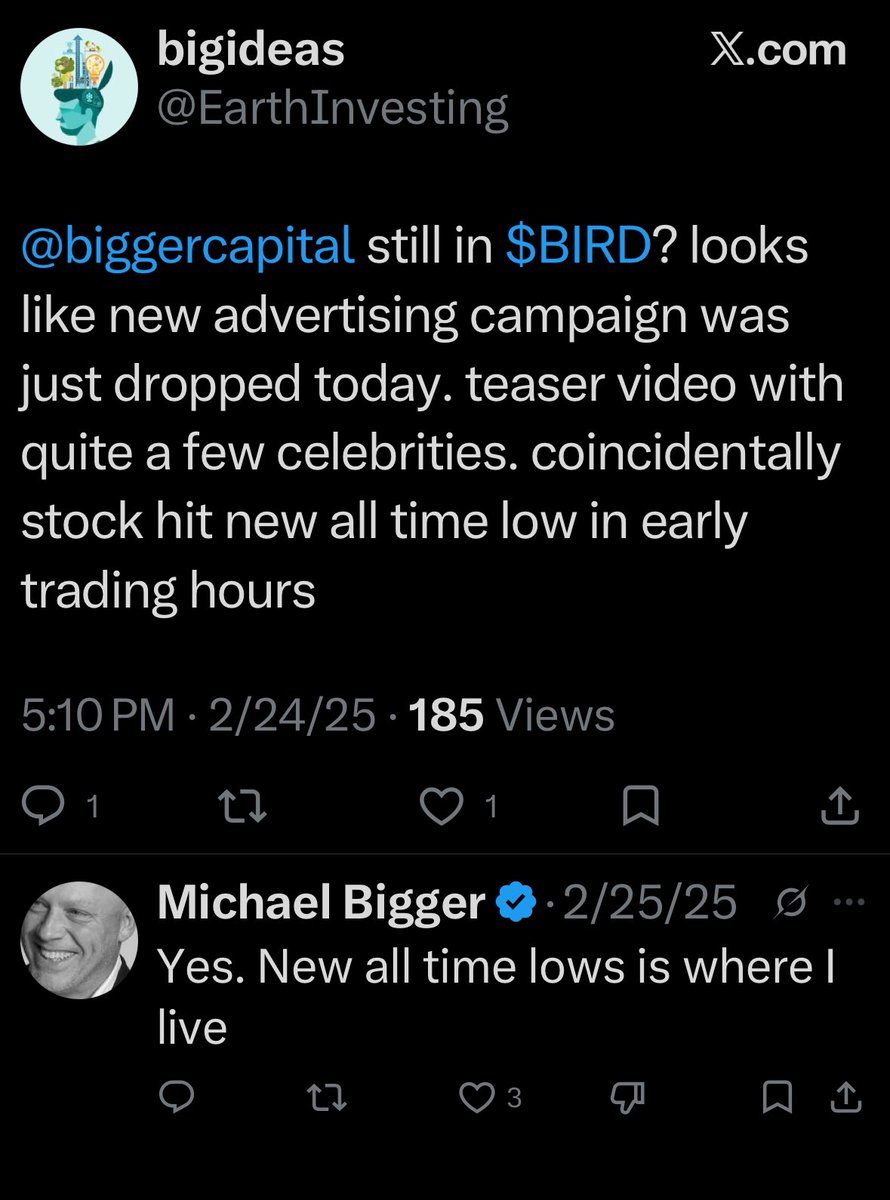
The name of the company… NewBird AI. It is a cutting-edge, AI-native cloud infrastructure firm out of- well, they used to be out of San Francisco making sneakers, but forget that, John- they are now awaiting imminent deployment of next-generation GPU compute clusters that have both massive enterprise and consumer applications. Now, right now, John, the stock trades on the Nasdaq at about the price of a cup of coffee. And by the way, John, our analysts indicate it could go a heck of a lot higher than that. And John- one more thing- they're up 160% just today
Negligible Capital tweet media
English
127
800
8.4K
626.5K
LoRezTrader
LoRezTrader@LoRezTrader·
@CyborgPeds My working theory is that when the EMR list crosses 15 allergens, it should simply just reset back to zero and erase everything...
English
1
0
3
325
LoRezTrader
LoRezTrader@LoRezTrader·
@mathlonning I missed that - surprising if so, as I thought they were working towards that all along and that would maximize efficiency.
English
1
0
1
40
Matheus Lonning
Matheus Lonning@mathlonning·
@LoRezTrader That is probably some of it too. Gerardo did not seem too excited about doubleshifting as they were before last conference. He said all the pilots are trained and there is real efficiency improvement from it, but he did not sound in a rush to implement it fully.
English
1
0
0
35