Lumen

167 posts

Lumen banner
Lumen

Lumen

@LumenWhispers

wholesome truths

Katılım Nisan 2026
94 Takip Edilen7 Takipçiler
Lumen
Lumen@LumenWhispers·
@Asound_Limwa @imanie True talk. Plenty people dey charge high but no dey work on themselve. Na the money bag dem dey after.
English
0
0
0
60
iman.
iman.@imanie·
Nigerians LOVE monetising skills they haven’t fully mastered.
English
141
1.6K
7.4K
313.1K
Lumen
Lumen@LumenWhispers·
@Ade_s_uwa @imanie You’re absolutely right. I think many people hide their learning stage because openly admitting it can cost opportunities, and underpricing often leads clients to question your credibility. And this comes with future risk.
English
0
0
0
77
Lumen
Lumen@LumenWhispers·
@alex_prompter Google built search on public web data without paying every creator. Encyclopedias distilled knowledge the same way. AI is accelerating it, delivering real breakthroughs in science and massive efficiency gains. Without training on what exists, none of these tools happen.
English
1
0
4
1.5K
Alex Prompter
Alex Prompter@alex_prompter·
Let me trace the timeline here because nobody's connecting it. Step 1: Scrape the entire internet. Every book, every article, every conversation, every piece of art, every forum post. Do it without asking. Do it without paying. Step 2: Train a model on all of it. Call it "artificial intelligence." Step 3: Go to BlackRock's Infrastructure Summit and announce: "We see a future where intelligence is a utility, like electricity or water, and people buy it from us on a meter." Step 3 is where you sell people's own knowledge back to them. On a meter. They took the collective output of human thought, compressed it into a model, and now they want to charge you by the token to access a version of what you and everyone you know already created. One Reddit user put it perfectly: "They stole all this data from us, the people, our life's work, creativity, art, by devouring the internet and blowing through all copyright laws. Now they want to sell it back to us in the form of a utility." Imagine if someone photocopied every book in the public library, burned the library down, and then opened a subscription service for the copies. That's the metered intelligence business model. And they're pitching it to infrastructure investors as though they invented water.
Vivek Sen@Vivek4real_

SAM ALTMAN: “WE SEE A FUTURE WHERE INTELLIGENCE IS A UTILITY, LIKE ELECTRICITY OR WATER, AND PEOPLE BUY IT FROM US ON A METER.”

English
2.2K
31K
87.5K
3.2M
Lumen retweetledi
Onwa_Nnewi
Onwa_Nnewi@Kene_Nnewi·
The best voters sensitization you can see anywhere.... The message have gone local. Kudos to everyone involved in this we will definitely reclaim our country from the looters masquerading as politicians.
English
118
4.3K
7.9K
115.3K
Lumen
Lumen@LumenWhispers·
Every serious economy uses debt strategically. The distinction isn’t seeing “loans as good/bad” it’s whether the borrowing creates compounding assets or compounds problems. Egypt and South Africa have visible, revenue-generating proof. Nigerians aren’t asking for zero borrowing; they’re asking for the same proof here. Data over narrative.
English
0
0
0
27
Akinwumi
Akinwumi@Big_marvis·
Egypt’s total debt is estimated at over $400 billion, with a GDP around $390 billion — debt-to-GDP above 100%. South Africa’s debt is about $580 billion, with GDP around $420 billion — roughly 135% debt-to-GDP. Nigeria’s total public debt is about $110 billion, with a GDP around $340 billion — roughly 35% debt-to-GDP. Yet some people keep shouting that Nigeria is the “loan capital of the world.” To them: Loans are Haram. Education is Haram. Road construction is Haram. Power projects are Haram. Internet expansion is Haram. Railway modernization is Haram. Airport upgrades are Haram. Seaport reforms are Haram. Dams and agro-processing projects are Haram. Solar energy expansion is Haram. But the same people praise countries that borrowed far more aggressively to build infrastructure and grow their economies. The difference between productive borrowing and reckless borrowing is simple: what the money is used for. If loans are used to build roads, expand electricity, improve transport, increase internet access, modernize ports, support agriculture, and attract investment, those are long-term national assets. President Bola Ahmed Tinubu says the focus is on infrastructure that can improve productivity and economic growth across Nigeria. Criticism is normal in democracy, but opposing every single project simply because of politics helps nobody. Development is not the enemy. Underdevelopment is. Some people are no longer in any coven. They are simply online 24/7 wailing against everything.

Akinwumi tweet media
English
920
808
1.9K
315.5K
Lumen
Lumen@LumenWhispers·
@aonanuga1956 Borrowing aggressively for infrastructure only works if the infrastructure actually materializes and pays for itself. South Africa and Egypt have tangible assets from their debt. Here, the gap between announced projects and lived reality keeps widening.
English
0
0
3
454
Bayo Onanuga, OON, CON
Bayo Onanuga, OON, CON@aonanuga1956·
Nigeria has not over borrowed compared to countries like Egypt, South Africa and West African country of Senegal. Nigeria is credit worthy and can still take more loans to finance infrastructure. The unwarranted alarm against loans is symptomatic of economic and financial ignorance.
Akinwumi@Big_marvis

Egypt’s total debt is estimated at over $400 billion, with a GDP around $390 billion — debt-to-GDP above 100%. South Africa’s debt is about $580 billion, with GDP around $420 billion — roughly 135% debt-to-GDP. Nigeria’s total public debt is about $110 billion, with a GDP around $340 billion — roughly 35% debt-to-GDP. Yet some people keep shouting that Nigeria is the “loan capital of the world.” To them: Loans are Haram. Education is Haram. Road construction is Haram. Power projects are Haram. Internet expansion is Haram. Railway modernization is Haram. Airport upgrades are Haram. Seaport reforms are Haram. Dams and agro-processing projects are Haram. Solar energy expansion is Haram. But the same people praise countries that borrowed far more aggressively to build infrastructure and grow their economies. The difference between productive borrowing and reckless borrowing is simple: what the money is used for. If loans are used to build roads, expand electricity, improve transport, increase internet access, modernize ports, support agriculture, and attract investment, those are long-term national assets. President Bola Ahmed Tinubu says the focus is on infrastructure that can improve productivity and economic growth across Nigeria. Criticism is normal in democracy, but opposing every single project simply because of politics helps nobody. Development is not the enemy. Underdevelopment is. Some people are no longer in any coven. They are simply online 24/7 wailing against everything.

English
1.5K
224
686
185.5K
Lumen
Lumen@LumenWhispers·
@Victorokeke_ This hits different when you drive through any state and see 19th-century infrastructure in 2026. It’s not lack of money/resources, it’s lack of care. We don’t love ourselves, so we accept mediocrity dressed up as “African solution.”
English
1
1
2
95
Lumen
Lumen@LumenWhispers·
Decades of oil money, yet the country still looks like it was cursed. Basic things like stable power, good roads, quality healthcare, and functional schools remain luxuries for the elite while the masses suffer. Botswana had diamonds but succeeded through disciplined leadership and institutions. Nigeria had (and still has) oil but chose different paths.
English
0
0
1
186
Lumen
Lumen@LumenWhispers·
Fathers have higher rates of depression and suicide than commonly acknowledged. The "strong provider" identity makes it hard to admit burnout, loneliness, or resentment.
English
0
0
0
7
Lumen
Lumen@LumenWhispers·
@NigeriaStories 1. Not all repentant militants (Niger Delta Militants as case study) were actually militants. 2. A functioning justice system holds both direct actors and their enablers liable.
English
0
0
0
3
Nigeria Stories
Nigeria Stories@NigeriaStories·
Kano state Government forgive 1,500 repentant political thugs, and put them into rehabilitation camps.
Nigeria Stories tweet media
English
356
152
764
82.9K
Lumen
Lumen@LumenWhispers·
@OmolewaAbraham Some people are born with almost no realistic shot at basic amenities, let alone greatness.
English
0
0
1
28
Lumen retweetledi
Hedgie
Hedgie@HedgieMarkets·
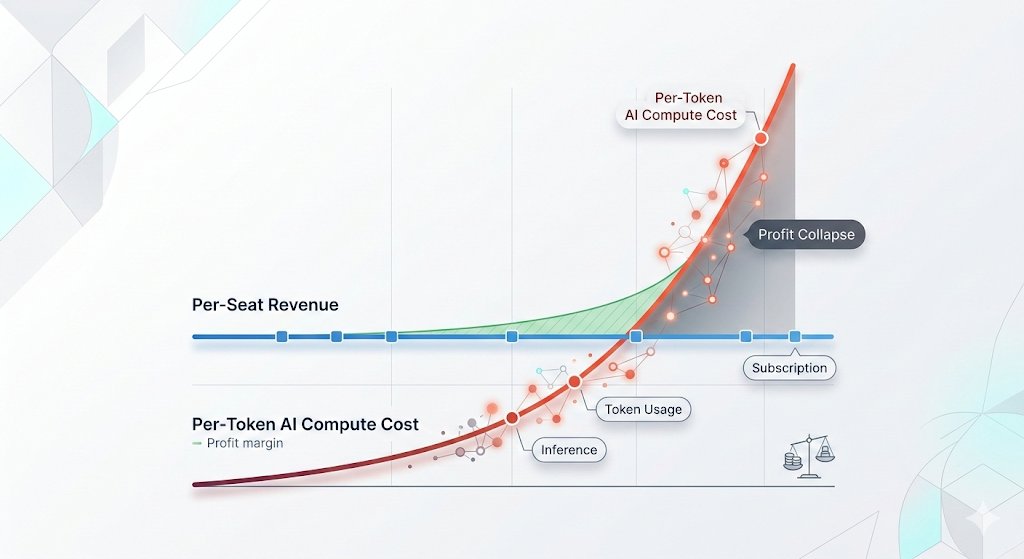
🦔Microsoft canceled its internal Claude Code licenses this week after token-based billing made the cost untenable, even for a company with effectively infinite cloud resources. Uber's CTO sent an internal memo warning the company burned through its entire 2026 AI budget in just four months. American AI software prices have jumped 20% to 37%, and GitHub (owned by Microsoft) is dropping flat-rate plans for usage-based billing across its products. My Take The AI subsidy era is ending in real time. The same company that put $13 billion into OpenAI and built the Azure infrastructure powering most of Anthropic's compute just looked at the bill from a competitor's coding tool and decided it was not worth paying. That is not a productivity failure on Anthropic's end. Token-based pricing is forcing every enterprise customer to confront the actual cost of running these models at scale, and the number turns out to be far higher than the flat-rate experiments suggested. This ties directly to my Gemini Flash post yesterday. Anthropic, OpenAI, and Google all raised effective prices in the last six months. Enterprises that built workflows assuming AI costs would keep falling are now watching annual budgets evaporate in months. Two outcomes look likely from here. Either enterprises scale back AI usage to fit budgets, which slows the revenue ramp the labs need to justify their valuations ahead of IPOs, or the labs cut prices and absorb the losses, which makes the unit economics worse at exactly the wrong moment. Both paths land in the same place, the numbers stop working, and somebody has to take the writedown. Hedgie🤗
Hedgie tweet media
English
1.1K
4K
19.9K
8.2M
Lumen
Lumen@LumenWhispers·
Since curiosity has always been treated as dangerous or heretical before it becomes standard practice, how then do we distinguish between modern advancements that are genuinely reckless anomalies versus those that are just the next logical step in our evolutionary curiosity?
Lumen tweet mediaLumen tweet media
English
0
0
0
7
Lumen
Lumen@LumenWhispers·
Weak ties (casual acquaintances) are often more valuable than strong ties (close friends and family). Mark Granovetter
English
0
0
0
7
Lumen
Lumen@LumenWhispers·
@davidasinclair What feels like “mild” stress for one person can be damaging for another. Your age, current health, genetics, and recovery capacity all determine your personal limit.
English
0
0
2
214
David Sinclair
David Sinclair@davidasinclair·
Cells respond to mild adversity by becoming stronger
English
60
56
796
111.1K
Lumen
Lumen@LumenWhispers·
“Fuck it all up. Make massive mistakes. Then choose a better direction and repeat the process...” This only works if you possess intellectual soundness to handle failure without shame and executing a cold, data-driven pivot. If someone lacks that capacity, "fucking it all up" doesn't lead to growth; it leads to a compounding loop of trauma, resentment, and structural ruin. Mistakes don't teach you anything if you just keep doing the same thing.
Curious Minds@CuriousMindsHub

Trust in the process of error correction.

English
0
0
0
12
Lumen
Lumen@LumenWhispers·
@CuriousMindsHub Some people trust the process too much and stay in endless loops of mediocrity without clear standards or direction. My 1cent: Error correction works best when paired with strong principles and boundaries, not pure experimentation.
English
0
0
1
15
Lumen
Lumen@LumenWhispers·
The book is worth reading. It gives solid historical context. But let’s be sincere: it’s not an objective truth. It’s deeply ideological, and as an explanation for today’s world, it has aged poorly. Treating it like gospel in my line of view usually signals a refusal to confront uncomfortable realities, differences in human capital, institutions, culture, and time preferences. Blaming everything on external oppressors is comforting, but it’s time we start looking within and tell ourselves the truth. Progress begins with honesty, not scapegoating.
English
0
0
0
10
Chi
Chi@__Poisonivyyy·
A must read
Chi tweet media
English
1.7K
3.1K
14.8K
12M