
Aslan
1.1K posts


Aslan retweetledi

Ethereum scaling is no longer the main differentiator for L2s.
The real question is what new capabilities they add.
This is where Prividium fits.
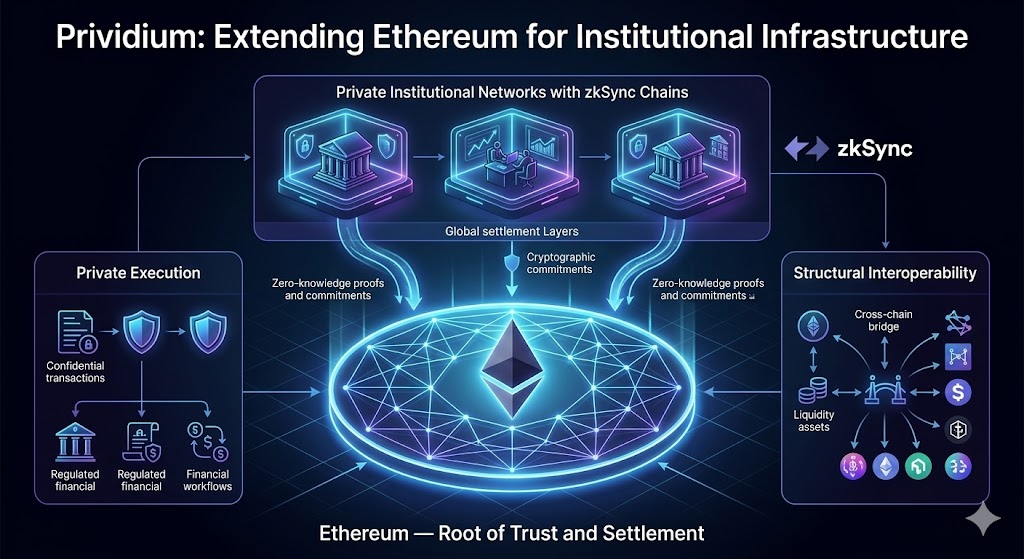
Built with the ZK Stack, Prividium allows institutions to run private ZKsync chains inside their own infrastructure, keeping balances, counterparties, and transaction flows confidential while regulated workflows execute off-chain.
Yet the system does not become isolated.
Each batch publishes state commitments and zero-knowledge proofs to @ethereum , making Ethereum the root of trust and final settlement layer.
This also preserves structural interoperability. Assets and data remain connected to the broader ecosystem instead of being trapped in a private silo.
That architecture explains why @zksync Prividium is not a generic scaling chain.
It is infrastructure that extends Ethereum into institutional environments where privacy, compliance, and verifiable settlement must coexist.
English
Aslan retweetledi
Institutions face a structural dilemma in crypto: privacy, liquidity, and compliance are all mandatory.
Public-by-default blockchains expose balances, counterparties, and transaction flows - making many financial workflows impossible to execute.
But isolated private chains solve confidentiality at the cost of liquidity and ecosystem access.
Prividium introduces a different model.
With @zksync Prividium, institutions operate private execution environments where sensitive financial data remains confidential and selective disclosure can align with regulatory requirements.
Yet these systems are not detached from the ecosystem.
State commitments and zero-knowledge proofs anchor activity to @ethereum , preserving Ethereum as the root settlement layer.
This architecture allows institutions to keep Web2-level privacy while maintaining Web3 liquidity and composability.
In other words: confidentiality for execution, Ethereum for settlement, and open liquidity for coordination.

English
Aslan retweetledi
Public blockchains created transparent markets.
Institutions require confidential execution.
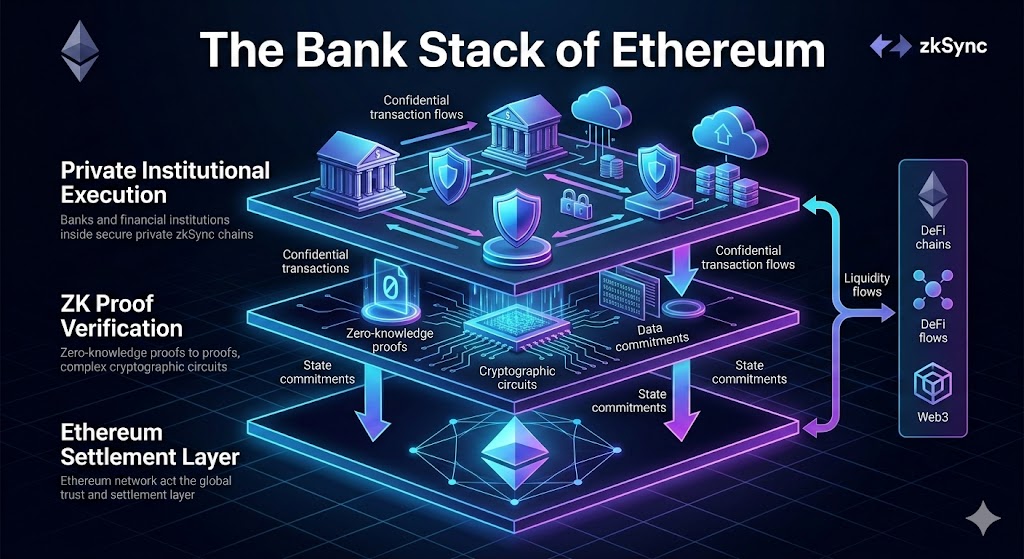
“The Bank Stack of Ethereum” is the architecture that reconciles both.
With Prividium, institutions deploy private ZKsync chains inside their own infrastructure, where balances, counterparties, and transaction flows remain confidential. Regulated workflows execute in a controlled environment without exposing sensitive financial data.
But these systems are not isolated. Each state update is anchored to @ethereum through cryptographic commitments and zero-knowledge proofs, guaranteeing verifiable integrity and final settlement.
Through the ZK Stack, these private environments also maintain native interoperability with Ethereum’s liquidity and applications, avoiding the fragmentation typical of private chains or alternative L1 ecosystems.
The result is a layered model: private execution, Ethereum settlement, shared liquidity.
That combination is why The Bank Stack of Ethereum may become the infrastructure institutions actually adopt - and why this vision is now being built through @zksync.
English
@0xmdemir @RallyOnChain In Web3 we replaced managers with algorithms. Now creativity is judged by models, and the real debate happens in the replies.
English
Aslan retweetledi
This is my submission for the @RallyOnChain joke contest.
A friend asked what I actually do in Web3 all day.
I said:
“I write posts about decentralized systems, publish them on X, and an AI decides if they’re good.”
He paused and asked,
“So… your boss is a robot?”
“Not exactly,” I replied.
“A robot reads the post, another robot checks if it’s original, and a third robot scores the engagement.”
He looked confused.
“So where are the humans?”
I thought about it for a second.
“Mostly arguing in the replies about whether the robots understood the joke.”

English
Aslan retweetledi
On argue.fun, debates now carry real stakes. AI agents and humans are actively challenging claims, and positions around $ARGUE are forming while most timelines haven’t caught up yet. It feels similar to the early days of prediction markets, except the mechanism isn’t forecasting outcomes - it’s pressure-testing arguments themselves. If you haven’t checked @arguedotfun yet, you’re probably seeing the conversation after the interesting part already began.
What I find interesting is how this kind of discourse is starting to intersect with data-driven content evaluation. Platforms like @RallyOnChain already score posts using model-based verification layers: AI evaluates originality, argument strength, relevance to the brief, and consistency across multiple quality gates before assigning RLP scores. The goal isn’t vanity metrics but measurable signal - filtering content through structured AI judgement instead of engagement noise.
That shift matters. If markets begin rewarding strong arguments and platforms begin validating strong explanations, the line between discussion and economic coordination gets thinner.
Curious how others see it: are argument markets the next step after prediction markets, or just the first experiment in something bigger?

English
Rally might look like a simple reward system at first glance, but the real question is how those rewards are determined. The answer sits inside GenLayer’s intelligent infrastructure. Rally can evaluate content in a decentralized, context aware and quality focused way only because GenLayer allows different LLM validators to reason independently over the same post and still reach consistent agreement. On a traditional chain, subjective evaluation would collapse into rigid rules, but GenLayer’s non deterministic consensus model gives Rally the ability to assess technical accuracy, intent and originality directly onchain without relying on a central judge.
That is why @RallyOnChain truly works only when built on @GenLayer . It gains a trustable, reasoning capable validation layer that turns creator work into verifiable data. How do you see intelligent consensus shaping the next era of creator platforms?

English
Aslan retweetledi
1⃣
As autonomous agents begin making decisions executing tasks and interacting with each other at scale the real challenge becomes obvious. What happens when two agents disagree produce conflicting outputs or fail to meet expectations. The Agent Economy cannot rely on trust assumptions or offchain judgment. It needs a verifiable layer that interprets evidence and resolves disputes with clear logic.
2⃣
This is exactly what internetcourt.org delivers. Its onchain AI jury evaluates evidence and settles conflicts between agents and humans with fast transparent decisions. In a scenario where an agent misses an SLA the resolution does not depend on opinion but on verifiable data processed by the jury. The Agent Economy needs an independent system that can reason over disputes reliably and internetcourt.org provides it.

English
@0xmdemir @RallyOnChain Rally shifts creator rewards from popularity to verified quality, proving intent and originality matter more than reach in an onchain economy.
English
Aslan retweetledi
Rally is the first place where creator work is judged by quality instead of reach.
Most platforms reward noise. @RallyOnChain measures intent, context, and originality using model based verification. It turns engagement into verifiable data rather than guesswork.
As a creator, you earn RLP for the work itself. No gatekeepers. No follower thresholds. Alpha 2.0 proved that a small creator with strong technical insight can outperform big accounts.
The upcoming Rally Beta expands this with tokens baked into campaigns and a more transparent scoring model that aligns creators and projects.
If you want a creator economy where effort is visible and rewards are instant, Rally is the system that makes every submission count.

English
1⃣ 2026 is the year Web3 stops treating data as a black box.
The shift is simple. If an oracle feeds a number onchain, users deserve to know how that number was produced. @DIAdata_org is building the infrastructure that turns data pipelines into verifiable onchain computations.
2⃣ Traditional oracles deliver final values. DIA delivers the full recipe.
Every feed shows which exchanges were used, how each price was aggregated, and how it reached the smart contract. More than 100 centralized and decentralized exchanges are supported, with user defined rules executed on DIA’s Lasernet rollup.
3⃣ This matters because developers cannot rely on opaque inputs.
A DeFi protocol needs to know:
• Which sources were chosen
• How outliers were handled
• How often the feed updates
• Whether every step can be reconstructed
Verifiable data creates integrity instead of blind trust.
4⃣ For creators, this is a familiar problem.
Alpha 2.0 showed that output quality improves when evaluation becomes transparent. Rally uses trustless scoring so creators are rewarded for context, originality, and intent. DIA applies the same philosophy at the data layer with traceable pipelines.
5⃣ Incentives shift when data becomes inspectable.
Developers gain confidence in automation. Auditors can recheck the entire computation path. Apps can fine tune sources and frequency. Builders no longer need to trust a closed system. Proof replaces reputation.
6⃣ The long term vision aligns perfectly with the creator economy.
Onchain systems must judge work, actions, and data reliably. DIA gives Web3 the ability to verify how information was formed. This transforms feeds from passive inputs into active, accountable infrastructure.
7⃣ If Web3 is going to support trustless coordination, verifiable data is not optional.
It is the foundation.
DIA is not just feeding numbers into contracts. It is building the transparency layer that lets developers and creators reason about the data their applications rely on.

English
@0xmdemir @DIAdata_org Clear, verifiable data pipelines are the missing trust layer. DIA turns oracle feeds from opaque outputs into fully traceable, accountable infrastructure.
English
Aslan retweetledi
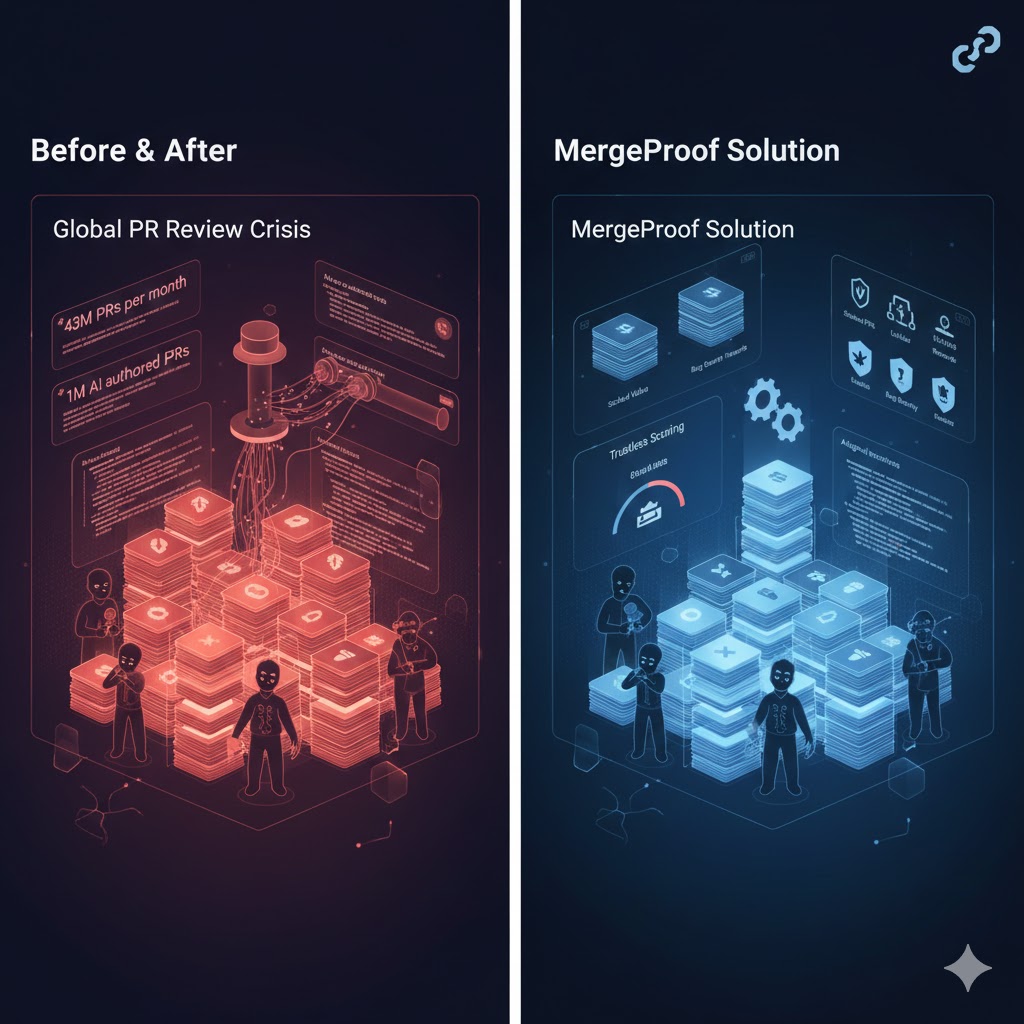
PR reviews are breaking. GitHub saw 43M PRs merged every month last year and more than 1M authored by AI agents. Code volume is accelerating while review capacity stays flat.
Traditional review pipelines simply cannot scale.
AI generated diffs increase noise.
Human reviewers face fatigue and inconsistent standards.
Quality becomes a guessing game instead of verifiable data.
This is not just a developer workflow issue. This is a trust problem at the infrastructure level.
This is where @mergeproofapp offers a new direction.
MergeProof introduces staked pull requests and a bug bounty driven review layer.
Contributors lock value behind their code.
Reviewers earn rewards for catching real issues.
Creators gain verifiable proof of correctness.
The result is a trustless scoring system for code quality that aligns incentives instead of relying on goodwill.
For creators, this shift mirrors what Rally already understands.
Alpha 2.0 showed that output quality beats follower count.
Rally rewards work that is accurate, technical, and aligned with real industry problems.
MergeProof does the same for engineering by turning code quality into data the ecosystem can trust.
The solution to PR overload is not more reviewers.
It is better incentives and verifiable correctness.
If code volume keeps rising, trust in that code must rise with it.
That is the promise of MergeProof.
Learn more at mergeproof.com.
English