
Peter Kaas

1.2K posts

Peter Kaas banner
Peter Kaas

Peter Kaas

@mepak

Personal onions only.

Katılım Mayıs 2007
602 Takip Edilen101 Takipçiler
Peter Kaas retweetledi
sudo rm -rf --no-preserve-root /
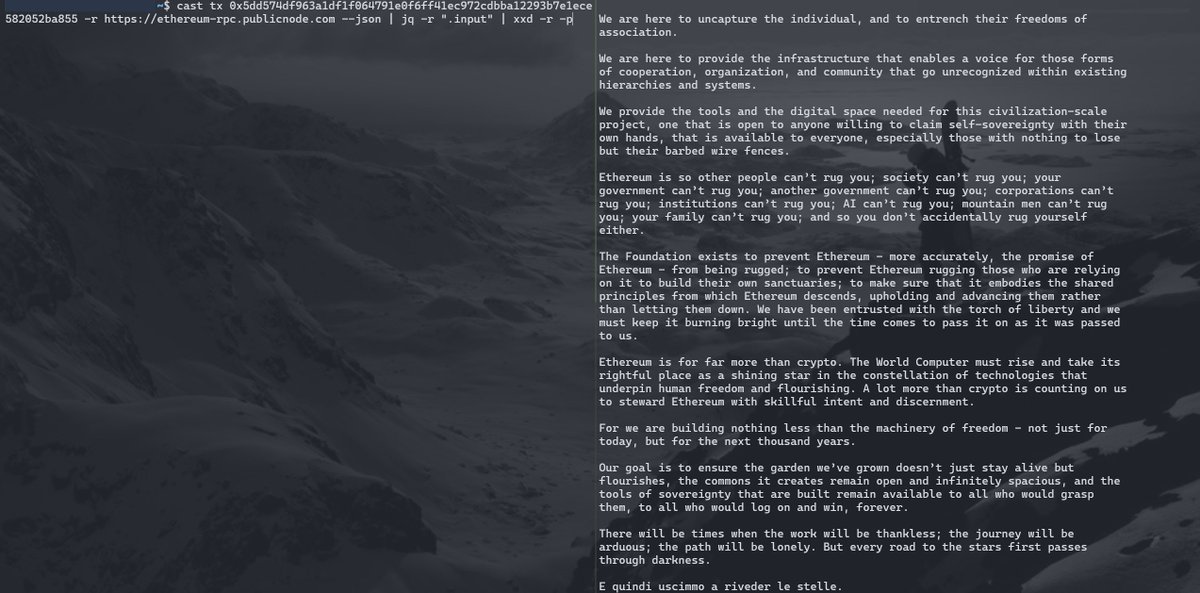
The mission is so simple, yet so powerful: Make the individual unruggable. Not by fucking governments. Not by fucking corporations. Not by fucking institutions. Principles matter because without them every system eventually becomes another way to fucking control people. Ethereum won't. Ethereum isn't just about making Cypherpunk great again. It's about winning self-sovereignty. LFG.
sudo rm -rf --no-preserve-root / tweet media
Ethereum Foundation@ethereumfndn

Today, the Foundation’s Board released the EF Mandate. This document, which was first intended for EF members, reaffirms the promise of Ethereum, and the role of EF within this ecosystem.

English
15
35
235
13.2K
Peter Kaas retweetledi
Tay 💖
Tay 💖@tayvano_·
A product is the thing you use to solve your problem or get a job done. People use products. Products thus serve those people. Not all people. Just the people with the specific problem the product aims to solve. The best products focus. If you have a loose screw, you reach for a screwdriver. Not a hammer. Not a penny. Not a multitool. A fucking screwdriver. A platform is a foundation for products. It's the technology, the infrastructure, the tooling, the resources. Eventually it is the ecosystem of people and APIs and libraries and other products and network effects. People do not use the platform. People build products on the platform. They build products that serve their users. The platform is the foundation. It is not the product. The best platforms are ones where every builder can build whatever they want without any blockers. You don't need approval. You know your users and their needs and you solve their problems. The platform unlocks and enables you to do that better, cheaper, more easily. If the platform does not allow you to create more value with the platform than without it then you don't use the platform. It's very simple. See: Base v OP Stack. The second-worst platform is a product that calls itself a platform. That non-platform end ups not empowering anyone while also not bothering to solving any problems or serving any user needs. It's bad, but mostly harmless (unless you are an employee there lol) No, the absolute worst platform is one that is actually a platform that actually has products built on it but suddenly fancies itself a product. If you are building on a platform that shifts to serve end-user directly, you should RUN THE FUCK AWAY. Their mission is no longer to empower anyone to build anything. It's to deliver their own products and solve their own user's needs. They will happily ignore/deprioritize/rug every other competing product. As they should. You cannot build a great product while building someone else's product at the same time. You cannot build a great platform if you are building a solution to a specific problem and specific user need. The EF is not building a product.
English
9
16
168
20.5K
Peter Kaas retweetledi
Aakash Gupta
Aakash Gupta@aakashgupta·
The PM skill that matters in 2026 is taste at speed. Boris Cherny just showed everyone what that looks like. His Claude Code team at Anthropic doesn’t write PRDs. They build hundreds of working prototypes before shipping a single feature. Boris personally ships 20-30 PRs a day running 5 parallel Claude instances. They built Cowork, a full product for non-engineers, in about 10 days. Everyone in the replies is debating whether PRDs should die. Wrong conversation. The real question is what happens to the PM who can’t evaluate 15 prototypes and pick the 3 worth shipping. Because here’s what changes when building costs near zero: the bottleneck moves from “can we build it” to “should we ship it.” PRDs existed because building was expensive and you needed sign-off before committing resources. When a prototype takes 45 minutes instead of 6 weeks, nobody needs a document to authorize exploration. They need someone who can look at working software and say “this one, not that one” in real time. On the Claude Code team, PMs code. Data scientists code. User researchers code. Boris said productivity per engineer grew 70% even as Anthropic tripled in headcount. The coordination cost of translating specs into code disappears when everyone can build. And that changes what a PM is actually good for. Boris said it himself: “There’s just no way we could have shipped this if we started with static mocks and Figma or if we started with a PRD.” The old process would have spent more calendar time documenting Cowork than his team spent building it. This is the Claude Code team today. It will be most fast-moving teams within 18 months. The PMs who thrive will be the ones reviewing prototypes at 9am, killing 80% of them by noon, and shipping the survivors by end of week. Pattern matching across user research, technical feasibility, and business model simultaneously while staring at working software. The PMs who struggle will be the ones still writing 15-page specs for features that could be prototyped, tested, and validated before the doc hits its first review cycle. Taste at speed is the new moat.
yenkel@yenkel

you must internalize this ASAP: - less handoffs, decide fast - faster exploration - encourage to throw away code/tokens - learn by building, de risk with code - pick leads that can own design, eng and product

English
33
35
442
98.8K
Peter Kaas retweetledi
vitalik.eth
vitalik.eth@VitalikButerin·
Over the past year, many people I talk to have expressed worry about two topics: * Various aspects of the way the world is going: government control and surveillance, wars, corporate power and surveillance, tech enshittification / corposlop, social media becoming a memetic warzone, AI and how it interplays with all of the above... * The brute reality that Ethereum seems to be absent from meaningfully improving the lives of people subject to these things, even on the dimensions we deeply care about (eg. freedom, privacy, security of digital life, community self-organization) It is easy to bond over the first, to commiserate over the fact that beauty and good in the world seems to be receding and darkness advancing, and uncaring powerful people in high places are making this happen. But ultimately, it is easy to acknowledge problems, the hard thing is actually shining a light forward, coming up with a concrete plan that makes the situation better. The second has been weighing heavily on my mind, and on the minds of many of our brightest and most idealistic Ethereans. I personally never felt any upset or fear when political memecoins went on Solana, or various zero-sum gambling applications go on whatever 250 millisecond block chain strikes their fancy. But it *does* weigh on me that, through all of the various low-grade online memetic wars, international overreaches of corporate and government power, and other issues of the last few years, Ethereum has been playing a very limited role in making people's lives better. What *are* the liberating technologies? Starlink is the most obvious one. Locally-running open-weights LLMs are another. Signal is a third. Community Notes is a fourth, tackling the problem from a different angle. One response is to say "stop dreaming big, we need to hunker down and accept that finance is our lane and laser-focus on that". But this is ultimately hollow. Financial freedom and security is critical. But it seems obvious that, while adding a perfectly free and open and sovereign and debasement-proof financial system would fix some things, but it would leave the bulk of our deep worries about the world unaddressed. It's okay for individuals to laser-focus on finance, but we need to be part of some greater whole that has things to say about the other problems too. At the same time, Ethereum cannot fix the world. Ethereum is the "wrong-shaped tool" for that: beyond a certain point, "fixing the world" implies a form of power projection that is more like a centralized political entity than like a decentralized technology community. So what can we do? I think that we in Ethereum should conceptualize ourselves as being part of an ecosystem building "sanctuary technologies": free open-source technologies that let people live, work, talk to each other, manage risk and build wealth, and collaborate on shared goals, in a way that optimizes for robustness to outside pressures. The goal is not to remake the world in Ethereum's image, where all finance is disintermediated, all governance happens through DAOs, and everyone gets a blockchain-based UBI delivered straight to their social-recovery wallet. The goal is the opposite: it's de-totalization. It's to reduce the stakes of the war in heaven by preventing the winner from having total victory (ie. total control over other human beings), and preventing the loser from suffering total defeat. To create digital islands of stability in a chaotic era. To enable interdependence that cannot be weaponized. Ethereum's role is to create "digital space" where different entities can cooperate and interact. Communications channels enable interaction, but communication channels are not "space": they do not let you create single unique objects that canonically represent some social arrangement that changes over time. Money is one important example. Multisigs that can change their members, showing persistence exceeding that of any one person or one public key, are another. Various market and governance structures are a third. There are more. I think now is the time to double down, with greater clarity. Do not try to be Apple or Google, seeing crypto as a tech sector that enables efficiency or shininess. Instead, build our part of the sanctuary tech ecosystem - the "shared digital space with no owner" that enables both open finance and much more. More actively build toward a full-stack ecosystem: both upward to the wallet and application layer (incl AI as interface) and downward to the OS, hardware, even physical/bio security levels. Ultimately, tech is worthless without users. But look for users, both individual and institutional, for whom sanctuary tech is exactly the thing they need. Optimize payments, defi, decentralized social, and other applications precisely for those users, and those goals, which centralized tech will not serve. We have many allies, including many outside of "crypto". It's time we work together with an open mind and move forward.
English
745
659
3.9K
547.2K
Peter Kaas retweetledi
Touraj Daryaee
Touraj Daryaee@tourajdaryaee·
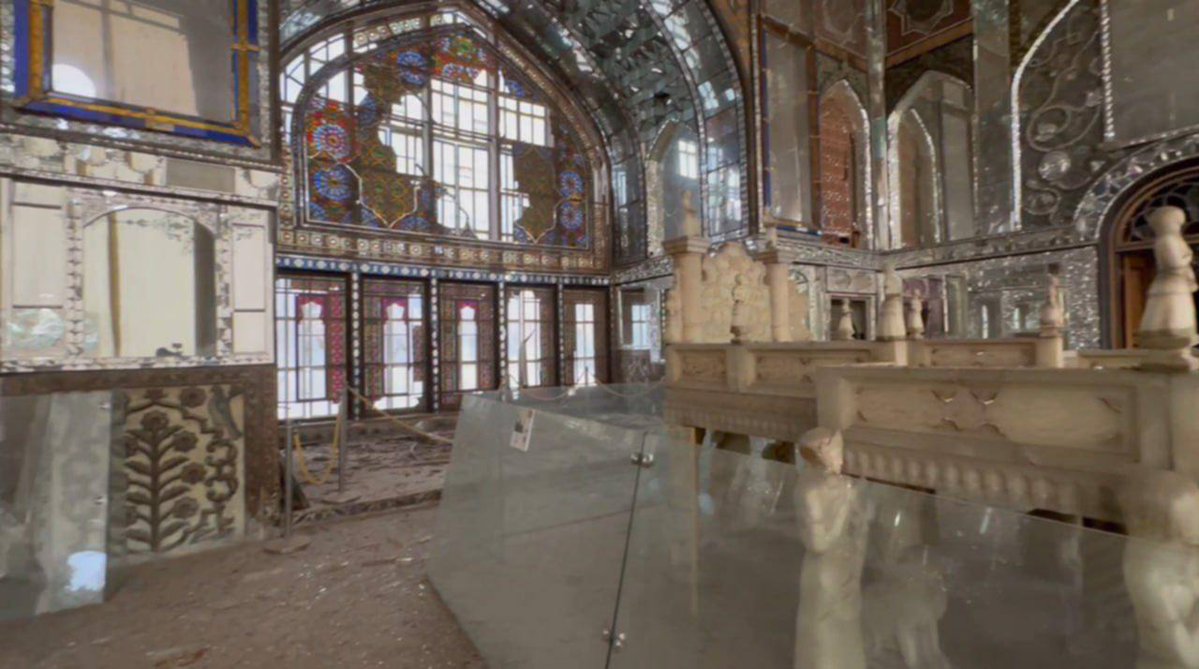
Golestan Palace, the Versailles of Persia/Iran, a UNESCO heritage site was damaged. کاخ گلستان
Touraj Daryaee tweet mediaTouraj Daryaee tweet mediaTouraj Daryaee tweet mediaTouraj Daryaee tweet media
Català
2
4.4K
12.8K
1.3M
Peter Kaas retweetledi
joseph.eth
joseph.eth@josephdelong·
If you think about it KYC is actually insane. The govt wants a bank to act as an extrajudicial body because they are too lazy to catch criminals.
English
51
65
744
25K
Peter Kaas retweetledi
Peter Van Valkenburgh
Peter Van Valkenburgh@valkenburgh·
Let me be clear. There is no legitimate business reason for anyone to have these personal records about you. Even government counterterrorism/crime needs would be better addressed with limited zkproof-based gating of trusted financial on and off ramps w/o mass surveillance.
Grafton (Disco)@satsdisco

ah shit, here we go again 4 days ago a company IDMerit, left their database with 1 billion personal records open on the Internet with no password. What is IDMerit? a KYC verification company, one designed and promised to keep your data safe. Stop and Read this thread 1/22

English
11
51
244
15.8K
Peter Kaas retweetledi
Volodymyr Zelenskyy / Володимир Зеленський
Today marks exactly four years since Putin started his three-day push to take Kyiv. And that says a great deal about our resistance, about how Ukraine has fought all this time. Behind those words stand millions of our people, immense courage, incredibly hard work, endurance, and the long path Ukraine has been pursuing since February 24. Looking back at the beginning of the invasion and reflecting on today, we have every right to say: we have defended our independence, we have not lost our statehood; Putin has not achieved his goals. He has not broken Ukrainians; he has not won this war. We have preserved Ukraine, and we will do everything to secure peace and justice. Glory to Ukraine!
English
1.1K
6.9K
28.9K
641.9K
Peter Kaas retweetledi
Grafton (Disco)
Grafton (Disco)@satsdisco·
So I don't know why more people don't scream about this but KYC does not prevent crime. I'm gonna lay out the numbers here because people do need to see this. The cost of pretending it works is measured in actual human lives now. follow along 🧵 1/15
English
14
76
263
21.7K
Peter Kaas retweetledi
AukeHoekstra
AukeHoekstra@AukeHoekstra·
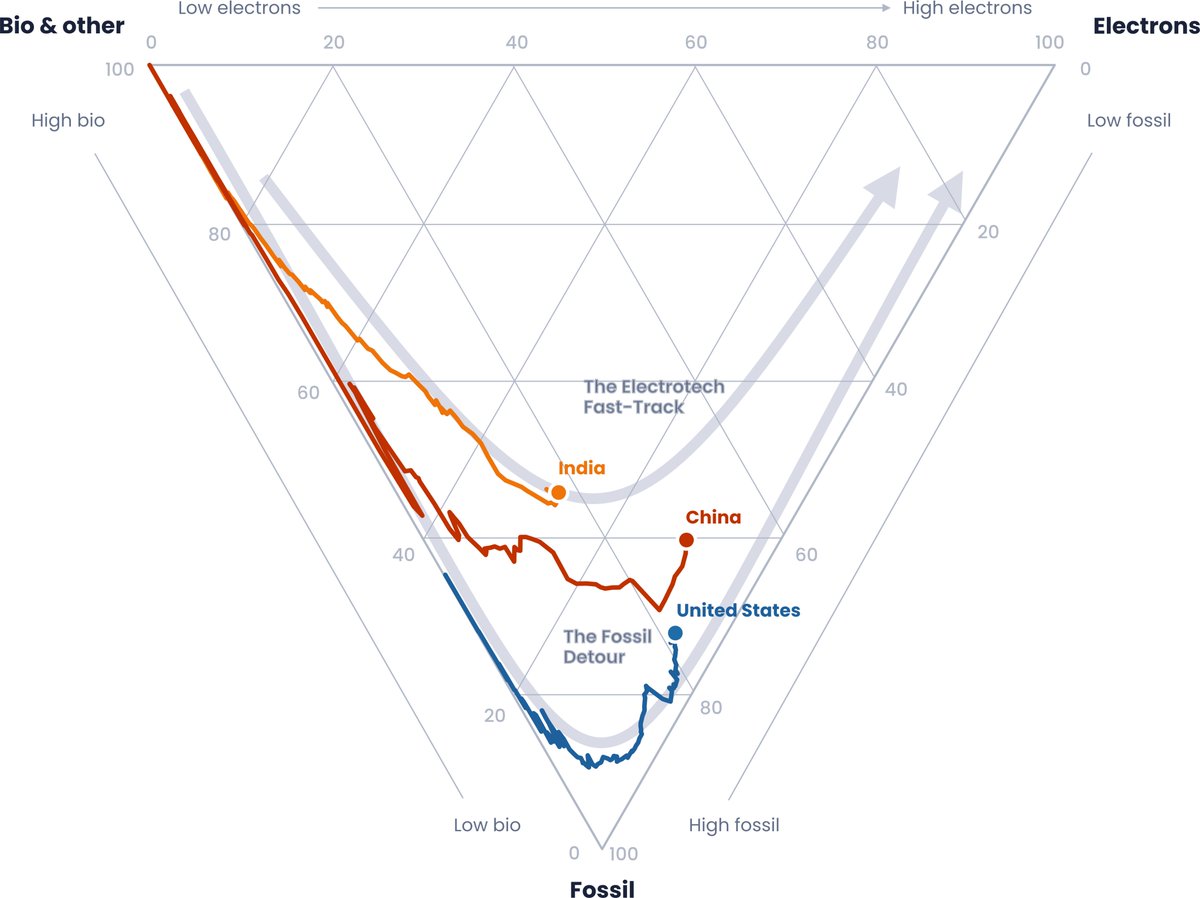
I *love* this ternary chart showing developing economies increasingly go directly for clean electrons (solar plus some wind), bypassing the fossil economy that the US and EU went through. I expect Africa will take an even more direct route than India. ember-energy.org/latest-insight…
AukeHoekstra tweet media
English
55
318
2K
90.9K
Peter Kaas retweetledi
Sabrina Halper
Sabrina Halper@SabrinaHalper·
Founder of @signalapp, @moxie Marlinspike on Telegram:   "Telegrams not a private messenger. There's nothing private about it. It's the opposite. It's a cloud messenger where every message you've ever sent or received is in plain text in a database that telegram the organization controls and has access to it" "It's like 'Russian oligarch starts unencrypted version of WhatsApp', a pixel for pixel clone of WhatsApp. That should be kind of a difficult brand to operate. And somehow, they've done a really amazing job of convincing the whole world that this is an encrypted messaging app and that the founder is some kind of Russian dissident, even though he goes there once a month, the whole team lives there, and their families are there." " What happened in France is they just chose not to respond to the subpoena. And so that's in violation of the law. And, he gets arrested in France, right? And everyone's like, oh, France, but I think the key point is they have the data, like they can respond to the subpoenas where as Signal, for instance, doesn't have access to the data and couldn't respond to that same request.  To me it's very obvious that Russia would've had a much less polite version of that conversation with Pavel Durov and the telegram team before this moment. "
English
323
1.1K
6K
854.6K
Peter Kaas retweetledi
DCinvestor
DCinvestor@DCinvestor·
vibe coders should understand something: i love how easy AI is making it for people to build their own apps, push them into production, and start businesses but let's be clear: the future is not in humans building consumer-facing apps the future is everything becomes an API which your personal AI agent can interact with in ways which suit your specific needs and lifestyle (down to the very specific needs of you as an individual) the fact that you can use the machines to build your apps is just an intermediate step to the machines creating the apps for you, LIVE, as you need them so the value of you learning how to build apps now really lies in you learning how to create a business model behind that app- not in creating the piece of software that is the app itself sure, there will be templates for how you can interact with those apps/APIs, but your personal AI will pick one and tailor it even further for you. and a lot of the time, you won't even need to interact with a UI beyond speaking with your AI assistant let me give you an example: would you rather use an app like Uber or Uber Eats, or would you rather just ask your AI assistant to get you a ride somewhere or to show you menus for the type of food you might be interested in and you pick one? the value in apps like that is not in the app installed on your phone. it's in the backend business model which connects the customer with providers. and personal AI assistants actually open the door to you being able to seamlessly use multiple business APIs without worrying in the slightest about which app or intermediate provider they come from there is a decent chance apps as you know them will be mostly dead in ~5-10 years and yes, there are some apps which will still require deep optimization and that is where the hardcore coders may still be needed. but machines will get better at that, and if you take one look at the AAA gaming landscape, you should understand that hyper-optimized code isn't as valuable as it used to be but what will be valuable is owning the APIs with the most use and liquidity. and yes, a lot of those will use public blockchains things are going to accelerate and get very weird very quickly from here
English
237
178
2K
238.9K
Peter Kaas retweetledi
Bert Slagter
Bert Slagter@bslagter·
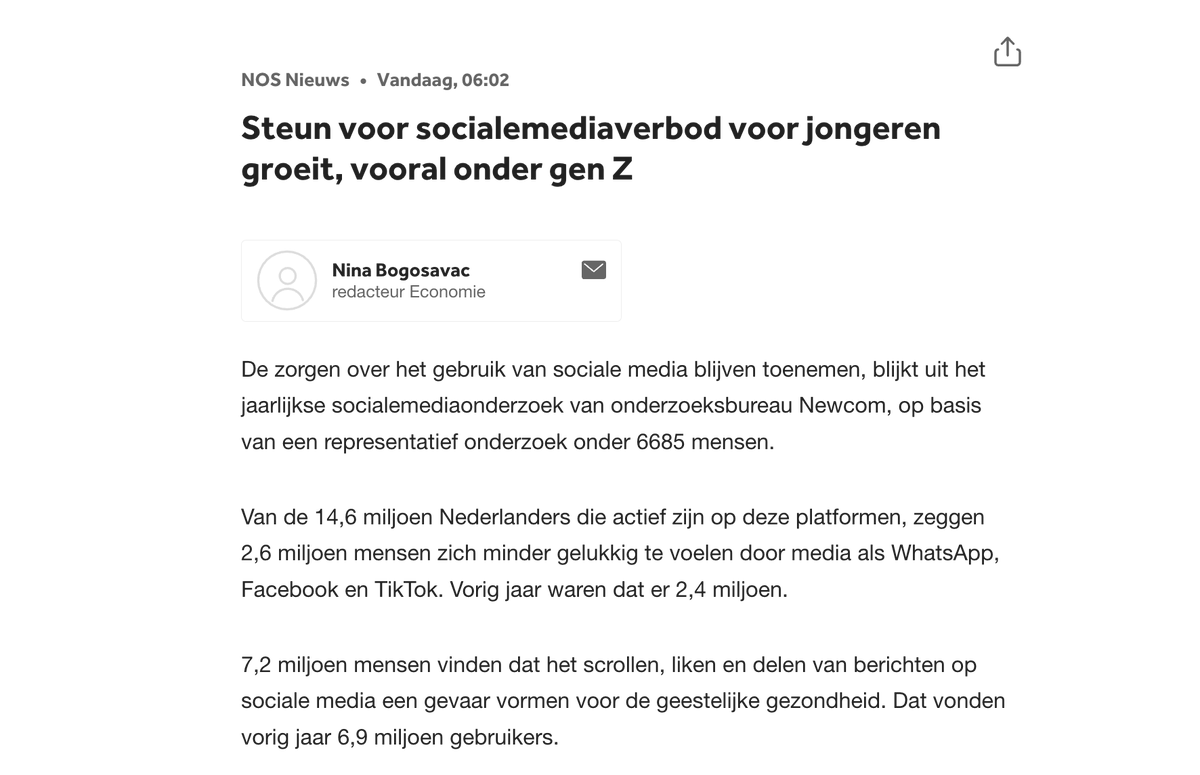
63% van NL steunt verbod sociale media voor jongeren. “Belangrijkste argument tégen zo’n verbod, vinden Nederlanders, is dat sociale media kinderen ook positieve vaardigheden kunnen leren.” Nee! Dat is het risico dat elke Nederlander zich uiteindelijk moet identificeren bij Amerikaanse en Chinese techreuzen. KYC op sociale media. Goed idee man! 🙄
Bert Slagter tweet media
Nederlands
18
13
86
9.1K
Peter Kaas retweetledi
Paul Graham
Paul Graham@paulg·
@NickKristof Is it piracy if someone learns from what he reads? And if not, why is it piracy if someone writes a program to do this?
English
148
25
1.1K
63.7K