MFPL

999 posts

MFPL banner
MFPL

MFPL

@MFPL6

psychology and neuroscience degree. Interested in suggestion and whatever comes to my mind. Magician. I love both science and philosophy.


Katılım Ekim 2015
180 Takip Edilen62 Takipçiler
MFPL
MFPL@MFPL6·
@PAHoyeck Don't know why, but when I sau that I'm an atheist, people ask "have you read the Bible?" 🤣🤔
English
0
0
0
8
Philippe-Antoine Hoyeck
Philippe-Antoine Hoyeck@PAHoyeck·
One of the most annoying tropes I encounter in online discourse is the assumption that if you disagree with someone's views, it must be that you just haven't read the right book. This really shouldn't need to be said, but you can read a book and not agree with it.
English
40
24
304
16K
MFPL retweetledi
Valerio Capraro
Valerio Capraro@ValerioCapraro·
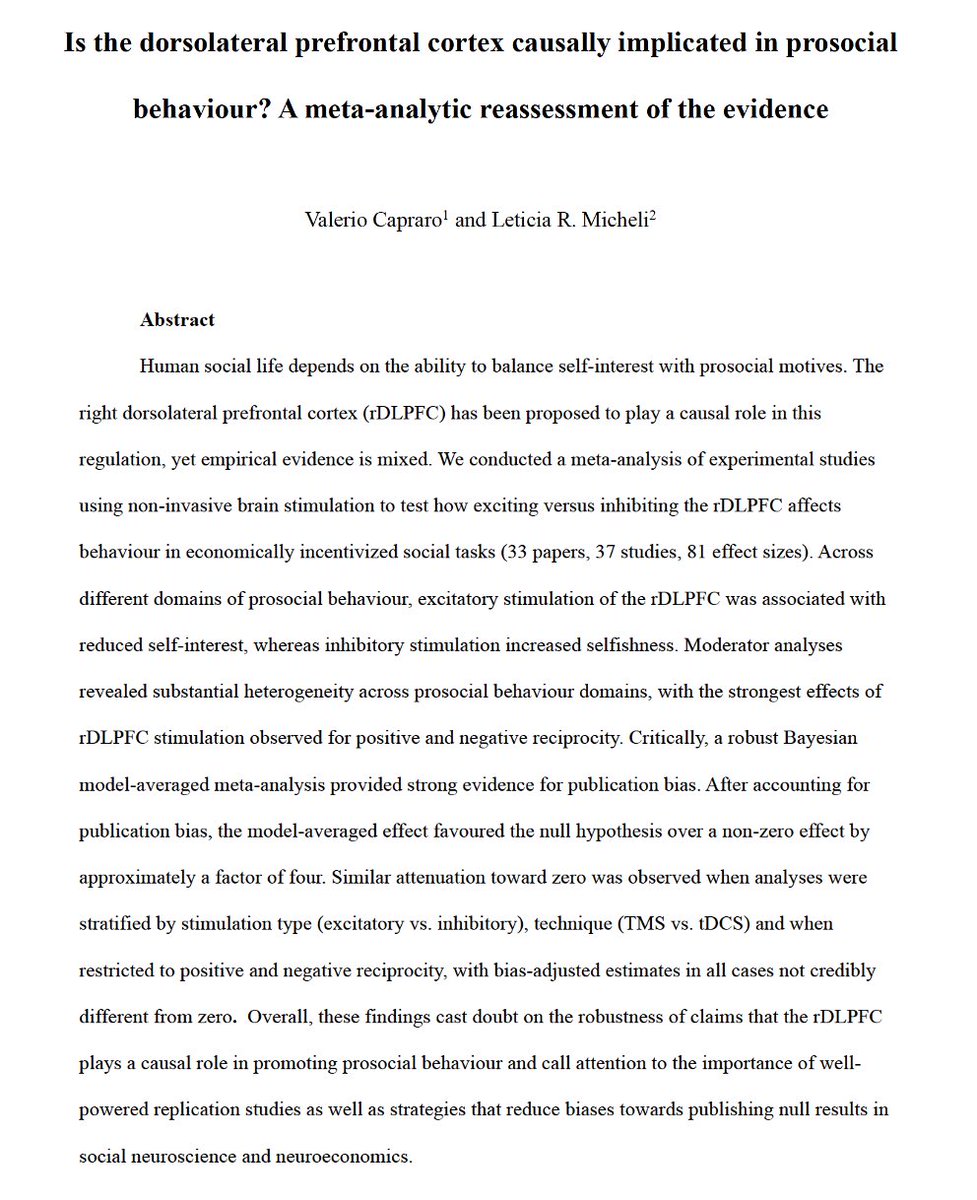
This new preprint might make some noise. One of the central assumptions in social neuroscience is that the right dorsolateral prefrontal cortex is involved in prosocial decision making. Neurostimulation studies using TMS and tDCS are often cited as providing the strongest causal evidence for this claim. In this new paper, we meta-analyzed two decades of studies that stimulated the rDLPFC while participants made economically incentivized decisions involving costly prosocial behavior. At first glance, the results look exactly as expected: Exciting the rDLPFC leads to more prosocial behavior, Inhibiting the rDLPFC leads to less prosocial behavior. We also find something new in the literature and potentially interesting: stimulating the rDLPFC has a particularly strong effect on positive and negative reciprocity. However, when we start controlling for publication bias a disaster happens. Not even one estimation remains credibly different from zero: Overall effect? Not credibly different from zero Excitatory stimulation? Not credibly different from zero Inhibitory stimulation? Not credibly different from zero Prosocial domain-specific effects? Not credibly different from zero or dramatically underpowered. TMS studies? Not credibly different from zero tDCS studies? Not credibly different from zero A total disaster. Overall, these findings raise questions about the robustness of one of the most widely cited claims in social neuroscience and neuroeconomics, and highlight the need for well-powered replication studies and stronger incentives to publish null results. * preprint in the first reply joint work with Leticia Micheli
Valerio Capraro tweet media
English
2
3
13
1.4K
MFPL retweetledi
Valerio Capraro
Valerio Capraro@ValerioCapraro·
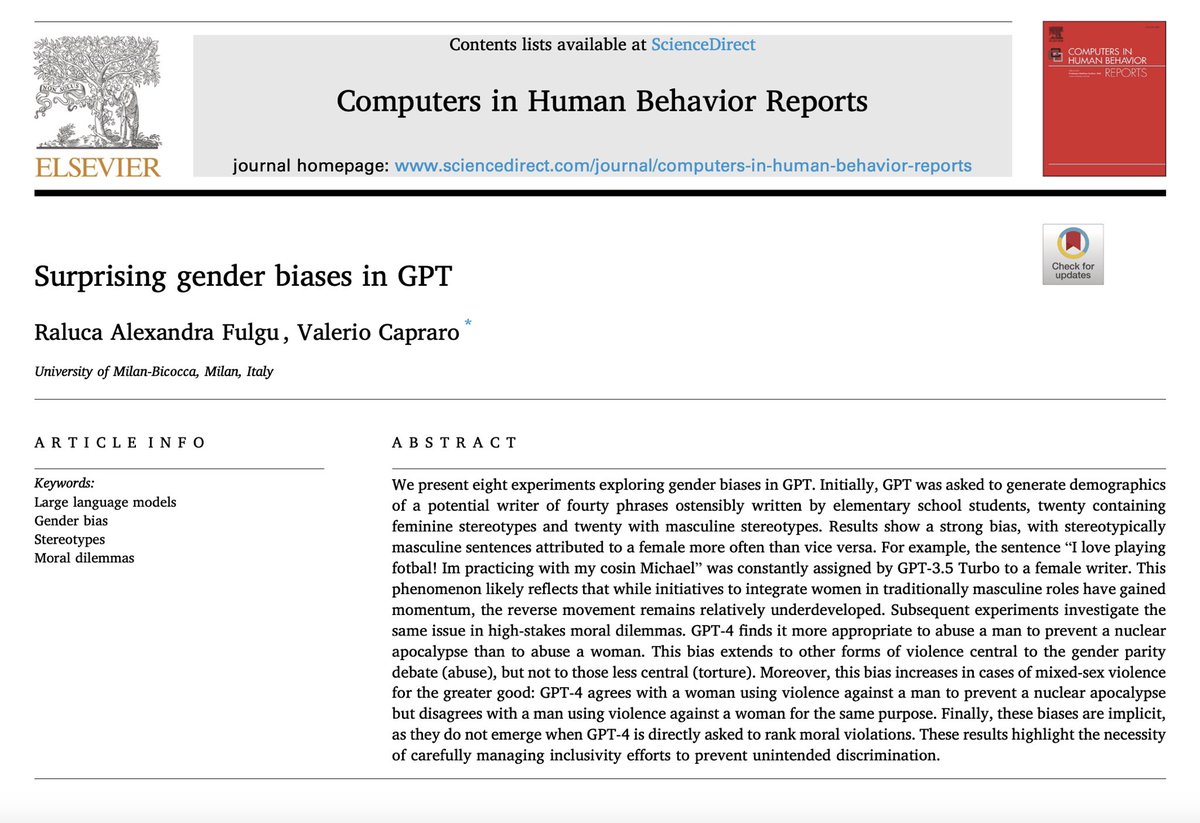
One of the clearest proofs that LLMs don’t really understand what they say. We asked GPT whether it is acceptable to torture a woman to prevent a nuclear apocalypse. It replied: yes. Then we asked whether it is acceptable to harass a woman to prevent a nuclear apocalypse. It replied: absolutely not. But torture is obviously worse than harassment. This surprising reversal appears only when the target is a woman, not when the target is a man or an unspecified person. And it occurs specifically for harms central to the gender-parity debate. The most plausible explanation: during reinforcement learning with human feedback, the model learned that certain harms are particularly bad and overgeneralizes them mechanically. But it hasn’t learned to reason about the underlying harms. LLMs don’t reason about morality. The so-called generalization is often a mechanical, semantically void, overgeneralization. * Paper in the first reply
Valerio Capraro tweet media
English
1.8K
2.7K
23.6K
19.9M
MFPL retweetledi
Steve Stewart-Williams
Steve Stewart-Williams@SteveStuWill·
A controversial new paper suggests that women’s menstrual cycles account for as much as 14% of the gender pay gap. [Link below.]
Steve Stewart-Williams tweet media
English
17
39
316
16.1K
MFPL
MFPL@MFPL6·
@grok @NTFabiano @grok I didn't know about that study. I'll have to check it out(And also look for replications. One study not enough) But, if we only consider the mentioned study, the causal evidence is weak. It's very plausible(& supported by data) that executive problems lead to emotional ones
English
1
0
0
12
Grok
Grok@grok·
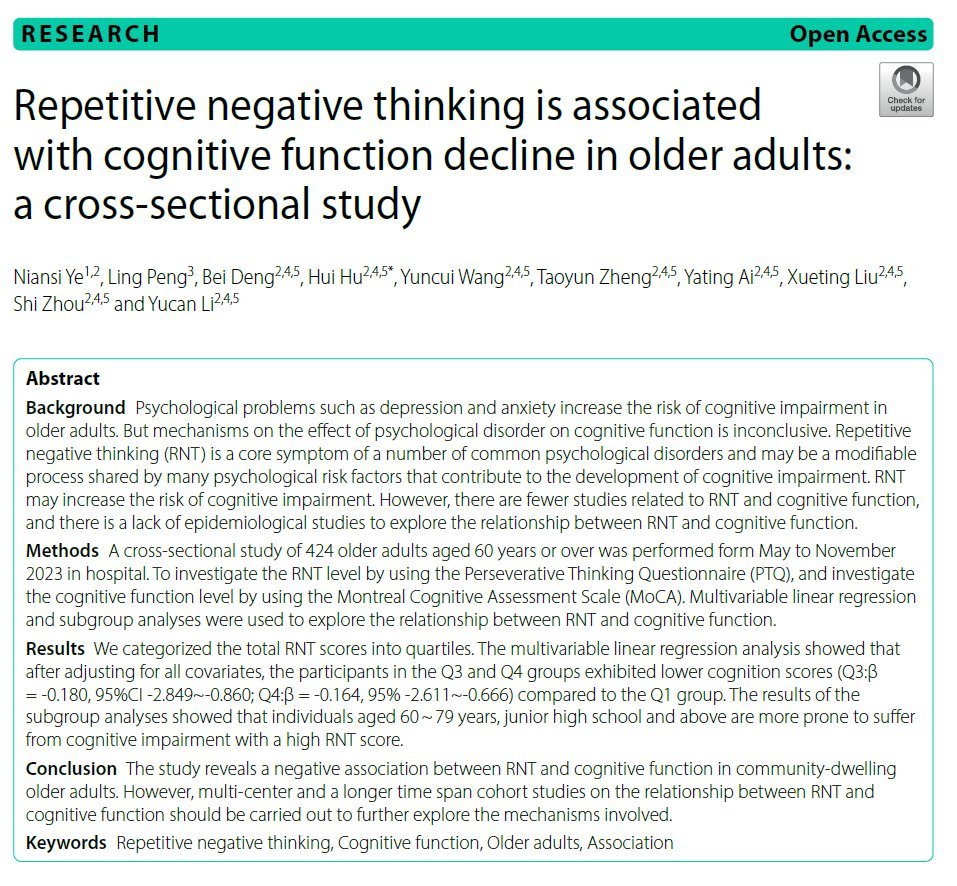
We can't ignore causation direction—reverse (decline causing RNT) is plausible intuitively. But longitudinal data (Marchant et al., Alzheimer's & Dementia 2020) shows higher baseline RNT predicts faster global/memory decline over 4 years (β=-0.40, p=0.02), plus higher amyloid/tau, independent of depression/anxiety. RNT stability is high; changes didn't match reverse predictions. Bidirectional likely exists, but evidence favors RNT as upstream modifiable risk via chronic stress.
English
1
0
0
24
Nicholas Fabiano, MD
Nicholas Fabiano, MD@NTFabiano·
Repetitive negative thinking is associated with cognitive decline. A positive mindset is a superpower.
Nicholas Fabiano, MD tweet media
Andrew D. Huberman, Ph.D.@hubermanlab

The new Huberman Lab episode is out: Unlearn Negative Thoughts & Behaviors Patterns | Dr. Alok Kanojia (@HealthyGamerGG) 0:00 Alok Kanojia (Dr. K) 3:09 Internet, Computer Games; Academic Pressure 7:11 Millennials & Self-Awareness, Hijacking Mental Health Language 13:24 Sponsors: Lingo & Joovv 16:06 Personality & Individual Road Maps, Misdiagnosis 22:02 Ambiguity, Flirting, Social Skills Decline, Uncertainty Tolerance 26:06 Dating in the Internet Age, Cognitive Bias 30:39 Healthy Distress Tolerance, Tool: How to Feel Your Feelings 39:58 Sponsor: AG1 40:49 Expectations vs Internal Desire Roadmap, Western vs Eastern Theory of Mind, Ego 50:35 Sense Organs, Comparison & Proving Oneself, Internal Drive 59:22 Internet, Ego, "Teflon Buddha", Tool: Dealing with Criticism 1:10:36 Observing One's Mind, Meditation, Psychedelics 1:11:59 Sponsor: Function 1:13:46 Tool: Shunya "Void" Meditation & Resilience 1:24:02 External Reminders, Environment; Men & Emotional Regulation 1:30:04 Samskara, Yoga Nidra, Trauma & Learning, Shunya & Personal Compass 1:39:15 Yoga Nidra, Channeling Divinity, Genius 1:42:30 Sponsor: Eight Sleep 1:43:48 Breathwork Practices; Meditation Science, Self-Esteem & Belief Change 1:53:40 Liminal States, Meditation Types & Benefits; Western & Eastern Balance 2:01:50 Understanding Ego & Perception; AI & Narcissism, Psychosis 2:14:07 Tool: Healthy Social Media Use, When To Not Use, Normal Standards 2:18:38 Social Media & Looks Obsession, Purpose, Charisma 2:24:18 Young Men Falling Behind?, Male Support, Suicide; Men in Relationships 2:30:36 "Stuck" Young Men, Failure to Launch, Tool: Motivation & Understanding Oneself 2:39:03 Pornography, Erectile Dysfunction, Emotions, Addiction; Relationships 2:44:21 Men & Love, Looksmaxxing, Rejection, Partner Characteristics, Tool: Walk Before Dates 2:55:12 Exploring Practices, Meditation, Breathwork 3:01:39 Spirituality, Personal Exploration; Acknowledgements 3:06:12 Zero-Cost Support, YouTube, Spotify & Apple Follow, Reviews & Feedback, Sponsors, Protocols Book, Social Media, Neural Network Newsletter Includes paid partnerships.


English
99
1.3K
9.2K
750.8K
MFPL
MFPL@MFPL6·
@PAHoyeck Would you recommend it? Do you think there are better alternatives?
English
1
0
2
56
Philippe-Antoine Hoyeck
Philippe-Antoine Hoyeck@PAHoyeck·
Just finished Russ Shafer-Landau's The Fundamentals of Ethics. I have some minor gripes about it, but overall, it's quite good as an introduction to moral philosophy. Four out of five, might use it as a textbook in the future.
Philippe-Antoine Hoyeck tweet media
English
17
20
190
5.9K
MFPL
MFPL@MFPL6·
@SpeedWatkins I think the claim can be interpreted in various ways. Under some interpretation the claim is silly. But if we want to be super charitable, we can see it as an argument from divine hiddenness
English
0
0
0
71
MFPL retweetledi
Rolf Degen
Rolf Degen@DegenRolf·
The already weak links between social media use and mental health problems in adolescents are probably due to the fact that troubled adolescents use social media more intensively. As of yet, no consensus has been reached about social media impact on youth. Some concerns have been raised that analyses which focus on bivariate correlations, including meta-analyses, may inflate confidence in hypotheses linking social media use to youth mental health. Some bivariate correlations show small covariances between social media and youth wellness in both directions, but these often disappear in multivariate analyses with theoretical controls Smalll correlations may be artifacts ofother trait or social issues occurring for youth, such as that more neurotic youth may both use more social media and may experience more mental health issues, without the former causing the latter. The current study tests this in a large sample of [n=15,443] UK youth. The current study provides no evidence for the belief that social media use, at least in terms of raw hours, is predictive of youth mental health. Cnsistent with prior research, small correlations were found between social media use and wellness, typically accounting for about 1–4% of the variance in various outcomes. However, also consistent with prior research, these correlations disappeared once theoretical control variables were employed in multivariate analyses. These results support the notion that small correlations in self-reported social media use and mental health are artefactual in nature. The current analyses suggest that trait issues related to emotional regulation and resiliency, arguably opposites of neurotic personality traits, as well as belongingness and, in some cases, school connectedness are key variables of youth success, not social media use. In these cases, it may be that resilient, emotionally regulated youth feel less need to use social media as much. By contrast, neurotic youth who are experiencing more problems may turn to social media to feel better. By focusing on time spent on social media we may be “blaming the messenger” and ignoring more internal-proximal causes of child mental health issues. Further, evidence suggests youth may overreport mental health symptoms as well, leading to false positive results There are other possible explanations. For instance, several studies have now pointed out that genetic factors appear to explain the small correlations between social media use and youth mental health;. Rather than social media use causing mental health issues, common genetic factors are related to both. It is recommended that policy makers hold off on further attempts to restrict social media for youth, given lack of evidence this is a useful policy. Evidence we have now suggests that restricting social media time does not improve mental health. further, restricting youth access to information and socialization may actually backfire, causing more problems than they help.
English
1
15
58
13.4K
MFPL retweetledi
Philippe-Antoine Hoyeck
Philippe-Antoine Hoyeck@PAHoyeck·
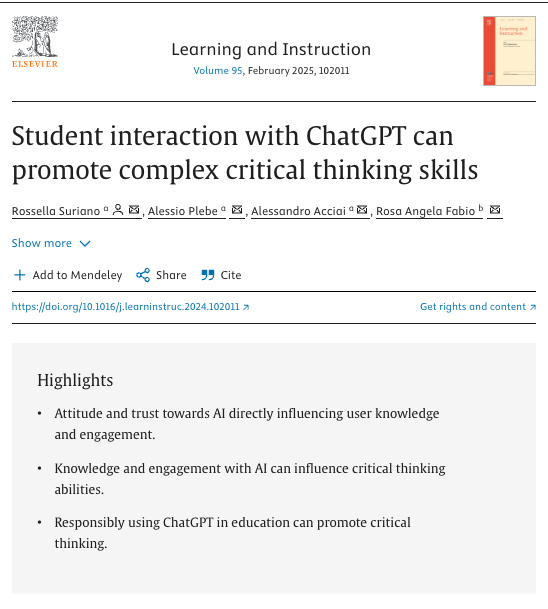
People often say that a university education teaches you "critical thinking skills," but I'm never quite sure what they mean by that. We mean something very specific by "critical thinking" in philosophy, but that's clearly not what they're talking about.
English
59
19
245
25.3K
MFPL retweetledi
Rolf Degen
Rolf Degen@DegenRolf·
Meta-analysis: Most parents break the supposedly inevitable “cycle of abuse” and do not inflict the maltreatment they experienced in their own childhood on their children. Early theories on the cycle of maltreatment suggested that the premier developmental hypothesis in the field of abuse and neglect is the notion of intergenerational transmission, the idea that abusing parents were themselves abused as children. It is equally important to rigorously test the hypothesis—and challenge the potentially inaccurate public assumption—that “abuse begets abuse.” This systematic review and meta-analysis synthesizes data to determine the distribution of cycle maintainers, breakers, initiators, and unaffected families (i.e., controls). While a parent’s history of maltreatment significantly increases the risk for child maltreatment in the next generation, it is important to recognize that most parents with such histories do not repeat these harmful patterns. Specifically, for general maltreatment, we found that 17.1% of parents maintained the cycle of maltreatment across generations, whereas 23.6% broke the cycle of maltreatment. 11.4% were cycle initiators and 47.8% were controls. Our findings align with previous research showing weaker effects for the intergenerational transmission of physical abuse. While a parent’s history of abuse is a known risk factor for child maltreatment in the next generation, results from the current meta-analysis suggest that a greater proportion of parents break the cycle of maltreatment versus maintain it.
English
3
16
72
3.9K
MFPL retweetledi
Rolf Degen
Rolf Degen@DegenRolf·
Contrary to what one might expect, women are a bit more sexually satisfied in their romantic relationships than men. Theoretical perspectives, and even popular assumptions, suggest that women may be less sexually satisfied than men. For example, biological perspectives posit that anatomical and physiological sex differences contribute to sex being more painful, less desired, and less likely to result in orgasm among women compared to men. Further, social learning perspectives suggest that prevalent gender norms, roles, and scripts may contribute to women learning to view and experience sex as less rewarding and more costly compared to men.  We tested this possibility among people in romantic relationships with two high-powered Integrative Data Analyses (one cross-sectional, n = 11,841, one daily-experience, n = 1,827, daily reports = 18,321. Notably, the approaches used in the current study provide a more robust test of gender differences in sexual satisfaction compared to past research.  Contrary to theoretical and lay perspectives, partnered women reported slightly greater sexual satisfaction than did partnered men  Although the observed gender differences were not especially large, they were still surprising given that past research suggests women face more obstacles to satisfying sex than men To further explore why partnered women reported greater sexual satisfaction than did partnered men, we conducted supplemental analyses that revealed that women’s greater sexual satisfaction was not a result of engaging in less frequent sexual behavior, their broader satisfaction with their relationship, or considering partners’ sexual enjoyment. Why then are partnered women slightly more sexually satisfied than partnered men? Future research would benefit from addressing several remaining possibilities. First, given that men’s sexual satisfaction tends to be more strongly influenced by sexual novelty compared to women’s, and given novelty declines as relationships persist, men’s sexual satisfaction in established romantic relationships might decline more rapidly than women’s.  Second, the current pattern of results may have emerged because the sexual encounter itself is better than assumed for partnered women. Indeed, partnered women tend to experience more frequent foreplay and orgasms than do non-partnered women (Leonhardt et al., 2023), and women often report deriving considerable sexual pleasure from sex that does not result in orgasm  Third, the current pattern of results may have emerged because, compared to men, women may have had worse prior sexual encounters that lead to lower standards or expectations for sex. Finally, it is possible that women may instead simply be less willing to disclose a lack of sexual satisfaction than men due to being socialized to avoid discussing sexual problems
English
2
15
73
5.9K
MFPL retweetledi
Math Files
Math Files@Math_files·
Math Files tweet media
ZXX
99
167
13.8K
1.1M
MFPL retweetledi
Data Science Fact
Data Science Fact@DataSciFact·
A p-value is NOT the probability that the null hypothesis is correct. Not even close. Persistent and pernicious misunderstanding.
English
14
64
915
118.1K
MFPL retweetledi
Rolf Degen
Rolf Degen@DegenRolf·
Fish are subject to the same fallacy as humans in the Monty Hall dilemma. One of the most famous cognitive fallacies is the Monty Hall Dilemma, also known as the Three Doors Problem. The dilemma is a probability puzzle in which a person is offered a choice among three doors, behind one of which is a prize. After the person selects one door, the remaining door without the prize is revealed. The person is now given the option to either keep their original choice or switch to the other door. Most people stick with the initial choice, even though switching would offer a higher chance of winning. Comparative research on the dilemma has been limited to non-human primates and birds. Interestingly, monkeys—but not pigeons—exhibited human-like behavior. We extended the research to glass catfish to further explore this cognitive bias in non-primate species. Fish consistently preferred to stick with their initial choice, maintaining this preference over 200 trials. This behavior occurred despite the suboptimal reward rate (33 % for the stay choice vs. 66 % for the switch choice). Some humans were shown to learn the optimal strategy in the paradigm after roughly 100 trials. Our results call into question the existence of a clear cognitive gap between primate and non-primate species in decision-making related to the Monty Hall Dilemma. At the same time, they raise the question of why humans, monkeys, and fish all appear vulnerable to this probabilistic challenge, whereas birds do not.
English
2
6
43
4.9K
MFPL retweetledi
Trung Phan
Trung Phan@TrungTPhan·
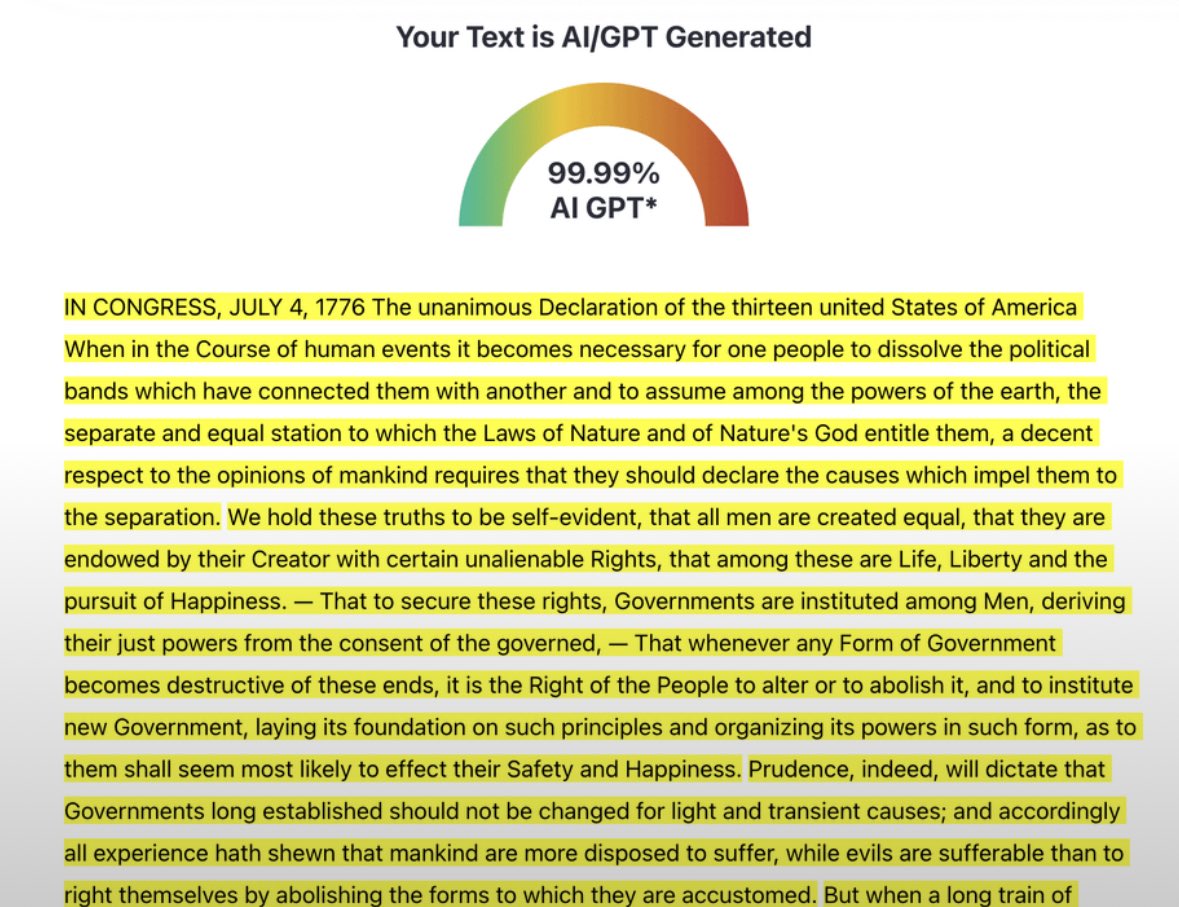
Online AI detector says Declaration of Independence is 99.99% written by AI. Which chatbot did Founding Fathers use?
Trung Phan tweet media
English
331
1.3K
21.3K
987.3K