Musavir Hameed Barech

1K posts

Musavir Hameed Barech banner
Musavir Hameed Barech

Musavir Hameed Barech

@MHBarech

Research Officer at @bttn_quetta|| Former Development Fellow at @PlanComPakistan. MPhil Pol Science from @gculahore.
Islamabad/Lahore/Quetta Katılım Ekim 2017
736 Takip Edilen326 Takipçiler
Musavir Hameed Barech retweetledi
Balochistan Think Tank Network (BTTN)
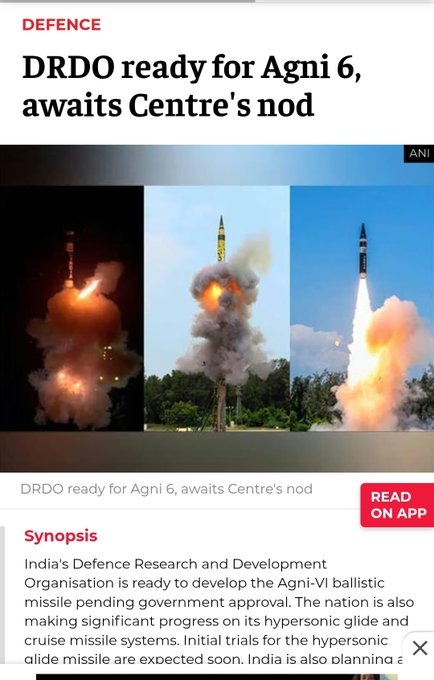
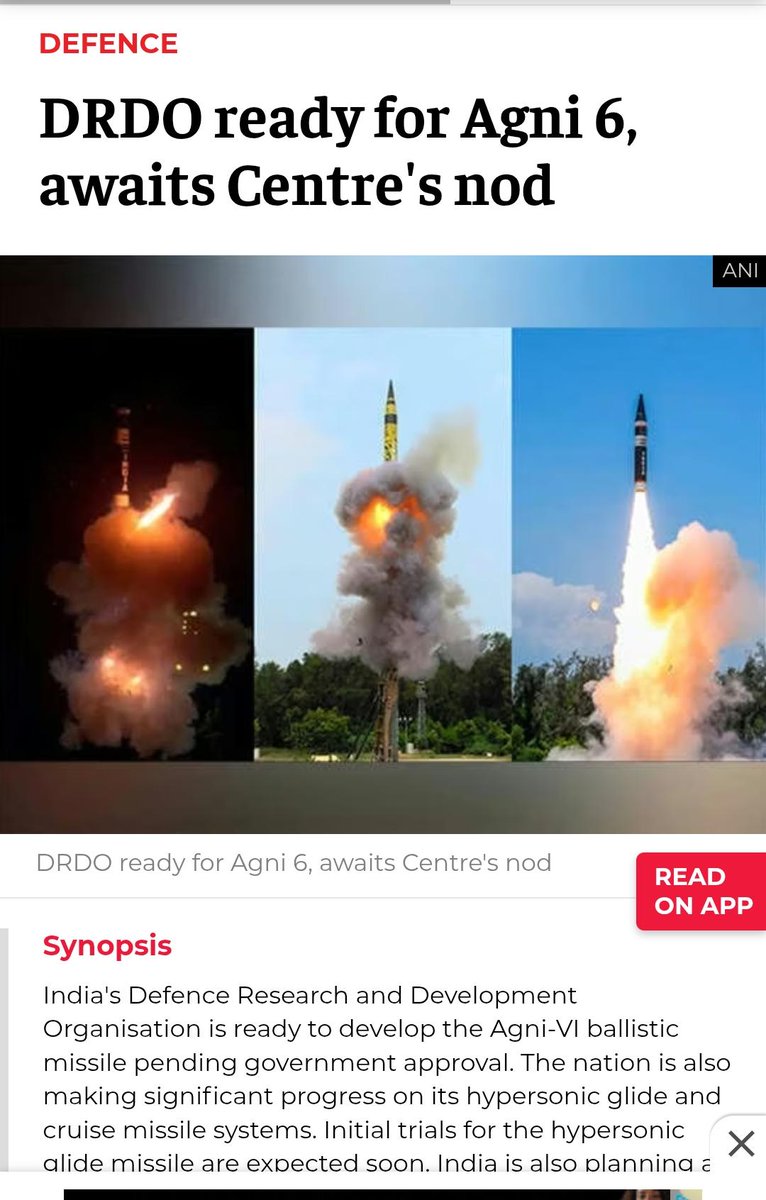
India doesn't need a 12,000 km missile to threaten Pakistan or China. India develops the Agni-VI with an intercontinental range, placing Washington, London, and Paris under its nuclear umbrella — this doesn't merely highlight the technicalities; the motive remains deeply rooted in strategic ambitions. Who is this missile for? Not the adversaries India publicly names. The range overshoot tells a different story; one of prestige-driven power maximization, not credible minimum deterrence. And yet, Western capitals remain conspicuously quiet. The same nonproliferation voices that challenge every Russian warhead and every North Korean test have nothing to say about India's silent march toward global strike capability. That silence is itself a strategic choice. And it may prove to be a costly one. @zahirhkazmi @zafarwafa1977 @AsmaKhawaja5 @ExecDirCISSS @ciss_ajk @CISS_Islamabad @SVI_Pakistan #AgniVI #ICBM #NuclearStrategy #India #Deterrence #ArmsRace #StrategicStability m.economictimes.com/news/defence/d…
English
12
24
34
2.7K
Shahab Shahid
Shahab Shahid@SShahabShahid·
Major General Gagan Deep Bakshi, a highly decorated Indian officer and strategic affairs commentator, warns that India could destroy major US cities such as New York and Washington using nuclear capable Agni-5 ICBMs and K-5 SLBMs
English
160
128
188
17.1K
Musavir Hameed Barech retweetledi
Hira Bashir
Hira Bashir@HiraBK5090·
The reported development of #AgniVI raises a question: When regional deterrence is stable, what justifies ICBM capabilities reaching #Europe and North America?Deterrence is not just capability,it is intent.And intent shapes strategic stability @AsmaKhawaja5 @RadioactiveFrnd
English
9
14
18
1.1K
Musavir Hameed Barech retweetledi
Sher Ali Kakar
Sher Ali Kakar@sherali_kakar·
🇮🇳 Reportedly preparing to test nuclear-capable Agni-VI (~12,000 km, MIRVs). This expands strike reach to 🇺🇸 🇨🇦 🇬🇧 🇫🇷, complicating global security landscape. 🇮🇳 is now posing a direct threat to 🇺🇸. 🇺🇸 & allies must stop turning a blind eye to these destabilizing developments.
English
0
10
10
115
Musavir Hameed Barech
@zahirhkazmi @bttn_quetta This reminds me of what US DS of State Christopher Landau said at the Raisina Dialogue: ‘We are not going to make the same mistakes with 🇮🇳 that we made with 🇨🇳 20 years ago.’ The US has woken up to 🇮🇳’s rising economic threat but they must now also address the military threats
English
0
3
3
175
Radioactive Friends
Radioactive Friends@RadioactiveFrnd·
‼️‼️𝐓𝐇𝐑𝐄𝐀𝐃‼️‼️ 1/7 #DRDO Chairman says India is ready to test its nuclear capable #ICBM #AgniVI with ranges estimated up to 12000 km carrying multiple warheads. With these ranges India has the capability to reach not just China, Middle East & Europe but also US and Canada.
Radioactive Friends tweet media
English
25
50
67
7.6K
Zahir Kazmi
Zahir Kazmi@zahirhkazmi·
🛡️ DRDO Chairman Kamat confirmed: India is “ready” for Agni-VI ICBM development witch’s a nuclear-capable beast with speculated 10-12,000 km range & MIRV warheads. Enough to reach Europe, US & Canada. Govt nod pending. Who is this really for? Pakistan & China are already covered by existing arsenal. In a nuclear South Asia, after Op Sindoor’s boldness, a Hindutva-driven push for global strike capability? The West watching this “minimum deterrence” stretch? #AgniVI #StrategicShift m.economictimes.com/news/defence/d… @RadioactiveFrnd @orfonline @EconomicTimes @bttn_quetta @ciss_ajk @ciss_ajk @dratiaalikazmi @arooj_kaz
English
56
70
116
18.3K
Musavir Hameed Barech retweetledi
Zafar Khan
Zafar Khan@zafarwafa1977·
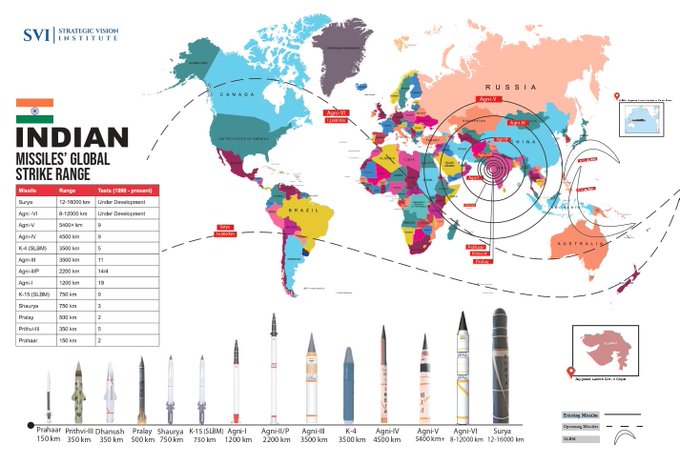
“Indian ICBMs (Agni-VI) – A Global Security Threat” India’s development of Agni-VI, an ICBM with a range of 12000km-16000km, goes beyond Pakistan and China. It now clearly threatens the US, Canada, Europe, and the entire American Continent. India, with increasing ranges of its ICBMS and SLBMs, has become a global threat. The international community, including the US, needs to question India about such strategic ambitions. This is no longer consistent with India’s declared minimum deterrence; it goes far beyond such a perceived nuclear policy. It is no longer security. It is dangerous hubris, an escalation dominance, prestige, and power projection, at both the regional and global levels. Pakistan is watching; the Chinese are watching; the global community is concerned about this, and the US must take action now rather than never when India becomes a strategic Frankenstein against the US's vital security and geostrategic interests. @MalluChique @RealBababanaras #India #DRDO #ICBMs #SLBMs #Threat #US #Canada #EU #global #power #prestige
Zafar Khan tweet mediaZafar Khan tweet media
English
8
25
34
3.6K
Musavir Hameed Barech
Musavir Hameed Barech@MHBarech·
@SShahabShahid This clearly lends credence to the argument that the primary target of 🇮🇳’s long-range ballistic missiles — the Agni-5 and the Agni-6 (currently under development) — with ranges of 8,000 to 12,000 km, is neither #Pakistan nor #China, but the #USA and its Western allies.
English
0
6
9
200
Musavir Hameed Barech
@RadioactiveFrnd This reminds me of what US DS of State Christopher Landau said at the Raisina Dialogue: ‘We are not going to make the same mistakes with 🇮🇳 that we made with 🇨🇳 20 years ago.’ The US has woken up to 🇮🇳’s rising economic threat but they must now also address the military threats
English
2
6
8
301
Zafar Khan
Zafar Khan@zafarwafa1977·
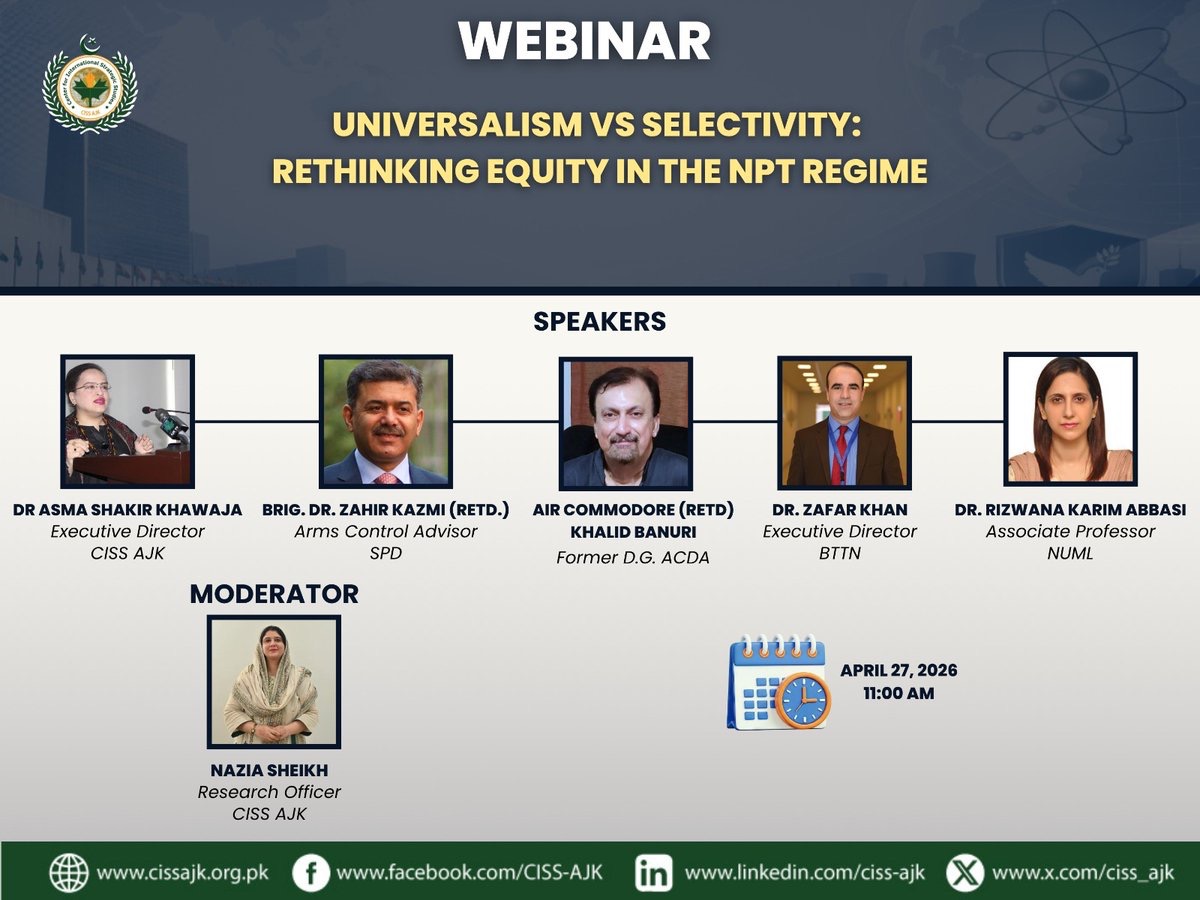
“Disarmament Commitments and Strategic Realities” I had a chance to deliver my thoughts titled “Disarmament Commitments and Strategic Realities” in the CISS AJK One-Day Webinar on “Universalism vs Selectivity: Rethinking Equity in the NPT Regime” on 27 April, 2026. Here is the gist of some of these analyses: When the Nuclear Non-Proliferation Treaty (NPT) was formed in 1968 and subsequently enforced in 1970 after a deadlock of many years of negotiations on establishing the three fundamental pillars of the NPT: a) nonproliferation, b) peaceful uses of nuclear technology, and c) nuclear disarmament, the major nuclear weapons states, now called the P-5, promised to go for nuclear disarmament in the NPT. They failed to keep their promise of complete disarmament despite the indefinite extension of the NPT at the 1995 NPT Review Conference. The commitments to nuclear disarmament were overshadowed by the harsh strategic realities of international politics. The good news is that there are only 9 nuclear-weapon states in the system, despite the perceived danger of a cascade of nuclear proliferation across the board. Nevertheless, the aspirant states for acquiring nuclear weapons were either forcefully not allowed by the US or preempted with preventive strikes by others, such as Israel and the US. Israel preempted Iraq, Syria, and, more recently, Iran’s nuclear facilities because of its fear of an “existential threat” from other countries in possession of nuclear weapons. But, Israel remains the only country to possess nuclear weapons in the region while rejecting the proposed nuclear-weapon-free zone in the Middle East. This became one of the reasons for the failure of the NPT Review Conference. The US did not allow others to acquire nuclear weapons except the UK and France for two simple reasons: One, the US pretends to promote the nonproliferation imperatives by providing a nuclear umbrella (extended deterrence) to its allies and partners, thereby not allowing them to develop their nuclear capability. Two, many security analysts argue that it suits the US's vital security interests by retaining its power projection and security dominance over its allies. The bad news is that NPT remains weak and ineffective, not even preventing nuclear-weapon states from striking non-nuclear-weapon states parties to the NPT. The NPT probably may not prevent the recognized nuclear-weapon states from using nuclear weapons against the non-nuclear-weapon states parties to the NPT. This potentially has created a dangerous precedent and a security concern between the haves and have-nots. In fact, the strategic realities are different and more complex than we ideally perceive. Both the US and Russia continue to possess almost 90% of the total world nuclear forces. All major nuclear-weapon states are not ready for the promises they made for the ultimate nuclear disarmament. Even President Barack Obama’s Prague speech in April 2009 aspired to a world without nuclear weapons. But, this could not be achieved at least in his lifetime, as he immediately admitted. All major nuclear states are not only modernizing but also increasing their nuclear weapons, along with the development of sophisticated delivery systems. In sum, this NPT review conference, starting on April 27, may not be able to accomplish all the outstanding goals, such as the proposed Middle East Nuclear Weapons Free Zone, agreement on complete nuclear disarmament, and the long-standing issue of discrimination between the haves and have-nots. What is needed much more is the principles of universality rather than selectivity, equity, transparency, restraint, and non-discrimination, moving forward. #NPT #NSG #IAEA #nuclear #nonproliferation #ReviewConference #disarmament #US #EU #China #Russia #UK #France
Zafar Khan tweet mediaZafar Khan tweet media
English
1
26
33
2.5K
Musavir Hameed Barech retweetledi
Zafar Khan
Zafar Khan@zafarwafa1977·
#post-heading" target="_blank" rel="nofollow noopener">thebulletin.org/2026/04/will-t… “THE ESSENCE OF NUCLEAR WEAPONS/ NUCLEAR DETERRENCE” “The takeaway for every middle power and so-called rogue state is becoming undeniable: If you have the bomb, you don’t get bombed. The race is on to get it while they still can.” - Pervez Hoodbhoy Although Pervez is famously known as the “nuclear abolitionist”, the concluding takeaway from his piece here reflects the essence of nuclear weapons/ nuclear deterrence against the perceived potential adversary. In other words, nuclear deterrence remains relevant and it deters. @BulletinAtomic #IranWar#IranRevolution2026#JCPOA #nuclear #Iran #US
English
1
10
12
341
Musavir Hameed Barech
Musavir Hameed Barech@MHBarech·
5. Addressing the Dual Challenge in Education: (A) Out-of-School Children. (B) Quality of Education. 6. ⁠Rationalizing the Establishment of New University Campuses across Balochistan. #امن_کا_سفیر_پاکستان #Pakistan #Youth #Development #Balochistan
English
0
1
5
86
Musavir Hameed Barech
Musavir Hameed Barech@MHBarech·
2. Establishment of a Dedicated Balochistan Job Portal just like the National Job Portal. 3. Prioritizing STEM Education 4. Enhancing Engagement at the School and College Level #امن_کا_سفیر_پاکستان #Pakistan #Youth #Development #Balochistan
English
1
1
5
86
Musavir Hameed Barech
Musavir Hameed Barech@MHBarech·
I was also invited by the Directorate of Youth Affairs Balochistan to contribute to the development of a comprehensive roadmap for the socio-economic development of Balochistan’s youth under a PSDP-funded scheme. #امن_کا_سفیر_پاکستان #Pakistan #Youth #Development #Balochistan
Directorate of Youth Affairs Balochistan@dyabpk

The Government of Balochistan has taken a significant step toward youth development by initiating the formulation of a Socio-Economic Development Roadmap. Under the special directives of Chief Minister Mir Sarfraz Ahmed bugti to promote youth welfare, the Directorate of youth Affairs ,Government of Balochistan organized an important policy workshop as part of the “Balochistan Youth Socio-Economic Development Program.” The workshop was held at the Balochistan Youth Resource Center, Ayub Stadium, under the patronage of Advisor to the Chief Minister on Sports and Youth Affairs, Ms. Meena Majeed Baloch. The primary objective of the workshop was to develop a comprehensive, effective, and actionable roadmap for the socio-economic development of the youth of Balochistan. The initiative aims to address key challenges faced by young people, particularly unemployment, educational barriers, and the lack of skills, through sustainable solutions. A total of 16 representatives participated in this important consultative session, including members from civil society, NGOs, government institutions, media, the business community, legal experts, universities, and research organizations. The inclusion of representatives from women, the transgender community, and persons with disabilities further enhanced the inclusivity and diversity of the process. During the workshop, Governance and Institutional Development Specialist Mr. Muhammad Yaqoob delivered a detailed presentation highlighting institutional improvements, policy gaps, and the importance of meaningful youth engagement. Participants engaged in in-depth discussions on various themes, emphasizing the need for technical and vocational training, increased employment opportunities, reduction of urban-rural disparities, and improved access to basic services. There was a strong consensus on the urgent need to equip youth with skills aligned with modern demands. At the conclusion of the workshop, participants presented short-, medium-, and long-term recommendations for the Government of Balochistan. These recommendations will serve as the foundation for developing a robust roadmap aimed at empowering youth and integrating them into the mainstream of development. This initiative is expected to become a key milestone in advancing youth empowerment across the province. #Balochistan #BYSEDP #Quetta #YouthEmpowerment #Youth @dpr_gob @JamalRaisani @Meena_Majeed @DurraDashti @IlyaasShaad

English
1
4
8
191